Leidsid 33 sarnast õppematerjali, mis on seotud failiga "Spices and Herbs". Need materjalid aitavad sul teemat sügavamalt mõista.
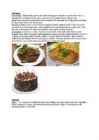
herb, spice, spices, herbs, plant, plants, flavor, picture, seed, dried, stems, seeds, grown, origin, foods, ground, part, refersodayalking, roots, usually, vegetable, zest, sold, whole, forms, popular, chili, powder, paprika, nutmeg, ginger, cumin, leaves, lack, woodyypically, green, value, define, earlyimes, century, england, around, startedGerman Sauerbraten: Traditionally made with a beef roasting joint (topside or similar) the meat is marinated for 2-3 days in beer, spices such as cloves, juniper berries, allspice and peppercorns, bay leaves and onions and is braised in the marinade for a long period, resulting in very tender melt-in-the-mouth meat. The Black Forest: cake is one of the most popular German national foods. Cake consists of several layers of chocolate cake, with whipped cream and cherries between each layer. Then the cake is decorated with additional whipped cream and chocolate shavings. A Schnitzel in German is a slice of pork or veal haunch
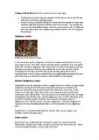
Forests Tropical and subtropical forests, also known as rainforests or tropical rainforests, are lavish and ample forests with broad leave tree. They are mostly found at lowlands near the equator - Asia, Africa, South & Central America and on many of the Pacific Islands. Almost 50% forests of the world are tropical and subtropical in nature. Rainforests are characterized by high rainfall. They are home to two-thirds of all the living animal and plant species on the planet. Tall, broad-leaved evergreen trees are the dominant plants, forming a leafy canopy over the forest floor. The undergrowth or understory in a rainforest generally consists of shade-tolerant shrubs, herbs, ferns, small trees and large woody vines. The temperature ranges from 5°C to 50°C. Human uses of tropical and subtropical forests:
Italian cuisine Ingredients and dishes vary by region. Many dishes that were once regional, however, have proliferated with variations across the country. Cheese and wine are a major part of the cuisine, with many variations and Denominazione di origine controllata (DOC) (regulated appellation) laws. Coffee, specifically espresso, has become important in Italian cuisine. Essential Italian herbs and spices in the Essential Italian food in the kitchen: kitchen: * Garlic * Olive oil * Prosciutto ham * Basil * Tomato * Rukola * Onions * Anchovy * Oregano * Capers * Rosemary * Artichoke
Afrikaner and British descent and their slaves and servants - this includes the cuisine of the Cape Malay people, which has many characteristics of Malaysia and Java, and recipes from neighbouring colonial cultures such as Portuguese Mozambique. Indigenous cookery traditional South African cuisine In the precolonial period, indigenous cuisine was characterized by the use of a very wide range of fruits, nuts, bulbs, leaves and other products gathered from wild plants and by the hunting of wild game. The domestication of cattle in the region about two thousand years ago by Khoisan groups enabled the use of milk products and the availability of fresh meat. However, during the colonial period the seizure of communal land in South Africa restricted and discouraged traditional agriculture and wild harvesting, and reduced the extent of land available to black people. Decline of indigenous cookery
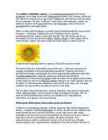
The sunflower (Helianthus annuus) is an annual(iga aastane) plant in the family Asteraceae, with a large flower head (inflorescence(õiekobar, õisik, õitseaeg, õidumine)). The stem(tüvi) of the flower can grow up to 3 metres tall, with the flower head reaching 30 cm in diameter. The term "sunflower" is also used to refer(nimetama, viitama, üle andma) to all plants of the genus(perekond, sugu) Helianthus, many of which are perennial(alaline, aastaringne) plants. What is usually called the flower is actually a head (formally(ametlikult) composite(liit-, komposiit- ; korvõieline, komposiit) flower) of numerous flowers (florets) crowded(täistuubitud, tunglev, rahvarohke) together. The outer flowers are the ray florets(pähik (õisiku osa) and can be yellow, maroon, orange, or other colors, and are sterile(steriilne, viljatu). The florets inside the circular head are called disc florets.
mead. At first our ancestors used wild bee's honey which was collected from their nests. Later, people started to keep bees in hives, as is the case today. Although the sugar arrived in Europe around 1100th year, it reached a wide use until 16th century. In the meantime had the privilege of the rich sugar used to flavor foods, as well as medication. Sugar cane comes from the Pacific Islands The first was to prepare the sugar cane (saccharum officinarum). Herb, which evolved into a cane, came from the Pacific Ocean from individual smaller islands, such as Polynesia and Melanesia. Experts have identified the origin of these herbs of 10 000 - 15 000 years ago, then. The original plant was on those from the smaller islands in Indonesia, India and
BASIL Sandra Pähklepa Horticulture 1. course Introduction • I have grown basil • Member of mint family • Belongs to the genus ocimum • The genus includes over sixty species of annuals Chemistry • Essential oils in the plant • Most basils contain methyl chavicol, eugenol and linalool • Methyl chavicol provides a sweet flavor Nutrition • Low in calories • No fat • Source of vitamin A • Also contains Calcium and smaller amounts of other vitamins Cultivation indoors • Growing indoors is challenging • Basil needs alot of water • As a tropical plant, basil requires plenty of heat and light • Good soil is sphagnum, perlite and wood chip mix • Cool white or warm white fluorescent tubes on a timer work best from light
History: · Indian society is predominantly agrarian. Diet consists mainly of fruits and vegetables, meat, cereals, dairy products and honey. Also, drinks containing different types of spices. · During the Gupta empire influenced by diet buduism and jainism. Many religious people were vegetarians. Most of the people consumed the chickens, sheep and goat meat. · Muslims also put emphasis on the development of food. Indians brought to the diet of dried fruit and flat bread. India introduced the dietary habits of the Portuguese and Chinese. · Indian diet is mixed with a variety of cultures. Etiquette: · Traditionally, meals were eaten while seated either on the floor or on very low stools or cushions. · Food is most often eaten without cutlery, instead using the right hand. Among the middle class throughout India, spoons and forks are commonplace.
vi Contents 12. Smoking 231 Zdzisław E. Sikorski and Edward Kol ´ akowski 13. Meat Packaging 247 Maurice G. O’Sullivan and Joseph P. Kerry 14. Novel Technologies for Microbial Spoilage Prevention 263 Oleksandr Tokarskyy and Douglas L. Marshall 15. Plant Cleaning and Sanitation 287 Stefania Quintavalla PART II. Products 299 16. Cooked Ham 301 Fidel Toldrá, Leticia Mora, and Mónica Flores 17. Cooked Sausages 313 Eero Puolanne 18. Bacon 327
Most of Dahab's Bedouin Women are excellent at making detailed beadwork necklaces and bracelets which are sold by their children in and around the town. 2. Bedouin Hospitally Bedouin people are excellent hosts and are well known for looking after guests and making them feel welcome. This is part of a tradition that has been passed down generation after generation. Firstly there is the famous bedouin tea, made from tea leaf with sugar, and desert herbs of habuck and marmaraya. This gives it a distinctive flavour.It is customary as soon as a guest arrives to get the tea on the fire, whilst sharing stories and news. The second part of the hospitality always involves food, Bedouin people will always make sure their guest are well refreshed with tea, water and traditional bedouin food. This includes delicious bedouin bread cooked on an open fire, rice and either a meat, fish or vegetable dish. The cooking is always
......................................................................................27 SOLAR ENERGY..............................................................................................................27 8.1 Photovoltaic energy...................................................................................................... 28 8.2 Solar thermal heat.......................................................................................................29 8.3 Solar thermal power plants......................................................................................... 30 8.4 Solar energy and the environment..............................................................................30 WIND ENERGY.................................................................................................................31 9.1 The History of Wind ..................................................................................................31 9.2 How wind machines work...
e) There was a wonderful smell of …. bread in the j) That was fantastic. Could I have a second …., kitchen. please? A) cooking B) roasting C) baking D) grilling A) plate B) course C) helping D) service Task 4. Decide which answer (A, B, C or D) best fits each space. Chickpea soup This recipe is both (1) B. and cheap. If you use dried chickpeas, (2) them for at least twelve hours in cold water. Drain them and put them in a large (3) with plenty of water. Bring them to the boil, and then let them simmer gently (4) the chickpeas are soft. I find it easier to use (5) chickpeas, which are already cooked. This (6) time, and also guarantees that the chickpeas will be soft, since it can take hours of boiling before they (7) Two small 450 gram cans are usually (8) Strain the chickpeas, but keep some of the liquid for the soup
domestic livestock. As a result much of the world's savannas have undergone change as a result of grazing by sheep, goats and cattle, ranging from changes in pasture composition to woody weed encroachment. The removal of grass by grazing affects the woody plant component of woodland systems in two major ways. Grasses compete with woody plants for water in the topsoil and removal by grazing reduces this competitive effect, potentially boosting tree growth. In addition to this effect the removal of fuel reduces both the intensity and the frequency of fires which may control woody plant species. Grazing animals can have a more direct effect on woody plants by the browsing of palatable woody species. There is
Pine forests (9/10) are the predominant type of stands, the area covered with birch and spruce forests is smaller. Männimetsad (9/10) on domineeriv (valdav) metsatüüp (puistutüüp), see ala, mis on kaetud kase ja kuuse metsadega on väiksem. The forest is sparse ( the average degree of stocking is 0,6) and of low productivity (quality class (IV) V ...Va). Mets on hõre (keskmine täius on 0,6) ja madala tootlikkusega (boniteediklass (IV) V..Va). The typical plants in undergrowth are junipers ; in ground vegetation: blue moor grass, blood-red geranium, bearberry, stemless thistle, mountain sedge etc. The moss layer is fragmentary. Tüüpilised alusmetsa taimed on kadakad; alustaimestikus: 1 lubikas, verev kurereha, leesikas, varretu keelikrohi, metstarn jne. Samblarinne on katkendlik. The small reed (Calamagrostis) alvar site type is widespread on thin (10 ...30
for 40 days after the plague victim had either died or recovered. Guards were set to stop people breaking out of the locked houses. (All Info About London's homepage: http://london.allinfo-about.com/features/plague.html) Thousands of Londoners lived on boats on the River Thames during the height of the plague and many of these survived. (All Info About London's homepage: http://london.allinfo- about.com/features/plague.html) 3.2 Bring out your dead A picture of removing corpses from the city can be seen on page 15 (Appendix 3) The city was full of dead bodies. To solve the problem men who wore black robes were sent to the town. They used horse carts to carry the corpses out of the city to the pits. One man walked on the streets and jingled his bell and yelled: ,,Bring out your dead!" People then carried the corpses out of their homes on the streets and men who were dressed in robes threw them on to the carrier and removed them from the city streets
British Cuisine Some people criticize English food. They say it's unimaginable, boring, tasteless, it's chips with everything and totally overcooked vegetables. The basic ingredients, when fresh, are so full of flavour that British haven't had to invent sauces to disguise their natural taste. What can compare with fresh pees or new potatoes just boiled and served with butter? Why drown spring lamb in wine or cream and spices, when with just one or two herbs it is absolutely delicious? If you ask foreigners to name some typically English dishes, they will probably say "Fish and chips" then stop. It is disappointing, but true that, there is no tradition in England of eating in restaurants, because the food doesn't lend itself to such preparation. English cooking is found at home. So it is difficult to a good English restaurant with a reasonable prices.
The network of artesian wells provides cattle with water. Natural zones The wet forests also called the rainforests occupy the narrow coastal region in the east. In the west they give place to grasslands with some trees called savannas. Farther west the trees disappear and the savannas give place to the bushlands. The real desert occupies the centre of the Western Plateau. In the very southwest there are thin forests of evergreen trees. Plants A rich variety of plant can be found in the natural landscapes of Australia. A lot of species can be found in wet tropical forests in the north and in temperate rainforests in the south. The biggest family of the native plants is the myrties. They include more than 500 species of eucalyptus, or gum trees. Only the big river red gum is seen everywhere. These can be found beside rivers and dry riverbeds. Some gum trees are valuable timber species and have been cut down for many years
..........................................................................................................3 Geographical Position.....................................................................................................3 Relief...............................................................................................................................4 Climate & Time Zones....................................................................................................5 Plants...............................................................................................................................5 Animals...........................................................................................................................6 Population.......................................................................................................................6 The Native Australians..............................................................................
middle latitudes typically have between 25 cm and 50 cm of precipitation a year. Much of this falls as snow, serving as reservoir of moisture for the beginning of the growing season. Warm to hot summers are experienced, depending on latitude. In the winter, grassland temperatures can be as low as -40° C, and in the summer it can be as high 20° C. There are two real seasons: a growing season and a dormant season. The growing season is when there is no frost and plants can grow (which lasts from 100 to 175 days). During the dormant (not growing) season nothing can grow because it's too cold. Taiga- Long, cold winters, and short, mild, wet summers are typical of this region. In the winter, chilly winds from the arctic cause bitterly cold weather in the taiga. The length of day also varies with the seasons in the taiga. Winter days are short, while summer days are long. The average temperature is below freezing for six months out of the year
3 Narcotics Narcotics are dangerous and illegal. Narcotics also known as drugs have several forms. You can consume drugs in a shape of a pill, by injecting it with a needle, smoking it and even baking it into a food and then eating it. Let's focus on five drugs marijuana, ecstasy, heroin, mushrooms and LSD. 1. Marijuana Marijuana is a green and brown mix of dried flowers, stems, seeds and leaves from the hemp plant Cannabis sativa. The main active chemical is THC (tretrahydrocannabinol), which moves quickly through the bloodstream to the brain and other organs throughout the body. Marijuana is a mild hallucinogen that can also act as a depressant or a stimulant. Many people think that it's a plant, so it's natural, and natural is always good-right? Think again, because
The animals adapt to the climate by hibernating in the winter and living off the land in the other three seasons. DesertDeserts cover about one fifth of the Earth's land surface. Deserts temperature ranges from 20 to 25° C. The extreme maximum temperature ranges from 43.5 to 49°. Hot and Dry Deserts usually have very little rainfall and concentrated rainfall in short periods between long rainless periods. Most Hot and Dry Deserts don't have very many plants. The only animals they have that can survive have the ability to burrow under ground. They only come out in the night when it is a little cooler. SavannaA savanna is a rolling grassland scattered with shrubs and isolated trees, which can be found between a tropical rainforest and desert biome. Savannas are also known as tropical grasslands. Savannas have warm temperature year round. There are two very different seasons in a savanna; a very long dry season(winter) and a very wet season
3% Not stated, 21.3% None · Demonym: Jamaican · Jamaica is a parliamentary democracy and constitutional monarchy, with Queen Elizabeth II serving as the Jamaican monarch · Independence from the United Kingdom, Granted 6 August 1962 · Currency: Jamaican dollar (JMD) · Jamaica is divided into 14 parishes, which are grouped into three historic counties that have no administrative relevance. · Jamaica's climate is tropical, supporting diverse ecosystems with a wealth of plants and animals. · Areas of heavy rainfall contain stands of bamboo, ferns, ebony, mahogany, and rosewood. · Cactus and similar dry-area plants are found along the south and southwest coastal area. Parts of the west and southwest consist of large grasslands, with scattered stands of trees. The Jamaican animal life- typical of the Caribbean, includes a highly diversified bird life. Parrots, hummingbirds,cuckoos, and green todies provide examples. Other birds are
PRAISE FOR The 4-Hour Workweek "This is a whole new ball game. Highly recommended." --Dr. Stewart D. Friedman, adviser to Jack Welch and former director of the Work/Life Integration Program at the Wharton School, University of Pennsylvania "It's about time this book was written. It is a long-overdue manifesto for the mobile lifestyle, and Tim Ferriss is the ideal ambassador. This will be huge." --Jack Can eld, cocreator of Chicken Soup for the Soul®, 100+ million copies sold "Stunning and amazing. From mini-retirements to outsourcing your life, it's all here. Whether you're a wage slave or a Fortune 500 CEO, this book will change your life!" --Phil Town, New York Times bestselling author of Rule #1 "The 4-Hour Workweek is a new way of solving a very old problem: just how can we work to live and prevent our lives from being all about work? A world of in nite options awaits those who would read this book an
Scientists think the reason is that nicotine hurts blood vessels to the brain, and also blocks air from the lungs. Whatever the reason, teen smokers are more likely to have panic attacks, anxiety disorders, and depression. Illegal Drugs When people talk about the "drug problem," they usually mean abusing legal drugs or using illegal drugs, such as marijuana, ecstasy, cocaine, LSD, crystal meth and heroin. Cocaine is a white powder that comes from the dried leaves of the coca plant that is found in South America. Crack cocaine is a form of the drug that gives a very quick, intense high. Crack is made by cooking cocaine powder with baking soda, then breaking it into small pieces called rocks. It got its name because it crackles when it is heated and smoked. Heroin comes from the opium poppy, a flower that grows in Asia, Mexico, and South America. Pure heroin is a white powder that tastes really bad. Some heroin is dark brown, and
children as well as adults. Estonians are also proud of their vodka and other spirits, such as the herbal liquer Vana Tallinn. Two of Estonia's oldest breweries are A. Le Coq, founded in 1807, and Saku Brewery, founded in 1820. Other dairy products besides milk (Estonian: piim) include keefir and also hapupiim and pett, which are variations on the theme of buttermilk. Summer and Spring Traditionally in summer and spring, Estonians like to eat everything fresh - berries, herbs, vegetables and everything else that comes straight from the garden. Hunting and fishing were common in the history. Nowadays, they have remained as popular pastimes. It is popular to barbecue in the summer. Winter and Christmas During winter jams, preserves and pickles are brought to the table. During the past, when the economy was largely agricultural, the gathering and conserving of fruits, mushrooms and vegetables for winter was essential
distinguished - successful and respected by many people District- an area of a town or country Draped- to put something made of cloth over or around something Draughts- a game for two people, played on a board with black and white squares using 24 round pieces. The American word is checkers Drill- a way of teaching people something by making them repeat it several times Ecological- relating to the environment and the way that plants, animals, and humans live together and affect each other Energy usage- Excavation- the process of digging in the ground to find things from the past Flannel coat- Forgery- the crime of making copies of valuable documents or works of art in order to make money by selling them Fowl- a bird that is kept on a farm for its eggs and meat, for example a chicken or a duck Fully-equipped- Fully-furnished- Genuine- real, rather than pretended or false Glass front-
Table of contents 1. Introduction 2. History 2.1. Early Hospitals 2.2 Recent developments 3. The National Health Service 4. Diseases 5. First Aid 6. Medicine and elements of medical care 7. Doctors 8. Ways of keeping health 9. Conclusion 10.Used materials 1. Introduction The human body is just like a machine with many parts. Each part has a special job, and all the parts work together to keep you alive and healthy. Good health is one of the most important things in life. There are certain things we can do to stay healthy. We should eat a balanced diet that includes the right kinds of food and drink plenty of clean, fresh water. We should exercise regularly, strengthening our muscles and keeping us in shape. Exercise helps the blood circulate around our bodies, cleaning out waste and supplying plenty of oxygen. It is also important what we get enough sleep. The number of hours we sleep we need depend on our age. Young babies sleep for 20-22 hours
2013): 1. Bacteria a) Heterotrophic bacteria, eg. symbiotic and non - symbiotic N2 fixers, ammonifier, cellulose decomposers, denitrifiers b) Autrotrophic bacteria, eg. nitrosomonas, nitrobacter, sulphur oxidizers, etc; 2. Fungus; 3. Viruses 4. Actinomycetes and stretomyces; 5. Algae eg. BGA, yellow gree algae, golden brown algae. The soil microflora largely depends on the type of soil, temperature, moisture, plant growth, nutrients, pH, and many other factors which may vary between locations but also within a single plot and over very small distances (OECD, 2007). Nevertheless of the quantity of microflora, biomass of all microorganisms living in soil play an important role in the functioning of entire soil ecosystems because their enormous biochemical activity (Barabasz et al. 2002). Soil microflora cycles carbon, nitrogen, phosphorus, and sulfur, plays a role in soil structure
All utility-scale reactors heat water to produce steam, which is then converted into mechanical work for the purpose of generating electricity or propulsion. In 2007, 14% of the world's electricity came from nuclear power. More than 150 nuclear-powered naval vessels have been built, and a few radioisotope rockets have been produced. Nuclear life cycle The Nuclear Fuel Cycle begins when uranium is mined, enriched, and manufactured into nuclear fuel, which is delivered to a nuclear power plant. After usage in the power plant, the spent fuel is delivered to a reprocessing plant or to a final repository for geological disposition. In reprocessing 95% of spent fuel can be recycled to be returned to usage in a power plant. What is nuclear energy? Nuclear energy was first discovered by French physicist Henri Becquerel in 1896, when he found that photographic plates stored in the dark near uranium were blackened like X-ray plates, which
It is also good for our health to drink a few glasses of fresh water every day. To prevent diseases we should also have regular check-ups with the doctor and the dentist. History Human beings have suffered from diseases since they first appeared on Earth. Because of that medicines history is as old as human beings, meaning about 2.5 million years. First medicine was mainly based on superstition and guesswork, because people knew very little about humans body. Plants were very much used, because they were easy to get and they could treat very well. Still the origin of healing dates back to the birth of first civilisations. About 3000 B.C. the Egyptians began making some important process in medicine. The Egyptian god of healing Imhotep was actually one of the first physician of the world. At 2500 B.C. Egyptian physicians started to specialize. Some of them specialized in internal diseases, some of them treated the diseases of eyes and teeth
..................18 The Chelsea Flower Show Gala Dinner...................................................................18 The first day - by invitation only..............................................................................18 Two Days for Members Only...................................................................................18 Two Days for the public...........................................................................................18 The Chelsea Plant Sell-Off.......................................................................................18 Judgment Days.............................................................................................................20 .....................................................................................................................................21 Facts about Chelsea Flower Show................................................................................22 Putting on the Show...
In most of the countries where biogas is produced, the excreta of the cattle and other farm animals are used. In India gobar or cow dung is used for the purpose of making biogas. 20% of the excreta of animals are made up of dust particles that are inorganic in nature. The percentage of the inorganic dust particles is brought down by combining water with the excreta in a 1:1 ratio. The rate of feeding of any biogas manufacturing plant that is based on dung is 3,500 kilograms per day. Under normal circumstances the microbial content of the biogas is maintained by the addition of 2% of the expended slurry of the slurry of the fresh dung. 1% calcium ammonium nitrate of the dung is combined with the slurry in such cases. At times waste of kitchens and excrement of human bodies is used in these processes. The human excreta are supposed to occupy, at the most, 3% of the slurry.
density rural areas which results in spreading of city over more and more rural land. Urban sprawl results in land degradation, increased traffic, environmental issues and health issues. FIND OUT 5 WAYS HOW TO FIX URBAN SPRAWL. 10. Genetic Engineering: Genetic modification of food using biotechnology is called genetic engineering. Genetic modification of food results in increased toxins and diseases as genes from an allergic plant can transfer to target plant. Genetically modified crops can cause serious environmental problems as an engineered gene may prove toxic to wildlife. Another drawback is that increased use of toxins to make insect resistant plant can cause resultant organisms to become resistant to antibiotics. FIND OUT 5 REASONS TO AVOID GM FOOD. If humans continue moving forward in such a harmful way towards the future, then there will be no future to consider
 annaabi.ee