Leidsid 33 sarnast õppematerjali, mis on seotud failiga "SISSEJUHATUS ITSSE". Need materjalid aitavad sul teemat sügavamalt mõista.
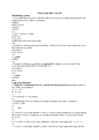
program, first, programme, java, process, work, develop, transistor, language, processor, rate, arch, internet, soft, programmeerimiskeel, loogik, found, sign, digit, corp, asutaja, javascript, loogika, base, developed, user, apple, create, prolog, microsoft, matemaatik, lambda, turing, disk, digital, circuit, computers, chip, based, server, filosoofAristoteles (470-399 e.m.a) : väidete struktuur kui iseseisev uurimisobjekt 1967- IBM builds the first floppy disk Süllogism (Aristoteles): 1967 - Seymour Papert designed LOGO as a computer language for children. 1. eeldus: iga x on y. 1968 - Robert Noyce and Gordon Moore found Intel Corporation 2. eeldus: mõni z on x. 1968 - Douglas C. Engelbart, of the Stanford Research Institute, demonstrates
Sissejuhatus infotehnoloogiasse 1. Loeng Algoritm on täpne samm-sammuline, kuid mitte tingimata formaalne juhend millegi tegemiseks. Näited: a. Toiduretsept. b. Juhend ruutvõrrandi lahendamiseks Algoritmiline probleem - probleem, mille lahenduse saab kirja panna täidetavate juhendite loeteluna. Programm on formaalses, üheselt mõistetavas keeles kirja pandud algoritm. Arvutid suudavad täita ainult programme. Analoogsüsteem andmeid salvestatakse (peegeldatakse) proportsionaalselt Näit: termomeeter, vinüülplaat, foto Digitaalsüsteem (pidevad) andmed lõhutakse üksikuteks tükkideks, mis salvestatakse eraldi Näit: CD, arvutiprogramm, kiri tähtede ja bittidena Ühelt teisele: digitaliseerimine The three major comparisons of computers are: Electronic computers versus Mechanical computers
1616-11 I6 Leibniz Lcibnizi anlrli(167 l)liiris. lrhuras. kormtas_ .jagas nUgaVaID: Usp, Ada, ML, Java, Python I VSimaldada kasutajal aryutis ohtmoodi ja harjumusparasell tegutseda, s6ltumatuli 6ellest. mis Kompilerimirer masinkoodis programm nimega kompilaator programmid lal arvutis on. I 7 1.1 Kir.itrtusnilsin. Hcnn, Mill.
Mõtestatud tekst koosneb kas (a) loogika ja matemaatika formaalsetest väidetest või (b) konkreetsete teadusharude fakte esitavatest lausetest. Igasugusel fakti esitaval väitel on sisu ainult siis, kui on võimalik öelda, kuidas selle väite kehtivust kontrollida. Metafüüsilised väited, mis ei lange punktide 1 ja 2 alla, on sisutud. Kõik moraali, esteetikat ja religiooni käsitlevad väited on mittekontrollitavad ja mõttetud. 1945 Konrad Zuse began work on Plankalkul (plan Calculus). The first algorithmic programming language, with an aim of creating the theoretical preconditions for the formulation of problems of a general nature. John von Neumann wrote "First Draft of a Report on the EDVAC." Grace Hopper recorded the first actual computer "bug." 1946 In February, the public got its first glimpse of the ENIAC, a machine built by John Mauchly and J. Presper Eckert that improved by 1,000 times on the speed of its contemporaries.
programm, mille tehnoloogia põhines vaakumtorudel 1950 ERA esimene avalikult esitletud arvuti 1951 UNIVAC I esimene arvuti, mis võitis avalikkuse tähelepanu 1962 võidab esimest korda programm inimest kabemängus. 1952 Heinz Nixdorf asutas Nixdorf Computer corp. Saksamaal hiljem 1990 ühines Siemensiga 1953 esimene elektrooniline arvuti 701 1954 Texas Instruments teatab silikoon transistorite tootmisest Logic Theorist is a computer program written in 1955 and 1956 by Allen Newell, Herbert Simon and J. C. Shaw.Newell, Simon and Shaw went on to construct the General Problem Solver, or GPS. The first version of GPS ran in 1957 1955 William Shockley leiutab Shockley pooljuhi 1956 IBM leiutab esimese kõvaketta RAMAC 305 5 MB 1956 valmib esimene transistorpõhine arvuti 1957 Fortran (Formula Translator) 1960 IBM avab masstootmishoone; AT&T esimene avalikult müüdav modem; COBOL üks vanimatest
Herman Hollerith perfokaartidega masin USA rahvaloenduse andmete töötlemiseks 1890, sellest firmast tekkis IBM Vaakumtoru - 1906, Lee Deforest Artikkel Turingi masinast: universaalsus, mittelahenduvus 1935-1937 Churchi lambda-arvutus, Churchi tees. - 1936,universaalsus, mittelahenduvus Z1 1936 , Konrad Zuse mehhaaniline arvuti MARK I 1939-1944, Harvardi elektriline(releedega) digitaalne arvuti ABC computer 1939-1942 , Atanasoff-Berry esimene elektronarvuti Esimene transistor - 1947 EDSAC 1949, esimene praktiline stored-program arvuti, programmid olid aukudega peberiribadel ERA 1101 1950 ESIMENE KOMMERTS-TOOTMISES ARVUTI, hoidis bitte magneetilises trumlis, lõpuks suutsid kuni 4000 sõna hoida UNIVAC I 1951 Esimene kommerts-tootmises arvutis, mis äratas suurt tähelepanu, 46 masinat müüdi, 1 million dollarit tükk, Remington Rand tootis Prinz´s chess program -1951 Stratchey checkers program 1952
A... AA Auto Answer AAA Authentication, Authorization and Accounting AAB All-to-All Broadcast AAC Advanced Audio Coding AACS Advanced Access Control System AAL Asynchronous Transfer Mode Adaption Layer AAM Automatic Acoustic Management AAP Applications Access Point [DEC] AARP AppleTalk Address Resolution Protocol AAS All-to-All Scatter AASP ASCII Asynchronous Support Package AAT Average Access Time AATP Authorized Academic Training Program [Microsoft] .ABA Address Book Archive (file name extension) [Palm] ABAP Advanced Business Application Programming [SAP] ABC * Atanasoff-Berry Computer (First digital calculating machine that used vacuum tubes) ABEND Abnormal End ABI Application Binary Interface ABIOS Advanced BIOS ABIST Automatic Built-In Self-Test [IBM] ABLE Adaptive Battery Life Extender + Agent Building and Learning Environment [IBM] ABM Asynchronous Balanced Mode ABR Available Bit Rate
Bit Eksam/ EksamBitt 1 or 0 Byte Eksam/ EksamBait 8 Bits Kilobait Eksam(KB) 1 024 Bytes Megabait Eksam(MB) 1 024 KB kuidas Eksamtähti Eksamkodeeritakse: ASCII (American Standard Code for Information Interchain) 8bit = 16 * 8 = 128 märki EBCDIC (Extended Binary Coded Decimal Interchange Code) 8bit, IBM UNICODE (Extended ASCII) (utf-8), 1Byte for first 128, up to 4B for the rest~143 859 märki algoritm Eksam- Eksamtäpne samm-sammuline juhend millegi tegemiseks programm Eksam- Eksamformaalses üheselt mõistetavas keeles kirja pandud algoritm Ajaloost: Kreeka Eksamloogikud Parmenides (5 sajand e.m.a.) : kasutas pikki loogilisi põhjendusi. Zenon EksamEleast (5 sajand e.m.a.) -apooriad/paradoksid Sofistid -Sokrates (470-399 e.m.a) -Platon (428/427 -348/347 e.m.a)
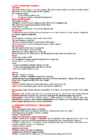
ARVUTI EHITUS AJALUGU XX sajand enne II maailmasõda II maailmasõda Ja edasi .... Elektroonika ja arvuti Elektroonika areng peale sõda Releearvuti Mark I XX sajand elektronarvuti sünd ARVUTITE KOLM PÕLVKANDA II. Põlvkond transistor arvutid I. põlvkond lamparvutid III. Põlvkond integraalskeemidel põhinevad arvutid Tarkvara areng koos põlvkondadega I Jäiga ühe programmi täitmisega II multitöö ja katkestused, programmeerimiskeeled III OS keerukad programmeerimiskeeled ja andmebaasid IBM 701 1952 1958 Invention of the IC by Jack Kilbyat Texas Instruments IBM 360-40 1964 First microprocessor: Intel 4004 1971 The first commercial 4-bit microprocessor 4004:
1625 - Schickard väitis,et tegi I liitev, lahutav, korrutav, 1978 – VAX11/780 , inteli 8086 mikropr;Raamat ”C 4.sumto ja c näited:1. eeldus: iga koer on imetaja.2. eeldus: jagav masin. programming language”. C (ja C++ ja Java ja C#) mõned neljajalgsed on koerad.järeldus: mõned neljajalgsed on imetajad. 1. eeldus: iga anarhist on
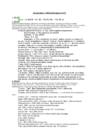
1889-1951Ludwig Wittgenstein. 1938, Shannon'i magistritöö sidus: Boole algebra. Elektrilülitid ja -skeemid. Bitid ja info kodeerimise. Info otsimise algoritmid.1939-1942 Atanasoff. esimene elektronarvuti?1939-44 Mark I (Aiken) IBMi elektriline(releed)digitaalne arvuti(5t).1941-1944:Konrad Zuse. Z3, Z4. Releedega digitaalarvuti.1948 I transistor(Shockley)- müüma hakkas Bell Corp.1949 - Maurice Wilkes koostas EDSAC, the first practical stored-program computer, at Cambridge University.1950 ERA 1101(I kommerts comp);ALGOL 58/60: Hoare, Perlis, Dijkstra, Kurtz, ..., Kotli;BCPL derivative of ALGOL (Strachey);B simplified derivative of BCPL (Ken Thompson);C derivative of B (Dennis & Ritchie).1952 - Nixdorf Computer Corp, liitus 1990 Siemensiga. 1953 - IBMi first electronic computer, the 701, Speedcoding: John Backus. 1956 - IBM develops the first hard disk, the RAMAC 305(math 5mb).
3.Seostab kõik protsessid, pandud algoritm. Arvutid suudavad täita ainult failid jm omanikuga ja piirab protsesside 1837 Morse elektritelegraaf. 1990 TBL browser NeXTil,HTML ja www, programme..Analoogsüsteem - andmeid pöördumise failide/ressursside poole vastavalt salvestatakse (peegeldatakse) proportsionaalselt pääsu- ja kasutusõigustele. (berners-lee) avalikuks 1991, Windows 3
Most modern PCs also come with external cache memory, called Level 2 (L2) caches. These caches sit between the CPU and the DRAM. Like L1 caches, L2 caches are composed of SRAM but they are much larger. Disk caching works under the same principle as memory caching, but instead of using high- speed SRAM, a disk cache uses conventional main memory. The most recently accessed data from the disk (as well as adjacent sectors) is stored in a memory buffer. When a program needs to access data from the disk, it first checks the disk cache to see if the data is there. Disk caching can dramatically improve the performance of applications, because accessing a byte of data in RAM can be thousands of times faster than accessing a byte on a hard disk. When data is found in the cache, it is called a cache hit, and the effectiveness of a cache is judged by its hit rate. Many cache systems use a technique known as smart caching, in which
kangasteljed, Babbage, Hollerith, colossus ja saksa krüptomasinad, Turing, Shannon, Zuse, esimesed programmeeritavad arvutid. Algoritm – täpne samm-sammuline, kuid mitte tingimata formaalne juhend millegi tegemiseks. Nt toiduretsept, juhend ruutvõrrandi lahendamiseks. Programm – formaalses, üheselt mõistetavas keeles kirja pandud algoritm. Arvutid suudavad täita ainult programme. Bitt – info mõõtmise ühik, tuleb mõistest binary digit – nö kahendarv kahe võimaliku väärtusega 0 ja 1. Saab näidata kahte võimalikku olekut. Nibble - 4 bitti. Bait – arvutites kasutatav infoühik, mis sisaldab 8 järjestatud bitti, kõige levinum infohulga mõõtühik. Tähistatakse B. Kilobait, megabait, gigabait, terabait, petabait(inimmälu hulk), eksabait, zettabait, jottabait. Kõik on eelnevast 210 korda suuremad. St 1 MB = 1024 kB
Games Programming with Java and Java 3D Andrew Davison Dept. of Computer Engineering Prince of Songkla University HatYai, Songkhla 90112 E-mail: [email protected] Draft: 14th January 2003, #2 Abstract This article looks at the advantages and disadvantages of using Java and Java 3D for games programming. It assumes the reader is familiar with Java, but presents short overviews of gaming, the low-level APIs OpenGL and DirectX, and Java 3D. No programming examples are included here, although links to online code are supplied. 1. Background to Gaming Giving a definition for `computer game' is problematic, due to the wide range of game types. For example, the ArcadePod site (http://www.arcadePod.com) divides its
provide enterprise resource planning (ERP), customer relationship management (CRM), supply chain management (SCM), tax accounting, and general accounting for the small and medium-size enterprise. - Kõigile kättesaadav populaarne tarkvara, mis võimaldab luua ettevõtte ressurssi plaane, klientide suhete haldamist, varustuse haldamist, maksude üleskirjutamist ja muid võimalusi keskmisele ettevõttele. Concurrent Versions System (CVS) – Concurrent Versions System (CVS) is a program that lets a code developer save and retrieve different development versions of source code . - Programm, mis võimaldab koodikirjutajal salvestada ja saada erinevaid arendus versioone põhikoodist. CoreOS Linux – CoreOS Linux is an open source operating system (OS) that provides the functionality required to deploy and manage applications within software containers. Based on the Linux kernel. - Kõigile kättesaadav operatsioonisüsteem, mis võimaldab hallata tarkvararakendusi
Fax: 781-904-2620 For information on all Newnes publications available, contact our World Wide Web home page at: http://www.newnespress.com 10 9 8 7 6 5 4 3 2 1 Printed in the United States of America Contents Preface ix Introduction xi 1 System Design 1 Dynamic Range 1 Calibration 2 Bandwidth 5 Processor Throughput 6 Avoiding Excess Speed 7 Other System Considerations 8 Sample Rate and Aliasing 11 2 Digital-to-Analog Converters 13 Analog-to-Digital Converters 15 Types of ADCs 17 Sample and Hold 26 Real Parts 29 Microprocessor Interfacing 30 Serial Interfaces 36 Multichannel ADCs 41 Internal Microcontroller ADCs 41 Codecs 42 Interrupt Rate 43 Dual-Function Pins on Microcontrollers 43 Design Checklist 45
Protocol Suite (TCP/IP) to serve billions of users worldwide. It is a network of networks that consists of millions of private, public, academic, business, and government networks, of local to global scope, that are linked by a broad array of electronic, wireless and optical networking technologies. History of the Internet 1957:The United States Department of Defense formed a small agency called ARPA (Advanced Research Projects Agency) to develop military science and technology. 1961-1965:The Massachusetts Institute of Technology (MIT) started to research sharing information in small, phone-linked networks. ARPA is one of their main sponsors. 1966: The first ARPANET plan is unveiled by Larry Roberts of MIT. Packet switching technology is getting off the ground, and small university networks are beginning to be developed.
otherwise. == 7. (A and B) or ((not A) and (not B)) == 8. You have two strings stored in variables S1 and S2. Both strings are stored in ASCII format and contain 8 bits per character and 20 characters per string. Write pseudocode that will compare the strings without case sensitivity and return a Boolean result in variable Y indicating whether the strings match or not. == 8. Y = true for i from 1 to 20 for j from 1 to 8, excluding 3 // first bit is spared (omitted) and the second (third) bit for upper bitindex = j + (i-1)*8 if S1[bitindex] ≠ S2[bitindex] Y = false Exit loop end end end == CPU architecture 9. Suppose a microprocessor adds the numbers shown below respectively. In each instance explain the influence of the computation on the flag register in terms of each of the flag bits Z, N, C, and V. Assume the processor can handle 8-bit binary values using a two’s compliment representation. a) 60 + 80 b) 60 – 80 ==
.....................................................................................................8-9 Conclusion.........................................................................................................................10 2 Introduction This chapter documents the advent and rise of automated essay scoring (AES) as a means of both assessment and instruction. The first section discusses what AES is, how it works, and who the major purveyors of the technology are. The second section describes outgrowths of the technology as it applies to on-going projects in measurement and education. In 1973, the late Ellis Page and colleagues at the University of Connecticut programmed the first successful automated essay scoring engine, "Project Essay Grade (PEG)" (1973). The technology was foretold some six years earlier in a landmark Phi
1. OBJECT-ORIENTED PARADIGM The Model •The model defines an abstract view to the problem. This implies that the model focuses only on problem related stuff and that you try to define properties of the problem. These properties include: 1 •the data which are affected and 2 •the operations which are identified by the problem. Object-oriented Paradigm •Everything is an object •A program is a bunch of objects telling each other what to do by sending messages •Each object has its own memory made up of other objects •Every object has a type •All objects of a particular type can receive the same messages Domain Model •A domain model does not represent the entire domain as it is in the real world. It includes only the concepts that are needed to support the application. Object •Is a partitioned area of memory where object code is stored •The area of memory is protected
info kodeerimine, Info otsimise algoritmid Zuse: 1940, programmeeritavad arvutid Turvateater: näiliselt millegi turvaliseks tegemine kuid tegelikult ei aita see midagi Malware: tarkvara mis kahjustab arvutit vms Cookie: info veebis mis salvestatakse inimese arvutile Phishing: passwordide ja isiklike andmete välja petmine Social engineering: psühholoogiliselt inimese mõjutamine et ta salastatud infot väljastaks 3. Nädal. Eksamiks: transistor, Samuel, Shockley semiconductor, Fortran, Fairchild, Sage, Texas instruments, integraalskeem, cobol, lisp, pdp-1, system 360, moore's law, intel, amd, Engelbart, Unix, esimene mikroprotsessor. E-riigist: mis on xtee, selle keskus, inimeste identiteedi haldamine, Transisor: 1947, Bell Telephone Laboratories, William Shockley Samuel: 1952, esimene AI programm(kabe) Shockley semiconductor: 1955, William Shockley -----> Fairchild Semiconductors 1957
autoritasu. Kuigi tehniliselt kasutavad kõik Office'i rakendused nüüd sama ISO- standardi vormi, uute kasutajate mugavuse jaoks otsustati kasutada eraldi nimesid erinevates rakendustes - just nagu neid kasutatakse. Neid on näha faililaienduses: Odt (text) .ods (for spreadsheets), .odp (for presentations) ja nii edasi. (Umbes OpenDocument Format. OpenDocument Format 2014) With ODF the way you store documents does not determine the software you work with. Files in the OpenDocument Format (ODF) are platform independent and do not rely on any specific piece of software whatsoever. Every software maker can implement without having to pay royalties. Although technically behind the scenes all Office applications now use the same ISOstandardized format, for the convenience of new users is was chosen to use separate names for the different applications just like they are used to. You recognize these by their "extensions": .odt (text)
Õpperühm: IATM Matrikli nr: 050829 Õppejõud: Avo Ots Tallinn 2008 Author's word This project is written to show some interesting aspects of working with VoIP (Voice over Internet Protocol) service. The project briefly describes the process of finding a solution for based VoIP problem and its realization. -2- Contents Introduction .............................................................................................................................. - 4 - Mission....................................................................................................................................... - 5 - Solution..............................................................
There are two manuals describing the setup and operation of the CPM1A: the CPM1A Operation Manual (this manual) and the CPM1/CPM1A/CPM2A/ CPM2C/SRM1(-V2) Programming Manual (W353). This manual describes the system configuration and installation of the CPM1A and provides a basic explanation of operating procedures for the Programming Consoles. It also introduces the capabilities of the SYSMAC Support Software (SSS). Read this manual first to acquaint yourself with the CPM1A. The CPM1/CPM1A/CPM2A/CPM2C/SRM1(-V2) Programming Manual (W353) provides detailed descriptions of the CPM1A’s programming functions. The SYSMAC Support Software Operation Manu- als: Basics and C-series PCs (W247 and W248) provide descriptions of SSS operations for the CPM1A and other SYSMAC C-series PCs. The SYSMAC-CPT Support Software Quick Start Guide (W332) and
Abstract How are 3D and BIM Changing the Design, Fabrication and Construction of Complex Steel Structures? The adoption of three-dimensional (3D) design and construction tools have created a remarkable shift in the building industry. Intelligent 3D technology in the form of Building Information Modeling (BIM) not only promises to improve the notoriously inefficient construction process, but also opens the door for designing new geometric shapes, which until recently have been considered unbuildable. Steel has been extensively used to build some of the most challenging architectural icons of the 21st century, due to its low weight and high strength in both compression and tension. Therefore, the steel design and construction industry has been on the forefront of technical innovation. The purpose of this study is to determine how 3D and BIM are changing the design,
Winchester, floppydrive, laptop Larry Ellison, Bob Miner, Ed Oates – 1977 Oracle. Oracle Database. GNU: GNU Hurd, Linux,FreeBSD, NetBSD, OpenBSD GNU-tasuta, UNIX-tasuline, kommertsiline. Rekursia – funktsioon viidab iseendale. Intelligentne agent – programm, mis otsib nettis huvipakkuvaid materjale arvutikasutajale. Internet Eestis – 1990 Commodore PET – 1977, 8bit Mosaic Communications Corporation - 1994 Schickard - 1623 mehhaaniline kalkulaator William Shockley - 1947 transistor GPL – GNU kontendi kasutamine vabalt DEC- PDP-8 - 1965 esimene kommertsiline edukas miniarvuti minimax algorithm - valib välja kõige minimaalse ja kasulikuma käigu mängus Ethernet on juhtmetega kohtvõrgu tehnoloogia, mis võimaldab andmevahetust kaadrite kujul kõikide kohtvõrku ühendatud seadmete vahel.
Good afternoon ladies and gentlemen. My name is Timo Kask and i’m going to give you an overview of apple inc. I’ve divided my talk into ??? parts. In the first part im going to talk about their history secondly i’ll talk about companys profile. finally i’ll talk about their subsidiaries, revenue and so on. My talk will take about five minutes and if u have any questions leave them to the end of my presentation. INTRODUCTIONApple Inc. is an American multinational corporation headquartered in Cupertino, California, that designs, develops, and sells consumer electronics, computer software, online services, and personal computers
......................................8 3.4. Projects..............................................................................................................................9 3.5. Outsourced Services .........................................................................................................9 3.6. Structure............................................................................................................................9 3.7. Management Process ......................................................................................................10 4. Development Program............................................................................................................10 4.1. Expenses .........................................................................................................................10 4.2. Outstanding Tasks and Projects ....................................................................
I grew up in Pittsburgh and went to college at Cornell, so I can answer for both. The weather is terrible, particularly in winter, and there's no interesting old city to make up for it, as there is in Boston. Rich people don't want to live in Pittsburgh or Ithaca. So while there are plenty of hackers who could start startups, there's no one to invest in them. Not Bureaucrats Do you really need the rich people? Wouldn't it work to have the government invest in the nerds? No, it would not. Startup investors are a distinct type of rich people. They tend to have a lot of experience themselves in the technology business. This helps them pick the right startups, and means they can supply advice and connections as well as money. And the fact that they have a personal stake in the outcome makes them really pay attention. Bureaucrats by their nature are the exact opposite sort of people from startup investors.
The 24 meg format is over the spec for AVCHD, and can only be burned to real BDR disks, or transcoded to a lower bitrate for recording on conventional DVD-R media with compatability with blu ray players. Most editing software these days will handle both HDV and AVCHD formats. When I have done side by side tests comparing my AVCHD camera to my HDV cameras, I am hard pressed to see any real difference. They are very good. When it comes to editing, the AVC format is moch more finicky to work with. If is it a single camera personal video, then I may shoot it on my flash memory camera just because it is convient. If I am shooting anything 2 camera, or any commercial shoots that I know I am going to need to edit, then I shoot HDV, and leave the AVC camera at home. Why? The editing process for HDV is no different than for shooting DV. I plug the player into my old tired work station, and fire up Adobe Premiere pro, and capture my clips no differently than working with DV. In the
How to Write a Design Report Summary A design report is the written record of the project and generally is the only record that lives once the design team disbands at the end of the project. The report has three sections. The first section describes the problem that was being solved and provides the background to the design. The second section describes the design and the third section evaluates how well the design worked by comparing its performance to the design requirements. The report starts with a short executive summary that contains a synopsis of the three sections. The body of the report is relatively short. Appendices to the
UNIVERSITY OF TARTU DEPARTMENT OF ENGLISH Using Blogs as a Platform in the Teaching of English as a Foreign Language Research paper Tartu 2010 ABSTRACT This work analyses the usefulness of blogging in teaching English as a foreign language. The definition of the term `blog' is provided along with the advantages and disadvantages of blogs' usage in practice. The analysis of language skills developed by students throughout the use of blogs for learning purposes is given in the paper with possible limitations that blogs have. Author of this paper also shares personal comments about the experience in the field. In this paper it is also described which research methods are planned to be employed for the conduction of research project. 2 ABSTRACT..............................
 annaabi.ee