Leidsid 33 sarnast õppematerjali, mis on seotud failiga "Robert Burns". Need materjalid aitavad sul teemat sügavamalt mõista.
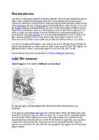
burns, poet, song, poetry, supper, scots, held, january, july, scotland, first, songs, other, night, celebration, death, nation, wrote, edition, traditional, tunes, year, around, came, although, there, since, broth, cottage, aged, perhaps, symbol, mount, handsome, partner, fields, harvest, work, dresser, earn, money, real, passion, children, them, 1786TOPIC 8 The greatest poet of Scotland Robert Burns is loved by all Scotsmen as their greatest poet. The future poet was fortunate in his father who was understanding, friendly and fearless man. So it was probably from him that the poet inherited his great love and undrestanding of people. From his mother he, too, learned something that was to be value to him. His mother often sang the old songs and ballads of the countryside. Although William Burns, Robert´s father, was a poor peasant, he was man who valued knowledge. His greatest wish was to give his children the best education in his power. It was from him where Robert received his love of books. When Robert was six he and his brother Gilbert went to school, but only after a few months the teacher left and the school was closed. Their father persuaded two or three neighburs to join him in engaging another teacher. The new teacher was called John Murdoch. Although he was only eighteen,
Population: 5, 055, 000 National emblem: the thistle Capital: Edinburgh National flower: the bluebell Islands: About 790 National instrument: bagpipes Lakes: the best- known is Loch Ness, famous for National dish: haggis Nessie, its mythical monster Scotland is also famous for: whisky, kilts and sheep · One of the four constituent nations which form the UK · They have their own money, system of law, history, stamps, deep- rooted customs, traditions and ancient language- Gaelic · Most people speak the Scottish dialect becoming endangered language · Weather unpredictable · Breathtaking scenery Scottish Industries · Traditional -coal mining, steel production, shipbuilding
The oldest game of football in England is probably the football match which takes place at Ashburn on Shrove Tuesday every year. The game starts in the centre of the town, and the distance between two goals is two miles. The only rule is not to use motorcycles, cars and lorries in the game. In 1958 one team buried the ball. The other team didn't know and ran after them. Later first team took the ball and won. 3) JAMES WATT He was born in the small port of Greenock on the river Clyde in Scotland in 1736. His father was a mathematical-instrument maker and also kept a shop to supply ships with goods for their voyages. James was a delicate boy and often suffered from headaches. That is why he could not go to school at the age when other children did. His mother taught him to read and his father taught him writing and arithmetic. He had very good memory and a natural love of work. He liked mathematics and was also fond of designing and making things. James was an observant and thoughtful
SCOTLAND 1. What is the capital of Scotland? The capital of Scotland is Edinburgh. 2. What is the population of Scotland? 2008 estimate is 5, 168, 500. 3. Why isn't S an independent country? Because it's part of the United Kingdom. 4. Did the Romans conquer Scotland? No, the Romans never conquered Scotland. 5. Why did they build Hadrian's wall? They built it to protect thei Empire south of the Scottish border. 6. When were S and England united? Why? Because there were many wars between them and in 1603 the Scottish kind James VI, became King of England and a century later they were united because of that. 7. Who's Robert Burns?' He's the national poet of Scotland. 8. When and how do Scottish celebrate Burns Night? (What do they do on that day?)
Scotland Scotland · Scotland is a country in the north of Great Britain. It is apart of the United Kingdom. Scotland is divided into three natural regions: the Southern Uplands, the Central Lowlands and the Highlands and islands. A lot of places in Scotland are a natural paradise, still untouched by man. Glasgow · Glasgow is the largest city in Scotland and the third largest in the United Kingdom. Before 1750 Glasgow was a small town. It had a cathedral and a university but it was not a rich town. After 1707 Scottish ships could go to the English colonies in America. Ships brought tobacco to Glasgow and took back Scottish goods. In 1776, the American colonies became independent and the tobacco trade stopped. Heavy industry began to develop. It used coal and iron from the Clyde valley.
Outstanding figures in British literature Eva Martina Põder 11.b British literature Refers to all literature produced by British authors from the United Kingdom, which includes England, Scotland, Northern Ireland, Wales, the Channel Islands, and Isle of Man Includes early works written in Gaelic, Welsh, and Latin, works in Old, Middle, and Modern English, each of which represents a different period Full of great works British works in Latin Venerable Bede He lived between 673 and 735 AD The greatest of all the AngloSaxon scholars He's the earliest English historian, whose work has shed light on a period of English history that would have otherwise been unknown
Scotland Scotland lies in the Atlantic Ocean. It's the northern part of Great Britain. The biggest cities of Scotland are Glasgow, Aberdeen and Edinburgh. Glasgow is the biggest of the cities. It was famous as a big industrial centre. Today it's famous for many theatres and art galleries. Scotland is known for its traditions, whisky, music and special food, which all are great attractions for tourists. Scotland's landscape is very attractive. There are wild mountains, heather moors and deep lakes called lochs in the northern part of Scotland. Some people believe that there is a big strange monster in Loch Ness. It's called the Loch Ness monster. Some people say that they have seen it. Tourists come there to see the monster every year but the monster doesn't show itself
He married with Susan De Lancy and got 5 children. They lived Europe, but returned to America because he was unpopular in Europe. In 1920 je published his first fiction "Precaution", in 1821 the second one "The Spy". His third book "The Pioneers" was the first of five novels. He died at Cooperstown in 1851. He was immensely popular writer and he considered to be the first major American novelist. R.L.Stevenson(1850-1894): he was born in Edinburgh, Scotland in 1850. He was a sick little boy who spent much of his time in bed. He was very lonely only child. When he grew older and seemed stronger, his father took him on trips to he wildest coasts of Sotland. Stevenson was no student. He roamed about Edinburgh, learning to know people of all kinds. His stories were full of gaiety, sharm and mis-spelled words. Louis's father let him study law, but soon after he began, his health had become worse. He was
1. Ancient Britain: the Celtic tribes. 2000 years ago there was an Iron Age Celtic culture throughout the Br Isles. It seems that the Celts, who had been arriving from Europe from the 8th cent BC onward, intermingled with the peoples who were already there. The Celts were extremely talented people, creative and artistic. More than 1 Celtic tribe invaded Br. The descendants of ancient Celts live in Wales, Scotland, Cornwall and Ireland. They lived in primitive society. Druids priests, more powerful than chiefs. Acted like prophets. 2. Stonehenge From prehistoric period. Was built on Salisbury plain between 2500 and 1500 bc. One of the most famous and mysterious archaeological sites in the world. One of the mysteries is how it was built at all with the technology of the time. Another is its purpose. It appears to function as a kind on
Test on Romantic Poetry and Prose 1. Approximate dates of romanticism: in the second half of the 18th century. Major events on world history at that time: · Industrial revolution · In America the Declaration of Independence, July 4, 1776 · The French Revolution, 1789 · The King of England was George III, after him George IV and then Queen Victoria Outcomes: · Revolution did not bring welfare · Lives of the lower-classes worsened · Extended the distance between the lower and upper class · The rich got richer, the poor got poorer 2
auditioned as solo artist for Sam Phillips' Sun Records, that following Spring he was in the Sun Studios to record with his new band; The Tennessee Three. Originally consisting of Luther Perkins, Marshall Grant and Red Kernodle. A most popular song of Johnny's was produced at this time by the name of "Hey Porter," however, it had a futile running. "Cash's time in the military may have been a short four years, but those years were crucial in the Vivian Liberto Becomes... Vivian Cash Vivian Liberto became Vivian Cash in 1954 upon his arrival home. They soon after
Scotlan History The history of Scotland begins around 10,000 years ago, when humans first began to inhabit Scotland after the end of the Devensian glaciation, the last ice age. Of the Stone Age, Bronze Age, and Iron Age civilization that existed in the country, many artifacts remain, but few written records were left behind.People lived in Scotland for at least 8,500 years before recorded history dealt with Britain. The written history of Scotland largely begins with the arrival of the Roman Empire in Britain, when the Romans occupied what is now England and Wales, administering it as a Roman province called Britannia. To the north was territory not governed by the Romans -- Caledonia, by name. Its people were the Picts. From a classical historical viewpoint Scotland seemed a peripheral country, slow to gain advances filtering out from the Mediterranean fount of civilisation, but as knowledge of
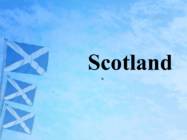
Scotland ! Scotland (Gaelic: Alba) is a country in northwest Europe that occupies the northern third of the island of Great Britain. It is part of the United Kingdom, and shares a land border to the south with England. It is bounded by the North Sea to the east, the Atlantic Ocean to the north and west, and the North Channel and Irish Sea to the southwest. In addition to the mainland, Scotland consists of over 790 islands including the Northern Isles and the Hebrides. Edinburgh, the country's capital and second largest city, is one of Europe's largest financial centres. It was the hub of the Scottish Enlightenment of the 18th century, which saw Scotland become one of the commercial, intellectual and industrial powerhouses of Europe. Scotland's largest city is Glasgow, which was once one of the
The Life of Dante, the Inferno of Dante Dante Alighieri, one of the greatest poets of the Middle Ages, was born in Florence, Italy on June 5, 1265. He was born to a middle-class Florentine family. At an early age he began to write poetry and became fascinated with lyrics. During his adolescence, Dante fell in love with a beautiful girl named Beatrice Portinari. He saw her only twice but she provided much inspiration for his literary masterpieces. Her death at a young age left him grief-stricken. His first book, La Vita Nuova, was written about her. Sometime before 1294, Dante married Gemma Donati. They had four children. Dante was active in the political and military life of Florence.
combination of cruelty and neglect he experienced there at the hands of Mrs. Holloway might not have hastened the onset of his literary life. She ruled the boarding house with fire and brimstone and Kipling was often beaten by her and her son. "Then the old Captain died, and I was sorry, for he was the only person in that house as far as I can remember who ever threw me a kind word."--ibid. Kipling soon learned to read and found solace in literature and poetry, voraciously turning to the magazines and books his parents sent him including Daniel Defoe's Robinson Crusoe. Wilkie Collins' The Moonstone and works by the likes of Ralph Waldo Emerson and Bret Harte also left an indelible impression on Kipling. Respite from the Holloway household was gained when he spent one month a year in London with his mother's kindly sister Aunt Georgie and her husband, pre-Raphaelite painter Edward Burne Jones and their children
colonisation to Englishmen back in the homeland. An example of this form of writing is John Smith's A True Relation of Virginia, which is widely recognized to be the first example of Am lit. The early years of colonisation produced a mass of utilitarian writings including biographies, accounts of voyages, diaries, sermons, pamphlets. Much of the material addressed the problems of Church and State. There were few examples of fiction, poetry or drama. Anne Bradstreet of Massachusetts published some lyrical poems of high literary quality (1650) and Edward Taylor, who was born in England but lived in Boston, wrote some poetry in the style of John Donne and the metaphysical poets. All 17 th cent Am writings were, both in content and form, similar to English lit of the same period. The great literary figures of the 18th cent were Benjamin Franklin (1706-1790), Thomas Paine (1737-1809) and Thomas Jefferson (1743-1826).
in one week, and the tale has become one of the most popular and enduring Christmas stories of all time. William Makepeace Thackeray William Makepeace Thackeray was an English novelist of the 19th century. He was famous for his satirical works, particularly Vanity Fair, a panoramic portrait of English society. Thackeray, an only child, was born in Calcutta, India, where his father, Richmond Thackeray (1 September 1781 13 September 1815), held the high rank of secretary to the board of revenue in the British East India Company. William had been sent to England earlier, at the age of five, with a short stopover at St. Helena where the imprisoned Napoleon was pointed out to him. He was educated at schools in Southampton and Chiswick and then at Charterhouse School, where he was a close friend of John Leech. He disliked Charterhouse, parodying it in his later fiction as "Slaughterhouse."
apothecary is summoned. He talks with Jane and sympathetically suggests that she should go away to school. [edit] Chapters 5-10: Jane's education at Lowood School Mrs. Reed sends Jane to Lowood Institution, a charity school, and warns them that Jane is deceitful. During an inspection, Jane accidentally breaks her slate, and Mr. Brocklehurst, the self-righteous clergyman who runs the school, brands her as a liar and shames her before the entire assembly. Jane is comforted by her friend, Helen Burns. Miss Temple, a caring teacher, facilitates Jane's self-defense and writes to Mr. Lloyd whose reply agrees with Jane's. Ultimately, Jane is publicly cleared of Mr. Brocklehurst's accusations. Jane mistakes Mr. Rochester for a Gytrash. While the Brocklehurst family lives in luxury, the eighty pupils are subjected to cold rooms, poor meals, and thin clothing. Many students fall ill when a typhus epidemic strikes. Jane's friend Helen dies of consumption in Jane's arms. When Mr
American most touched by the ideas of the Enlightenment. Attempts to reconcile science and religion resulted in a widespread rejection of prophecy, miracle and revealed religion in preference for Deism especially by Thomas Paine in "The Age of Reason" and by Thomas Jefferson in his short Jefferson Bible from which all supernatural aspects were removed. Benjamin Franklin was influential in America, England, Scotland, and France, for his political activism and for his advances in physics. The American Dream is a national ethos of the United States, a set of ideals in which freedom includes the opportunity for prosperity and success, and an upward social mobility achieved through hard work. In the definition of the American Dream by James Truslow Adams in 1931, "life should be
musical career. McCartney and Starr remain active; Lennon was shot and killed in 1980, and Harrison died of cancer in 2001. During their studio years, The Beatles produced what critics consider some of their finest material, including the album Sgt. Pepper's Lonely Hearts Club Band (1967), widely regarded as a masterpiece. Four decades after their breakup, The Beatles' music continues to be popular. The Beatles have had more number one albums on the UK charts, and held down the top spot longer, than any other musical act. According to RIAA certifications, they have sold more albums in the US than any other artist. In 2008, Billboard magazine released a list of the all-time top-selling Hot 100 artists to celebrate the US singles chart's fiftieth anniversary, with The Beatles at number one. They have been honoured with 7 Grammy Awards, and they have received 15 Ivor Novello Awards from the British Academy of Songwriters, Composers and Authors
· Attidude thought their land/language · Similar stories Dates and names · America was discovered in 1492 by Columbus · 1497 John Cabot went to Canada · 1579 San Fransisco/St. Fransis · 1607 Jamestown collony/John Smith · 1620 a boat called MayFlower · 1630 Boston was established · 1636 Harvard University · 1773 Boston Teaparty · 1775 War of Independence · 1776 4 July Declaration of Independence · First President George Washington Christopher Columbus Christopher Columbus (1451-1506) was an Italian explorer who sailed across the Atlantic Ocean in 1492, hoping to find a route to India (in order to trade for spices). He made a total of four trips to the Caribbean and South America during the years 1492-1504. He discovered America in 1492. I Indian sun, they pray for fan. J we hate Jews, they are fools.
training. They were trusted to use common sense. By the end of the 12th cent. They had real knowledge & experience of the law which became known as ,,common law", based on custom, comparison, previous cases & decisions. It was unlike in the rest of Europe. In England trial by ,,ordeal" was replaced with trial by jury. The work of juries gradually changed from giving evidence to judging evidence of others. Now the king's laws were in force everywhere. In 1157 he forced Malcolm IV of Scotland to give up border regions to England. In 1171 he went to Ireland, took it under his rule & made his son John, Lord of Ireland. When he got the throne there had been a civil war between his mother Matilda & uncle Stephen. There was also Church who had become too powerful. The Church wanted the kings of Europe to accept its authority over both spiritual & earthy affairs. Conflict between Henry & Church. He chose his trusted adviser, Thomas Becket, to become archbishop in 1162, but he began to
were very popular. THE RENAISSANCE: The Literary Background 16th century, - humanism. Thomas More- brought it to England and he was arrested because he refused to acknowledge Henry VIII as the Head of the Church. Elizabeth's reign was a period of unprecedented prosperity, and both the court and the emerging middle class dedicated a lot of time to art and literature. W. Shakespeare wrote 154 sonnets, E. Spencer 88. . Spenser's belief that poetry should deal with subjects far removed from everyday life and should be written in refined language unlike that which was used by common people became the basic principle for poetry throughout much of the Elizabethan period. CHRISTOPHER MARLOWE 1564-1593, born in Canterbury, was working for the government. Also wrote plays where he was successful. In the end got stabbed to death. SHAKESPEARE (1564-1616) he was an actor, poet, playwright and the best dramatist in writing
1. Beowulf. The dating of Beowulf is still controversial. The poem is one of the earliest and greatest monuments of the Germanic literatures. The main stories of the poem (the fights of B.) are versions of common folk-tales, but the poet also introduces many incidental stories, some of which belong to the world of ancient Germanic legend. He writes his folk-tales and legends in a web of other events, mainly set in the Baltic Kingdoms. He shows a very rich and leisurely portrayal of this Baltic world, providing many customs like the close relationship between lord and man in the war-band and others. All this encouraged the supposition that the unknown author of the poem was himself a bard of the ancient type
He works as a product recall specialist for a car manufacturing company, traveling from city to city, assessing the damages of car crashes. He describes his job in such a way that makes it sound complex when it actually is not. "If a new car built by my company leaves Chicago traveling west at 60 miles per hour, and the rear differential locks up, and the car crashes and burns with everyone trapped inside, does my company initiate a recall? You take the population of vehicles in the field (A) and multiply it by the probable rate of failure (B), then multiply the result by the average cost of an out-of-court settlement (C). A times B times C equals X. This is what it will cost if we don't initiate a recall. If X is greater than the cost of a recall, we recall the cars and no one gets hurt
the country. Court in cultural isolation. Ben Jonson. King and courtiers were close to universally recognised ideal types (conflict with the reality). Mysticism. Emergence of perspective view, stage machinery, artificial light, revolution. The stage cast the monarch in the focal point (the lines of perspective of the stage met there. Inigo Jones. Masque an educative vehicle, towards classical antiquity and architecture. Tide towards absolute monarchy. Masque – linked poetry and moral philosophy into art. Music, dance, poetry, lavish illusionistic scenic display to express the doctrines of divine kingship. Great impact. Like gods come down to earth. 2. The Caroline masque Charles decided on subject matter, and acted and danced in masques. Now the regal divinity even more obvious. Ben Jonson. Divine minds of this incomparable pair. Arts role – to set a noble ideals, to strengthen practice of virtue. He and queen living incarnations of ideals
Russian literature refers to the literature of Russia and its émigrés and to the Russian-language literature of several independent nations once a part of what was historically Rus', the Russian Empire or the Soviet Union. The roots of Russian literature can be traced to the Middle Ages, when epics and chronicles in Old Russian were composed. By the Age of Enlightenment, literature had grown in importance, and from the early 1830s, Russian literature underwent an astounding golden age in poetry, prose and drama. Romanticism permitted a flowering of poetic talent: Vasily Zhukovsky and later his protégé Alexander Pushkin came to the fore. Prose was flourishing as well. The first great Russian novelist was Nikolai Gogol. Then came Ivan Turgenev, who mastered both short stories and novels. Leo Tolstoy and Fyodor Dostoyevsky soon became internationally renowned. In the second half of the century Anton Chekhov excelled in short stories and became a leading dramatist
Holidays, Festivals, Cultural events TALLINN - If you're looking for entertainment in Estonia this summer, you are really spoiled for choice. Festivals and events dedicated to the consumption of beer are a lot of fun, but if you want to get the true feel of the country, you need something a little more ethnic. Like a town fair. Just as July becomes August, the seaside town of Haapsalu will host a grand spectacle of rural Estonian entertainment. The White Lady Days is a summer celebration filled with amusement for all the family. Held in and around the remains of the Teutonic-knights-era castles, the fair combines enchanting medieval legends with modern countryside charm to create a comprehensive experience of Estonia beyond the big cities.
Such warnings not only appeared before and after each program and after each commercial break, but also in a "crawl" that ran along the bottom of the screen during some especially risky stunts, as well as showing their 'skull and crutches logo' at the bottom right of the screen to symbolize the stunt performed as risky. Nevertheless, the program has been blamed for a number of deaths and injuries involving teens and children recreating the stunts. On January 29, 2001, U.S. Senator Joseph Lieberman publicly condemned MTV and Jackass in connection with a dangerous stunt that led to a copycat incident in which a 13-year-old Connecticut teenager was left in critical condition with severe burns. Lieberman followed up with a February 7, 2001 letter to MTV's parent company Viacom urging the company to take greater responsibility for its programming and do more to help parents protect their children. MTV
The great Roman Emperor Firts came 55 BC to gather information, celts were doing agriculturally well,so romans wanted to get some food too In 54BC Caesar defeated Cassivelaunus Actual reasons why he made expeditions are unknown or wheteher he wanted to intend conquest The Roman Occupation 43-410 43 AD Emperor Claudius conquered Britain, it was easy, romans were more skilled and betetr equipped. Romans faced assaults of Picts, Scots, barbarians. 406-7 barbarians begin invasion Legacy- new types of animals, plants; miles, feet, inches-roman measurements;christianity; Roman basilica in curches; reading, writing; buildings, roads Christianity in Roman Britain Until 4th C christians were persecuted 313 AD Emperor Constantine legalised christianity 380 AD Emperor Theodosius I made it the official religion of the empire Paganism had been eclipsed but continued to
metaphors. He only has one sonnet that conforms to traditional rules; his songs are not lyrical at all. He introduces sex, death and erotic love into poetry. John Milton (1608–74) – poet; introduced the blank verse into English poetry. Best known for epic poem Paradise Lost; story of the fall of man and the eventual expulsion from the Garden of Eden. Literature after the Restoration (of Monarchy in 1660) – rich and many-‐sided, covering
Philip Larkin’s Poetry: Themes, Form, Style, Imagery and Symbolism Author: Sandra Olivares González Tutor: Jesús Marín Calvarro Degree in English Studies, English Department, Faculty of Philosophy and Letters, University of Extremadura Cáceres, 29th January 2016 Philip Larkin’s Poetry: Themes, Form, Style, Imagery and Symbolism The aim of this work is to obtain some characteristics of the poetry of Philip Larkin, such us the origin of his themes, the way in which he writes his poems and the symbolism he uses (which is a very controversial topic because some assume that he does use it, while some others say that he uses it in an ironic way). In this work we tried to make a revision on the vision of Larkin through the studies that had been made on
Hadrian's Wall was built, beginning in 122, to keep Roman Britain safe from hostile attacks from the Picts. The wall stretched from the North Sea to the Irish Sea. In addition to the wall, the Romans built a system of small forts called milecastles. Sixteen larger forts holding from 500 to 1000 troops were built into the wall, with large gates on the north face. To the south of the wall the Romans dug a wide ditch with high earth banks. *The Picts, Caledonia The Romans called Scotland 'Caledonia' because the dominant tribe of Picts they encountered was the Calidonii. Romans thought they were barbarian savages, but actually they had an advanced, cultured society. There was no slavery amongst them and women for instance had a higher standing than in Roman society. The Picts fought the Romans. The Picts- ,,The Painted Ones"- spoke Pict-Celtic. *The Scots, Hibernia In early medieval times Ireland was known by the name "Hibernia".
 annaabi.ee