Leidsid 33 sarnast õppematerjali, mis on seotud failiga "Riikide võrdlus". Need materjalid aitavad sul teemat sügavamalt mõista.
capita, spain, billion, grow, economic, eksport, growth, economy, government, clean, highly, ending, bank, power, freedom, rate, export, competitiveness, through, recession, madrid, boost, banks, sector, come, official, exchange, ostuvõime, parity, gini, corruption, country, fall, france, germany, rapid, global, major, land, income, however, spanish06.05.2012 Abstract 06.05.2012 Experience and Wellness management Author Group Girli Vasiljev RB1X Title of report Number of pages Economic Country Review: Finland, Estonia 20 and Hungary Teacher Kalevi Torunen The goal of this paper is to compare the economic performance of Finland, Estonia and Hungary. First, a general overview on the countries will be given. After, economic indicators (real GDP growth rate, inflation, unemployment, household consumption, investment, current account, government budget and deficit) of the three countries will be compared to draw a conclusion. Keywords GDP, inflation, unemployment, household consumption, investment, current account, government budget, deficit, surplus Table of contents 1 Introduction
INVESTBULGARIA AGENCY WHO ARE WE InvestBulgaria Agency (IBA) is a Government institution providing information, contacts and project management support to potential investors. IBA services: Macroeconomic data on Bulgaria Data on operational costs Regional information Personalized administrative servicing Legal advice Liaison with central and local governments Liaison with branch chambers and NGOs www.investbg.government.bg GENERAL INFORMATION
........................................................ 4 1. UKRAINE ...................................................................................................................... 5 1.1. General information ..................................................................................................... 5 1.1.1. Country Profile ..................................................................................................... 5 1.1.2. Post-Independent Ukraine. Economy and politics ............................................... 6 1.1.3. Key Macroeconomic indicators ......................................................................... 14 1.1.4. Foreign Direct Investments ................................................................................ 16 1.1.5. Demographics and labor force .......................................................................... 17 1.1.6. New emerging industry................................
ERLE MAIDO TAAB11 Report Purpose The purpose of this report is to give an overview of Estonian population, political factors, technological factors, economic factors and the trends in Estonian economy compared to Germany and to briefly discuss Estonian business environment. Estonian population The total population of Estonia is 1 313 271 according to Statistics Estonia, of which 69.1% are Estonians, 25.1% Russians, 4.9% of which are of different nationalities for example Ukrainians, Belarusians and Finns. Rest are of unknown nationality. 68.5% of population speaks Estonian as a mother language, 29.6% speaks Russian as a mother language and 0.6% Ukrainian
The United States and its economy are known to be one of the thriving and strongest in the world. It represents 16.6% of the world’s total GDP. The estimated worth of USA's GDP is estimated to be around 17.5 trillion dollars and dollar being the third currency in the world and the official currency of the US. They also manage a 5% growth every quarter. So how do they manage it? There are three main sectors that contribute to the USA's GDP. First is services that is 80% of the total GDP. The output of services in 2014 was 13,8 billion dollars witch was the nr.1 in front of European Union’s output witch was 13,4. The second contributing sector is the industry sector which provides 19% of the country’s GDP. In this area USA has fallen behind and has to accept the third position in the world’s total industry's output. First in
Alternatiivne link : http://www.citypopulation.de/cities.html a. SKT in/kohta- 36,525, koht maailmas 7. b. SKT kasv- 0,7 %, koht maailmas 184 . c. Kui suure osa SKT-st annab GDP composition by sector: põllumajandus – 1.2%, Tööstus- 21.9%, teenindavad harud – 76.9%. d. Tööpuuduse määr unemployment rate - 5.6% ja koht mm-s on 129-s e. Tööstustoodangu kasv industrial production growth rate - miinus 2% ja koht mm-s on 149-s f. Hõive labor force by occupation- põllumajanduses 0.7% ja teeninduses 20.3%. g. Interneti kasutajaid- 66.1% ehk 40.200.200 ja koht mm-s on 7-s. h. Elektrienergia toodang electricity production – 371.000 miljonit kwh aasta kohta, koht maailmas on 11-s i. Elektrienergia tarbimine electricity consuption - 348.000 miljonit kwh aasta
Central Asia, Turks, British, and French. In 1946, the French gave up control over Syria, and the Syrian Arab Republic was created. Syria is a country in the Middle East bordering the Mediterranean Sea. Neighboring countries include Iraq, Israel, Jordan, Lebanon, and Turkey. The geography of Syria is primarily semiarid and desert plateau with a double mountain belt in the west. The government system is a republic under authoritarian regime. The chief of state is the President and the head of government is the Prime Minister. Syria has a mixed economy in which there is limited private freedom but the economy remains highly controlled by the government. Syria is a member of the Council of Arab Economic Unity (CAEU). Two-thirds of Syria is desert; the other third is part of the Fertile Crescent along the Mediterranean coast. About 80 percent of the population lives in that fertile region. The total population of Syria is a little over 13 million. Half the people live in cities, 4 million in
Gross Domestic Product (GDP) The gross domestic product (GDP) or gross domestic income (GDI) is a measure of a country's overall economic output. It is the market value of all final goods and services made within the borders of a country in a year. It is often positively correlated with the standard of living, alternative measures to GDP for that purpose. · Gross domestic product comes under the heading of national accounts, which is a subject in macroeconomics. Gross National Product Gross national product (GNP), in economics, a quantitative measure of a nation's total
Jamaica prospered from the wealth brought by buccaneers, notably Sir Henry Morgan, to Port Royal, the capital; in 1692, however, much of the city sank into the sea during an earthquake, and Spanish Town became the new capital. A huge, mostly African, slave population grew up around the sugarcane plantations in the 18th cent., when Jamaica was a leading world sugar producer. Freed and escaped slaves, sometimes aided by the maroons (slaves who had escaped to remote areas after Spain lost 3 control of Jamaica), succeeded in organizing frequent uprisings against the European landowners. The sugar industry declined in the 19th cent., partly because of the abolition of slavery in 1833 (effective 1838) and partly because of the elimination in 1846 of the imperial preference tariff for colonial products entering the British market. Economic hardship was
the Celtic Sea and St George's Channel to the South and South-East. The legal name of the state is simply "Ireland", but its legal description the Republic of Ireland is sometimes used to differentiate the state from the island. On 29 December 1937 Ireland became the successor-state to the Irish Free State, itself established on 6 December 1922. Ireland was one of the poorest countries in Western Europe and had high emigration. The protectionist economy was opened in the late 1950s and Ireland joined the European Communities (now the European Union) in 1973. An economic crisis led Ireland to start large-scale economic reforms in the late 1980s. Ireland reduced taxation and regulation dramatically compared to other EU countries. Despite a forecast for reduced economic growth in 2008, Ireland today has the fifth highest gross domestic product per capita and the seventh gross domestic product per
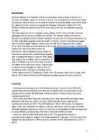
Estonia is a democratic parliamentary republic and is divided into fifteen counties. The capital and largest city is Tallinn. With a population of only 1.4 million, it is one of the least-populous members of the European Union. Estonia was a member of the League of Nations from 22 September 1921, has been a member of the United Nations since 17 September 1991, of the European Union since 1 May 2004 and of NATO since 29 March 2004 Estonia has also signed the Kyoto protocol. Economy Estonian economy was one of the fastest growing in the world until 2006 with growth rates even exceeding 10% annually. Despite some concerns both in and outside of the country, the Estonian economy and its currency remained highly resilient and solvent. Until recent years the Estonian economy continued to grow with admirable rates. Estonian GDP grew by 6.4% in the year 2000 and with double speeds after accession to the EU in 2004. The GDP grew by 7.9% in 2007 alone. Increases in
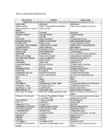
Sõltumatu muutuja Independent variable Независимая переменная Pöördvõrdeline sõltuvus Inverse relationship Обратная зависимость Sirge tõus Slope of a line Подъем кривой ordinaattelg Vertical axis ордината-ось majandussüsteem Economic system Экономическая система piiratus Scarsity ограниченность Majanduslik hüvis Economic goods Экономическое благо Vaba hüvis Free goods Свободное благо Majanduslik ressurss Economic Resources Экономический ресурс
Majandusõpetus Teema 13. Majanduse areng ja stabiilsus 1. Makroökonoomika, macroekonomics - õpetus turu 1. üldisest tasakaalust e. majandusest kui tervikust tema seostes 2. 2. Makromajanduslikud majandusnäitajad, macro : economic indicators majandust kui tervikut (), , , iseloomustavad näitajad: majanduse (SKP) kasv, töötus, . inflatsioon, väliskaubanduse saldo jm. 3. , 3. Sisemanduse kogutoodang (SKP), gross domestic product (- ) (GDP) on mingil periodilriigis toodetud
TALLINNA ÜLIKOOL POLITICAL SCIENCE AND GOVERNMENT INSTITUTE ANNELI PALM CRITISIM ABOUT IMF AND WORLD BANK INTERNATIONAL POLITICAL ECONOMY (RIR6032/RIR6004) ESSAY 2014 Contents TALLINNA ÜLIKOOL.............................................................................................. 1 Introduction............................................................................................................ 3 Basic of liberalism.................................................................................................. 4 International Monetary Fund and World Bank............
Tallinn English College Report of Canada 8a Teacher: Merike Sisask Composer: Kärt Kalvet 2010 Canada, Kärt Kalvet 8a Canada General Information Canada is in North America. It's area is 9220970 sq km. Canada's population is 313.612.000 people. Canada is divided into 10 provinces and 3 territories. The capital of Canada is Ottawa. Canada has constitutional monarchy. The head of state in Canada's government is the Queen of England. There are two main languages in Canada: English and French. Canada's curreny is Canadian dollar (1 dollar=100 cents[Can$]). The highest peak of Canada is Mount Logan, 5959 metres. The lowest point is sea level. The longest river is the Mackenzie. The climate and geography of Canada vary greatly from temperate in the south to arctic in the north and from islands and plains in the east to mountains in the west. Location
Linna sees on 22 raudteeliini. Linna läbib mitu suurt maanteed (HarbiniWuchengi maantee, maantee 301). Harbiniga ühendab teda HarbiniAchengi kiirtee. Turism Linna läbib turismimarsruut Harbin Yabuli Jingpo järv Xingkai järv. Acheng on valitud väljapaistvaks Hiina turismilinnaks. ---------------------------------------------------------------------------------------------------------- Beginning in late 1978, the Chinese leadership has been reforming the economy from a Soviet-style centrally planned economy to a more market-oriented economy that is still within a rigid political framework under Party control. The reforms replaced collectivization of Chinese agriculture with privatization of farmlands, increased the responsibility of local authorities and industry managers, allowed a wide variety of small-scale enterprises to flourish, and promoted foreign investment. Price controls were also relaxed
They approach innovation in its broadest sense, including both new technologies and new ways of doing things” – (Porter 1990) ● “An innovative business is one which lives and breathes “outside the box”. It is not just good ideas, it is a combination of good ideas, motivated staff and an instinctive understanding of what your customer wants” – (Branson 1998) ● “...novel implementation of an invention, discovery, new or existing knowledge in economic process” (Joseph A. Schumpeter) ● An innovation is the implementation of a new or significantly improved product (good or service), or process, a new marketing method, or a new organisational method in business practices, workplace organisation or external relations” (Oslo Manual). Innovation and entrepreneurship Schumpeter on innovation: the role of inventions and entrepreneurs ● Innovation as “new combinations” of existing
..................................... 2 1.2. Potential future utilization..............................................................................4 1.3. Why Don't We Use More Renewable Energy? ...........................................5 2. Energy Types 2.1. Wind Energy.......................................................................................................6 2.1.1. Annual Generation........................................................................................7 2.1.2. Growth and cost trends................................................................................8 2.1.3. Theoretical potential.....................................................................................9 2.1.4. Benefits of wind energy................................................................................10 2.2. Solar Energy........................................................................................................11 2.2.1 Development, deployment and economics........
.....................1 2. Nature and geography.....................................................................................2 3. Position and size.............................................................................................2 4. Climate............................................................................................................3 5. Flora and fauna...............................................................................................4 6. Main fields of economy and industry..............................................................5 7. The people......................................................................................................6 8. Population......................................................................................................6 9. Traditions and culture.....................................................................................7 10. History...................................................................
riigid vähem kui siirderiigid, kuid nende tulemused mitmete indikaatorite lõikes (vastsündinute suremus, eeldatav eluiga, töö- ja pensioniealiste suhe jne.) on paremad (Fakin, 1997). Valitsuse majanduspoliitilist tegevust on analüüsitud mitmete erinevate indikaatorite abil. Nii näiteks on Kaufmann, Kraay ja Zoido-Lobaton välja töötanud kuus erinevat indikaatorit. Nimetatud autorite uurimus näitas positiivset seost indikaatorite väärtuse ja per capita tulu vahel. (Kaufmann, 1999). B. Wederi institutsionaalse kvaliteedi indeks võtab aluseks eelpoolnimetatud autorite kuuest indikaatorist viis, mis arvestavad demokraatiat, valitsussektori efektiivsust, regulatsioone, seadusi ja korruptsiooni (vt. joon. 1)1. Nii antud indeksi kui ka tema koostisse kuuluvate indikaatorite väärtust hindas B. Weder vahemikus 25 kuni +25. Arenenud riikides on antud indeksi keskmine väärtus 12,6. Eesti
S. through its largest tributary, the Tennessee River. During the eighteenth century, it was the southern boundary of the Northwest Territory, thus serving as the border between free and slave territory. Other The Great Plains is the board expanse of prairie and steppe which lies east of the Rocky Mountains in the United States and Canada. Grand Canyon created by Colorado River cutting a channel over millions of years, is about 227 miles long, and attains a depth of more than a mile. Nearly two billion years of Earth's history has been exposed as the Colorado River and its tributaries cut through layer after of sediment as the Colorado Plateaus have uplifted. 5. Climate Due to its large size and wide range of geographic features, the United States contains examples of nearly every global climate. The climate is temperate in most areas, tropical in Hawaii and southern Florida, polar in Alaska, semiarid in the Great Plains west of the 100 th meridian,
usually included in the downstream category. Petroleum is vital to many industries, and is of importance to the maintenance of industrialized civilization itself, and thus is critical concern to many nations. Oil accounts for a large percentage of the world's energy consumption, ranging from a low of 32 percent for Europe and Asia, up to a high of 53 percent for the Middle East, South and Central America (44%), Africa (41%), and North America (40%). The world at large consumes 30 billion barrels (4.8 km³) of oil per year, and the top oil consumers largely consist of developed nations. In fact, 24 percent of the oil consumed in 2004 went to the United States alone, though by 2007 this had dropped to 21 per cent of world oil consumed. In the US, in the states of Arizona, California, Hawaii, Nevada, Oregon and Washington, the Western States Petroleum Association (WSPA) represents companies responsible for producing, distributing, refining, transporting and marketing petroleum
....................................................................18 2 Introduction The aim of this research is to get know more about the Netherlands history and its geographical facts. This report is describing one of most the most beautiful countries in the Europe - Netherlands. Netherlands is famous for its windmills and flowers. Netherlands is also known unofficially as Holland. Government is constitutional monarchy of north-western Europe. Netherlands is bordered on the north and west by the North Sea, on the east by Germany and on the south by Belgium. The European portion of the Netherlands has a total area of 41,528 sq km of which 33,939 sq km is land surface. Country's capital and largest city is Amsterdam. Population is about 16 million. 3 Chapter 1
Kas moderniseerumine tähendab läänestumist? Postmoderniseerumine: eesmärgitu, paljusubjektne, palju tõdesid, ei liigu kuskile, ei usu midagi?! Innovation - may refer to both radical and incremental changes in thinking, in things, in processes or in services (Mckeown, 2008). Invention that gets out in to the world is innovation. In many fields, something new must be substantially different to be innovative, not an insignificant change, e.g., in the arts, economics, business and government policy. In economics the change must increase value, customer value, or producer value. The goal of innovation is positive change, to make someone or something better. Innovation leading to increased productivity is the fundamental source of increasing wealth Innovatsiooni liigid: – tehnoloogiline innovatsioon – uued tehnilised lahendused (päikesepatarei, wifi) – turundusinnovatsioon – uuenduslike müügimeetodi tekasutuselevõtmine.
República Portuguesa) is a country located in Southwestern Europe, on the Iberian Peninsula. It is the westernmost country of mainland Europe, and is bordered by the Atlantic Ocean to the west and south and by Spain to the north and east. The Atlantic archipelagos of the Azores and Madeira are Portuguese territory as well. The country is named after its second largest city, Porto, whose Latin name was Portus Cale. SETTLEMENT The land within the borders of the current Portuguese Republic has been continuously settled since prehistoric times. In the 8th century most of the Iberian Peninsula was conquered by
Didn't have the right to vote · Trail of Broken Treaties of 1972 Took place in 1972 Cross-country protest by American Indian organizations Intended to bring attention to American Indian issues such as treaty rights, living standards, and inadequate housing. Huge media coverage "20-Point Program" · Present situation 1 Reservations situated west of the Mississippi 1% of the population Minority group, less privileged Social problems Self-awareness Mixture of old and new HOW GOVERNMENT ACTS NOW- gives natives money and near Las Vegas the right to own casinos to compensate injustice and taking away land. II First Settlements · Jamestown Colony (living conditions, population, plantations, import of slaves) First permanent English colony in North-America 214 settlers Searching for gold (none found) Strategically good location, James River Quite poor conditions. Starvation, diseases, lack of water, attacks of natives , fierce weather Tobacco plantations
Approximately 20,000 Displaced Persons arrived in the US. Immigration in 1969-...: the Soviet Union temporarily loosened emigration restrictions for Jewish emigrants, which allowed nearly 250,000 people leave the country, escaping covert anti-semitism. Jews were allowed to leave Russia for Israel, but many had the US as their real goal. Most had no knowledge of Yiddish or Hebrew or the Jewish religion. Immigration after 1985: the Soviet government under Mikhail Gorbachev allowed anyone to leave the Soviet Union. The major group of post-Soviet immigrants were the political refugees, persons who claim persecution or reasonable fear of persecution in Russia. Largest Russian communities today are in New York, California and Florida. 5. From where did the Indians come to America? *Native Americans aka. Indians, Red Indians, Redskins, American Indians, Amerindians, Namerind, First Nations people (Canada) *Origins of N-Am, theories =
became extinct after the arrival of humans and the mammals they introduced.The majority of New Zealand's population is of European descent; the indigenous Mori are the largest minority. Asians and non-Mori Polynesians are also significant minority groups, especially in urban areas. The most commonly spoken language is English.New Zealand is a developed country that ranks highly in international comparisons on many topics, including lack of corruption, high educational attainment and economic freedom. Its cities also consistently rank among the world's most liveable.Elizabeth II, as the Queen of New Zealand, is the country's head of state and is represented by a Governor-General, and executive political power is exercised by the Cabinet of New Zealand. Some Quick facts Capital: Wellington Government: Representative parliamentary democracy and Constitutional monarchy Currency: New Zealand dollar (NZD) Area: 270,534 sq km Population: 4,347,000 (February 2009 est.)
regularly monitored by Central Banks. Table ... Consolidated MFI balance sheet. Schematic consolidated balance sheet of the MFI sector for the euro area ( 1 ) Assets Liabilities 1. Loans 1. Currency in circulation 2. Securities other than 2. Deposits of central government shares 3. Shares and other equities 3. Deposits of other general government and other euro area residents 4. External assets 4. Money market fund shares/units 5. Fixed assets 5. Debt securities issued 6
structurises the information channels for the future. The course supports the other Traderun courses, especially the course related to EU cooperation with Russia and Eastern Partnership Countries. 3 1. LEGALIZATION OF A COMPANY WITH A FOREIGN OWNER IN RUSSIA Today the investment attractiveness of Russia is very high. In addition to the dynamic pace of development of the economy, Russia offers to foreign investors increasing every year the market of goods and services to consumer and business. Most often, this together with the high rate of return on invested capital is a crucial factor in the decision to enter the Russian market. One possible way to full implementation of business activities on the territory of the Russian Federation - is the creation of a legal entity. An enterprise with foreign capital - is created on the territory of the Russian business-
Second-generation biofuels are not yet commercially viable and therefore will not be discussed; although they could significantly improve the sustainability of biofuels when they break through to the industrial scale. 2. The scale of biofuels production 2.1. Drivers of biofuels production Lal (2010) stated that "three inter-connected challenges face humankind in the 21st century": food security, climate change, and energy security. The world population is projected to reach 9 billion in 2050, posing more demands on energy, food, and other natural resources. It has been estimated that the world food production needs to double and meat production increase by 85% by 2050 to fulfill projected demand by population (Karp, 2011). In the recent decades, the food consumption in the most populous counties has shifted from grain-based diets to meat and dairy diets. Meat production requires times more biomass in the form of
Findings, conclusions and comments made in the publication do not necessarily reflect the opinion of GIZ. This publication may not be reproduced in whole or in part without the written permission of the copyright holder. © Deutsche Gesellschaft für Internationale Zusmmenarbeit GmbH (GIZ), 2011. 2 CYAN MAGENTA YELLOW BLACK 2 Introduction For the past few years, Georgian government has carried out a number of significant economic reforms in various fields in order to create attractive business environment and to breathe a new life into Georgian economy. The main aim of the reforms was to boost foreign investments, cre- ate new jobs, stimulate entrepreneurial activities in a variety of fields and increase the welfare of citizens. As a result of economic deregulation policy which was focused on liberalization of the Economy,
1710-1850 and 1850-1918 Contents Contents.................................................................................................................................. 2 17101850.............................................................................................................................. 3 Population and social structure........................................................................................ 4 Serfdom and the intensifying manorial economy ............................................................. 4 Influences of Pietism and the Moravian Brethren............................................................. 5 Enlightenment and enlightened absolutism...................................................................... 6 18501918.............................................................................................................................. 8 The national awakening.............................
 annaabi.ee