Leidsid 33 sarnast õppematerjali, mis on seotud failiga "Reported speech". Need materjalid aitavad sul teemat sügavamalt mõista.
year, years, live, asesõnad, asked, says, fifteen, yesterday, before, accept, come, sunday, reported, speech, olevikus, ajavormid, sõnajärg, today, these, told, previous, edastada, advise, agree, allow, apologize, refuse, birthday, party, accepted......12 Passiiv Passive voice .................................................................................................12 Loendatavad nimisõnad Countable nouns.................................................................12 Loendamatud nimisõnad Uncountable nouns............................................................13 Mitmuse moodustamine................................................................................................13 Siduvad asesõnad..........................................................................................................14 Omastav kääne..............................................................................................................14 Käskiv kõneviis.............................................................................................................15 Omadussõnad............................................................................................................
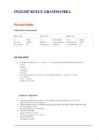
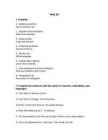
Artikkel a, an 10 Muu 11 Otsekõne Direct speech 11 Kaudkõne Reported speech 11 Kaudküsimused Reported questions 12 Passiiv Passive voice 12 Loendatavad nimisõnad Countable nouns 12 Loendamatud nimisõnad Uncountable nouns. 13 Mitmuse moodustamine 13 Siduvad asesõnad 14 Omastav kääne 14 Käskiv kõneviis 15 Omadussõnad 15 Viisimäärsõnad 16 Tingimuslaused 16 2 Ajavormid Tense vorms Lihtolevik The present simple Korduv, harjumuspärane tegevus
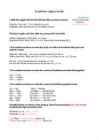
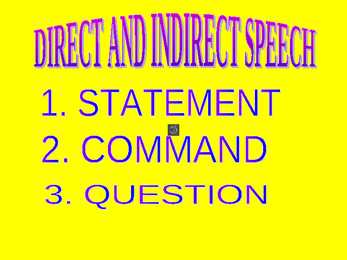
Kaudne kõne 1. Saatelause olevikus (he says that ...) Kõneleja juttu saab edasi anda otseselt (direct) ja kaudselt (reported). Otsene kõne: He says: "I am a man" Kaudne kõne: He says (that) he is a man. Kaudsel kõnel võivad muutuda asesõnad ja ka verbi pöördevormid. She tells me: ,,I like your dress." She tells me (that) she likes my dress. 2. Saatelause minevikus (he said that ...) Kui saatelause on minevikus, siis võivad samuti muutuda asesõnad ja verbi pöördevormid. Pane tähele! Oleviku vorm otseses kõnes muutub mineviku vormiks kaudses kõnes. am/is --- was are -- were do/does --- did want/like/know/go etc --- have/has had wanted/liked/knew/went etc will --- would can --- could
We/you/they go We/you/they do not go Do we/you/they go? NB! ERANDID! · Verbidele, mis lõpevad ss, h, ch, tch, x või oga, lisatakse ainsuse kolmdandas pöördes es. he does he goes he misses he watches he mixes · Verbid, mis lõpevad yga, mille ees on konsonant, muudavad y iks enne es lisamist. fly he flies carry he carries Võrdle: say he says Lihtolevik väljendab: · Antud momendil toimuvat tegevust, mis ei väljenda kestvat aega, näiteks see, hear, know. I see that man who you are pointing at. · Üldist, kogu aeg toimuvat või korduvat tegevust, pole oluline, kas tegevus toimub rääkimise hetkel. Teachers teach in schools. He usually goes to gym on Monday. · Tegevust mingil ajal. I go to school at 8 o´clock.
It was raining earlier. He said it had been raining earlier. past perfect past perfect The play had started when I arrived. NO CHANGE POSSIBLE past perfect continuous past perfect continuous I'd already been living in London for five NO CHANGE POSSIBLE years. Other verb forms Other verb forms also sometimes change: will would I'll come and see you soon. He said he would come and see me soon. can could I can swim under water for two He said he could swim under water for two minutes. minutes. had to must
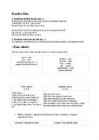
Kaudkõne inglise keeles Aegade nihe 1.tuleb teha aegade nihe olevikust lihtminevikku ja muuta asesõnad. Asesõna muutumine Saatesõna Otsekõne: Colin said, ,,I like Scotland very much. Kaudkõne küsimus Kaudkõne: Colin said that she liked Scotland very much. (Kui lause on juba minevikus tuleb see panna perfekti minevikku. William Shakespeare (1564-1616) wrote plays. Jacqueline Wilson (born 1945) has written many books about teenage girls.) 2
n e k õ n e T d C E H a u R C K D E I IN PE S v i i rek aa S n e U m St H s iu 12 lva naa E üm G 3 Kaudne kõne Kõneleja sõnu saab edasi anda otseselt ja kaudselt.Otsene kõne kordab kõneleja sõnu täpselt Näiteks: She says, ,,I am a student ." Kaudne kõne annab kõneleja sõnu edasi ümberjutustatult. Näiteks: She says that she is a student. Otsene kõne Otsene kõne antakse kaudses kõned edasi sihitislausega, kusjuures toimuvad mõningad muudatused , näiteks muutuvad vastavalt lause mõttele asesõnad ja mõnel juhul ka verbi pöördevormid. Saatelause Otsene kõne Reporting clause Direct speech He says, ,,I like your
et rääkida sündmusest, mis oli kestev, kui teine sündmus aset leidis They were driving down the road when a dog ran in front of the car. et rääkida tegevustest, mis leidsid aset samal ajal minevikus While I was cooking lunch, Gina was washing the floor. 4.2c Past perfect simple (Had+past participle) Kasutame et rääkida sündmustest, mis leidsid aset enne, kui teine mineviku vorm When I saw her, I realised I had met her before kaudses kõnes 4.2c Kestev täisminevik Kasutame: et rääkida tegevusest, mis kestsid kuni nimetatud sündmuseni minevikus I had been walking for three hours when I came to a small village. kaudses kõnes UNIT 5 5.1 Time expressions .. kui räägime ühest sündmusest, mis juhtus enne eelmist Before I left the house, I locked all the doors. Previously she'd lived abroad with her family. I arrived about and hour earlier. .
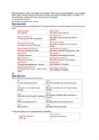
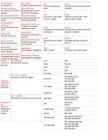
now then /at that time /immediately at that moment today / tonight that day /that night here there this / these that / those tomorrow the following day /the next day the day after next week the following week /the next week the week after yesterday the previous day /the day before last week the previous week /the week before (a year) ago (a year) before /earlier the day before yesterday two days before /earlier the day after tomorrow in two days' time come go Direct Speech Indirect/Reported Speech I he, she you I, she, he, we, they we they me him, her you him, her, us, them us them
There is one extra word which you do not need to use. aggressive nervous dull funny easy-going ambitious expensive usual experienced successful practical 1 She told a very ________________________ joke and everyone laughed. 2 She's a very ________________________ person. She will do anything to become famous. 3 They didn't give him the job because he was ________________________. He had never done anything like that before. 4 This is a very ________________________ animal. I've never seen one like it before. 5 I get very ________________________ before an exam and when I go to the dentist. 6 It's a great jacket and quite ________________________ considering its quality. 7 He's always having fights with people. He's very ________________________. 8 It's a nice idea but I think it's completely ________________________. It will never work. 9 Their latest CD was ________________________
(NOT I think you have better see the doctor.) We'd better ask John to help us. 11. Use the present progressive am playing, is raining etc to talk about things that are continuing at the time of speaking. I'm playing very badly today. (NOT I play very badly today.) Look! It's raining! (NOT Look! It rains!) 12. Use for with a period of time. Use since with the beginning of the period. for the last two hours = since 9 o'clock for three days = since Monday for five years = since I left school I've been learning English for five years. (NOT I've been learning English since three years.) We've been waiting for ages, since eight o'clock. 13. Don't separate the verb from the object. VERB OBJECT She speaks English very well . (NOT She speaks very well English.) Andy likes skiing very much. (NOT Andy likes very much skiing.) 14. Don't use the present perfect have/has seen, have/has gone etc with words that name a finished time.
3. Present Continuous [am/is/are + present participle]. Tegevus toimub/ei toimu praegusel hetkel. You are watching TV. You are learning English now. I am studying to become a doctor. I am meeting some friends after work. Active= Right now, Tom is writing the letter. Passive= Right now, the letter is being written by Tom. 4. Past Simple [VERB+ed] or irregular verbs. Tegevus algas/lõppes minevikus täpsel ajal. . You called Debbie. I saw a movie yesterday. I finished work, walked to the beach, and found a nice place to swim. I lived in Brazil for two years. I studied French when I was a child. Active = Tom repaired the car. Passive= The car was repaired by Tom. 5. Past Continuous [was/were + present participle]. Pikalt kestev tegevus katkestati minevikus. You were studying when she called. I was watching TV when she called. Last night at 6 PM, I was eating dinner. I was studying while he was making dinner. She was always coming to class late
(direct speech), but reported (indirect) speech. Therefore, you need to learn how to transform direct speech into reported speech. We use reported speech when we are saying what other people say, think or believe. - Example: If this verb is in the present tense (says), it's easy. We just put 'she says' and then the sentence. When we are reporting things in the present, future or present perfect we don't change the tense. : direct speech: "I like ice cream" reported speech: She says she likes ice cream - But, if the reporting verb is in the past tense (said), then usually we change the tenses in the reported speech: direct speech: "I like ice cream" reported speech: She said she liked ice cream. ......... · When there are Changing tenses: present changes to past:::: am/is --- was are -- were want/like/know/go etc --- wanted/liked/knew/went etc do/does --- did have/has had will --- would can --- could wanted/liked --- had wanted/had liked
· Am, is, are · Was/were · Shall/will · Should/would · Can · Could · May · Might · Must · Have/has to · Ought to · Had to CHANGES OF ADVERB OF TIME & PLACE · DIRECT · INDIRECT · NOW · THEN · TOMORROW · THE FOLLOWING DAY · NEXT WEEK · THE FOLLOWING WEEK · TONIGHT · THAT NIGHT · TODAY · THAT DAY · YESTERDAY · THE DAY BEFORE · LAST NIGHT · THE NIGHT BEFORE · LAST WEEK · THE WEEK BEFORE · HERE · THERE · THIS · THAT · THESE · THOSE CHANGES OF TENSES · DIRECT · INDIRECT · SIMPLE PRESENT · SIMPLE PAST · SIMPLE PAST · PAST PERFECT · PRESENT PERFECT · PAST PERFECT · PRESENT · PAST CONTINUOUS CONTINUOUS · PAST PERFECT · PRESENT PERFECT CONT
Present Progressive Past Progressive Present Perfect Past Perfect Present Perfect Progressive Past Perfect Progressive Past Simple Past Perfect Past Progressive Past Perfect Progressive Past Perfect jääb muutmata Past Perfect Progressive jääb muutmata Future Simple Future in the Past 3. Kui saatelause verb on minevikus, asendatakse kaudses kõnes mõned lähedust väljendavad sõnad kaugust väljendavate sõnadega: This that These those Here there Now then Ago before Today that day Tomorrow the next day Yesterday the day before Last night the previous night Next week the following week Aegade nihet ei toimu kui 1. Lause väljendab üldtuntud tõde He said, ´The sun is 92 million miles away.´ He said that the sun is 92 million miles away. Tingimuslausete 2. ja 3. tüübis 2. Kui Past Simple otsese kõnes tähistab tegevust, mis toimus teatud momendil
Kui saatelause on olevikus , siis jääb öeldu ka olevikku . Näit: He says:"Everybody speaks English" -> he says (that) everybody speaks English. KUI ON SAYS , SIIS EI LÄHE ÜHE VÕRRA MINEVIKU POOLE! Kui aga saatelause on minevikus, siis läheb lause ühe võrra mineviku poole! "I speak English well" -> He said (that) he spoke English well. "They are speaking English now - > He said (that) they were speaking English then . "They spoke English to their guests last week -> He said (that) they had spoken English to their guests last week "They were speaking English when I arrived" -> he said (that) they had been speaking English when he arrived .
.. (take) their places on the football field. 9 Mrs Watson ... (make) her speech when the girls rushed in. --- 4 2. Write the verbs in the past simple, the future simple, or the present perfect tense. Do you remember? I started I'll start I've started / she's started I'm not interested in sport, but lots of my classmates are. Some of them ... (1 do) great things in sport. Lisa ... (2 win) nine swimming competitions since she was 13. John ... (3 be) the school's top runner for the last two years. Next spring he ... (4 run) the London Marathon. But my friend Kelly is the best. She ... (5 start) skating when she was four. She ... (6 have) the best results and she ... (7 win) lots of prizes. She ... even ... (8 be) on TV. Kelly ... (9 break) her arm twice while doing a jump on the ice, but she's OK now. Last year she ... (10 travel) to Canada to practise in a training camp. I'm sure sometime in the future she ... (11 win) an Olympic medal. By that time, I ..
...........the same time 16. The puppy is .................. the trash can. 17. .................. midnight 18. We are going .................. holiday next week. 19. There is a bridge .................. the river. 20. Would you like to go .................. the cinema tonight? 21. The woman's bag is .................. the table. 22. The woman is sitting .................. a table. 23. Some kinds .................. plants 24.To be caused .................. something 25.To last .................. years 26. .................. the stairs 27.I can depend .................. my best friend Paul. 28. Stop! Wait .................. me 29.The letter was written ..................my pen friend in Scotland. 30. Benjamin is really interested ..................history. 31.We were talking ..................you. 32. The girl is standing ..................the two boys. 33. The boy with the green shirt is ..................the right. 34. ..................the picture, there are three kids. 35. He has a gamboy
moment of speaking just now, Q: Is he speaking? Listen!, Look!, · action taking place only for a now, right now limited period of time · action arranged for the future Past Simple A: He spoke. · Finished action in the past yesterday, 2 N: He did not speak. minutes ago, in Q: Did he speak? · actions taking place one after 1990, last Friday another Past A: He was speaking. · action going on at a certain when, while Continuous N: He was not time in the past yesterday at 5 speaking.
Juhendaja: Toomas Rähn Final Test Form 7 Name................. 1. Use the right tense. (15 p) 1) Look! She....................................(carry) a heavy bag. 2) Mrs. Brown...................................(play) the piano at the concert next week. 3) Mary is a good girl. My mother............................(meet) her every day since she and her father moved here. 4) Yesterday at two o`clock Tom ..............................(sing) and his sister ........................... (draw) a pictuture in the living room. 5) The wind ........................(be) very strong some days ago. 6) Where are the children? They ...................................... (play) with their ball in the garden. 7) He...............................(go) to work every day. 8) Mary................................(arrive) tomorrow. 9) Last year she...........................
put an end to slavery 7 oma traditsioone ja kultuuri säilitama keep your traditions and culture 8 immigrantide arv the number of immigrants 2 Complete the sentences with the names of countries, nationalities, and languages. 1 The capital of Norway is Oslo. 2 Kevin lives in Chicago. He is American. 3 Michail comes from Moscow. He speaks Russian. 4 What nationality are you? I´m Estonian. 5 The descendants of the Africans brought to America are called settlers. 6 Uwe´s grandparents live in Germany. They speak German. 7 Michael comes from Australia. He speaks Australian English. 8 Eve lives in Ireland. She speaks English and Irish. 3 Write the sentences in reported speech. 1 Martin said, "We´re going on a class trip tomorrow." Martin said they were going on a class trip the next day. 2 Mary said to us, "I bought a book on big cats yesterday." Mary told us she had bought a book on big cats the day before. 3 Ben said to Brian, "You can wait for me here."
past perfect in advance. bought in advance. past simple He said he had bought a I bought a new car. new car. shall should past perfect continuous What shall we do about He asked what we should do past continuous He said it had been it? about it. It was raining earlier. raining earlier. past perfect past perfect may might The play had started NO CHANGE POSSIBLE May I smoke? He asked if he might smoke. when I arrived. past perfect continuous
2. Hiljuti lõpetatud tegevus, mille tagajärjed on näha. She has finished typing the letters. 3. Sündmused, mis toimusid mingil täpselt määratlemata ajal minevikus. Tegevuse aega ei mainita, sest see on teadmata või ebaoluline. Rõhk on tegevusel. I´ve had lunch, thank you 4. Tegevus, mis toimus teatud ajaperioodil, mis ei ole veel lõppenud; ajamäärustega today, this morning/evening/week/month etc. She has taken fifteen pictures today. 5. Ajamääruslausetes tegevus, mis lõpeb enne kindlat momenti tulevikus. I shall go out when I have finished work. Ajamäärused just, ever, never, already, yet (eitavas ja küsilauses), always, how long, so far, recently, lately, since, for, today, this week/month, it´s the first/second time etc. 4. Present Perfect Continuous (kestev täisminevik) have (I, you, we, they) been I -ing he has been working
Unfortunately, owing to other commitments. I will be unable to attend ... 2. Dear Ralph, l just got your invitation to the company's event. l `m afraid I can't make it because I've a/ready made plans which l can "t change ... 3. Dear Sirs, I am writing to complain about the poor quality of the items which I received from your company. I have no other alternative but to cancel the order which 1 placed earlier this week ... 4. ... thus, I recommend that you accept this advice on the matter. I am pure that the suggestion offered is the best solution. Please let me know if this was helpful. Yours sincerely, Lee Jones 5. ... I would appreciate a reply at your earliest convenience. I look forward to meeting you to discuss employment opportunities. Yours faithfully, Nicole Porter Paragraph Plan for Letters · salutation · Paragraph 1 reasons for writing · Paragraphs 2, 3 development
Time Warner Book Group 1271 Avenue of the Americas, New York, NY 10020 Visit our Web site at www.lb-teens.com First Edition: September 2005 The characters and events portrayed in this book are fictitious. Any similarity to real persons, living or dead, is coincidental and not intended by the author. Library of Congress Cataloging-in-Publication Data Meyer, Stephanie, 1973-- Twilight : a novel / by Stephanie Meyer. -- 1st ed. p. cm. Summary: When seventeen-year-old Bella leaves Phoenix to live with her father in Forks, Washington, she meets an exquisitely handsome boy at school for whom she feels an overwhelming attraction and who she comes to realize is not wholly human. ISBN 0-316-16017-2 [1. Vampires -- Fiction. 2. High schools -- Fiction. 3. Schools -- Fiction. 4. Washington (State) -- Fiction.] I. Title. PZ7.M57188Tw2005 [Fic] --dc22 2004024730 Printed in the United States of America For my big sister, Emily, without whose enthusiasm this story might still be unfinished.
3 1 f hindsight 4 c evocative 5 comes to, more in common 2 broadened out 2 a recall 5 b recollection 6 she's passed on to me 3 a shred 3 d reminisce 6 e ingrained genetically 4 plausible 5 obsolete 4 1 I've asked you time and time 3 1 There's a strong resemblance again to keep the noise down. between Paul and Joe. 1D Sporting origins page 67 2 She recognised him at once. 2 Phobias can be genetically 3 He's working at his father's shop inherited. 1 1 staunchly / resolutely for the time being
.......blue eyes and blond hair, but her brother ........dark hair. He ........in his late twenties. He........married and........two sons. I........short, but my sister........tall. We........a dog and a cat. Our uncle........two dogs. They........brown. 2. Choose the correct item. ( 5 points ) e.g. The residents were made...D....their homes by the authorities. A leave B leaving C left D to leave 1) Ann is my best friend! We........each other for years A know B knew C knows D have known 2) Nicky........to San Francisco when the accident happened. A flies B has flown C was flying D has been flying 3) Why don`t you let her........her story? A finish B to finish C finishing D have finished 4) Tim........in a cafe at present, but he has already applied for a new job A work B have worked C is working D worked
topic of school. Both photos show page 4 6 He dropped a leaf into the water students in class. In the first photo I imagine that 1 1 ate and watched it drift under the they're about 13 years old. 2 have/'ve met bridge. It looks like a science lesson 3 have/'ve caught 7 As she got older, her health and judging by the students' 4 lived deteriorated
recording, or by any information storage and retrieval system, without the written permission of the publisher. ISBN 1-59905-201-6 Printed in the United States of America 13 12 11 10 09 08 07 9 8 7 6 5 4 3 2 1 Introduction Grammar is a very old field of study. Did you know that the sentence was first divided into subject and verb by Plato, the famed philosopher from ancient Greece? That was about 2,400 years ago! Ever since then, students all over the world have found it worthwhile to study the structure of words and sentences. Why? Because skill in speaking and writing is the hallmark of all educated people. Lesson by lesson, this book provides basic instruction in the eight parts of speech--nouns, pronouns, verbs, adjectives, adverbs, prepositions, conjunctions, and interjections--as well as the standard patterns of English sentences. All students of English, be they native speakers or those
How does Higgins use the word ,,dickens". Quote his use of the word in different sentences and explain it's meaning. He uses the word in sentences like "Cynical! Who the dickens said it was cynical? I mean it wouldn't be decent." and ,,What the dickens has happened to you?" He uses the word instead of a swearing word. Comment on Eliza's behaviour at the meeting.(Do it in about 4 sentences) Eliza is speaking very properly and is polite. She is answering the questions that are asked from her with very long sentences. But she is also saying things that are not necessary. What is Freddy's attitude towards Liza? Freddy is giggling at her. How does Liza leave? She says good by to everyone but before she leaves Freddy stops her and asks if she is walking but Eliza says that not bloody likely and leaves. What does Higgins suggest Clara to do after she said that they had to leave? Why does he give such a suggestion? He suggests to try the new small talk at the three at-homes
she treated it that way. Thank you, Martha! To Victoria Colotta, for all her hard work on the interior design and typesetting. She took my plain text and made it gorgeous. Thank you, Victoria! To Tera Kleinfelter, who read the first half of Bared to You and told me she loved it. Thank you, Tera! To all girls who were at Cross Creek at some point in your adolescence: May all your dreams come true. You deserve it. And to Alistair and Jessica, from Seven Years to Sin , who inspired me to write Gideon and Eva's story. I'm so glad the inspiration struck twice! 1 "We should head to a bar and celebrate." I wasn't surprised by my roommate's emphatic pronouncement. Cary Taylor found excuses to celebrate, no matter how small and inconsequential. I'd always considered it part of his charm. "I'm sure drinking the night before starting a new job is a bad idea." "Come on, Eva
Kordamine inglise keele eksamiks A 1.1 Read the text and answer the questions below. Dear Mary-Alice, It's been ages since I last wrote to you, isn't it weird? Yes, so it is, but, I do have a certain reason. Do you remember Sir Thom of the Minquettes'? That fine young man with fascinating blue eyes... Oh, my sweet Mary, you will never guess what happened yesterday! It was about seven o'clock in the evening when Lillian called me out for a walk you know I can't say `no' to my little sis. Anyway we went to the forest near the Swan Lake and, believe it or not, got lost! Awful! I was so scared... We walked and walked, not even knowing the direction we were heading to, until we reached a huge mansion. And the garden around it was so extraordinary... That is something you just must see! But neither the trees nor flowers
Aktiivilause alus ehk tegija jäetakse ära või pannakse lause lõppu prepositsiooni by järele: Present simple passive am/ is/ are + III pv (cleaned/ seen jne) Many accidents are caused by careless driving. Present simple active: Somebody cleans this room every day. passive: This room is cleaned every day. Past simple passive was/ were + III pv (cleaned/ seen jne) We were woken up by a loud noise during the night. Past simple active: Somebody cleaned this room yesterday. passive: This room was cleaned yesterday. These rooms were cleaned yesterday. Infinitive (to) be + III pv (done/ cleaned/ seen jne) The situation is serious. Something must be done before it's to late. Active: Somebody will clean the room later. Passive: The room will be cleaned later. Perfect infinitive (to) have been + III pv (done/ cleaned/ seen jne) I haven't received the letter yet. It might have been sent to the wrong address.
 annaabi.ee