Leidsid 33 sarnast õppematerjali, mis on seotud failiga "Rare animals". Need materjalid aitavad sul teemat sügavamalt mõista.
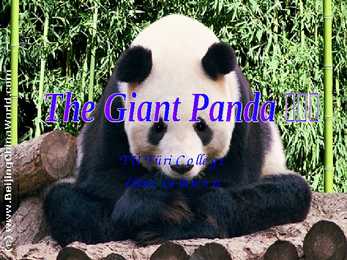
species, forest, china, rare, south, tiger, wild, river, lemur, beetle, conservation, extinct, rate, dolphins, dwarf, lemurs, forests, habit, there, first, could, development, found, beetles, habitat, evolution, fresh, animals, endangered, still, wildlife, native, east, programme, insect, housing, roberts, move, chance, before, work, added, seriousT Ü T üri C o lle g e Liina Le inm e ts Introduction · Panda (Ailuropoda melanoleuca) is a mammal classified in the bear family, native to centralwestern and southwestern China. It is easily recognized by its large, distinctive black patches around the eyes, over the ears, and across its round body. · The Giant Panda lives in a few mountain ranges in central China. · It once lived in lowland areas, but farming, forest clearing, and other development now restrict the Giant Panda to the mountains. In the wild · The Giant Panda is a · Pandas communicate terrestrial animal and through vocalization primarily spends its life and scent marking such roaming and feeding in as clawing trees or the bamboo forests. spraying urine. It is able · Though generally alone, to climb and take each adult has a shelter in hollow trees
Protecting endangered species will make a difference in humans' life In the nature of humankind it is natural to hunt animals. However, nowadays hunting endangered species will make humans be just killers, because it is not necessary to kill something just to have a trophy on the wall at home. People can be proud of what they have done, but decreasing the population of a species largely will cause the specific animal breed to go extinct faster than it would happen via natural causes. Therefore, humans should stop hunting endangered species to slow down their extinction, as these species offer balance in the wildlife, are used without purpose in medicine, and may even reduce poverty. Species on the brink of extinction affect us more than we realize. Sure, pandas are cute, and rhinos are fun to look at, but is there anything more to that
Geography Papua New Guinea consists of over 600 islands and lies in the middle of the long chain of islands stretching from mainland South-East Asia. The mainland and larger islands are mountainous and rugged, divided by large fertile upland valleys. Fast- flowing rivers from the highlands descend to the coastal plains. A line of active volcanoes stretches along the north coast of the mainland and continues on the island of New Britain. To the north and south of this central mountain range on the main island lie vast stretches of mangrove swamps and coastal river deltas. /1/ Volcanoes and thermal pools are also found in the southeast of other islands. Papua New Guinea offers the greatest variety of terrestrial ecosystems in the South Pacific, including five types of lowland rainforest, 13 types of montane rainforest, five varieties of palm and swamp forest and three different mangrove forests
Labour Party, the Liberal Party and National Party. The Senat's membership is wider, it comprises 12 senators from each state and 2 from each territory. Senators are elected for six year terms. The Executive power in Australia is in the hands of the Commonwealth Government lead by the Prime Minister. Today the Prime Minister is John Howard, the leader of the Liberal Party. History Australia was once a part of the giant continent Gondwana. It included Africa, South America and Antarctica. First Australia and Antarctica split from Gondwana, then Australia broke away from Antarctica and began to move north. Aborigines arrived there about 50 000 years ago. They had occupied the whole continent by 30 000 years ago. At that time Tasmania was still part of the mainland. About 20 000 years ago the ice began to melt and the rising water level cut Tasmania off from the mainland. Traders from what is now Indonesia are thought to have been visiting
Topic Australia Introduction Many people know Australia as the land down under because it is the only continent except for Antarctica that is all on the southern hemisphere. Its name means ,,Southland". The official name of the country is the Commonwealth of Australia. It's capital is Canberra. Australia is the sixth largest country in the world but the smallest continent. Australia has 6 states and 2 territories (New South Wales, Victoria, Tasmania, Queensland, Western Australia , South Australia, The Australian Capital Territory and the Northern Territory). The Australian people are culturally the same as the Anglo Americans. There also live aborigines. Aborigines are the ancestors of the people. Like the US and Canada, Australia was an English speaking colony of Great Britain. Today Australia is a modern developed country with a diversified economy. Australia is an island continent of 7.7 million square kilometres, which makes it a little smaller than the USA.
Subject: Animals in danger of extinction Date: 20.04.11 The aim of this report is to make an overview of the status of wild animals in the world. The report is based on up-to-date statistics related to the topic. There are several disappointing facts and figures. a) Over the last couple of years the list of animals in danger of extinction has grown rapidly. The International Union for Conservation of Nature (IUCN) has calculated the percentage of endangered animals as 40 percent of all organisms. Recent research indicates that 70% of the world's most threatened
Zoos are sometimes seen as necessary alternatives to a natural environment. Not only people are trying to keep endangered species and rare animals in the nature reserves, but also the number of zoos built around the world is slowly growing. Do we actually need those kind of man-made "homes" for animals or is it better for them to live outside cement walls in their natural habitat? First of all, nowadays we need to help the nature and animals that are the ones facing quite big danger of becoming extinct. Mostly it is caused by our selfish attitude: we do not take care of nature. Zoo is
Its capital is Canberra. Other big cities are Melbourne, Sydney, and Brisbane. National language in Australia is English. Monetary unit is Australian dollar. Their national holiday is on the 26th of January. In 1788 on the 26th of January the first fleet arrived at Botany Bay and established a penal colony near modern-day Sydney. Geographical Position Australia is located in the Southern Hemisphere. It’s the only continent except for Antarctica that is all south of equator. Sometimes Australia is called the island continent. There is a great reason why. It really is an island. It is 2880 km from the mainland of Asia and is almost half way round the world from Europe. More than 9 600 km separates it from America. Australia lies between the Pacific and Indian oceans. The Timor Sea and the Arafura Sea separate Australia from Indonesia. In the north the coast is washed by Great Australian Bight and the Indian Ocean. In the northeast the Coral
Topic Australia Tallinn English College 2006 Australia 1 . Introduction The name Australia is derived from the Latin Australis, meaning of the south. In land area, Australia is the sixth largest nation, its territory is 7,686,850 sq km and its population reaches today over 20,5 million people. It is the only nation to govern an entire continent and its outlying islands. Australia's capital is Canberra, the only city with its own territory. It was built in the early 1900s just to be the capital. The official language is English and the official name of Australia is the Commonwealth of Australia.
Palm oil Palm oil is a type of edible vegetable oil that is derived from the palm fruit, grown on the African oil palm tree. Oil palms are originally from Western Africa, but can flourish wherever heat and rainfall are abundant. Today, palm oil is grown throughout Africa, Asia, North America, and South America, with 85% of all palm oil globally produced and exported from Indonesia and Malaysia; but most of the time not using sustainable measures. The industry is linked to major issues such as deforestation, habitat degradation, climate change, animal cruelty and indigenous rights abuses in the countries where it is produced, as the land and forests must be cleared for the development of the oil palm plantations. According to the World Wildlife Fund, an
The Mountain Lion cougar (Puma concolor), also puma, cougar, or panther, is a member of the Felidae family, native to the Americas. This large, solitary cat has the greatest range of any wild land mammal in the Western Hemisphere, extending from Yukon in Canada to the southern Andes of South America. An adaptable species, the cougar is found in every major North American habitat. The Mountain lions of Yellowstone region were significantly reduced by predator control measures during the early 1900s. It is reported that 121 lions were removed from the park between the years 1904 and 1925. Then, the remaining population was estimated to be 12 individuals. Mountain lions apparently existed at very low numbers between 1925 and 1940. They maintain a secretive profile in the Yellowstone region
MOST ENDANGERED BEARS SIIRI PAURSON EMÜ 2016 TOPICS 1. GIANT PANDA (hiidpanda e. bambuskaru) 2. SUN BEAR (päikesekaru e. malai karu e. biruang) 3. ASIATIC BLACK BEAR (kaeluskaru) 4. SLOTH BEAR (huulkaru) 5. ANDEAN BEAR (prillkaru) 6. POLAR BEAR 7. BROWN BEAR 8. THE AMERICAN BLACK BEAR (baribal) 1. GIANT PANDA • The giant panda remains the world's most threatened bear species. • A very high risk of extinction (väljasuremine) in the wild. • Despite "the establishment of nearly 60 panda reserves, a ban on logging (metsaraie keeld), and widespread reforestation programmes," habitat destruction and degradation are still the panda's greatest enemies. 2. SUN BEAR • The world's smallest bear species. • We estimate that sun bears have declined by at least 30 percent over the past 30 years and continue to decline at this rate. • Sun bears live mostly in the tropical forests of mainland Southeast Asia.
Australia Fact file: Australia comprises a land area of 7 686 850 square kilometres. Its population is about 21,3 million people. Australia's capital is Canberra. The national language is English. The official name of it is the Commonwealth of Australia. It's divided into six states and two territories: New South Wales, Queensland, South Australia, Western Australia, Tasmania, Victoria, Australian Capital Territory (ACT) and Northern Territory. Symbols: Australia had the British flag as their official flag until 1901, when the Commonwealth of Australia was formed. Over 30 000 entries attracted the official competition. Five of them, which contained almost identical designs, were placed equally first. The Australian flag symbolises Australia's historical links with Britain, because it has
o' Groats 1,404 kilometres (872 miles) and 16.5 h) Finland is a land of all seasons. Its blue and white flag is said to represent the white snow of winter and the blue lakes of summer. In between the two is the dramatic spring when everything turns green in a week, and autumn, full of reds and browns as the leaves swirl over the city squares.Finland is certainly Scandinavia`s least understood and most culturally remote country. Finland is covered by a mixture of forest and marshland. It seems , for every Finnish family to have an island or lake of its own, with plenty of space for visitors too. Inland lakes cover almost 10 percent of the country`s entire area. None of Finland`s lakes are very deep, however; most of them averae around 100m (330ft). (www.wikipedia.org) Position and size Finland is made up of 11 provinces and the autonomous land Islands. It lies on the
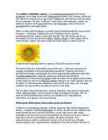
This motion(liikumine, esildis) is performed by motor cells in the pulvinus, a flexible segment(segment, lõik ; segmenteerima, tükeldama) of the stem just below the bud. As the bud stage ends, the stem(tüvi) stiffens(kangestuma, jäigastuma) and the blooming stage is reached. Sunflowers in the blooming stage are not heliotropic anymore. The stem has frozen, typically in an eastward orientation. The stem and leaves lose their green color. The wild sunflower typically does not turn toward the sun; its flowering heads may face many directions when mature. However, the leaves typically exhibit some heliotropism. Cultivation and uses A sunflower farm near Mysore, India. Sunflower heads solds as snacks in China. Sunflowers are native(pärit) to the Americas. The earliest known examples of a fully domesticated sunflower were found at the Olmec site of San Andrés dating some time before 2500 B.C
His weight was about 7 tons.He had a massive skull balanced by a long, heavy tail. Fossils of T. rex have been found in North American rock formations. More than 30 specimens of T. rex have been identified, some of which are nearly complete skeletons. He became extinct 65 million years ago. *QUAGGA: One of Africa's most famous extinct animals, the quagga was a subspecies of the plain zebra. The quagga was hunted to extinction for meat. The last wild quagga was probably shot in the late 1870s, and the last specimen in captivity died on August 12, 1883 at the Artis Magistra zoo in Amsterdam. *IRISH DEAR: The Irish Elk or Giant Deer, was the largest deer that ever lived. It lived in Eurasia, from Ireland to east of Lake Baikal. The Giant Deer is famous for its size (2.1 meters tall+ antlers 3.65 meters) The cause of theis extinction is still unknown. Some say they died because of their large
fresh water lakes on Earth. They are sometimes called the inland seas. There are: 1. Lake Superior (the largest and deepest) 2. Lake Michigan (the only one entirely in USA) 3. Lake Huron 4. Lake Erie (smallest and most shallow) 5. Lake Ontario (much lower elevation than the rest). The Great Lakes between the USA and Canada are joined together by rivers and canals. The lakes are connected to the Atlantic Ocean by the St. Lawrence River and to the Hudson River by a canal. Between Lake Ontario and Lake Erie is Niagara Falls (51 m). Another large lake in the USA is Great Salt Lake. It is saltier than the sea. Rivers The Mississippi river is the major river of North America and the United States. It flows from north-western Minnesota south to the Gulf of Mexico. It is a significant transportation artery and when combined with its major tributaries (the Missouri and the Ohio rivers) it becomes the third largest river system in the world (at 6,236 km)
Võnnu Keskkool ESTONIA Referaat Autor: Klass : 9 Juhendaja: Võnnu 2013 Estonia officially the Republic of Estonia, is a state in the Baltic region of Northern Europe It is bordered to the north by the Gulf of Finland, to the west by the Baltic Sea, to the south by Latvia and to the east by Lake Peipus and Russia.Across the Baltic Sealies Sweden in the west and Finland in the north. The territory of Estonia covers 45,227km2 The Estonian climate resembles that of other countries on the Baltic littoral. On account of the country's proximity to the sea, the skies are often cloudy, and rain often falls in the spring and autumn, in the winter the rain turns to snow. The highest point in Estonia is Suur Munamäg It is in fact the highest point in the Baltic
2 million in the Republic of Ireland[2] (1.6 million in Greater Dublin[3]) and just over 1.7 million in Northern Ireland[4] (0.6 million in Greater Belfast[5])). Politics Politically, Ireland is divided into: · The Republic of Ireland, with its capital Dublin. · Northern Ireland, which is part of the United Kingdom, Geography A ring of coastal mountains surrounds low central plains. The highest peak is Carrauntuohill , which is 1,041 m. The island is bisected by the River Shannon, at 386 km (240 miles) the longest river in Ireland. The island's lush vegetation, a product of its mild climate and frequent but soft rainfall, earns it the sobriquet "Emerald Isle". The island's area is 84,412 km². Ireland is divided into four provinces: Connacht, Leinster, Munster and Ulster. Ireland's least arable land lies in the south-western and western counties. These areas are largely spectacularly mountainous and rocky, with beautiful green sights.
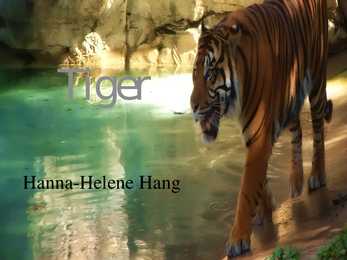
Tiger HannaHelene Hang Naming The word "tiger" is taken from the Greek word "tigris", which is possibly derived from a Persian source meaning "arrow", a reference to the animal's speed and also the origin for the name of the Tigris river. Physical characteristics Tigers are easy to recognise. They typically have rustyreddish to brownrusty coats, a whitish medial and ventral area, a white "fringe" that surrounds the face, and stripes that vary from brown or gray to pure black. The form and density of stripes differs between subspecies, but most tigers have over 100 stripes. Subspecies There are nine recent subspecies of tiger, three of which are extinct.
In the very southwest there are thin forests of evergreen trees (5.). Most of Australian trees are kinds of eucalyptus trees (or gum trees to Australians) and acacia ( wattle to Australians). Eucalyptus trees are found everywhere in Australia. There are many kinds of them and they greatly differ in size. One kind, the great mountain ash, can grow to 120 metres and it grows in the wet forests in the eastern part of the continent.These strong trees do not die when there are forest fires. Some other kinds are small bushes in the semi-deserts.Eucalyptuses give the local people timber and eucalyptus oil. Of 600 kinds of acacias the golden wattle, the national flower of Australia, is the best known. Australia has many other kinds of tree, and thousands of kinds of wild flowers too. Of other trees there grow bottle trees in the savannas, tree ferns in the tropical forests and many others. Fauna. The animal life of Australia is unique
centuries, mutation produced a wide array of colours based on 2 different pigments. Eumelanin gives the blacks, browns and blues while phaeomelanin gives the reds, fawns and creams. A few other genes give further variations on those colours such silvers, colourpoints and solids/selfs. Mutations continue to occur and unexpected colours also turn up due to inbreeding where recessive genes, hidden for generations, start showing up. AMBER AND LIGHT AMBER During the 1990s, some purebred Norwegian Forest Cats in Sweden produced chocolate/lilac and cinnamon/fawn offspring. However, those colours are not found in the purebred Norwegian Forest Cat gene pool. Had the gene pool become polluted by someone, perhaps generations ago, breeding their Norwegian Forest Cat to another breed? Was it a spontaneous mutation? Crossing of those cats with known chocolate and cinnamon colour cats of other breeds ruled out chocolate/lilac and cinnamon/fawn genes. These cats were a totally new
officially the Portuguese Republic, Portuguese: República Portuguesa) is a country located in Southwestern Europe, on the Iberian Peninsula. It is the westernmost country of mainland Europe, and is bordered by the Atlantic Ocean to the west and south and by Spain to the north and east. The Atlantic archipelagos of the Azores and Madeira are Portuguese territory as well. The country is named after its second largest city, Porto, whose Latin name was Portus Cale. SETTLEMENT The land within the borders of the current Portuguese Republic has been continuously settled since prehistoric times
Kingdom are the Isle of Man in the Irish Sea and the Isle of Wight which lies off of England's southern coast. The largest groups of islands are the Shetland Islands, the Orkney Islands and the Hebrides. Geographical Position The UK is situated in the Northern Hemisphere. The United Kingdom is bordered by the Atlantic Ocean in the west, the North Sea in the east, the Norwegian Sea in the north, and the English Channel, also known as La Manche, in the south and it also separates the country from the continent of Europe. The neighbours of the United Kingdom are Iceland in the north-west, Norway in the east and France in the south. Britain also has many dependant territories which are scattered throughout the world and are the remains of the huge former British Empire. Today Britain assists them, but they may become independent whenever they wish. There have been some difficulties with some of the territories. Argentina has made
it is estimated that by 2025, more than half of the world population will be facing water-based vulnerability and human demand for water will account for 70% of all available freshwater. • Freshwater is the most fundamental finite resource with no substitutes for most uses, yet we are consuming fresh water at least 10 times faster than it is being replenished in regions of northern Africa, the Middle East, India, Pakistan, China, and the U.S.. Species Extinction • Human beings are currently causing the greatest mass extinction of species since the extinction of the dinosaurs 65 million years ago at rates 1000 to 10,000 times faster than normal. • The 2012 update of the IUCN Red List of Threatened Species shows that of the 63,837 species examined worldwide, 19,817 are threatened with extinction - nearly a third of the total. • If present trends continue, scientists warn that within a few
Fishery resources Capture fisheries resources are highly diverse. FAO landing statistics refer to about 2 500 species or group of species most of which are finfish. By far the most numerous fish species, and those most important to aquaculture and fisheries, are teleosts, or bony fish, which in the sea extend from small "grazing" species such as anchovy to large active predatory fish such as tuna. A similarly wide range is also found in freshwater, with the most important species from a production point of view belonging to the carp family. These account for over half the total of inland waters fisheries production. Marine capture fisheries resources are usually considered close to full exploitation worldwide with about half of them fully exploited, one quarter over exploited, depleted or
of waste disposal. Developed countries are notorious for producing an excessive amount of waste or garbage and dumping their waste in the oceans and, less developed countries. Nuclear waste disposal has tremendous health hazards associated with it. Plastic, fast food, packaging and cheap electronic wastes threaten the well being of humans. FIND OUT 5 WAYS HOW TO MANAGE WASTE. 5. Loss of Biodiversity: Human activity is leading to the extinction of species and habitats and loss of bio- diversity. Eco systems, which took millions of years to perfect, are in danger when any species population is decimating. Another example is the destruction of coral reefs in the various oceans, which support the rich marine life. FIND OUT 5 WAYS HOW TO HALT THE LOSS OF BIODIVERSITY 6. Deforestation: Our forests produce fresh oxygen and help in regulating temperature and rainfall. At
New Zealand New Zealand is an island country. It is in the south-western Pacific Ocean comprising two main island, North- and the South Island with lots of smaller islands. New Zealand is notable for its geographic isolation. It's about 1,600 kilometers from Australia and its closest neighbours to the north are New Caledonia, Fiji and Tonga. New Zealand's total land area is 268,021 square kilometers. The country extends more than 1600 kilometers along its main,north - north-east axis and has about 15,000 kilometers of coastline. The South Island is the largest land mass of New Zealand and is divided along its
across the country, Canadians experience many different landscapes from rolling plains and mountains to the cold tundra of the north. Despite Canada's great size, it is one of the world's most sparsely populated countries. This fact, coupled with the grandeur of the landscape, has been central to the sense of Canadian national identity. 2. Geographical position Canada is the second largest country in the world after Russia. In the Arctic, Canada reaches almost as far north as Greenland. To the south it extends to the same latitude as southern France. The distance from Canada's west coast, the Pacific Ocean, to its east coast, the Atlantic Ocean, is farther than from North America to Europe. Canada's total land area includes thousands of adjacent islands, notably Newfoundland in the east and those of the Arctic Archipelago in the north. In longitude Canada extends from approximately 52° to 141° W, a distance that spans six time zones
The current coat of arms of Estonia is a golden shield which includes three slim, blue leopards (or lions) in the middle, with oak branches along the side of the shield. It originates from Denmark. It was officially adopted in 1925. Geography Estonia is the northernmost of the three Baltic States. It is located on the northern hemisphere on the eastern shores of the Baltic Sea in the north-east of Europe. It has land contact with Russia from the east and Latvia from the south. In the north The Gulf of Finland separates Estonia from Finland. The Gulf of Riga is situated to the south-west. Estonia has more than 1500 islands. The biggest ones are located to the west. The four biggest islands are Saaremaa, Hiiumaa, Vormsi and Muhu. The highest point in Estonia and also in the Baltic region is Suur Munamägi. It is 318. above sea level. Estonia is a country of a thousand lakes. The Largest one is Lake Peipsi which is also the fourth biggest freshwater lake in Europe
continent and very big for an island. There are only five countries bigger than Australia in the World. There are five states in the mainland. Tasmania is also considered as a state so there are six states. The Northern Territory and Canberra are also independent but they are not states. Canberra is the capital of Australia and it is situated between Sydney and Melbourne because both of these cities wanted to be the capital. The population is about 19 million people and growing. New South Wales is the most populated state and Victoria is the most densely populated state. The national language is English. It is English because British settlers came to live in Australia in the past and they brought convicts with them who were also British. Symbols. The Australian Flag came into being after the federation of the Australian States into the Commonwealth of Australian on the first January, 1901. The Commonwealth Blue Ensign was selected as a result of a public competition
everything was naturally in motion. In the course of the eighteenth century the notion of progress, of gradual but relentless pursuit of betterment, began to take hold in western thought. It was only natural that the ideas of change and of progress should eventually be applied to the Great Chain of Being. The natural implication of a "dynamic" chain of being was a sort of tree of life, gradually sprouting upward from basic primordial ooze, branching outward into all the varied species on our fine planet, ending with, of course, eighteenth century Man. This could be called evolutionary, but it does not offer a theory of evolution, an order in which evolution took place. It was no longer acceptable to say "God did it". Therefor, if evolution was to ever become a science, a rational explanation had to be offered. Such an explanation was proposed by Jean Babtiste Lamarck toward the end of the eighteenth century, and Lamarck became best
9,522,055 km2 to 9,826,630 km2 which makes it the third or fourth largest country in the world. America is surrounded by three oceans Pacific Ocean, Atlantic Ocean and Arctic Ocean. It's also bounded with Gulf of Mexico and Bering Strait. The highest point in America is Mount McKinley (6,194 m) in Alaska. The lowest point is Death Valley which lies 86 metres below sea level. The Great Basin Desert is the largest desert in America. Missouri river is the longest river in the States. The largest lake is Lake Superior. Lake Superior Death Valley Nature There are very many species in the States. There are about 17 000 types of trees (larger plants) in the mainland and Alaska. Over 1,800 species of flowering plants are found in Hawaii. The United States is home to more than 400 mammal, 750 bird, and 500 reptile species. About 91,000 insect species have been described
 annaabi.ee