Leidsid 33 sarnast õppematerjali, mis on seotud failiga "Questions about the solar system". Need materjalid aitavad sul teemat sügavamalt mõista.
solar, mars, outer, season, asteroid, belt, surface, mercury, venus, jupiter, saturn, pluto, between, describe, seen, star, night, brown, viking, landed, found, rocky, changes, caps, frozen, fluid, melt, polesTallinna Tööstushariduskeskus Saturn Referaat Tallinn 2014 Sissejuhatus Saturn is one of the most interesting planets in the solar system. It is the sixth planet in the solar system, and is most famous for its stunning array of rings. It is a very easy planet to pick out in the sky because it is one of the brightest lights in the shy. It also has a very faint greenish color that makes it stand out from the rest of the objects in the sky ("Astronomy for Kids"). Saturn is the second largest planet in the solar system, Jupiter being the only planet that is bigger
.........................................................................27 7.8 Measuring electricity..................................................................................................27 SOLAR ENERGY..............................................................................................................27 8.1 Photovoltaic energy...................................................................................................... 28 8.2 Solar thermal heat.......................................................................................................29 8.3 Solar thermal power plants......................................................................................... 30 8.4 Solar energy and the environment..............................................................................30 WIND ENERGY.................................................................................................................31 9
planets, Gal-Yam said. He added: "I'm just really happy to be observing this." The star had begun its race to destruction long before that night on Palomar, when it began to lose a lifelong fight against gravity. Gravity is responsible for setting newborn stars aflame, by squeezing atoms of hydrogen in the star's core so tightly that they fuse to make helium. The fusion generates light and heat and also exerts pressure that allows the core to withstand the enormous weight of the star's outer layers. But when the core consumes all of its hydrogen, gravity compresses it. The temperature of the shrinking core rises to about a hundred million degrees, hot enough for helium nuclei to fuse and make carbon. The new surge of energy keeps the core from collapsing much further. For an isolated star no heavier than the sun, there is little more to the story. The star burns all of its helium and shrivels. It turns into a white dwarf about the size of Earth, aging and cooling
1 Wave energy Introduction to wave energy There are several possibilities to harvest different forms of energy from the sea. One of these options is the usage of waves for the generation of electricity. The devices needed to perform this task are called wave energy converters. Wave energy is indirect solar energy in twice. At first there is the wind, which is caused by variations in atmospheric pressure due to a differential solar heating of earth's surface by the sun. Different regions of pressure drives a force which rises a movement of atmospheric air masses that causes the earths wind system. If wind strikes over the surface of an open water, waves are induced. First they are very flat with only a low level of energy. When there is a long distance over
SINU KOOLI NIMI SINU NIMI BOOK REPORT FORM "Life, The Universe and Everything" KOHT, AASTAARV Page 1 Contents · About the author .................................................................................................................... 3 · Plot ................................................................................................................................... ........ 4 · Characters ......................................................................................................................... ...... 5 · Theme/setting.................................................................................................................... ...... 6 · Lan
Wonders of Nature are just ‘stuff’. Mysteries (Magic) are not feared or admired, they are conquered. We are changing the world and the world is changing us. We live in a techno-scientific world. Our worldview is techno-scientific. Knowledge vs Wisdom The Business of Science (Knowledge) The Business of Philosophy (Wisdom) Does the Earth move? What is the meaning of life? What is the surface of a triangle? Why should I be good? When was the Battle of Waterloo fought? How can we be happy? What is the age of the Earth? What is beauty? How long is the Amazon River? How do we know? Is Global warming happening? What is Philosophy? What is Science? Science needs/requires Philosophy. What is Philosophy? Philosophia = Pursuit of wisdom / Love of knowledge
. . . . . . . . . . . . . . . . . . . . . . . . . . . . . . . . . . . . . . .33 Road test . . . . . . . . . . . . . . . . . . . . . . . . . . . . . . . . . . . . . . . . . . . . .32 Crankcase emission control filter renewal . . . . . . . . . . . . . . . . . . . .35 Roadwheel check . . . . . . . . . . . . . . . . . . . . . . . . . . . . . . . . . . . . . . .30 Distributor lubrication - models with contact breaker distributor . .12 Seat belt check . . . . . . . . . . . . . . . . . . . . . . . . . . . . . . . . . . . . . . . . .19 Driveshaft check . . . . . . . . . . . . . . . . . . . . . . . . . . . . . . . . . . . . . . . .29 Spark plug renewal . . . . . . . . . . . . . . . . . . . . . . . . . . . . . . . . . . . . . .24 Engine oil and filter renewal . . . . . . . . . . . . . . . . . . . . . . . . . . . . . . . .6 Spark plug renewal - RS Turbo models . . . . . . . . . . . . . . . . . . . . . .15
.........................................6 2.1.1. Annual Generation........................................................................................7 2.1.2. Growth and cost trends................................................................................8 2.1.3. Theoretical potential.....................................................................................9 2.1.4. Benefits of wind energy................................................................................10 2.2. Solar Energy........................................................................................................11 2.2.1 Development, deployment and economics................................................12 2.3. Hydroenergy.......................................................................................................13 2.4. Geothermal Energy............................................................................................14 2.5. Biomass Energy...................................
...........................................................144 Who Is the Experiencer? ..........................................................................146 The Breath.................................................................................................147 Addictions..................................................................................................149 Inner Body Awareness...............................................................................150 Inner and Outer Space................................................................................151 Noticing the Gaps.......................................................................................153 Lose yourself to Find Yourself....................................................................153 Stillness.......................................................................................................154 Chapter Nine
placed them at opposite ends of a metal tube. A rudimentary telescope was the result. Galileo made his own telescope as well as a compound microscope. Galileo directed all of his attention to the heavens. He was the first man to see craters on the moon, sun spots and the rings of Saturn. He also observed the phases of Venus. He determined that the Earth's moon was not a source of light but rather of reflected light. He saw the moons of Jupiter. And of course, Galileo was also a Copernican: "Sol est centrum mundi, est omnio immobile motu locali," ("The sun is the center of the universe and the earth moves.") In 1611, Galileo packed his brass telescope in his bag and decided to go to Rome. Criticism of Galileo's observations began immediately. The authorities at Rome would not even look through his telescope. Why not? They had absolute faith in Aristotle
Venus Venus has been known since prehistoric times and the planet is named after Venus, the Roman goddess of love. It is the second-closest planet to the Sun and it`s often called Earth's "sister planet," because the two are similar in size, gravity, and bulk composition. Because of these similarities, it was thought that Venus might even have life. Venus is also called the Morning star or the Evening star, because it reaches its brightness shortly before sunrise or shortly after sunset. It is the brightest object in the sky except for the Sun and the Moon. During the last few years the scientists have found that Venus and Earth are very different. It has no oceans and is surrounded by a heavy atmosphere composed mainly of carbon dioxide with virtually no water vapor.
boats called "umiaq" transported people, dogs, and supplies. Finding Food Because Inuit live in places where most plants cannot grow, the traditional diet consisted of almost entirely meat. Inuit fished and hunted to get their food. Whales, walruses, seals, fish were staples of their diet. Clothing for Staying Warm Traditional Inuit clothing was made from animal skins and fur. Boots were also made from animal skins. Large, thick coats with big hoods called "parkas" were worn as an outer layer. Today the parka style of coat is worn in other places in the world and it is made of many other materials. Traditions Although Inuit life has changed significantly over the past century, many traditions continue. Traditional storytelling, mythology, and dancing remain important parts of the culture. Family and community are very important. The Inuktitut language is still spoken in many areas of the Arctic and is common on radio and in television programming.
c 2 rip somebody off 3 conversion 7 top-floor d 4pay through the nose (for Challenge! 4 open-plan 8 lease something) Students' own answers e 3 make a killing 2 1 B 2 C 3 D f 8 tighten your belt 3 1 T 2 F 3 F 4 T 5 F 2F Discussing pros and cons g 1 put aside page 17 h 7 be well off 4 1 500,000 Britons live abroad for part of the year. 1 1 You have to admit that ...
Parts of Canada are very mountainous and the tallest mountain in Canada is the Yukon's Mount Logan, which is 6050 meters tall. Canada has many mountain ranges. In the east there are the Appalachians, Torngats and Laurentias. In the western region there are the Rocky, Coastal and Mackenzie ranges and Mount St. Elias and the Pelly Mountains in the northern regions. Canada has about two million lakes and they cover about 7.6% of Canada's land. The biggest lakes in order by their surface are Lake Huron, Lake Great Bear, Lake Superior, Lake Great Slave (which is also the deepest), Lake Winnipeg, Lake Erie and Lake Ontario. There are also a lot of rivers in Canada. The longest river is the Mackenzie River which is 4241 kilometers long. It runs through the Northwest Territories. Other large and important rivers are the St. Lawrence River, the Yukon River, the Columbia River, the Nelson River, the Churchill River and the Fraser River.
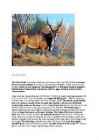
Ontogeny and Reproduction Gestation Period: 9 months Young per Birth: 1 Weaning: After 6 months. Sexual Maturity: Females at 15-36 months, males at 4-5 years. Life span: Up to 25 years. Primarily nocturnal, Giant Elands are highly nomadic, with large home ranges and seasonal migration patterns. During the day, herds often rest in sheltered areas. A gregarious species, Giant Eland herds usually consist of twenty or more animals and do not disband during the wet season, suggesting that social rather than ecological factors are responsible for herding. There is no evidence of territoriality, and males rarely display aggression, even during the breeding season. Giant Eland are alert and wary, making them difficult to approach and observe. They move quickly, running at over 70 km/h (42 mph), and despite their size are exceptional jumpers, easily clearing heights of 1.5 m (5 ft). Giant Eland live in open forest and savannah where
Answers for the IPCC Summary. 1.Radiative forcing is a measure of the influence that a factor has in altering the balance of incoming and outgoing energy in the Earth-atmosphere system and is an index of the importance of the factor as a potential climate change mechanism. 2.The three main things that alter the energy balance of the climate system are the changes in the atmospheric abundance of greenhouse gases and aerosols, in solar radiation and in land surface properties. 3.The two sources for the increased concentration of CO2 in the atmosphere are production, distribution and consumption of fossil fuels and as a by-product from cement production. 4.The two main sources of methane pollution are agriculture and fossil fuel use. 5.Volcanic aerosols are not included to the list because of their episodic nature. 6.The world's oceans absorb more than 80% of heat. 7.The total 20th-century rise is estimated to be 0.17 [0.12 to 0.22] m. 8
activated and temporarily reverses the electrical state of its interior membrane from negative to positive. An electrical charge travels along the axon to the neurone’s ending (terminal) where it triggers the release of a neurotransmitter* and then disappears. ADRENALINE (U.S. - Epinephrine) – A hormone released by the adrenal medulla* and a neurotransmitter acting at the level of the autonomic nervous system and the brain. ADRENAL CORTEX – The outer layer of the adrenal, a small endocrine gland located near the kidney. It produces and secretes several hormones* (corticosteroids) e.g. cortisol. It is implicated in stress response. ADRENAL MEDULLA - The centre of the adrenal, a small endocrine gland located near the kidney. It produces and secretes noradrenaline and adrenaline for the activation of the sympathetic nervous system. It is implicated in stress response.
from 1930-34 visiting scientist at Harvard University. 3. Öpik was one of the most outstanding astrophysicists of his generation, with wide- ranging interests in the physical sciences. Among his many pioneering discoveries were:the first computation of the density of a degenerate body, named the white dwarf; the first accurate determination of the distance of an extragalactic object (Andromeda Nebula;the prediction of the existence of a cloud of cometary bodies encircling the Solar System, later known as the "Oort Cloud";the first composite theoretical models of dwarf stars like the Sun which showed how they evolve into giants;a new theory of the origin of the Ice Ages. 4. Öpik made many contributions to our knowledge of the minor bodies of the Solar System and founded the meteor research group at Harvard. His statistical studies of Earth-crossing comets and asteroids are fundamental to our understanding of the
Moon and what did he say? Was he walking on the Moon alone? 2 How many Apollo missions were registered? What number mission was the first/last to land on the Moon? How many Apollo missions landed on the Moon? 3 What do you know about the following people: Harrison Schmitt; Alan Shephard; Eugene Cernan? 4 Which invention enabled the people on the Moon to travel long distances? 5 Have the Russians walked on the Moon? Though the exploration of Mars has taken place over hundreds of years, it began in earnest with the invention and development of the telescope in the 1600s. Increasingly detailed views of the planet from the Earth inspired speculation about its environment and possible life, even intelligent civilizations that might be found there. Probes sent from Earth beginning in the late 20th century have dramatically increased the knowledge of the Martian system. Engineering interplanetary journeys is very complicated, so roughly two
- Orange thin lines appearing and going into some of the white circles. - Lot of hexagons filled with graphical imagery Connotative look : - Blue color is mostly picked from the company's brandbook. It is associated with trust, hoenesty and loyality. From color pshycology persepctive its reliable, responsible, emits inner security and confidence. Blue is also referred as a sky or even pictured as a Earth atmosphere or a outer space. Therefore, in the video we sense this blue gradiant as a sky or a space. We also could feel that the company might be actually trustworthy. - The white circes on the backround look like stars. Along with the blue gradient of course. These white circes are firstly shaped as circles. And circles, viewing from the far distance, may look like a star. Another thing is their color. When we view the sun
went 7. Optional ,,-ly" ending on adverbs ,,He writes real quick." 8. Unmarked plurality on amounts of measurement after numerals 10 pound, 20 year 9. Different forms of the relative pronoun ,,The man what lives there."/ ,,The man as lives there." 10. Regularisation of reflexive pronouns myself; herself; hisself; theirselves 11. Distinction between main and auxiliary verb ,,do" ,,You done it, did you?" 2) The spread of English. The Inner / Outer / Expanding Circle THE SPREAD OF ENGLISH · 16-18th century the spread took place. · By the beginning of the 19th century English had spread to virtually every part of the world. · 19-20th century the number of speakers only grew. The growth was achieved by covering more land, exploring more land, going west, and accepting new immigrants from other places of the world. The spread of English also brought political growth and the spread of power. Besides the
Story: white European Charles Marlowe is in charge of a ferry boat on Congo, meets Kurtz, who is trading ivory, very expensive, made illegal in some countries for now, keeps the local in fear. Later on he dies and Marlow returns to tell the story. Critique in colonialism: On one level, then, Heart of Darkness is a scathing critique of colonialism. It takes place at a time when there were mere hints that colonialism was not working as it should. It was a time that appeared on the surface perhaps to be the height of Empire, a time to be bullish about colonialism in Africa. Kurtz as Nietzschean Superman- Kurtz is another strong person, that uses the Negroes because they are weaker than him - in fact he is considered like a god by them for his nature- and that loves this country for the same reason as Marlow and also because he can be seen like a god and live far from the stupid morals of his rich European world. Nietzsche believes that the true strength of
control unit will trigger the ignition of a gas generator propellant to rapidly inflate a nylon fabric bag. As the vehicle occupant collides with and squeezes the bag, the gas escapes in a controlled manner through small vent holes. The airbag's volume and the size of the vents in the bag are tailored to each vehicle type, to spread out the deceleration of (and thus force experienced by) the occupant over time and over the occupant's body, compared to a seat belt alone. The signals from the various sensors are fed into the Airbag control unit, which determines from them the angle of impact, the severity, or force of the crash, along with other variables. Depending on the result of these calculations, the ACU may also deploy various additional restraint devices, such as seat belt pre-tensioners, and/or airbags (including frontal bags for driver and front passenger, along with seat-mounted side bags, and "curtain" airbags which cover the side glass).
Tallinna Inglise Kolledž Australia Referaat Tallinn Table of contents: Introduction.....................................................................................................................3 Geographical Position.....................................................................................................3 Relief...............................................................................................................................4 Climate & Time Zones....................................................................................................5 Plants...............................................................................................................................5 Animals...........................................................................................................................6 Population......................................................................................
The Cordilleras consist of rows of mountain ranges with the heights of up to 3000-5000 m. In Alaska the mountain ranges stretch in the west-east direction. 4 On the territory of the USA the mountain ranges stretch in the north-south direction. The first from the east are the Rocky Mountains. West of the Rockies lie vast plateaus and tablelands: the volcanic Columbia Plateau, the Great Basin, the Colorado Plateau. Further west is a narrow belt of the Cascade Mountains, and the Sierra Nevada Range Still further west lies an area of valleys. The forests cover 30% of the US. In the southern part of Alaska grow coniferous trees, notably spruces and firs. Around the Great Lakes and New England are mixed forests of pines, maples, elms, birches, oaks and beeches. Along the Gulf of Mexico grow magnolia, red and black gum, cypress and mangrove. Geographical Regions
Canada. Canada is a very big country in the continent of North America. It is about 10 million square kilometres and that makes it the second largest country in the world after Russia. Quebec (the province) is six times as big as the UK. Canada borders the Atlantic Ocean, the Pacific Ocean, the Arctic Ocean and the USA. The capital of Canada is Ottawa and other main cities are Toronto, Montreal and Vancouver. It is a very developed country. Montreal is the largest city and it is called the Paris of North America because most of the people there speak French. The population of Canada is 28 million people. It is a very multicultural country. People from many different countries have come to live there. The natives are Eskimos and Indians. Eskimos have their own self-governing homeland called Nunavut. In Canada there are also 2 official languages English and French. One third of the population speaks French and the other two spea
Air pressure is measured using a barometer. Several different barometers exist, two of the most common are the mercury barometer and the Air pressure aneroid barometer. Air absolute and relative 1 bar = 1000 mbar = 105 Pa (N/m2) = 750 mmHg humidity Air velocity – is the rate of displacement of air
Lai and Laboratooriumi Streets and built already in the twelfth century. The present location of the church might date from 1330 a boss with this date and the image of St Olaf was found in the church during the reconstruction in the nineteenth century. The present shape and size probably dates from the fifteenth century. St Olaf's Church was the biggest building in medieval Tallinn. The interior is significant for the great height of the nave (31 m) and the beautiful asteroid vaults of the chancel. The steeple with its slender spire was once 159 m high and, as such, the tallest in in the world in the 1500s. This tall spire and a part of the valuable interior was destroyed in the fire caused by the lightning in 1625 and when it was restored in 1651, it was made lower. During the 17th and 18th centuries, the steeple was struck by lightning six times. The present height 123.7-
GrasslandsGrassland biomes can be found in the middle latitudes. They can have either moist continental climates or dry subtropical climates. There are two different types of grasslands; tall-grass, which are humid and very wet, and short-grass, which are dry, with hotter summers and colder winters than the tall-grass prairie. In the winter, grassland temperatures can be as low as -40° F, and in the summer it can be as high 70° F. There are two real seasons: a growing season and a dormant season. Deciduos forest The average annual temperature in a deciduous forest is 50° F. The average rainfall is 30 to 60 inches a year. In deciduous forests there are five different zones. The deciduous forest has four distinct seasons, spring, summer, autumn, and winter. In the autumn the leaves change color. During the winter months the trees lose their leaves. The animals adapt to the climate by hibernating in the winter and living off the land in the other three seasons.
conditioning. Formation of reproducible surface of the capillary is one of the biggest problems in HECE. Conditions were more reproducible if the capillary contacts only with the buffer. However, in practice this is not possible due to the adsorption of sample components and changing the EOF. More often, to delete adsorption products on surface, conditioning by alkalis is applied. Typical conditioning cycle comprises washing with 1 M NaOH, then 0.1 M NaOH, and finally filling the buffer. Before each analysis are performed only the last two steps. Another method consists in washing with a strong acid or with organic solvents such as methanol, dimethylsulfoxide or detergents. Thermal regulation
Parts of Canada are very mountainous and the tallest mountain in Canada is the Yukon's Mount Logan, which is 6050 meters tall. Canada has many mountain ranges. In the east there are the Appalachians, Torngats and Laurentias. In the western region there are the Rocky, Coastal and Mackenzie ranges and Mount St. Elias and the Pelly Mountains in the northern regions. Canada has about two million lakes and they cover about 7.6% of Canada's land. The biggest lakes in order by their surface are Lake Huron, Lake Great Bear, Lake Superior, Lake Great Slave (which is also the deepest), Lake Winnipeg, Lake Erie and Lake Ontario. There are also a lot of rivers in Canada. The longest river is the Mackenzie River which is 4241 kilometers long. It runs through the Northwest Territories. Other large and important rivers are the St. Lawrence River, the Yukon River, the Columbia River, the Nelson River, the Churchill River and the Fraser River. 4. Land regions Mountains
During the war Britain had been seriously bombed for the first time, so exhibits addressed the problems of what could be done with bomb sites around ST Paul's Cathedral, in the City of London. Nothing was three-dimensional. All the exhibits were on one level of tabling in the Great Marquee, because the RHS had not yet realized the value of presentation. Inside the new triple football field sized Chelsea Display Pavilion, old World War II ammunition crates surface from storage at the Royal Hospital to create the elevated, stair step display stands underneath all the plant materials. It is a wonderful example of English economy, devotion to tradition, persistence in spite of obstacles and unabashed joy in the beauty of nature on this relatively small, rocky island country. In 1951 the RHS proudly announced that the largest marquee in the world covering 3.4 acres (1.4 hectares)
various gases and toxins released by industries and factories and burning of fossil fuels; soil pollution is majorly caused by industrial waste that deprives soil from essential nutrients. FIND OUT 5 WAYS HOW TO STOP POLLUTION. 2. Global Warming: Climate changes like global warming is the result of human practices like emission of Greenhouse gases. Global warming leads to rising temperatures of the oceans and the earth surface causing melting of polar ice caps, rise in sea levels and also flash floods, excessive snow or desertification. FIND OUT 5 WAYS HOW TO STOP GLOBAL WARMING. 3. Overpopulation: The population of the planet is reaching unsustainable levels as it faces shortage of resources like water, fuel and food. Population explosion in less developed and developing countries is straining the already scarce resources. Intensive agriculture practiced to produce food, damages the
 annaabi.ee