Leidsid 33 sarnast õppematerjali, mis on seotud failiga "Present Simple - Lihtolevik". Need materjalid aitavad sul teemat sügavamalt mõista.
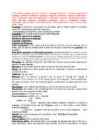
põhivorm, present, simple, spikker, eitav, times, jaatav, küsiv, eitavas, goes, kaashäälik, study, studies, täishäälik, lihtolevik, korduvat, sometimes, vahepeal, usually, often, onceLIHTOLEVIK Present Simple I, you, we, they + I pv N: I work every day He, she, it + I pv + -s (-es) N: He works every day. Küsiv ja eitav vorm moodustatakse abitegusõnade do, does (he, she, it) abil. N: küsiv- Do you work every day? Eitav- No, I do not (don't) work every day. Lõppu -es kasutatakse ainsuse 3. isiku puhul: · kui sõna lõpus on pass passes -ss, -sh, -ch, -x push pushes wach watches
Lihtoleviku moodustamine Jaatav vorm Eitav vorm Küsiv vorm I make I do not make Do I make? He/she/it speaks He/she/it does not speak Does he/she/it speak? Do We/you/they go We/you/they do not go go? we/you/they NB! ERANDID!
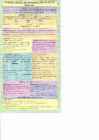
Present perfect (täisminevik) Have, has kasutatakse kõikides + have, has + 3.põhivorm lausetes - have, has + not + 3.põhivorm ? have, has + 3.põhivorm Väljendab: Äsja lõppenud tegevust, täna/sel nädalal/sel kuul/sel aastal toimunud tegevust, tegevust, mida on/ei ole kunagi tehtud Spikkrisõnad: today, this week, this year, already, yet, just, never, ever, for, lately Past simple (lihtminevik) Did kasutatakse eitavas ja küsilausetes + 2.põhivorm - did + not + 1.põhivorm ? did + 1.põhivorm Väljendab: Minevikus toimnud tegevust, tegevuse v sündmuse aeg on antud. Tgevust, mis toimus minevikus korduvalt, kuid enam ei toimu Spikkrisõnad: ago, last, yesterday Past continuous (kestev minevik) Was, were kasutatakse kõikides lausetes + be (was, were) + 1.põhivorm ing
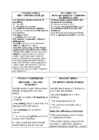
Grammar Present Simple (Lihtolevik) and Present Continuous (Kestev olevik) PRESENT SIMPLE - LIHTOLEVIK Lihtolevik väljendab: 1) Harjumuspärast tegevust või seisundit olevikus. What time do you usually get up? 2) Üldtuntud tõdesid ja fakte. It always rains in October. 3) Oskusi ja võimeid. She speaks English well. Juhul kui tegusõna lõpeb häälikuga `s` või ühenditega sh`, `ch`, lisatakse ainsuse kolmandas pöördes tegusõna lõppu ` ES` (switch switches). Täpselt sama reegel kehtib tegusõnade kohta, mis lõpevad häälikuga `o` (go goes).
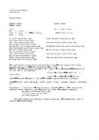
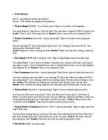
The Present Simple Lihtolevik Moodustamine: Jaatav lause Eitav lause Ksiv lause I pv DO + not + I pv Do + I pv I pv + (e)s -3. pre ainsus DOES + not + I pv Does + I pv I work hard every day. I do not work hard every day. Do I work hard every day? You work hard every day. You do not work hard every day. Do you work hard every day? He/she/It works hard every day. He/She/It does not work hard every day. Does he/she/it work hard every day?
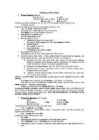
TENSES. ACTIVE VOICE. 1. Present Simple (üldolevik) I (he, she, it s) he works Eitav,küsiv do (I, you, we, they) he does not work does (he, she, it) does he work? Verbidele, mis lõpevad infinitiivis ss, -sh, -ch, -x või o, lisatakse ainsuse 3. pöördes es he touches, she goes Verbidel, mis lõpevad y-ga, mille ees on konsonant, muutub y->ies carry - he carries Vrdl: play he plays 1. Harjumuspärane, korduv tegevus või seisund olevikus. Tom drinks tea every day. He lives in Brussels. 2. Üldtuntud tõed, loodusseadused The earth goes round the sun. 3. Tulevikus toimuv tegevus a) Sõiduplaanid, planeeritud programmid. The train for Tallinn leaves at 10. The course begins on Monday.
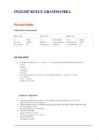
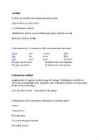
INGLISE KEELE GRAMMATIKA Present Simple Lihtoleviku moodustamine Jaatav vorm Eitav vorm Küsiv vorm I make I do not make Do I make? He/she/it speaks He/she/it does not speak Does he/she/it speak? We/you/they go We/you/they do not go Do we/you/they go? NB! ERANDID! · Verbidele, mis lõpevad ss, h, ch, tch, x või oga, lisatakse ainsuse kolmdandas pöördes es. he does he goes he misses
Nimisõnade omastav kääne 66 OMADUSSÕNA kesk- ja ülivõrre 67 TEGUSÕNA Tegusõna BE pööramine (olevik) 69 Tegusõna BE pööramine (minevik) 70 HAVE GOT pööramine 71 Üldolevik 73 Üldminevik Jaatav lause - reeglipärased tegusõnad 74 Jaatav lause - ebareeglipärased tegusõnad 75 Eitav ja küsiv lause 77 USED TO 78 LISTEN & REPEAT REPEAT 59 Lk. Üldtulevik 78
INGLISE KEEL Sisukord Sisukord.................................................................................................................................. 2 Ajavormid Tense vorms.......................................................................................................3 Lihtolevik The present simple..................................................................................... 3 Lihtminevik The past simple....................................................................................... 3 Lihttulevik The future simple...................................................................................... 3 Kestev olevik The present continuous......................................................................... 3 Kestev minevik The past continuous
INGLISE KEEL Sisukord Sisukord 2 Ajavormid Tense vorms 3 Lihtolevik The present simple 3 Lihtminevik The past simple 3 Lihttulevik The future simple 3 Kestev olevik The present continuous 3 Kestev minevik The past continuous 4 Kestev tulevik The future conrinuous 4 Täisminevik The present perfect 4 Enneminevik The past perfect 4 Ennetulevik Future perfect 5 Üldminevik Past tense 5 Üldtulevik Future indefinite 5 Artiklid ja eessõnad 7
PRESENT SIMPLE (lihtolevik) Form: 1st form (+s) Use: 1. Things in general. Nurses look after patients in hospitals. 2. Things that happen all the time or repeatedly. She usually goes away at weekends. 3. Laws of nature (things that are true in general). The sun rises in the east. 4. Timetable events. The train leaves at 6.50 p.m. Negative form: I don't (do not) normally eat my lunch here. He doesn't (does not) like this film at all. Question form: Do you live here? How often does it rain around here? Signal words: always, every day/month, never, normally, often, seldom, sometimes, usually etc.
on Christmas Day (but at Christmas) We use at in these expressions: at night - at Christmas - at the moment / at present - at the same time - at weekends - at the age of... IN DURING
Present Simple and Continuous Table of Contents Present Simple ..................................................................... 2 The spelling of endings in the Present Simple ....................... 2 When to use the Present Simple ........................................... 3 The verb 'be' ......................................................................... 4 Present Continuous.............................................................. 5 The spelling of endings in the Present Continuous................ 5 When to use the Present Continuous.................................... 6 State verbs and event (action or dynamic) verbs ................... 7 Present Simple
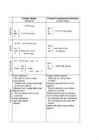
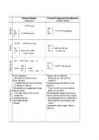
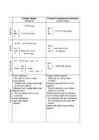
Ing Present Simple Present Progressive/Continuous (lihtolevik) (kestev olevik) I vorm (play) am JAATAV he is I vorm+ing (playing) she I vorm+s (plays) are it do not I vorm (don't play) am
Ing Present Simple Present Progressive/Continuous (lihtolevik) (kestev olevik) I vorm (play) am JAATAV he is I vorm+ing (playing) she I vorm+s (plays) are it do not I vorm (don't play) am
Ing Present Simple Present Progressive/Continuous (lihtolevik) (kestev olevik) I vorm (play) am JAATAV he is I vorm+ing (playing) she I vorm+s (plays) are it do not I vorm (don't play) am
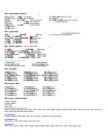
you are, they are. He is jane he/she/it isn't Is he/she/it German? No I'm not, you aren't, he/she/it isn't, we aren't, She is marta we aren't are we German? you aren't, they aren't. It is a school. you aren't are you German? We are students they aren't are they German? You are in class 12 They are teachers Unit 2 / present simple + - ? yes- I do, you do, he/she/it does. I work I don't work Do I work no I don't, you don't, he/she/it doesn't You work you don't work do you work? He/she it works he/she/it doesn't works does he/she/it work We work we don't work do we work
Olevik: PS He/she/it + -s /Does I/you/we sama /Do PC am/is/are + -ing PP ... + Have/has + III PPC ... + Have/has been + -ing Minevik: PS -ed/III PC Was/were + -ing PP I/she/it/you/they + Had + -ed/III PPC - ... + had + been + -ing PPS - ... + have/has + III Olevik: Present Simple Lihtolevik: Tegijale harjumuspärane, tihti korduv tegevus, loodusseadused, sõiduplaanid, püsiv olukord. Eevery day/month/ year/once twice a week /often/ usually/ always/seldom/never. Tulevikku väljendades pärast: when, after, as soon as, until. Olekut väljendavate tegusõnadega: Like, love, hate, enjoy, prefer, adore; See, hear, smell, taste, feel, look, sound; Know, believe, understand, realise, remember, forget, notice, recognise, think,
Will + infinitive (will go) Am/is/are going to + infinitive (is going to rain) 1.A decision at the moment of 1.Future plans made before the speaking: moment of speaking: A: 'I'm cold'. A: 'We've run out of milk.' B: 'I'll close the window'. B: 'I know, I'm going to buy some.' 2.Prediction based on opinion: 2.Prediction based on present I think the Conservatives will win the evidence: next election. Look at those boys playing football! 3.A future fact: They're going to break the window. He will be ten next year. 4.Promises / requests / refusal / willingness: I'll help you with your homework. Will you give me a hand? 5.In the same way as the future continuous, but with state verbs: I'll be at the station when you arrive. 'Shall' is used mainly in the forms 'shall I
3 TALLEGG 11 MIZDE 4 VESITERM 12 LADA 5 STOW 13 SCHWUNG 6 KALEV 14 MAIASMOKK 7 YAMAHA 15 ISKU 8 ESTRAVEL 2 Affirmative tense Use Signal Words Negative/Questions · action in the present taking always, Present Simple A: He speaks. place once, never or several every ..., N: He does not speak. normally, often, Q: Does he speak? times seldom, · facts sometimes,
sentences. All students of English, be they native speakers or those who are studying English as a second language, will profit from the fundamental introduction and review of grammar provided by SADDLEBACK'S BASIC ENGLISH GRAMMAR 1 and 2. Helpful marginal notes throughout the books have been provided to reinforce existing skills and call attention to common problem areas. We wish you every success in your pursuit of English proficiency. 1 What is Grammar? 5 The Simple Past Tense 98 Regular and Irregular Verbs 99 Was and Were 104 2 The Capital Letter 6 The Past Progressive Tense 106 The Future Tense 108 Can and Could 112
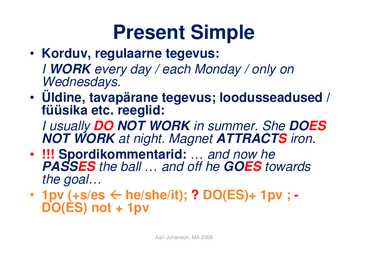
Present Simple · Korduv, regulaarne tegevus: I WORK every day / each Monday / only on Wednesdays. · Üldine, tavapärane tegevus; loodusseadused / füüsika etc. reeglid: I usually DO NOT WORK in summer. She DOES NOT WORK at night. Magnet ATTRACTS iron. · !!! Spordikommentarid: ... and now he PASSES the ball ... and off he GOES towards the goal... · 1pv (+s/es Å he/she/it); ? DO(ES)+ 1pv ; - DO(ES) not + 1pv Aari Juhanson, MA 2008 Present Progressive · Hetkel toimuv, pooleliolev tegevus: S/he IS TALKing on the phone now. I AM READing an interesting book. · Ajutine, regulaarsele ja tavapärasele vastanduv tegevus (tulevikku viitav): This summer they ARE not GROWing cucumbers as usual. They'RE GROWing tomatoes instead. · !!! Halvakspanu väljendus harjumuspärase tegevuse kohta: He IS always COMPLAINing! · BE (am/is/are) + 1pv-ing Aari Juhanson, MA 2008 Present Perfect ON -NUD
He greeted me in a most friendly manner. (adverb) I don’t like your cowardly behaviour. (adjective) He betrayed me in a most cowardly way. (adverb) 8. Sentence Adverbs are words or phrases like certainly, perhaps, luckily, of course. They say something about the situation described in the whole sentence. Fortunately, the weather stayed fine. We’ll probably have to wait for another bus. This one is full. I certainly didn’t expect such a beautiful present! He was late, of course. 3 Position of Adverbs Adverbs of Manner normally come 1. 1) at the end of a statement: Since then I have answered all the letters personally. 2) in shorter sentences they can stand in front of the verb: He quietly shut the door. 3) but after the verb to be Mary is frequently late. 2. before Adjectives and other Adverbs: reasonably cheap (adverb + adjective)
There are two main types of computers, analog and digital, although the term computer is often used to mean only the digital type, because this type of computer is widely used today. That is why I am going to tell you about digital computers. Everything that a digital computer does is based on one operation: the ability to determine: on or off, high voltage or low voltage or -- in the case of numbers -- 0 or 1 or do-called binary code. The speed at which the computer performs this simple act is called computer speed. Computer speeds are measured in Hertz or cycles per second. A computer with a «clock speed» of 2000 MHz is a fairly representative microcomputer today. It is capable of executing 2000 million discrete operations per second. Nowadays microcomputers can perform from 800 to over 3000 million operations per second and supercomputers used in research and defense applications attain speeds of many billions of cycles per second.
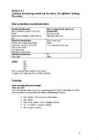
Tests Superstar 1 Luke Prodromou Test 1 Name____________________ Class_______ Use your English 1 Complete these sentences using the correct form (present simple or present continuous) of the verb in brackets. _ 1 She is in a band and she _________________________________ (record) a CD at the moment. _ 2 She is an actress and often _________________________________ (appear) on television. _ 3 At the moment she _________________________________ (have) a rest because she is tired. _ 4 Mike is a doctor and he _________________________________ (live) in Manchester. _ 5 I _________________________________ (start) work at 8.30 every morning.
Types of affixes → Affix is a morpheme that is attached to the root of a word. Prefixes – A morpheme that is attached in front of the stem of the word. For example: rearrange /re/ is a prefix. Suffixes – A morpheme that goes in the end of the word stem. For example: cleverly /ly/ is a suffix. Infixes – A morpheme that is inside of the root word. English doesn’t have these types of affixes. Circumfixes – Morphemes that surround the
I. Inherent categories for verbs: - tense: He walks a mile every day. He walked a mile every day Grammaticalized expression of location in time. The Wishram-Wasco dialect of Chinook: 4 inflectional past tenses ga-ciux `He did it some time ago' ni-cíux `He did it long ago.' na-ciúxw-a `He did it recently.' i-cíux `He just did it.' - aspect: He was writing a letter to Tom. He has written a letter to Tom. - mood: He goes to Tallinn tomorrow. He would go to Tallinn tomorrow if he had time. German: the subjunctive Wenn du Zucker hättest, könnten wir jetzt Tee trinken. `If you had sugar, we could drink tea now.' English: They demanded that he leave the room. If I were you, I wouldn't buy this car. - transitivity: sleep, kiss Manam (a Kairiru-Manam language; Malalyo-Polynesian) dang i- aka- gita i water be hot `he heated the water' II
1. Active/Passive Active - the professor teaches the students. Passive - The students are taught by the professor 2. Present Simple [VERB] + s/es in third person. Tegevus on korduv või tavapärane. You speak English. I play tennis. Cats like milk. The train leaves tonight at 6 PM. I am here now. Active= Once a week, Tom cleans the car. Passive= Once a week, the car is cleaned by Tom. 3. Present Continuous [am/is/are + present participle]. Tegevus toimub/ei toimu praegusel hetkel. You are watching TV. You are learning English now. I am studying to become a doctor. I am meeting some friends after work. Active= Right now, Tom is writing the letter. Passive= Right now, the letter is being written by Tom. 4. Past Simple [VERB+ed] or irregular verbs. Tegevus algas/lõppes minevikus täpsel ajal. . You called Debbie. I saw a movie yesterday. I finished work, walked to the beach, and found a nice place to swim
Lihtlause (The simple sentence) Lauseliikmed on alus (t/ie subject),iildis (the predicale), sihitis lthe objecr) ja mddrus (.the adver- blal1. Lau.eliikmek. rdih olla iiLl.,siksona r0i terve:dnade riihm ehl< lraas. faraline sdnajiirg on: Alus Oeldis Sihitis MAarus
to go by tram trammiga sõitma to go by air lennukiga sõitma learn by heart pähe õppima speak by telephone telefoniga kõnelema last week /month/year möödunud nädalal/kuul/aastal next week/month/year tuleval nädalal/kuul/aastal from day to day päevast päeva from morning till night hommikust õhtuni from place to place ühest kohast teise at present praegu by chance juhuslikult on foot jalgsi Tegusõna be 1. I MINA MY MINU YOU SINA YOUR SINU HE TEMA (M) HIS TEMA (M) SHE TEMA (N) HER TEMA (N) IT SEE ITS SELLE WE MEIE OUR MEIE
Balley, G.Marduzeon who in the 20th century made a definite contribution. This happened because of the centuries-old tradition in France of interest in style. The classical works on english stylistics are those by the german scholars: Ph.Aronstein, M.Deutschbein, I.Galperin. In the 50's and 60's of the previous century there was a rapid growth of interest in stylistics throughout the word. In the 70's and 80's, the methods of structural linguistics were very popular in stylistics. Present stylistic studies have become quite systematic. Computer-assisted stylistic analysis appears to be quite promising, e.g the study of cases of disputed authorship (I may claim I have written Othello) which may study the influence of one author to another. Although still somewhat chaotic stylistic is a vigorous, young science with vast prospects. Stylistician- a scholar who studies style. Stylist- a writer or speaker skilled in a literary style. Linguistic style
University of Pennsylvania "It's about time this book was written. It is a long-overdue manifesto for the mobile lifestyle, and Tim Ferriss is the ideal ambassador. This will be huge." --Jack Can eld, cocreator of Chicken Soup for the Soul®, 100+ million copies sold "Stunning and amazing. From mini-retirements to outsourcing your life, it's all here. Whether you're a wage slave or a Fortune 500 CEO, this book will change your life!" --Phil Town, New York Times bestselling author of Rule #1 "The 4-Hour Workweek is a new way of solving a very old problem: just how can we work to live and prevent our lives from being all about work? A world of in nite options awaits those who would read this book and be inspired by it!" --Michael E. Gerber, founder and chairman of E-Myth Worldwide and the world's #1 small business guru "Timothy has packed more lives into his 29 years than Steve Jobs has in his 51." --Tom
Kõik õigused on kaitstud. Ilma autoriõiguse omaniku eelneva kirjaliku loata pole lubatud ühtki selle töövihiku osa paljundada ei elektroonilisel, mehaanilisel ega muul viisil. Töövihik on kooskõlas 2009. a uuendatud õppekomplektiga I Love English 6. Tartu, 2014 ISBN 978-9949-436-59-0 Kirjastus Studium Riia 15b, Tartu 51010 www.studium.ee Trükitud OÜ Greif trükikojas Lohkva, Luunja vald Tartumaa 62207 --- 3 xxx 1. The Big Apple 1. Write the verbs in the present continuous or the past continuous tense. Do you remember? am is are was were verb -ing 1 Sorry. I ... (write) a report at the moment. I can't come with you. 2 When Peter arrived, his friends ... (play) football. 3 I ... (sleep) when the alarm went off in my sister's room. 4 Dad's mobile phone is switched off because he ... (fly) to Paris. He's on the plane at the moment. 5 I ... (read) an interesting book. It's a collection of memories. 6 Leo was late again. He ..
 annaabi.ee