Leidsid 33 sarnast õppematerjali, mis on seotud failiga "Present Perfect". Need materjalid aitavad sul teemat sügavamalt mõista.
them, spoke, visit, friend, english, vist, words, since, yesterday, friends, speak, present, perfect, never, already, today, olevikus, haven, fixed, light, broken, simple, weekend, lõpetatud, father, came, went, livingroom, sofa• we don't use an article: at night, at noon, every We don't usually use an article week, every day, every night, last morning, last • to talk about things in general. • before the names of countries, cities, towns and villages. week, all night, all day, tomorrow, yesterday,... • with plural nouns and uncountable nouns when talking about them • use the with in the morning, in the afternoon, generally. during the night, the winter, the summer, the day Examples: She has got long hair. He wears black shoes. after tomorrow,... • when talking about sports, people's first
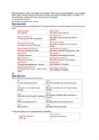
'How are you?' Very often people expect you to say something positive. Here's a breakdown of how you can express how you really are without complaining too much. · Fine, thanks. / On top of the world, thanks. · OK, thanks · Not so bad, thanks. / Can't complain, thanks. · So so, thanks. / So and so, thanks. · Not so good, actually 1 The English alphabet Spelling Work with your partner and spell out first your name and then some names of places. Write down each letter as you hear it, and then say the word. The English alphabet on the phone: You might find the following alphabet (used by international airlines) useful when trying to spell a word on the telephone. A Alpha O Oscar Ä Alpha-Echo Ö Oscar-Echo
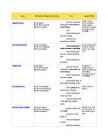
tense Affirmative/Negative/Question Use Signal Words always, every ..., action in the present Simple Present A: He speaks. never, normally, N: He does not speak. taking place once, never or often, seldom, Q: Does he speak
Book 1 BASIC ENGLISH BASIC ENGLISH GRAMMAR GRAMMAR BASIC ENGLISH GRAMMAR Book 1 Book 1 Younger students at beginning to intermediate levels will greatly benefit from this step-by-step approach to English grammar basics. This is the ideal supplement to your language arts program whether your students are native
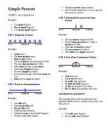
Simple Present · · New York is a small city. It is not important that this fact is untrue. [VERB] + s/es in third person USE 3 Scheduled Events in the Near Examples: Future · You speak English. · Do you speak English? · You do not speak English. USE 1 Repeated Actions Examples: · The train leaves tonight at 6 PM. · The bus does not arrive at 11 AM, it arrives at 11 PM. · When do we board the plane?
Tests Superstar 1 Luke Prodromou Test 1 Name____________________ Class_______ Use your English 1 Complete these sentences using the correct form (present simple or present continuous) of the verb in brackets. _ 1 She is in a band and she _________________________________ (record) a CD at the moment. _ 2 She is an actress and often _________________________________ (appear) on television. _ 3 At the moment she _________________________________ (have) a rest because she is tired. _ 4 Mike is a doctor and he _________________________________ (live) in Manchester.
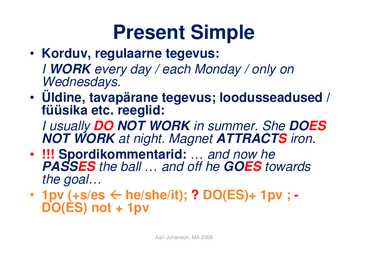
vastanduv tegevus (tulevikku viitav): This summer they ARE not GROWing cucumbers as usual. They'RE GROWing tomatoes instead. · !!! Halvakspanu väljendus harjumuspärase tegevuse kohta: He IS always COMPLAINing! · BE (am/is/are) + 1pv-ing Aari Juhanson, MA 2008 Present Perfect ON -NUD · Toimunud tegevus, seos olevikuga: I have WORKed here for 3 years. · Toimunud olevikuga seotud/lõpetamata tegevus (saab muuta): S/he has CALLed them twice already. · !!! Kordne tegevus: It's the umpteenth time you've TOLD me this! Have I ever FORGOTTEN anything? · !!! Tutvuse pikkuse väljendus: I don't know how long I have KNOWN her. · have/has (s/he, it) + -ed/3 pv Aari Juhanson, MA 2008 Present Perfect Progressive · Tegevuse protsessi/kestvuse rõhutamine, lõpetamata: I have been WORKing on this project since morning! (I'm sick & tired of it!) · Äsja lõppenud tegevuse nähtavate
(3rd person singular: infinitive + 's') I speak I am speaking you speak you are speaking he / she / it speaks he / she / it is speaking we speak we are speaking they speak they are speaking Signal words: always, every, often, normally, usually, Signal words: at the moment, at this moment, today, sometimes, seldom, never, first, then now, right now, Listen!, Look! Rules · in general (regularly, often, never) · right now ex. Colin plays football every Tuesday. ex. Look! Colin is playing football now. · present actions happening one after another · also for several actions happening at the same ex
He/she/it went He/she/it did not go Did he/she/it go? We/you/they made We/you/they did not make Did we/you/they make? Lihtminevik väljendab: · Üksikut tegevust või üksteisele järgnevaid tegevusi, mis on lõpetatud enne kõnemomenti või on toimunud minevikus kindlal ajal (in 1984, yesterday, last year etc). I saw my grandmother yesterday. Lisa went to the cinema, after that she went home right away. John wrote us two months ago. · Harjumust või korduvat tegevust minevikus. John always wore a hat. They played football every Monday. · Tegevust, mis toimus teatud ajaperioodil, kuid on kõnemomendiks lõppenud. He lived in this apartment for 5 years. Present Perfect Täismineviku moodustamine
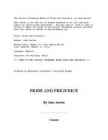
The Project Gutenberg EBook of Pride and Prejudice, by Jane Austen This eBook is for the use of anyone anywhere at no cost and with almost no restrictions whatsoever. You may copy it, give it away or re-use it under the terms of the Project Gutenberg License included with this eBook or online at www.gutenberg.org Title: Pride and Prejudice Author: Jane Austen Release Date: August 26, 2008 [EBook #1342] [Last updated: August 11, 2011] Language: English Character set encoding: ASCII *** START OF THIS PROJECT GUTENBERG EBOOK PRIDE AND PREJUDICE *** Produced by Anonymous Volunteers, and David Widger PRIDE AND PREJUDICE By Jane Austen Contents Chapter 1 Chapter 22 Chapter 2 Chapter 23 Chapter 43 Chapter 3 Chapter 24 Chapter 44
2. Things that happen all the time or repeatedly. She usually goes away at weekends. 3. Laws of nature (things that are true in general). The sun rises in the east. 4. Timetable events. The train leaves at 6.50 p.m. Negative form: I don't (do not) normally eat my lunch here. He doesn't (does not) like this film at all. Question form: Do you live here? How often does it rain around here? Signal words: always, every day/month, never, normally, often, seldom, sometimes, usually etc. PRESENT CONTINUOUS/PROGRESSIVE (kestev olevik) Form: am/is/are + ing Use: 1. Unfinished actions happening at or around the time of speaking. Listen! Somebody is crying. They are building a new bridge in our town. 2. Changes happening around now. The population of the world is increasing fast. 3. Arrangements for the future
· Am, is, are · Was/were · Shall/will · Should/would · Can · Could · May · Might · Must · Have/has to · Ought to · Had to CHANGES OF ADVERB OF TIME & PLACE · DIRECT · INDIRECT · NOW · THEN · TOMORROW · THE FOLLOWING DAY · NEXT WEEK · THE FOLLOWING WEEK · TONIGHT · THAT NIGHT · TODAY · THAT DAY · YESTERDAY · THE DAY BEFORE · LAST NIGHT · THE NIGHT BEFORE · LAST WEEK · THE WEEK BEFORE · HERE · THERE · THIS · THAT · THESE · THOSE CHANGES OF TENSES · DIRECT · INDIRECT · SIMPLE PRESENT · SIMPLE PAST · SIMPLE PAST · PAST PERFECT · PRESENT PERFECT · PAST PERFECT · PRESENT · PAST CONTINUOUS CONTINUOUS · PAST PERFECT · PRESENT PERFECT CONT
Kordamine inglise keele eksamiks A 1.1 Read the text and answer the questions below. Dear Mary-Alice, It's been ages since I last wrote to you, isn't it weird? Yes, so it is, but, I do have a certain reason. Do you remember Sir Thom of the Minquettes'? That fine young man with fascinating blue eyes... Oh, my sweet Mary, you will never guess what happened yesterday! It was about seven o'clock in the evening when Lillian called me out for a walk you know I can't say `no' to my little sis. Anyway we went to the forest near the Swan Lake and, believe it or not, got lost! Awful! I was so scared... We walked and walked, not even knowing the direction we were heading to, until we reached a huge mansion. And the garden around it was so extraordinary... That is something you just must see! But neither the trees nor flowers
1. Active/Passive Active - the professor teaches the students. Passive - The students are taught by the professor 2. Present Simple [VERB] + s/es in third person. Tegevus on korduv või tavapärane. You speak English. I play tennis. Cats like milk. The train leaves tonight at 6 PM. I am here now. Active= Once a week, Tom cleans the car. Passive= Once a week, the car is cleaned by Tom. 3. Present Continuous [am/is/are + present participle]. Tegevus toimub/ei toimu praegusel hetkel. You are watching TV. You are learning English now. I am studying to become a doctor. I am meeting some friends after work. Active= Right now, Tom is writing the letter. Passive= Right now, the letter is being written by Tom. 4
6 have/'ve known interested and it looks as though shipwrecked three times. 7 walked they are working hard. Most of She was lucky because she survived 8 have you phoned them are looking at the experiment each of the three disasters. 2 1 written 8 was trying and working together. They are 4 1 D 3 F 5 G all wearing uniform it's quite an 2 been meaning 9 came
today, tonight etc. Present Perfect · Action happened at an unstated time in the past. Emphasis on the action, time is unimportant or unknown. (I have washed the car) · Action started in the past and continues up to the present, especially with stative verbs (I have known her for six years) · Recently completed action (I have finished my essay) TIME EXPRESSIONS USED WITH PRESENT PERFECT: for, since, already, always, just, ever, never, so far, today, this week/month etc. lately, recently, still (in negations) etc. Present Perfect Continuous · To put emphasis on the duration of an action which started in the past and continues up to the present (We have been cleaning the house all morning) · To express anger, irritation or annoyance (She has been using my computer without asking) · Fo repeated actions in the past continuing to the present
Inglise keele kontrolltöö 7. klassile Õpik: I love English 4 Kokkuvõte aasta jooksul õpitust. Koostaja: Gea Gutmann Viljandi Maagümnaasium Juhendaja: Toomas Rähn Final Test Form 7 Name................. 1. Use the right tense. (15 p) 1) Look! She....................................(carry) a heavy bag. 2) Mrs. Brown...................................(play) the piano at the concert next week. 3) Mary is a good girl. My mother...........................
Reported speech is often also called indirect speech. When we use reported speech, we are usually talking about the past (because obviously the person who spoke originally spoke in the past). The verbs therefore usually have to be in the past too. For example: "I'm going to the cinema". He said he was going to the cinema. Basic tense chart The tenses generally move backwards in this way (the tense on the left changes to the tense on the right): present simple past simple I'm a teacher. He said he was a teacher past continuous.
everyone is frustrated. To sum up, some improvements in the middle school program need to be made. To conclude, I want to wish you all a very happy holiday season. There was a malfunction in the smoke machines and lights, the curtains would not open and close properly, and one of the actors was sick with no stand-in. In conclusion, the play was a disaster. Words that REPEAT information · in fact · in other words · once again · to put it another way · to repeat That area is very dangerous for you to bike in. To repeat, I warn you not to go there. Lisa decided not to go to King Islands. In fact she told me, "No, way." I feel that our last Student Council meeting did not go well. In other words, it was a fine mess. Sally has lost an oar on her boat and she is in big trouble. Well, to put it another way, Sally has to find another way to row or she will sink! Words that show COMPARISON · as ..
Verbidel, mille lõpus on üksik rõhuline vokaal 2 konsonandi vahel, -ed lõpu lisamisel tüve lõppkonsonant kahekordistub stop-stopped Kui tüvi lõpeb konsonant + y, muutub y i-ks cry cried Vrdl: play played 1. Tegevus, mis algas minevikus ja kestab edasi, eriti seisundiverbidega be, have, like, know etc. Tegevuse algus või kestus võib olla antud (since, for) We have known her since 1970. 2. Hiljuti lõpetatud tegevus, mille tagajärjed on näha. She has finished typing the letters. 3. Sündmused, mis toimusid mingil täpselt määratlemata ajal minevikus. Tegevuse aega ei mainita, sest see on teadmata või ebaoluline. Rõhk on tegevusel. I´ve had lunch, thank you 4. Tegevus, mis toimus teatud ajaperioodil, mis ei ole veel lõppenud; ajamäärustega today, this morning/evening/week/month etc.
noticed when I was born! 3 1 Laura was offered a place at much. Personality-wise, I've got a lot of my Manchester University but she dad's traits in me. We're both quite bubbly and friendly (or so people 1C The origins of English turned it down. page 5 2 Whilst some people are in favour say), and we share quite a laid-back of the monarchy, others think we approach to life. When it comes to 1 1 Anglo-Saxon 8 Conquest
(Past Continuous Passive) 1. They will finish the house next month. 2. The house will be finished next month. 3. Susan has completed the essay. 4. The essay has been completed by Susan. 5. People should have left the bird alone. 6. The bird should have been left alone. 7. We cannot repair their car. 8. Their car cannot be repaired. 9. The owners had sent the money to a Swiss bank. 10. The money had been sent to a Swiss bank by the owners. 11. People speak English and French in Canada. 12. English and French are spoken in Canada. 13. The police may have seen the suspected criminal. 14. The suspected criminal may have been seen by the police. 15. We are going to redecorate our kitchen this July. 16. Our kitchen is going to be redecorated this July. 17. The committee is interviewing the candidate. 18. The candidate is being interviewed by the committee. 19. They make mistakes in almost every essay. 20
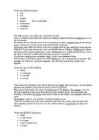
( 10 points ) Mary........blue eyes and blond hair, but her brother ........dark hair. He ........in his late twenties. He........married and........two sons. I........short, but my sister........tall. We........a dog and a cat. Our uncle........two dogs. They........brown. 2. Choose the correct item. ( 5 points ) e.g. The residents were made...D....their homes by the authorities. A leave B leaving C left D to leave 1) Ann is my best friend! We........each other for years A know B knew C knows D have known 2) Nicky........to San Francisco when the accident happened. A flies B has flown C was flying D has been flying 3) Why don`t you let her........her story? A finish B to finish C finishing D have finished 4) Tim........in a cafe at present, but he has already applied for a new job
I bought a new car. new car. Future Simple FutureinthePast He said (that) he would go to the I will go to the cinema. cinema. Present Perfect Past Perfect I've been to France three He said (that) he had been to times. France three times. Read the sentences and turn them in the indirect form. 1. Ralph said, "We have been in the mountains this summer." 2. "We were very happy to spend the weekend at the seaside," said Donald. 3. "We have left the school," said the children. 4. "In 1991 I entered Oxford University," said Henry. Modal Verbs can could I can swim under He said (that) he could water for two minutes. swim under water for two minutes.
........................................................5 Word Order in Negative Sentences......................................................6 Word Order in General Questions.........................................................7 Word Order in Special Questions ..........................................................8 Word Order in Subject Questions ..........................................................9 Types of Sentences There are four basic types of sentences in English. AFFIRMATIVE and NEGATIVE sentences both end with a full stop ( ) : . I live in Tallinn. I do not live in Tallinn. I never watch soap operas. INTERROGATIVE sentences end with a question mark ( ? ) : Do you live in Tallinn? Why do you never watch soap operas? EXCLAMATORY and IMPERATIVE sentences end with an exclamation mark ( ! ) : What a beautiful day! Do your homework at once! Parts of the Sentence The basic parts of the sentence are: THE SUBJECT (WHO? WHAT?) ,
Language: a systematic, conventional use of sounds, signs or written symbols in a human society for communication and self-expression. - human language at all levels is rule- or principle-governed. Linguistics: the scientific study of human natural language Synchronic approach to language: Diachronic approach to language: Linguistic competence: Linguistic performance: What is grammar?: "The sounds and sound patterns, the basic units of meaning, such as words, and the rules to combine them to form new sentences constitute the grammar of a language" Prescriptive grammar vs. Descriptive garmmar: Descriptive grammar: the systematic study and description of a language. Descriptive grammar refers to the structure of a language as it is actually used by speakers and writers. Prescriptive grammar: a set of rules and examples dealing with the syntax and word structures of a language, usually intended as an aid to the learning of that language. Prescriptive grammar refers
My languages I love different languages. I mean, I really, really love different languages. I also believe and have been told that I pick them up rather easily. That might be true, although I did not pick any Greek up in Greece but that might have been because they spoke so damn fast that I could not tell if it was a word or an entire sentence. The first foreign language I learned was Russian. Considering I was ten when Estonia became a Republic, it makes sense. We began studying Russian in first grade, though it was simplified – "koška" instead of "kot", "medvešonok" instead of "medved", "saichik" etc. Did not make much sense and we mostly played some games in Russian (Tare-tareke etc). Learned as much playing
4.ärritusest, mis tekib teise inimese halvast harjumusest (he is always smoking inside the house) Present Perfect--- Kasutatakse, et rääkida: 1.Mineviku sündmustest, tegevustest, millel on tagajärjed või tulemused olevikus (I have written a book) 2.ühekordsetest või korduvatest sündmustest, mis toimusid minevikus, kuid mille puhul pole oluline, kuna nad aset leidsid (Have you ever swum in valgejärve?) 3.situatsioonidest, mis algasid minevikus ja kestavad siiani ( She has been learning since yesterday). Present Perfect Continuous-Kasutatakse, et rääkida: 1.Kestvatest või korduvatest tegevustest, mis algasid minevikus ja ei ole lõppenud (I´ve been learning a lot reacently, because I want to learn at the University). 2.Kestvatest või korduvatest tegevustest, mis toimusid hiljuti (minevikus),kuid millel on tagajärjed olevikus (You look happy. Whom have you been dancing with? Past Simple- Kasutatakse, et rääkida: 1
" I hoped he didn't think so little of me as to believe I would give up that easily. "When did he buy it?" "He bought it in 1984, I think." "Did he buy it new?" "Well, no. I think it was new in the early sixties -- or late fifties at the earliest," he admitted sheepishly. "Ch -- Dad, I don't really know anything about cars. I wouldn't be able to fix it if anything went wrong, and I couldn't afford a mechanic..." "Really, Bella, the thing runs great. They don't build them like that anymore." The thing, I thought to myself... it had possibilities -- as a nickname, at the very least. "How cheap is cheap?" After all, that was the part I couldn't compromise on. "Well, honey, I kind of already bought it for you. As a homecoming gift." Charlie peeked sideways at me with a hopeful expression. Wow. Free. "You didn't need to do that, Dad. I was going to buy myself a car." "I don't mind. I want you to be happy here." He was looking ahead at the road when he said this.
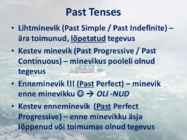
ära toimunud, lõpetatud tegevus • Kestev minevik (Past Progressive / Past Continuous) – minevikus pooleli olnud tegevus • Enneminevik !!! (Past Perfect) – minevik enne minevikku OLI -NUD • Kestev enneminevik (Past Perfect Progressive) – enne minevikku äsja lõppenud või toimumas olnud tegevus Created by Aari Juhanson, MA 2009 Past Simple • Ära toimunud (regulaarne) tegevus: I WORKED yesterday. S/he didn’t WORK last Monday. • Lõpetatud tegevus: I already CALLED them today. (I’m not going to call again!) Which countries did you VISIT? (You’re back …) BUT: Which countries have you VISITED so far? (You’re not back yet or you travel regularly …) • Jutustused, mineviku sündmuste kirjeldus: Once upon a time there LIVED a Garfield who HAD many friends. The first one WAS Odie, … • 2pv; ?/- DID + 1pv Created by Aari Juhanson, MA 2009
Moved to Cali 2005 Was Born Traveled to Europe Husband 1978 School graduates @ Oxford 1999 Started Got married School 1983 2008 2 The Six English Verb Tenses Three Simple Tenses Simple continuous Present You walk. You are walking I run. I am running. Past You Walked You were walking. I ran. I was running. Future You will walk. You will be walking. I will run. I will be running. Three Perfect Tenses Perfect continuous
Studium Units 1-4 e-formaat Toimetatud Tartu Emajõe Koolis Toimetaja I. Tars Tartus, 2016 Elektroonilisse vormingusse kohandatud õpikus kasutatud märgised, mis aitavad otsingukäsu kasutamisel navigeerida * Tavakirjas leheküljenumbri ees on kolm järjestikust sidekriipsu, tühik ja vastava lehekülje number, näiteks, --- 5; * peatüki ette on kirjutatud kolm x-i, tühik ja vastava peatüki number, näiteks xxx 5; * visuaalne info on pandud kahekordsete ümarsulgude vahele. I Love English 6 töövihik sobib inglise keele õpetamiseks 8. klassis Töövihik vastab riiklikule õppekavale Retsenseerinud Piret Kärtner, Viive Latt, Ingrit Tera Toimetanud Viiu Menning, Nicola Fyfe, Tiina Helekivi Kujundanud ja küljendanud Eve Kurm Tehniliselt toimetanud Andero Kurm Illustreerinud Ülle Meister Esikaas: Boswell and Dr. Johnson (foto Scanpix). Vaata Unit 20. Autoriõigus: Mare Jõul, Ülle Kurm, 2009 Kirjastus Studium, 2009 Kõik õigused on kaitstud
3)In the interrogative form, especially with 'you', to distinguish between a simple request for information and an invitation: Will you be coming to the party tonight? (= request for information) Will you come to the party? (= invitation) 4)To predict or guess about someone's actions or feelings, now or in the future: You'll be feeling tired after that long walk, I expect. 5)Events in progress in the future: When you are in Australia will you be staying with friends? This time next week you will be working in your new job. At four thirty on Tuesday afternoon I will be signing the contract. 6)Events/actions in normal course of events: I'll be going into town this afternoon, is there anything you want from the shops? Will you be using the car tomorrow? - No, you can take it. I'll be seeing Jane this evening - I'll give her the message. 7)Asking for information: Will you be bringing your friend to the pub tonight? Will Jim be coming with us?
 annaabi.ee