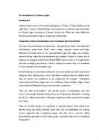
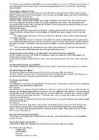
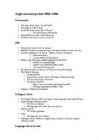
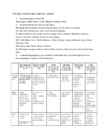
1.The leg of norm-when william 1 died normandy went to his oldest son robert,feudalism-land was given to lords who suported The domesday book-the first national census,11h 2.Anglo sax 410-793 wrom the jutes came from juteland,angles from south of denma, saxons from germ; deff-the new anglo saxon invaders were not organised centrally as the romans had been;days of the week 3.The celtic peop 500bc-43ad the cealts(fr) the brit(eng)the graels(irel) 4.Roman britain ad 43-410 britains helped the cauls fight against julius ceasar 5.the vihing793-1066 they came acress the north seam most viking who sailed overses were simply searching for letters land for their farms.alfred great the eng king, king canute 1016 of denmark captured the english
Dear Ms Peck, I saw your advertisement about volunteering work. I would like to join in and work with children. My name is Mari Mets and I am 18 years old. I speak Hungarian, English and Russian. I have a driving licence. Despite being 18 years old, I have organised holidays for youngsters before (2001 – Hungary; 2002 – Romania). In addition to that I have taken a course in child psychology (October – January 2000). Also, I really like children, I help with neighbour children on a regular basis. I could help with accommodation, organise games and activities, teach children various skills such as pottery, offer some help with general problems. I have some questions about the volunteer work. Where will the children be from? How long
Red Nose Day · What is it? Red Nose Day is a fundraising event organised by Comic Relief · When is it? On the second or third Friday of March · Why that date? The first Red Nose Day (RND) was held on the 5th Feburary 1988, when it was launched as a National Day of Comedy, and since then they have been on the second or third Friday of March · What happens? Having fun and changing lives. Everyone has a laught whilst raising money to help change cauntless lives aacross the UK and Africa.
there are no big industrial enterprises in the vicinity. Problematic areas are air and litter pollution as many tourists visit the place leaving behind exhaust gases and rubbish on the ground. Wildlife In the forests near Poku there is comparatively rich in wildlife. The only problem seems to be cutting trees which may leave the local animals without their usual habitat. Recycling Recycling of paper and glass is very well organised in the area of Poku. More problematic seems to be recycling of plastic and chemicals as there are no special containers for that kind of waste. Conclusion and recommendations Poku is a good place many families with children visit and enjoy their time there. To decrease the air pollution cars should be banned from Poku. New litter bins and containers for recycling plastic and chemicals should be placed in the location. To avoid the decrease of local wildlife cutting tees should be forbidden.
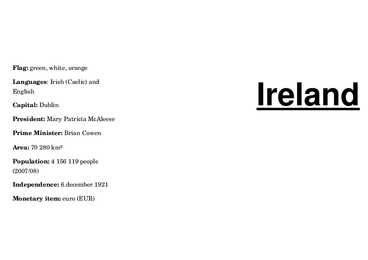
Landscape: The interior of the are Gaelic football and hurling, which country is relatively flat land, are organised on an allIreland basis. traversed by rivers such as the River Shannon and several large lakes Architecture: Some architectural Position: Ireland has two parts, one or loughs. Ireland is known for its features in Ireland date back or them is the part on UK
What can be done to prevent petty crime? Nowadays more and more young people have started comit petty crime and people believe that thouse can be prevented. I support this view for a variety of reasons. To start with petty crime can be prevented with teenagers, the problematical ones in particular should participate to educational courses organised by the state where they can learn everything about these petty crimes an also how to avoid getting in the middle of them. It is very important to organise this meetings in the poor districts where teenagers are prone to ilicit activities such as pickpocketing or even burglery. Another method of reducing petty crime is that the people should learn how to protect their houses and their valuable goods. They should also learn how to protect themselves by thieves
Report to the Board of Governors. Introduction The main principal aim of this report is to describe a fund-raising day organised for disadvantaged children and to make some recommendations for the next year. Methods of fund raising Our charity organisation has been going in for collecting money to support disadvantaged children in Britain already for seven years. There are some verified ways to collect money, such as a street collection, house-to-house collection and jumble sales. A large amount of money was raised by the house-to house collection. It`s about a 40% of the whole money we got for these children
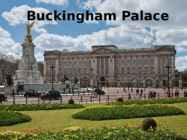
78 bathrooms. In measurements, the building is 108 metres long across the front, and 24 metres high. • The Palace is very much a working building and the centrepiece of Britain's constitutional monarchy. It houses the offices of those who support the day-to-day activities and duties of The Queen and The Duke of Edinburgh and their immediate family. • The Palace is also the venue for great Royal ceremonies, State Visits and Investitures, all of which are organised by the Royal Household. Most popular rooms: • The Throne Room - is used principally for the reception of formal addresses on important occasions. • The Blue Drawing Room - is used by guests who gather here before large luncheon parties and grand State and diplomatic occasions. • The White Drawing Room - is used for receptions and audiences. The Throne Room The White Drawing Room The Blue Drawing Room Thanks for watching
The trend was started by Raivo Roosna and Aleks Lepajõe who robbed the Tillander store in Helsinki in 1985. In December 2006, it was estimated that Estonian criminals were responsible for 140 robberies of jewellery and watch stores in Finland, the Netherlands, Portugal, Italy, Spain, France, Germany, the United Kingdom, Denmark, and Sweden during the last three years. The value of the lost property is estimated to be 25 million Euros.[1] Today transnational Estonian organised crime is predominantly about smuggling drugs, alcohol, and other illegal or high-tax goods from Russia to Finland, Sweden, and elsewhere in the Baltic Sea. Estonia is a relatively safe country, although there are some situations, where people should be more careful crime has been increased lately. We could count different type of crimes, but most common are smuggling and robberies. Many people like something, what do not belong to them. On the one hand, news are
The role of the free press Newspapers and magazines play an imoportant role in today's society and are capable of influencing people's lives in many ways. The new electronic media have become even more influential in shaping people's opinions, attitudes and behaviour. However, does the free press offer a valuable service, or is it, as American journalist, Edward Egglestone said, "organised gossip"? On a personal level, the media can be very entertaining and informative. Reading about the lifestyles of the rich and famous is amusing and can help people forget their own problems. However, journalists frequently intrude on the privacy of celebrities, following them and photographing them in their most intimate moments. This is surely an unacceptable interpretation of the word "free".
Religion in Ireland 2. Today I'm going to talk about Christianity in Ireland, Roman Catholic Church, Saint Patrick and Saint Patrick's day . 3. Christianity is and has been the largest religion in Ireland. Most churches are organised on an all-Ireland basis which includes both Northern Ireland and the Republic of Ireland. Many people believe that St Patrick was the one responsible for bringing Christianity to Ireland. Although he made a major impact on Christian Ireland he certainly wasn't the first to arrive here. St. Palladius was the first Christian to arrive in Ireland. 4. The Roman Catholic Church in Ireland is part of the worldwide Roman Catholic Church. It is the largest
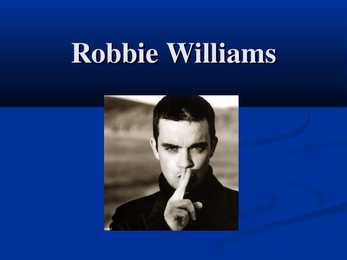
alien contact. Relationships Several wellknown female celebrities, including Rachel Hunter, Since January 2007, Williams has been in a relationship with Turkish American actress Ayda Field On 7 August 2010, Williams and Field married at his home in Los Angeles. Charity Williams has set up a charity in his home town entitled Give It Sum. Williams, with the help of friend Jonathan Wilkes, organised a charity football match Soccer Aid to raise money for UNICEF UK. Discography Life thru a Lens (1997) I've Been Expecting You (1998) Sing When You're Winning (2000) Swing When You're Winning (2001) Escapology (2002) Intensive Care (2005) Rudebox (2006) Reality Killed the Video Star (2009) Used literatur http://en.wikipedia.org/wiki/Robbie_Williams http://www.robbiewilliams.com/ http://www.google.com/images? hl=et&rls=com.microsoft:et:IE
Bruce Lee was a Hong Kong American martial artist, Hong Kong action film actor, martial arts instructor, filmmaker, and the founder of Jeet Kune Do A statue of Bruce Lee on the Avenue of Stars, a tribute to the city's martial arts Culture Sports in Hong Kong are a significant part of its culture. Football, basketball, swimming, badminton, table tennis, cycling and running have the most participants and spectators In 2009, Hong Kong successfully organised the V East Asian Games and was the biggest sporting event ever held in the territory Table Tennis Big Buddha Tian Tan Buddha, also known as the Big Buddha, is a large bronze statue of a Buddha Amoghasiddhi, completed in 1993, and located at Ngong Ping, Lantau Island, in Hong Kong Top three facts 1. With a population of 7 million people but land area of only 1,108 km, Hong Kong is the 4th most densely populated territory
different periods (childhood, adolescence) of Jamal. Some questions do not refer to points of his life (cricket champion), but by witness he comes to the right answer. I think it was an excellent movie with fantastic cast and acting. The director Danny Boyle is a master. Every scene is explosive- emotionally and visually. I loved the story of Jamal, it was very colorful and the special effects within were superb. The film gave me a good overview of the Indian orphans, slaughter, poverty, organised crime, enslavement and police brutality. But what i loved the most is that, besides all the brutality there is warmth and humanity in this film. The romance in this film is also breathtaking, the love story of Jamal and Latika is so sweet, that it brought tears to my eyes. The end is very moving and a wonderful soundtrack completes the entire experience. This is one of my favourite films what i have seen in many years, so I would definitely
One possible solution to reduce smoking is to educate the teens. Schools could have classes and seminars that increase the knowledge about the consequences of smoking. That way teens would be aware of the health problems such as many different cancers, heart diseases, asthma and strokes caused by cigarettes. Youths should also see the visuals how smoking ages skin and yellows teeth. Also a similar meetings for parents and students should be organised. After this parents might be more intrested in and responsible for their child' s health. Teens would care about their health more if they knew about the consequences of tobacco. Raising awareness is a good solution to reduce underage smoking. Another suggestion would be to ban adverts that supports smoking. We could for example, ban magazine advartisements. It would be a good idea because teens read magazines very often and they see the pictures in them
He quietly shut the door. 3) but after the verb to be Mary is frequently late. 2. before Adjectives and other Adverbs: reasonably cheap (adverb + adjective) terribly sorry (adverb + adjective) incredibly quickly (adverb + adverb) It’s a reasonably cheap restaurant and the food is extremely good. I’m terribly sorry. I didn’t want to hurt you. Maria learns languages incredibly quickly. 3. before a Past Participle (injured/organised/written etc.): Two people were seriously injured in the accident. The meeting was very badly organised. Adverbs of Place (where?) 1. Usually the verb and the adverb of place go together: go home live in a city If the verb has an object, the adverb of place comes after the verb + object: take somebody home meet a friend in the street 4 Adverbs of Time (when? /how often? /how long?) normally go after adverbs of place:
Its culmination came during the World War II, when the massive Jew-baiting took place, known as the Holocaust. People's, who obeyed Adolf Hitler, tolerance changed to a very cruel way of intolerance. Very hot topic is also discrimination and not accepting homosexuals. Despite of that, many countries have allowed people with different sexual orientations to get married and even adopt children. There have even been gay parades even in Estonia, not to mention the ones that have been organised in world capitals like Rome and Berlin. Tough it is surrounded with a lot of critizism, it is a huge step to grew people's tolerance. My father once told me that earlobs can show people's tolerance. The longer the lobs, the more tolerant the person. It might be a fairytale or a grain of truth. If it is a fairytale, then he just wanted show-off his long earlobs. If it has some kind of truth inside of it, then we should start immidiately to sretch our earlobs with heavy earrings
the ages of 23 and 37 Must hold American citizenship, have a clean record, and hold a fouryear TS/SCI clearance. Have to pass a Physical Fitness Test Spend approximately 21 weeks at the FBI Academy, located on Marine Corps Base Quantico in Virginia 10 11 Similar agencies in Europe Security Intelligence Service, Denmark Federal Criminal Police Office, Germany Serious Organised Crime Agency, United Kingdom National Bureau of Investigation, Finland Swedish Security Service, Sweden Federal Security Service, Russia 12 Famous cases Alphonse Capone, aka. Al, Scarface Bonnie and Clyde 9/11 Investigation (PENTTBOM) 13 14 15 16 Thank You for your attention! 17
bodies of frogs. Women collected anything that grew or moved, including fruit, lizards, snakes, roots, grass, etc. Their skill in finding food even in the most extreme conditions often kept the whole group alive. 4. Hunting Large mammals, now extinct (väljasurnud), roamed some areas (hulkusid mingitel aladel) of Australia and provided (andsid) meat for the aboriginal hunters. Other areas were richer in vegetable food, but there was no organised agriculture or domesticated animals. Food therefore was not easy to obtain. Tribesmen recognized the tracks of animals and developed extraordinary skills in tracking their pray. 5. Traditions, arts and beliefs. The Aborigines blamed supernatural forces for all the events and used magic and ritual to get rid of evil spirits. Each of the clans had a special sacred place on their land where their spirits returned after death
• Population in Australia is 22,760,245. • They have almost 10,700 beaches in all shapes, sizes and colours. FLAG OF AUSTRALIA CULTURE • Since 1788, the basis of Australian culture has been strongly influenced by Anglo-Celtic Western culture. • Distinctive cultural features have also arisen from Australia's natural environment and Indigenous cultures. SPORT • About 24% of Australians over the age of 15 regularly participate in organised sporting activities. • Australia has strong international teams in cricket, hockey, netball, rugby league, and rugby union, having been Olympic or world champions at least twice in each sport in the last 25 years for both men and women where applicable ARTS • Australian visual arts are thought to have begun with the cave paintings, rock engravings and body painting of its Indigenous peoples.
Pupils can also take a 2-year course of studies towards a professional qualification called a B.E.P. (Certificate of Vocational Proficiency) in one of four fields (social and health careers, driving jobs and road transport services, the catering and hotel industry, and the optics-eyewear sector). In a professional lycée, the BEP course is integrated into the three-year programme of the professional baccalaureate. The general baccalaureate and the technological baccalaureate are organised into 'series' or streams (ES - economic and social studies, L - literary and S - scientific) for the general 'bac', and STG (Management), STI (Industrial), STL (Laboratory), STSS (Health and Social), STAV (Agronomy), TMD (Music and Dance) and Hotel Management for the technological 'bac'. Each stream is structured by a coherent core of key subjects. The professional baccalaureate requries 3 years of study and certifies the capacity to work in a highly qualified professional activity. http://www
10 D Tennis *Tennis is a game played on a rectangular court . *Tennis is becoming a very popular around the world. *The modern game of tennis originated in Birmingham, England, http://www.sparta7.com/bl in the late 19th century. og/have-your-child-enjoy- competitive-tennis.html Athletics *Athletics is an exclusive collection of sporting events that involve competitive running, jumping, throwing, and walking. *Organised athletics are traced back to the Ancient Olympic Games from 776 BC. *The most common types of athletics competitions are track and field, road running, cross country running and race walking. Volleyball *Volleyball is a team sport in which two teams of six players are separated by a net. *A volleyball court is 18 m long and 9 m wide, divided into 9 m × 9 m halves *Each team tries to score points by grounding a ball on the other team's court under organized rules
These men discouraged rebellion by building strong castles throughout the country, especially in Wales. In return for their land, William's barons had to perform certain services. They and their bishops had to perform certain services. They and the bishops served as members of William's Council, which replaced the Anglo-Saxon Witan. The barons also had military obligations to serve as knights (army commanders) for William. William organised his English kingdom according to the feudal system which had already begun to develop in England before his arrival, but under the Normans, it became more organised. The word feudalism comes from the French word feu, which the Normans used to refer to land held in return for duty or service to a lord. The basis of feudal society was the holding of land, and its main purpose was economic. All land was divided into manors. Most manors contained a village
Anglo-Saxon period Celts-came from Germany,2000-1200BC began to migrate to Britain,spoke Celtic language,were known as Britons,lived in small villages,round wooden huts-mainly farmers-no towns,organised in tribes with a king/queen as a leader,intertribal wars were very common,the Ancient Britons:one of the Celtic tribes living in Britain 4thBC,believed in different gods,governed by a class of priests-druids who had great power. Romans in Britain:55BC came to conquer Britain(Julius Caesar),brought their own civilization,taught Britons to build roads,bridges,houses,baths,temples,protected Britain for several hundred years,4thBC Romans left Britain,43AD Queen
1917 revolution and the generally unstable situation in Russia created the opportunity for Estonia to gain its independence. The impetus for independence was provided by the National Front, Estonia's main ideological movement, which based its ideas on US President Woodrow Wilson's principle of self-determination. On April 8, 1917, Estonian organisations and military personnel totalling 40 000 held a demonstration in Petrograd (St. Petersburg) in support of self-government of Estonia. The organised, peaceful demonstration achieved its goal when, on April 12, the Russian Provisional Government signed the Law on Estonian Autonomy, which united the Livonian counties of Tartu, Võru, Viljandi, Pärnu and Saaremaa with Estonia. For the first time an Estonian, Jaan Poska was appointed as a Provincial Commissioner of Estonia. A six-member Provisional National Council, the Maapäev, was formed. The Maapäev appointed
tourism farm and Raudsilla hiking centre have three cornflowers. There are some accommodators who provide unusual accommodation and other services, for example Raudsilla holiday centre near Kolga manor. Raudsilla's buildings are all tipi's. Adami tourist farm in Vainupea village has a smoke sauna in the Vainupea river valley. There are several examples of co-operation in Lahemaa tourism. Some riding farms provide riding trips along Lahemaa, where they have accommodation and catering services organised with co-operating manors and other service providers. Many accommodation providers use local nature guides to provide hiking services in Lahemaa National Park. The co-operation network genuine experiences in Lahemaa (14 tourist farms), all provide local food, including home baked bread, different home baked pastries, local fish dishes, traditional old dishes etc. For example Mätta riding farm always serves their home baked bread, goat milk and meat dishes
December 1995, Buckingham Palace publicly announced the Queen had sent letters to Charles and Diana advising them to divorce. Prince Charles immediately agreed with the suggestion. In February Diana announced her agreement. The divorce was finalised on 28 August 1996. Charles and his family gave Diana £ 17 million. She was allowed to keep her jewellery, including personal gifts to Diana. She remained the bearer of the three Orders which Queen Elizabeth had lent her. Her office where she organised her charitable work was supported by £300 000 yearly. She is allowed to remain living in Kensington Palace until William and Henry come of age. The custody of the children is shared by both parents, as is common in England. Besides this, Diana was allowed to keep using the title "Princess of Wales". Diana's divorce certificate Diana's sons Prince Harry
Second invasion - Caesar's second raid In 54 B.C. Julius Caesar came to Britain again landing at Walmer near Deal in Kent. This time he brought with him five legions (30,000 foot soldiers) and 2,000 cavalrymen (horse riders). This time the Romans crossed the River Thames. After more fighting, the British tribes promised to pay tribute to Rome and were then left in peace for nearly a century. Third and final invasion In 43 A.D. (43 years after Jesus was born) Emperor Claudius organised the final and successful Roman invasion of Britain. General Plautius led four legions with 25,000 men, plus an equal number of auxiliary soldiers. The biggest battle was fought on the banks of the River Medway. It went on for two days before the Celtic tribes retreated. Many tribes tried to resist the Romans. It took about four years for the invaders to finally gain control over southern England, and another 30 years for them to conquer all of the West Country and the mountains
4 Read the text about Martin Luther King. Fill in the gaps with the missing parts of the sentences. A learned about the life and work. E received threats to his life B made his famous speech F helped lead a well-known civil rights march C stepped out of his motel room G unedrstood the importance of religion D organised many peaceful protests H had to experience racial problems Free at Last Martin Luther king, Jr., grew up in a supportive and caring religious family in Atlanta, Georgia. As a black child, growing up in the South, he (1) H almost every day. He wanted to help change things for the better for his people and future children. His idea was to become a doctor or a lawyer. As he honoured his father and (2)
CONVENIENCE Please respond ................................................................ 3. The hotel was further away from the beach than was claimed in the brochure. NOWHERE The hotel ................................................................ the beach as they'd claimed in the brochure. 4. I wasn't expecting my colleagues to organise a farewell party on my last day at the company. TAKEN I .........................................................when my colleagues organised a farewell party on my last day. 5. It's not likely to happen but if you're not satisfied with the product we'll refund your money. EVENT ............................................................... that you are not satisfied with the product your money will be refunded. 6. It's one thing to think there's a demand for your product and another to actually make a sale. WORLD There's ............................................................... between thinking there's a demand for your
Marino, which is a reflection of Nikolai's lack of practical and organizational abilities. Nikolai himself says that " ." And truly, there is no improvement - there's " , ... , , - , ". The peasantry is poor and disobedient " ". In chapter 4, it is described that even Nikolais best efforts do not bare fruits " , , ". Witnessing this situation makes Arkdays heart ache perhaps in a way that Turgenev himself felt with the fate of ill-organised estates. Marino's lacklustre management symbolises the futility of the gentry's attempts to modernize - Nikolai stands as the ,,the economic failings of the gentry" (Dunaev: 1983:196). The shortcomings of the Kirsanov management are even more obvious when subtly contrasted with the well-organised Nikolskoe, ran by Odintsova a representative of the new generation. Therefore the sad state of Marino can be seen as a symbol to the ineffective
universities, and set out to improve education. He thought part of this improvement should be sports education, which he considered an important part of the personal development of young people. He conceived of an international competition to promote athletics. A growing international interest in the ancient Olympics, fed by recent archaeological finds at Olympia, De Coubertin devised a plan to revive the Olympic Games at the age of 31. To publicize these plans, he organised an international congress on June 23, 1894 at the Sorbonne in Paris. There he proposed to reinstate the ancient Olympic Games. The congress led to the establishing of the International Olympic Committee (IOC), of which De Coubertin became the general secretary. It was also decided that the first modern Olympics would take place in Athens, Greece and that they would be held every four years. These Games proved a success. Paradoxically, the first
result of the Russian central power and the Baltic German-dominated cultural situation, motivated the elite of the `awakened peasants' to build up their own independent nation and national society. In 1857 Johann Voldemar Jannsen (18191890), replaced the term `country people' with the word `Estonians'. Patriotic intellectuals encouraged Estonians to participate in public life, determined the legal and cultural requirements of the emerging nation, and organised the extensive sending of petitions to the Russian authorities. At its height, in 18601880, the movement was governed by a politically moderate trend with their specific ethnic-linguistic aims. The trend stressed the need to develop national culture and education in Estonian. Pastor and linguist Jakob Hurt was convinced that the mission of a small nation can only be of a cultural and not of a political nature; what counts is national identity, not statehood as such
world, such as Easter and Christmas. However, Australians also celebrate some holidays unique to their country and culture. Australia Day Australia Day, 26 January, is the anniversary of the arrival of the First Fleet of 11 convict ships from Great Britain, and the raising of the Union Jack at Sydney Cove by its commander Captain Arthur Phillip, in 1788. On Australia Day, over half of the nation's population of 21 million attend either an organised community event, or get together with family and friends with the intention of celebrating our national day. It is celebrated with parties, picnics, and fireworks and coincides with the last days of summer vacations. Anzac Day Anzac Day is a national day of remembrance in Australia and New Zealand, and is commemorated by both countries on 25 April every year to honour the members of the Australian and New Zealand Army Corps who fought at Gallipoli in Turkey during
Co-opted groups were functional (labour, there/distinct political trajectory peasants, etc), not regional or territorial. Regional social movements Eg map on next page which Sara showed in emerged to argue for rights or interests. Zapatistas land, justice in lecture shows swing towards/away from ANC south. Human rights groups around disappearances, murders in north. Only area that went towards ANC was kwaZulu Migration and organised crime (drugs, etc) have given north a set of natal influence of Zuma as presidential interests distinct from the south. But the response has been federal: candidate police and troops. Key distinctions between north and centre/south hinge on ethnicity, poverty, industry, agriculture
Some forests are changed into nationality areas, so in order to cut trees down or hunt animals, people must ask permission from the governments. Rubbish Finally, there is the problem of rubbish, that we get in contact with every day. We can see litter mostly lying in the streets, but also in the reservoirs and in the forests. This is mostly our fault and we don't care about the cleanliness of the streets etc. There are organised cleaning campaigns, where people gather in a certain place and split up then to start cleaning the surroundings of our homes and the forests. Every day we throw away millions of tonnes of rubbish. Half of this is paper that we can use again. A typical family in Europe or USA throws away more than 1 tonne of rubbish each year, but we can recycle most of this. If we recycle things, we can save money, energy and natural resources.
Calvinism with its strict insistence on simplicity and its dislike of ritual and celebration became the dominant religion in England. 7. Who was the king who took the Union Flag into use? Why is it called the Union Flag? King James I took the Union Flag into use. The flag was a symbol of the united countries England and Scotland and the flag combined the English flag of St. George with the Scottish flag of St. Andrew. 8. What is the Gunpowder Plot? Why was it organised? Gunpowder Plot was the name of the conspiracy by Catholics who tried to kill James and the Members of the Parliament to regain for their religion the influence that it had had before Elizabeth I's reign. 9. What were the landmarks in English literature in James I's reign? During James I reign, puritans was given the right to make an official translation of the Bible which was published in 1611. Also, the greatest writers during 17th
It is a meeting place where you can interact with people, go for a swim in sandy shore and have picnics. Open-air art installations have been put up for the people to enjoy and the traditional summer solstice celebrations have taken place there. Despite the lack of maintenance of the area Kalarand is already one of the best places to spend time by the sea, by emphasizing its values it can be made even more pleasant. Over the years a sense of community has been created. People of Kalamaja have organised summer beach parties and sauna parties there, with temporary sauna tents. In 2011, when Tallinn was a European Capital of Culture, the authors of Urban Intervention built changing cabins, benches and terraces to Kalarand. The beach area was cleared, the scrub trimmed and dustbins were provided for the summer season. The seabed of the bathing site was cleared of rubbish and pieces of concrete, water samples were taken and analysis results were posted on a notice board
Other Russian goods that have been transported through Estonia are grain and fertilizers. Another important area is passenger shipping which is directly linked to tourism. The Estonian national air company Estonian Air has also proven successful as it has managed to increase both cargo volumes and the number of passengers. A large part of freight transport is still done by road. Passenger transport is organised with buses for the most part, there are international lines to St Petersburg, Latvia, Lithuania, Poland, Germany and Scandinavia. During the recent years a lot of roads have been repaired and new ones have been constructed, but a considerable number of roads are still in a fairly poor condition. About 3.4 million tourists visit Estonia every year, the majority of them come Finland and stay for a short period. Tourists who come for a couple of days also go to the theatre and
The Normans took away the Saxon lords' land. Only a few Saxons who supported William could keep their land. Feudalism William gave parts of his conquered land to his captains around the country to avoid rebellions and uprisings. He also kept some land to himself to make sure his was much stronger than his nobles. Of all the farmland half went to his nobles, quarter to church and fifth he kept to himself. William organised the English kingdom according to feudal system. The main purpose of using that system was economic. King gave the land to "vassals" in return of army services and goods. When a noble dies, his son took over the estate. When there was no family, the land went back to king who could give it to another noble or just keep it for a few years. In 1086 he wanted to know exactly who was using his land and how much it produced so he could organise and plan economy and taxes
Catholicism was the highest law (?). The church unified Europe. Abbeys and monasteries became centres of learning. 1168 the founding of Oxford University, 1209 Cambridge University. Alongside the church there was a very complex feudal system based on the idea of land ownership. Landed gentry noble people who owned land, right below aristocracy, quite above peasants etc. Towns grew, London became the true capital. A new class of people developed guildsmen. The guilds were organised by profession. Everything in medieval society was regulated, fixed. Medieval life was very austere (strict). Travel was difficult and dangerous (robbers, bandits). Food was terrible for the most part cabbage everyday! There were some compensations such as religious festivals time for the people to have fun. Crusades the aim was to reconquer the Holy Land. Arab influence. The Arabs gave Europe medicine, mathematics etc. Commerce, travel became easier.
· Harald's army defeated, leaders killed · The end of the Viking Age · The Normans land in Britain (a few days after Stamford Bridge) · The Battle of Hastings · Harold defeated · Anglo-Saxon leaders killed at Hastings or Stamford Bridge · The end of the Anglo-Saxon era · The Bayeux Tapestry · Depicts the events before and during the battle · Weaving organised by William's wife · William = William the Conqueror Trilingual culture · For roughly 300 years after the conquest, three languages were used in Britain. · Anglo-Norman (Norman French) · The Norman nobility · The language of the state, the court and law · Middle English · 90% of the population · Latin · The language of the Church · Trilingual culture: folklore in Anglo-Saxon, romances in French, religious
Reserve • Deployable combat formations consist of two divisions (1st Armoured and 3rd Mechanised) and eight brigades • The Army has 50 battalions (36 regular and 14 territorial) • There are four operational roles that infantry battalions can fulfil: air assault, armoured infantry, mechanised infantry, and light role infantry Royal Air force • Frontline aircraft are controlled by Air Command, which is organised into three groups defined by function: 1. 1 Group (Air Combat) 2. 2 Group (Air Support) 3. 22 Group (training aircraft and ground facilities) Science and technology • England and Scotland were leading centres of the Scientific Revolution from the 17th century • Major theorists from the 17th and 18th centuries include Isaac Newton, from the 19th century Charles Darwin, James Clerk Maxwell. And more recently Stephen Hawking
education) Congress, the Festtival one of war (live-and-let- • American lit. conventions of 1996 summer America’s two live) • Industrial delegates from Olympic games major political Revolution the original today a parties - one of the colonies that manufacturing Republican original spirit organised the region Party has remained -> American • literature simple Revolution (Mark Twain) woodframe birthplace of the oppose the houses, white Declaration of spreaad of church steeples, Independence slavery traditional The
term or long term, personal or business. Although the above may seem obvious, it is still worth starting without a conscious plan people tend to be reactive. Above all, being in a control of your time will lead to increased self-confidence and peace of mind and, best of all, with a bit of self-discipline and thought it can be achieved by anyone. How you use your diary is clearly a key element in effective time management. If properly used, your diary can keep you organised and focused on the key events well in advance. A key component of time management and one often ignored is the whole area of punctuality. How can you ensure you are never late? For example, you could automatically add extra time to all journeys. If you are early for a meeting you can always use the time to catch up on business reading, preparation for other meetings, pending file and so on. Here are the four elements of the Four Point Time Driver approach: 1
Kosovo (KFOR) and Afghanistan (International Security Assistance Force, ISAF), the Multinational Force in Iraq, as well as the EU-led peacekeeping mission to Bosnia and Herzegovina. Since 1996, more than 30 Estonian policemen have participated with the UN Department of Peacekeeping Operations in police missions to Bosnia and Herzegovina as well as Kosovo. In April 2005, a UN peacekeeping seminar Train the Trainers with participants from nearly 30 countries, organised jointly by Estonia and the United Nations, took place in Tallinn. Estonians representatives to the UN The permanent representatives of Estonia to the UN in New York · 1991- 1994 Ernst Jaakson · 1994- 1998 Trivimi Velliste · 1998- 2000 Sven Jürgenson · 2000- 2004 Merle Pajula · 2004 Jaak Jõerüüt · 2004-present Tiina Intelmann The permanent representatives of Estonia to the UN and other international
South Africa Apartheid and before South Africa was created by peoples from Africa, Asia, and Europe. created their own states , combined (sometimes through war, sometimes through negotiation) to form the current South African state. The important thing is not what states were called or how long they lasted, but how they were organised, maintained control, gained and lost legitimacy. South African state formed out of: Conquest Colonization Slavery Indentured labour Racially discriminatory laws reserved jobs for whites; differential pay-scales etc Post 1910 state strong and centralized institutionalised racism: "power, wealth and privileges [distributed] unequally on a racial basis" (Giliomee, 1995, p190)
6 details of regular quadrat placing; 7 identify species/use of keys; 8 presence or absence in quadrat; 9 calculation of % of species frequency; 10 measure % cover/use of appropriate scale; e.g. (Braun-blanquet/ACFOR/ DAFOR/DOMIN) 11 ref to analysis of data/use of kite diagram; 12 AVP; ref to relevant statistical analysis, e.g. Spearmans Rank Correlation max 7 QWC - clear well-organised answer using specialist terms 1 [8] 40. routeways/pathways allowing movement of (insects); ref to connectivity/AW; ref to sites of refuge/habitat; max 2 [2] 41. pest remains/not totally eradicated;
Yeats, Maeve Binchy and Celia Aherne. Patron Saint... Saint Patrick, who brought Christianity to Ireland in around 430. St Patrick's Day is celebrated in Ireland, and indeed all over the world, on March 17th. Our capital Dublin... Dublin was founded by the Vikings in 988 and was originally called Dubh Linn (which means Black Pool in Irish). First Saint Patrick's Day parade... Boston was the proud host with an event organised by the Charitable Irish Society in 1737. The White House... James Hoban, a Kilkenny born architect, won a competition to design the original White House. Famous outlaws... Grace O'Malley (Queen of the Pirates) operated off the west coast of Ireland and Ned Kelly (son of an Irish convict) was an infamous Australian outlaw. Highest mountain... Killarney, County Kerry is home to the highest mountain Carrantouhill, part of the mountain range the McGillycuddy Reeks. Longest river...
Which side is more interested? The main cornerstones of the EU and Russia relations are the trade and energy relations. One biggest breakthrough has been gas pipeline Nord Stream. Russia is the third biggest trade partner of the EU and is the main importer of gas and crude oil. The economic benefits are the biggest cornerstones of the relations. Cooperation between Russia and the European Union progressively strengthens in foreign policy and security issues, in combating illegal migration, organised crime and terrorism. The main achievement of recent years, which can be hardly overestimated, is the understanding increasingly gaining ground that partnership between Russia and the EU is one of the cornerstones of maintaining stability and prosperity not only in Europe, but world-wide. Joint Russian-EU program called "A Partnership for Modernization" was launched. The main achievement has been the fact that the talks on Russia's membership in the WTO have finally ended in Russia's favor
 annaabi.ee