Leidsid 33 sarnast õppematerjali, mis on seotud failiga "Monument to the Conquerors of Space! ". Need materjalid aitavad sul teemat sügavamalt mõista.
monument, space, museum, launch, sputnik, grand, took, anniversary, part, program, yuri, open, built, housing, full, shiny, steel, march, months, competition, best, obelisk, dawn, proposals, architects, chosen, place, since, 1960s, moscow, concentration, sights, names, besides, cosmos, exhibition, centre, soviet, named, friedrich, designed, base, howeverfinally became the official royal palace of the British monarch on the accession of Queen Victoria in 1837. · Harrods is London's most famous department store, is named after Charles Henry Harrod, who opened a family grocers shop on the site in 1849. The store occupies a 5-acresite and has over one million square feetof selling space in over 330 departments . · Hyde Park is one of the largest parks in central London, England and one of the Royal Parks of London, famous for its Speakers' Corner. It covers 142 hectares. The park was the site of The Great Exhibition of 1851, for which the Crystal Palace was designed by Joseph Paxton. The park is divided in two by the Serpentine.
Art Museum of Estonia Art Museum of Estonia was founded on November 17th, 1919, but it was not until 1921 that it got its first permanent building the Kadriorg Palace, built in the 18th century. In 1929 the palace was expropriated from the Art Museum in order to rebuild it as the residence of the President of Estonia. The Art Museum of Estonia was housed in several different temporary spaces, until it moved back to the palace in 1946. In September, 1991 the Kadriorg Palace was closed, because it had totally deteriorated by then. At the end of the year the Supreme Council of the Republic of Estonia decided to guarantee the construction of a new building for the Art Museum of Estonia in Kadriorg. Untill then the Knighthood House at Toompea Hill served as the temporary main building of the Art Museum of Estonia
Estonia. During World War II Estonia was occupied by both German and Russian invaders and Tallinn suffered heavily. The bombing of the city by the Soviet air force on 9 March 1944 left over 20,000 people homeless. During the Russian occupation which followed attempts were made to Russify the local people. Estonia re-established its independence on 20 August 1991. Toompea Toompea is the oldest and the most respectable part of the city. For centuries there was only one means of access to Toompea Pikk Jalg Street. In the middle of the 15th century the Lower Town fenced itself off with these walls from the Upper Town because of the permanent contradictions between the noblemen of Toompea and the citizens of Down Town. At the end of the street there used to be a wooden gate, in place of this a gate-tower was built at the end of the 14th century. At present Pikk Jalg Street is only for pedestrians.
It is also set into the small coat of arms of Tallinn. Great coat of arms - three lions, a knight, and Danish queen; leaves around Old Thomas - quardian of Tallinn, put on top of the spire of Tallinn Town Hall in 1530; boy that excelled springtime contests thrown by Baltic German elite, because of his low-born status was unable to receive a prize, therefore was granted the position of town guard. Right now there’s third Old Thomas, first one can be seen at Tallinn City Museum. Toompea as a symbol of power Toompea palace - wooden fortification was originally built in the 9th century, Danes made the castle the centre of secular power; Toompea palace hosts the parliament of the Republic of Estonia, designed by Eugen Habermann and Herbert Johanson. The parliament has 101 members and is chosen for 4 years. Stenbock House - the official seat of the Estonian Government since 2000; the building started in 1787, originally meant to be a courthouse
home of the London Bridge as it appeared in Roman times was in virtually the same spot as the home of the London Bridge today, suspended over the Thames River. The Romans were not the only people in London Bridge history to construct a wooden bridge. After the fall of the Roman Empire, the Saxons were known to have built at least one, if not many (due to destruction by fire and other calamities) timber bridges. The first stone structure in London Bridge history was built in the 12th century and took 33 years to complete. King John was in power when the bridge was finally completed, and it was King John who had the idea to build houses on the bridge itself. The history of the London Bridge goes on to reflect that scores of houses and shops quickly built up on the bridge. The number of people residing on the bridge eventually became so high that the bridge became its own district in London. Each side of the now stone bridge also had a stone gatehouse
Paul's Cathedral in 604. The Vikings 8th and 9th century By the 9th century, London was a very prosperous trading centre, and its wealth attracted the attention of Danish Vikings. The Danes periodically sailed up the Thames and attacked London. In 851 some 350 longboats full of Danes attacked and burned London to the ground. King Alfred the Great totally defeated the Danes in 878 and they split the country between them. The Danes took eastern England including London while Alfred took the South and West. Alfred's men took London in 886 and repaired the walls of the old Roman city. In 1016 the Vikings attacked London again but the Saxons fought them off. The attacks ceased when the Danish king Cnut came to power in 1017. Cnut managed to unite the Danes with the Anglo-Saxons, and invited Danish merchants to settle in the city. London prospered under Cnut, but on his death the city reverted to Anglo-Saxon control under Edward the Confessor
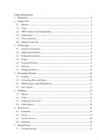
.............................3 2. History.........................................................................................................4 3. Early History...............................................................................................4 4. The Post-War Years....................................................................................5 5. Recent History.............................................................................................6 6. Estonian Maritime Museum and the Seaplane Harbour.............................6 7. Comments on the Seaplane Hangars...........................................................7 8. Restoration..................................................................................................7 9. Interesting Facts..........................................................................................8 10. Summary...................................................................................................9 11
• Shop-drawing review is sped up; • Steel design takes place in a more concurrent fashion; • 3D illustrations help to explain erection sequencing; • Building models provide rigging information for erection crews. The results of this thesis illustrate the benefit that 3D and BIM offer for complex steel construction projects and demonstrate an overall trend in the construction industry. The primary purpose of 3D and BIM is to be able to build the structure in virtual space before actual construction starts, so that the majority of the potential challenges can be successfully identified and addressed during the preconstruction phase. Resümee Käesoleva magistritöö põhiosa on kirjutatud Ameerika Ühendriikides Washingtoni Ülikoolis ajavahemikus september 2009 – september 2010. Ameerikas alustati mudelprojekteerimise (Building Information Modelling – BIM)
Order. Toompea became the seat of the German-born gentry. A wall was built to separate the Upper Town and the Lower Town. In 1285 Tallinn joined the Hanseatic league and became a junction of trade between East and West. Tallinn is said to be built on salt, as it was an important trading commodity. In the 16th century Tallinn had a population of about 7,000 8,000 making it one of the biggest cities in northern Europe. In 1629 Sweden took control of the whole of Estonia. Though hard times continued, the period that followed is known as the "good old Swedish era": foundations were laid for the Estonian school system, the privileges of the nobility were curtailed, local peasants were granted the right to own property, and so on. Peter the Great wanted to open a window onto Europe for Russia so he started the Northern War in 1700. Estonia remained under Russian rule and the Baltic-German nobility vowed allegiance to the
Holidays, Festivals, Cultural events TALLINN - If you're looking for entertainment in Estonia this summer, you are really spoiled for choice. Festivals and events dedicated to the consumption of beer are a lot of fun, but if you want to get the true feel of the country, you need something a little more ethnic. Like a town fair. Just as July becomes August, the seaside town of Haapsalu will host a grand spectacle of rural Estonian entertainment. The White Lady Days is a summer celebration filled with amusement for all the family. Held in and around the remains of the Teutonic-knights-era castles, the fair combines enchanting medieval legends with modern countryside charm to create a comprehensive experience of Estonia beyond the big cities. But the legend of the White Lady of Haapsalu, which is at the heart of the festival, is perhaps the most famous tall tale
from a theatre stage for the first time. Early in the 19th century city architect Carl Ludwig Engel (helped rebuild Helsinki and also built the palace at 8 Kohtu Street on Toompea) designed a sumptuous hall for the theatre, but it was destroyed in a fire. Another fire devastated the theatre in 1902, after which it moved out from Old Town. The premises came into the possession of the Puppet Theatre in 1955. In 1991, the whole building was given to the theatre. Renovation works took place in 2001-03. 5 17 Lai Street Lai 17, so-called Menshikov House was completed about 1685 in the Dutch Baroque style. The family coat-of-arms on the pediment was added in 1817 by then owner Count Stenbock (Sweden origin Russian brigade leader and estate owner). It belonged to Prince Alexander Menshikov, the governor- general of Estonia in 1710-19. He was born in the family of a groom at the
The Ostromir Gospels of 1056 is the second oldest East Slavic book known, one of many medieval illuminated manuscripts preserved in the Russian National Library. Dialectal differentiation accelerated after the breakup of Kievan Rus' in approximately 1100. On the territories of modern Belarus and Ukraine emerged Ruthenian and in modern Russia medieval Russian. They became distinct since the 13th century, i.e. following the division of that land between the Grand Duchy of Lithuania, Poland and Hungary in the west and independent Novgorod and Pskov feudal republics plus numerous small duchies (which came to be vassals of the Tatars) in the east. The official language in Moscow and Novgorod, and later, in the growing Muscovy, was Church Slavonic, which evolved from Old Church Slavonic and remained the literary language for centuries, until the Petrine age, when its usage became limited to biblical and liturgical texts
SCIENCE AND TECHNOLOGY A century ago communication across any distance was dependent upon the telegraph or letters. No jets crossed the ocean, no television pictures enabled us instantly to see events in any part of the world, there were no worldwide telephone networks and no computers. It is just a short lifetime since humanity first travelled into space and discovered how fragile our planet looks. FROM FIREWORKS TO THE MOON At first glance you might think that there couldn't possibly be anything common between a 13 th century festival in China and the Apollo 11 moon landing in 1969. However, there is a link and that is that they both relied on the use of rockets. The Chinese first developed rockets by filling bamboo tubes with an explosive made from saltpetre, charcoal, and sulphur
VI The Fersen's sepulchar chapel VII Chancery of congregation room IX southwest chapel 1. Nicolaes Millich Epitaph of Johan Hastfer 1676 2. Box of the Mannteufels 1750s 3. Box of Patkuls 2nd quarter of the 18th cent. 4. Hermann Berents and Hinrik Martens Golgotha group on the transverse beam of the triumphal arch 1694 5. Arent Passer Grave slab of Otto von Uexküll 17th century 6. Arent Passer Perts of Carl Horn's sarcophagus 1601 7. Arent Passer Grave monument of Pontus de la Gardie 1589-95 8. Christian Ackermann Reredos 1694-96 9. Hans von Aken Epitaph of Olaf Ryning 1594 10. Arent Passer Grave monument of Casper von Tiesenhausen 1599 11. Grave monument of Ferdinand von Tiesenhausen 1806 12. Christian Ackermann Pulpit 1686 13. Johann Gustav Stockenberg Grave monument of Fabian von Fersen Last decades of the 17th century 14. Johann Gustav Stockenberg Grave monument of Otto Reinhold von Taube Last decades of
(stone, wood, cast and wrought iron, and what we use today - concrete and steel). The purpose of this contextual essay is to provide parameters of value and significance so that we can focus our attention on those bridges - globally - that best illustrate the history of bridge building, and to encourage their preservation. What is a World Heritage bridge? The World Heritage Committee states that to be of World Heritage status a monument or site must be of outstanding universal value. It must illustrate or interpret the heritage of the world in terms of engineering, technology, transportation, communication, industry, history, or culture. World Heritage industrial sites and monuments must meet one or more of the following criteria and pass the test of authenticity: Represent a masterpiece of human creative genius; Have exerted great influence, over a span of time or within a cultural area of the world, on
There are also the Atlantic Ocean, the Pacific Ocean and the Gulf of Mexico surrounding the big country. There are 50 states in America. Most of the people live in towns. The biggest state is Alaska; next by size are California, Alaska and Montana. Six states - Maine, Vermont, New Hampshire, Connecticut, Rhode Island and Massachusetts are called New England. They are all small states in the USA that lie in the north- east. The first colony of immigrants settled down in Virginia, in the eastern part of the USA. 3. Relief The USA is situated in the central part of the North American continent. Its western coast is washed by the Pacific Ocean and its eastern coast is washed by the Atlantic Ocean and in the south its coast is washed by the Gulf of Mexico. The coastline is even. There are no big islands belonging to the USA except the Hawaiian Islands which lie halfway the continents of America and Asia. The biggest peninsulas are the Florida Peninsula and Alaska. 4. Land Regions Mountains
musical field in a single book. Several questions connected with creativity, both of the musician (inducements, scope of ideas, intentions) and the listener-auditor (traditionalism, novelty, subjective wishes), can be answered most effectively by the music itself. Thus many unanswered questions remain. Therefore, this book should be considered as an attempt to convey a general picture. Moreover, I had to set limits in the treatment of the historical-cultural status forming an integral part of the whole. A book on this subject may be conceived in two different ways: 1) Laying the main emphasis on symphonism as the creative method and demonstrating how different composers in different periods have applied it individually. In this case the creative method would be the “axis” with the composer “spinning” around it. This is a deductive form of research. 2) Observing Estonian symphonic output both in an exact and broad sense and
Without this policy you would end up with a street market atmosphere with no educational value. Plants may not be sold from the stands in the Floral Marquees until an hour before the whole Show closes. Other shows are less stringent and this is yet another reason why Chelsea is such a great spectacle. 12 Since the 1980s, when conservatories became very popular, there was been a big demand for Show space by their manufactures. There has also been pressure for more room by firms selling powered machinery lawn mowers and twig shredders, strimmers, and powered scythes. In 2001 was no different and, as always, there were ideas and inspiration at every turn. Some you covet instantly, while others might be better suited to someone else's back garden. The day before the Show is a hive of activity. The TV celebrities have
Rudyard Kipling - One of the most memorable English writers of all time Family of Joseph Rudyard Kipling Mother- Alice MacDonald Kipling. Alice Kipling (one of four remarkable Victorian sisters) was a vivacious woman about whom a future Viceroy of India would say, "Dullness and Mrs. Kipling cannot exist in the same room."[3] Father - John Lockwood Kipling. Lockwood Kipling, a sculptor, an illustrator, museum curator and pottery designer, was the principal and professor of architectural sculpture at the newly- founded Sir Jamsetjee Jeejeebhoy School of Art and Industry in Bombay. Later in life Kipling illustrated many of Rudyard Kipling's books, and other works. Kipling also remained editor of the Journal of Indian Art and Industry, which carried drawing works from the students of the Mayo School. COUPLE named their son after the place they had first met Rudyard Lake.
as a masterpiece. Four decades after their breakup, The Beatles' music continues to be popular. The Beatles have had more number one albums on the UK charts, and held down the top spot longer, than any other musical act. According to RIAA certifications, they have sold more albums in the US than any other artist. In 2008, Billboard magazine released a list of the all-time top-selling Hot 100 artists to celebrate the US singles chart's fiftieth anniversary, with The Beatles at number one. They have been honoured with 7 Grammy Awards, and they have received 15 Ivor Novello Awards from the British Academy of Songwriters, Composers and Authors. The Beatles were collectively included in Time magazine's compilation of the 20th century's 100 most important and influential people. The Who are an English rock band which was formed in 1964: vocalist Roger Daltrey, guitarist Pete Townshend, bassist John Entwistle, and drummer Keith Moon. They became
7.The Anglo-Saxon Chronicle The Anglo-Saxon Chronicle is a collection of annals in Old English chronicling the history of the Anglo-Saxons. The annals were initially created late in the 9th century, probably in Wessex, during the reign of Alfred the Great. Multiple manuscript copies were made and distributed to monasteries across England and were independently updated. In one case, the chronicle was still being actively updated in 1154. Nine manuscripts survive in whole or in part, though not all are of equal historical value and none of them are the original version. 8. Beowulf Beowulf is the most famous heroic poem (written down 8-9cc) Beowulf is a war-leader from Scandinavia.He rescued the land of the Danes from a man-like monster Grendel. The monster kills the hero.The poet describes the funeral and how warriors mourned their king. 9. The Vikings, their way of life. Sutton Hoo
By DAVID KAHN (abridged by the author) A SIGNET BOOK from NEW AMERICAN LIBRARV TIMES MIRROR Copyright © 1967, 1973 by David Kahn All rights reserved. No part of this book may be reproduced or transmitted in any form or by any means, electronic or mechanical, including photocopying, recording or by any information storage and retrieval system, without permission in writing from the publisher. For information address The Macmillan Company, 866 Third Avenue, New York, New York 10022. Library of Congress Catalog Card Number: 63-16109 Crown copyright is acknowledged for the following illustrations from Great Britain's Public Record Office: S.P. 53/18, no
settlement. English settlers 1636 Trade and growing crops ´´Fundamental Orders´´- constitution. Fundamental laws · Massachusetts 1620 the Pilgrims Seek religious freedom. Puritans, Indians and farmers Farming and trade Sundays in church (Very Very religious) · New Hampshire Pilgrims from England Religious freedom 3 Fishing, lumber, ship building and farming Public education in 1647 · Middle Colonies Delaware- first a Swedish colony. The Dutchmen took over. New Jersey- Swedish settlers buy land. England gains control over it. Pennsylvania- 1731: Benjamin Franklin -the first library in the colonies. New York- (before it was new Amsterdam) the dutch, the english. · Life in Middle Colonies- Farmers lived in very small houses outside the town. Wheat, barley, rye, fruits, Clocks, watches, guns, locks, cloth, and hats Benjamin Franklin- Fire department, library, freedom of the press No college for woman and African-Americans
region, because there is enough food. The savannas which are grasslands with some trees are mostly in the west. Farther west are the bushlands. The real deserts occupy the centre of the Western Plateau. In the very south west there are thin forests of evergreens trees. Australia is the driest inhabited continent, the flattest, and has the oldest and least fertile soils. Only the south-east and south-west corners of the continent have a temperate climate. The northern part of the country, with a tropical climate, has vegetation consisting of rainforest, woodland, grassland, mangrove swamps and desert. Climate is highly influenced by ocean currents, including the El Niño southern oscillation. 4. Land regions Mountains The Great Dividing Range runs along the Pacific ocean. These mountains are very old and much of worn down but the Australian Alps are the highest of them. The highest top Mount Kosciusko is 2228 metres above sea level
Engineering, Technion Israel Institute of Technology Consultant: Roode Liias- Professor and Dean, Faculty of Civil Engineering, Tallinn University of Technology Title: Integration of Lean Construction and Building Information Modelling Archived: University of Applied Sciences, Faculty of Construction ABSTRACT This research can be divided into two. The first part investigates the current state of the construction industry, while the second part looks at new emerging business models in particular, Lean Construction (LC) and Building Information Modelling (BIM), as well as an integration of these two. Given that the construction industry does not have a particularly good reputation among the public, the first part of this thesis focuses mainly on this problem and its sources. It is the reason why we need
.......................................................9 3.5. Outsourced Services .........................................................................................................9 3.6. Structure............................................................................................................................9 3.7. Management Process ......................................................................................................10 4. Development Program............................................................................................................10 4.1. Expenses .........................................................................................................................10 4.2. Outstanding Tasks and Projects ......................................................................................10 4.3. SWOT Analysis of the IT Department ...............................................................
*Liberty, anarchism and the noble savage · European amazement at Indians' personal liberty · Living in social harmony and prosperity without the rule of a king · The European Enlightenment much of its light from the torch of Indian liberty The Indian "the noble savage" living in the "natural state" Thomas Paine = used Indians as models of how society might be organized 7. Which organization united the Indians of the eastern part of what is now the US? How is this reflected in the political organization of the US? The Founding Indian Fathers · The Founding Fathers faced a major problem how to make one country from 13 colonies · Reportedly the first person to propose a union of all colonies was the Indian chief Canassatego *The American system of states is based on the Iroquouis League *The Iroquois League: Founded by Hiawatha and Deganwidah between 10001450 · Five or six nations
spread of liquor distilling. The spirits sold in Russia, the mash from the distilleries was used to fatten the cattle, whose manure was fertilizing the fields. At the same time, the lifestyle of the nobility and other Baltic Germans became far more refined. Taking advantage of the economic boom, they erected grand neo-classical mansions surrounded by splendid parks which adorn the Estonian landscape even today. Influences of Pietism and the Moravian Brethren Being joined to Russia did not mean isolation for Estonia. It belonged to the German cultural sphere and was therefore able to participate in pan-European cultural and spiritual movements. During the first half of the 18th century, the influence of Pietism grew in
4 percent of GDP, exceptionally large. Barter and the use of surrogate moneys and foreign currencies prevailed. Ukraine had introduced a sovereign currency, the Hryvnia, but it was little used. A shadow economy swelled and compensated for an unknown share of the economic collapse. 2001-2008 Between 2001 and 2008, the Ukrainian economy picked up significantly. Many of Ukraine's large-scale capitalists--the oligarchs--are former Soviet-era industrial managers who succeeded on a grand scale when industries were privatized. Their wealth was originally based on a traditional, simple formula: convert cheap energy and raw materials into metals and manufactured goods. The six richest Ukrainians are all metallurgy magnates. In Ukraine--like in Russia--incumbent managers (there is a special term in Russian for such executives/ owners Red Director) were present at the birth of private property and could harness privatization
Stonehenge One of the best known ancient wonders of the world, 5000 years old Megalith monument, built by western mediterraneans during 3000-1600 BC Circular structure, large standing stones, aligned with rising sun at teh solstice Attlers and bones were sued to dig pits that hold the stones The Celts in Britain and their legacy 700-200 BC celts invade Britain Gaels or Goehls(Ireland and Scotland),Cymri(Wales) and Brythons(gave name to Brittany) Fierce fighters,superb horsemen.Most of them farmers, lived in thatched houses
A self- conscious break with traditional aesthetic forms. Rejecting the sentiment and discursiveness typical of Romanticism and Victorian literature for poetry that instead favored precision (täppis) of imagery and clear, sharp language. Modernist writers embraced the unconscious fears of a darker humanity. Sub movements: surrealism, formalism, avant-garde, symbolism, imagism Structuralism: Writers used myth and music as a part of the books structure. J. Joyce "Ulysses". Deep structure is the same as in "odyssey" and T.S. Elliot "the fisher king"-more complicated experiment. Aldous Huxley ,,point counter point"-builds his chapters on principles of music. R. Aldington ,,death of a hero"-a jazz novel. Polyphony-harmony. Cacophony Virginia Woolf ,,the waves"-symphony. Psychoanalysis: The greatest influence of psychoanalysis on literary production has
History exam *Stonehenge - is a monument located in England. It is one of the most famous prehistoric sites in the world and is composed of earthworks surrounding a circular setting of large standing stones. The surrounding circular, earth bank and ditch, have been dated to about 3100 BC. Stonehenge was produced by a culture with no written language. Many aspects of Stonehenge remain subject to debate. There is little or no direct evidence for the construction techniques used by the Stonehenge builders.
In addition, foreign born professionals frequently need a TOEFL score for certification to practice their profession in the United States or Canada. The TOEFL is a timed test that consists of the three sections listed here. THE TOEFL Section 1 Listening Comprehension 50 questions 35 minutes Part A Statements 20 questions Part B Short Dialogs 15 questions Part C Minitalks and Extended Conversations 15 questions Section 2 Structure and Written Expression 40 questions Structure 25 minutes
 annaabi.ee