Leidsid 33 sarnast õppematerjali, mis on seotud failiga "Modern Tallinn". Need materjalid aitavad sul teemat sügavamalt mõista.
build, building, wall, different, kumu, exhibition, architects, restaurant, full, floor, glass, no99traw, theatre, apartment, toom, class, architecture, alot, them, couple, close, rooms, floors, permanent, 18th, century, till, film, museum, 2017tained, walls, dedicated, cinema, anto, jürgen, built, interiorimple, light, viimsiecondary, groundArt Museum of Estonia Art Museum of Estonia was founded on November 17th, 1919, but it was not until 1921 that it got its first permanent building the Kadriorg Palace, built in the 18th century. In 1929 the palace was expropriated from the Art Museum in order to rebuild it as the residence of the President of Estonia. The Art Museum of Estonia was housed in several different temporary spaces, until it moved back to the palace in 1946. In September, 1991 the Kadriorg Palace was closed, because it had totally deteriorated by then. At the end of the year the Supreme Council of the Republic of Estonia decided to guarantee the construction of a new building for the Art Museum of Estonia in Kadriorg. Untill then the Knighthood House at Toompea Hill served as the temporary main building of the Art Museum of Estonia. The exhibition there was opened on April 1, 1993
graceful bronze statue of a Roe Deer by Jaan Koort (1883-1935), one of the best-known Estonian sculptors, has been standing for several decades. Lai Street stretches from Nunne Street to Pikk Street. Parallel with Pikk Street, Lai Street, too, ends at the Great Coast Gate (first mentioned 1359). Lai Street is very wide considering that it was laid out in the Middle Ages. This is because it sprang up on both sides of former city wall. Lai is quite a peaceful street with few shops. However, it has three museums and two theatres. The main entrance into St Olaf´s Church also faces the street. Several Lai Street houses have kept their Gothic appearance and even interiors, although we can also notice moderate Nordic Baroque, Neoclassicicm, Historicism and even Art Nouveau. The origin of the name "Lai" Lai Street belongs among the oldest streets of Tallinn. Despite its length and width its share in
01.2010 Juhendaja: Roode Liias ……………………….. Ülesande vastu võtnud: Tanel Friedenthal ………………………. Abstract How are 3D and BIM Changing the Design, Fabrication and Construction of Complex Steel Structures? The adoption of three-dimensional (3D) design and construction tools have created a remarkable shift in the building industry. Intelligent 3D technology in the form of Building Information Modeling (BIM) not only promises to improve the notoriously inefficient construction process, but also opens the door for designing new geometric shapes, which until recently have been considered unbuildable. Steel has been extensively used to build some of the most challenging architectural icons of the 21st century, due to its low weight and high strength in both compression and tension. Therefore, the steel
and the third-tallest free-standing clock tower in the world. The clock first ticked on 31 May 1859. The pendulum is installed within an enclosed windproof box sunk beneath the clockroom. It is 3.9m long, weighs 300 kg and beats every 2 seconds. The clockwork mechanism in a room below weighs 5 tons. · Buckingham Palace is the official London residence of the British monarch. Originally known as, the building which forms the core of today's palace was a large townhouse built for the Duke of Buckingham in 1703 on a site which had been in private ownership for at least 150 years. During the 19th century it was enlarged, principally by architects John Nash and Edward Blore, forming three wings around a central courtyard. Buckingham Palace finally became the official royal palace of the British monarch on the accession of Queen Victoria in 1837.
restaurants, sport and cultural centres. Every five years national song and folk dance festivals take place in Tallinn. The yachting regatta of the 1980 Moscow Olympic Games was held at Pirita. History Tallinn means in English "Danish town". The place is believed to have been settled by Finno-Ugric people about 2500 BC. It was first marked on a map of the world by the Arab geographer al-Idrisi in 1154. The Estonians were the first to build a stronghold on the spot of the Toompea Hill, but the real Tallinn was built by the Danes who conquered the north of Estonia in 1219. Legend has it that one day, when the Danes were about to lose a bloody battle, the sky suddenly opened and a red flag with a white cross on it dropped down upon them from the heaven. This is how the Danes obtained their national flag. In 1346 the Danish king sold his Estonian lands to the Teutonic Order, who a year later resold them to the Livonian Order
Minimalist design has been highly influenced by Japanese traditional design and architecture. In addition, the work of De Stijl artists is a major source of reference for this kind of work. De Stijl expanded the ideas that could be expressed by using basic elements such as lines and planes organized in very particular manners. Architect Ludwig Mies van der Rohe adopted the motto "Less is more" to describe his aesthetic tactic of arranging the numerous necessary components of a building to create an impression of extreme simplicity, by enlisting every element and detail to serve multiple visual and functional purposes (such as designing a floor to also serve as the radiator, or a massive fireplace to also house the bathroom). Designer Buckminster Fuller adopted the engineer's goal of "Doing more with less", but his concerns were oriented towards technology and engineering rather than aesthetics. A similar sentiment was industrial designer Dieter Rams' motto, "Less but better"
Legend has it that one day, when the Danes were about to lose a bloody battle, the sky suddenly opened and a red flag with a white cross on it dropped down upon them from the heavens. This is allegedly how the Danes obtained their national flag, the Dannebrog in a battle against the Estonians. In the middle of the 14th century Denmark sold its possessions in Estonia to the German Teutonic Order. Toompea became the seat of the German-born gentry. A wall was built to separate the Upper Town and the Lower Town. In 1285 Tallinn joined the Hanseatic league and became a junction of trade between East and West. Tallinn is said to be built on salt, as it was an important trading commodity. In the 16th century Tallinn had a population of about 7,000 8,000 making it one of the biggest cities in northern Europe. In 1629 Sweden took control of the whole of Estonia. Though hard times
But, under the control of various English kings, London once again prospered as an international trading centre. However, Viking raids began in the late 10 th century and reached a head when they took the city under Danish king Canute and forced the then-English king to flee. Years later, following a victory at the Battle of Hastings, William the Conqueror was crowned King of England in the newly-finished Westminster Abbey in 1066. William granted the citizens of London special privileges while building a castle in the corner of the city to keep them under control. This castle was expanded by later kings and is now known as the Tower of London. The city grew in wealth and population during the Middle Ages. In 1100 its population was around 18,000 but after 200 years it had grown to nearly 100,000. However disaster struck during the Black Death, when London lost nearly a third of its population. After the defeat of the Spanish Armada, stability in politics allowed the city to grow even more
A month later Estonia joined the United Nations. In 1997 the population reached 1.462 million; from this Estonians total 65% (950,124) and other nationalities 35%. The capital Tallinn, mentioned for the first time in 1154, has a population of 434,800 (1995). Other important towns are Tartu, Kohtla-Järve, Narva and Pärnu. Estonia is a developed industrial and agricultural country. In industrial output: oil shale, electrical energy, mineral fertilisers, paper, chemicals, building material, and textile production are prominent. In agriculture: milk, milk products, meat, grain, potatoes, fruits and vegetables. Estonian cultural life is manifold and intense, initiated by the National Awakening movement during the second half of the 19th century. Estonian folk arts date back to the remote past. In Estonia there are 27 higher educational establishments, among them seven universities with more than 25,000 students and post-graduates
London History The Romans AD 43- AD 410 The Romans finally invaded Britain in AD 43 from Kent. The Romans lead by Julius Caesar attempted to invade Britain twice before that in 55 and 54 BC but the invasions were unsuccessful. They made their way to the river Thames and sailed up it. The Romans knew it was important to control a crossing point at the river Thames, so they decided to build a settlement on the north bank. Although small settlements had been built on the banks of the Thames, the Romans were the ones who built the first city. They called their city Londinium. The Roman engineers noticed that the point where the swampy river narrowed would make an ideal crossing point, they built London Bridge. Less than 20 years later the native Iceni tribe, led by Queen Boudicca, rose up against the Romans in revenge for mistreatment and burnt Londinium to the ground
Foreword Bridging rivers, gorges, narrows, straits, and valleys always has played an important role in the history of human settlement. Since ancient times, bridges have been the most visible testimony of the noble craft of engineers. A bridge can be defined in many ways, but Andrea Palladio, the great 16th century Italian architect and engineer, hit on the essence of bridge building when he said "...bridges should befit the spirit of the community by exhibiting commodiousness, firmness, and delight." In more practical terms, he went on to explain that the way to avoid having the bridge carried away by the violence of water was to make the bridge without fixing any posts in the water. Since the beginning of time, the goal of bridge builders has been to create as wide a span as possible which is commodious, firm, and occasionally delightful
Ergo Pikas Integration of Lean Construction and Building Information Modelling DISSERTATION Tallinn 2010 2 UNIVERSITY OF APPLIED SCIENCES Author: Ergo Pikas- Civil Engineering student, Faculty of Construction, Tallinn University of Applied Sciences Supervisor: Rafael Sacks- Associate Professor, Faculty of Civil and Env. Engineering, Technion Israel Institute of Technology
......................................................................................................4 USES OF ENERGY............................................................................................................. 4 2.1 Uses of energy in homes...............................................................................................5 2.2 Types of energy used in homes.................................................................................... 6 2.3 Energy use in different types of homes........................................................................ 6 2.4 Commercial Energy Use...............................................................................................9 2.5 Industrial and Manufacturing Energy Use..................................................................11 2.6 Transportation Energy Use.........................................................................................12 RENEWABLE ENERGY...............................
She magnified details until they lost recognizability. She then displayed severe edges, rigorous formality and austere paint surfaces, often in her landscape paintings. Later in her career, she painted romantic essence of New Mexico, displaying skulls, bones and flowers and veered towards the abstract. Subsidiary artists: Gertrude Stein, Joseph Stella, John Marin, Arthur G. Dove, Marsden Hartley. The Armory Show. Held in 1913, this was the most influential art exhibition ever held in America. The revolutionary Europeans drew more attention than the American painters. The show was held to present the evolution of modern art since Romanticism. The exhibition became a subject of headlines and controversy. The prices of pieces of art surged after 1913 and the market for modern art boomed. Synchromism. Definition: shapes and volumes of pure color. The style was more directed toward free and pure- colored abstraction. The style name suggests harmonized colors
She magnified details until they lost recognizability. She then displayed severe edges, rigorous formality and austere paint surfaces, often in her landscape paintings. Later in her career, she painted romantic essence of New Mexico, displaying skulls, bones and flowers and veered towards the abstract. Subsidiary artists: Gertrude Stein, Joseph Stella, John Marin, Arthur G. Dove, Marsden Hartley. The Armory Show. Held in 1913, this was the most influential art exhibition ever held in America. The revolutionary Europeans drew more attention than the American painters. The show was held to present the evolution of modern art since Romanticism. The exhibition became a subject of headlines and controversy. The prices of pieces of art surged after 1913 and the market for modern art boomed. Synchromism. Definition: shapes and volumes of pure color. The style was more directed toward free and pure- colored abstraction. The style name suggests harmonized colors
what was going on in the turn of century in America · They wanted something fresh, new · They were disgusted by romantics · Showed the harsh tone in moral life · Refleced the development of science · Period of intense urbanisation, the city is in the center of the novel, often · New characters were businessmen, salesman, immigants, poor farmers · These characters were in new settings, skyscrapers, departments store, apartment building, ghetto, stockyard (cattle, cows were slaughtered), commercial trust · Their world is not one of culture or high moral standards · For these new writers controlling new american social experience · Naturalists offered a view that questioned the belief that now was a conscious and national being and happiness could in moral behaviour · Naturalists show man as a small figure in deterministic system which ignores him · Man is a huge machine
seasons. It appears in number of novels. These days it is not only the interest of tourists but is also a gathering point of certain minority groups. It is now fenced off to protect it from damage. 3. The Roman conquest Julius Caesar's first raid was in 55 BC but the romans left. Ad 43- the Romans came to stay. The army established Roman rule in the south and SW of the country. The Romans started to introduce their laws to a new province of the Roman Empire and started to build good roads. Officials were appointed (governors, procurators to collect taxes, look after the estates and mines and se that the gold, silver, iron and lead were exported back to Rome). Introduced schools,a new language Latin, large farms (villas), baths. In AD 410 they had to leave . roman occupation lasted nearly 400 years. They left behind very little. Roman province of Britannia covered most of present-day England and Wales. 4. Latin influence on English
image on a surface beyond the lens. Examples of such surfaces are the retina of the eye or a movie screen. The distance from the lens to the focal plane is known as focal length. In cameras, telescopes, and similar devices, the lens is turned on a screw-thread mounting to adjust the focal length. This action allows focusing of images of objects at various distances. In the human eye, focal length is adjusted by muscles that alter the lens curvature. Light rays of different colors are bent by varying degrees as they pass through a curved surface. This causes a distortion of the image, known as chromatic aberration. In cameras, sharp images are obtained by arranging two or more lenses so that the aberration of one cancels out the aberration of another. Such an arrangement of lenses is called an achromatic lens. QUESTION: According to the passage, what is focal length? (A) A curved surface that refracts light. (B) The distance from the focal plane to the lens.
nobody else. You want your children to have good grades in school? Then practice Capitalist Niggerism because then you will not blame the teachers for failing your children or blame the nationwide testing services for using non-black questions in their testing. You will be in control because you will totally understand that everything that happens to your child at school is a result of the learning environment you have provided him or her at home. You want to succeed in creating wealth, join Wall Street. Don’t make excuses that Blacks don’t know how to invest their money. Go after the Caucasians. Use their guilt to your advantage. Another important point which I raised in this book concern the long study I have conducted regarding the economic behaviour of East Indians and Pakistanis. It is an economic doctrine I have christened the “Spider Web Doctrine,” because I believe we all understand how spiders behave. They build a web, and
the use of language typical of a literary genre (e.g. the style of a comedy, drama, novel). 4. the selective use of language that depends on spheres / areas of human activity (e.g. style of fiction, scientific prose, newspapers, business correspondence, etc.). STYLISTICS Stylistics is the study of style. The very term "stylistics" came in more common use in English only some 45 years ago. Stylistics is a part of style; it studies principles of selecting and using different linguistic means (grammatical and phonetic) that serve to render shades of meaning. The Stylistics of language studies stylistic devices and expressive shades of linguistic units (words, construction of phrases). The Stylistics of speech studies individual texts viewing the way the message or content is expressed. Literary Stylistics concentrates on artistic expressiveness that characterizes a literary work, a writer, or a whole time period.
outlook on the future. Population of Western Ukraine largely supports politics paying EU card (Yusteshenko, Tymoshenko), while industrial Eastern regions support Yanukovych as Politian closely associated with better relation / integration with Russia. 1.1.2. Post-Independent Ukraine. Economy and politics 1990-s When Ukraine became independent in 1991, there were expectations that it would in the near future become a wealthy free market democracy and a full member of the European and Euro-Atlantic communities. Ukraine never fulfilled those expectations. Instead, it is seen as an underachiever, sometimes as a sick man of Europe, and perhaps even as a potentially failed state thanks to its geopolitical situation, historical burdens, and the mistakes made in institutional development and policy. Economically, Ukraine has grown along with the region. As such, growth rates have not been
or had tried to take a long view and ask some questions that now appear basic. I believe it to be true that, from the point of view of the material previously published in books on cryptology, what is new in this book is 85 to 90 per cent. Yet it is not exhaustive. A foolish secrecy still clothes much of World War II cryptology—though I believe the outlines of the achievements are known—and to tell just that story in full would require a book the size of this. Even in, say, the 18th century, the unexplored manuscript material is very great. Nor is this a textbook. I have sketched a few methods of solution. For some readers even this will be too much; them I advise skip this material. They will not have a full understanding of what is going on, but that will not cripple their comprehension of the stories. For readers who want more detail on these methods, I
Phonetic SD Aposiopesis Spondee Onomatopoeia Nominative sent. Pyrrhic Alliteration Asyndeton Rhythmic invers. Assonance Apokoinu Run-on line Rhyme: Gap-sentence link Stanza: Full Framing Heroic couplet Incomplete Anadiplosis Ballad stanza Vowel Tautology Spenserian stanza Consonant Polysyndeton Ottava rima Compound Inversion Sonnet:
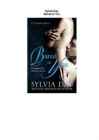
Eva's story. I'm so glad the inspiration struck twice! 1 "We should head to a bar and celebrate." I wasn't surprised by my roommate's emphatic pronouncement. Cary Taylor found excuses to celebrate, no matter how small and inconsequential. I'd always considered it part of his charm. "I'm sure drinking the night before starting a new job is a bad idea." "Come on, Eva." Cary sat on our new living room floor amid a half-dozen moving boxes and flashed his winning smile. We'd been unpacking for days, yet he still looked amazing. Leanly built, dark-haired, and green-eyed, Cary was a man who rarely looked anything less than absolutely gorgeous on any day of his life. I might have resented that if he hadn't been the dearest person on earth to me. "I'm not talking about a bender," he insisted. "Just a glass of wine or two. We can hit a happy hour and be in by eight."
"The Writer's Journey should be on anyone's bookshelf who cares about the art o f storytelling at the movies. N o t just some theoretical tome filled with development clichés of the day, this book offers sound and practical advice on how to construct a story that works." — David Friendly, Producer, Little Miss Sunshine, Daylight, Courage Under Fire, Out to Sea, My Girl "A classic of its k i n d full of insight and inspiration that every writer, both amateur and professional, must read." — R i c h a r d D. Zanuck, T h e Zanuck C o m p a n y Charlie and the Chocolate Factory, Big Fish, Reign of Fire, Driving Miss Daisy, Cocoon, The Verdict, Sting " T h e basis for a great movie is a great screenplay, and the basis for a great screenplay should be The Writer's Journey."
The Revolution was more than just a protest against English authority; as it turned out, the American Revolution provided a blueprint for the organization of a democratic society. And while imperfectly done, for it did not address the terrible problem of slavery, the American Revolution was an enlightened concept of government whose most profound documents may have been the American Declaration of Independence and United States Constitution. To feel the full impact of the Enlightenment on America one needs only to look at the first inaugural address of Thomas Jefferson, who, along with Benjamin Franklin, is considered to be the American most touched by the ideas of the Enlightenment. Attempts to reconcile science and religion resulted in a widespread rejection of prophecy, miracle and revealed religion in preference for Deism
the sanitation workers' ball. Probably this long-standing status as sucker accounts for my interest in the study of compliance: Just what are the factors that cause one person to say yes to another person? And which techniques most effectively use these factors to bring about such compliance? I have wondered why it is that a re- quest stated in a certain way will be rejected, but a request that asks for the same favor in a slightly different fashion will be successful. So in my role as an experimental social psychologist, I began to research the psychology of compliance. At first the research took the form of experiments per- formed, for the most part, in my laboratory and on college students. I wanted to find out which psychological principles influenced the tendency to comply with a request. Right now, psychologists know quite a bit about these principles-what they are and how they work
.............................................................. 11 2.2. Limited Liability Company ..................................................................................................... 11 2.3. Closed Joint-Stock Company ................................................................................................. 13 2.4. Company name ..................................................................................................................... 14 2.5. Comparison of different forms of incorporation of companies ............................................ 15 3. TAXATION, DUTIES AND EXCISES .............................................................................................. 17 3.1. The essence of the tax system, the principles and functions of taxes .................................. 17 3.2. The main taxes ...................................................................................................................... 20 3.3
2 1 Water was pouring into the boat. 3 the hills 7 bee 4 like 9 hard 2 We clambered onto the rocks. 4 a mouse 8 a fox 5 judging 3 The wooden floor had rotted. Challenge! 4 The little boy was sobbing and Transcript Students' own answers pointing to his sister's ice cream. 5 The thief grabbed my bag and ran The photos are connected with the 1B Past and perfect tenses off
program ran at Westinghouse, producing a missing comma diagnostic. A successful attempt followed. A group of eight engineers leaves Shockley Semiconductor to form Fairchild Semiconductors. Kenneth Olsen founds Digital Equipment Corporation. 1958 At Texas Instruments, Jack St. Clair Kilby comes up with the idea of creating a monolithic device (integrated circuit) on a single piece of silicon.Later (in 2000) Kilby receives Nobel price in physics. Jack Kilby completes building the first integrated circuit, containing five components on a piece of germanium half an inch long and thinner than a toothpick. SAGE -- Semi-Automatic Ground Environment -- linked hundreds of radar stations in the United States and Canada in the first large-scale computer communications network. 1959 Fairchild Semiconductor files a patent application for the planar process for manufacturing transistors. The process makes commercial production of transistors possible and leads
AMBER AND RUSSET - LATE COLOUR CHANGE GENES Copyright 2014, Sarah Hartwell The ancestors of the domestic cat were nondescript black/brown striped tabbies. Over the centuries, mutation produced a wide array of colours based on 2 different pigments. Eumelanin gives the blacks, browns and blues while phaeomelanin gives the reds, fawns and creams. A few other genes give further variations on those colours such silvers, colourpoints and solids/selfs. Mutations continue to occur and unexpected colours also turn up due to inbreeding where recessive genes, hidden for generations, start showing up. AMBER AND LIGHT AMBER During the 1990s, some purebred Norwegian Forest Cats in Sweden produced chocolate/lilac and cinnamon/fawn offspring
ccc_tracy_fm_i-xviii.qxd 7/7/03 3:22 PM Page iii CHANGE YOUR THINKING, CHANGE YOUR LIFE How to Unlock Your Full Potential for Success and Achievement B R I A N T R AC Y JOHN WILEY & SONS, INC. ccc_tracy_fm_i-xviii.qxd 7/7/03 3:22 PM Page i CHANGE YOUR THINKING, CHANGE YOUR LIFE ccc_tracy_fm_i-xviii.qxd 7/7/03 3:22 PM Page ii ccc_tracy_fm_i-xviii.qxd 7/7/03 3:22 PM Page iii CHANGE YOUR THINKING,
1. Health. 2. Physical fitness. 3. Weight loss. I. Title. II. Title: Four-hour body. RA775.F47 2010 613.7--dc22 2010018533 eISBN: 978-0-307-46365-4 All illustrations by Fred Haynes/Hadel Studio, unless otherwise noted in the Photo and Illustration Credits section Jacket front-flap photos: (top) (c) Mark Reifkind; (bottom) (c) Photos taken by Inge Cook, provided courtesy of Ellington Darden, PhD v3.1 For my parents, who taught a little hellion that marching to a different drummer was a good thing. I love you both and owe you everything. Mom, sorry about all the crazy experiments. Support good science-- 10% of all author royalties are donated to cure-driven research, including the excellent work of St. Jude Children's Research Hospital. LIST OF ILLUSTRATIONS GROUND ZERO--GETTING STARTED AND SWARAJ Comparison of Methods for Estimating % Bodyfat Male Examples--Bodyfat Female Examples--Bodyfat Ramit Sethi's Betting Chart
 annaabi.ee