Leidsid 33 sarnast õppematerjali, mis on seotud failiga "Michelangelo". Need materjalid aitavad sul teemat sügavamalt mõista.
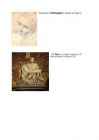
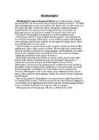
michelangelo, florence, work, known, between, galleria, dell, sent, year, italian, painter, poet, renaissance, best, works, unique, statue, himself, birth, simoni, commonly, march, near, arezzo, republic, today, showed, interest, copy, paintings, seek, gifted, february, 18th, states, engineer, field, architecture, poetry, 16th, century, told, howeverThe portrait of Michelangelo by Daniele de Volterra The Pietà is a marble sculpture in St. Peter's Basilica in Vatican City MICHELANGELO Italian sculptor, painter, architect and poet. He was one of the founders of the High Renaissance and, in his later years, one of the principal exponents of Mannerism. He was born in 6 March, 1475 in Caprese, the son of the local magistrate, his family returned to Florence soon after his birth. During his life he lived in city's like Florence, Venice and Bologna in Tuscany, nowadays Italy. Later, during the prolonged illness and after the death of his mother, he lived as a stonecutter and his wife and family in the town of Settignano where his father owned a marble quarry and a small farm. Michelangelo once said to the biographer of artists Giorgio Vasari, "What little good I have within me came from the pure air of your native Arezzo and the chisels and hammers
Michelangelo Michelangelo di Lodovico Buonarroti Simoni was an Italian painter, sculptor, poet and architect. He was of noble birth, but was not raised by his parents. His father had him brought up by a stone carver and his wife, because his own wife was too ill to take care of the child. While living with his step-parents, young Michelangelo learned the skills that would serve him throughout his life, but his father was displeased when his son told him he wanted to be an artist, and it took much convincing for Michelangelo to be permitted to further his apprenticeship. Michelangelo went on to study sculpture at Medici gardens, where Leonardo da Vinci had also been taught. Following his sojourn at Medici gardens, Michelangelo went to Bologna, then to Rome, where he saw the impressive marble statues, which
Michelangelo Buanarroti Katrin Jermoskin Mustvee Gymnasium Form 11 2010 Michelangelo di Lodovico Buonarroti Simoni 6 March 1475 18 February 1564 Italian Renaissance painter, sculptor, architect, poet, and engineer The second of 5 brothers Mother was Francesca Neri she died young Father was Ludovico di Leonardo di Buonarotti Simoni Childhood in Florence 1488 he got inspiration by painter Domenico Ghirlandaio 1489 he began to study sculpture under the protection of the Lorenzo Magnifico
The three youthful Pre-Raphaelites deliberately challenged the established view of art, drawing up a manifesto of their intentions and publishing them in the four issues of a periodical called "The Germ". They would paint direct from nature, with objective truthfulness and genuine ideas in sympathy with what was direct and heartfelt in the art of the past. The brotherhoods techniques came from the early Flemish art- especially Van Eyck. To imitate the work of great Italian artists the PRB-s studied the colours in nature. To have the effect of glowing colours they invented a new method called "wet white". It was very difficult and wasn't used a lot (except Hunt). The technique was to apply colour on a wet brilliant white ground. For inspiration the brotherhood turned to the bible because they wanted to portray significant themes. They applied much original thought to their subjects, and this made them excellent illustrators. Only
The Renaissance Between 14th and 16th century in Europe From French word rebirth It was an age of growth in Europe. New, powerful city states emerged. A new middle class had more and more money to spend. Great artists, writers and thinkers lived during this time. During the Middle Ages many people who lived in the countryside worked on the land that they got from the noblemen. In return, they were protected by them Between the middle and the end of the 14th century, the plague, also called "Black Death" killed almost half of Europe's population. It spread most rapidly in the larger cities where many people lived. This led to economic depression. When the plague slowly decreased in the 15th century, the population in Europe began to grow. A new middle class emerged --bankers, merchants and trades people had a new market for their services. People became wealthier and had more than enough money to spend
Guy painted city life, Birch painted the seascape. The "Peale formula" was adhered to: objects along tableware against a dark background. Also, trompe-l'oeil persisted via Charles Willson's Peale's sons. Artists: Ralph Earl, Francis Guy, Thomas Birch, James Peale, Raphaelle Peale. Mid-C19 Landscape. In C19, landscape painting became dominant and provided many unexplored subjects. The tradition of landscape art emerged in the 1820s through the work of the so-called Hudson River School. The school of "luminism" is also distinguished, it is interested in the phenomenon of light. Exemplary artists. Thomas Cole (early-C19). He painted more in the Romantic mold than his contemporaries. He was inspired by the valleys of Catskill Mountains. He depicted lonely wilderness and apocalyptic visions. Albert Bierstadt (late-C19). He painted the last frontier, the heroic landscape of the country. He compiled a
Guy painted city life, Birch painted the seascape. The "Peale formula" was adhered to: objects along tableware against a dark background. Also, trompe-l'oeil persisted via Charles Willson's Peale's sons. Artists: Ralph Earl, Francis Guy, Thomas Birch, James Peale, Raphaelle Peale. Mid-C19 Landscape. In C19, landscape painting became dominant and provided many unexplored subjects. The tradition of landscape art emerged in the 1820s through the work of the so-called Hudson River School. The school of "luminism" is also distinguished, it is interested in the phenomenon of light. Exemplary artists. Thomas Cole (early-C19). He painted more in the Romantic mold than his contemporaries. He was inspired by the valleys of Catskill Mountains. He depicted lonely wilderness and apocalyptic visions. Albert Bierstadt (late-C19). He painted the last frontier, the heroic landscape of the country. He compiled a
BEOWULF most important poem, surviving in a 10th-cent manuscript. The historical period of the poem's events can be dated in the 6th to 8th century. Much of the material of the poem is legendary and paralleled in other Germanic historical-mythological literature in Norse, Old English, and German. GEOFFREY CHAUCER (1340-1400) Politician and writer, fought in France during the 100 years war. He visited Genoa and Florence where he became acquainted with Italian literature and in particular with the works of Dante, Petrarch and Boccaccio. The French period (up to 1370). early works were based mostly on French models. The Italian period (up to c. 1387). Was influenced by Italian literature, especially Dante and Bocaccio. The English period. Wrote Canterbury tales. CANTERBURY TALES This unfinished poem of about 17,000 lines was written mostly after 1387. The poem introduces a group of pilgrims who are journeying from London to the
current ideals and foundations. Furthermore, the wider public was enthralled with his ability to represent brotherhood and patriotism while using the neoclassicistic style. (Friedlaender, 1952, p.16) Jacques-Louis David was born in Paris in 1748 as the son of an ironmonger. The leader of the French classical movement studied with the artist Joseph-Marie Vien. Although, he attained his real art education in Rome, where he was surrounded by ancient ruins and the masterpieces of great Italian painters. After returning to Paris in 1789 David started to shape his vision, connecting the themes from Antique with the themes of strict morality and heroic sacrifice. This was compatible with the new ideas of the French Republic and therefore David quickly turned into a national hero. When the French revolution started, Jacques-Louis David was as passionate towards politics as he was towards his art. He joined the National Convention, staged Republic marches and attacked the Royal Academy
Major events on world history at that time: · Industrial revolution · In America the Declaration of Independence, July 4, 1776 · The French Revolution, 1789 · The King of England was George III, after him George IV and then Queen Victoria Outcomes: · Revolution did not bring welfare · Lives of the lower-classes worsened · Extended the distance between the lower and upper class · The rich got richer, the poor got poorer 2. Romanticism is a reaction against classicism, science and atomic (aesthetic ideal of order and unity) worldview. Romantic ideal is the organic world. Romanticism: · Returns to nature and belief in the goodness of mankind · Exaltation of the senses and emotion overcome reason and intellect is the time when novels became more important
1. The Jacobean masque Elizabethan one nation culture, now cultural polarisation between the new courtly culture and the rest of the country. Court in cultural isolation. Ben Jonson. King and courtiers were close to universally recognised ideal types (conflict with the reality). Mysticism. Emergence of perspective view, stage machinery, artificial light, revolution. The stage cast the monarch in the focal point (the lines of perspective of the stage met there. Inigo Jones. Masque an educative vehicle, towards classical antiquity and architecture. Tide towards absolute monarchy
English literature is one of the oldest literatures in Europe; dates back to the 6th century AD. Oral literature, i.e. not written down, spread from person to person. In 449 AD Anglo-‐Saxon tribes invaded England – beginning of the Anglo-‐Saxon period in English literature. The first form of literature was folklore, carried by scops and gleemen, who sang in alliterative verse (a kind of simple poetry). Prose developed much later. The first form of recorded English literature was the epic Beowulf, which was produced sometime near the end of the 7th and beginning �
well as a vigorous social campaigner. Considered one of the English language's greatest writers, he was acclaimed for his rich storytelling and memorable characters, and achieved massive worldwide popularity in his lifetime. Charles Dickens was born in Landport, Portsmouth in Hampshire, the second of eight children to John Dickens n 7 February 1812. The 12-year-old Dickens began working ten hour days in a Warren's boot-blacking factory. In May 1827, Dickens began work in the office of Ellis and Blackmore as a law clerk. At the age of seventeen, he became a court stenographer and, in 1830, met his first love, Maria Beadnell. Maria's parents disapproved of the courtship and effectively ended the relationship when they sent her to school in Paris. In 1834, Dickens became a political journalist, reporting on parliamentary debate and traveling across Britain by stagecoach to cover election campaigns for the Morning Chronice.
õppis École des Beaux-Arts kunstikoolis (18971899). Aastatel 19021904 õppis Pariisis Academie Humbert'is. Georges Braque teenis Esimese maailmasõjas Prantsuse sõjaväes ja sai raskelt haavata. Ta kasutas maalis esimesena kirjatähti, imiteeris puu ja marmori faktuuri ning leiutas kollaazitehnika Robert Delaunay Robert Delaunay (12 April 1885, Paris 25 October 1941) was a French artist who used Orphism, which is similar to abstract art, abstraction and cubism in his work. Delaunay concentrated on Orphism, while his later works were more abstract, reminiscent of Paul Klee. His key influence related to bold use of colour, and a clear love of experimentation of both depth and tone. While he was a child, Delaunay's parents divorced, and he was raised by his uncle, in La Ronchère (near Bourges). He took up painting at an early age and, by 1903, he was producing mature imagery in a confident, impressionistic style.
Alice Kipling Fleming - Sister of British author Rudyard Kipling who became a well-known psychic, producing automatic writing under the name "Mrs. Holland." Born June 11, 1868, Alice Kipling was privately educated. She went to India at age 16 and married British army officer John Fleming. While in India she wrote a number of poems, and in 1893 initially experimented with automatic writing. After a long illness she returned to England in 1902 and in the following year read the classic study Human Personality and Its Survival of Bodily Death, by F. W. H. Myers. As a result she contacted the secretary of the Society for Psychical Research (SPR), London, regarding her own automatic writing. She was one of the seven principal mediums involved in the famous cross-correspondences cases. Fleming continued to do automatic writing until 1910, when she suffered a nervous breakdown. Early Life
Midwest have spectacular weather, with hot and humid summers. The rainfall decreases to the west due to rain shadow caused by Sierra Nevada. The southwest part of the Great Plains is the hottest and driest region of the U.S. The Pacific coast is almost rainless in the summer, but having often fog. IN the winter there is frequent drizzle, but the climate is still, warm. The eastern part of the county is moderately rainy and the summers are extremely humid. History The first known inhabitants of modern-day United States territory are believed to have arrived over a period of several thousand years by crossing Beringa into Alaska. Research has revealed much about the early Native American settlers of North America who are also called Indians. Columbus' men were the first documented Old Worlders to land in the territory of what is now the United States. In its beginnings, the United States of America consisted only of the Thirteen Colonies.
it got its first permanent building the Kadriorg Palace, built in the 18th century. In 1929 the palace was expropriated from the Art Museum in order to rebuild it as the residence of the President of Estonia. The Art Museum of Estonia was housed in several different temporary spaces, until it moved back to the palace in 1946. In September, 1991 the Kadriorg Palace was closed, because it had totally deteriorated by then. At the end of the year the Supreme Council of the Republic of Estonia decided to guarantee the construction of a new building for the Art Museum of Estonia in Kadriorg. Untill then the Knighthood House at Toompea Hill served as the temporary main building of the Art Museum of Estonia. The exhibition there was opened on April 1, 1993. Art Museum of Estonia premanently closed down the exhibitions in that building in October 2005.
kool Research work Styles in interior design nimi TALLINN2010 Interior design is a multifaceted profession in which creative and technical solutions are applied within a structure to achieve a built interior environment. The interior design process follows a systematic and coordinated methodology, including
from Walter Scott's Waverley novels. The tales, which include The Last of the Mohicans, recount the adventures of the great frontiersman Natty Bumppo, nicknamed `Leatherstocking'. Cooper shows great skill in weaving history into the exciting plots and in creating credible and identifiably Am characters. His works sold widely in Am, Britain and Europe. Edgar Allan Poe was a southerner who moved north to find work as an author and editor in Baltimore, Philadelphia and New York City. His gothic tales of horror included the Romantic elements of fantasy and terror. His masterpieces The Fall of The House of Usher (1839) and The Masque of the Red Death (1842) show a deeply analytical mind which Poe also applied to literary criticism. His novel The Murders in the Rue Morgue is widely considered to have given rise to the genre of detective stories
especially by Thomas Paine in "The Age of Reason" and by Thomas Jefferson in his short Jefferson Bible from which all supernatural aspects were removed. Benjamin Franklin was influential in America, England, Scotland, and France, for his political activism and for his advances in physics. The American Dream is a national ethos of the United States, a set of ideals in which freedom includes the opportunity for prosperity and success, and an upward social mobility achieved through hard work. In the definition of the American Dream by James Truslow Adams in 1931, "life should be better and richer and fuller for everyone, with opportunity for each according to ability or achievement" regardless of social class or circumstances of birth. The idea of the American Dream is rooted in the United States Declaration of Independence which proclaims that "all men are created equal"
and the atomic bomb. Science can be a mixed blessing with much that is good comes much that is clearly bad. But, what do we mean by science? Science is faith. And the Gospel of that faith was written by Copernicus, Galileo, Newton, Darwin, Einstein and others. We are certainly not all scientists. I know I'm not a scientist. But yet, I'm sure that scientists are busy at work solving problems, the solution to which will help me in some way. Perhaps scientists can improve our situation here on earth, just as the Gospels perhaps did almost two millennia ago. A scientist is an expert and for some reason we have grown to trust experts. The scientists, the technicians, the experts they must know the answers to our questions. We are surrounded by science whether we recognize it or not. Just about everything we see, touch, smell
APPENDIX F. SOUND TAPES OF ESTONIAN SYMPHONIES IN THE ESTONIAN MUSIC INFORMATION CENTRE AT THE COMPOSERS UNION. APPENDIX G. SOME PROGRAMMES WITH ESTONIAN MUSIC AND CONDUCTORS. APPENDIX H. INDEX OF PERSONAL NAMES. APPENDIX I. SELECTION OF PHOTOGRAPHS. APPENDIX J. MUSICAL EXAMPLES. PIANO ARRANGEMENTS AND SCORE SAMPLES. APPENDIX K. USEFUL ADDRESSES. ABOUT THE AUTHOR ESTONIA AND THE ESTONIANS Estonia is situated on the southern shore of the Gulf of Finland, between the Baltic Sea and Lake Peipsi. The country is populated by Estonians who belong to the Western Finnish group of nations, a branch of the Finno-Ugric stem, and speak the Estonian language. Estonia is the northernmost of the Baltic States. From west to east the length of the country is 360 kilometres and the width, from north to south, is 255 kilometres. The area is 45,227 square kilometres of which more than 4,000 square
monuments of the Germanic literatures. The main stories of the poem (the fights of B.) are versions of common folk-tales, but the poet also introduces many incidental stories, some of which belong to the world of ancient Germanic legend. He writes his folk-tales and legends in a web of other events, mainly set in the Baltic Kingdoms. He shows a very rich and leisurely portrayal of this Baltic world, providing many customs like the close relationship between lord and man in the war-band and others. All this encouraged the supposition that the unknown author of the poem was himself a bard of the ancient type portrayed within the poem (a lord's scoop). However, many people propose that the author could be Christian poet, perhaps a monk, versed not only in old native traditions, but also in the culture and literature of the Latin Church, and whose purpose of writing was highly moral. For example, the fate is
Lai Street belongs among the oldest streets of Tallinn. Despite its length and width its share in the city's inner traffic is fairly modest. The extraordinary width of the street is likely due to the fact that the town wall used to be there and the street then sprang up on both sides of the city wall. But that city wall was eliminated in the construction of a new wall to the west. The freed area became a beautiful wide street with local significance, its main purpose was to create a link between the monastery of St Michael's female Cistercians (founded in 1294) and St Olaf's church. Previous names of the street also refer to it: Susterstrate 1361; Platea sororum 1364-1380; 1606 Süsterstrasse and Schwestergasse, all of which include the concept of a nun or a sister. After the Reformation, the monastery was eliminated and in 1631 a gymnasium was founded in its rooms, but the street name remained in the form of Süsterstrasse and Cisternstrasse. It
Foreword Bridging rivers, gorges, narrows, straits, and valleys always has played an important role in the history of human settlement. Since ancient times, bridges have been the most visible testimony of the noble craft of engineers. A bridge can be defined in many ways, but Andrea Palladio, the great 16th century Italian architect and engineer, hit on the essence of bridge building when he said "...bridges should befit the spirit of the community by exhibiting commodiousness, firmness, and delight." In more practical terms, he went on to explain that the way to avoid having the bridge carried away by the violence of water was to make the bridge without fixing any posts in the water. Since the beginning of time, the goal of bridge builders has been to create as wide a span as possible
Britain in the reign of Elizabeth 3 Elizabeth II (Elizabeth Alexandra Mary; born 21 April 1926) is the constitutional monarch of 16 sovereign states known as the Commonwealth realms, and head of the 54-member Commonwealth of Nations. In her specific role as the monarch of the United Kingdom, one of her 16 realms,
comparative linguistics, language typology, psycholinguistics, sociolinguistics; applied linguistics including speech and text processing, quantitative linguistics, modern applied linguistics). History of the Department Russian philology was not studied as an independent academic discipline until 1945, yet from the very beginning of the faculty's existence there were courses in Russian studies on offer for students of Slavic studies. In the 1922/1923 academic year, an independent Section of Russian Language and Literature was founded within the School of Slavic Studies. The section was, from its foundation until 1945, headed by Valerij Alexandrovic Pogorielov. In 1945 another member of the post-revolutionary wave of Russian emigrants, Prof. Alexander Vasilievic Isacenko, was appointed Professor in Russian Philology. In 1946 Prof. A. V. Isacenko became the director of the newly established School of Russian, which transformed itself into the
· 1497 John Cabot went to Canada · 1579 San Fransisco/St. Fransis · 1607 Jamestown collony/John Smith · 1620 a boat called MayFlower · 1630 Boston was established · 1636 Harvard University · 1773 Boston Teaparty · 1775 War of Independence · 1776 4 July Declaration of Independence · First President George Washington Christopher Columbus Christopher Columbus (1451-1506) was an Italian explorer who sailed across the Atlantic Ocean in 1492, hoping to find a route to India (in order to trade for spices). He made a total of four trips to the Caribbean and South America during the years 1492-1504. He discovered America in 1492. I Indian sun, they pray for fan. J we hate Jews, they are fools. K Bush is okey, because he is not gay. L Americans are large, they eat much. M Mc`Donalds is good, there is a lot of food. N is for Nigga who pulled the trigger.
womens magazine. Anti human values of the city. Sacco and Vanzetti-two Americans of Italian origin, who were fighters of rights of workers. They were executed, it is been proved that they have been accused wrongfuly, it wasnt fair, they were communists. The 1930's saw the publications ,,USA trilogy"- 1."The 42nd Parallel", 2. ,,1919", 3. ,,Big Money". All the three books were published in 1930's. It's his masterpiece, the greatest work. He did a huge work. He traces the history of usa to the very end of the 19th century, the american-spanish war-to 1927, the execution of Sacco and Vanzetti. He shows history as a great operative force, wants to recreate history, wants to show that the causes of what is happening now has to be found somewhere in the history. Unlike other modernists Dos Passos is interested in the average man, more than other modernist authors. Geography of the novel extends from east coast to west coast
the site of the present cathedral. However, a serious conflict with the Order of the Brothers of the Sword broke out soon as the latter wanted to gain control of the entire Estonia. The order succeeded in subordinating Tallinn and the whole of North Estonia to its rule in 1227. The monks of the Dominican Order began the construction of a stone church in Toompea in 1229. The first written data on the cathedral date back to 1233, the date of a battle between the order and the pro-papal vassals, who attempted for the last time to turn Tallinn into the centre of the ecclesiastical state, and were defeated. According to the records, the battle had spread to the interior of the church and the bodies of the fallen knights had piled at the altar. The resettling of the Dominican monks from Toompea to downtown was one of the results of the battle. Having acquired North Estonia again in 1238, King Valdemar of Denmark appointed
Nietzsche believes that the true strength of man is unique and not of everybody: Marlow and Kurtz have this uniqueness. The hero that Nietzsche considers is the law of himself: he does not have to be limited by the consideration for the other people, and by stupid laws and rules. So, the true Nietzsche's hero can be very similar to Kurtz. Darkness of human heart: Frame story: Marlowe taken on board by 5 boatmen on the Thames awaiting tide, story, tide missed, darkness ahead, darkness in between, London: another dark place on earth. Brits to ancient romans what Africans to 20th century. Civilization versus barbarism: which is which? Different levels of darkness: of Congo wilderness, of European exploitation of natives, of general human nature-inherent evil. Outside social control(superego). Man is capable of committing heinous (jälk ) actions. Civilization vs barbarism: which is which? The treatment of the natives at the Company's
herself to avoid capture Hadrian´s wall A defensive barrier builtin 122 AD by Roman emperor Hadrian to guard the northern part of Britain against barbarian invaders Most imposing frontier of Roman Empire, controlling peoples mobements Building took several years, builders kept changing minds about the size 119 km lenght, 5m high, 3m deep The Picts, Caledonia The painted ones, northern tribes, part of the Scots Inhabited an area known as eastern and th western Scotland, until 10 c Mysteriously disappeared Constantly fought with Romans Teir country- Caledonia- Pictland The Scots, Hibernia Raiders, Celts living in Ireland/Hibernia Migrated to Scotland Raided Roman Britain After Kenneth McAlpin united Scotland all inhabitants became Scots The Venerable Bede A monk in the Northumbrian monastery of Jarrow
The first English King to convert to Christianity, King Ethelbert, founded St Paul's Cathedral in 604. The Vikings 8th and 9th century By the 9th century, London was a very prosperous trading centre, and its wealth attracted the attention of Danish Vikings. The Danes periodically sailed up the Thames and attacked London. In 851 some 350 longboats full of Danes attacked and burned London to the ground. King Alfred the Great totally defeated the Danes in 878 and they split the country between them. The Danes took eastern England including London while Alfred took the South and West. Alfred's men took London in 886 and repaired the walls of the old Roman city. In 1016 the Vikings attacked London again but the Saxons fought them off. The attacks ceased when the Danish king Cnut came to power in 1017. Cnut managed to unite the Danes with the Anglo-Saxons, and invited Danish merchants to settle in the city. London
 annaabi.ee