Leidsid 33 sarnast õppematerjali, mis on seotud failiga "Memo firma omanikult". Need materjalid aitavad sul teemat sügavamalt mõista.
management, baumann, hard, manager, decision, unit, richard, date, shows, controlling, approach, times, different, democratic, instance, feel, independent, included, important, working, other, decisions, extent, open, communication, between, motivation, among, team, still, powerINTRODUCTION OF SUPPLY CHAIN MANAGEMENT (SCM) A supply chain is a network of facilities and distribution options that performs the functions of procurement of materials, transformation of these materials into intermediate and finished products, and the distribution of these finished products to customers. Supply chains exist in both service and manufacturing organizations, although the complexity of the chain may vary greatly from industry to industry and firm to firm.
In the Field Services Department of the Melbourne Construction Company (MCC), a problem has arisen over the maintenance of company vehicles work which is carried out by a sub contractor, the Autocheck Maintenance Company (AMC). Several vehicles have been unavailable for use for long periods because of a deterioration in the quality of AMC's services, and this has caused considerable operational difficulties. When the MCC Transport Manager heard of the problem, he immediately telephoned the Transport Supervisor and asked him to write a short report detailing the background and extent of the problem. Text 1 is the report that the Transport Supervisor drafted out. However, knowing that his report writing ability was not particularly good, he asked his secretary to revise it before she typed it up. Text 2 is the report that was finally sent to the Transport Manager. Read both of the reports and see if you can identify:
owner of the company and relatives. USA: in the middle, favors organization into divisions, with a standardization of output Def: when you delegate sth to a subordinate you give the same (but not all) authority to complete tha task as if you had done it yourself. The aim: to lighten your load so you can focus on more important issues and to help the subordinate learn and grow. Stereotypes: older workers are hard workers vs they are difficult to train to use new methods Communication style Germans: communicate at work to demonstrate their knowledge and gain respect USA: communicate to be liked. USA presentations focus on main points, less analysis into details than Germans. USA: "sandwich technique" in criticizing: The negative part is btw 2 positive statements: Germans consider it unabmiguous or dishonest Problem-solving Germans: analyze in depth before taking action, USA call it "analysis paralysis"
unmitigated improvement. If a bookworm grows up to be antisocial or worse, it is not because of too much reading, but because something else was lacking in the education or caregiving. Hands-on learning is another factor difficult to overrate. Imagine trying to learn to draw from listening to a lecture. You must draw, draw, draw, and with time and tutoring, will improve. This is a truism, just like saying "reading is valuable." I imagine nobody complains about children spending too much time working. If anything the contrary complaint rings loudly. What I don't begin to know is the ideal breakdown, according to age, of reading, listening to instruction, and working or hands-on time. What about technology in excess? Before the age of printing and cheap paper, comparatively few people could become learned. Now, theoretically, our electronic age makes learning easier than ever. Well, technology is indisputably better. We can store and retrieve data much more efficiently
Lecture 1: The mountebank pharmacy. Price: 60% of average turnover on last 2 years + 10% of profits per year during next 2 years (võib olla kasumit ei tule, kuna on vaja investeerida). Quack bank present buiseness plan by 8 november, presentation 9 november long term loan (10 years), at 4,8% interest rate. Conclusion I need this sum of money from bank. Business plann: 1. management summary 2. organisational profile 3. internal analysis 4. external analysis 5. strategy 6. financial prognosis Group feedback 7/11. Leadership and management A good manager is competent in all different management styles, and knows when to apply which style. 1. Autocratic 2. Democratic 3. Free reign (vabad käed, dellegeerimine) 4
names, no matter what type of object is in use at the moment. 2. COMPONENT TECHNOLOGY – THE PROBLEM The Problem •Today, anything and anyone must be net-enabled. •Automated business processes, products, and software systems need to evolve in „e-Time“. •Everything must be changeable, extensible, adaptable. •Quality is an important issue. Architectural consequences of these requirements: •Software should not be designed as monolithic unit but partitioned into composableservices that can be spontaneously connected and orchestrated by business/technical processes (component-based software). •„Software entropy“should be maximized: loosely coupling between peers,decentralized information access, reflective approaches (Just-in-Time Integration). •Software must be e-enabled. Application Partioning •Solutions consist of collections of components. •Components are divided into multiple packages.
· How do they differ? · Which extracts are examples of formal letters? · How is the reader addressed in a formal letter? · What are the closing remarks for formal letters? · What is the salutation in a friendly letter? · How would you end extracts 1,2,3 ? · How would you begin the extracts 4 and 5? 1. Dear Mr Miller, I received your kind invitation to the reception. Unfortunately, owing to other commitments. I will be unable to attend ... 2. Dear Ralph, l just got your invitation to the company's event. l `m afraid I can't make it because I've a/ready made plans which l can "t change ... 3. Dear Sirs, I am writing to complain about the poor quality of the items which I received from your company. I have no other alternative but to cancel the order which 1 placed earlier this week ... 4. ... thus, I recommend that you accept this advice on the matter
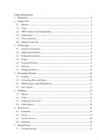
..................................................................4 3. IT Description ..........................................................................................................................8 3.1. Hardware Environment.....................................................................................................8 3.2. Software Environment ......................................................................................................8 3.3. Working Environment ......................................................................................................8 3.4. Projects..............................................................................................................................9 3.5. Outsourced Services .........................................................................................................9 3.6. Structure.........................................................................
More praise for Influence: Science and Practice! "We've known for years that people buy based on emotions and justify their buying decision based on logic. Dr. Cialdini was able, in a lucid and cogent manner, to tell us why this happens." --MARK BLACKBURN, Sr. Vice President, Director of Insurance Operations, State Auto Insurance Companies "Dr. Cialdini's ability to relate his material directly to the specifics of what we do with our customers and how we do it, enabled us to make significant changes. His work has enabled us to gain significant competitive differentiation and advantage"
·Integration in action: four international case studies. A study of four international organisations that have attempted to improve integration between health and care services. Interviews, documentary analysis and literature review are used to identify the main stimuli for integration and the issues that help or hinder progress; drawing out lessons for the NHS. ·Towards integrated care in Trafford. A project that looks at the process of change and lessons learned to date in Trafford, where NHS organisations have been working on the development of an integrated care system across the whole health economy. Further details of our integrated care work can be found at: www.nuffieldtrust.org.uk/integratedcare Acknowledgements Our thanks go to Richard Gleave, Diane Gray, George Kissen, Dennis Kodner, Judith Smith and Sarah Smyth for their comments, all of which have helped to shape both the structure and content of this report. 3 What is integrated care?
Introduction This inspirational and easy-to-read guide will make every manager stop and think again about how they approach their jobs. It provides practical advice on how to be prioritized and focused on the key tasks, how to manage in the organization; how to delegate effectively, and how to manage the balance between your work, family and personal needs. Managing yourself Book begins with a basic question: How can you possibly hope to manage your unit, team, organisation or company if you can not manage yourself?
I am also one of his close colleagues and friends. We have worked together on many platforms, and met and talked with each other on numerous occasions. Brian is one of the finest thinkers and writers on inner develop- ment and personal success in the world. I know; I have sold over 82 million books aimed at helping people get the most out of themselves. Change Your Thinking, Change Your Life shows you how to dis- cover your extraordinary inner resources and tap your incredible powers.You will learn how to attract into your life all the people and resources you need to achieve any goal you can set for yourself. You will absolutely amaze yourself as you start to achieve new and better results by employing these concepts and ideas in every- thing you do. These are the same concepts used by all big-time win-
and leading people. Role of civil service has increased by every age- becoming more and more wider in tasks, obligations and responsibilities, so have the cost that it all brings. Considering this, governments nowadays have a task to evaluate the work of their civil service, to make it more productive and cost-effective. For this, different methods have been discussed, being influenced by different contexts, religion and other factors. Constant pressure on civil service forces governments to improve its performance and make it more and more effective. With a “help” of New Public Management and its rationalism and managerialism public management and civil service has been influenced in many countries either voluntarily or under duress. Due to new public management public sector has become more like private sector putting emphasis on instruments that
The Rise and Demise of the New Public Management Wolfgang Drechsler (University of Tartu and Tallinn University of Technology, Estonia) © Copyright: Wolfgang Drechsler 2005 Within the public sphere, the most important reform movement of the last quarter of a century has been the New Public Management (NPM). It is of particular interest in the post-autistic economics (pae) context because NPM largely rests on the same ideology and epistemology as standard textbook economics (STE) is based (for my take on this, see Drechsler 2000), and it has had, and still has, similar results. Already more on the defensive within public administration (PA) than STE is within economics, NPM also shows that such major paradigm shifts in theory and policy may actually happen
that they will have to use BIM to meet clients’ needs within the next two years; almost 80% said within the next five years. A survey of architects conducted from Dec. 3, 2005, to Jan. 6, 2006 by the American Institute of Architects showed that 74% of the respondents use some level of 3D digital modeling. Of the 74% using 3D/BIM, 98% use it for basic visualizations and design, 34% use it for conflict identification and 12% use it for post-occupancy facility management (Post, 2006a). A survey by Björk, B.C. in 2010 revealed that architecture firms are using BIM for design-related functions such as building design, visualization, and programming/massing studies. Contractors’ top three BIM use areas were clash detection, visualization, and creation of as-built models. Use of BIM in direct fabrication, where BIM replaces traditional shop drawings and drives fabrication equipment, is still limited; however,
..........................................10 2.1 PROBLEMS ......................................................................................................................................10 2.2 CAUSES OF THE PROBLEMS .............................................................................................................12 2.2.1 Structural: contractual systems ...............................................................................................12 2.2.2 Management in construction ...................................................................................................15 2.2.21 Conventional production management theory in construction..........................................16 2.2.22 Conventional project management theory in construction ................................................17 2.2.23 Learning and improvement ...............................................................................................19
Nowadays microcomputers can perform from 800 to over 3000 million operations per second and supercomputers used in research and defense applications attain speeds of many billions of cycles per second. Digital computer speed and calculating power are further enhanced by the amount of data handled during each cycle. Except two main types of computers, analog and digital there are eight generations of digital computers or processing units. The first generation was represented by processing unit Intel 8086. The second generation central processing unit was represented by processing unit Intel 80286, used in IBM PC AT 286. The third generation is Intel 80386, used in IBM PC AT 386. The microprocessors of the fourth generation were used in computers IBM PC AT 486. There are also central processing units of the fifth generation, used in Intel Pentium 60 and Intel Pentium 66, central processing units of the sixth generation, used in computers Intel Pentium 75, 90,100 and 133
commercially successful and critically acclaimed acts in the history of popular music. From 1962 the group consisted of John Lennon (rhythm guitar, vocals), Paul McCartney (bass guitar, vocals), George Harrison (lead guitar, vocals) and Ringo Starr (drums, vocals). Rooted in skiffle and 1950s rock and roll, the group later worked in many genres ranging from folk rock to psychedelic pop, often incorporating classical and other elements in innovative ways. The nature of their enormous popularity, which first emerged as the "Beatlemania" fad, transformed as their songwriting grew in sophistication. The group came to be perceived as the embodiment of progressive ideals, seeing their influence extend into the social and cultural revolutions of the 1960s. With an early five-piece line-up of Lennon, McCartney, Harrison, Stuart Sutcliffe (bass) and
process is less formidable. You will want to know how to join similarities, compare and contrast certain facts, introduce the next topic, offer a supporting idea, or refer to previously presented facts. You will also need to know how to present different shades of argument to produce logically a recommendation you wish to make. This requires an ability to emphasise certain facts and 'bury' others. However, all facts need to be linked to give a logical flow. This unit will give you language practice in this important aspect of producing written documents. Evaluation Exercise 1 Connectives Study the following two versions of the same text and decide which do you find easier to read and why? what is the difference between them? When the ICN equipment was first introduced, it was found to provide a flexible and advanced system. Its speed of operation was greater than comparable hardware then available
especially by Thomas Paine in "The Age of Reason" and by Thomas Jefferson in his short Jefferson Bible from which all supernatural aspects were removed. Benjamin Franklin was influential in America, England, Scotland, and France, for his political activism and for his advances in physics. The American Dream is a national ethos of the United States, a set of ideals in which freedom includes the opportunity for prosperity and success, and an upward social mobility achieved through hard work. In the definition of the American Dream by James Truslow Adams in 1931, "life should be better and richer and fuller for everyone, with opportunity for each according to ability or achievement" regardless of social class or circumstances of birth. The idea of the American Dream is rooted in the United States Declaration of Independence which proclaims that "all men are created equal"
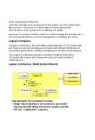
1.The Conceptual Architecture identifies the high-level components of the system, and the relationships among them. Its purpose is to direct attention at an appropriate decomposition other system without delving into details. Moreover, it provides a useful vehicle for communicating the architecture to non-technical audiences, such as management, marketing, and users. Logical Architecture In Logical Architecture, the externally visible properties of the components are made precise and unambiguous through well-defined interfaces and component specifications, and key architectural mechanisms are detailed. The Logical Architecture provides a detailed "blueprint" from which component developers and component users can work in relative independence. Logical Architecture. Model System Behavior Execution Architecture
Here are some questions you might want to consider: What am I like? How do my friends characterize me? What are my personality traits? Have I ever experienced a moment of epiphany? Why is (some color) my favorite color? Why is (some movie) my favorite movie? How have my favorites influenced my life? What have I done? What are my major accomplishments? Why do I consider them accomplishments? What extra curricular activities have I participated in? Have I strived hard for something and achieved it? Why did I succeed? Have I strived hard for something and failed to achieve it? Why did I fail? What was the most difficult time of my life? How did my perspective of life change due to that difficult time? Where do I want to go? What would I most like to be doing right now? Where would I like to be? Who would I most like to be with? What are my dreams for the future? What do I intend to do to achieve these dreams? What will I be doing ten years from now?
among them are the very same jobs that people are queuing to get out of, says John Lees, author of How to Get a Job You'll Love and Take Control of Your Career. Many of us get to the point, whether in our twenties, thirties, forties or fifties where we decide to change careers. Some of us will make radical changes, while others will move to the edge of their comfort zone, perhaps shifting from acupuncturist to homeopath or PR office to journalist. But the key to making the right decision, says Lees, is to bring your dream back down to life with a hard thump. "I always say to people, 'Find out what you will actually be doing in the job of your dreams. What does the nitty-gritty day-to- day work involve?'" Conversely, he says, people should not be put off by their dreams. "If you did a straw poll of the number of peoplewho think about changing career and those who actually do it, you'd be looking at less than 5 per cent. And yet it's never been easier. Portfolio careers
Performing the presentation Introducing yourself and your talk Greeting, name, position, opening formalities Good morning, ladies and gentlemen. Good afternoon, everyone. Good morning. My name's (...). I'm the new Finance Manager. Good morning. Let me start by saying just a few words about my own background. I started out in... Welcome to Standard Electronics. I know I've met some of you, but just for the benefit of those I haven't, my name's (...). It's very nice to see you all here today. I'm very pleased to be here. I'm glad you could all make it. Thanks for inviting me. Thank you (all) for coming. Title/Subject I'd like to talk (to you) today about ... I'm going to present the recent ...
Preparing for exam. Focus areas Defining innovation ● “An innovation is an idea, practice, or object that is perceived as new by an individual or other unit of adoption.” (Rogers 1952) ● CIS survey: “Product innovations must be new to your enterprise, but they do not need to be new to your market”. ● “Companies achieve competitive advantage through acts of innovation. They approach innovation in its broadest sense, including both new technologies and new ways of doing things” – (Porter 1990) ● “An innovative business is one which lives and breathes “outside the box”. It is
1.2. Console Hardware Since consoles are so central to gaming, it is interesting to consider their capabilities. The PlayStation 2 processor runs with a clock speed of 294 MHz, has 32Mb of RAM, and a separate graphics chip that can render about 66 million polygons per second. The small amount of RAM is an important constraint upon games wishing to use Java. The introduction of the Xbox changed the game rules (so to speak), with its Pentium III, 64Mb RAM, a 8Gb hard disk, and the ability to render 150-200 million polygons per second. Sony and Microsoft have recently released network adapters for their consoles, highlighting the growing importance of multiplayer games. Future console designs (e.g. the PlayStation 3 and Xbox 2) will bring PCs and consoles even closer, and further emphasize online gaming. The PlayStation 3 (slated to appear at the end of 2004) may use a 3GHz processor, 512Mb RAM, a 120Gb hard disk, and render 2 billion polygons per second
Separate words neutral literary colloquial eat partake gobble die expired go west kill slay Do in, make away begin commence Get going Stylistics is a very special signs because it has no fixed, single unit of study. Stylistics studies everything that makes the text expressive. Stylistics cuts right across all the basic linguistic sciences.e.g silent, sleepy streets. Stylistic point of view ,,s" sound, alliteration, drowsyness' effect. Morphology spoke and spake the truth. From the point of view of morphology, these are 2 variants of the past-tense. From the point of view of stylistics, they are 2 different modes of expression, because they carry different stylistic overtones
There is nothing like potentials, creativeness, possibilities or even 2nd chances. Families put high expectations on academic achievements and they always compare their kids with other's kids. A minority in each community will be really dedicated to help their kids explore their horizons. It is true that we should re-think the fundamental principles in which we educate our children. Our task is to educate the children so that they can face this future. II 10 effective classroom management techniques. 1. Set and agree the house rules and class regulations with the class. 2. Choose class activities that encourage any good relationships. 3. Be dedicated and care for your students. 4. Accept and even celebrate individual differences. 5. Realise that people learn in different ways 6. Create more student-centred activities. 7. Provide a diverse lesson with a variety of activities 8. Be always prepared for the lesson. 9
people. 6 smudged sheep grazed were grazing. He 3 Her father works as a TV 7 twitch had spotted a juicy-looking lamb producer. 8 mimicking and was just going to pounce on it, 4 Unlike Kate, I don't like reality when a shepherd, who looked was shows. 2 1 E 2 B 3 D 4 H 5 G looking for a sheep to slaughter for 5 I love animated films such as 6 C 7 A his own dinner, quickly was grabbing Ratatouille. 3 1 The boys were being evacuated grabbed the wolf, thinking it was a 6 I don't watch a lot of television, from a war zone. sheep, and killed it. like Steve
found that years of backpacking led them to a more pointed sense of identity confusion, or a feeling of being lost in a ‘sea’ of cultural differences (see Cohen, 2010). Return trips home for the participants were also commonly marked by distress and intense ‘reverse culture confusion’ (Hottola, 2004, p. 460), which in more pronounced cases manifested in a brief depressive state: ‘Every time I go back to the United States, it’s hard, I get real depressed, lay in bed for about a week, every single time (Josh, American, 23). Rather than returning home and, as is described of many backpackers, narrating their travels as a badge of achievement that might facilitate access to a professional workforce (Desforges, 2000; Sørensen, 2003) and eventually successfully reorientating themselves to their home societies (Noy & Cohen, 2005; Pocock & McIntosh, 2010), participants spoke of persisting
1869: they vividly express the feeling of oneness within the nation. For further detailed information, please consult: Statistical Yearbook of Estonia 1997. Statistical Yearbook of Estonia 2000. Life in Estonia. Handbook 2005. Ambassador Collection. Statistical Yearbook of Estonia 2006. FOREWORD This book is first and foremost written by a composer. I am of the opinion that it is a creative individual that must take on this hard task: realising it, presumably, more profoundly as he stands nearer to the Source of all sources from which all the innermost sublime and substantial ideas stream. In this book Estonian symphonic music is discussed from its starting point, the pathetic overture Julius Caesar (1896) by Rudolf Tobias, up to the works of the young composers of the 1990s. This is the first book that presents a general treatment of the Estonian symphonic music
These brands include Diet Coke, Coca-Cola Zero, Fanta, Sprite, Dasani, vitaminwater, Powerade, Minute Maid, Simply, Del Valle, Georgia and Gold Peak. Through the world's largest beverage distribution system, they are the No. 1 provider of both sparkling and still beverages. More than 1.9 billion servings of their beverages are enjoyed by consumers in more than 200 countries each day (World of Coca-Cola). As the numbers are so immense and hard to imagine, it is appropriate to mention the reach of Coca-Cola Company. It manages six operating segments in Europe, Middle East, Africa, Latin America, North America and Asia. These segments primarily manufacture and sell beverage concentrates and syrups. The biggest segment is North America, accounting for nearly 30% of revenue (World of Coca-Cola). Role in IPE Coca-Cola's role in international political economy is undoubtedly very great. There are not
mutes their voices, denies their personhood, and limits their potential` 26. Children are not citizens in a constitutional sense, they cannot vote. They are perceived as `presocial` actors `trapped in the state of becoming rather than being`.27 Thereupon, children are not considered of being rational and capable of exercising responsibility until the age of majority, the age of 18. 28 There is an imposition that granting children rights to participate in decision making will overwhelm them with a great responsibility and denies them an opportunity of childhood. 29 It is strongly believed that children should have the time for play and innocence and henceforth `must be protected because they are children and as children they lack competence and autonomy presumed by the idea of a right.30 Moreover, rights also threaten the stability and harmony of family life in which too much freedom of choice in making decisions about the matters that affect children
 annaabi.ee