Leidsid 33 sarnast õppematerjali, mis on seotud failiga "Manual For Bio-fuels". Need materjalid aitavad sul teemat sügavamalt mõista.
fuels, wood, peat, value, biofuel, forest, plants, considered, combustion, composition, origin, practical, baltic, burned, based, these, consists, mainly, higher, than, heat, density, bomb, final, deposit, biological, related, manual, introduction, told, solid, technologies, technological, chain, production, brought, policy, users, shown, boiler, wide......................................................................................27 SOLAR ENERGY..............................................................................................................27 8.1 Photovoltaic energy...................................................................................................... 28 8.2 Solar thermal heat.......................................................................................................29 8.3 Solar thermal power plants......................................................................................... 30 8.4 Solar energy and the environment..............................................................................30 WIND ENERGY.................................................................................................................31 9.1 The History of Wind ..................................................................................................31 9.2 How wind machines work...
4¢/kWh. Though in some G8 nations the cost can be significantly higher at 7.88p (~15¢/kWh).Achieving further cost reductions as indicated in the table below requires further technology development, market deployment, an increase in production capacities to mass production levels,and of the establishment of an emissions trading scheme and/or carbon tax which would attribute a cost to each unit of carbon emitted; thus reflecting the true cost of energy production by fossil fuels which then could be used to lower the cost/kWh of these renewable energies. Type 2001 energy costs Wind 48 ¢/kWh Solar photovoltaic 25160 ¢/kWh Solar thermal 1234 ¢/kWh
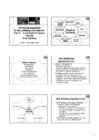
How to produce bioenergy from agricultural resources without harming the environment Jürgen Aosaar Jaak-Albert Metsoja Ahto Oja BOVA cource on biogas from biomass March 3-7 2008 Tartu Deciduous tree species on abandoned agricultural land Current situation • The long term development plan of the Estonian energy industry foresees a reduction in the use of fossil fuels and an increase in the share of biofuels: by the year 2010 renewable energy must account for 5.1% of total energy consumption Current situation (2) • In Estonia we have abandoned arable land about 400 000 ha, part of it is overgrowing naturally, and another part has been afforested • For short-rotation forestry in Estonia, ecologically and economically the most suitable tree is probably grey alder, which is a highly productive and soil improving species
characterization (mainly in terms of porosity and permeable structures). It is refined and separated, most easily by boiling point, into a large number of consumer products, from petrol (or gasoline) and kerosene to asphalt and chemical reagents used to make plastics and pharmaceuticals. Petroleum is used in manufacturing a wide variety of materials, and it is estimated that the world consumes about 88 million barrels each day. The use of fossil fuels such as petroleum can have a negative impact on Earth's biosphere, releasing pollutants and greenhouse gases into the air and damaging ecosystems through events such as oil spills. Concern over the depletion of the earth's finite reserves of oil, and the effect this would have on a society dependent on it, is a field known as peak oil. Etymology The word "petroleum" comes from Greek: πέτρα (petra) for rock and Greek: ἔλαιον (elaion) for oil
Margit Tepner k0848752 Sustainability aspects of biofuels 1. Introduction The literature review will discuss the sustainability aspects of biofuels. Food production will be the main concern as it is the most debated issue, but other aspects, such as land use change and water consumption will be also considered as they are essential aspects in the biofuels sustainability criteria. The review will discuss the viability of biofuels based on the current technologies. Second-generation biofuels are not yet commercially viable and therefore will not be discussed; although they could significantly improve the sustainability of biofuels when they break through to the industrial scale. 2. The scale of biofuels production 2.1. Drivers of biofuels production
held in an anaerobic area, which can range from a storage tank which is not ventilated to a device which is specifically designed to produce gases. The conditions attract anaerobic bacteria, which start to break down the organic material, producing methane and carbon dioxide as a by-product. Another type of biogas which includes hydrogen, nitrogen, and carbon monoxide can be obtained through the gasification of biomass such as wood or rice husks, a technique which is used to manufacture gas industrially. The gases produced through anaerobic fermentation or gasification are combustible in addition to having a strong smell which makes them stand out to the human nose. Methane leaks from landfills are an ongoing problem, as is the production of biogas in poorly maintained compost piles, manure lagoons, and outhouses. Spontaneous fires and explosions caused by build-ups of gas have
Most French DH systems are operated according to long-term concessions by companies that sell electricity and gas. No strong actor provides unbiased DH support. In the Czech Republic, gas offers DH severe competition. Much DH is produced at the expense of electricity that is considered more valuable, and waste incineration is not popular. In Romania, DH consumption was reduced by one-half. Distribution losses are enormous. New less polluting plants are needed. Consortia from established DH countries could offer DH systems from fuel to customer if local policies facilitate DH development. Introduction This paper describes barriers to district heating (DH) in various parts of Europe and to Swedish involvement in district-heating business abroad. The paper is based on a report called "District Heating in Europe: Barriers to overcome for Swedish export" , which was prepared for The Swedish District Heating Association.
but are created when other chemicals or products are made. This family includes: seven of the polychlorinated dibenzo dioxins (PCDDs), ten of the polychlorinated dibenzo furans (PCDFs) and twelve of the polychlorinated biphenyls (PCBs). · PCDD · 2,3,7,8TCDD · PCDF · PCB · PCDDs and PCDFs are not commercial chemical products but are trace level unintentional byproducts of most forms of combustion and several industrial chemical processes. Of all of the dioxins and furans, one, 2,3,7,8tetrachloropdibenzo dioxin (2,3,7,8 TCDD) is considered the most toxic. · PCBs were produced commercially in large quantities until production was stopped in 1977. . Emission sources Dioxins are mainly produced as unwanted byproducts of industrial processes and there is no intentional production or use
which can release large amounts of energy both as electromagnetic radiation and as kinetic energy of the fragments (heating the bulk material where fission takes place). Fission is a form of nuclear transmutation because the resulting fragments are not the same element as the original atom. Nuclear fission produces energy for nuclear power and to drive the explosion of nuclear weapons. Both uses are made possible because certain substances called nuclear fuels undergo fission when struck by free neutrons and in turn generate neutrons when they break apart. This makes possible a self-sustaining chain reaction that releases energy at a controlled rate in a nuclear reactor or at a very rapid uncontrolled rate in a nuclear weapon. The amount of free energy contained in nuclear fuel is millions of times the amount of free energy contained in a similar mass of chemical fuel such as gasoline, making nuclear fission a very
The bearberry (Arctostaphylos) alvar site type has a soil layer with fine texture and rich in lime and humus ( 6 ...20%), but with thickness up to 10 centimetres only. Leesika tüüpi loopealne on mullakihiga, millel on peen tekstuur ja rikkaliku lubja- ning huumusesisaldusega (6...20%), kuid ainult kuni 10 sentimeetrini ulatuva tüsedusega. This is reason why the water holding capacity of this soil is very low and the main factor inhibiting the growth and regeneration of forest is the lack of moisture. See on põhjus, miks selle mulla veemahutavus on väga madal ning niiskuse puudumine on just see faktor, mis takistab metsa kasvu ning taastumist. As a result of cuttings and pasture in the past, a significant part of the forests of this site type has been turned into alvars covered with junipers or having no tree cover at all. Minevikus toimunud raietegevuse ja karjatamise tulemusena on oluline osa sellest
given to oil and gas sector. Oh and the wind has to blow. Hydropower Power to the Water · By using earth's · 90% energy water cycles and efficient compared running water used to natural gas threw mostly dams being 50% to provide energy. efficient. · Hydropower is · The only problem about 1/3 the cost is, you need water. of using fossil fuels and about 1/6 the cost of natural gas. Biofuels · Using natural I Love you Plants materials to turn into fuel or forms of combustible energy. · Which is mostly plants and plant products Cost Efficient? · A study done by OSU So much for the love.... · Going to biofuels would be like adding a new gas tax. About 25 cents. · And it is not proven to reduce green house gases and may even produce more of them.
In the atmosphere they react with water, oxygen and other chemicals to form more acidic pollutants, known as acid rain. Sulfur dioxide and nitrogen oxides dissolve very easily in water and can be carried very far by wind. As a result, the two compounds travel long distances where they become part of the rain, sleet, snow or fog. SO2 and NOx come mainly from power stations and factories burning fossil fuels, or from motor vehicles. · Carbon dioxide in the air can dissolve in rain water to form carbonic acid, H 2CO3 CO2 + H2O H2CO3 · During the last century the rain water in some parts of the world has become far more acidic. This acid rain has been caused by the emission of pollutants gasses such as sulfuric dioxide, when goal is burned in electric power stations, sulfur impurities form sulfur dioxide S + O2 SO2
to control water flow; and a reservoir where water can be stored. Hydroelectric power provides almost onefifth of the world's electricity. China, Canada, Brazil, the United States, and Russia were the five largest producers of hydropower in 2004. The first hydroelectric power plant was built at Niagara Falls in 1879. Negative aspects of hydropower Damming rivers may destroy or disrupt wildlife and other natural resources. Hydropower plants can cause low dissolved oxygen levels in the water, which is harmful to river habitats. Hydroelectric power plants don't work for a very long time. Silt, or dirt from a riverbed, builds up behind the dam and slows the flow of water. Geothermal energy Geothermal energy is the heat from the Earth. It's clean and sustainable. It can be extracted without burning a fossil fuel such as coal, gas, or oil. Geothermal fields produce only about onesixth of the carbon dioxide
Italian cheeses, dried foods, and fish. Formaldehyde is found in many products used every day around the house, such as antiseptics, medicines, cosmetics, dish-washing liquids, fabric softeners, shoe-care agents, carpet cleaners, glues and adhesives, lacquers, paper, plastics, and some types of wood products. Some people are exposed to higher levels of formaldehyde if they live in a new mobile home, as formaldehyde is given off as a gas from the manufactured wood products used in these homes. Formaldehyde is used in many industries. It is used in the production of fertilizer, paper, plywood, and urea-formaldehyde resins. It is present in the air in iron foundries. It is also used in the production of cosmetics and sugar, in well-drilling fluids, in agriculture as a preservative for grains and seed dressings, in the rubber industry in the production of latex, in leather tanning, in wood preservation, and in photographic film production
Winter, which lasts from November to middel March, 4 can be very cold. The cold winter does not necessarily mean constant snow; in fact snowfalls are few and far between. When it falls it stays though, and there tends to be a layer of snow on the ground constantly. The deepest snow cover is usually in the south-eastern part of Estonia. Temperatures range from a summer average of 30°C to an average in winter of -8°C.The coldest month is considered to be February and the hottest July. There are about 160 to 181 rainy days a year. Rainfall is distributed throughout the year with the heaviest rainfall in August. Nature Waterbodies Estonia is a country of thousands of lakes. There are about 1450 natural and man-made lakes in Estonia. The two largest of them are Lake Peipsi (the fifth largest in Europe; 3 555 sq km, shared with Russia) and Võrtsjärv (270 sq. km). Of all the other lakes, only 45 have an area of more than 100 ha
Estonian University of Life Sciences Report on Soil Microflora By Katrin Vares Tartu 2013 Introduction The purpose of this report is to define soil microflora and establish the importance of it. Since the microorganisms clearly play an important role in preserving the balance of life, the next objective is to look into factors that influence this balance. Natural conditions and cultural impact could be considered as the variables that correlate the most with the activity and composition of microflora, hence some of the natural and cultural factors will be looked into a little more in detail. Definition, composition and importance of microflora Saunders Comprehensive Veterinary Dictionary (2007) cited by the online medical dictionary (2013) defines living microorganisms as that small that they can be seen only with a
In the Maritimes, the Atlantic Ocean moderates the climate such that winters are generally long and mild, and summers are short and cool. These conditions help in the development of forests. Finally, around the Great Lakes and alongside the St. Lawrence River as far downstream as the city of Québec, the climate is characterized by relatively warm summers and cool winters, moderated by surrounding water bodies. These conditions are suitable to the development of mixed wood and broadleaf forests. Mineral Resources Mining and fuel extraction and production accounted for 4.5 percent of Canada's GDP or some US$36.1 billion. Fuel exploration and production dominate this sector, but the processing of other types of mineral resources has grown significantly. In 1996, the top non-fuel minerals were gold with production of US$2.05 billion, copper US$1.47 billion, nickel US$1.45 billion, and zinc US$1.25 billion. There was also significant production of lead and iron
postmortem changes will influence the suit- in skeletal muscle (ionic strength ≤0.15), but ability of meat for further processing. can be solubilized at higher ionic strengths (≥0.3). This class of proteins includes both the proteins directly involved in movement Muscle Composition (contractile proteins) and proteins that regu- The largest constituent of muscle is water late the interactions between the contractile (Table 1.1; U.S. Department of Agriculture proteins (regulatory proteins). There are also 2008). In living tissue, the average water many soluble proteins (sarcoplasmic pro- 5 6 Chapter 1
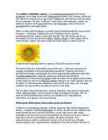
The sunflower (Helianthus annuus) is an annual(iga aastane) plant in the family Asteraceae, with a large flower head (inflorescence(õiekobar, õisik, õitseaeg, õidumine)). The stem(tüvi) of the flower can grow up to 3 metres tall, with the flower head reaching 30 cm in diameter. The term "sunflower" is also used to refer(nimetama, viitama, üle andma) to all plants of the genus(perekond, sugu) Helianthus, many of which are perennial(alaline, aastaringne) plants. What is usually called the flower is actually a head (formally(ametlikult) composite(liit-, komposiit- ; korvõieline, komposiit) flower) of numerous flowers (florets) crowded(täistuubitud, tunglev, rahvarohke) together. The outer flowers are the ray florets(pähik (õisiku osa) and can be yellow, maroon, orange, or other colors, and are sterile(steriilne, viljatu). The florets inside the circular head are called disc florets.
EU services imports from Russia 2010: 14.2 billion The EU is Russia's largest trading partner by far with the EU accounting for 52.3% of all foreign Russian trade in 2008 and 75% of foreign direct investment (FDI) stocks in Russia also come from the EU. The EU exported 105 billion of goods to Russia in 2008 and Russia exported 173,2 billion to the EU. 68.2% of Russian exports to the EU are accounted for by energy and fuel supplies. In 2010, imports from Russia are mainly energy and mineral fuels products (79.5%), some manufactured goods chemicals and raw materials. EU exports to Russia are diversified, covering nearly all categories of machinery and transport equipment (44.7%), manufactured goods, food and live animals. The biggest EU trade partners for Russia are Germany, Italy and France. Among the EU Member States, Germany (25.2 bn euro or 32% of EU exports) was by far the largest exporter to Russia in the first nine months of 2011, followed by Italy (6.9 bn or 9%), France (5
Estonia joined the World Trade Organization in 1999. A sizable current account deficits remains, but started to shrink in the last months of 2008 and is expected to do so in the near future. In the fourth quarter of 2008, the average monthly gross wage in Estonia was 13,117 kroons (838, US$1,066.5). Estonia is nearly energy independent supplying over 90% of its electricity needs with locally mined oil shale. Alternative energy sources such as wood, peat, and biomass make up approximately 9% of primary energy production. Estonia imports needed petroleum products from Western Europe and Russia. Oil shale energy, telecommunications, textiles, chemical products, banking, services, food and fishing, timber, shipbuilding, electronics, and transportation are key sectors of the economy. The ice-free port of Muuga, near Tallinn, is a modern facility featuring good transshipment capability, a high-capacity grain elevator, chill/frozen storage, and
excitation, the movement of an electron to a higher energy state (ultraviolet, visible light, infrared, microwave, radio waves, low frequency Luminance L cd/m2 RF and static fields) Luminous flux (Ф)- the total perceived power of Illuminance light emitted in all directions, measured in lm. It’s Illuminance (E) is the the value of radiant flux which contains those term given to the wavelenghts which are detectable by the human quanitify of luminous flux eye. falling on unit area of a Luminous intensity (I) is a measure of the surface. luminous flux over a solid angle (steradian (ω)) E = Ф/A emitted to a given direction (cd)
· Clay bricks do not warp, rust, split, peel or fade over time. They do not harbor termites and appear more beautiful as they grow older. While clay bricks may be expensive to acquire, their low maintenance and durability make these materials a cost effective option for the exterior of your home. Clay brick structures last for hundreds of years · Clay brick homes generally have a high resale value as homebuyers prefer the upscale appearance and easy care of a brick home. · Clay bricks do not burn and reduce the possibility of fire where they are used. · May be used for exterior and interior works · Clay controls indoor climate by adjusting the huminity and temperature fluctuation Areas of use (slide 13) Aside from using clay bricks on walls, these may also be used for paving, constructing a firebox or for roofing
FIND OUT 5 WAYS HOW TO STOP DEFORESTATION. 7. Ocean Acidification: It is a direct impact of excessive production of CO2. 25% of CO2 produced by humans. The ocean acidity has increased by the last 250 years but by 2100, it may shoot up by 150%. The main impact is on shellfish and plankton. Acid Rain: Acid rain occurs due to the presence of certain pollutants in the atmosphere. Acid rain can be caused due to burning of fossil fuels or erupting volcanoes or rotting vegetation which release sulphur dioxide and nitrogen oxides into the atmosphere. Acid rain is a known environmental problem that can have serious effect on human health, wildlife and aquatic species. FIND OUT 5 WAYS HOW TO REDUCE OCEAN ACIDIFICATION AND 5 WAYS THAT WOULD HELP TO PREVENT ACID RAIN POLLUTION. 8. Water Pollution: Clean drinking water is becoming a rare commodity. Water is becoming an economic
Estonia in 1969. The high latitude makes the rotation of seasons and the interchange of light and dark periods of the year well pronounced in Estonia the maximum length of a summer day on the north coast is 18 hours 14 minutes, wheres during the shortest day in winter the sun appears for a mere 6 hours 3 minutes. Moreover, the long twilight time makes the transition between day and night rather smooth and the nights around the Midsummer Day shorter still. 7. Flora & fauna Estonia's plants and animals aren't represented in great variety. The percent of forests is growing every year and the most common trees are pine, birch, spruce, aspen, oak and alder. Forests offer a habitat to different wild animals. Among 65 species of mammals, the most widespread are the elk, roe deer, wild boar, hare, hedgehog, squirrel, fox and marten. Some endangered species, such as the brown bear, lynx and wolf, are represented in small numbers. Estonia is believed
F2 genotypes C C C C C C C C F2 phenotypes red pink (pink) white; F2 ratio 1:2:1; accept other symbols if key given. accept r and w as symbols without key. 6 (c) (i) 65; 130; 65; 3 (ii) 0.138 + 0.007 + 0.061; (or other suitable working) 0.206 – 0.208; 2 marks for correct value if no working shown ecf for both marks but calculated value must be to three decimal places 2 (iii) support, figure lower than 5.991 / figure lower than critical value; R ‘support’ on its own. ecf applies if value in (ii) is incorrect 1
All about High Tech High tech is technology that is at the cutting edge--the most advanced technology currently available. There is no specific class of technology that is high tech--the definition shifts over time--so products hyped as high tech in the 1960s would now be considered, if not exactly low tech, then at least somewhat obsolete. This fuzzy definition has led to marketing departments describing nearly all new products as high tech. Economy Because the high-tech sector of the economy develops or uses the most advanced technology known, it is often seen as having the most potential for future growth. This perception has led to high investment in high-tech sectors of the economy. High-tech startup enterprises receive a large portion of venture capital
7 - Paul Craig, Gráinne de Búrca, EU Law: Text, Cases, and Materials, p.613, 617, 618, 2015 8 - http://eur-lex.europa.eu/legal-content/EN/TXT/?uri=CELEX%3A61968CJ0024 guaranteeing both free circulation of goods and products and respect for other EC Treaty objectives, such as protection of the environment and of consumers, competition, etc. Harmonisation must be restricted to essential requirements, and is justified when national rules cannot be considered equivalent and create restrictions. Directives adopted under this new approach have the dual purpose of ensuring free movement of goods through the technical harmonisation of entire sectors, and guaranteeing a high level of protection of the public interest objectives referred to in Article 114(3) TFEU (e.g. toys, building materials, machines, gas appliances and telecommunications terminal equipment).4 Completion of the internal market
or D-pillarmoving in profile view from the front to rear. In American and British English, the pillars are sometimes referred to as posts (A-post, B-post etc.). Pillars are implied, whether they exist or not; the non-existent pillar is "skipped" when naming the other pillars. · Hard trim: Instrument panel moldings, center consoles and similar plastic trim · Quarter panel: (or rear wing as it is known in British English) is usually considered the body panel which goes between the rear door and the trunk and typically wraps around the wheel well; however, the similar front section Fender (vehicle), between the door and the hood, is sometimes incorrectly referred to as a quarter panel. The quarter panel is typically made of Sheet metal, but is sometimes made of fiberglass or fiber-reinforced plastic; although, this varies with different makes and models.
Lahemaa National Park is the largest and oldest national park in Estonia. It covers 1119 square km. The park has reserves where any human activity is prohibited except for scientific purposes. It features various landscapes. Soomaa National Park offers real wilderness it covers 370 sq km of a vast lowland is central Estonia. The aim of the park is to protect Estonia's bigger bogs, meadows and forests. The Viidumäe Nature reserve is a small area in Saaremaa rich in rare plants. Some of them are unique in the world like Saaremaa yellow rattlebox. NORTH ESTONIA It consists of 5 counties Harjumaa, Raplamaa, Järvemaa, Lääne Virumaa and IdaVirumaa. The land is arable and the soil is fertile. On the northern coast is the Baltic Glint and Ontika is the highest point of it. Harjumaa is a densely populated region with large areas of summer cottages and gardens, children's camps and picnic spots. Estonia's biggest waterfalls are found there
o Arthur ‘high, noble’ o Donald ‘proud chief’ o Mac ‘son of’ (Scottish) o O’ ‘son of’ (Irish) O’Connor Breton through French: bijou, dolmen, menhir. Celtic before Gaelic, Welsh, Breton, and Cornish, and through Latin, French, and Old English: ambassador/embassy, bannock, bard, bracket, breeches, car/carry/ career/carriage/cargo/carpenter/charge, crag, druid, minion, peat, piece, vassal/valet/varlet. Cornish: porbeagle, wrasse. Gaelic, general: bog, cairn, clarsach, ceilidh, coronach, crag, crannog, gab/gob, galore, skene, usquebaugh/whisk(e)y; Irish: banshee, blarney, brogue, colleen, hooligan, leprechaun, lough, macushla, mavourneen, poteen, shamrock, shebeen, shillelagh, smithereens, spalpeen, Tory; Scottish: caber, cailleach, cairngorm, clachan, clan, claymore, corrie, glen, loch, lochan, pibroch, plaid, ptarmigan,
in 1990 [7]; images of fabric samples, pilled using Martindale equipment, were acquired using a commercial camera under near-tangential illumination thus obtaining images with high pill-to-background contrast. Obtained images are then binarized using two different thresholds with the final result of detaching the background from the pills. In Konda’s work, the background is represented with black (pixel value equal to 0) while pills are depicted as white blobs (pixel value equal to 1). Eventually, pilling class of the fabric sample under investigation is evaluated from the total number (or total area) of pills. FIGURE 4. Flow diagram of 2D imaging methods based on thresholding. 9 In Figure 5 an illustrative image from Konda’s work describing the number of pills as a function of pill size is proposed. FIGURE 5
In the paper industry logs are immersed in steam baths before processing. In many processes materials are immersed in liquids of higher or lower temperatures resulting in unsteady heat transfer. (Geankoplis, 1993) Consider a system formed by a tank filled with a mass of fluid inside which a helical coil is immersed. Inside the coil flows a cooling liquid at a given mass flow rate and the system is operating under unsteady state conditions. It is considered there is no heat loss to the exterior. The heat transfer coefficient in an unsteady state was calculated using the equation (15). The specific heats were considered constants and chosen for the average temperature. The average temperature for the bath was calculated from the beginning and end temperatures of the experiment. Average temperature for the water inside the coil was calculated by taking the average between the inlet temperatures and outlet temperatures.
 annaabi.ee