Leidsid 33 sarnast õppematerjali, mis on seotud failiga "Keila Joa ajalugu". Need materjalid aitavad sul teemat sügavamalt mõista.
count, benckendorff, keila, castle, russia, waterfall, century, russian, couple, wife, here, built, 19th, royal, metres, gift, little, queen, dead, back, place, alexander, chief, secret, police, part, authority, close, saved, tsar, fire, himself, rich, above, door, roses, blue, gold, means, interesting, things, there, room, gifted, lovely, anotherTallinn English College English Sergo Vainumäe 9A TALLINN Report Supervisor: Inge Välja Tallinn 2006 Order of contents: 1.Introduction 2.Toompea 3.Lower Town 4.Kadriorg and Pirita 5.Museums 1. Introduction Tallinn, the capital of Estonia, lies on the Baltic Sea. It is on almost the same latitude east St. Petersburg in Russia, Stockholm in Sweden and Stavanger in Norway, and covers 158 sq km. Tallinn was first marked on a map of the world by the Arab geographer al-Idrisi in 1154, its name then being Kolyvan (probably derived from the name Kalev). In the 13th-century Chronicle of Henricus de Lettis the town was called Lyndanise. Later came Reval (presumably after the old county of Rävala), the name used by the Germans who ruled the country for seven centuries. Russians then modified Reval to Revel
"Anna Karenina" Lev Tolstoi Part 1 The novel opens with a scene introducing Prince Stepan Arkadyevitch Oblonsky, "Stiva", a Moscow aristocrat and civil servant who has been unfaithful to his wife Darya Alexandrovna, nicknamed "Dolly". Dolly has discovered his affair - with the family's governess - and the house and family are in turmoil. Stiva's affair and his reaction to his wife's distress shows an amorous personality that he cannot seem to suppress. In the midst of the turmoil, Stiva reminds the household that his married sister, Anna Arkadyevna Karenina is coming to visit from Saint Petersburg. Meanwhile, Stiva's childhood friend
wanted to defeat it. He could clearly see that Britain was a threat to his latest and greatest conquest - France. He invaded Britain twice, in 55 and 54 BC. The first invasion was unsuccessful - it gained a beachhead on the coast of Kent but achieved little else. The second was more successful, the Celts asked for truce. However it wasn't a victory he had imagined and Julius Caesar never returned to Britain after that. The island was left undisturbed for nearly a century. *The Roman occupation of Britain 43-410 and its legacy Britain was conquered by Emperor Claudius, the Roman rule in England lasted up to 410. The Romans left behind a huge legacy: many types of animals and plants were brought to Britain in Roman times. Roman introduced theire measurements, Christianity, reading and writing. Also, many words in English and Welsh have been borrowed from the Latin language. An important legacy of the Romans was its roads, agriculture and cities
Chekov Lady and the Lapdog Reid about Chekov: The characters in Chekhov's plays are never fully "known" as a writer, he seems to delight in maintaining a sense of indeterminacy, and unknowability, about them. The bare facts are always laughably inadequate to the complexity of "real" people. Anton Pavlovich Chekhov was born on 29 January (New Style), 1860, in Taganrog, a small port on the Sea of Azov, in southern Russia. As the son of a grocer and grandson of a serf, Chekhov was a first-generation intellectual. His modest background and upbringing are crucial to his development as a writer. Chekhov always felt that he missed out on childhood. It was a very hard lifeand it may have contributed to his poor health: he succumbed later on to the"family disease", tuberculosis, which led to his early death at the age of 44.His mother was a quiet, gentle soul who was full of stories of her early life
His father's art studio provided many creative outlets with clay and paints. Often the family took evening walks along the Bombay Esplanade beside the Arabian Sea, the dhows bobbing on the glittering waters. Kipling's days of "strong light and darkness" in Bombay were to end when he was five years old.[21] As was the custom in British India, he and his three-year-old sister, Alice (or "Trix"), were taken to England--in their case to Southsea (Portsmouth), to be cared for by a couple that took in children of British nationals living in India. The two children would live with the couple, Captain and Mrs. Holloway, at their house, Lorne Lodge, for the next six years. In his autobiography, published some 65 years later, Kipling would recall this time with horror, and wonder ironically if the combination of cruelty and neglect he experienced there at the hands of Mrs. Holloway might not have hastened the onset of his literary life
[1] The Duke of Kent was the fourth son of George III and Victoria Maria Louisa was the sister of King Leopold of Belgium. The Duke and Duchess of Kent selected the name Victoria but her uncle, George IV, insisted that she be named Alexandrina after her godfather, Tsar Alexander II of Russia. [2] Victoria's father died when she was eight months old. The Duchess of Kent developed a close relationship with Sir John Conroy, an ambitious Irish officer. Conroy acted as if Victoria was his daughter and had a major influence over her as a child. [2] Edward, Duke of Kent Victoria Maria Louisa of Saxe-Coburg When Princess Victoria of Kent was eleven years old, her uncle, King George IV, died
Chapter 17 Chapter 38 Chapter 58 Chapter 18 Chapter 39 Chapter 59 Chapter 19 Chapter 40 Chapter 60 Chapter 20 Chapter 41 Chapter 61 Chapter 21 Chapter 42 Chapter 1 It is a truth universally acknowledged, that a single man in possession of a good fortune, must be in want of a wife. However little known the feelings or views of such a man may be on his first entering a neighbourhood, this truth is so well fixed in the minds of the surrounding families, that he is considered the rightful property of some one or other of their daughters. "My dear Mr. Bennet," said his lady to him one day, "have you heard that Netherfield Park is let at last?" Mr. Bennet replied that he had not. "But it is," returned she; "for Mrs. Long has just been here, and she told me all about it
The only woman tortured in the Tower was Anne Askew. Guy Fawkes was prisoned 5 th November 1605, hung in 1607. Walter Raleigh was knighted, married without queen´s permission. Last prisoners were in the Tower in 1952. Rita: "Alexander Fleming" Was a pharmacologist, has graduated 6 schools, studied anti-bacterial agents, found Lysozyme accidentally in 1922 and penicillin, which changed the world, in 1928. Won Nobel Prize in 1945. Has been married twice, first wife was a trained nurse. He died in 1955 at home because of a heart attack. He had 1 child. Liis: "The Phantom of the Opera" A.L. Webber is knighted, started writing musicals in 1965, owns 7 theatres and has written 13 musicals. The story is based on a book. The musical was first staged at Sydmonton, at the home of A.L Webber. The main actors were Sarah Brightman and Michael Crawford. There have been 65 000 performances and over 80 million people have seen it. There was a film made in 2004
The future emperor Vespasian subdued the southwest,Cogidubnus was set up as a friendly king of several territories, and treaties were made with tribes outside the area under direct Roman control.Romans built many roads and also many great bulidings like the Hadrians wall. Anglo-Saxons and Normans The history of Anglo-Saxon England broadly covers early medieval England from the end of Roman rule and the establishment of Anglo-Saxon kingdoms in the 5th century until the Conquest by the Normans in 1066. Christianisation of the Anglo-Saxon Kingdoms began around 600 and was essentially complete by the mid 8th century. Throughout the 7th and 8th centuries, power fluctuated between the larger kingdoms. Bede records Aethelbert of Kent as being dominant at the close of the 6th century, but power seems to have shifted northwards to the kingdoms of Mercia and Northumbria. Aethelbert and some of the later kings of the other kingdoms were recognised by their
working man with dirty fingernails and the Virgin as an ordinary young girl. They were accused to be setting themselves better than anyone else (for example Raphael, Michelangelo, da Vinci- traditional trinity of great masters of that period). They had their supporters among middle classes of the Midlands and North of England. Even thou the brotherhood lasted only about five years its impact to art lasted up to the 20 th century. At first the realistic movement predominated but later the mystical medievalism of Rossetti became more influential. Pre-Raphaelitism hung on in British art until after World war I, but it no longer represented the feelings and ideas of society. During Queen Victoria`s reign interest grew in classical literature and the history of ancient Greece and Rome, as well as in the legendary medieval past of Britain itself. Artists started to combine sex
The House of Commons writes the bills. 6. What do you know about the Wars of the Roses? It was a war between two families, one had a red rose as their symbol and the other had a white rose as their symbol. The war was about who should be on the throne, the red rose won and thereafter the red rose has been the symbol of England. 7. How was Protestantism established in England? When and by who? It was established by Henry VIII because he wanted to divorce his first wife. Up until then England was Catholic and divorcing was not allowed for him. He really wanted a new wife, so he declared that England was no longer a part of the Catholic Church and made himself as the head of the new church. It happened in 15 8. What good did the invasion of Romans bring to England? It brought roads and order. They also built the first version of London. 9. What do you know about the Tower of London?
PRESENTATION PRINCESS DIANA Diana, Princess of Wales was born on the 1st of July in 1961 and died on the 31st of August in 1997. She was a popular member of the British royal family and an international personality of the late 20th century. She was the first wife of Charles, Prince of Wales, whom she married on the 29th of July in 1981. The wedding, which was held at St. Paul's Cathedral, was televised and watched by a global audience of over 750 million people. Diana and Charles had two sons, Princes William and Harry. EARLY LIFE She was born at Park House, Sandringham in Norfolk, England. Her parents were John Spencer and Frances Burke Roche. She had two older sisters Sarah and Jane and a younger brother Charles. When
Russian philology The meaning of the word "philology" is "love for word". This is love that unites teachers and researchers of modern and Classical languages and literature, interpreters and diplomats, journalists and publishers, writers and poets. Russian philologis are highly demanded in various spheres of scholarly research and education, in the mass media, in civil service at the Ministry of Foreign Affairs, in archives, libraries, museums, in travel agencies, as well as Russian and international companies. Curriculum within in philological faculty includes courses of Russian and European languages and literature, courses of Linguistics and Theory of Literature for students to familiarize themselves with various schools and trends of Russian and foreign philology. The core curriculum also includes a number of Liberal Arts courses (Philosophy, History, Psychology, Pedagogy), as well as courses of basic mathematics and computer studies, and
Test 13 1 Translate. 1 Minu lemmiklill on maikelluke. My favourite flower is the lily of the valley. 2 Eesti rahvuslikud sümbolid on suitsupääsuke ja rukkilill. The Estonian national symbols are the barnswallow and the cornflower. 3 See kindlus on pärit 15. sajandist. This fortress dates from the 15th century. 4 Saaremaal on palju tuuleveskeid. There are lots of windmills on Saaremaa. 5 Eesti pinnas ei ole väga rammus. Estonian soil is not very rich. 6 Kas sa oled käinud paekivi muuseumis Porkunis? Have you been to the limestone museum in Porkuni? 7 Raekoja plats The Town Hall Square 8 millegagi võrdlema compare sth with sth 2 Write the questions. 1 in / longest / What / Estonia / is / the / river What is the longest river in Estonia? 2 ever / smoke / Have / a / had / sauna / you
of the story Miss Brill jumps in her thoughts back to the past. The main audience of the written task are people who enjoy reading Katherine Mansfield’s short story “Miss Brill” and who would now like to read a written task where the short story is continued by someone else than the original author. In general, The audience of the written task can be anyone who is interested in literature, particularly in Katherine Mansfield’s short stories. Word count: 245 Continuing Katherine’s Mansfield’s short story “Mrs. Brill” Her heart started trembling as she thought about the incident in the park. The tears ran from her eyes like a river and the faces of Ann and George kept coming into her head. She walked into the other end of her miniature room, sat down on a blue wooden chair and opened a little box next to the chair. The box was old and was covered with dust, it was clear that it had been untouched for a long time
These criminals are doing what nature, environment, their unconscious tells them to do. Naturalists do not judge their characters, they simply report. Try to describe facts like they are. Naturalists depict the lower, coarser forms of life. · Drab, squallid set of scene. Revolting, disgusting · Characters are people with strong animal desires · Neurotic characters unable to understand the forces that control them · By the end of the 18th century the naturalism depicts in europe, but stars to become the literature method no 1 in america · Naturalism appealed American authors because they found it very right to describe what was going on in the turn of century in America · They wanted something fresh, new · They were disgusted by romantics · Showed the harsh tone in moral life · Refleced the development of science · Period of intense urbanisation, the city is in the center of the novel, often
St Olaf's church. Previous names of the street also refer to it: Susterstrate 1361; Platea sororum 1364-1380; 1606 Süsterstrasse and Schwestergasse, all of which include the concept of a nun or a sister. After the Reformation, the monastery was eliminated and in 1631 a gymnasium was founded in its rooms, but the street name remained in the form of Süsterstrasse and Cisternstrasse. It was not until the 18th century that the name Lai also started to appear. In 1872, when the street names were being fixed, Lai remained the sole name of the street. 4 1 Lai Street / 4 Nunne Street A good example of Neo-Renaissance and early Art Nouveau styles combined is Lai Street 1, the present Youth and Puppet Theatre, erected at the beginning of the 20th century as the Nobility Club. The three-storey building replaces two medieval properties. In 1784 an amateur theatre began playing in a house situated in the
be an intimate trip. Marilyn Monroe and Joe DiMaggio in an undated photo.Back home, she wrote him a letter about her dreams for their future, dated February 28, 1954: "My Dad, I don't know how to tell you just how much I miss you. I love you till my heart could burst... I want to just be where you are and be just what you want me to be... I want someday for you to be proud of me as a person and as your wife and as the mother of the rest of your children (two at least! I've decided)..."[37] --Marilyn Monroe DiMaggio biographer Maury Allen quoted New York Yankees PR man Arthur Richman that DiMaggio told him everything went wrong from the trip to Japan on. On September 14, 1954, Monroe filmed the iconic skirt-blowing scene for The Seven Year Itch in front of New York's Trans-Lux Theater. Bill Kobrin, then Fox's east coast correspondent, told the June 26, 2006 Palm Springs Desert Sun that it was
Names of town ● Lindanise - it was first used in 1219, derived from mythical Linda, the wife of Kalev and the mother of Kalevipoeg, national hero. ● Koluvan - found in old Russian chronicles, the name possibly deriving from the Estonian mythical hero Kalev ● Reval - used after 1219; comes from two german words ‘reh’ and ‘fall’, meaning the falling of the deer - as they fall down the Toompea hill, probably when escaping from the Danish occupation or just the hunters. ● Tallinn - used after Estonia gained its independence in 1918, origin is definitely estonian; meaning Taani-linn, tali- linn. Liberty Square
Guinea, the Solomon Islands, Tuvalu, Saint Lucia, Saint Vincent and the Grenadines, Belize, Antigua and Barbuda, and Saint Kitts and Nevis. In 1947 she married Prince Philip, Duke of Edinburgh, with whom she has four children: Charles, Anne, Andrew, and Edward. In 1992, which Elizabeth termed her annus horribilis ("horrible year"), Charles and Andrew separated from their wives, Anne divorced, and a severe fire damaged part of Windsor Castle. Revelations continued on the state of Charles's marriage to Diana, Princess of Wales, and they divorced in 1996. The following year, Diana died in a Paris car crash, and the media criticised the royal family for remaining in seclusion 4 in the days before her funeral. Elizabeth's
If you don't mind, I'd gladly come over someday soon and accept my lucky duty as your priestess, and, perhaps, even as a friend. Best wishes, Misery She enveloped the letter and called a servant. "Susanna, take this letter to Her Majesty," she said, "and tell her to hurry with the answer, I can't stay in this dark tower much longer." Susanna smiled and bowed her curly red-haired head. She was very happy to join the rest of the castle again. After eating the candy, Misery felt very tired. But instead of heading to the bedroom, she opened her wide white wings and flew out to the royal park. The day was warm and sunny; in the gardens many flowers had started their colourful blooming, decorating tasteless gravy castle walls. Misery landed on the juicy green grass and looked up in the light blue sky and soundless tears fell down her pale cheeks: this was the sky the previous queen and her mother had liked.
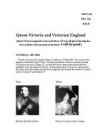
Queen Victoria and Victorian England (Queen Victoria is supposed to have said this as a 10-year-old girl on learning that she was likely to become queen in the future: I will be good.) VICTORIA (r. 1837-1901) Victoria was born at Kensington Palace, London, on 24 May 1819. She was the only daughter of Edward, Duke of Kent. The Duke and Duchess of Kent selected the name Victoria but her uncle, George IV, insisted that she be named Alexandrina after her godfather, Tsar Alexander II of Russia. Edward died when Victoria was eight months old, upon which her mother enacted a strict regimen that shunned the courts of Victoria's uncles, George IV and William IV. Father Mother Edward, the Duke of Kent Princess Victoria of Saxe-Coburg. Warmhearted and lively, Victoria had a gift for drawing and painting; educated by a governess, Louise Lehzen, and the Reverend George Davys at home. She was certainly busy
Lower Town was a merchantile centre, Tallinn also belonged to the Hansaetic League (1285). It is often referred to as the town of citizens. Any grown-up, married and economically independent person, born in a legal marriage between two free people and having lived in the town for at least 3 months, could apply to the Magistracy for citizenship. Serfs could escape from serdom after having successfully hidden in town for a year and a day. Two parts remained separated until the end of the 19th century. Four Names Lyndanise - mentioned by Henricus de Lettis in his Chronicle; derives from the name Linda - the wife of Kalev and mother of Kalevipoeg Koluvan - mentioned in Russian chronicles; derives from the hero Kalev from our national epic Reval - comes from the German words “REH” and “FALL”, meaning the falling of the deer; could be deers trying to escape from the Danes, running down the Toompea hill
A Christmas Carol in Prose, Being a Ghost Story of Christmas (commonly known as A Christmas Carol) is a novella by Charles Dickens first published on December 19, 1843 with illustrations by John Leech. The story was an instant success, selling over six thousand copies in one week, and the tale has become one of the most popular and enduring Christmas stories of all time. William Makepeace Thackeray William Makepeace Thackeray was an English novelist of the 19th century. He was famous for his satirical works, particularly Vanity Fair, a panoramic portrait of English society. Thackeray, an only child, was born in Calcutta, India, where his father, Richmond Thackeray (1 September 1781 13 September 1815), held the high rank of secretary to the board of revenue in the British East India Company. William had been sent to England earlier, at the age of five, with a short stopover at St. Helena where the imprisoned Napoleon was pointed out to him
wasn't very fond of her and neither were the detectives. She seemed to be clever and hiding something. Basil Blake was a murder suspect with an arrogant attitude towards the police. He was having parties at his house all the time with young women coming over. He was a rich man working in the film business. He did not want to talk to the police very much and the neighbours did not like him at all, he was not really kind to people. Mr and Mrs Bantry were a married couple in their 60's I think. The body was found from their house but the people were sure that they weren't involved in the murder because they were nice people. Mr Bantry was a reliable man who was a retired colonel. He was a calm and clever man. Never did anything unwise. Mrs Bantry was more active, she was even kind of happy about the body because she had been waiting for a long time for something interesting to happen in her life.
5. The Angles, Saxons and Jutes. The Angles were one of the main groups that settled in Britain in the post-Roman period, founding several of the kingdoms of Anglo-Saxon England, and their name is the root of the name "England". The Saxons were a confederation of Old Germanic tribes. Their modern-day descendants are generally considered ethnic Germans, Dutch or English.. Saxons participated in the Germanic settlement of Britain during and after the 5th century The Jutes were a Germanic people who were one of the three most powerful Germanic peoples of their time. They are believed to have originated from Jutland in modern Denmark. Were associated with the Saxons. The Jutes, along with some Angles, Saxons and Frisians, sailed across the North Sea to raid and eventually invade Great Britain from the late 4th century onwards, either displacing, absorbing, or destroying the native Celtic peoples there. 6. The Anglo-Saxon invasion
The Angles, Saxons and Jutes came from present-day Northern-Germany and Denmark in 449. A number of tribes from the European mainland invaded and settled in large numbers; however, they were not always victorious. These Anglo- Saxons soon had the south-east of the country in their control. In the west, their advance was temporarily halted by an army of (Celtic) Britons under the command of the legendary King Arthur. By the 7th century the Anglo-Saxons were ruling most of Britain. 10. Scandinavian raids. In 789 three Viking ships landed on the coast of the kingdom of West Saxon. They were traders and raiders. In the 9th century they conquered and settled the islands around Scotland and some coastal regions of Ireland. Their conquest of England was halted when they were defeated by King Alfred of the Saxon kingdom of Wessex
summer he is a big boatman. The king is interested in music, art and food too. Hunting is King's leisure interest. The Sweden King, Carl Gustaf XVI has his motto - "For Sweden - With the times." 4 The Queen Silvia Queen Silvia is the Queen of Sweden. She was born in Heidelberg, Germany, on December 23 in 1943. Her parents were the late Walther Sommerlath and his Brazilian wife Alice, née de Toledo, but unfortunately they are deceased. Silvia Sommerlath and King Carl XVI Gustaf met at the 1972 Olympic Games in Munich, where Silvia was serving at the games as a hostess. The Queen has two older brothers: Ralf and Walther Sommerlaht. Her third brother, Jörg Sommerlath , passed away in 2006. The Sommerlath family lived in Sao Paulo, Brazil. The family returned to West Germany in 1957. Queen Silvia can speak six
in 1897. The story is about vampire that tries to find new blood for himself and the hunt for him. Also you can find a little romance in the book. It takes place in Transylvania, Romania and in England. The novel is written in diary-form and several characters are telling their story by keeping a journal. Entries are written in six months by four persons. In the novel there are nine main characters: Jonathan Harker, whose writings are seen first; Count Dracula, of whom all the story is about, but he does not keep a diary; Wilhelmina ‘’Mina’’ Harker, early Murray, wife of Jonathan Harker; Lucy Westerna, a friend of Wilhelmina; Arthur Holmwood, Lucy’s fiancee, who also doesn’t write; John Seward, a doctor; Abraham Van Helsing, a Dutch doctor, dr. Seward’s teacher, writes letters; Quincey Morris, one of Lucy’s suitors and Renfield, a patient of dr. Seward, both not writing anything.
Mary I Mary I, called Mary Tudor (1516-1558), Queen of England (1553-1558). Mary was born in London on February 18, 1516, the daughter of Henry VIII by his first wife, Catherine of Aragón. Because Henry divorced Catherine, Mary was declared illegitimate. Nonetheless, Henry included her in his will, and on the death of her half-brother, Edward VI, on July 6, 1553, she became the legal heir to the throne. Although Lord High Chamberlain John Dudley, Duke of Northumberland, favoured the
Next time they came in 43 A.D. and their leader was Emperor Claudius. Romans brought a lot with them. Their brought paved roads, the sites of important cities, the seeds of Christianity, the Roman law, Roman baths, language and advanced civilization. They also built Hadrian's Wall in 122 A.D. Romans occupied Britain for four centuries. The Roman way of life all vanished after the invasions from Northern Europe by the Angles, Saxons and Jutes from the 5th century onwards. They ruined Londinium, but they were easily turned into Christianity and religion became more and more important. The Vikings, who came in the 9th century, first raided England to plunder it, but then they decided to stay. In the 10th century England fell under Danish Rule, with King Canute finally managing to unite the Anglo-Saxons and Danes at the beginning of 11th century. Medieval England After defeating the Anglo-Saxon King Harold at the Battle of Hastings in 1066,
defend the Church. Henry saw him as a traitor, lost his temper. He is said to have exclaimed ,,Will no one rid me of this turbulent priest?" 4 knights killed Becket on the altar steps. The murder shocked. The Pope made Becket a saint. Canterbury became a shrine. Henry himself made a pilgrimage to Canterbury, walked barefoot through the town and was flogged by bishops at his request. In the end Henry quarrelled with his beautiful & powerful wife, his sons took Eleanor's side. In 1189 Henry died a broken man, disappointed & defeated by his sons and the French king. He was followed by his rebellious son, Richard. Although he spent little time in England (6 months of his 10-year reign), he was one of England's most popular kings. He was brave, a good soldier, but his nickname ,,lion-heart" shows that his culture was French. He died in 1199. He had no son. His brother John followed.
their also. Finally they began talking and the man told Mr. Bumble that he had been searching him out. He asked Mr. Bumble questions about the night Oliver Twist was born, and Bumble answered him as best as he could. The strange man wanted to find the nurse that delivered Oliver, and Bumble told him that she had died the previous winter. He also informed the strange man that the nurse had told his wife a secret about that night to his wife before she died, and Bumble agreed to bring his wife to see the man the next night. They exchanged the address, and Mr. Bumble found out the man's name was Monks. Chapter 38: The Bumbles walked to the address that Monks gave the night before and let them in out of the rain. They were in a bad part of town in a worn down building next to the river. Mrs. Bumble negotiated with Monks and got him to give her twenty-five pounds for the information she was about to tell him. When he agreed to the sum, Mrs
 annaabi.ee