Leidsid 33 sarnast õppematerjali, mis on seotud failiga "Kanada stereotüübid". Need materjalid aitavad sul teemat sügavamalt mõista.
canada, polite, beer, everywhere, afraid, live, speak, french, ride, polar, bears, there, summer, cold, plays, hockey, than, wear, snowboard, avril, come, maple, syrup, drive, sleds, monopoly, money, army, police, horses, dark, geese, front, door, mooses, respectful, passive, boring, patriotic, patriotism, express, controversial, opinions, engage, heroTopic Canada Tallinn English College 2006 1. Introduction If you had to use two words to describe Canada, they might be large and diverse. Canada is the second largest country in the world with a territory of about 10 million square kilometers and it is bordered by three oceans: the Arctic, the Pacific and the Atlantic Oceans. The population of Canada is about 31 million people. About 77% of the people live in cities which lie in a band about 100 miles wide above the border of the United States. The capital of Canada is Ottawa. Other large cities are Montreal, Toronto, Vancouver, Winnipeg and Quebec. 2. Geographical position Canada is a huge country in the continent of North America. It is bordered with the Atlantic Ocean in the east, the Pacific Ocean in the west, the United States of America in the south and the Arctic Ocean in the north
The names of countries and their people are also proper nouns. American Egyptian Indian Italian Thai Japanese Korean Malay Filipino Pakistani Country People Country People America Americans Korea Koreans Egypt Egyptians Malaysia Malaysians India Indians Pakistan Pakistanis Italy Italians France the French Japan the Japanese Thailand Thais 14 The names of towns, cities, buildings and landmarks are proper nouns. Egypt Hong Kong the Great Wall of China the Statue of Liberty Tokyo Sydney Bangkok New Delhi London Denver the Grand Canyon
7 YAMAHA 15 ISKU 8 ESTRAVEL 2 Affirmative tense Use Signal Words Negative/Questions · action in the present taking always, Present Simple A: He speaks. place once, never or several every ..., N: He does not speak. normally, often, Q: Does he speak? times seldom, · facts sometimes, · action set by a timetable or usually schedule Present A: He is speaking
(never) They ________________________________________________ the Caribbean islands before. 3 She arrived a few minutes ago. (just) She ________________________________________________ arrived. 4 This is not our first time at a rock concert. (already) We ________________________________________________ to a rock concert. 5 I am still tidying my room. (finished) I ________________________________________________ my room yet. 6 He came to live here two years ago. (for) He ________________________________________________ two years. 7 She hasn't phoned her mother yet. (still) She ________________________________________________ her mother. 8 I started this letter a week ago. (writing) I ________________________________________________ this letter for a week. 9 The snow started this morning and it is still snowing. (been) It ________________________________________________ since this morning.
Anti war novel called ,,Three soldiers". Dos Passos went to Europe, served for a while. Three main characters, three young soldiers. One is Dan Fuselli, he is an optical worker from San Francisco, naively thinks that war is fun, Chris Field, farmboy, hates the army, was forced to join it. John Andrews, he is the intellectual of the three. He is also very sensitive young man and wants to be a musician. He and Chris Field desert the army. Andrews hides with a French girl and starts writing a symphony and is arrested later. War is hostile to the artist. And destructive of his art. This novel is written in more or less anti war. ,,Manhattan transfer"- truly modernist novel. Ruinous effect of capitalism on human lives. The scene of action is New York. The city itself becomes the central character, the whole novel is an attempt to show the complex nature of the novel metropolis-huge city. It is a truly modernist level in any
herbs it is absolutely delicious? If you ask foreigners to name some typically English dishes, they will probably say "Fish and chips" then stop. It is disappointing, but true that, there is no tradition in England of eating in restaurants, because the food doesn't lend itself to such preparation. English cooking is found at home. So it is difficult to a good English restaurant with a reasonable prices. In most cities in Britain you'll find Indian, Chinese, French and Italian restaurants. In London you'll also find Indonesian, Mexican, Greek... Cynics will say that this is because English have no "cuisine" themselves, but this is not quite the true. Vocabulary: to criticize - tasteless overcooked - ingredient - to invent - sauces - to disguise - spice herb - delicious - disappointing - to lend cuisine British Youth (2) Most 18 and 19 year-olds in Britain are quite independent people. English people say
know, they talk about how GM food 1 h 2 e 3 d 4 a could affect our digestion, cause 5 b 6 c 7 f 8 g allergies, that sort of thing. 5 1 unfriendly Leo There's a lot of controversy around it, but no actual evidence to 2 incorrect prove that GM food does us any harm. 3 completely Rosie I don't agree with that 4 totally argument, I'm afraid. There may be no 5 perfectly evidence right now, but it's the long- 6 wrong term effects that I'm concerned about. 7 virtually Leo Well any change has potential 8 highly consequences. You could make exactly the same argument against mobile 6 Students' own answers phones, or any new technology. Of course they may have harmful side 1G Describing an event
African nation – the young Republic of Biafra. But Biafra was defeated and Nigeria remained one, as a giant of Africa. In the last 32 years, I have watched with horror and outright helplessness as the downward slide of the African race continues to escalate. But rather than address the problems, we resort to blaming the Caucasians, Asians and others for our misfortune. We are not men enough to accept responsibility for our actions. Africans blame either the British, French or little Portuguese/Spanish for their problems. Africans in America blame the Caucasians for all their problems, or any other ethic group they have allowed to take over their neighbours, a frequently recurring phenomena. Africans blame the International Monetary Fund, the World Bank, the Group of 7, the former colonial masters for the abject poverty in our respective countries. We blame the wars ravaging
13. Don't separate the verb from the object. VERB OBJECT She speaks English very well . (NOT She speaks very well English.) Andy likes skiing very much. (NOT Andy likes very much skiing.) 14. Don't use the present perfect have/has seen, have/has gone etc with words that name a finished time. I saw him yesterday. (NOT I have seen him yesterday.) They went to Greece last summer. (NOT They have gone ... last summer.) 15. English (the language) normally has no article. You speak very good English. (NOT You speak a very good English.) 16. After look forward to, we use ing, not an infinitive. I look forward to seeing you. (NOT I look forward to see you.) We're looking forward to going on holiday. (NOT ... to go on holiday.) 17. Information is an uncountable noun. Can you give me some information? (NOT Can you give me an information?) I got a lot of information from the Internet. (NOT I got a lot of informations from the Internet.) 18
1. A generalist is ignorant from the point of view of a specialist and a specialist is stupid from the point of view of a generalist. 2. All great stupidity is created by geniuses. 3. All stereotypes are true; the fact that you recognize a slur proves that it isn't. 4. Anything you're afraid is true is true. 5. Before most people get to the point of being able to tell their ass from a hole in the ground they're already assholes and it's too late. 6. Concentrating on something important can make you lose track of your soap opera. 7. Debunking the bunk is everyone's responsibility. 8. Don't ask me to pay for anyone else's mistakes. I make enough of my own. 9. Even those who possess real magic must beware of being misled by "magical thinking." 10
Tobacco plantations African slaves, working in tobacco harvest 1620 by Dutch boat. Also Englishmen (convicts and poor people) Mayflower and Pilgrim Fathers Mayflower- cargo ship In 1620 one hundred Puritans boarded the Mayflower From Plymouth, England, to today's Plymouth, Massachusetts, United States Claim they are the forefathers of USA aristocracy- FALSE They saw little chance of England becoming a proper country Wished to live free of English laws and oppressing church religious freedom In may (had time before winter!!!) · Mayflower Compact First governing document of Plymouth Colony Agreement composed by a consensus among new Settlers Composed for the sake of their own survival Fair and equal laws, for the general good Signed by 41 adult male members on the Mayflower Free of English law foundation of the USA constitution · Puritan Colony in Plymouth, New England
Time Warner Book Group 1271 Avenue of the Americas, New York, NY 10020 Visit our Web site at www.lb-teens.com First Edition: September 2005 The characters and events portrayed in this book are fictitious. Any similarity to real persons, living or dead, is coincidental and not intended by the author. Library of Congress Cataloging-in-Publication Data Meyer, Stephanie, 1973-- Twilight : a novel / by Stephanie Meyer. -- 1st ed. p. cm. Summary: When seventeen-year-old Bella leaves Phoenix to live with her father in Forks, Washington, she meets an exquisitely handsome boy at school for whom she feels an overwhelming attraction and who she comes to realize is not wholly human. ISBN 0-316-16017-2 [1. Vampires -- Fiction. 2. High schools -- Fiction. 3. Schools -- Fiction. 4. Washington (State) -- Fiction.] I. Title. PZ7.M57188Tw2005 [Fic] --dc22 2004024730 Printed in the United States of America For my big sister, Emily, without whose enthusiasm this story might still be unfinished.
CLEANTE, brother-in-law of Orgon TARTUFFE, a hypocrite DORINE, Mariane's maid M. LOYAL, a bailiff A Police Officer FLIPOTTE, Madame Pernelle's servant The Scene is at Paris ACT I SCENE I MADAME PERNELLE and FLIPOTTE, her servant; ELMIRE, MARIANE, CLEANTE, DAMIS, DORINE MADAME PERNELLE Come, come, Flipotte, and let me get away. ELMIRE You hurry so, I hardly can attend you. MADAME PERNELLE Then don't, my daughter-in law. Stay where you are. I can dispense with your polite attentions. ELMIRE We're only paying what is due you, mother. Why must you go away in such a hurry? MADAME PERNELLE Because I can't endure your carryings-on, And no one takes the slightest pains to please me. I leave your house, I tell you, quite disgusted; You do the opposite of my instructions; You've no respect for anything; each one Must have his say; it's perfect pandemonium. DORINE If . . . MADAME PERNELLE You're a servant wench, my girl, and much Too full of gab, and too impertinent
`There will be a lot of dancing tonight.' III. Agreement categories for verbs: I am/he is/they are sleeping he sleeps Grammatical categories for adjectives I. Inherent categories for adjectives: degree of comparison (comparative, superlative): cold colder coldest II. Agreement categories for adjectives: agreement of attributive adjectives with the head noun, and of predicative adjectives with the subject French: le vin blanc `the white wine' la porte blanch `the white door' German: Ein klein-es Kind sah einen reich-en Mann `A small child saw a rich man' 3. Nouns and noun phrases, the structure and functions of noun phrases; lexical subclasses (proper nouns, common nouns), abstract vs concrete nouns, one class or more?; grammatical categories: number, gender, case. Identifying nouns: meaning, function, form
The latin word ,,stilus" meant a writing instrument used by the ancients for writing on waxed tablets. Already, in classical latin the meaning of style was extended to denote the manner of expressing one's ideas in written or oral form. One of the abts/the best was given by Jonathan Swift: ,,Proper words in proper places." In present- day english, the world style is used in about half a dozen basic meanings. 1. the characteristic manner in which a writer expresses his ideas. Some speak about the style of Hemingway, Dickens etc. 2. the manner of expressing ideas, characteristic of a literary movement or period. Style of symbolism, romanticism 3. the use of language to pick a literary genre-comedy, novel, drama, O.D (poetic form) etc. 4. the selective use of language that depends on spheres of human activity fiction, scientific prose, newspapers, official documents, business correspondenc etc.
cheapness of life in the war. Joseph Behm - The first of Paul's classmates to die in the war. Behm did not want to enlist, but he caved under the pressure of the schoolmaster, Kantorek. His ugly, painful death shatters his classmates' trust in the authorities who convinced them to take part in the war. Detering - One of Paul's close friends in the Second Company. Detering is a young man with a wife and a farm at home; he is constantly homesick for his farm and family. Gérard Duval - A French soldier whom Paul kills in No Man's Land. Duval is a printer with a wife and child at home. He is the first person that Paul kills in hand-to-hand combat, one of Paul's most traumatic experiences in the war. Leer - One of Paul's classmates and close friends during the war. Leer serves with Paul in the Second Company. He was the first in Paul's class to lose his virginity. Haie Westhus - One of Paul's friends in the Second Company. A gigantic, burly man, Westhus was a peat-digger before the war
good. 5 costly 10 economical town. 7 There are no easy answers. 3 I had no difficulty repairing the 2 1 economical 7 priceless 8 Few of my relatives live nearby. broken vase. 2 pricey 8 economic 9 My parents have little money. 4 Dad refused to let me stay out late. 3 valuable 9 costly 10 He read the whole magazine.
SDD: based on ABSENCE OF LOGICALLY REQUIRED ELEMENTS OF SPEECH ELLIPSIS ELLIPSIS or ELLIPTICAL SENTENCES means leaving out one or both principle members of the sentence that is the subject or predicate. NT: Where is the man I'm going to marry? - Out in the garden. (no subject) What is he doing out there? - Annoying father. Here, in the dialogue, ellipsis creates the colloquial tone of the utterance. It also renders realistically the way the characters speak. The elliptical sentences convoy/render carelessness, familiarity, harshness. It makes the utterance tens and emotional or helps to stress most important elements. NT: I went to Oxford, as one goes to exile; she to London. APOSIOPESIS (Greek - silence) it is called break-in-the-narrative. APOSIOPESIS is an unfinished sentence where the speaker or writer suddenly stops in the middle, as if unable or unwilling to proceed
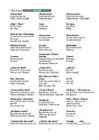
oo-sted ays I am _____ years old. How old are you? (formal) How old are you? (informal) ¿Hablas inglés? ¿Habla usted español? (No) Hablo... ah-blahs een-glehs ah-blah oo-sted eh-spahn-yol noh ah-bloh Do you speak English? Do you speak Spanish? (formal) I (don't) speak... (informal) ¿Entiende usted? / ¿Entiendes? (No) Entiendo. Yo (no lo) se. ehn-tyen-deh oo-sted / ehn-tyen- noh ehn-tyen-doh yoh noh loh seh dehs I (don't) understand. I (don't) know. Do you understand? (formal / informal)
come to play an essential part in the evolution of consciousness of another species. Humans would increasingly be drawn to and fascinated by them. As the consciousness of human beings developed, flowers were most likely the first thing they came to value that had no utilitarian purpose for them, that is to say, was not linked in some way to survival. They provided inspiration to countless artists, poets, and mystics. Jesus tells us to contemplate the flowers and learn from then how to live. The Buddha is said to have given a “silent sermon” once during which he held up a flower and gazed at it. After a while, one of those present, a monk called Mahakasyapa, began to smile. He is said to have been the only one who had understood the sermon. According to legend, that smile (that is to say, realization) was handed down by twenty- eight successive masters and much later became the origin of Zen. Seeing beauty in a flower could awaken humans, however briefly, to
6. Do you listen to weather forecasts? Do you read them in the newspaper? 7. What is the most terrible weather you have ever seen? 8. What will the weather be like if swallows fly very low? The sun sets into a cloud? The sunset is red? Dogs eat grass? 9. Have you ever tried to forecast the weather? What were the results? 10. What kind of things do you like doing outdoors? 11. Do you think Estonia has a good climate? What do you like about it and what not? 12. If you could choose where to live, what kind of climate would you prefer? Why? Rainy Vihmane Windy Tuuline Misty Uduvines foggy Udune Cloudy Pilvine Forecast Ilmaennustus Cool, chilly Jahe Frosty Pakaseline Below zero Alla nulli Above zero Üle nulli
INGLISE KEELE GRAMMATIKA Present Simple Lihtoleviku moodustamine Jaatav vorm Eitav vorm Küsiv vorm I make I do not make Do I make? He/she/it speaks He/she/it does not speak Does he/she/it speak? We/you/they go We/you/they do not go Do we/you/they go? NB! ERANDID! · Verbidele, mis lõpevad ss, h, ch, tch, x või oga, lisatakse ainsuse kolmdandas pöördes es. he does he goes he misses he watches he mixes · Verbid, mis lõpevad yga, mille ees on konsonant, muudavad y iks enne es lisamist. fly he flies carry he carries
· the manner of expressing ideas characteristic of a literary movement or period (symbolism, romanticism) · the use of lg. typical of a literary genre (comedy, drama, novel) · the selective use of lg that depends on spheres of human activity. These are called functional styles or registers (fiction, newspaper) Stylistics is the study of style. However, for some reason, English stylistics is less developed than French, German or Russian. The term ,,stylistics"came into more common use in English only some 35 years ago. It was recorded much earlier; in 1882 as "the study of literary style, the study of stylistic features" Stylistics is a branch of linguistics that studies principles of selecting different linguistic means for passing on thoughts and emotions. It studies: · Different functional styles, styles of genres, individual styles · Expressive, emotional features of different language units
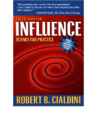
More praise for Influence: Science and Practice! "We've known for years that people buy based on emotions and justify their buying decision based on logic. Dr. Cialdini was able, in a lucid and cogent manner, to tell us why this happens." --MARK BLACKBURN, Sr. Vice President, Director of Insurance Operations, State Auto Insurance Companies "Dr. Cialdini's ability to relate his material directly to the specifics of what we do with our customers and how we do it, enabled us to make significant changes. His work has enabled us to gain significant competitive differentiation and advantage" -LAURENCE HOF, Vice President, Relationship Consulting, Advanta Corporation "This will help executives make better decisions and use their influence wisely ... Robert Cialdini has had a greater impact on my thinking on this topic than any other scientist." -CHARLES T. MUNGER, Vice Chairman, Berkshire Hathaway, Inc.
the use of language typical of a literary genre (e.g. the style of a comedy, drama, novel). 4. the selective use of language that depends on spheres / areas of human activity (e.g. style of fiction, scientific prose, newspapers, business correspondence, etc.). These are called functional styles or registers. Stylistics is the study of style. In spite of the variety of styles English Stylistics has not been discussed on the same scale as French or German stylistics; it has not been discussed thoroughly. The very term "stylistics" came in more common use in English only some 45 years ago. However, it was recorded for the first time much earlier in 1882, meaning "the study of literary style, the study of stylistic features" (Oxford Dictionary). Stylist is a writer / speaker skilled in a literary style (e.g. Hemingway is considered a peculiar stylist used a lot of repetitions)
..................................................................................... 59 17.2 What Fuels Are Made From Crude Oil?...................................................................60 17.3 How Does Oil Impact The Environment?................................................................60 3 ENERGY STORY Once upon a time, in a town not far away, there was an 8th grader who was afraid of the dark. Her name was Jules. She was also afraid of the quiet, and of the cold. So she always left on the lights, the TV, and stereo even when she had her I-Pod earbuds on. She took lots of very long, hot showers. She never walked anywhere, but got rides from her mom in a big SUV. She couldn't be happy unless she was using all the energy she possibly could for all the stuff around her. Her friend, Les, didn't like to use any energy at all. He walked to school, read books
CHANGE YOUR LIFE How to Unlock Your Full Potential for Success and Achievement B R I A N T R AC Y JOHN WILEY & SONS, INC. ccc_tracy_fm_i-xviii.qxd 7/7/03 3:22 PM Page iv Copyright © 2003 by Brian Tracy. All rights reserved. Published by John Wiley & Sons, Inc., Hoboken, New Jersey. Published simultaneously in Canada. No part of this publication may be reproduced, stored in a retrieval system, or transmitted in any form or by any means, electronic, mechanical, photocopying, recording, scanning, or otherwise, except as permitted under Section 107 or 108 of the 1976 United States Copyright Act, without either the prior written permission of the Publisher, or authorization through payment of the appropriate per-copy fee to the Copyright Clearance Center, Inc
There has to be a place better than this, in heaven So right before I sleep, dear God, what I'm askin Remember this face, save me a place, in thug's mansion Hit em up I ain't got no motherfuckin friends That's why I fucked yo' bitch, you fat motherfucker (take money) WEESSSSSSTTTTIIIIIDE!! Bad Boy killers (take money) You know the realest is niggaz (take money) We bring it to you (take money) Tupac: First off, fuck your bitch and the click you claim WESTSIDE when we ride come equipped with game You claim to be a player but I fucked your wife We bust on Bad Boy niggas fuck for life Plus Puffy tryna see me weak hearts I rip Biggie Smallz and Junior M.A.F.I.A. some mark ass bitches We keep on comin' while we runnin for ya jewels steady gunnin, keep on bustin at them fools, you know the rules Little Caeser, go ask ya homie how I leave ya cut your young ass up, see you in pieces, now be deceased Lil Kim, don't fuck around with real G's
Public International Law is a system of law, different from domestic law. Why is this system unique? Usually law regulates relations between people, people and the state etc, PIL regulates relations between states. Thats why PIL is important for international relation students. PIL influences the life of everybody, it doesn't regulate people directly but indirectly (through the decisions of the states), because it's everywhere. It's like air. E.g. when you want to send a letter to Brazil, you put a stamp from your own country and send it from your post office and the letter gets delivered. Why is this so easy, because there are certain international conventions that regulate postal services. E.g. traffic signs are almost the same everywhere, why? Because of certain int conventions that require the states to have more or less unified traffic signs.
and that they are "endowed by their Creator with certain inalienable Rights" including "Life, Liberty and the pursuit of Happiness." (Mark Twain's The Adventures of Huckleberry Finn) De Crevecoeur, Hector St. John (17351813): FrancoAmerican Writer. With the publication of his Letters from an American Farmer (1782), Hector St. John de Crevecoeur became one of the eighteenthcentury's most influential commentators on American life and manners. While not born in America, Crevecoeur traded his French citizenship for an American one in 1765, taking up residence in New York. He had traveled throughout New England and its coastal region before claiming his new identity, however, and before seriously embarking upon his life as a farmer in Orange County, New York, in 1778, Crevecoeur traveled extensively inland through the Ohio Valley and on to the banks of the Mississippi. Drawing upon his
one moment in time, not at how this language came to be the way it is now. Example Estonian in the 21st century. Diachronic approach to language → A focus in language study on how a language has changed over some period of time. In a way it is comparing language to what it was and how it is now. For example comparing 18th century and 19th century Estonian. Linguistic competence → Is a person’s knowledge of how it is correct to speak but he or she is unable to give reasons why this is the right way of speaking. Chomsky says that linguistic competence is an idealized capacity of language. It is the hearers knowledge of his/hers language and it is the ‘mental reality’ which is responsible for all those aspects of language use which can be characterized as ‘linguistic’. Abstract sets of rules that help us to form and understand grammatical sentences.
into its smallest parts (e.g. genes, neurotransmitters or proteins). This approach is sometimes criticized for being overly simplistic, but it is important to have detailed information of the components of human behavior in order to understand the interaction of several factors. Kasamatsu and Hirai studied a group of Buddhist monks who went on a 72-hour pilgrimage to a holy mountain in Japan. During this time the monks did not eat, drink or speak and were exposed to cold, autumn weather. About 48 hours later they started to have hallucinations, often about their ancestors. The researchers took blood samples from the monks before the ceremony and immediately after the monks reported seeing hallucinations. They found that serotonin levels had increased in their brains. Serotonin activated the hypothalamus and the frontal cortex resulting in hallucinations. They concluded from this study that sensory deprivation triggered the
record of respecting children in many other countries. The `protectionist` approach towards children trenchantly illustrates the fact that the nature of the Convention and its purpose was clearly underestimated by the UK.21 Gerison Lansdown argues that the UK commodiously failed to place emphasis on respecting children`s right to express a view in all matters of concern and have these views taken seriously in a variety of social settings in which they live their daily lives, like family life and education. Instead the UK government placed the importance only on the legal requirement of courts and local authorities under the Children 17 UN Committee on the Rights of the Child (1995) 18 UN Committee on the Rights of the Child (1995) 19 UN Committee on the Rights of the Child (1995) 20 Harvey Rachel, ` UK before the UN Committee on the Rights of the Child`, ChildRIGHT, 190 (2002), http://www.essex.ac.uk/armedcon/story_id/000043
 annaabi.ee