Leidsid 33 sarnast õppematerjali, mis on seotud failiga "Inglise keele stilistika". Need materjalid aitavad sul teemat sügavamalt mõista.
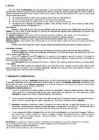
words, express, stylistic, mean, here, sound, sing, ling, noun, meaning, negative, come, speak, motion, ding, other, speech, rhyme, vowel, writer, part, nouns, these, poet, such, emotional, idea, adjective, literary, character, adjectives, follow, suffix, consonant, proper, present, positive, depend, than, person, create, english, studies, linguistic1. STYLE The term "style" is polysemantic (has many meanings): a Latin word "stilus" originally meant a writing instrument used by ancient people. Already in classical Latin the meaning was extended to denote the manner of expressing one's ideas in written or oral form. Jonathan Swift defined style as "proper words in proper places". In present day English the word "style" is used in about a dozen of principle meanings: 1. the characteristic manner in which a writer expresses his/her ideas (e.g. style of Byron) 2. the manner of expressing ideas, characteristic of a literary movement or period 3. the use of language typical of a literary genre (e.g. the style of a comedy, drama, novel). 4. the selective use of language that depends on spheres / areas of human activity (e.g
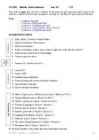
Galperin "Stylistics" - I. Ladusseva "Rhythm and Text" - I. Ladusseva "Vocabulary and Style" - I. Ladusseva "Stylistic practice: Book I, Book II" - I. Ladusseva "A Guide to Punctuation" EXAMINATION TOPICS: 1. Style, stylistics, a survey of stylistic studies 2. Inherent connotations. Phonesthemes Use lecture notes 3. Adherent connotations 4. Stylistic morphology: articles, nouns, pronouns, adjectives, verbs, adverbs, number * 5. Expressiveness on the level of word-building 6. Phonetic expressive means Study independen tly 7
STYLISTICS 1. Style, stylistics, a survey of stylistic studies The term ,,style" is polysemantic. Latin ,,stilus"--a writing instrument used by the ancients for writing on waxed tablets. Soon, the meaning was extended to denote the manner of expressing one's ideas in written or oral form. Jonathan Swift said: ,, Style is proper words in proper places" Present day--half a dozen meanings: · the characteristic manner in which a writer expresses his ideas (Style of Byron) · the manner of expressing ideas characteristic of a literary movement or period (symbolism, romanticism) · the use of lg. typical of a literary genre (comedy, drama, novel) · the selective use of lg that depends on spheres of human activity. These
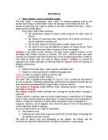
1 SYNTACTIC STYLISTIC DEVICES SYNTACTIC STYLISTIC DEVICES are based on a peculiar place of the word or phrase in the utterance (text, sentence, etc).This special place creates emphasis irrespective of the lexical meaning of the words used. Categories: syntactic stylistic devises based on: SDD: based on ABSENCE OF LOGICALLY REQUIRED ELEMENTS OF SPEECH ELLIPSIS ELLIPSIS or ELLIPTICAL SENTENCES means leaving out one or both principle members of the sentence that is the subject or predicate. NT: Where is the man I'm going to marry? - Out in the garden. (no subject) What is he doing out there? - Annoying father. Here, in the dialogue, ellipsis creates the colloquial tone of the utterance. It also renders realistically the way the characters speak
words; syntax. Language: a systematic, conventional use of sounds, signs or written symbols in a human society for communication and self-expression. - human language at all levels is rule- or principle-governed. Linguistics: the scientific study of human natural language Synchronic approach to language: Diachronic approach to language: Linguistic competence: Linguistic performance: What is grammar?: "The sounds and sound patterns, the basic units of meaning, such as words, and the rules to combine them to form new sentences constitute the grammar of a language" Prescriptive grammar vs. Descriptive garmmar: Descriptive grammar: the systematic study and description of a language. Descriptive grammar refers to the structure of a language as it is actually used by speakers and writers. Prescriptive grammar: a set of rules and examples dealing with the syntax and word
CHARACTERISTIC FEATURES OF OLD ENGLISH - 15 monophtongs, (7 long, 7 short, 1 central), 4 diphtongs, 17 consonants. Free variaton of R, and it was pronounced everywhere. Very much Germanic in character. Quite some special consonants that no longer exist. About morphology: synthetic with numerous aglutinating tendencies. System of tenses Germanic, but with a reduction of tenses. Paradigmatic leveling; Stress shift; Word order; Loan words (Old Norse, Old French). Dual pronouns. Determiners - no separate definite article. Strong and weak verbs. Word order relatively free with tendencies towards SVO. SVO, SOV, VSO most common. Adposition and podposition were both possible (eesliide ja tagaliide). About syntax: clauses were joined much simpler than nowadays, using and, then etc. Because of case syncretion the word order in a sentence became much more important to be able to tell the difference between words.
marker tunnus (mitmuse, oleviku, lihtmineviku, tingiva kõneviisi, käskiva kõneviisi, kaudse kõneviisi, umbisikulise tegumoe, ma- tegevusnime, oleviku kesksõna, mineviku kesksõna) derivational affix liide, tuletusliide, tuletusafiks (e.g. postwar, anti-American, wiser, greenish) parts of speech sõnaliigid English Estonian Definition Example noun (proper, common, nimisõna, Refers to words which denote classes and categories of book, water, sincerity, Mary, concrete, abstract) substantiiv things in the world, including people, animals, Estonia inanimate things, places, events, qualities, and states. Nouns can be divided into proper nouns and common
LEXICOLOGY 1. Size of English vocabulary 1) Old English – 50,000 to 60,000 words Vocabulary of Shakespeare OE – homogeneous; 1/3 of the vocabulary has survived • 884,647 words of running text About 450 Latin loans (Amosova) • 29,000 different words (incl. work, working, Viking invasions added 2,000 worked, which are counted here as separate 2) Middle English – 100,000 – 125,000 words) English becomes heterogeneous (Norman French, • 21,000 words English, Latin), hybrid of Germanic and Romance languages Norman French influence – about 10,000 words, 75 % are still in use (Baugh) Latin influence continues 3) Early Modern English – 200,000 – 250,000 English becomes a polycentric language; polyglot,
English structure revision for the exam 1. Terms Language → A systematic, conventional (tavakohane) use of sounds, signs or written symbols in a human society for communication and self-expression. Human language at all levels is rule- or principle- governed (valitsema) meaning that language corresponds to the grammar. Natural language is usually spoken, while language can also be encoded into symbols (such as letters, morse etc) For example: Estonian, English. Linguistics → The scientific study of human natural language. Broadly, there are three aspects to the study which are Pragmatics (studies the use of language → interested in the gap between the sentence’s meaning and the speaker’s meaning).
There are general L (studies words disregarding particular features of any particular lg); special L (studies specific features of a separate lg, there is Engl that bases on general L); contrastive (compares vocabularys in different languages). 2. Connection of L with other linguistic disciplines a) the word performes a certain grammatical function (nt, he always misses the class, how many misses are there; the girl powders her nose, soliders face powder)In speech words are combined according to grammatical rules. The plural of nouns may carry a new meaning (nt, arms-weapons, looks-appearance, works-plant) b)connected with phonetics. The meaning of a word is expressed by sounds and it depends on the order of sounds(spoonerism) c)history of the lg helps to understand ahanges in the meanings of words (nt, legend ment a book where a life of saints was described) d)stylistics is the sign of expressive means of the language. The same idea may be expressed in
Equally crucial, although often overlooked or misapplied, is the dimension of the syntagmatic and paradigmatic axes of linguistic description. Saussure's 'theory of the sign' defined a sign as being made up of the matched pair of signifier and signified. Signifier The signifier is the pointing finger, the word, the sound-image. A word is simply a jumble of letters. The pointing finger is not the star. It is in the interpretation of the signifier that meaning is created. Signified The signified is the concept, the meaning, the thing indicated by the signifier. It need not be a 'real object' but is some referent to which the signifier refers. The thing signified is created in the perceiver and is internal to them. Whilst we share concepts, we do so via signifiers. Whilst the signifier is more stable, the signified varies between people and contexts. The signified does stabilize with habit, as the signifier cues thoughts and images.
suppletive forms has decreased.In the text: goon to go wenden - to turn Gan was suppletive in Old English, past form: eode.Eode was supplanted by went (past form of wenden) at the end of the Middle English period.To wend has survived in Modern English in phrases such as to wend one's way, we wended homewards (ironic usage). Thus: suppletivity- suppletion different parts of one and the same paradigm come from what were originally different paradigms (different words with close meanings or words in different but close dialects).Suppletion embraces verbs, adjectives, nouns. Be was/were been (Old English beon/wesan) (am, art, is, are); in Old English some suppletive forms were used parallel to one another) Good better best Bad worse worst Much more most Little less least Estonian: hea parem (cf "paras" fitting, in Finnish "the best" - metonymical link), palju - rohkem Finnish: mennä (to go), lähteä (to leave) Estonian: minema, mine, lähen, läksin
- the ability to classify it (grouping ability); - the ability to describe the material ("some say this ..., they are not wrong, but other say that ...." Etc.); - the ability to draw conclusions (on theoretical and practical materials); - your personal contribution (do something that no one has done before); - talking about the material (as if you are speaking to the first year student avoid sophistication in language, that may sound unnatural). Comment on examples (from where the example is taken how it is used explain all). NB! Comments everywhere. You have right to: · Supervisor discusses and specifies the topic with you; · Supervisor gives a tutorial where the supervisor sets general directions for your paper and recommends a book (source) for your study; · Supervisor reads your rough sketch (and if necessary checks faults); BUT! Supervisor does not have to correct your language.
Syllable - is a phonological unit consisting of one or more phonemes. In phonetics a syllable is a unit which consists of a centre, that has little or no obstruction to airflow; it is comparatively louder than other sounds. In phonology syllables are the possible combinations of phonemes. The syllable consists of - onset, nucleus, coda. (every syllable has a nucleus: vowel, syllabic l, or m, n). Rhyme/rime nucleus + coda; the nucleus and the coda constitute a sub-syllabic unit rhyme. Words rhyme, when their nucleus and coda are identical. (E.g 'cr-o-wn', 'd-o-wn'). The hierarchical structure of the syllable: Onset the beginning of the syllable Nucleus/peak the open part of a syllable, generally a vowel. Coda a consonant sound which ends the syllable. Open syllable - has no coda Closed syllable - has a coda! Texts: [t-e-k-s-t-s]- (Consonant, Vowel, Consonant, Consonant, Consonant, Consonant).
English lexicology 1. Size of English vocabulary Vocabulary is a sum total of words used in a language by speakers or for dictionary-making. Active and passive vocabulary. The Old English vocabulary was homogenous. There were about 50 000 – 60 000 words, 1/3 of which have survived. o About 450 loans from Latin o About 2000 from the Viking invasions. The Middle-English vocabulary became a heterogeneous hybrid of Germanic and Romanic languages. 100 000 to 125 000 words. o About 10 000 loans from Norman French, 75% are still in use o Continuing Latin influence Early Modern English. 200 000 – 250 000 words
•He took his boots off. •They called the doctor in. apposition a grammatical construction in which two usually adjacent nouns having the same referent stand in the same syntactical relation to the rest of a sentence (as the poet and Burns in “a biography of the poet Burns”) back-reference In grammatical analysis, the term reference is often used to state a relationship of identity which exists between grammatical units, e.g. a pronoun 'refers' to a noun or noun phrase. When the reference is to an earlier part of the discourse, it may be called a 'back-reference' (or anaphora); collective noun Collective noun is the name we give to a group of nouns to refer to them as one entity. A crew of sailors. A flock of birds. A range of mountains. conjunction any member of a small class of words distinguished in manylanguages by their function as connecto rs between words, phrases,clauses, or sentences, as and, because, but, however. content words
Review questions English lexicology Size of English vocabulary. Average speaker 45,000-60,000 words, a total of about 200,000. Core and periphery. English has been heavily influenced by other languages. 31.8 % comes from Old English, 45% comes from French, 16,7% comes from Latin, 4,2% other germanic languages and 2,3 other languages. The very core is mono-syllabic (93 of the first 100 words and the other seven are two-syllabic). The core vocabulary is predominantly germanic. Native and foreign element. Native words belong to very important semantic group (modal verbs-shall, will, can, may; pronouns- I, you, he, my, his; preps- in, out, under; numerals and conjunctions::but, till, as. Native words are head, arms, back; mother, brother, son, wife; snow, rain, wind, sun; cat, sheep, cow; old, young, cold, hot, dark; do, make, go, come, see
Louise Erdrich Love Medicine Assignment 1 (pages 142) 1. Define the following words and expressions (considering the context) and reproduce (in your own words) the situations in which they appear in the book: a beacon (2) (AmE) a fire or light set up in a high or prominent position as a warning, signal, or celebration, it appears as a metaphor to describe a white egg in her hand. Situation: June walked through the door and toward blue egg in the white hand of Andy, which she compares with a beacon in the murky air. a turtleneck (2) - Example
http://akoaotearoa.ac.nz/download/ng/file/group-4/n2431-esol-teaching-skills- taskbook-unit-1-a---classroom-dynamics.pdf accessed 27.12.2012 III Language teaching methods. · (Traditional: the grammar-translation method/ classical method.) · Traditional: the direct method Youtube: http://www.youtube.com/watch?v=XiQvG-fvzLM Kids lesson (direct method) Language is primarily speech Reading skills are developed through practice with speaking Realia is used to convey the meaning Demonstration instead of translation or explanation Complete sentences instead of vocabulary lists The purpose of language learning is communication Pronunciation Self correction The goals of the teacher are communication, demonstration instead of translation (the teacher used pictures and pointed to yourself....), they studied complete sentences. It is a teacher-centred method. (T. was the leader, asked questions). The teacher and students were sociable and easy-going
publisher. ISBN 1-59905-201-6 Printed in the United States of America 13 12 11 10 09 08 07 9 8 7 6 5 4 3 2 1 Introduction Grammar is a very old field of study. Did you know that the sentence was first divided into subject and verb by Plato, the famed philosopher from ancient Greece? That was about 2,400 years ago! Ever since then, students all over the world have found it worthwhile to study the structure of words and sentences. Why? Because skill in speaking and writing is the hallmark of all educated people. Lesson by lesson, this book provides basic instruction in the eight parts of speech--nouns, pronouns, verbs, adjectives, adverbs, prepositions, conjunctions, and interjections--as well as the standard patterns of English sentences. All students of English, be they native speakers or those who are studying English as a second language, will profit from the fundamental introduction and review of
accents). · The consonant /t/ may be realized as a glottal stop [?]. · Most EngEng accents have lost the original contrast. · Some English accents are ,,rhotic" or ,,r-ful" and others are ,,non-rhotic" or ,,r-less". 3. Estuary English - a dialect of English widely spoken in South East England. IT is commong among young Londoners. Something between RP and Cockney. Some features: · Non-rhotic · They use intrusive / r / · They use the broad / a: / sound · They use glottal stop more often (instead of k/p/t) · Use of / w /, recieved pronouncation will have / l / sound · /l/ may disappear [vunnerable] · /I/ -> /i:/ · Use of question tag [Ain't I? (einnai)] · Yod coalescence when two things come together. Like: /d/ instead of /dj/ /t/ instead of /tj/ [tu:zdeI] · Prolongs diphtongs · H-dropping (Tell him= [tellim]) 5) Cockney, Cockney Rhyming Slang
to the main issues and theories in twentieth and twenty-first-century phi- losophy of language, focusing specifically on linguistic phenomena. Topics are structured in four parts in the book. Part I, Reference and Referring, includes topics such as Russell's Theory of Descriptions, Donnellan's distinction, problems of anaphora, the description theory of proper names, Searle's cluster theory, and the causalhistorical theory. Part II, Theories of Meaning, surveys the competing theories of linguistic mean- ing and compares their various advantages and liabilities. Part III, Pragmatics and Speech Acts, introduces the basic concepts of linguistic pragmatics, includes a detailed discussion of the problem of indirect force and surveys approaches to metaphor. Part IV, new to this edition, examines the four theories of metaphor. Features of Philosophy of Language include: · new chapters on Frege and puzzles, inferentialism, illocutionary
· only facts, infrequent use of descriptive Best wishes / Love / Yours / Regards. adjectives · no use of short forms Name: Steve Name: Yours faithfully/Yours sincerely, Steven Hill TASK 2 Put an - for formal and an I for informal language. Give reasons . 1 In reply to your query about ... 2 I trust that this is the information you require .... 3 Hope this information helps you ... 4 I would like to express my dissatisfaction with the item I purchased ... 5 I'm afraid I won't be able to make it on Friday ... 6 Why don't you come and visit us ... 7 I'm looking forward to hearing from you ... 8 I look forward to meeting you. 9 I am writing with regard to the advertisement ... 10 How about getting together next Friday instead? 11 Pop in for a chat some time soon ... 12 You've been very helpful ... 13 Well, I must leave now ... 14 By the way, I've got to tell you ...
Auditory phonetics the study of the way listeners perceive these sounds. Articulatory phonetics the study of how the vocal tract produces the sounds of language. Phonology maybe used by actors, teachers, computer engineers etc. Phonology the description of the systems and patterns of speech sounds in a language. It studies: the abstract or mental aspect of the sounds in a language the actual physical articulation of speech sounds The phoneme. Phoneme is a meaning distinguishing sound in a language; it functions contrastively/ the smallest contrastive unit in the sound system of a language. When there is a contrast in identical environment we must be dealing with separate phonemes - when we replace one sound with another, we get another word with another meaning, therefore that sound must be a phoneme. There are small shades of sounds that don't distinguish meaning phones. The
.............................................................. 5 Names that take the Definite Article...................................... 6 No article.............................................................................. 7 Countable and uncountable nouns ....................................... 9 General Rules There are two articles in the English language – the Indefinite Article and the Definite Article. The Indefinite Article has two forms – a and an (a precedes words beginning with a consonant sound and an precedes words beginning with a vowel sound). It comes from the Old English word ãn, which meant one. The Definite Article is the. It comes from the Old English word ţis, which meant this. Thus, in most general terms, a and an cannot be used with countable nouns in the plural and with uncountable nouns. Countable nouns are names of the things you can count (one elephant, two elephants, three elephants, etc).
Colin was disappointed to see how badly his son had done at the exam. NB! At the same time there are some adjectives which end in –ly as well. The most common are friendly, lively, lovely, ugly, silly, cowardly: Nobody has ever been so friendly to me. (adjective) He greeted me in a most friendly manner. (adverb) I don’t like your cowardly behaviour. (adjective) He betrayed me in a most cowardly way. (adverb) 8. Sentence Adverbs are words or phrases like certainly, perhaps, luckily, of course. They say something about the situation described in the whole sentence. Fortunately, the weather stayed fine. We’ll probably have to wait for another bus. This one is full. I certainly didn’t expect such a beautiful present! He was late, of course. 3 Position of Adverbs Adverbs of Manner normally come 1. 1) at the end of a statement:
CITATION FORM The citation form of the lexeme is the form that is employed to refer to the lexeme; it is also the form that is used for the alphabetical listing of lexemes in a conventional dictionary. In English, the citation form of a noun is the singular: e.g., mouse rather than mice. For multi-word lexemes which contain possessive adjectives or reflexive pronouns, the citation form uses a form of the indefinite pronoun one: e.g., do one's best, perjure oneself. In many languages, the citation form of a verb is the infinitive: French aller, German gehen, Spanish ir. In English it usually is the full infinitive (to go) although alphabetized without 'to' (go);
The Literary Analyses of "Beowulf" "Beowulf" is a heroic epic that was written down around 1000 AD in Old English. The poem's composition, however, is considered to date back to about 700 AD, meaning that it is from the Anglo-Saxon literary period. The epic was most probably created by scop(s) who composed it for entertainment and in praise of their master. Over the three centuries the epic was being changed and adapted by them, as it was inherited by word of mouth. The events occurring in the poem are set in Southern Scandinavia, Geatland and Denmark, in the fifth and sixth centuries. It should be observed that the narrative
Automated Essay Scoring 3 Automated essay scoring is a measurement technology in which computers evaluate written work (Shermis & Burstein, 2003). Most of the initial applications have been in English, but past work has been applied to Japanese (Kawate-Mierzejewska, 2003, March), Hebrew (Vantage Learning, 2001), and Bahasa Malay (Vantage Learning, 2002). Computers do not "understand" the written text being evaluated Unlike humans, a computer cannot interpret the play on words, and infer that the predicate in the answer (i.e., "ajar") is being cleverly used as a noun (i.e., "a jar"). What the computer does in an AES context is to analyze the written text into its observable components. Different AES systems evaluate different numbers of these components. Page and Peterson (1995) referred to these elements as "proxes" or approximations for underlying "trins" (i.e., intrinsic characteristics) of writing. It is the
participants, whose brains had been spilt to relieve epilepsy. Test results show that speech is localized in only one half of the brain. So when the patient was shown an image that was projected to his or hers left hemisphere of the brain he or she could easily identify the object. But when it was shown so it would be projected in the right hemisphere, the participant could not verbally identify the object, although he or she could point out what it was, if cards with different words were shown. This evidence implicates that the language processing happens mainly in the left hemisphere of the brain. To test what the right hemisphere of the brain might localize in another test with a split-brain patient was carried out. It is known that the right hand is governed by the left hemisphere and the left hand by the right. So the patient was asked to solve a visual constructional task with blocks. He could solve it with his left hand, governed
those without, the so-called soft and hard sounds. Almost every consonant has a hard or a soft counterpart, and the distinction is a prominent feature of the language. Another important aspect is the reduction of unstressed vowels. Stress, which is unpredictable, is not normally indicated orthographically. though an optional acute accent ( , znak udareniya) may be used to mark stress, such as to distinguish between homographic words, for example (zamók, meaning a lock) and (zámok, meaning a castle), or to indicate the proper pronunciation of uncommon words or names. The standard form of Russian is generally regarded as the modern Russian literary language ( ). It arose in the beginning of the 18th century with the modernization reforms of the Russian state under the rule of Peter the Great, and developed from the Moscow (Middle or Central Russian) dialect substratum under the influence of some of the previous century's Russian chancellery language.
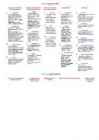
LEXICAL STYLISTIC DEVICES Based on: interaction of lexical and interaction of denotational interaction of primary circumlocution other cases contextual meaning and emotional meaning and secondary meaning 1. EPITHET 1. METAPHOR indicates individual 1. ZEUGMA 1. PERIPHRASIS 1. BATHOS based on similarity of 2 evaluation of sth. Logical "to join" w-d is use of longer spoiling the lofty effect. Function
I don't like to be shouted at. (NOT I don't like to be shouted.) This needs to be thought about some more. (NOT This needs to be thought some more.) 6. Don't use a present tense after It's time. It's time you went home. (NOT It's time you go home.) It's time we invited Bill and Sonia. (NOT It's time we invite Bill and Sonia.) 7. Use was/were born to give dates of birth. I was born in 1975. (NOT I am born in 1975.) Shakespeare was born in 1564. 8. Police is a plural noun. The police are looking for him. (NOT The police is looking for him.) I called the police, but they were too busy to come. 9. Don't use the to talk about things in general. Books are expensive. (NOT The books are expensive.) I love music. (NOT I love the music.) 10. Use had better, not have better. I think you'd better see the doctor. (NOT I think you have better see the doctor.) We'd better ask John to help us. 11
 annaabi.ee