Leidsid 33 sarnast õppematerjali, mis on seotud failiga "Inglise keele grammatika". Need materjalid aitavad sul teemat sügavamalt mõista.
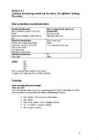
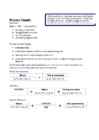
condition, result, likely, happen, present, good, university, conditional, part, although, know, simple, gets, grades, action, means, possible, could, speak, formation, base, verb, known, helped, conditions, sure, perfect, talk, first, actions, tense, going, other, might, different, italian, english, course, real, there, talking, case, person, modalConditionals Sentences with if are used to express possibilities. 0 Zero conditional If-clause present (past) simple Main clause present (past) simple Sometimes sentences with if express certainty rather than possibility. The zero conditional is used to talk about sth. that is always true (such as a scientific fact), or that was always true in the past. In this type of conditional we can use when instead of if. E.g., If/When you mix blue and red, you get purple. If/When you don't water flowers, they die. (present simple in both parts of the sentence) If/When I asked her to come with us, she always said no. (past simple in both parts of the sentence) 1 First conditional If-clause present simple; Main clause future tense (or: can, must, may, etc., + bare infinitive) Used to talk about the consequences of a possible action (a real or very probable situation in the
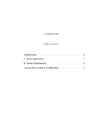
................ 2 A. Real Conditionals ............................................................. 2 B. Unreal Conditionals ......................................................... 3 Linking words used in Conditionals ...................................... 4 Conditionals Conditions deal with imagined situations: some are possible, some are unlikely, some are impossible. A. Real Conditionals Real Conditionals refer to situations that are true, have happened, generally happen or are likely to happen. The First Conditional expresses a possible condition and a probable result: If I have time, I will help you. In the if-clause we use the Present Simple, in the main clause will + the verb. We can also use the Present Continuous or Perfect in the if-clause and a Modal Verb in the main clause. If we are having a party tomorrow, we shouldn’t go out tonight. If you have finished with the computer, you should turn it off.
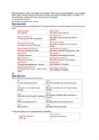
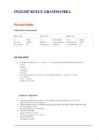
CONDITIONALS ZERO CONDITIONAL If you don't water flowers, they die. If you have a headache, stop watching TV. If clause: Main clause: PRESENT SIMPLE PRESENT SIMPLE or IMPERATIVE With zero conditional we express a general truth or we give advice. FIRST CONDITIONAL If the weather is nice, we will go for a walk. If you don't apologize, she will never trust you again. If clause: Main clause: PRESENT SIMPLE FUTURE SIMPLE The first conditional refers to the present and future. It expresses a possible condition and its probable result in the future. SECOND CONDITIONAL Jack wants to buy a house but he can't do this because he doesn't have any money. If I had a lo t o f m o ne y,
It replaces the traditional forms of Mrs and Miss. Greetings Good morning/afternoon/evening! 'How are you?' Very often people expect you to say something positive. Here's a breakdown of how you can express how you really are without complaining too much. · Fine, thanks. / On top of the world, thanks. · OK, thanks · Not so bad, thanks. / Can't complain, thanks. · So so, thanks. / So and so, thanks. · Not so good, actually 1 The English alphabet Spelling Work with your partner and spell out first your name and then some names of places. Write down each letter as you hear it, and then say the word. The English alphabet on the phone: You might find the following alphabet (used by international airlines) useful when trying to spell a word on the telephone.
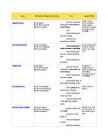
tense Affirmative/Negative/Question Use Signal Words always, every ..., action in the present Simple Present A: He speaks. never, normally, N: He does not speak. taking place once, never or often, seldom, Q: Does he speak? several times sometimes, usually if sentences type I
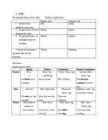
7. Verb: The principal forms of the verbs: Verbil on 4 põhivormi: Regular verb Irregular verb 1. the base form Talk Speak üldoleviku tüvivorm 2. the past form/ -ed form Talked Spoke üldmineviku vorm 3. the past participle (-ed Talked Spoken participle) mineviku kesksõna 4. the present participle (- Talking Speaking ing participle) oleviku kesksõna The tenses: Expressing the future: Simple Perfect Continuous Perfect Continuous Present Base Have / has + to be + base+ ing has/ have been +s + pariticiple base+ -ing
TIME CLAUSES Present Simple · Permanent states, facts (Tom works..) · Repeated and habitual actions, routines (She usually goes..) · Laws of nature and general truths (The sun sets in the west) · Timetables and programmes · Sporting commentaries, rewiews (Beckham wins the ball, crosses and Owen scores) · Feelings and emotions (I love Tallinn..) TIME EXPRESSIONS USED WITH PRESENT SIMPLE: usually, often, always, every day/week etc, in the morning/evening etc, at night/the weekend, on Fridays etc. Present Continuous · Actions taking place at or arount the moment of speaking (The kids are watching TV..) · Fixed arrangements in the near future (I'm going to the dentist tomorrow) · Currently changing ang developing situations (The number of burgularies is increasing)
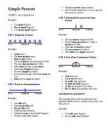
Windows are not made of wood. Simple Present · · New York is a small city. It is not important that this fact is untrue. [VERB] + s/es in third person USE 3 Scheduled Events in the Near Examples: Future · You speak English. · Do you speak English?
tips and useful language notes Book 1 Anne Seaton · Y. H. Mew Three Watson Irvine, CA 92618-2767 Web site: www.sdlback.com First published in the United States by Saddleback Educational Publishing, 3 Watson, Irvine, CA 92618 by arrangement with Learners Publishing Pte Ltd, Singapore Copyright ©2007 by Saddleback Educational Publishing. All rights reserved. No part of this book may be reproduced in any form or by any means, electronic or mechanical, including photocopying, recording, or by any information storage and retrieval system, without the written permission of the publisher. ISBN 1-59905-201-6 Printed in the United States of America 13 12 11 10 09 08 07 9 8 7 6 5 4 3 2 1 Introduction Grammar is a very old field of study. Did you know that the sentence was first divided into subject and verb by Plato,
c) Case: The term case applies in the first instance to a system of inflectional forms of a noun that serve to mark the function of an NP relative to the construction containing it. Distinctions of case mark the structural and semantic functions of noun phrases within sentences. Common Case and Genitive Case Plain and Genitive case Forms: boy boys boy's boys' child child's children children's Semantic functions of 's: We can use sentential or phrasal analogues to present the different meanings. 1) possessive genitive: the boy's car 2) partitive genitive: the man's head, the baby's eyes 3) subjective genitive: the boy's application 4) objective genitive: the thief's arrest 5) genitive of origin: the student's letter 6) local or locative genitive: the butcher's (shop) 7) genitive of measure: an hour's walk, ten days' absence 8) descriptive or classifying genitive: a man's voice 4. Pronouns: pronoun subclasses
I must You mustn’t (S)he do that! should We shouldn’t They Note: • Don’t have to = needn’t; mustn’t = be forbidden • Have to has all the forms that must doesn’t have. I had to work until midnight last night. (Past) You’ll have to study hard when you go to university. (Future) She’s a millionaire. She’s never had to do any work. (Present Perfect) I hate having to get up early. (-ing form) If you were a policeman, you would have to wear a uniform. (Infinitive) Question • Must I ...? is possible, but question forms with have to are more common. Do I have to do what you say, or can I do what I want? • Should I/she/we ...? is possible. We often use Do you think ...? Should I try to eat less?
Was Born Traveled to Europe Husband 1978 School graduates @ Oxford 1999 Started Got married School 1983 2008 2 The Six English Verb Tenses Three Simple Tenses Simple continuous Present You walk. You are walking I run. I am running. Past You Walked You were walking. I ran. I was running. Future You will walk. You will be walking. I will run. I will be running. Three Perfect Tenses Perfect continuous Present perfect you have walked. You have been walking. I have run
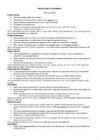
Golden Grammar rules 1. Don't use an with own. Sue needs her own room. (NOT Sue needs an own room.) I'd like a phone line of my own. (NOT ... an own phone line.) 2. Use or rather to correct yourself. She's German or rather, Austrian. (NOT She's German or better, Austrian.) I'll see you on Friday or rather, Saturday. 3. Use the simple present play(s), rain(s) etc to talk about habits and repeated actions. I play tennis every Saturday. (NOT I am playing tennis every Saturday.) It usually rains a lot in November. 4. Use will ..., not the present, for offers and promises. I'll cook you supper this evening. (NOT I cook you supper this evening.) I promise I'll phone you tomorrow. (NOT I promise I phone you tomorrow.) 5. Don't drop prepositions with passive verbs. I don't like to be shouted at. (NOT I don't like to be shouted
Tests Superstar 1 Luke Prodromou Test 1 Name____________________ Class_______ Use your English 1 Complete these sentences using the correct form (present simple or present continuous) of the verb in brackets. _ 1 She is in a band and she _________________________________ (record) a CD at the moment. _ 2 She is an actress and often _________________________________ (appear) on television. _ 3 At the moment she _________________________________ (have) a rest because she is tired. _ 4 Mike is a doctor and he _________________________________ (live) in Manchester. _ 5 I _________________________________ (start) work at 8.30 every morning.
1C Worst Britons page 5 altitude. 3 Students' own descriptions 1 1 poll 5 commentators 3 Tick: belong, know, imagine, think, 2 public 6 celebrities understand Challenge! 3 Prime Minister 7 figures Students' own answers 4 votes Photocopiable © Oxford University Press 1 Maturita Solutions Upper-Intermediate Workbook Key 1G Magazine article page 10 1 1 Introduction: C 2 Background information: A 3 Main events: D 4 Conclusion: B 2 1 One afternoon, at the time, when I finally reached safety, after that day 2 and fast! The rock was now more than a kilometre out to sea! After that day, I always checked
believed 11 between 1 I take after my mum 2 1 disorientated 5 withdrawn 7 granted 12 Although 2 the spitting image 2 distraught 6 preoccupied 3 a strong family resemblance 4 1 F 2 T 3 F 4 F 5 T 3 bewildered 7 circumspect between 4 overwhelmed 5 1 ignore
I haven't worked. Have I worked? you say that sth. has happened or have/has + past is finished in the past and it has a participle* Simple already He has worked. He hasn't worked. Has he worked? connection to the present Present Perfect *(infinitive + -ed) or so far, I have gone. I haven't gone. Have I gone? action started in the past and (3rd column of table continues up to the present of irregular verbs)
Conditionals: 0 and I What is a conditional sentence? • Conditional sentences have at least two clauses: IF clauses and THEN clauses • Examples: If I go into town tomorrow, then I will see a movie. If he spoke Chinese, then he would work as a guide in China. If they had been faster, then they would have won the race. IF Clauses (the condition) • IF clauses present the condition. • Examples: If I go into town tomorrow… If he spoke Chinese… If they had been faster… THEN Clauses (the results) • THEN clauses present the results. • Examples: … then I will see a movie. …. then he would work as a guide in China. … then they would have won the race. IF and THEN Clauses • The word “then” is optional, but the clause is still the result of the condition. So it is a “THEN” clause, without the word “then.” 0 CONDITIONAL
Philosophy of Language Philosophy of Language: a Contemporary Introduction introduces the student to the main issues and theories in twentieth and twenty-first-century phi- losophy of language, focusing specifically on linguistic phenomena. Topics are structured in four parts in the book. Part I, Reference and Referring, includes topics such as Russell's Theory of Descriptions, Donnellan's distinction, problems of anaphora, the description theory of proper names, Searle's cluster theory, and the causalhistorical theory. Part II, Theories of Meaning, surveys the competing theories of linguistic mean- ing and compares their various advantages and liabilities. Part III, Pragmatics and Speech Acts, introduces the basic concepts of linguistic pragmatics,
on Christmas Day (but at Christmas) We use at in these expressions: at night - at Christmas - at the moment / at present - at the same time - at weekends - at the age of... IN DURING
a) Why hasn't Steve written earlier? b) What does he think of Hong Kong? c) What is the weather like? d) What happened to him recently? e) What does he say about his new colleagues? f) Is his new job easier than the one he had in London? g) How does the writer feel about his new situation? Informal (friendly) letters are normally written to relatives, friends or other people we know very well. A good informal letter should be divided into paragraphs. Each paragraph should deal with one aspect of the subject and start with a topic sentence which gives the main idea of the paragraph. Tenses Present Perfect and Past Simple are often used in letters giving news. The Present Perfect is used to refer to recent activities and the Past Simple to refer to activities which happened at a stated time in the past. TASK 7 Read the following letter and correct the mistakes
That'll be Jim at the door. (This means that I suppose it is Jim.) 2. Will is also used to express an immediate decision, when we decide on something or agree to do it more or less at the moment of speaking. I’ll take this one. Decisions expressed with going to refer to a more distant point in the future. 3. Will does not express an intention. For that we use be going to. 2 Be going to We use the present tense of the verb be in the right form + going to + verb. I am going to travel I’m going to travel he/she is going to play he’s/she’s going to play we/you/they are going to drive we’re/you’re/they’re going to drive Negative I am not going to work I’m not going to work he/she is not going to fly he/she isn’t going to fly we/you/they are not going to walk
CHANGE YOUR LIFE How to Unlock Your Full Potential for Success and Achievement B R I A N T R AC Y JOHN WILEY & SONS, INC. ccc_tracy_fm_i-xviii.qxd 7/7/03 3:22 PM Page iv Copyright © 2003 by Brian Tracy. All rights reserved. Published by John Wiley & Sons, Inc., Hoboken, New Jersey. Published simultaneously in Canada. No part of this publication may be reproduced, stored in a retrieval system, or transmitted in any form or by any means, electronic, mechanical, photocopying, recording, scanning, or otherwise, except as permitted under Section 107 or 108 of the 1976 United States Copyright Act, without either the prior written permission of the Publisher, or authorization through payment of the appropriate per-copy fee to the Copyright Clearance Center, Inc., 222 Rosewood Drive,
Reported speech is often also called indirect speech. When we use reported speech, we are usually talking about the past (because obviously the person who spoke originally spoke in the past). The verbs therefore usually have to be in the past too. For example: "I'm going to the cinema". He said he was going to the cinema. Basic tense chart The tenses generally move backwards in this way (the tense on the left changes to the tense on the right): present simple past simple I'm a teacher. He said he was a teacher past continuous. present continuous He said he was having lunch with his I'm having lunch with my parents. parents. past perfect simple
Future Forms Future Forms · 1) Future Simple will work · 2) Be going to am/is/are going to work · 3) Present Continuous am/is/are working · 4) Present Simple start(s) Future Forms · 5) Future Continuous will be working · 6) Future Perfect will have worked · 7) Future Perfect Continuous will have been working Future Simple · We do our morning exercises and think, "I think we will have a nice day " · Prediction (ennustused kõhutunde põhjal) · verbs think, believe, guess, expect, hope etc · expressions be sure, be afraid etc · adverbs probably, perhaps, certainly
Grammar point Made by Nikolai Hodosevich Conditional mood The conditional mood is the form of the verb used in conditional sentences to refer to a hypothetical state of affairs. Conditional verb forms can also have temporal uses, often for expressing "future in the past" tense. Condition sentences are often entered with conjunction IF Real events Structure: Additional clause Present Indefinite Main clause Future Indefinite If I have a lot of money, I will buy a car , Almost unreal events *In additional and main clauses usually use Subjunctive I and II *When you translate into Russian these sentences, you should use conjunction * This type of unreal conditional sentence use, when speaker wants to underline small probability of condition realization Almost unreal events
......................................117 Chaos and Higher Order.............................................................................118 Good and Bad.............................................................................................119 Not Minding What Happens.......................................................................120 Is That So?..................................................................................................121 The Ego and the Present Moment .............................................................122 The Paradox of Time...................................................................................124 Eliminating Time.........................................................................................125 The Dreamer and the Dream.......................................................................127 Going Beyond Limitation...........................................................................128
Central Europe. you should buy this new edition of Influence: o More neuroscience evidence of how the influence process works is inte- Science and Practice, gra ted throughout. For instance, brain imaging research is presented, showing here are 5 good reasons! how the "Expensive = Good" heuristic o Updated coverage of social influence leads people to perceive more costly effects in popular culture, such as the items as better than (identical) less contagion of obesity among the young costly ones. and the contagion of violence in such tragedies as the Virginia Tech and North- o Enhanced coverage of "how to say
results come only after great efforts. Sensitivity in my integrated meaning is broad, covering literally the senses, so that deaf and blind people are less sensitive, as well as people whose senses work perfectly, but whose receptivity or thought processes are blunted for whatever reason. A person can be insensitive in one way, such as blind, and extraordinarily sensitive in another way, such as in hearing. It is also possible to be so ultra-sensitive that the result is disadvantageous. I expect no argument in asserting that a normal sensitivity is a healthy, indispensable ingredient for optimal education. Sensitivity can be heightened or blunted by education. It is intertwined with curiosity. An ideal education affords numerous and varied opportunities for students to touch, see, smell, listen, hear; to spark their curiosity. When I was a child the things that pleased me were largely other than the plants which have earned me a living as an adult
Modals Sandra Haar Form 11 I am going to talk about... Can Could May Might Must Should Would Ought to Excercises References How do we use modal verbs? Affirmative: Subject + modal + infinitive, Example: She should stay Negative: Subject + modal(n`t) + infinitive, Example: She shouln`t stay Interrogative: (Wh) Modal + Subject + Infinitive, Example: Why should she stay? Can Ability to do something in the present-I can speak English. Permission to do something in the present-Can I go to the cinema? Request - Can you wait a moment, please? Offer- I can lend you my car till tomorrow. Suggestion- Can we visit Grandma at the weekend? Possibility- It can get very hot in Arizona. Could Ability to do something in the past- I could speak English. Permission to do something in the past- I could go to the cinema. Polite question- Could I go to the cinema, please? Polite request- Could you wait a moment, please? Polite
services, and this has caused considerable operational difficulties. When the MCC Transport Manager heard of the problem, he immediately telephoned the Transport Supervisor and asked him to write a short report detailing the background and extent of the problem. Text 1 is the report that the Transport Supervisor drafted out. However, knowing that his report writing ability was not particularly good, he asked his secretary to revise it before she typed it up. Text 2 is the report that was finally sent to the Transport Manager. Read both of the reports and see if you can identify: the changes that the secretary made the reasons for making these changes the effect of these changes TO: Transport Manager FROM: Transport Supervisor (Field Services) SUBJECT: Services Provided by Autocheck Maintenance Company DATE: 6.4.01 Ref your phone call about the maintanance of field vehicles
The Present Simple is the most basic tense in the English language. It is an interesting tense because it can be used Present Simple to express the future. Generally, though, we use it to Basic form describe the present activities or to talk about routines or Subject + Verb + -s (present form) John lives in New York. We play football every day. You are really kind. The meeting starts at 3 PM. Use the Present Simple: with state verbs. to talk about situations in life that last a relatively long time. when an event is certain to happen in the future.
Enneminevik väljendab: · Tegevust, mis lõppes enne teatud aega või enne teist tegevust minevikus. She had seen the play before. Mary and Tom had already started playing cards when June arrived. · Tegevust, mis algas enne antud aega minevikus, kestis peale antud aega või lõppes just enne seda. Tegevus on määratletud ajaga, näiteks since, for. Mona had gone in university for 2 years before she met her future husband. Tom had played football since July. Past Perfect Continuous Kestva ennemineviku moodustamine Jaatav vorm Eitav vorm Küsiv vorm I had been asking I had not been asking Had I been asking? He/she/it had been going He/she/it had not been going Had he/she/it been going?
 annaabi.ee