Leidsid 33 sarnast õppematerjali, mis on seotud failiga "-ing and to". Need materjalid aitavad sul teemat sügavamalt mõista.
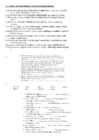
verb, remember, tell, advise, admit, change, late, keep, regret, tend, money, expect, mean, prefer, meaning, offer, imagine, deny, know, forget, seem, dare, without, done, stolen, teach, talk, tired, object, couldn, expected, hotel, stay, hates, avoid, hope, finish, consider, agree, manage, afford, fancy, suddenly, locked, door, clearly, refuse, arrangeThe gerund form -ing The gerund form -ing is used: After some main verbs. (admit, appreciate, consider, delay, deny, detest, dislike, enjoy, escape, face, feel like, finish, forgive, give up, imagine, involve, mention, mind, miss, postpone, practise, prefer, put off, recommend, resent, risk, suggest, understand) I do not recommend going to that restaurant. After an adjective, verb or noun followed by a preposition. She is really good at swimming. He apologised to arriving late. I quite like the thought of working in a travel agency. In some fixed expressions I can not bear listening to people who complain. I can not help feeling that he is cheating us. That book is not worth reading. The infinitive with to The infinitive with to is used: After some main verbs
Would you help me put my bag in the overhead locker? 7.4 Common verbs followed by an infinitive with ´to´ I can´t afford to buy a new overcoat. Here are some common verbs which are followed by an infinitive with ´to´ Afford, agree, appear, arrange, ask, attempt, bear, begin, care, choose, consent, decide, determine (pühendumine), expect, fail, forget, happen, hate, help, hesitate, hope, intend, learn, like, love, manage, mean, offer, prefer, prepare, pretend, promise, propose, refuse, regret (kahetsema), remember, seem, start, swear, trouble, try, want, wish She pretend to be sleep Ta teeskleb magamist. 7.5 Common verbs followed by object + infinitive with ´to´ He encouraged me to try again. Here are some common verbs which are followed by an object and the infinitive with to: Advise, allow, ask, cause, command, encourage, expect, forbid, force, get, hate, help, instruct, intend, invite, leave, like, mean, need, oblige (kohustama), order, permit,
All rights reserved. No part of this book may be reproduced in any form or by any means, electronic or mechanical, including photocopying, recording, or by any information storage and retrieval system, without the written permission of the publisher. ISBN 1-59905-201-6 Printed in the United States of America 13 12 11 10 09 08 07 9 8 7 6 5 4 3 2 1 Introduction Grammar is a very old field of study. Did you know that the sentence was first divided into subject and verb by Plato, the famed philosopher from ancient Greece? That was about 2,400 years ago! Ever since then, students all over the world have found it worthwhile to study the structure of words and sentences. Why? Because skill in speaking and writing is the hallmark of all educated people. Lesson by lesson, this book provides basic instruction in the eight parts of speech--nouns, pronouns, verbs, adjectives, adverbs, prepositions, conjunctions, and
been speaking. · putting emphasis on the Q: Will he have been course of an action speaking? Note: we use continuous tenses only for actions and happenings (e.g. they are singing/ it is snowing). Some verbs are not action verbs (e.g. know, like). You cannot use continuous tenses with the following verbs: like love hate want need prefer know realise suppose mean understand believe remember belong contain consist depend seem 4 The following verbs are usually only used in Simple Present (not in the continuous form). state: be, cost, fit, mean, suit Example: We are on holiday. possession: belong, have Example: Sam has a cat. senses: feel, hear, see, smell, taste, touch Example: He feels the cold. feelings: hate, hope, like, love, prefer, regret, want, wish Example: Jane loves pizza.
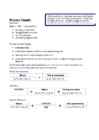
www.english-4u.de/am_i s_are_ex3.htm Long form Short form Example Negation 3. http:// Question www.english-4u.de/am_i I am I'm I am late. I am not ('m not) late. s_are_ex6.htm Am I late? You are You're You are clever. You are not (aren't) clever. Are you clever? He is He's He is happy. He is not (isn't) happy. Is he happy? She is She's She is hungry. She is not (isn't) hungry. Is she hungry? It is It's It is cold. It is not (isn't) cold
· Wishes are for lazy people who can't get up and make their dreams come true on their own. Make it happen! · It's easy to say something, but it's harder to mean it. · Distance isn't a big factor in a relationship. Communication is. But most of all, commitment is the biggest. · A broken heart can hurt but it's the memories that kill you. · Every girl deserves to be treated with respect and not to be lied to or cheated on. · Remember, you need to open your eyes before opening your mouth! · When people start telling you you've changed, it's actually because you've just stopped living life THEIR way. · In life, shit happens, so forget about the past, and make the best of the future! · If you don't understand my silence, how do you understand my words? · Karma exists, good or bad. Karma comes in any ways. It may not come today but it WILL someday.
-ING · Admit, anticipate, appreciate, avoid, complete, consider, continue, delay, deny, discuss, enjoy, escape, excuse, fancy, finish, forgive, go (for activities), imagine, involve, keep (=continue), mention, mind, miss, postpone, practise, prevent, quit, recall, recollect, report, resent, resist, risk, save, stand, SUGGEST, stop, tolerant, understand · Dislike, enjoy, hate, like, love, prefer · Be busy, it's no use, it's good, it's worth, what's the use of, can't help, there's no point (in), can't stand, have difficulty (in), have trouble, have a hard/difficult time · Spend, waste, lose
5 1 at first hand 5 maiden voyage I would guess that it's a private 4 fell 11 were chatting 2 tuberculosis 6 mine school, but it could be a state 5 seen 12 walked school. It's hard to say. 6 were waiting 13 didn't admit 3 stewardess 7 retirement 7 was looking 4 wonderful 2 1 I reckon they are about 17 years old. 3 1 was getting, arrived Challenge! 2 It's a mixed class of girls and boys.
symbols (such as letters, morse etc) For example: Estonian, English. Linguistics → The scientific study of human natural language. Broadly, there are three aspects to the study which are Pragmatics (studies the use of language → interested in the gap between the sentence’s meaning and the speaker’s meaning). Semantics (concerned with the meaning of the language aspects and the way they change, also how objects and language and thinking and language are related). Syntax (concerned with the rules [grammar] and how sentences and words are formed). Synchronic approach to language → A focus in language study on how language exists in one moment in time, not at how this language came to be the way it is now. Example Estonian in the 21st century. Diachronic approach to language → A focus in language study on how a language has changed over some period of time
We are meeting tonight. We are going to the theatre. Pane tähele! Kestvat olevikku kasutatakse tegevusverbides (I am dancing, you are eating etc.). Mõned verbid on mitte tegevusverbid, näiteks ei saa öelda I am liking või you are knowing, vaid I like ja you know. Järgmiseid verbe ei kasutata tavaliselt kestvas olevikus. like love hate want need prefer know realise suppose mean understand believe remember belong contain consist depend seem Past Simple Lihtmineviku moodustamine Jaatav vorm Eitav vorm Küsiv vorm I asked I did not ask Did I ask? He/she/it went He/she/it did not go Did he/she/it go?
2 a recall 5 b recollection 6 she's passed on to me 3 a shred 3 d reminisce 6 e ingrained genetically 4 plausible 5 obsolete 4 1 I've asked you time and time 3 1 There's a strong resemblance again to keep the noise down. between Paul and Joe. 1D Sporting origins page 67 2 She recognised him at once. 2 Phobias can be genetically 3 He's working at his father's shop inherited. 1 1 staunchly / resolutely for the time being. 3 When it comes to politics, 2 By and large 4 They'll be here any moment now
Dear Sir or Madam, kui sa ei tea, kellele kirjutad 2. First paragraph The first paragraph should be short and state the purpose of the letter- to make an enquiry, complain, request something, etc. The paragraph or paragraphs in the middle of the letter should contain the relevant information behind the writing of the letter. Most letters in English are not very long, so keep the information to the essentials and concentrate on organising it in a clear and logical manner rather than expanding too much. 3. Last Paragraph The last paragraph of a formal letter should state what action you expect the recipient to take- torefund, send you information, etc. 4. Yours faithfully, - kui sa ei tea, kellele kirjutad Yours sincerely, kui sa tead, kellele kirjutad SINU NIMI a. Informal letter
Neti Habakuk Margit Mölder Forming: infinitive+ ing (I+ing) USING: 1) In some fixed expressions (As well as I+ing.., It is no good I+ing.., It is no use I+ing.., can not bear I+ing.., can not help I+ing.., worth I+ing..) 2) After prepositions (before I+ing.., of I+ing.., for I+ing.., by I+ing.., at I+ing..) 3) After verbs (enjoy, admit, consider, can`t stand/ help/ bear, deny, avoid, mind, suggest, understand) 4) With from and to with some verbs (He prevented her from leaving. Look forward to I+ing.., Get used to I+ing..) Forming: to+ verb I (to+v) USING: 1) After some adjectives (happy to+v.., wrong to+v..) 2) To express purpose (She went to Spain to meet her friend.) 3) After some nouns ( decision to+v.., time to+v.., wish to+v..) 4) After some main verbs ( appear, agree, ask,
If you have any questions, please stop me at any time, and I will be happy to answer them. If you have any questions, please feel free to interrupt. Please interrupt me if there's something which needs clarifying. Otherwise, there'll be time for discussion at the end. Discouraging questions (during the presentation/talk) I'd be glad to answer any questions at the end of my talk. At the end of my talk, there will be a question and answer session. I would appreciate it if you could keep your questions until then. I'll be happy to answer any questions you have at the end of my presentation THE MAIN POINTS TO REMEMBER The beginning Making it interesting Say hallo Visual Say who you are Quote Give purpose and main points Surprising fact Give length Story / anecdote Handouts
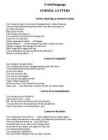
DAMIS, DORINE MADAME PERNELLE Come, come, Flipotte, and let me get away. ELMIRE You hurry so, I hardly can attend you. MADAME PERNELLE Then don't, my daughter-in law. Stay where you are. I can dispense with your polite attentions. ELMIRE We're only paying what is due you, mother. Why must you go away in such a hurry? MADAME PERNELLE Because I can't endure your carryings-on, And no one takes the slightest pains to please me. I leave your house, I tell you, quite disgusted; You do the opposite of my instructions; You've no respect for anything; each one Must have his say; it's perfect pandemonium. DORINE If . . . MADAME PERNELLE You're a servant wench, my girl, and much Too full of gab, and too impertinent And free with your advice on all occasions. DAMIS But . . . MADAME PERNELLE You're a fool, my boy--f, o, o, l Just spells your name. Let grandma tell you that I've said a hundred times to my poor son,
past simple past perfect I bought a new car. He said he had bought a new car. past continuous past perfect continuous It was raining earlier. He said it had been raining earlier. past perfect past perfect The play had started when I arrived. NO CHANGE POSSIBLE past perfect continuous past perfect continuous I'd already been living in London for five NO CHANGE POSSIBLE years. Other verb forms Other verb forms also sometimes change: will would I'll come and see you soon. He said he would come and see me soon.
1 First conditional If-clause present simple; Main clause future tense (or: can, must, may, etc., + bare infinitive) Used to talk about the consequences of a possible action (a real or very probable situation in the present or future). E.g., If I write my essay this afternoon, I will have time to go out tonight. (or: I might go out tonight). (It is still morning, and it is quite possible that I will do this.) NOTE: With type 1 conditionals we can use unless + affirmative verb (= if + negative verb). E.g., I will not be able to come unless Joe gives me a lift. (= If Joe does not give me a lift, ...) Provided that/providing that are synonyms for if that can be used with type 1 conditionals. 2 Second conditional (unreal present) If-clause past simple/past continuous; Main clause conditional tense (would, could, might + present bare infinitive) Used to talk about the consequences of a hypothetical action (imaginary situations that are contrary
· What is the salutation in a friendly letter? · How would you end extracts 1,2,3 ? · How would you begin the extracts 4 and 5? 1. Dear Mr Miller, I received your kind invitation to the reception. Unfortunately, owing to other commitments. I will be unable to attend ... 2. Dear Ralph, l just got your invitation to the company's event. l `m afraid I can't make it because I've a/ready made plans which l can "t change ... 3. Dear Sirs, I am writing to complain about the poor quality of the items which I received from your company. I have no other alternative but to cancel the order which 1 placed earlier this week ... 4. ... thus, I recommend that you accept this advice on the matter. I am pure that the suggestion offered is the best solution. Please let me know if this was helpful. Yours sincerely, Lee Jones 5. ... I would appreciate a reply at your earliest convenience
Tests Superstar 1 Luke Prodromou Test 1 Name____________________ Class_______ Use your English 1 Complete these sentences using the correct form (present simple or present continuous) of the verb in brackets. _ 1 She is in a band and she _________________________________ (record) a CD at the moment. _ 2 She is an actress and often _________________________________ (appear) on television. _ 3 At the moment she _________________________________ (have) a rest because she is tired. _ 4 Mike is a doctor and he _________________________________ (live) in Manchester. _ 5 I _________________________________ (start) work at 8.30 every morning.
Second Conditional: Imaginary Present or Unlikely Future The Second Conditional can be used used to talk about imaginary present situations, where we are imagining something different from what is really the case. We can also use it to talk about things in the future that are unlikely to happen, as the condition is unlikely to be met. We use the past tense in the condition part and would for the result. Formation: if + past simple, + would + base form For Example: If I were you, I'd tell her. I Condition Time Result Possibility F presen WOULD + base past simple impossible t verb I had the I would learn I don't have the time, so I'm not going to If time, Italian. learn Italian. WOULD + base past simple future unlikely
adjective + preposition omadussõna + eessõna proud of, good at, married to adverb particle Some verbs are followed by adverb particles. Examples are: put on, take off, give away, bring up, call in. Sometimes the particle is detached from the verb and put after the object. •He took his boots off. •They called the doctor in. apposition a grammatical construction in which two usually adjacent nouns having the same referent stand in the same syntactical relation to the rest of a sentence (as the poet and Burns in “a biography of the poet Burns”) back-reference In grammatical analysis, the term reference is often used to state a relationship of identity which exists between grammatical units, e.g
.................................................................. 6 Expressing possibility/probability......................................... 7 Asking about possibilities ..................................................... 7 Infinitives ............................................................................. 8 Introduction Modal Verbs are can, could, may, might, must, will, would, shall, should, ought to. They are known as modal auxiliary verbs because they ‘help’ another verb, i.e. they are always used with another verb in its base form. e.g. I can swim. Do you think I should go? Characteristics of Modal Verbs • There is no -s in the third person singular: She can ski. He must be tired. It might rain. • They are used to form questions and negatives: Shall we go for a walk? What should I do? He can’t dance. You mustn’t tell lies! • Modal auxiliary verbs don’t usually have past forms. Other expressions are
I'm playing very badly today. (NOT I play very badly today.) Look! It's raining! (NOT Look! It rains!) 12. Use for with a period of time. Use since with the beginning of the period. for the last two hours = since 9 o'clock for three days = since Monday for five years = since I left school I've been learning English for five years. (NOT I've been learning English since three years.) We've been waiting for ages, since eight o'clock. 13. Don't separate the verb from the object. VERB OBJECT She speaks English very well . (NOT She speaks very well English.) Andy likes skiing very much. (NOT Andy likes very much skiing.) 14. Don't use the present perfect have/has seen, have/has gone etc with words that name a finished time. I saw him yesterday. (NOT I have seen him yesterday.) They went to Greece last summer. (NOT They have gone ... last summer.) 15. English (the language) normally has no article. You speak very good English
Infixation is common in languages of Southeast Asia and the Philippines, and it is also found in some Native American languages. circumfixes morphemes that are attached to a root or stem morpheme both initially and finally. Morphs: the concrete realisation of a morpheme (`was' be, past, singular) Allomorphs: a/an Types of affixes: Derivational and infelctional Derivational affixes: Derivational affixes may change the grammatical class of the root verbs into nouns, nouns into adjectives (boy, boyish), and so on. Derivation is a lexical process which actually forms a new word out of an existing one by adding affixes to stems or roots. consideration, considerate, inconsiderate, inconsiderateness Inflectional affixes: Inflectional affixes may be described as `relational markers' that fit words for use in a sentence (express a syntactic relation). Inflections do not change the
Concrete nouns refer to physical entities that can be observed and measured (cat, garage, soldier). Abstract nouns refer to abstractions that cannot be observed and measured (competition, conscience). verb tegusõna, In a clause, the verb is an obligatory and the most walk, put, do, be, must pöördsõna, verb central element. It denotes actions, events, processes and states. Verbs are either regular (cough, coughs, coughing, coughed) or irregular (speak, speaks, spoke, speaking, spoken). There are three main grammatical
1.- Choose the most suitable verb form in each sentence. a) If only Peter doesn't live / didn't live / wouldn't live so far away from the town centre. We'll have to take a taxi. b) I feel rather cold. I wish I brought / had brought my pullover with me. c) What a pity. I wish we don't have to / didn't have to / wouldn't have to leave. d) If only you tell / told / had told me about the test. I haven't done any revision. e) I wish the people next door hadn't made / wouldn't make / couldn't make so much noise. I can't hear myself think! f) Darling, I love you so much! I wish we are / had been / would be / could be together always! g) I'm sorry I missed your birthday party. I really wish I come / came / had come / would come. h) I like my new boss but I wish she gave / would give / could give me some
. I am extremely concerned at the thought that ... It must be very clear that ... If these proposals go ahead, ... will happen. Another threat to ... , if these proposals go ahead, would come from ... I dread to imagine what damage this will cause. May I respectfully suggest that you ... I was wondering if you had considered this alternative? Would it not be possible to ... ? Letters of complaint I am writing to complain about ... I am writing to tell you how disappointed/annoyed I feel about ... I was amazed/distressed/horrified to find that ... As you must realise, ... I am sure you know that ... I am sure you can imagine ... I am sure you will appreciate that ... It goes without saying that ... At the very least, I look forward to receiving ... Unless you ... , I am afraid that I will have to take this matter further. Letters of recommendation I am writing to you on behalf of ...
months -- but even if I had, I would not have imagined it like this. I stared without breathing across the long room, into the dark eyes of the hunter, and he looked pleasantly back at me. Surely it was a good way to die, in the place of someone else, someone I loved. Noble, even. That ought to count for something. I knew that if I'd never gone to Forks, I wouldn't be facing death now. But, terrified as I was, I couldn't bring myself to regret the decision. When life offers you a dream so far beyond any of your expectations, it's not reasonable to grieve when it comes to an end. The hunter smiled in a friendly way as he sauntered forward to kill me. 1. FIRST SIGHT My mother drove me to the airport with the windows rolled down. It was seventy-five degrees in Phoenix, the sky a perfect, cloudless blue. I was wearing my favorite shirt -- sleeveless, white eyelet lace; I was wearing it as a farewell gesture. My carry-on item was a parka.
ccc_tracy_fm_i-xviii.qxd 7/7/03 3:22 PM Page iii CHANGE YOUR THINKING, CHANGE YOUR LIFE How to Unlock Your Full Potential for Success and Achievement B R I A N T R AC Y JOHN WILEY & SONS, INC. ccc_tracy_fm_i-xviii.qxd 7/7/03 3:22 PM Page i CHANGE YOUR THINKING, CHANGE YOUR LIFE ccc_tracy_fm_i-xviii.qxd 7/7/03 3:22 PM Page ii ccc_tracy_fm_i-xviii.qxd 7/7/03 3:22 PM Page iii CHANGE YOUR THINKING, CHANGE YOUR LIFE How to Unlock Your Full Potential for Success and Achievement B R I A N T R AC Y JOHN WILEY & SONS, INC. ccc_tracy_fm_i-xviii.qxd 7/7/03 3:22 PM Page iv
The Present Simple is the most basic tense in the English language. It is an interesting tense because it can be used Present Simple to express the future. Generally, though, we use it to Basic form describe the present activities or to talk about routines or Subject + Verb + -s (present form) John lives in New York. We play football every day. You are really kind. The meeting starts at 3 PM. Use the Present Simple: with state verbs. to talk about situations in life that last a relatively long time. when an event is certain to happen in the future. to talk about events that we can't change (for example, an official meeting or a train departure).
1. A generalist is ignorant from the point of view of a specialist and a specialist is stupid from the point of view of a generalist. 2. All great stupidity is created by geniuses. 3. All stereotypes are true; the fact that you recognize a slur proves that it isn't. 4. Anything you're afraid is true is true. 5. Before most people get to the point of being able to tell their ass from a hole in the ground they're already assholes and it's too late. 6. Concentrating on something important can make you lose track of your soap opera. 7. Debunking the bunk is everyone's responsibility. 8. Don't ask me to pay for anyone else's mistakes. I make enough of my own. 9. Even those who possess real magic must beware of being misled by "magical thinking." 10. Everyone knows what shit tastes like. 11. Exclusive occupancy of a private room is a basic human right. 12. Fair compensation for genius is wealth. 13
breakfast, lunch, tea and dinner. Breakfast time is between seven and nine a.m. A traditional English breakfast is a very big meal. It consists of juice, porridge, a rasher or two of bacon and eggs, toast, butter, jam or marmalade, tea or coffee. Marmalade is made from oranges and jam is made from other fruit. Many people like to begin with porridge with milk or cream and sugar, but no good Scotsman ever puts sugar on it, because Scotland is the home of porridge. For a change you can have sausages, tomatoes, mushrooms, cold ham or perhaps fish. But nowadays in spite of the fact that the English strictly keep to their meals many people just have cereal with milk and sugar or toast with jam or honey. The two substantial meals of the day are lunch and dinner. Lunch is usually taken at one o'clock. For many people lunch is a quick meal. Office workers usually go to a cafe at this time
Philosophy of language has been much in vogue since early in the twentieth century, but only since the 1960s have the issues begun to appear in high resolution. One crucial development in the past forty years is the attention of philoso- phers of language to formal grammar or syntax as articulated by theoretical linguists. I personally believe that such attention is vital to success in phi- losophizing about language, and in my own work I pay as much of it as I am able. With regret, however, I have not made that a theme of this book. Under severe space limitations, I could not expend as many pages as would be needed to explain the basics of formal syntax, without having to omit presentation of some philosophical issues I consider essential to competence in the field. Since around 1980, some philosophers of language have taken a turn toward the philosophy of mind, and some have engaged in metaphysical exploration
 annaabi.ee