Leidsid 33 sarnast õppematerjali, mis on seotud failiga "History of Different cultures". Need materjalid aitavad sul teemat sügavamalt mõista.
egypt, roman, empire, years, king, rule, italy, ruled, caesar, ancient, lower, aten, julius, became, emperor, peace, divided, upper, lost, power, different, cultures, farming, tiber, river, southern, known, wars, finally, country, total, until, republic, itself, sole, brutus, others, octavius, himself, first, warfare, halves, east, west, christianityStonehenge One of the best known ancient wonders of the world, 5000 years old Megalith monument, built by western mediterraneans during 3000-1600 BC Circular structure, large standing stones, aligned with rising sun at teh solstice Attlers and bones were sued to dig pits that hold the stones The Celts in Britain and their legacy 700-200 BC celts invade Britain Gaels or Goehls(Ireland and Scotland),Cymri(Wales) and Brythons(gave name to Brittany) Fierce fighters,superb horsemen.Most of them farmers, lived in thatched houses
They were not centrally governed. The Celts brought iron working, iron ploughs and metal swords, horses, wheels and chariots - all these things gave them an instant superiority over the native tribes. The Celts built a number of hill forts throughout the region. The society was divided into warrior aristocracy, agricultural commons and the priests, the druids. *Caesar in Britain - Britain was very rich in minerals but that wasn't the main reason Caesar wanted to defeat it. He could clearly see that Britain was a threat to his latest and greatest conquest - France. He invaded Britain twice, in 55 and 54 BC. The first invasion was unsuccessful - it gained a beachhead on the coast of Kent but achieved little else. The second was more successful, the Celts asked for truce. However it wasn't a victory he had imagined and Julius Caesar never returned to Britain after that. The island was left undisturbed for nearly a century.
A highly mechanized agricultural sector employs no more than 4% of the labor force but provides large surpluses for the food-processing industry and for exports. The Netherlands, along with 11 of its EU partners, began circulating the euro currency on 1 January 2002. The country continues to be one of the leading European nations for attracting foreign direct investment. Economic growth slowed considerably in 2001-02, as part of the global economic slowdown, but for the four years before that, annual growth averaged nearly 4%, well above the EU average. (3) 1.4 Population The great majority of inhabitants of the Netherlands are Dutch. They are mainly descended from Franks, Frisians, and Saxons. Most residents of Friesland Province are Frisian, a distinct cultural group with its own language. Fearing overpopulation, the government encouraged Dutch emigration after World War II (1939-1945), and some 500,000 people left. But an even
COMPENDIUM ABOUT PRAGUE Prague is the capital and largest city of the Czech Republic. Nicknames for Prague have included Praga mater urbium/Praha matka mst ("Prague Mother of Cities") in Latin/Czech, Stovzatá Praha ("City of a Hundred Spires") in Czech or Zlaté msto/Goldene Stadt ("Golden City") in Czech/German. Situated on the Vltava River in central Bohemia, Prague has been the political, cultural and economic centre of the Czech state for more than 1100 years. For many decades during the Gothic and Renaissance eras, Prague was the permanent seat of two Holy Roman Emperors and thus was also the capital of the Holy Roman Empire. 4 Today, the city proper is home to about 1.3 million people, while its metropolitan area is estimated to have a population of over 1.9 million.
Northern Ireland don't have an official flag any more nor a coat of arms. Due to the division of the population along ethnic, religious and political lines, a wide variety of flags can be seen flying from lampposts and private houses across Northern Ireland. Government. The British Constitution is an unwritten constitution, not being contained in a single legal document. England and Wales have no criminal or civil code. It is case law there. It contains two main principles the rule of law (nobody can escape from the law) and the supremacy of Parliament (in theory the Parliament can do whatever it wishes). Since the age of absolute monarchy there has been a gradual decline in the Sovereign's power and, while formally still the head of the executive and the judiciary, commander-in-chief of all the armed forces, and temporal governor of the Church of England, nowadays monarchs reign but they do not rule. Parliament is the supreme legislative authority
since prehistoric times. In the 8th century most of the Iberian Peninsula was conquered by Moorish invaders professing Islam, who were later expelled by the Knights Templar. During the Christian Reconquista, Portugal established itself as an independent kingdom from León in 1139, claiming to be the oldest European nation-state. In the 15th and 16th centuries, as the result of pioneering the Age of Discovery, Portugal expanded western influence and established the first global empire, becoming one of the world's major economic, political and military powers. In addition, the Portuguese Empire was the longest-lived of the modern European colonial empires, spanning almost 600 years, from the capture of Ceuta in 1415 to the handover of Macau in 1999 and grant of sovereignty to East Timor in 2002. The empire spread throughout a vast number of territories that are now part of 53 different sovereign states
England: * it has 50 cities, the capital city is London * despite of the density of population and the high degree of urbanisation, England has many unspoilt rural and coastal areas which have been placed under protection * the flag is called the Saint George's Cross Scotland: * the biggest cities are Glasgow and Edinburgh (the capital) * Stirling has been an important settlement in Scotland for over 800 years * the flag is called the Saint Andrew's Cross Wales: * the biggest cities are Cardiff, Swansea and Newport * these cities depended for their growths on surrounding mines and metal production, which started during the days of the Industrial Revolution * the flag is of Wales bears a Red Dragon (it is not represented on the Union Jack) Northern Ireland: * the capital city is Belfast
пособия. Пособие предназначено для студентов гуманитарных специальностей. Подготовлено на факультете лингвистики. The book contains an overview of the most important events in British history – from the first documented invasions of the island to the formation and fall of the British colonial empire. A series of exercises will help to remember the subject matter, practise the vocabulary and contribute to skills work. The book is intended for the Humanities students. Вавилов Н.А., 2008 3 4 Contents 5 ПРЕДИСЛОВИЕ Настоящее пособие содержит краткий очерк истории Великобритании от
the largest Art Deco architectural style and located in Rio de Janeiro, Brazil. The statue has a height 38 meters and is located at the top of Corcovado Mountain is 710 m high in the Tijuca Forest National Park, overlooking the city. Chichen Itza It is a Mayan archaeological heritage in Mexico is the most complete and still well maintained. According to the Mayan culture of Chilam Balam, the temple complex was built between the years 502-522 AD. Mayans occupy just over 200 years, then they migrate to coastal areas in Campeche. Itza is the central point of the complex and other buildings such as the Pyramids of Kukulcan, Temple of Chac Mool, and building the Thousand Pillars. Colosseum Is a large theater / Amphitheater, located at the State Capital of Italy, Rome, called the original "Flavian Amphitheatre", founded by King Vespasian and completed by his son Titus. Some argue that the Colosseum was made in the year 79 BC. Originally Colosseum name comes from a statue
Britain History Pre-Norman Britain The Iberians brought their metal-working skills and the first real civilization to Britain in the third millennium B.C and were overrun by various Celtic invasions that began in the 8th century. The Celts introduced their tribal organization and an early form of agriculture before they were forced westward by the Roman invasion. Forms of Celtic language are still spoken in Britain. Romans (with Julius Caesar in the head of them) first tried to occupy Britain in 55 B.C., but there was a rebellion in Gaul so they had to leave to fight against it. Next time they came in 43 A.D. and their leader was Emperor Claudius. Romans brought a lot with them. Their brought paved roads, the sites of important cities, the seeds of Christianity, the Roman law, Roman baths, language and advanced civilization. They also built Hadrian's Wall in 122 A.D. Romans occupied Britain for four centuries.
LONDON The history of the town is very closely linked with the history of the country itself. The name probably comes from the celtic words Llyn, which means a lake, and Dun, which means a fort or a strong place. Although the site was not important during the Celtic period (400 BC 43 AD) During the Roman occupation Londinium, as it was called then, was not influential politically, but was, however an important crossing point for the romans over the river Thames. Londinium was at a very good place, so it soon became a trading centre. In AD 61 the city was devastated by Boudicca, who led a revolt againt the Roman conquest of Britain. The city was burned down and its inhabitants massacred. London was rapidly rebuilt, becoming the capital of the province Britannia
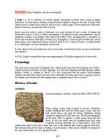
(bukva--"letter") is cognate to "beech". It is thus conjectured that the earliest Indo-European writings may have been carved on beech wood. Similarly, the Latin word codex, meaning a book in the modern sense (bound and with separate leaves), originally meant "block of wood". History of books Antiquity Sumerian language cuneiform script clay tablet, 24002200 BC When writing system were invented in ancient civilization, nearly everything that could be written upon--stone, clay, tree bark, metal sheets--was used for writing. Alphabetic writing emerged in Egypt about 5,000 years ago. The Ancient Egyptians would often write on papyrus, a plant grown along the Nile River
founded the religion of Islam as a historical phenomenon. Muslims view him not as the 3|Page creator of a new religion, but as the restorer of the original, uncorrupted monotheistic faith of Adam, Abraham and others. In Muslim tradition, Muhammad is viewed as the last and the greatest in a series of prophets--as the man closest to perfection, the possessor of all virtues. For the last 23 years of his life, beginning at age 40, Muhammad reported receiving revelations from God. The content of these revelations, known as the Qur'an, was memorized and recorded by his companions. The Masjid alNabawi ("Mosque of the Prophet") in Medina is the site of Muhammad's tomb.During this time, Muhammad preached to the people of Mecca, imploring them to abandon polytheism. Although some converted to Islam, Muhammad and his followers were persecuted by the leading Meccan authorities
o From present-day Austria, Switzerland o The Celtic language survives in the names of many places in England- Dover, Kent, Thames o The Celts are best known for their art- many bronze objects with elaborate designs; brooches; pins; mirrors; Celtic stone crosses o The Celts had 3 social orders: warriors, druids(priests) ordinary people 2) The Romans o (55 BC-Caesar) 43 AD- 410 AD- Claudius o From present-day Italy o Southern Britain became Britannia and was ruled by a roman governor o The Romans built over 20 towns: Colchester, Londinium, Winchester etc. They were good engineers and built roads and villas that had central heating, glass windows and mosaic floors o 122 AD- Hadrian's Wall; 138 AD- Antonine Wall o Druids(celtic priests) were banned and Britain was influenced by christianity
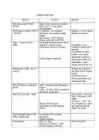
LONDON HISTORY PERIOD EVENTS PEOPLE The Celtic period (400 BC Name: Celtic words (Llyn (a lake) + AD 43) Dun (a fort or strong place) ) Not important The Roman occupation (AD 43 Londinium not important Boadicea a revolt against - AD 410) politically. An important trading the Roman conquest centre. Devastation AD 61. Rebuilt. Roman walls built in AD 200. Anglo Saxons (AD 400 Destroyed the Roman towns. Many 1066) kingdoms. London in ruins. King Egbert one Flourishing. Attacks by Vikings. kingdom England (the 9th century)
The foundation stones The Island Britain has a mild climate due to the Gulf Stream which brings warm waters from the Gulf of Mexico. The northern part of the island in average 5'C cooler and it's mountainous or hilly and that's why the south has been more populated.. Britain became an island only 5000 years BC after the Ice Age ended. Britain's prehistory The first evidence of human life on the island are dated back to 250 000 BC. 50 000 BC in a milder Ice Age period Britain became habitable again. People from that time were the ancestors of the modern British. 10 000 BC ige age ended and Britain became inhabited by small groups of hunters who probably followed herds of deer
1. Ancient Britain: the Celtic tribes. 2000 years ago there was an Iron Age Celtic culture throughout the Br Isles. It seems that the Celts, who had been arriving from Europe from the 8th cent BC onward, intermingled with the peoples who were already there. The Celts were extremely talented people, creative and artistic. More than 1 Celtic tribe invaded Br. The descendants of ancient Celts live in Wales, Scotland, Cornwall and Ireland. They lived in primitive society. Druids priests, more powerful than chiefs. Acted like prophets. 2. Stonehenge From prehistoric period. Was built on Salisbury plain between 2500 and 1500 bc. One of the most famous and mysterious archaeological sites in the world. One of the mysteries is how it was built at all with the technology of the time. Another is its purpose. It appears to function as a kind on
Revision questions for the test on Old English and Medieval Literature. 1.) How is literature analysed and studied? What is the difference between the diachronic and synchronic view? Literature is studied and analysed by reading the piece of work profoundly and work on all the aspects of the piece. Diachronic is development in history Synchronic is particular state at any given moment 2.) Give a general overview of Celtic Britain, Roman invasion in 55-54 BC, Anglo-Saxon invasion and the second Roman "invasion" of Great Britain, who were the leaders, what influence did they leave on the culture of Great Britain? Celtic Britain was during the Bronze Age, there were many small tribal kingdoms fighting one another. Many megalithic monuments were built around that time, e.g. Stonehenge, the Avebury ring. The Roman Invasion 55-54 BC, Julius Caesar ruled Rome, Rome built the Hadrian's wall (73 miles
Gaelic Alba. The use of the words Scots and Scotland to encompass all of what is now Scotland became common in the Late Middle Ages. History Repeated glaciations, which covered the entire land-mass of modern Scotland, have destroyed any traces of human habitation that may have existed before the Mesolithic period. It is believed that the first post-glacial groups of hunter-gatherers arrived in Scotland around 12,800 years ago, as the ice sheet retreated after the last glaciation. Groups of settlers began building the first known permanent houses on Scottish soil around 9,500 years ago, and the first villages around 6,000 years ago. The well-preserved village of Skara Brae on the Mainland of Orkney dates from this period. Neolithic habitation, burial and ritual sites are particularly common and well-preserved in the Northern Isles and Western Isles, where lack of trees led to most structures
25/11/2012 22:54 The World According to Student Bloopers Richard Lederer St. Paul's School One of the fringe benefits of being an English or History teacher is receiving the occasional jewel of a student blooper in an essay. I have pasted together the following "history" of the world from certifiably genuine student bloopers collected by teachers throughout the United States, from eight grade through college level. Read carefully, and you will learn a lot. The inhabitants of Egypt were called mummies. They lived in the Sarah Dessert and traveled by Camelot. The climate of the Sarah is such that the inhabitants have to live elsewhere, so certain areas of the dessert are cul- tivated by irritation. The Egyptians built the Pyramids in the shape of a huge triangular cube. The Pramids are a range of mountains between France and Spain. The Bible is full of interesting caricatures. In the first book of the Bible, Guinesses, Adam and Eve were created from an apple tree
British history Roman Britain Roman Britain was those parts of the island of Great Britain controlled by the Roman Empire between 43 and about 410. The Romans referred to their province as Britannia. Prior to the Roman invasion, Iron Age Britain already had cultural and economic links with Continental Europe, but the invaders introduced new developments in agriculture, urbanization, industry and architecture, leaving a legacy that is still apparent today. Historical records beyond the initial invasion are sparse, although many Roman historians mention the province in passing. Most of the knowledge of the period stems from archaeological investigations and especially epigraphic evidence.
city. London is a major tourist attraction with four world heritage sites, several royal parks and numerous iconic landmarks such as the Houses of Parliament, Towe Bridge, the Tower of London, Westminster Abbey and the London Eye. 2. History Although there is some evidence of a permanent settlement before the Romans came in 43 A.D., it is more accepted by historians that the Romans were the first. The settlement was called Londinium. The first London lasted for just seventeen years, for around AD 61, a tribe of Celts led by Queen Boudica stormed London, burning it to the ground. The next heavily-planned London prospered and surpassed Colchester (another major city at the time) as the capital of the Roman province of Britannia. At its height in the 2nd century, Roman London had a population of about 60,000. However, by the 3 rd century, the city fell into a decline due to trouble in the Roman Empire and by the 5th century, it was largely abandoned
ENGLISH LITERATURE Ancient Britain Lived on the British Isles in the 1st millenium. They most probably came from Eastern Europe and belonged to the Celtic race and also spoke Celtic. They were primitive hunters- gatherers, farmers. Some Celtic words are still used in modern English, however they are used mostly in place names. For example: · avon river · cumb valley · ford shallow place in the river Ancient Britons had their own religion and priests or druids and temples.
The Middle Ages The Middle Ages are one of the most turbulent periods in English history. The Middle Ages are so called as the middle period between the decline of the Roman Empire and the Renaissance. The Middle Ages started in 1066. with the Battle of Hastings and the Norman Conquest. William the Conqueror took all the lands from the Saxon English and gave these to French nobles. Normans were known as great builders. This is assured by the fact that many great castles and other buildings, including the Tower of London, were built during the Norman Conquest. In 1086. Domesday Book was compiled. It is a detailed survey of England ordered by William the Conqueror
constitute their own counties: Saaremaa and Hiiumaa. England is north from France, surrounded by the Atlantic Ocean from the west and North Sea from the east. The highest peak in Great Britain is Ben Nevis (1343 m). The largest river in Great Britain is the Severn. 5) England: Scafell Pike, low hills and plains, the rose, the Pennine Chain, very little dry land Scotland: wild landscapes, large areas of untouched lands, Ben Nevis, lochs, mountains, sheep, ancient castles Wales: mountains, sea on three sides, National Park, caves, rivers, beaches Ireland: intensive greenery, pastures, tranquillity, dairy products, second largest of the British Isles, spectacular landscape 9) British talk about the weather because it changes very often and therefore is unpredictable. It also varies according to the location; it can be sunny in one place and cloudy just a few kilometres away. The weather has changed Britain´s landscape.
private law. The continued independence of Scots law, the Scottish education system, and the Church of Scotland have all contributed to the continuation of Scottish culture and Scottish national identity since the Union. Although Scotland is no longer a separate sovereign state, the constitutional future of Scotland continues to give rise to debate. Hisory of Scotland ! The history of Scotland begins around 10,000 years ago, when humans first began to inhabit what is now Scotland after the end of the Devensian glaciation, the last ice age. Of the Stone Age, Bronze Age, and Iron Age civilization that existed in the territory, many artifacts remain, but few written records were left behind. The written history of Scotland largely begins with the arrival of the Roman Empire in Britain, when the Romans occupied what is now broadly England and Wales and the Scottish Lowlands, administering it as a
The Saxons & Vikings Fragmentary knowledge of England in the 5th & 6th centuries comes from the British writer Gildas, the Anglo-Saxon Chronicle, saints' lives, poetry, archaelogical findings and place- name studies. British landlords ruled small, unstable kingdoms and continued some Roman traditions of governance. In the mid-5th cent, Vertigern, a British leader, hired Germanic mercenaries to help defend against peoples of the north (Picts & Scots). In the end they revolted & the process of invasion and settlement began. The first Saxon ,,kings" were Hengist & Horsa in Kent, Aelle in Sussex, Cerdic / Cynric in Wessex. So the first ,,English" became mainly from Northern Germany & Denmark. The resistance of the Celts was long. They were free at the time, not like other Roman
continent. The first explorers were Norse seafarers known as Vikings. As they sailed from Iceland to Greenland in AD 985, they were blown far off their course and they saw the coast what must have been Labrador. The forested areas of Canada's coast encouraged further explorations, because their settlement lacked lumber. They established a colony, what they called Vinland on Newfoundland. It died out during the 14th and 15th centuries. 500 years later Europeans started looking for a waterway to Asia, because travelling with spices over land wasn't very safe anymore. The first explorer was Christopher Kolumbus who reached America's shore in 1492, although he thought it was Asia. The next explorer was John Cabot in 1497. He sailed to Newfoundland. The first European who explored further inland was Jacques Cartier in 1534. The King of France wanted to settle nowadays eastern Canada and call it New France. To
London History The Romans AD 43- AD 410 The Romans finally invaded Britain in AD 43 from Kent. The Romans lead by Julius Caesar attempted to invade Britain twice before that in 55 and 54 BC but the invasions were unsuccessful. They made their way to the river Thames and sailed up it. The Romans knew it was important to control a crossing point at the river Thames, so they decided to build a settlement on the north bank. Although small settlements had been built on the banks of the Thames, the Romans were the ones who built the first city. They called their city Londinium.
This was the time of the crystallization and the culmination of serfdom, when various socio- political and cultural undercurrents were also active, preparing the ground for the industrial society and the national-democratic movement in the second half of the 19th century. The 1710 of the corporations of knights and towns, until Alexander II (18551881), established the relationships between Estonia, Livonia and the Russian Empire. The Baltic Landesstaat reached its full development. The freedom of action in the new provinces was naturally granted to one of the most firm ideological pillars of the tsarist empire -- the Russian orthodox church; though as the Landeskirche in the Estonian and Livonian territories, the Lutheran church long maintained a de facto predominance. The most important organ of Baltic German local government was the Diet, consisting of all
THE CITY OF LONDON History The City of London occupies one square mile in the middle of the capital. It once made up entire town of London, surrounded by the wall first built by Romans. The Romans also built a bridge over the Thames and there has been one in the same area ever since. The Roman Londinium grew up on the northern side of the bridge. In AD 61 the native Celtic tribe, led by Queen Boudicca, rose up against the Romans. They burnt down Londinium to the ground and killed most of its inhabitants. Roman armies eventually defeated Boudicca and Londinium was rebuilt. At the end of the fourth century AD the Roman Empire began to crumble and the Roman armies were recalled from Britain to defend Rome itself. Once they had left, tribes such as Angles,
The Renaissance In the history the Middle Ages were followed by the Renassance period. During this period a new class called bourgeoeisie came into being. This is the period when monarchies based on nationality were estabilished. The Renaessance started in Italy In the 14th century. Then it spread all over Europe, reached England in 16th century. The struggle for power culminated in a war called The War of Roses. It was a civil war between two dynasties, families. They had different emblems on one side the Yorks (white rose) other Lancasters (red). They couldn't decide who gets the throne. War ended 1485. A new dynasty came to throne, Tudor, the first king in this dynasty was Henry Vll
Edinburgh, Loch Ness, The Highlands, Snowdonia, Cardiff. 6. Name 6 islands, 5 rivers, 3 lakes, 3 mountains in UK. Isle of Man, Isle of Wight, Isle of Lewis, Island of Mull, Island of Arran, Anglesey Island Severn, Thames, Tweed, Avon, Trent, Dove Ben Nevis, Snowdon, Ben Macdui 7. Stonehenge. Stonehenge was produced by a culture that left no written records. Built on Salisbury Plain, in Wiltshire, England some time between 5,000-4,300 years ago. One of the most famous megaliths in the world, dating from prehistoric times. Stonehenge consists of circles of stone arranged in complex patterns, and their origin is still being explored. Some of the stones come from over 200 miles away in Wales. There is little or no direct evidence revealing the construction techniques used by the Stonehenge builders. It was probably associated with sun-worship and other rites of prehistoric people
 annaabi.ee