 50 punkti
Autor soovib selle materjali allalaadimise eest saada 50 punkti.
50 punkti
Autor soovib selle materjali allalaadimise eest saada 50 punkti.
 ~ 6 lehte
Lehekülgede arv dokumendis
~ 6 lehte
Lehekülgede arv dokumendis
 2015-11-26
Kuupäev, millal dokument üles laeti
2015-11-26
Kuupäev, millal dokument üles laeti
 8 laadimist
Kokku alla laetud
8 laadimist
Kokku alla laetud
 0 arvamust
Teiste kasutajate poolt lisatud kommentaarid
0 arvamust
Teiste kasutajate poolt lisatud kommentaarid
 Lennu123
Õppematerjali autor
Lennu123
Õppematerjali autor
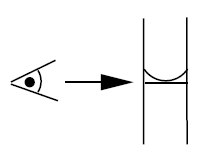
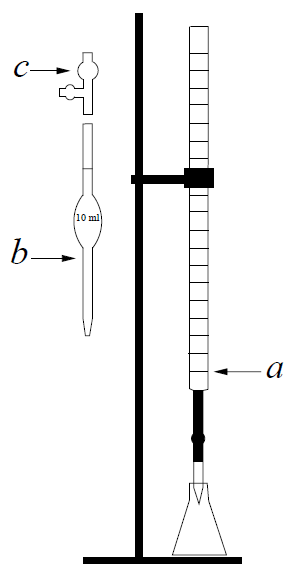
Aim Determination of total and carbonate hardness of tap water using titration technique. Eliminating total hardness with a Na+ ion-exchange softener. Reagents 0.1 M hydrochloric acid, 0,025 M and 0,005M trilon-B solution, buffer solution (NH4Cl + NH3∙H2O), indicators methyl red (mr) or methyl orange (mo) and chromogen black ET-00. Apparatus Conical flasks (250 ml, 500 ml), measuring cylinder (25 cm 3), burette (25 cm3), pipettes (100 cm3). Experimental Procedure A Determination of carbonate hardness 1. Rinse the 100 cm3 pipette 2...3 times with a small amount of the test water. Wash the conical flask with distilled water. Pipette 100 cm 3 of the test water and transfer it into the conical flask, add 3...4 drops of indicator mo or mr. 2. Prepare the burette – remove any air bubbles from the nozzle and fill with 0.1 M hydrochloric acid till zero (The lower meniscus has to coincide with the scales 0-notation). 3. Titrate with a 0.1 M hydrochloric acid solution, while swi
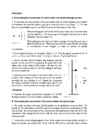
Aim Determining the identity of an unknown metal. Measurement of gas volume, calculations with gases based on reaction equations. Substances 10% solution of hydrochloric acid, 5,0...10,0 mg piece of a metal. Equipment Apparatus for measuring the volume of gas, measuring cylinder (25 cm 3), funnel, filter paper, thermometer, barometer and hygrometer. Experimental procedure 1. The experimental apparatus (Figure 1) consists of two burettes connected with a rubber hose (a), which is filled with water. One burette is connected to a test tube (b), in which the metal reacts with the acid. 2. Preparation for the experiment. Remove the test tube and wash it carefully with distilled water. Firmly attach the test tube back. Adjust the burettes to the same height and check whether the water level (c) in both of the burettes is at the same height. Raise one of the bure
Aim of the work Creating a solution from solid compounds, separating compounds from mixtures using their differences in solubility, determining the percentage of table salt in a sand-salt mixture. Used compounds Solid sodium chloride in a mixture with sand, dried to a constant weight at 105ºC. Equipment Beaker, glass rod, funnel, conical flask, measuring cylinder (250 cm 3), hydrometer, filter paper. 1) In a conical flask, dissolve the NaCl from a previously weighed sand-salt mixture. To do that, add about 50 cm3 of distilled water to the mixture. Stir the solution with a glass rod and then filter it. For filtration, fold the filter paper in half twice. Cut one corner for the filter paper to distribute evenly to the wall of the funnel (see Figure Figure 1.1 2.1 figure 1.1). Place the filter paper into the funnel, wet it with distilled water and press it fi
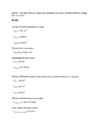
Aim To familiarize oneself with some more common instances of corrosion. Reagents Hydrochloric acid 0.1 M; sulphuric acid 0.1 M; zinc and aluminium granules; copper wire; solution of copper(II) sulphate; solution of copper(II) chloride; solution of iron(II) sulphate; solution of potassium hexacyanoferrate(III); zinc-plated iron sheet; tin-plated iron sheet; iron paper clips; solid NaCl; urotropin. Equipment Test tubes, small beaker (50 cm3), centrifuge tube. Experiments 1. Making of a galvanic pair 1.1. Place a zinc granule on the bottom of the centrifuge tube and pour solution of hydrochloric acid on top. Write down the equation of reaction which occurs. Which compound is the oxidant, which is the reductant? Zn+2 HCl ZnCl 2 + H 2 -¿ H 2 Oxidant is H: +¿+2 e ¿ 2 H¿ 2+ ¿ ¿ Reductant is Zn: -¿ Zn
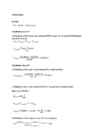
The aim of the experiment To determine the molar mass of carbon dioxide in three different ways; 1) using the Ideal Gas Law equation, 2) using the molar volume of a gas at NTP, 3) using the relative density to air Equipment CO2 tank, a flask with a rubber stopper (300 cm 3), technical balance, measuring cylinder (250 cm3), thermometer, barometer. Method 1. Determine the mass (m1= mflask+stopper+air) of the dry flask with a rubber stopper by weighing on a technical balance. Draw a line on the flask at the bottom edge of the stopper in order to measure the volume of the flask in step 5. 2. Fill the flask with carbon dioxide gas. Direct the gas from the CO 2 tank into the flask for about 7-8 minutes. The tip of the hose has to be in the bottom but not very closely against the bottom. Otherwise it may happen that all of the CO 2 will exit from other branches of the hose bundle. 3. Seal the flask quickly and weigh again for the mass (m2=mflask+sto
Tallinn University Natural and exact sciences Molecular Biochemistry and Ecology Maria Gnidenko Capillary electrophoresis Essay Supervisor: Kert Martma Tallinn 2015 Table of contents Acronyms and symbols used Introduction History and development Physical basis and principle of separation Elektrophoresis Electroosmotic flow Separation process Electrodispersion Various methods of separation Capillary zone?
Formaldehyde Formaldehyde is a colorless, flammable gas at room temperature. It has a pungent, distinct odor and may cause a burning sensation to the eyes, nose, and lungs at high concentrations. Formaldehyde is also known as methanal, methylene oxide, oxymethylene, methylaldehyde, and oxomethane. Formaldehyde can react with many other chemicals, and it will break down into methanol (wood alcohol) and carbon monoxide at very high temperatures. Formaldehyde is naturally produced in very small amounts in our bodies as a part of our normal, everyday metabolism and causes us no harm. It can also be found in the air that we breathe at home and at work, in the food we eat, and in some products that we put on our skin. A major source of formaldehyde that we breathe every day is found in smog in the lower atmosphere. Automobile exhaust from cars without catalytic converters or those using oxygenated gasoline also contain formaldehyde. At home, forma
Tallinna tehnikaülikool Riski- ja ohutusõpetus keemiatööstuses Referaat: Kemikaali riskianalüüs Aniliin Õppejõud: Karin Reinhold Üliõpilane: Kood: 000000 Tallinn 2012 1. Introduction Aniline (also known as phenylamine or aminobenzene) is an organic compound with the formula C6H5NH2. Consisting of a phenyl group attached to an amino group, aniline is the prototypical aromatic amine. The largest application of aniline is for the preparation of methylene diphenyl diisocyanate. The majority of aniline serves this marke
 annaabi.ee











Kõik kommentaarid