Leidsid 33 sarnast õppematerjali, mis on seotud failiga "Hamlet’s View on Life and Death". Need materjalid aitavad sul teemat sügavamalt mõista.
hamlet, death, things, thinking, itself, than, real, fate, dilemma, lists, sure, experience, worse, dark, dresseslack, finds, clown, skull, really, value, desire, kill, claudius, doesn, influences, morality, matter, actual, purpose, case, means, concern, revenge, reliable, something, later, clearly, shift, attitude, himself, nature, gives, peace, readyHamlet WILLIAM SHAKESPEARE Character List Hamlet - The Prince of Denmark, the title character, and the protagonist. About thirty years old at the start of the play, Hamlet is the son of Queen Gertrude and the late King Hamlet, and the nephew of the present king, Claudius. Hamlet is melancholy, bitter, and cynical, full of hatred for his uncle's scheming and disgust for his mother's sexuality. A reflective and thoughtful young man who has studied at the University of Wittenberg, Hamlet is often indecisive and hesitant, but at other times prone to rash and impulsive acts. Hamlet (In-Depth Analysis) Claudius - The King of Denmark, Hamlet's uncle, and the play's antagonist. The villain of the play, Claudius is a calculating, ambitious politician, driven by his sexual appetites and his lust for power, but he occasionally shows signs of guilt and human feeling--his love for Gertrude, for instance, seems sincere. Claudius (In-Depth Analysis)
William Shakespeare (baptised 26 April 1564 – died 23 April 1616) was an English poet and playwright, widely regarded as the greatest writer in the English language and the world's pre-eminent dramatist. He is often called England's national poet and the "Bard of Avon" (or simply "The Bard"). His surviv- ing works consist of 38 plays, 154 sonnets, two long narrative poems, and several other poems. His plays have been trans- lated into every major living language, and are performed more often than those of any other playwright. Shakespeare was born and raised in Stratford-upon-Avon. At the age of 18 he married Anne Hathaway, who bore him three children: Susanna, and twins Hamnet and Judith. Between 1585 and 1592 he began a successful career in London as an actor, writer, and part owner of the playing company the Lord Chamberlain's Men, later known as the King's Men. He ap- pears to have retired to Stratford around 1613, where he died three years later
Ameerika Kirjandus 30.01.13 Naturalism · France, Emile Zola · Put down his theory in 1879: Le Roman Experimental, attempt to explain the development of human society throuch biological laws · Outlook is deterministic, pessimistic, fatalistic (fate or biology) · Man as an animal-clever than other beasts, still explainable within the framework · Man is not a free agent, is govern by something · Unable to determine his own faith · Hereditary · Naturalists tried to apply in fiction the processes of natural sciences · Writers task is to record facts, systems of behaviour, living conditions, never revealing any natural unbiased (completely natural) · Point of view: amoral-outside the category of morality, neither good or bad
suspects of having love affairs with other women, and of giving in to his mother's plans to marry him off to a rich Society woman. There is a bitter row, and Anna believes that the relationship is over. She starts to think of suicide as an escape from her torments. In her mental and emotional confusion, she sends a telegram to Vronsky asking him to come home to her, and pays a visit to Dolly and Kitty. Anna's confusion overcomes her, and in a parallel to the railway worker's accidental death in part 1, she commits suicide by throwing herself in the path of a train. Part 8 Stiva gets the job he desired so much, and Karenin takes custody of baby Annie. A group of Russian volunteers, including Vronsky, who does not plan to return alive, depart from Russia to fight in the Orthodox Serbian revolt that has broken out against the Turks. Meanwhile, amid the joys and fears of fatherhood, Levin no longer feels he lacks Christian faith; he decides to give his life its own meaning
..............................................................18 Chapter Two Ego: The Current State of Humanity – 19 The Illusory Self......................................................................................20 The Voice in the Head.............................................................................22 Content and Structure of the Ego.............................................................24 Identification with Things........................................................................25 The Lost Ring...........................................................................................26 The Illusion of Ownership........................................................................29 Wanting: The Need for More....................................................................31 Identification with the Body.....................................................................33 Feeling the Inner Body
In Deism, there is no interference by a deity, and man controls his own destiny. These ideas stirred the masses into action, as the people dreamed of carving their own futures. Adopted by the Founding Fathers, Enlightenment ideals became the vision for modernday America, where these ideologies are deeply rooted in the nation. The Enlightenment was important America because it provided the philosophical basis of the American Revolution. The Revolution was more than just a protest against English authority; as it turned out, the American Revolution provided a blueprint for the organization of a democratic society. And while imperfectly done, for it did not address the terrible problem of slavery, the American Revolution was an enlightened concept of government whose most profound documents may have been the American Declaration of Independence and United States Constitution. To feel the full impact of the Enlightenment
All this encouraged the supposition that the unknown author of the poem was himself a bard of the ancient type portrayed within the poem (a lord's scoop). However, many people propose that the author could be Christian poet, perhaps a monk, versed not only in old native traditions, but also in the culture and literature of the Latin Church, and whose purpose of writing was highly moral. For example, the fate is a `providentia' and the monster Grendel is an embodiment of evil fighting against Christian militant. This contrast corresponds to the poem itself. The poet is looking back from his own Christian times to an old society with different customs and beliefs. The poem is set, as it is announced in the very first line: `in days gone by'. For instance, the poet and his fellow Christians who can know that Grendel belongs to the race of monsters descended from Cain
Before the war, Himmelstoss was a postman. He is a petty, power-hungry little man who torments Paul and his friends during their training. After he experiences the horrors of trench warfare, however, he tries to make amends with them. Read an in-depth analysis of Corporal Himmelstoss. Franz Kemmerich - One of Paul's classmates and comrades in the war. After suffering a light wound, Kemmerich contracts gangrene, and his leg has to be amputated. His death, in Chapter Two, marks the reader's first encounter with the meaninglessness of death and the cheapness of life in the war. Joseph Behm - The first of Paul's classmates to die in the war. Behm did not want to enlist, but he caved under the pressure of the schoolmaster, Kantorek. His ugly, painful death shatters his classmates' trust in the authorities who convinced them to take part in the war. Detering - One of Paul's close friends in the Second Company. Detering is a young man with
New developments in science and philosophy. The essence and influence of Freudian theory. Contradictory, diverse, chaotic 20th c- simultaneous rejection and invocation of the past. While modernists apotheosized the creative geniuses of the past, they also rejected old poetic forms. Challenge old and established beliefs and more and more people had access to books and education more people went to universities. profound change in morals: · No universal value and perspective on things · Multiple truths, multiple perspectives · Nothing has inherent (kaasasündinud, sisemist) importance · Life lacks purpose Science: Albert Einstein-general theory of relativity had a huge impact on culture as well. Everything is relative. Philosophy: Henri Bergson (French) came to challenge the immediate experience ad intuition are more significant than rationalism and science for understanding reality. Opposition to materialism and positivism
4. Anything you're afraid is true is true. 5. Before most people get to the point of being able to tell their ass from a hole in the ground they're already assholes and it's too late. 6. Concentrating on something important can make you lose track of your soap opera. 7. Debunking the bunk is everyone's responsibility. 8. Don't ask me to pay for anyone else's mistakes. I make enough of my own. 9. Even those who possess real magic must beware of being misled by "magical thinking." 10. Everyone knows what shit tastes like. 11. Exclusive occupancy of a private room is a basic human right. 12. Fair compensation for genius is wealth. 13. God's not perfect, so it's a pretty good bet that you're not, either. 14. Good institutions help to overcome human moral inertia. 15. I am not one of your little friends. 16. If a dimension is anywhere it's everywhere. 17. If God's not crazy, why are you? 18
and W r i t e r s Retreat " T h i s is a book about the stories we write, and perhaps more importantly, the stories we live. It is the most influential work I have yet encountered on the art, nature, and the very purpose of storytelling." — Bruce Joel Rubin, Screenwriter, Ghost, Jacob's Ladder " T h i s book should come w i t h a warning: You're going to learn about more than just writing movies—you're going to learn about life! The Writer's Journey is the perfect m a n u a l for developing, pitching and writing stories with universal human themes that will forever captivate a global audience. It's the secret weapon I hope every writer finds out about." — Jeff Arch, Screenwriter, Sleepless in Seattle "Vogler was the genius behind The Writer's Journey, which should be on the shelf
- Development of medicine - Greeks are pirates, they steal- high technology - Bad tempered people Men's progress towards freedom. (Hegel) Persia is under emperor Xerxes- slaves, fighting for Xerxes and their country, but it does not mean anything to them Greece cities- Patriotism, they are fighting for their freedom and for their country, you can quit, because you volunteered, individuality. o Zeus (son of Chronos Time and Gaia Earth) · Moira- Fate, An underlying order which not even the Gods can alter · Transmigration of Souls- souls leave the bodies · Psyche- the mind · Morality and psychology might be important Miletus Underlying principle of the universe- H20 Milesian or Ionian School · Thales circa 624-546 BC - "All things come from water into water all things are resolved"
I should belie my feelings not to say so. His actions rouse my wrath at every turn; And I foresee that there must come of it An open rupture with this sneaking scoundrel. DORINE Besides, 'tis downright scandalous to see This unknown upstart master of the house-- This vagabond, who hadn't, when he came, Shoes to his feet, or clothing worth six farthings, And who so far forgets his place, as now To censure everything, and rule the roost! MADAME PERNELLE Eh! Mercy sakes alive! Things would go better If all were governed by his pious orders. DORINE He passes for a saint in your opinion. In fact, he's nothing but a hypocrite. MADAME PERNELLE Just listen to her tongue! DORINE I wouldn't trust him, Nor yet his Lawrence, without bonds and surety. MADAME PERNELLE I don't know what the servant's character May be; but I can guarantee the master A holy man. You hate him and reject him Because he tells home truths to all of you. 'Tis sin alone that moves his heart to anger,
Themes, Motifs, and Symbols Themes Themes are the fundamental and often universal ideas explored in a literary work. The Grim Reality of War - As the title of the novel makes clear, A Farewell to Arms concerns itself primarily with war, namely the process by which Frederic Henry removes himself from it and leaves it behind. The few characters in the novel who actually support the effort--Ettore Moretti and Gino--come across as a dull braggart and a naïve youth, respectively. The majority of the characters remain ambivalent about the war, resentful of the terrible destruction it causes, doubtful of the glory it supposedly brings.
Having briefly considered the feasibility of gaining the secret by becoming the lover of the eighty-seven-year-old Countess, he has spotted Lizaveta Ivanovna and decides she might be a better bet to gain access to the house. Following the receipt of a flurry of notes, Lizaveta Ivanovna (Chapter III) agrees to an assignation with Hermann, instructing him to enter the house and await her return, with the Countess, from a ball. This Hermann does, but waits in the Countess's study, rather than going up to Lizaveta's room. After the return of the ladies, Hermann emerges to confront the Countess and demand the secret. Getting no reply, other than "It was a joke", Hermann loses control, calls the Countess an "old witch" and threatens her with a pistol, whereupon she expires. Hermann then goes up to Lizaveta Ivanovna to confess all. Lizaveta is distraught and calls Hermann a "monster" nevertheless, she supplies him with a key to enable him to leave the house unseen (Chapter IV).
The Death of the Author The Death of the Author - Roland Barthes Source: UbuWeb | UbuWeb Papers 1 The Death of the Author In his story Sarrasine, Balzac, speaking of a castrato disguised as a woman, writes this sentence: “It was Woman, with her sudden fears, her irrational whims, her instinctive fears, her unprovoked bravado, her daring and her delicious delicacy of feeling” Who is speaking in this way? Is it the story’s hero, concerned to ignore the castrato con- cealed beneath the woman? Is it the man Balzac, endowed by his personal experience with a philosophy of Woman
Major characters: Othello he is the play's protagonist and hero. He has risen to high military prestige in Venice, after defeating the Turks and other enemies in battle. He is well-liked and honored, despite his racial difference. He moves to Cyprus after becoming a general and he marries Desdemona. He falls victim to Iago's plan causing Othello to believe his wife has betrayed him with Cassio, becomes insanely jealous of their relationship and ultimately smothers his wife to death. After he realizes that Iago has tricked him and that Desdemona has always been faithful and chaste, he stabs Iago, leaving him to a life of pain and then kills himself. (Micha el) Cassio he is Othello's lieutenant and another victim of Iago's evil plan. He meets Desdemona and asks her help to mend his relationship with her husband. Iago schemes and
leading to the climax, and tragedy of the play. Othello arranges with Iago the deaths of both Desdemona and Cassio, his wife at his own hands, in the midst of his jealous anger. Because of her pledge to plea for Cassio, Desdemona only further worsens her case to her husband, solidifying his suspicions of their affair. Iago utilizes Roderigo one last time to help him in the murder of Cassio. The two however fail to kill Cassio, instead only wounding him. However, waiting for the cry of his death, Othello hears the attack and immediately takes to his part of the plan, going to Desdemona in her bed and smothering her with a pillow. In the final scenes, Iago’s wife Emilia reveals the ruse to Lodovico and Gratiano, their fellow Venetians, and incurs Iago’s anger, dying at his hands. Cassio however, having not been murdered in the street, confirms the tale and exonerates Desdemona and himself in the process. Othello
· Hobbes leviathan · Locke second treatise of government · Rousseau - social contract · Montesquieu - The Spirit of the Laws · Kant idea for a universal history from a cosmopolitan point of view · Hegel - philosophy of right Key dates 1603 Shakespear's King Lear , Death of the Queen Elizabeth 1. 1618-48 The Thirty Year's War 1649 Execution of Charels 1 of England, Establishment of Oliver Cromwell's Prodecorate 1651 Hobbes' Leviathan(1588-1679) 1660 The Restoration of Charels 2. as king of England 1688 The Glorious Revolution of Willim and Mary in England 1689 John Locke publishes Two Treatises of Goverment 1707 formation of the British Parliament Social Contract philosophy: The reasons for entering a social contract and the responsibilities of the goverment
The Life of Dante, the Inferno of Dante Dante Alighieri, one of the greatest poets of the Middle Ages, was born in Florence, Italy on June 5, 1265. He was born to a middle-class Florentine family. At an early age he began to write poetry and became fascinated with lyrics. During his adolescence, Dante fell in love with a beautiful girl named Beatrice Portinari. He saw her only twice but she provided much inspiration for his literary masterpieces. Her death at a young age left him grief-stricken. His first book, La Vita Nuova, was written about her. Sometime before 1294, Dante married Gemma Donati. They had four children. Dante was active in the political and military life of Florence. He entered the army as a youth and held several important positions in the Florence government during the 1290's. During his life, Florence was divided politically between Guelphs and Ghibellines. The Guelphs
today. He is, in addition, acid, disagreeable, unpleasant, and we can catalogue these characteristics like the most appreciated by its followers. Larkin gives us through his poetry, a vision of middle-aged conservative, that in a politically incorrect way in our days, does not stand children, detests the life in family, he does not believe in anything and he does not wait anything of the life. He scorns the “literary life” and also the things that normally soften everybody: the romantic love, the memories of the childhood, the nature, etc. Keywords: Larkin, poetry, cruelty, suffering, nature Index Introduction 4 1. Chapter I 5 1.1. Larkin Studies Points of View: Biography and Poetry 5 1.2. Larkin Stylistic Map 8 2
William SHAKESPEARE (April 23, 1564 April 23, 1616) He was baptized on the 29th of April. His father, John, was a merchant, bailiff and leading citizen; his mother, Mary Arden, was a rich farmer's daughter. He attended the local grammar school. He wed his older wife, Anne Hathaway at the age of 18 and they had 3 children - Susanna, and twins Judith/Hamnet. Susanna later became William's caretaker after the death of his wife and the twins. Shakespeare was forced toleave Stratford for London after a quarrel with the local squire. Will started as an actor before starting to write his own plays; his career lasted for 21 years. Returned to Stratford in 1610, where he lived until his death atthe age of 52 and was buried in the local churh. Optimistic period wrote two long poems, ,,Venus and Adonis", ,,Lucrece", 154 sonnets, bright comedies, ,,Romeo and Juliet" and his historical plays.
and legislators. And now his theory of is the one that is known for justifying torture (Verplaetse, 2008). Since 9/11 and the following fight against terrorism it became clear that the Bush administration thought of torture as something justifiable while it goes against all possible agreed upon treaties and conventions. One could indeed possibly think of situations that could serve as an exception to the prohibition of torture but these hypothetical situations can hardly relate to real situations. The ticking bomb argument looks at the hypothetical case where a leader of a state is asked to give their permission to torture a captured rebel leader because he (probably) knows the locations of a few explosives that are spread around the city in different apartment buildings. In case they are not found within 24 hours, they will explode and many will be left dead (Walzer, 1973). Is it justified to torture this person to find out where the bomb is?
Charles Dickens, William Makepeace Thackeray, George Eliot (actually a woman), Elizabeth Gaskell and also the Bronte sisters. Charles Dickens (1812-‐1870) – best-‐known English realist. A social critic, journalist, public speaker, actor and many other things. At 12 he became almost homeless and had to work at a shoe-‐blackening factory after his father was arrested for debt. This helped form his personality and also gave material for his writings. His novels are a mixture of romantic and realist elements
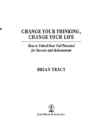
ccc_tracy_fm_i-xviii.qxd 7/7/03 3:22 PM Page iii CHANGE YOUR THINKING, CHANGE YOUR LIFE How to Unlock Your Full Potential for Success and Achievement B R I A N T R AC Y JOHN WILEY & SONS, INC. ccc_tracy_fm_i-xviii.qxd 7/7/03 3:22 PM Page i CHANGE YOUR THINKING, CHANGE YOUR LIFE ccc_tracy_fm_i-xviii.qxd 7/7/03 3:22 PM Page ii ccc_tracy_fm_i-xviii.qxd 7/7/03 3:22 PM Page iii CHANGE YOUR THINKING, CHANGE YOUR LIFE How to Unlock Your Full Potential for Success and Achievement B R I A N T R AC Y JOHN WILEY & SONS, INC. ccc_tracy_fm_i-xviii.qxd 7/7/03 3:22 PM Page iv
Therefore, one must not forget to look not only at the written sources but also at the more cultural and artistic interpretations. One of the best examples of cultural and political distribution of the Revolutionary ideas was Jacques-Louis David, who, with his paintings, perpetuated The French Revolution from the Republican point of view. His art was mostly tightly connected to the main figures, events and ideas of the French Revolution. David had more than 5 pieces of art that captured the essence of the Revolution. His paintings represented political ethics, current ideals and foundations. Furthermore, the wider public was enthralled with his ability to represent brotherhood and patriotism while using the neoclassicistic style. (Friedlaender, 1952, p.16) Jacques-Louis David was born in Paris in 1748 as the son of an ironmonger. The leader of the French classical movement studied with the artist Joseph-Marie Vien. Although, he attained
extramarital relations recently. But, it's really hard to find something that good, and really easy to lose it. Just consider pro and con, and then keep what you really love. However, distance makes everything clearer; you can only see the whole when you are far enough. Take Alex for an example, as she had travelled ever further outwards, she found the answer. The Nature of Truth: Annie was a successful author and she met an old friend, Jane, on the train. Things change a lot, even if you had settled down. Jane had the boyfriend in collage and they soon got married after graduated. At first, they had a happy life, but one year later, Jane's husband had extramarital relations and divorced with Jane. In a summary, what will life be in the future? Future is not to see. Just the facts: Reporter was Lisa's first job and now she was going to write an article about Gary who killed a judgment in town and Gary was sentenced to death
Morris immediately; that he is to take possession before Michaelmas, and some of his servants are to be in the house by the end of next week." "What is his name?" "Bingley." "Is he married or single?" "Oh! Single, my dear, to be sure! A single man of large fortune; four or five thousand a year. What a fine thing for our girls!" "How so? How can it affect them?" "My dear Mr. Bennet," replied his wife, "how can you be so tiresome! You must know that I am thinking of his marrying one of them." "Is that his design in settling here?" "Design! Nonsense, how can you talk so! But it is very likely that he may fall in love with one of them, and therefore you must visit him as soon as he comes." "I see no occasion for that. You and the girls may go, or you may send them by themselves, which perhaps will be still better, for as you are as handsome as any of them, Mr. Bingley may like you the best of the party." "My dear, you flatter me
confronting Victor, vows to be with Victor on his upcoming wedding night. The monster murders Clerval and leaves the corpse on an Irish beach, where Victor lands upon leaving the island. Victor is imprisoned for the murder of Clerval, and becomes seriously ill, suffering another mental breakdown in prison. After being acquitted, and with his health renewed, he returns home with his father. Once home, Victor marries his cousin Elizabeth and prepares for a fight to the death with the monster. Wrongly believing the monster's vowed revenge was for his own life, he asks Elizabeth to retire to her room for the night while he goes looking for the fiend. He searches the house and grounds, but the creature murders the secluded Elizabeth instead. Victor sees the monster at the window pointing at the corpse. Grief-stricken by the deaths of William, Justine, Clerval, and now Elizabeth, Victor's father dies
Sõprus 1. Aristoteles sõpruse olemusest ning tüüpidest Sõprus ja armastus pole selgelt eristatud philia. Sõprus iseloomustab vabal kiindumusel põhinevaid inimsuhteid perekondlikud, võimulolijate suhted kodanikesse, kodanike omavahelised suhted. Sõprus hoiab riike koos. Eeldab vastastikku heasoovlikkust ja ühistegevust. Sõprus jaguneb 2 viisil 3-ks: Vastavalt põhjusele, miks head soovitakse: Kasu äri Nauding sõbrad Täiuslik sõprus loomutäiuselt sarnaste inimeste vahel Vastavalt osapoolte seisundile: Ülimuslikkus vanemad laste suhtes Paremus mehed naiste suhtes Võrdsus vennad Täielikku sõprust naudivad üksikud, sest nad suudavad arendada omavahel loomutäiust täiuslikkuseni. Linnriik põhineb sõprusel, kiindumusel põhinevatel inimestevahelistel suhetel. Timokraatia (varanduslikel klassidel rajanev poliitiline süsteem) põhineb võrdsusel vennalikel suhetel. 2. Cicero isiklikust ja po
P.S. I love you Cecilia Ahern Kristi Võrk Summary This book tells a story about a woman, who's husband had just died. Holly, the main character, is trying to get on with her life after the death of her husband Gerry. They were happily married for 12 years. A few months before Gerry's death, they found out that he had a brain tumor and he was hospitalized. Holly always stayed beside him, she quit her job so she could spend all her time with Gerry. Before his death Gerry wrote 10 letters, in them he guides Holly and helps her rediscover herself. After his death Holly got the letters from her mother. There was a big envelope, with 10 little letters inside it. All the letters had different months written on them. Every month she had to open one letter. The point of the letters was that he will always be at her side. Her best friends Denise and Sharon were also at her side, supporting her through it.
6 1 self-employed 4 supersensitive 3 used to 3 1 A 2 C 3 C 4 A 5 B 2 undercooked 5 co-starred 4 would help / helped 6 C 7 B 8 A 9 C 10 A 3 anticlockwise 6 misheard 5 didn't use to 11 A 12 B 6 was thinking 1B Inheritance page 4 7 didn't use 4 1 F 2 F 3 T 4 F 5 T 6 F 8 used to resent 1 1 T 2 F 3 F 4 T 5 T 9 are forever mistaking 5 1 2
recovery and relaxation he needs. Next comes the shuttle ride to Eros, where Command School is located, the trip is long and Ender and Graff begin to feel enclosed and tired of the space. Eros, built by the buggers, is not much better: the low ceilings, narrow passages, downward-sloping floor and lower gravity. The focus of activity here is in the simulation rooms, where, it turns out, Ender is actually commanding the real fleets. When he leaves Eros, it is not for Earth, but for the first human colony, on a former bugger world, which will become known as Ender's World. While looking for a location for another group of colonists, Ender discovers a landscape mimicking that in the fantasy game he played at Battle School. The setting here is used by the buggers to communicate with Ender and lead him to the discovery of their hive queen. Main Characters Ender
 annaabi.ee