Leidsid 33 sarnast õppematerjali, mis on seotud failiga "Hagia Sophia". Need materjalid aitavad sul teemat sügavamalt mõista.
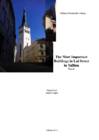
sophia, dome, church, hagia, wisdom, build, years, order, original, museum, istanbul, famous, cathedral, nearly, building, first, santa, greek, base, interior, weight, walls, height, present, approximately, twenty, feet, than, structure, late, former, basilica, later, turkey, massive, considered, architecture, thousand, until, completion, seville, 1520Tallinn Mustamäe College G2K Jaana-Kristiina Jõgevest The Four oldest churches of Tallinn Report Supervisor: Ingrid Teigar Tallinn 2009 The Dome Church The Danes began fortification of Toompea after the conquest of Tallinn in 1219 and probably also built the first church there. It was presumably a wooden building located at the site of the present cathedral. However, a serious conflict with the Order of the Brothers of the Sword broke out soon as the latter wanted to gain control of the entire Estonia. The order succeeded in subordinating Tallinn and the whole of North Estonia to its rule in 1227. The monks of the Dominican Order began the construction of a stone church in Toompea in 1229
who submits (to God)". There are between 1.1 billion and 1.8 billion Muslims, making Islam the secondlargest religion in the world, after Christianity. Muslims believe that God revealed the Qur'an to Muhammad, God's final prophet, and regard the Qur'an and the Sunnah (words and deeds of Muhammad) as the fundamental sources of Islam.They do not regard Muhammad as the founder of a new religion, but as the restorer of the original monotheistic faith of Abraham, Moses, Jesus, and other prophets. Islamic tradition holds that Jews and Christians distorted the revelations God gave to these prophets by either altering the text, introducing a false interpretation, or both. Islam includes many religious practices. Adherents are generally required to observe the Five Pillars of Islam, which are five duties that unite Muslims into a community. In addition to
Tsar; the barons were restored their former privileges. In 1870 a railway line was opened from St. Petersburg to Tallinn. Tallinn grew into a major port and an industrial centre. Estonians became conscious of their national identity. Tartu was the centre of the movement of national awakening. On 24 February 1918, Estonia was proclaimed an independent democratic republic. Tallinn developed into a modern European capital. A period of prosperity followed, but independence only lasted for 20 years. During World War II Estonia was occupied by both German and Russian invaders, and Tallinn suffered heavily. The bombing of the city by the Soviet air forces on 9 March 1944 left over 20,000 people homeless. During the Russian occupation which followed (and which lasted for five decades) attempts were made to Russify the local people. Large scale industry was developed in Tallinn, workers were resettled from Russia and new blocks of flats sprang up on the outskirts to provide
Together they are known as Anglo-Saxons. They were farming people who preferred living outside towns. For a while London probably lay in ruins, but it eventually developed again, partly because its position on the river was good for trading. In 1666 most of the City of London was destroyed in the Great Fire of London. London Bridge The home of the London Bridge is the Thames River, and a bridge has existed on the spot for at least the last 2000 years. The first bridge on record was constructed by the Romans, and since then many bridges have risen at the hands of various empires. London Bridge today remains one of the most popular tourist attractions in Britain as well as an icon for the City of London. London Bridge history records the building of a wooden bridge by the Romans about 2000 years ago. Historians suspect that the location was chosen for its relatively convenient access to the
river. In AD 61 the native Celtic Iceni tribe, led by Queen Boudicca, rose up against The Romans. They burnt Londinium to the ground but Roman armies eventually defeated Boudicca. The city was rebuilt and was gradually surrounded with a wall of stone and brick which lasted for many centuries. During the archeological excavations in 1954 the Roman Temple of Mithras was revealed. It was a pagan temple dedicated to the Persian Sun-god. The Temple was later reconstructed only a short way from its original site and the relics are displayed in the Museum of London in the Barbican. At the end of the fourth century AD the Roman Empire began to crumble and the Roman armies were recalled from Britain to defend Rome itself. Once they had left Anglo-Saxons invaded and settled in Britain. They were farming people who preffered to live outside towns. For a while London probably lay in ruins, but it eventually developed again, partly because of its position on the river was good for trading.
It has nearly half a million inhabitants and covers an area of almost 160 sqkm. It is also an important economic and cultural centre and one of the main ports in the Baltic States. Tallinn is one of the oldest cities on the Baltic Sea. It is unique for its well-preserved architecture from the 13-15 centuries. In contrast to the ancient town-walls and towers, Tallinn of today offers modern hotels, restaurants, sport and cultural centres. Every five years national song and folk dance festivals take place in Tallinn. The yachting regatta of the 1980 Moscow Olympic Games was held at Pirita. History Tallinn means in English "Danish town". The place is believed to have been settled by Finno-Ugric people about 2500 BC. It was first marked on a map of the world by the Arab geographer al-Idrisi in 1154. The Estonians were the first to build a stronghold on the spot of the Toompea Hill, but the real Tallinn was built by the Danes who conquered
over much of modern European Russia, Ukraine and Belarus was the Eastern branch of the Slavs, speaking a closely related group of dialects. The political unification of this region into Kievan Rus' in about 880, from which modern Russia, Ukraine and Belarus trace their origins, established Old East Slavic as a literary and commercial language. It was soon followed by the adoption of Christianity in 988 and the introduction of the South Slavic Old Church Slavonic as the liturgical and official language. Borrowings and calques from Byzantine Greek began to enter the Old East Slavic and spoken dialects at this time, which in their turn modified the Old Church Slavonic as well. The Ostromir Gospels of 1056 is the second oldest East Slavic book known, one of many medieval illuminated manuscripts preserved in the Russian National Library. Dialectal differentiation accelerated after the breakup of Kievan Rus' in approximately 1100.
city. London is a major tourist attraction with four world heritage sites, several royal parks and numerous iconic landmarks such as the Houses of Parliament, Towe Bridge, the Tower of London, Westminster Abbey and the London Eye. 2. History Although there is some evidence of a permanent settlement before the Romans came in 43 A.D., it is more accepted by historians that the Romans were the first. The settlement was called Londinium. The first London lasted for just seventeen years, for around AD 61, a tribe of Celts led by Queen Boudica stormed London, burning it to the ground. The next heavily-planned London prospered and surpassed Colchester (another major city at the time) as the capital of the Roman province of Britannia. At its height in the 2nd century, Roman London had a population of about 60,000. However, by the 3 rd century, the city fell into a decline due to trouble in the Roman Empire and by the 5th century, it was largely abandoned
another way leading up to Toompea - Lühike Jalg, which was made in the 14th century. At present Pikk Jalg and Lühike Jalg are used only by pedestrians. Until the 20th century there was no way down from the western side of Toompea except for a foot-path. The stairs were built in 1903 and called Patkul Stairs after Dietrich Friedrich von Patkuli who had been the deputy Governor in Tallinn during the Great Northern War. Pikk Jalg (Long Leg) - the original road leading to the ancient Estonian stronghold (therefore the oldest street in Tallinn) and the only public road connecting the upper and lower town. It was paved with cobblestones already in the 14th century and was considered quite a dangerous place in the old times. It was certainly not recommended to walk along it after dark and it was not an easy road to be taken on a carriage, as the steep rise often proved too difficult for the
" Building began around 1632 and was completed around 1653, and employed thousands of artisans and craftsmen. The Persian architect, Ustad Ahmad Lahauri is generally considered to be the principal designer of the Taj Mahal. Origin and inspiration In 1631 the emperor during the Mughal empire's period of greatest prosperity, was griefstricken when his third wife died during the birth of their fourteenth child. In her dying breath, his wife urged him to build a mausoleum for her that the world has never seen before. Shah Jahan granted his wife's wish and the constructions started one year after her death with the principal mausoleum completed in 1648. The surrounding buildings and garden were finished five years later. Architecture The focus of the Taj Mahal is the white marble tomb, which stands on a square plinth consisting of a symmetrical building with an iwan, an arch-shaped doorway, topped by a large dome.
religion and one of the fastest-growing religions in the world. Muhammad Muhammad (c. 570 June 8, 632) was a trader later becoming a religious, political, and military leader. However, Muslims do not view Muhammad as the creator of Islam, but instead regard him as the last messenger of God, through which the Qur'an was revealed. Muslims view Muhammad as the restorer of the original, uncorrupted monotheistic faith of Adam, Abraham, Moses, Jesus, and other prophets. In Muslim tradition, Muhammad is viewed as the last in a series of prophets. For the last 22 years of his life, beginning at age 40 in 610 CE, Muhammad started receiving revelations from God. The content of these revelations, known as the Qur'an, was memorized and recorded by his companions. During this time, Muhammad preached to the people of Mecca, imploring them to abandon polytheism.
London History The Romans AD 43- AD 410 The Romans finally invaded Britain in AD 43 from Kent. The Romans lead by Julius Caesar attempted to invade Britain twice before that in 55 and 54 BC but the invasions were unsuccessful. They made their way to the river Thames and sailed up it. The Romans knew it was important to control a crossing point at the river Thames, so they decided to build a settlement on the north bank. Although small settlements had been built on the banks of the Thames, the Romans were the ones who built the first city. They called their city Londinium. The Roman engineers noticed that the point where the swampy river narrowed would make an ideal crossing point, they built London Bridge. Less than 20 years later the native Iceni tribe, led by Queen Boudicca, rose up against the Romans in revenge for mistreatment and burnt Londinium to the ground
It was built to a design by Mikhail Preobrazhensky in a typical Russian Revivalstyle between 1894 and 1900, during the period when the country was part of theRussian Empire. The Alexander Nevsky Cathedral is Tallinn's largest and grandest orthodox cupola cathedral. It is dedicated to Saint Alexander Nevsky who in 1242 won the Battle of the Ice on Lake Peipus, in the territorial waters of present-day Estonia. The late Russian patriarch, Alexis II, started his priestly ministry in the church. Interior of the Cathedral. The Alexander Nevsky Cathedral crowns the hill of Toompea where the Estonian folk hero Kalevipoeg is said to have been buried according to a legend. (There are many such legendary burial places of him in Estonia.) The cathedral was built during the period of late 19th century Russification and was so disliked by many Estonians as a symbol of oppression that the Estonian authorities scheduled the cathedral for demolition in 1924, but the decision was
Estonian sculptors, has been standing for several decades. Lai Street stretches from Nunne Street to Pikk Street. Parallel with Pikk Street, Lai Street, too, ends at the Great Coast Gate (first mentioned 1359). Lai Street is very wide considering that it was laid out in the Middle Ages. This is because it sprang up on both sides of former city wall. Lai is quite a peaceful street with few shops. However, it has three museums and two theatres. The main entrance into St Olaf´s Church also faces the street. Several Lai Street houses have kept their Gothic appearance and even interiors, although we can also notice moderate Nordic Baroque, Neoclassicicm, Historicism and even Art Nouveau. The origin of the name "Lai" Lai Street belongs among the oldest streets of Tallinn. Despite its length and width its share in the city's inner traffic is fairly modest. The extraordinary width of the street is likely due to
Ellora (600 and 1000 AD ) Kailasa Temple Ajanta caves http://upload.wikimedia.org/wikipedia/commons/c/c3/Ajanta_ Ellora caves http://www.sacred-destinations.com/india/ellora-caves-photos/view-cc-shok.jpg Kailasa Temple Represents Mt. Kailasa, home of god Shiva; Largest monolithic structure in the world; 200 000 tons of removed rocks; 2x the area of Parthenon and 1,5 times higher; 7000 labourers; 150 years. Kailasa Temple Indo-Islamic Architecture Muslims in medieval time Imperial style under patronage of the Sultans of Delhi Mughal architecture round domes, high minarets, pillars, open courtyards Indo-Islamic style most important symbol is tomb provided spaciosness, massiveness and breadth Examples : Qutub Minar, Alai Darwaza, Tughlaqabad Fort, Fatehpur Sikri, Agra Fort, Taj Mahal, Red Fort Delhi Fahpur Sikri Palace
Art Museum of Estonia Art Museum of Estonia was founded on November 17th, 1919, but it was not until 1921 that it got its first permanent building the Kadriorg Palace, built in the 18th century. In 1929 the palace was expropriated from the Art Museum in order to rebuild it as the residence of the President of Estonia. The Art Museum of Estonia was housed in several different temporary spaces, until it moved back to the palace in 1946. In September, 1991 the Kadriorg Palace was closed, because it had totally deteriorated by then. At the end of the year the Supreme Council of the Republic of Estonia decided to guarantee the construction of a new building for the Art Museum of Estonia in Kadriorg. Untill then the Knighthood House at Toompea Hill served as the temporary main building of the Art Museum of Estonia
It is also set into the small coat of arms of Tallinn. Great coat of arms - three lions, a knight, and Danish queen; leaves around Old Thomas - quardian of Tallinn, put on top of the spire of Tallinn Town Hall in 1530; boy that excelled springtime contests thrown by Baltic German elite, because of his low-born status was unable to receive a prize, therefore was granted the position of town guard. Right now there’s third Old Thomas, first one can be seen at Tallinn City Museum. Toompea as a symbol of power Toompea palace - wooden fortification was originally built in the 9th century, Danes made the castle the centre of secular power; Toompea palace hosts the parliament of the Republic of Estonia, designed by Eugen Habermann and Herbert Johanson. The parliament has 101 members and is chosen for 4 years. Stenbock House - the official seat of the Estonian Government since 2000; the building started in 1787, originally meant to be a courthouse
It is 3.9m long, weighs 300 kg and beats every 2 seconds. The clockwork mechanism in a room below weighs 5 tons. · Buckingham Palace is the official London residence of the British monarch. Originally known as, the building which forms the core of today's palace was a large townhouse built for the Duke of Buckingham in 1703 on a site which had been in private ownership for at least 150 years. During the 19th century it was enlarged, principally by architects John Nash and Edward Blore, forming three wings around a central courtyard. Buckingham Palace finally became the official royal palace of the British monarch on the accession of Queen Victoria in 1837. · Harrods is London's most famous department store, is named after Charles Henry Harrod, who opened a family grocers shop
Baroque (pronounced /brok/ b-ROHK in American English or /brk/ in British English) is an artistic style prevalent from the late 16th century to the early 18th century in Europe.[1] It is most often defined as "the dominant style of art in Europe between the Mannerist and Rococo eras, a style characterized by dynamic movement, overt emotion and self-confident rhetoric". The popularity and success of the Baroque style was encouraged by the Roman Catholic Church, which had decided at the time of the Council of Trent, in response to the Protestant Reformation, that the arts should communicate religious themes in direct and emotional involvement. The aristocracy also saw the dramatic style of Baroque architecture and art as a means of impressing visitors and expressing triumphant power and control. Baroque palaces are built around an entrance of courts, grand staircases and reception rooms of sequentially increasing opulence. Baroque architecture
the largest Art Deco architectural style and located in Rio de Janeiro, Brazil. The statue has a height 38 meters and is located at the top of Corcovado Mountain is 710 m high in the Tijuca Forest National Park, overlooking the city. Chichen Itza It is a Mayan archaeological heritage in Mexico is the most complete and still well maintained. According to the Mayan culture of Chilam Balam, the temple complex was built between the years 502-522 AD. Mayans occupy just over 200 years, then they migrate to coastal areas in Campeche. Itza is the central point of the complex and other buildings such as the Pyramids of Kukulcan, Temple of Chac Mool, and building the Thousand Pillars. Colosseum Is a large theater / Amphitheater, located at the State Capital of Italy, Rome, called the original "Flavian Amphitheatre", founded by King Vespasian and completed by his son Titus. Some argue that the Colosseum was made in the year 79 BC. Originally Colosseum name comes from a statue
banned until late in the fourth century. *Boadicea/Boudica At his death bed, Boudica's husband left half his possession to the emperor, expecting that this would protect his family. However, his property was confiscated. When Boudica, the queen of the Celts, protested, she was flogged and her daughters were raped. She swept trough Southern Britain with her tribe and tortured every Roman she met. A women having power seemed unnatural to the Romans. She fought back for 2 years, but finally took poison and died. *Hadrian's Wall It was built by the emperor Hadrian and it marked the Northen border of the Roman empire. Hadrian's Wall was built, beginning in 122, to keep Roman Britain safe from hostile attacks from the Picts. The wall stretched from the North Sea to the Irish Sea. In addition to the wall, the Romans built a system of small forts called milecastles. Sixteen larger
West Saxons on 3 April 1043. According to those who compiled the Anglo- Saxon Chronicle, the first thing Edward did, despite his religious views, was to deprive his mother of all of her estates and reduce her to relative poverty. It is said that Edward blamed her for his miserable and lonely childhood. For the first eleven years of Edward's reign the real ruler of England was Godwin, Earl of Wessex. In 1045, he married Godwin's only daughter, Edith. Godwin was the most important nobleman in England. They had no children as Edward had taken a vow of celibacy. Even this marriage couldn't prevent a breach between Godwin and Edward in 1049. A number on Normans were killed in a scrap in Dover and Kent in 1051. Edward still had influential
many customs like the close relationship between lord and man in the war-band and others. All this encouraged the supposition that the unknown author of the poem was himself a bard of the ancient type portrayed within the poem (a lord's scoop). However, many people propose that the author could be Christian poet, perhaps a monk, versed not only in old native traditions, but also in the culture and literature of the Latin Church, and whose purpose of writing was highly moral. For example, the fate is a `providentia' and the monster Grendel is an embodiment of evil fighting against Christian militant. This contrast corresponds to the poem itself. The poet is looking back from his own Christian times to an old society with different customs and beliefs. The poem is set, as it is announced in the very first line: `in days gone by'. For instance, the poet and his fellow Christians who can know that Grendel
Stonehenge One of the best known ancient wonders of the world, 5000 years old Megalith monument, built by western mediterraneans during 3000-1600 BC Circular structure, large standing stones, aligned with rising sun at teh solstice Attlers and bones were sued to dig pits that hold the stones The Celts in Britain and their legacy 700-200 BC celts invade Britain Gaels or Goehls(Ireland and Scotland),Cymri(Wales) and Brythons(gave name to Brittany) Fierce fighters,superb horsemen.Most of them farmers, lived in thatched houses
A highly mechanized agricultural sector employs no more than 4% of the labor force but provides large surpluses for the food-processing industry and for exports. The Netherlands, along with 11 of its EU partners, began circulating the euro currency on 1 January 2002. The country continues to be one of the leading European nations for attracting foreign direct investment. Economic growth slowed considerably in 2001-02, as part of the global economic slowdown, but for the four years before that, annual growth averaged nearly 4%, well above the EU average. (3) 1.4 Population The great majority of inhabitants of the Netherlands are Dutch. They are mainly descended from Franks, Frisians, and Saxons. Most residents of Friesland Province are Frisian, a distinct cultural group with its own language. Fearing overpopulation, the government encouraged Dutch emigration after World War II (1939-1945), and some 500,000 people left. But an even
Sculptures and monuments St. John's Lutheran Church St John's Church was probably built in the first third of the 14th century. There is no other brick church decorated with so much terracotta plastic in Europe Eduard Tubin Monument The Eduard Tubin monument, marking the 100th birthday of the composer, was dedicated in 2005. The authors of the statue are sculptor Aili Vahtrapuu, architect Veronika Valk, with sound installations by Louis Dandrel.Eduard Tubin (1905-1982) was a versatile composer and conductor, one of the most recognized symphonists throughout history. He served as concert master and conductor at the Vanemuise Theatre
need for soldiers (the English archers!) · The genius of Chaucer (1340 1400) · The Wars of the Roses (1455 1485) the remaining French-speaking noblemen killed one another off! 1362 English becomes the language of Parliament and the courts of law. · 1485 end of the Wars of the Roses · 1500 turn of the century · 1533 Reformation (Henry VIII) · Individual responsibility before God, no need for the mediation of the (Roman Catholic) Church · Need for religious literature, particularly the Bible, in the vernacular the language of the native speakers (as opposed to Latin as a lingua franca) · Need for general literacy · Renaissance- Need for terminology and new (scientific, philosophical, etc) vocabulary in the vernacular The Great Vowel Shift was a major change in the pronunciation of the English language that took place in the south of England between 1450 and 1750. First studied by Otto
COMPENDIUM ABOUT PRAGUE Prague is the capital and largest city of the Czech Republic. Nicknames for Prague have included Praga mater urbium/Praha matka mst ("Prague Mother of Cities") in Latin/Czech, Stovzatá Praha ("City of a Hundred Spires") in Czech or Zlaté msto/Goldene Stadt ("Golden City") in Czech/German. Situated on the Vltava River in central Bohemia, Prague has been the political, cultural and economic centre of the Czech state for more than 1100 years. For many decades during the Gothic and Renaissance eras, Prague was the permanent seat of two Holy Roman Emperors and thus was also the capital of the Holy Roman Empire. 4 Today, the city proper is home to about 1.3 million people, while its metropolitan area is estimated to have a population of over 1.9 million.
developments in engineering theory, technology, construction, transportation, and communication; Be an outstanding example of a type which illustrates a significant stage in bridge engineering or technological developments. A World Heritage bridge, like other properties, must meet the test of authenticity in design, materials, workmanship, or setting (the Committee has stressed that reconstruction is only acceptable if carried out on the basis of complete and detailed documentation of the original artefact and to no extent on conjecture). The criteria of authenticity may apply to Japanese bridges like the Kintaikyo spanning the Nishiki River in Iwakuni or Palladio's bridge over the River Brenta at Bassano a Grappa near Venice (Italy). In the same context, some bridges have been moved when unable to function at their original location. It is not unusual in the USA, for example, to relocate a
predominance. From time to time some stronger state seized the land of the neighbouring kingdoms & made them pay tribute or even ruled directly. The number of kingdoms & their boundaries were always changing. The greatest & most important kingdoms were Kent, Northumbria, Mercia & Wessex. King Offa of Mercia claimed ,,Kingship of the English". His power his shown by the border barrier he built between Mercia & Wales Offa's Dyke. It probably took 5000 men to build it. It stretches for about 180 km, was 7 metres high, the ditch in front of it 2 metres deep. By the beginning of the 9th cent. Wessex had become the strongest. Wessex never again lost its supremacy. In 829 King Egbert was acknowledged by Kent, Mercia & Northumbria. This was the beginning of the united kingdom. King Egbert became 1st King of England. The clergy, royal warriors & officials supported the king's power. He granted them land and the right to collect
In 1607, Smith was captured by Powhatan warriors and held captive for four days. When two large rocks were brought in, the legend goes, Smith had a hunch his beheading was imminent. But Pocahontas begged Powhatan not to kill the Englishman and, being her father's favorite, the chief obeyed his daughter and spared Smith. It is true that Pocahontas had acted as an ambassador for her people to the English. In the first years of the colony, she served as a courier for traded goods and as a negotiator between the two sides. But by 1609 the Powhatans' relationship with the newcomers had soured, and soon war broke out. Finally, in 1613, Pocahontas was kidnapped by the English and held at Jamestown. While captive, Pocahontas studied English and converted to Christianity. Then, in 1614, she wed John Rolfe, one of the first tobacco farmers, and the union brought a modicum of peace to tidewater Virginia.
It is the story of a poor girl who falls in love with the son of the village elder, and disguises herself as a choirboy in order to sneak into the castle. But, alas, the lord of the manor's son discovers the deception. He is overcome by jealous rage and orders his men to seal the girl inside the thick stone walls while still alive. Turned into an incarnation of undying love, the White Lady now appears every August, on the night of the full moon, in the Dome Church chapel window. Haapsalu is seven-and-a- quarter centuries old this year, and the townsfolk intend to make it a celebration to remember. The annual dance and light show dedicated to the Lady alone involves over 100 performers - and you'll have several chances to catch it over the four days of the event. Musical shows, dances and contests of strength and skill will be held all over town.
The Koran is viewed by Muslims as the final revelation and literal word of God and is widely regarded as the finest literary work in the Arabic language. The Koran is divided into 114 suras(chapters), which contain 6236 verse. The chronologically earlier suras, revealed at Mecca, are primarily concerned with ethical and spiritual topics. The later Medinan suras mostly discuss social and moral issues relevant to the Muslim community. Muslims are usually viewing the Koran as the original scripture as revealed in Arabic and that any translations are necessarily deficient, which are regarded only as commentaries on the Koran. Muslims identify the prophets of Islam as those humans chosen by God to be his messengers. According to the Koran, the prophets were instructed by God to bring the ,,will of God" to the peoples of the nations. Muslims believe that prophets are human and not divine, though some are able to perform miracles to prove their claim
 annaabi.ee