Leidsid 33 sarnast õppematerjali, mis on seotud failiga "Famous people from Ireland". Need materjalid aitavad sul teemat sügavamalt mõista.
ireland, irish, famous, patrick, wilde, person, poet, works, swift, colin, actor, golden, globe, award, bono, daniel, lewis, there, blood, writer, 16th, importance, picture, dorian, political, gulliver, modest, proposal, 30th, 1667, 19th, appeared, vice, 31st, patron, century, honor, brought, christianity, sold, birth, singer, received, nobel, peacedining and drinking with friends. One popular New Year's Eve drink is eggnog, yellow mixture, Made with eggs, milk or cream, and sugar. One of the nosiest and most crowded of New Year's Eve celebrations takes place in Times Square, New York City. Many people travel from one party to another to celebrate with several different groups of friends. Following a long exciting New Year's Eve Americans spend a quiet New Year's Day. One famous New Year's Day festival is the Mummer's Parade. It takes place in Philadelphia. It is a ten hour spectacle. The mummer's parade is colourful and high-spirited. Men dress in splendid costumes. The tournament of roses takes place in Pasadena, California. All these events help to make the New Year's Day relaxing holiday. On new years day people talk about turning a new leaf. Many Americans make new years resolutions promising themselves to improve their behaviour
Christmas Carol) is a novella by Charles Dickens first published on December 19, 1843 with illustrations by John Leech. The story was an instant success, selling over six thousand copies in one week, and the tale has become one of the most popular and enduring Christmas stories of all time. William Makepeace Thackeray William Makepeace Thackeray was an English novelist of the 19th century. He was famous for his satirical works, particularly Vanity Fair, a panoramic portrait of English society. Thackeray, an only child, was born in Calcutta, India, where his father, Richmond Thackeray (1 September 1781 13 September 1815), held the high rank of secretary to the board of revenue in the British East India Company. William had been sent to England earlier, at the age of five, with a short stopover at St. Helena where the imprisoned Napoleon was pointed out to him. He was educated at schools
the largest of the British Isles. With a population of about 60.0 million people in mid-2009, it is the third most populous island in the world, after Java and Honsh. Great Britain is surrounded by over 1,000 smaller islands and islets. The island of Ireland lies to its west. Politically, Great Britain may also refer to the island itself together with a number of surrounding islands which comprise the territory of England, Scotland and Wales. All of the island is territory of the sovereign state of the United Kingdom of Great Britain and Northern Ireland, and most of the United Kingdom's territory is in Great Britain. Most of England, Scotland, and Wales are on the island of Great Britain, as are their respective capital
2.3 Results of the questionnaire 1...............................................................................................23 During the first questionnaire 30 students of the 9th and 10th class of Gymnasium were questioned about the British national symbols...........................................................................23 Surprisingly, according to the results, more than 50 percent of students are aware of the national flags of Great Britain, Scotland, Northern Ireland and Wales. As can be seen, quite a lot of children also know the name of the Great Britain flag. However, almost all of the students have no idea about other names of the British flags, as well as about the patron saints. In addition, almost 90 percent of students are also unaware about the national holidays..........23 All things considered, we see that there is a need for students to pay more attention to
1. Ancient Britain: the Celtic tribes. 2000 years ago there was an Iron Age Celtic culture throughout the Br Isles. It seems that the Celts, who had been arriving from Europe from the 8th cent BC onward, intermingled with the peoples who were already there. The Celts were extremely talented people, creative and artistic. More than 1 Celtic tribe invaded Br. The descendants of ancient Celts live in Wales, Scotland, Cornwall and Ireland. They lived in primitive society. Druids priests, more powerful than chiefs. Acted like prophets. 2. Stonehenge From prehistoric period. Was built on Salisbury plain between 2500 and 1500 bc. One of the most famous and mysterious archaeological sites in the world. One of the mysteries is how it was built at all with the technology of the time. Another is its purpose. It appears to function as a kind on
English literature is one of the oldest literatures in Europe; dates back to the 6th century AD. Oral literature, i.e. not written down, spread from person to person. In 449 AD Anglo-‐Saxon tribes invaded England – beginning of the Anglo-‐Saxon period in English literature. The first form of literature was folklore, carried by scops and gleemen, who sang in alliterative verse (a kind of simple poetry). Prose developed much later.
during World War II, Norma Jeane Dougherty moved in with her mother-in-law where she started working in the Radioplane Munitions Factory owned by Hollywood actor Reginald Denny. She sprayed airplane parts with fire retardant and inspected parachutes. During this time Army photographer David Conover snapped a photograph of her for a YANK magazine article. He encouraged her to apply to the The Blue Book modeling agency. She signed with the agency, and she began researching the work of famous actresses Jean Harlow and Lana Turner, and enrolled in drama and singing classes. Monroe had her hair cut, straightened, and lightened to golden blonde.[15] She became one of Blue Book's most successful models, appearing on dozens of magazine covers. In 1946, she came to the attention of talent scout Ben Lyon. He arranged a screen test for her with 20th Century Fox. She was offered a standard six-month contract with a starting salary of $125 per week. [16]
History exam *Stonehenge - is a monument located in England. It is one of the most famous prehistoric sites in the world and is composed of earthworks surrounding a circular setting of large standing stones. The surrounding circular, earth bank and ditch, have been dated to about 3100 BC. Stonehenge was produced by a culture with no written language. Many aspects of Stonehenge remain subject to debate. There is little or no direct evidence for the construction techniques used by the Stonehenge builders.
experimented in several genres including rock, Britpop, pop, reggae, and ska, at times being described as "a less severe Arctic Monkeys".Signed to Virgin Records just three months after forming, The Kooks broke into the musical mainstream with their debut album Inside In/Inside Out (2006). The album was ultimately successful, achieving quadruple platinum status in the UK within a year and also overseas in the form of a platinum certification in Australia and two times platinum in Ireland. The Kooks found themselves entering into mainstream media attention, with the band winning the award for Best UK & Ireland Act at the MTV Europe Music Awards 2006 and picking up a nomination at The Brit Awards for the single "She Moves in Her Own Way. With their follow up Konk (2008) debuting at number one on the UK Albums Chart it recorded first week sales of 65,000, achieving gold status in both the UK and Ireland. The Kooks are currently working on their third studio album.
large numbers. Anglo-Saxon invasions in 499 The Saxons- Saxon country to South and West The Angles- Angulus to East Anglia, Jutes in Kent Same culture as southern Scandinavia, Germany, northern France 600 they had founded their 7 kingdoms The Anglo-Saxon kingdoms Kent-JUtes, Essex, Sussex, Vessex- Saxons East Anglia, Mercia, Nothumbria- Angles Series of over-kings from various kingdoms St Patrick Conversion of Irish- 432-461 Patron saint of Ireland, originally pagan, slave He escaped, became a Christian priest and later bishop. Ireland was largely christian by 6th C Monasteries multiplied, monastic lines, provinces were ruled by abbots St Columba 6th, 7th C Irish sent missionaries to Gaul, Germany, Scotland and England St Columba went to Scotland, converted Picts, 563 founded a monastery of island Iona
entertainment. The White Lady Days is a summer celebration filled with amusement for all the family. Held in and around the remains of the Teutonic-knights-era castles, the fair combines enchanting medieval legends with modern countryside charm to create a comprehensive experience of Estonia beyond the big cities. But the legend of the White Lady of Haapsalu, which is at the heart of the festival, is perhaps the most famous tall tale of the many that are so abundant in Estonia's folklore. It is the story of a poor girl who falls in love with the son of the village elder, and disguises herself as a choirboy in order to sneak into the castle. But, alas, the lord of the manor's son discovers the deception. He is overcome by jealous rage and orders his men to seal the girl inside the thick stone walls while still alive. Turned into an incarnation
Later on he dies and Marlow returns to tell the story. Critique in colonialism: On one level, then, Heart of Darkness is a scathing critique of colonialism. It takes place at a time when there were mere hints that colonialism was not working as it should. It was a time that appeared on the surface perhaps to be the height of Empire, a time to be bullish about colonialism in Africa. Kurtz as Nietzschean Superman- Kurtz is another strong person, that uses the Negroes because they are weaker than him - in fact he is considered like a god by them for his nature- and that loves this country for the same reason as Marlow and also because he can be seen like a god and live far from the stupid morals of his rich European world. Nietzsche believes that the true strength of man is unique and not of everybody: Marlow and Kurtz have this uniqueness. The hero that
optional courses of science and the Humanities. The Department of Theory of Literature and the Department of General and Comparative Linguistics teach a vast number of core courses to junior students, both offering major courses to senior students in all the divisions of the faculty. The Department of Theory of Literature teaches literature as a type of art, focusing on the genesis, structure, classification, and functioning of literary works, on stylistics and versification, as well as on the methodology of literary criticism, a number of major courses being offered in these specialist areas. The Division of the Russian Language and Literature unites the Department of the Russian Language, the Department of Russian Literature, the Department of Russian Literature of XX century, and the Department of Russian Folklore. The core curriculum includes courses in the
"It is not composed, as in Europe, of great lords who posses everything, and of a herd of people who have nothing". During the period of enlightenment the people of America came to realize that if they work hard enough that what they earn is for them to keep. There are no Kings or Dictators ruling the lower class. There is a huge amount of personal and financial freedom to be gained in American during this time. Crevecoeur states that "each person works for himself". American became a classless society during the Enlightenment period where each individual was allowed as much room to grow as needed. The Age of Romanticism. The early romantic writers. Washington Irving as a transitional figure from the traditions of the Enlightenment to those of Romanticism. Romanticism (or the Romantic era/Period) was an artistic, literary, and intellectual movement that originated in Europe toward the end of the 18th
wasted to keep up the prices. This merry, cheerful party mood of 1920 was changed to social consciousness and seriousness. Writers became socially minded. Politically and economicallt the rise of trade unions. Communist party in the usa became quite popular. Partly because of the russian revolution, which had huge impact all over the world. Writers became more critical and more bitter. One zanr that was proletarian literature, pro communist, left wing. The most famous representative was Michael Gold. The most interesting style was modernist combined with realism. The most interesting writer of this period was John Dos Passos 1896-1970. He is linked to the 1930's, the period of fear, unemployment, the rise of facism, market crashing. Came from an interesting background, grandfather was portugese, his mother came from puritan New England. Father was a lawyer and importand figure on wall street. He was born into a well off family and this is a paradox about him
Though Celtic in origin, it was supposed by the Romans to come from Lat. albus (white), with reference to the chalk cliffs at Dover. White cliffs are the first and last sight of land for visitors who come to Britain by sea. Notes 1. The British Isles is a geographical term for the islands bounded by the English Channel, the Strait of Dover, the North Sea, and the Atlantic Ocean. The islands in the group are Great Britain, Ireland, the Isle of Man, the Isle of Wight, the Isles of Scilly, the Hebrides, the Orkney Islands, the Shetland Islands, and about 5,500 small islands and islets. Britain is also the largest island in Europe and the eighth largest in the world. It covers 218,980 sq. km. The second largest in the British Isles is the island of Ireland (area 83,694 sq. km.). 2. In 1875 Matthew Webb was the first to swim across the Channel. And in 1907 Louis Blériot made the first air crossing in a plane
FOREWORD This book is first and foremost written by a composer. I am of the opinion that it is a creative individual that must take on this hard task: realising it, presumably, more profoundly as he stands nearer to the Source of all sources from which all the innermost sublime and substantial ideas stream. In this book Estonian symphonic music is discussed from its starting point, the pathetic overture Julius Caesar (1896) by Rudolf Tobias, up to the works of the young composers of the 1990s. This is the first book that presents a general treatment of the Estonian symphonic music. Other Estonian literature on this subject has offered a broader background. This book should appeal to composers, musicologists, conductors, educationalists, instrumentalists, music students, as well as everybody interested in Estonian symphonic music. The book is divided into 29 chapters where more than 70 orchestral compositions of 32 composers are examined
AMBER AND RUSSET - LATE COLOUR CHANGE GENES Copyright 2014, Sarah Hartwell The ancestors of the domestic cat were nondescript black/brown striped tabbies. Over the centuries, mutation produced a wide array of colours based on 2 different pigments. Eumelanin gives the blacks, browns and blues while phaeomelanin gives the reds, fawns and creams. A few other genes give further variations on those colours such silvers, colourpoints and solids/selfs. Mutations continue to occur and unexpected colours also turn up due to inbreeding where recessive genes, hidden for generations, start showing up. AMBER AND LIGHT AMBER During the 1990s, some purebred Norwegian Forest Cats in Sweden produced chocolate/lilac and cinnamon/fawn offspring. However, those colours are not found in the purebred Norwegian Forest Cat gene pool. Had the gene pool become polluted by someone, perhaps generations ago, breeding their Norwegian Forest Cat to another breed? Was it a spontaneous mutation? Crossing of those c
DAA INTRODUCTION In October 1960, Nigeria received its independence from Britain. By then, Ghana the former Gold Coast had been independent for three years under the great Osagyefo Kwame Nkumah. It was a time for celebrating Africa’s coming of age, as more and more African countries received their independence either from Britain or France. It was especially a poignant time for Africa, as then British Prime Minister Harold McMillan articulated his now famous “winds of change” sweeping Africa. We had high hopes for Africa, for the Black race, that the insidious imposition of foreign rule on us, the looting of Africa’s natural resources by our colonial masters accorded us would be things of history. That is more than forty years ago. Unfortunately, the promise of independence has not been fulfilled. Today, Africa has become more desolate; there is more starvation, diseases and non-provision of
Hyperbole STYLE AND STYLISTICS FGI 1081 Stylistics (I. Ladusseva) 2 The term "style" is polysemantic (has many meanings): a Latin word "stilus" originally meant a writing instrument used by ancient people. Already in classical Latin the meaning was extended to denote the manner of expressing one's ideas in written or oral form. The precise definition was given by Jonathan Swift, who defined style as "proper words in proper places". In present day English the word "style" is used in about a dozen of principle meanings: 1. the characteristic manner in which a writer expresses his/her ideas (e.g. style of Byron). 2. the manner of expressing ideas, characteristic of a literary movement or period (e.g. symbolism, romanticism, renaissance). 3. the use of language typical of a literary genre (e.g
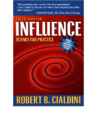
" -CHARLES T. MUNGER, Vice Chairman, Berkshire Hathaway, Inc. If you're wondering why of Latin America, the Far East, and Central Europe. you should buy this new edition of Influence: o More neuroscience evidence of how the influence process works is inte- Science and Practice, gra ted throughout. For instance, brain imaging research is presented, showing here are 5 good reasons! how the "Expensive = Good" heuristic o Updated coverage of social influence leads people to perceive more costly effects in popular culture, such as the items as better than (identical) less
your mind or to try to convince you of anything, but to bring about a shift in consciousness; that is to say, to awaken. In that sense, this book is not “interesting”. Interesting means you can keep your distance, play around with ideas and concepts in your mind, agree or disagree. This book is about you. It will change your state of consciousness or it will be meaningless. It can only awaken those who are ready. Not everyone is ready yet, but many are, and with each person who awakens, the momentum in the collective consciousness grows, and it becomes easier for others. If you don’t know what awakening means, read on. Only by awakening can you know the true meaning of that word. A glimpse is enough to initiate the awakening process, which is irreversible. For some, that glimpse will come while reading this book. For many others who may not even have realized it, the process has already begun. This book will help them recognize it. For some, it may have
Hamlet Shakespeare, William Published: 1599 Categorie(s): Fiction, Drama Source: Feedbooks 1 About Shakespeare: William Shakespeare (baptised 26 April 1564 – died 23 April 1616) was an English poet and playwright, widely regarded as the greatest writer in the English language and the world's pre-eminent dramatist. He is often called England's national poet and the "Bard of Avon" (or simply "The Bard"). His surviv- ing works consist of 38 plays, 154 sonnets, two long narrative poems, and several other poems. His plays have been trans- lated into every major living language, and are performed more often than those of any other playwright. Shakespeare
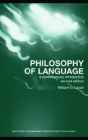
Center and its wonderful staff for their generous support. For additional funding I am indebted to the National Endowment for the Humanities (#RA20169 95). Acknowledgements for the Second Edition Thanks to editor Kate Ahl for her patient help, and to Meg Wallace for a good deal of research as well as editing and indexing. Thanks also to many readers of the first edition, who have offered comments and suggestions from around the world. I am especially grateful to Mike Harnish (again!), Patrick Greenough, and Mark Phelan, who gave me very detailed comments that have led to many improvements, including the correction of some errors. Many of the comments I have received urged me to add a chapter or section on this or that additional topic. Those were good ideas, but space limitations forbade my adopting more than a handful of them; my apologies. 1 Introduction: meaning and reference Overview That certain kinds of marks and noises have meanings, and that we human
vegetation, twisted or braided and hung in suspension. These three types - beam, arch, and suspension - have been known and built since ancient times and are the origins from which engineers and builders derived various combinations such as the truss, cantilever, cable-stayed, tied- arch, and moveable spans. The essential difference among types is the way they bear their own weight - the "dead load" and the "live load" - a person, the railway train, wind, or snow that is applied to the bridge. The weight of beam, truss, and girder bridges bears directly downwards from their ends on the ground, piers, or abutments. Arch bridges thrust outwards as well as downwards, acting in compression. The cables of suspension bridges act in tension, pulling inwards against their anchorages. If two or more beam or girder spans are joined together over piers, they become continuous, a form
• How German codebreakers helped usher in the Russian Revolution. • How John F. Kennedy escaped capture in the Pacific because the Japanese failed to solve a simple cipher. • How codebreaking determined a presidential election, convicted an underworld syndicate head, won the battle of Midway, led to cruel Allied defeats in North Africa, and broke up a vast Nazi spy ring. • How one American became the world's most famous codebreaker, and another became the world's greatest. • How codes and codebreakers operate today within the secret agencies of the U.S. and Russia. • And incredibly much more. "For many evenings of gripping reading, no better choice can be made than this book." —Christian Science Monitor THE Codebreakers The Story of Secret Writing
• A revised chapter which looks back at the Star Wars phenomenon and analyzes the six feature films as an epic on the theme of father-son relationships • New illustrations and diagrams that give additional depth to the mythic principles • A final chapter, "Trust the Path," an inspiring call to adventure for those who want to discover themselves through writing "This book is like having the smartest person in the story meeting come home with you and whisper what to do in your ear as you write a screenplay. Insightfor insight, step for step, Chris Vogler takes us through the process of connecting theme to story and making a script come alive. " - Lynda Obst, Producer, Sleepless in Seattle, How to Lose a Guy in 10 Days; Author, Hello, He Lied
" moments and improve results 10% or so. If you ever feel overwhelmed, though, skip them, as they're not mandatory for the results you're after. RULE #3. PLEASE BE SKEPTICAL. Don't assume something is true because I say it is. As the legendary Timothy Noakes PhD, author or co-author of more than 400 published research papers, is fond of saying: "Fifty percent of what we know is wrong. The problem is that we do not know which 50% it is." Everything in this book works, but I have surely gotten some of the mechanisms completely wrong. In other words, I believe the how-to is 100% reliable, but some of the why-to will end up on the chopping block as we learn more. RULE #4. DON'T USE SKEPTICISM AS AN EXCUSE FOR INACTION. As the good Dr. Noakes also said to me about one Olympic training regimen: "This [approach] could be totally wrong, but it's a hypothesis worth disproving." It's important to look for hypotheses worth disproving.
Many people have contributed to my thinking and have been invisible guides as these chapters came to- gether. I would like to first thank my friend Mark Victor Hansen, who introduced me many years ago to Emmet Fox, perhaps the finest spiritual thinker of the twentieth century. Ernest Holmes, founder of Science of Mind, opened my eyes and heart to the incredible universe of potential contained within each person when they changed their thinking and changed their lives. Great spiritual teachers such as Charles Fillmore, Neville, Eric Butterworth, Wayne Dyer, and Roberto Assagioli have had a profound influence on my thinking. I would also like to thank those great practical thinkers on suc- cess who have had such a wonderful influence on me—and on the world—such as Napoleon Hill, Maxwell Maltz, Claude Bristol,
section. If you do not know the word tested or can't determine its synonym, choose (B) or (C) as your answer. On the TOEFL, (B) and (C) answers tend to be used slightly more than (A) and (D). Also remember that answer choices that contain the same prefix or suffix or are pronounced like the underlined word are seldom the correct answers. Examine the following question. Swallows are among the most agile passerine birds. (A) Idle (B) swift (C) fragile (D) frail Note that choices (A) and (C), idle and fragile, have sounds similar to agile. Such words are not usually the correct choice. Such words are often used to distract you. Unless you are sure of the answer do not choose these words. Let's see how to use our strategy with a sample item. Look at the sentence and look immediately to the underlined word. Do not read any other words in the sentence. Read the four choices and make your selection.
And when the party entered the assembly room it consisted of only five altogether--Mr. Bingley, his two sisters, the husband of the eldest, and another young man. Mr. Bingley was good-looking and gentlemanlike; he had a pleasant countenance, and easy, unaffected manners. His sisters were fine women, with an air of decided fashion. His brother-in-law, Mr. Hurst, merely looked the gentleman; but his friend Mr. Darcy soon drew the attention of the room by his fine, tall person, handsome features, noble mien, and the report which was in general circulation within five minutes after his entrance, of his having ten thousand a year. The gentlemen pronounced him to be a fine figure of a man, the ladies declared he was much handsomer than Mr. Bingley, and he was looked at with great admiration for about half the evening, till his manners gave a disgust which turned the tide of his popularity; for he was discovered to be proud; to be above his company, and above
" "Hi, Mike." "Do you need any help finding your next class?" "I'm headed to the gym, actually. I think I can find it." "That's my next class, too." He seemed thrilled, though it wasn't that big of a coincidence in a school this small. We walked to class together; he was a chatterer -- he supplied most of the conversation, which made it easy for me. He'd lived in California till he was ten, so he knew how I felt about the sun. It turned out he was in my English class also. He was the nicest person I'd met today. But as we were entering the gym, he asked, "So, did you stab Edward Cullen with a pencil or what? I've never seen him act like that." I cringed. So I wasn't the only one who had noticed. And, apparently, that wasn't Edward Cullen's usual behavior. I decided to play dumb. "Was that the boy I sat next to in Biology?" I asked artlessly. "Yes," he said. "He looked like he was in pain or something." "I don't know," I responded. "I never spoke to him." "He's a weird guy
corporation. Purpose, to research educational resources and technological improvements for education. 1967 The first Consumer Electronics Show is held in New York City. International Research applies for a patent for a method of constructing double sided magnetic tape utilizing a MU-Metal Foil Inter layer. Legal problems with a professor at the University of North Carolina, cause Wayne Pickette to drop the quest for that patent. Wayne Pickette makes acquaintence with the famous entrepreneur Arthur Rock of San Francisco. IBM builds the first floppy disk. Seymour Papert designed LOGO as a computer language for children. 1968 Edsger Dijkstra's "GO TO considered harmful" letter, published in Communications of the ACM, fired the first salvo in the structured programming wars. International Research Corp., in San Martin, California, develops the architecture for a computer- on-a-chip modeled on an enhanced PDP-8/S concept.
 annaabi.ee