Leidsid 33 sarnast õppematerjali, mis on seotud failiga "English Tenses - theory". Need materjalid aitavad sul teemat sügavamalt mõista.
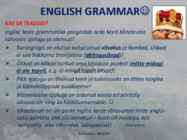
going, juhanson, work, simple, perfect, here, know, tomorrow, pooleli, party, call, present, summer, growing, usual, already, there, visit, year, olevik, plane, night, instead, worked, morning, hear, something, shall, oleviku, regulaarne, monday, talking, phone, vastanduv, viitav, väljendus, years, them, kestvuse, working, since, tired, still, ache, feelg. ei mingit topelt eitust)! Pikk ajalugu on lihvinud keelt ja tulemuseks on lihtne loogika ja käändelõppude puudumine! Mitmekesine ajalugu on aidanud kaasa eri päritolu sõnavarale ning ka hääldusmuredele. Väidetavalt on üle poole inglise keele sõnavarast mitte anglo- saksi päritolu, ehk siis laenatud – kontrolli hoolega, kas ‘sympathy’ ikka tähendab ‘sümpaatiat! kaastunne Aari Juhanson, MA 2009 Tenses – Tegusõna ajad • Olevik (Present) • Minevik (Past) • Tulevik (Future) • Kaudne tulevik (Future-in-the-Past) Aari Juhanson, MA 2009 Present Tenses • Lihtolevik (Present Simple / Present Indefinite) – regulaarne, korduv tegevus • Kestev olevik (Present Progressive / Present Continuous) – pooleliolev, ühes tükis tegevus • Täisminevik !!! (Present Perfect) – tehtud, *lõpetamata* tegevus
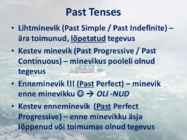
Past Tenses • Lihtminevik (Past Simple / Past Indefinite) – ära toimunud, lõpetatud tegevus • Kestev minevik (Past Progressive / Past Continuous) – minevikus pooleli olnud tegevus • Enneminevik !!! (Past Perfect) – minevik enne minevikku OLI -NUD • Kestev enneminevik (Past Perfect Progressive) – enne minevikku äsja lõppenud või toimumas olnud tegevus Created by Aari Juhanson, MA 2009 Past Simple • Ära toimunud (regulaarne) tegevus: I WORKED yesterday. S/he didn’t WORK last Monday. • Lõpetatud tegevus: I already CALLED them today. (I’m not going to call again!) Which countries did you VISIT? (You’re back …) BUT: Which countries have you VISITED so far? (You’re not back yet or you travel regularly …) • Jutustused, mineviku sündmuste kirjeldus: Once upon a time there LIVED a Garfield who HAD many friends. The first one WAS Odie, … • 2pv;
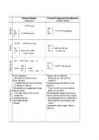
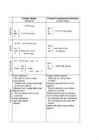
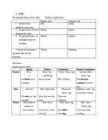
Ing Present Simple Present Progressive/Continuous (lihtolevik) (kestev olevik) I vorm (play) am JAATAV he is I vorm+ing (playing) she I vorm+s (plays) are it do not I vorm (don't play)
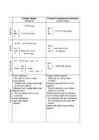
Ing Present Simple Present Progressive/Continuous (lihtolevik) (kestev olevik) I vorm (play) am JAATAV he is I vorm+ing (playing) she I vorm+s (plays) are it do not I vorm (don't play)
Ing Present Simple Present Progressive/Continuous (lihtolevik) (kestev olevik) I vorm (play) am JAATAV he is I vorm+ing (playing) she I vorm+s (plays) are it do not I vorm (don't play)
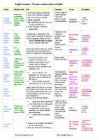
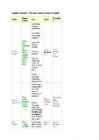
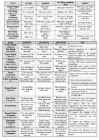
Tense Signal words Use Form affirmative negative interrogative every day something happens repeatedly sometimes how often something happens always I work. I don't work. Do I work? one action follows another often Infinitive He works. He doesn't work. Does he work? Simple Present things in general usually he/she/it + -s I go. I don't go. Do I go? after the following verbs (to love,
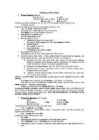
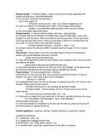
TENSES. ACTIVE VOICE. 1. Present Simple (üldolevik) I (he, she, it s) he works Eitav,küsiv do (I, you, we, they) he does not work does (he, she, it) does he work? Verbidele, mis lõpevad infinitiivis ss, -sh, -ch, -x või o, lisatakse ainsuse 3. pöördes es he touches, she goes Verbidel, mis lõpevad y-ga, mille ees on konsonant, muutub y->ies carry - he carries Vrdl: play he plays 1. Harjumuspärane, korduv tegevus või seisund olevikus. Tom drinks tea every day. He lives in Brussels. 2. Üldtuntud tõed, loodusseadused The earth goes round the sun. 3. Tulevikus toimuv tegevus
Here's a breakdown of how you can express how you really are without complaining too much. · Fine, thanks. / On top of the world, thanks. · OK, thanks · Not so bad, thanks. / Can't complain, thanks. · So so, thanks. / So and so, thanks. · Not so good, actually 1 The English alphabet Spelling Work with your partner and spell out first your name and then some names of places. Write down each letter as you hear it, and then say the word. The English alphabet on the phone: You might find the following alphabet (used by international airlines) useful when trying to spell a word on the telephone. A Alpha O Oscar Ä Alpha-Echo Ö Oscar-Echo B Bravo P Papa
FUTURE SIMPLE BE GOING TO Will + infinitive (will go) Am/is/are going to + infinitive (is going to rain) 1.A decision at the moment of 1.Future plans made before the speaking: moment of speaking: A: 'I'm cold'. A: 'We've run out of milk.' B: 'I'll close the window'. B: 'I know, I'm going to buy some.' 2.Prediction based on opinion: 2.Prediction based on present I think the Conservatives will win the evidence: next election. Look at those boys playing football! 3.A future fact: They're going to break the window. He will be ten next year. 4.Promises / requests / refusal / willingness: I'll help you with your homework. Will you give me a hand? 5.In the same way as the future
Tense Signal words Use Estonian Form Examples · something happens repeatedly *korduv tegevus every day · how often something happens *püsiv olukord sometimes, *tulevikus · one action follows another I work Present twice a week toimuv, seotud · things in general infinitive he works Simple always, often sõiduplaanidega · after the following verbs (to love, he/she/it + s I go
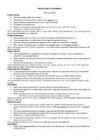
Golden Grammar rules 1. Don't use an with own. Sue needs her own room. (NOT Sue needs an own room.) I'd like a phone line of my own. (NOT ... an own phone line.) 2. Use or rather to correct yourself. She's German or rather, Austrian. (NOT She's German or better, Austrian.) I'll see you on Friday or rather, Saturday. 3. Use the simple present play(s), rain(s) etc to talk about habits and repeated actions. I play tennis every Saturday. (NOT I am playing tennis every Saturday.) It usually rains a lot in November. 4. Use will ..., not the present, for offers and promises. I'll cook you supper this evening. (NOT I cook you supper this evening.) I promise I'll phone you tomorrow. (NOT I promise I phone you tomorrow.) 5. Don't drop prepositions with passive verbs. I don't like to be shouted at
words s something happens repeatedly how often something happens every one action day follows sometim another es I work always infinitive Present things in he/she/it he works often Simple general + s I go usually he goes seldom after the never following first ... verbs (to then love, to hate,
1. the base form Talk Speak üldoleviku tüvivorm 2. the past form/ -ed form Talked Spoke üldmineviku vorm 3. the past participle (-ed Talked Spoken participle) mineviku kesksõna 4. the present participle (- Talking Speaking ing participle) oleviku kesksõna The tenses: Expressing the future: Simple Perfect Continuous Perfect Continuous Present Base Have / has + to be + base+ ing has/ have been +s + pariticiple base+ -ing He drinks tea at I have walked She is talking She has been breakfast. waiting for you all
USE 1 Repeated Actions Examples: · The train leaves tonight at 6 PM. · The bus does not arrive at 11 AM, it arrives at 11 PM. · When do we board the plane? Examples: · The party starts at 8 o'clock. · When does class begin tomorrow? · I play tennis. · She does not play tennis. USE 4 Now (Non-Continuous Verbs) · Does he play tennis? · The train leaves every morning at 8 AM. · The train does not leave at 9 AM. · When does the train usually leave? · She always forgets her purse. · He never forgets his wallet. Examples:
Reported speech is often also called indirect speech. When we use reported speech, we are usually talking about the past (because obviously the person who spoke originally spoke in the past). The verbs therefore usually have to be in the past too. For example: "I'm going to the cinema". He said he was going to the cinema. Basic tense chart The tenses generally move backwards in this way (the tense on the left changes to the tense on the right): present simple past simple I'm a teacher. He said he was a teacher past continuous. present continuous He said he was having lunch with his I'm having lunch with my parents. parents. past perfect simple
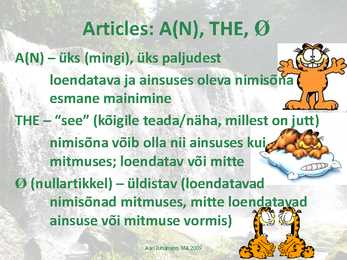
Articles: A(N), THE, Ø A(N) üks (mingi), üks paljudest loendatava ja ainsuses oleva nimisõna esmane mainimine THE "see" (kõigile teada/näha, millest on jutt) nimisõna võib olla nii ainsuses kui mitmuses; loendatav või mitte Ø (nullartikkel) üldistav (loendatavad nimisõnad mitmuses, mitte loendatavad ainsuse või mitmuse vormis) Aari Juhanson, MA 2009 A(N) Loendatavate, ainsuses olevate ja esmakordselt mainitavate nimisõnade/omadus- ja nimisõnade ees · Uus info: A (young) man in a streetcar smiled at me. · Ametid: She always wanted to be a dancer. · Kindlad väljendid: a couple of; be in a hurry; etc Aari Juhanson, MA 2009 A(N) set phrases They left a couple of days ago and all of a sudden I realized that it had been a long time since they last
..) one after another action taking place in the middle of another action Past Progressive A: He was speaking. when, while, as action going on at a N: He was not speaking. long as Q: Was he speaking? certain time in the past actions taking place at the same time action in the past that
Get/ Have something TENSE ACTIVE PASSIVE WHEN? done Present Simple Am/is/are + Every day, year, often, I pv + do/does Have/ get + sth+ III pv Lihtolevik III pv usually, always Past Simple Yesterday, last year,
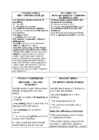
• we don't use an article: at night, at noon, every We don't usually use an article week, every day, every night, last morning, last • to talk about things in general. • before the names of countries, cities, towns and villages. week, all night, all day, tomorrow, yesterday,... • with plural nouns and uncountable nouns when talking about them • use the with in the morning, in the afternoon, generally. during the night, the winter, the summer, the day Examples: She has got long hair. He wears black shoes. after tomorrow,... • when talking about sports, people's first
Present tenses : 1) Present simple regular actions and routines especially with frequency(kordumine ) adverbs(määrsõna) N: Do you go to school by car every day ? I don't often watch TV. 2)Present continuousbe + verb + ing. Actions happening now N; Look! It's snowing. I'm meeting Jane tonight. You're always losing things. 3)keep + ingto describe habitual actions which may be irritating. N: my uncle keeps making silly jokes. Present perfect: 1) Present perfect simple: have/has + past participle. N: I've been here for ten minutes .The phone has rung ten times today. Look at this cheque,'I've won first prize. They have made a new star wars film. I've just got home. How long have you been here ? Have you ever been to Paris? It's the best book I've ever read. It's the first time I have ever been abroad. 2)Present perfect continious : have/has + been + ing. N:I've been living in this flat since 2000
Tests Superstar 1 Luke Prodromou Test 1 Name____________________ Class_______ Use your English 1 Complete these sentences using the correct form (present simple or present continuous) of the verb in brackets. _ 1 She is in a band and she _________________________________ (record) a CD at the moment. _ 2 She is an actress and often _________________________________ (appear) on television. _ 3 At the moment she _________________________________ (have) a rest because she is tired. _ 4 Mike is a doctor and he _________________________________ (live) in Manchester. _ 5 I _________________________________ (start) work at 8.30 every morning.
INGLISE KEELE KORDAMINE TIME CLAUSES Present Simple · Permanent states, facts (Tom works..) · Repeated and habitual actions, routines (She usually goes..) · Laws of nature and general truths (The sun sets in the west) · Timetables and programmes · Sporting commentaries, rewiews (Beckham wins the ball, crosses and Owen scores) · Feelings and emotions (I love Tallinn..) TIME EXPRESSIONS USED WITH PRESENT SIMPLE: usually, often, always, every day/week etc, in the morning/evening
1. Active/Passive Active - the professor teaches the students. Passive - The students are taught by the professor 2. Present Simple [VERB] + s/es in third person. Tegevus on korduv või tavapärane. You speak English. I play tennis. Cats like milk. The train leaves tonight at 6 PM. I am here now. Active= Once a week, Tom cleans the car. Passive= Once a week, the car is cleaned by Tom. 3. Present Continuous [am/is/are + present participle]. Tegevus toimub/ei toimu praegusel hetkel. You are watching TV. You are learning English now. I am studying to become a doctor. I am meeting some friends after work. Active= Right now, Tom is writing the letter. Passive= Right now, the letter is being written by Tom. 4. Past Simple [VERB+ed] or irregular verbs
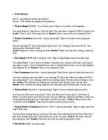
Copyright ©2007 by Saddleback Educational Publishing. All rights reserved. No part of this book may be reproduced in any form or by any means, electronic or mechanical, including photocopying, recording, or by any information storage and retrieval system, without the written permission of the publisher. ISBN 1-59905-201-6 Printed in the United States of America 13 12 11 10 09 08 07 9 8 7 6 5 4 3 2 1 Introduction Grammar is a very old field of study. Did you know that the sentence was first divided into subject and verb by Plato, the famed philosopher from ancient Greece? That was about 2,400 years ago! Ever since then, students all over the world have found it worthwhile to study the structure of words and sentences. Why? Because skill in speaking and writing is the hallmark of all educated people. Lesson by lesson, this book provides basic instruction in the eight parts of speech--nouns, pronouns, verbs,
Future Forms Future Forms · 1) Future Simple will work · 2) Be going to am/is/are going to work · 3) Present Continuous am/is/are working · 4) Present Simple start(s) Future Forms · 5) Future Continuous will be working · 6) Future Perfect will have worked · 7) Future Perfect Continuous will have been working Future Simple · We do our morning exercises and think, "I think we will have a nice day " · Prediction (ennustused kõhutunde põhjal) · verbs think, believe, guess, expect, hope etc · expressions be sure, be afraid etc · adverbs probably, perhaps, certainly Future Simple · You see your little brother carrying a very heavy suitcase and you think, "I will help him carry the suitcase." · on-the-spot decision (hetkeotsused)
he does he goes he misses he watches he mixes · Verbid, mis lõpevad yga, mille ees on konsonant, muudavad y iks enne es lisamist. fly he flies carry he carries Võrdle: say he says Lihtolevik väljendab: · Antud momendil toimuvat tegevust, mis ei väljenda kestvat aega, näiteks see, hear, know. I see that man who you are pointing at. · Üldist, kogu aeg toimuvat või korduvat tegevust, pole oluline, kas tegevus toimub rääkimise hetkel. Teachers teach in schools. He usually goes to gym on Monday. · Tegevust mingil ajal. I go to school at 8 o´clock. You have to pay taxes once a month. · Kõigile tuntud fakte. Life passes by quickly. Present Continuous Kestva oleviku moodustamine
Ways of expressing the Future Table of Contents Future Simple ...................................................................... 2 Be going to ........................................................................... 3 Present Continuous .............................................................. 3 Present Simple ..................................................................... 4 Future Continuous ............................................................... 4 Future Perfect....................................................................... 6 Other ways of referring to the future ..................................... 7 Other future references......................................................... 8 Future Simple In Future Simple we use the modal verb will + the verb
PRESENT SIMPLE [s] lihtolevik · kestvad tegevused. Tom works in the market. · rutiinid. He works every day. · loodusseadused. The sun sets in the west. · ajatabelid ja programmid. The buss leaves at 7 am. · (spordi) kommentaarid. Ben passes ball to Tom. väljendid, mida kasutatakse: usually, often, always, every day/week etc, in the morning/afternoon/evening, at night/the weekend, on Friday etc. He works He don't work Does he work PRESENT CONTINUOUS [ is + ing] kestev olevik · tegevused, mis praegu leiavad aset. Karl is doing his homework at the moment. · plaanitud tegevus lähitulevikus. I am going to school tomorrow. · kui midagi toimub/muutub praegu. The number of burglaries is increasing. · alati sama korduv tegevus. You are always eating, when i wake up. väljendid, mida kasutatakse: now, at the moment, at present, these days, nowdays, still, today, tonight etc. He is working He isn't working
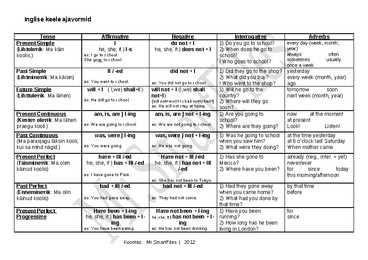
Inglise keele ajavormid Tense Affirmative Negative Interrogative Adverbs Present Simple I do not + I 1) Do you go to school? every day (week, month, (Lihtolevik: Ma käin he, she, it } I-s he, she, it } does not + I 2) When does he go to year) koolis.) ex: I go to school. school? always often She goes to school
Cali 2005 Was Born Traveled to Europe Husband 1978 School graduates @ Oxford 1999 Started Got married School 1983 2008 2 The Six English Verb Tenses Three Simple Tenses Simple continuous Present You walk. You are walking I run. I am running. Past You Walked You were walking. I ran. I was running. Future You will walk. You will be walking. I will run. I will be running. Three Perfect Tenses Perfect continuous Present perfect you have walked
SIMPLE CONTINUOUS PERFECT I (-s) DO/DOES AM/IS/ARE + ING HAVE/HAS + III pv. I learn English I am learning English I have learned English. I get up at 7 every day. I'm reading a good book at the I've learned 10 words today. He doesn't get up at 7. moment. He hasn't learned any new What time do you get up? He isn't reading anything at the words today. moment
INGLISE KEEL Sisukord Sisukord 2 Ajavormid Tense vorms 3 Lihtolevik The present simple 3 Lihtminevik The past simple 3 Lihttulevik The future simple 3 Kestev olevik The present continuous 3 Kestev minevik The past continuous 4 Kestev tulevik The future conrinuous 4 Täisminevik The present perfect 4 Enneminevik The past perfect 4 Ennetulevik Future perfect 5 Üldminevik Past tense 5 Üldtulevik Future indefinite 5
INGLISE KEEL Sisukord Sisukord.................................................................................................................................. 2 Ajavormid Tense vorms.......................................................................................................3 Lihtolevik The present simple..................................................................................... 3 Lihtminevik The past simple....................................................................................... 3 Lihttulevik The future simple...................................................................................... 3 Kestev olevik The present continuous......................................................................... 3 Kestev minevik The past continuous
 annaabi.ee