Leidsid 33 sarnast õppematerjali, mis on seotud failiga "English structure revision for the exam". Need materjalid aitavad sul teemat sügavamalt mõista.
exam, noun, verb, nouns, verbs, adjective, adverb, object, subject, language, phrase, clause, here, adjectives, pronoun, words, adverbs, class, pronouns, person, plural, english, mean, sing, other, phrases, meaning, function, morpheme, direct, there, case, able, thing, position, degree, gender, grammar, singular, come, between, sentences, suffixInfixation is common in languages of Southeast Asia and the Philippines, and it is also found in some Native American languages. circumfixes morphemes that are attached to a root or stem morpheme both initially and finally. Morphs: the concrete realisation of a morpheme (`was' be, past, singular) Allomorphs: a/an Types of affixes: Derivational and infelctional Derivational affixes: Derivational affixes may change the grammatical class of the root verbs into nouns, nouns into adjectives (boy, boyish), and so on. Derivation is a lexical process which actually forms a new word out of an existing one by adding affixes to stems or roots. consideration, considerate, inconsiderate, inconsiderateness Inflectional affixes: Inflectional affixes may be described as `relational markers' that fit words for use in a sentence (express a syntactic relation). Inflections do not change the grammatical class of a given item or produce new lexemes, just different word forms.
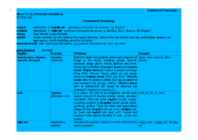
marker tunnus (mitmuse, oleviku, lihtmineviku, tingiva kõneviisi, käskiva kõneviisi, kaudse kõneviisi, umbisikulise tegumoe, ma- tegevusnime, oleviku kesksõna, mineviku kesksõna) derivational affix liide, tuletusliide, tuletusafiks (e.g. postwar, anti-American, wiser, greenish) parts of speech sõnaliigid English Estonian Definition Example noun (proper, common, nimisõna, Refers to words which denote classes and categories of book, water, sincerity, Mary, concrete, abstract) substantiiv things in the world, including people, animals, Estonia inanimate things, places, events, qualities, and states. Nouns can be divided into proper nouns and common
adjective + preposition omadussõna + eessõna proud of, good at, married to adverb particle Some verbs are followed by adverb particles. Examples are: put on, take off, give away, bring up, call in. Sometimes the particle is detached from the verb and put after the object. •He took his boots off. •They called the doctor in. apposition a grammatical construction in which two usually adjacent nouns having the same referent stand in the same syntactical relation to the rest of a sentence (as the poet and Burns in “a biography of the poet Burns”) back-reference In grammatical analysis, the term reference is often used to state a relationship of identity which exists between grammatical units, e.g. a pronoun 'refers' to a noun or noun phrase. When the reference is to an earlier part of the discourse, it may be called a 'back-reference' (or anaphora); collective noun
All rights reserved. No part of this book may be reproduced in any form or by any means, electronic or mechanical, including photocopying, recording, or by any information storage and retrieval system, without the written permission of the publisher. ISBN 1-59905-201-6 Printed in the United States of America 13 12 11 10 09 08 07 9 8 7 6 5 4 3 2 1 Introduction Grammar is a very old field of study. Did you know that the sentence was first divided into subject and verb by Plato, the famed philosopher from ancient Greece? That was about 2,400 years ago! Ever since then, students all over the world have found it worthwhile to study the structure of words and sentences. Why? Because skill in speaking and writing is the hallmark of all educated people. Lesson by lesson, this book provides basic instruction in the eight parts of speech--nouns, pronouns, verbs, adjectives, adverbs, prepositions, conjunctions, and
Phonesthemes Denotation--proper meaning Connotation--additional shade of meaning, also called overtone, colouring Words may convey emotional or expressive overtones (gorgeous, okay), or tey may render evaluation (famous, notorious) Inherent connotation--we are dealing with inherent con. When the additional shade of meaning is always present when the word is used, it is a permanent part of the meaning of a word. Inherent connotation may: · Be secured by the very object or notion that the word expresses. People appreciate certain notions as rather positive or negative e.g. pos--pure, noble (adj.); love, beauty (noun); worship, adore (verb) e.g. neg--nasty, dirty; death, fool; steal, destroy · Depend on the structure of the word, mainly on the presence of negative prefixes and suffixes. It is purely linguistic e.g. heartless, impolite, abnormal
15 monophtongs, (7 long, 7 short, 1 central), 4 diphtongs, 17 consonants. Free variaton of R, and it was pronounced everywhere. Very much Germanic in character. Quite some special consonants that no longer exist. About morphology: synthetic with numerous aglutinating tendencies. System of tenses Germanic, but with a reduction of tenses. Paradigmatic leveling; Stress shift; Word order; Loan words (Old Norse, Old French). Dual pronouns. Determiners - no separate definite article. Strong and weak verbs. Word order relatively free with tendencies towards SVO. SVO, SOV, VSO most common. Adposition and podposition were both possible (eesliide ja tagaliide). About syntax: clauses were joined much simpler than nowadays, using and, then etc. Because of case syncretion the word order in a sentence became much more important to be able to tell the difference between words. FIRST CONSONANT SHIFT (GRIMM'S LAW)
1. Nouns: how is the plural formed? The plural form of most nouns is created simply by adding the letter s: · more than one snake / snakes · more than one ski / skis · more than one Barrymore / Barrymores Words that end in -ch, x, s or s-like sounds, however, will require an -es for the plural: · more than one witch / witches · more than one box / boxes · more than one gas / gases · more than one bus / buses · more than one kiss / kisses
of meaning). Connotation may be a permanent part of word meaning it is then called inherent connotation. Connotation is ever present when the word is used. Adherent connotation is the shade of meaning the word requires in a particular context only. Outside this context this shade of meaning is not present. INHERENT CONNOTATION (IC) 1. IC may be secured by the very object, quality or notion that word denotes. Positively charged words are: noble, manly, virtue, beauty, love, etc. Negatively charged words: nasty, vulgar, greedy, sin, death, fool, etc.). This connotation is called referential; it depends on the referent (mean the thing the word stands for). 2. IC may depend on the structure of the word. Such words normally have a transparent structure and more often negative affixes are used (e.g
Literary (renaissance) o Democratic, juvenile, sophisticated, aberration, enthusiasm, pernicious, imaginary, allusion, anachronism, dexterity Scientific (17.-18. century) o Nucleus, formula, vertebra, corpuscle, atomic, carnivorous, incubate, aqueous, molecule Latin abbreviations o i.e – id est – that is to say Latin adjectives for english nouns o Nasal, oral, solar, paternal, maternal, lithic, lunar, filial Actual inflected Latin verbs used as nouns o Audio, audit, caveat, video. Endings dropped or adapted, often through French o add, addition, additive, agent, agentive, aqueduct, candle, colo(u)r, colossal, consider, contemplate, decide, decision, erupt, eruption, general, generic, hono(u)r, hono(u)rable,
g hey o oh x ah-kees h ah-chay p pay y ee-gree-ay-gah i ee q koo z say-tah The Spanish language academy no longer considers the ch, ll or rr to be separate letters in dictionaries, but they are still separate letters in the alphabet. In Spain, you can say oo-bay for v, but in Latin America most dialects just use bay and an adjective, such as chica (Mexico and Peru) or corta (Argentina and Chile). 4 4. Articles & Demonstratives Masc. Singular Fem. Singular Masc. Plural Fem. Plural the el (ail) la (lah) the los (lohs) las (lahs) a, an un (oon) una (oon-ah) some unos (oon-ohs) unas (oon-ahs)
Yes, the package should arrive tomorrow morning. However, you may not be satisfied with the results. 3. Use a pair of commas in the middle of a sentence to set off clauses, phrases, and words that are not essential to the meaning of the sentence. Use one comma before to indicate the beginning of the pause and one at the end to indicate the end of the pause. Here are some clues to help you decide whether the sentence element is essential: · If you leave out the clause, phrase, or word, does the sentence still make sense? · Does the clause, phrase, or word interrupt the flow of words in the original sentence? · If you move the element to a different position in the sentence, does the sentence still make sense? If you answer "yes" to one or more of these questions, then the element in question is nonessential and should be set off with commas. Here are some example sentences with nonessential elements:
FGI 1081 Stilistika (Irina Ladusseva) Kab. 420 2 AP Ends with an exam; lasts only for 1 semester. At the exam you get 2 questions and an exercise (50 sentences: establish the device used, recognize it, and name it). Care about the pronunciation of the terms. Books: - I. Galperin "Stylistics" - I. Ladusseva "Rhythm and Text" - I. Ladusseva "Vocabulary and Style" - I
On the other hand, words may contain evaluation (speaker's positive or negative attitude), e.g famous (pos.) = notorious (neg.) 4 Järgnev on pikk näide erinevatest naise kohta käivatest väljenditest (girl, maiden, lass, lassy, baby, young lady), arvan et pole nii oluline, kuna näiteid on konspektis niigi palju, ei hakka üle pakkuma. Inherent connotation 1 IC may be secured by the very object, quality or notion that the word stands for. People appreciate certain notions, as either positive or negative. Negative notions Adj: dirty, nasty, vulgar, obscene, greedy Nouns: sin, fool, death, tragedy Verbs: destroy, offend, steal, ploth (sepitsema) Positive notions Adj: polite, refine, pure, noble, manly Nouns: virtue, beauty, love, bliss Verbs: worship, save, protect 2 This connotation depends on the thing the word stands by. IC may also depend on the structure of the words
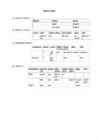
Word order: positive sentences subjects verb(s) object I speak English. I can speak English. Negative sentences subject verbs Indirect object Direct object place time I will not you the story at Tomorro tell school w. Subordinate Clauses conjunction subject verb(s) Indirec Direct place time t object object
separate lg, there is Engl that bases on general L); contrastive (compares vocabularys in different languages). 2. Connection of L with other linguistic disciplines a) the word performes a certain grammatical function (nt, he always misses the class, how many misses are there; the girl powders her nose, soliders face powder)In speech words are combined according to grammatical rules. The plural of nouns may carry a new meaning (nt, arms-weapons, looks-appearance, works-plant) b)connected with phonetics. The meaning of a word is expressed by sounds and it depends on the order of sounds(spoonerism) c)history of the lg helps to understand ahanges in the meanings of words (nt, legend ment a book where a life of saints was described) d)stylistics is the sign of expressive means of the language. The same idea may be expressed in different ways and so may aquire a new meaning
allusion, anachronism, dexterity scientific (17th-18th nucleus, formula, vertebra, corpuscle, atomic,carnivorous, incubate, aqueous, centuries) molecule The plurals of nucleus, verterbra, corpus, etc. Latin abbreviations in English i.e. = id est that is to say viz = namely etc = et cetera Latin adjectives for English nouns nose – nasal sun – solar son – filial mother – maternal mouth – oralmoon – lunar daughter – filial father – paternal stone – lithic 5. Greek borrowings The Greek language has contributed 50,000 words to the world. Christianity: New Testament in Greek. Catholic Church – Scclesiastical Latin. Examples: abbot, angel, apostle, bishop; school, cylinder, cycle, criterion, dialogue, cardiac, phonetic, gymnasium,
Almost no true infixes in English, except for colloquial speech and chemical terminology. (Shiznit) Combining forms A modified form of an independent word that occurs only in combination with words, affixes, or other combining forms to form compounds or derivatives, as electro- in electromagnet or geo- in geochemistry. Back-formation new words are formed by taking away affixes. (nt, connection, to connect). This process is based on analogy. Back-form is word building and it means coining verbs. (nt, butcher, to butch; sculptor, to sculpt, television, to televise). Rarely some other parts of speech are found (nt, nasty, to nast) Alphabetisms, initialisms, acronyms words made up of the initial letters (nt, USA, WC) Clippings, fore clippings, back clippings, ambiclippings Clipping is the word formation process which consists of the reduction of a word to one of its parts- shortening. Three types of clipping:
SYNTACTIC STYLISTIC DEVICES SYNTACTIC STYLISTIC DEVICES are based on a peculiar place of the word or phrase in the utterance (text, sentence, etc).This special place creates emphasis irrespective of the lexical meaning of the words used. Categories: syntactic stylistic devises based on: SDD: based on ABSENCE OF LOGICALLY REQUIRED ELEMENTS OF SPEECH ELLIPSIS ELLIPSIS or ELLIPTICAL SENTENCES means leaving out one or both principle members of the sentence that is the subject or predicate. NT: Where is the man I'm going to marry? - Out in the garden. (no subject) What is he doing out there? - Annoying father. Here, in the dialogue, ellipsis creates the colloquial tone of the utterance. It also renders realistically the way the characters speak. The elliptical sentences convoy/render carelessness, familiarity, harshness. It makes the utterance tens and emotional or helps to stress most important elements. NT: I went to Oxford, as one goes to exile; she to London.
3. Use the simple present play(s), rain(s) etc to talk about habits and repeated actions. I play tennis every Saturday. (NOT I am playing tennis every Saturday.) It usually rains a lot in November. 4. Use will ..., not the present, for offers and promises. I'll cook you supper this evening. (NOT I cook you supper this evening.) I promise I'll phone you tomorrow. (NOT I promise I phone you tomorrow.) 5. Don't drop prepositions with passive verbs. I don't like to be shouted at. (NOT I don't like to be shouted.) This needs to be thought about some more. (NOT This needs to be thought some more.) 6. Don't use a present tense after It's time. It's time you went home. (NOT It's time you go home.) It's time we invited Bill and Sonia. (NOT It's time we invite Bill and Sonia.) 7. Use was/were born to give dates of birth. I was born in 1975. (NOT I am born in 1975.) Shakespeare was born in 1564. 8. Police is a plural noun.
A suffix- is an element placed in the end of the word to form a derviative such as ing and fy. Prefixes: be- become, for-forget, with-within, ad-admit, ac-accurse, af-affrax, co-co-operate, de-destroy, dis-dismiss, sub-submarine Suffixes: er- maker, or- actor, eer- mountineer, ier/yer- lawyer, ant- assistant, ent-student, ee- detainee, ist-artist, en-vixen, ess-actress, ine-heroine 9) Coversion A type of dervation where no suffix is used to change the word class. Catch as a verb and catch as a noun, brake-down as a verb and break-down as an adjective. 10) compounds Are formed by joining two or more root morphemes. Compounds are often idiomatic in meaning or at least not entirely transparent. Coffe plus pot equals coffeepot 11) Clipping Clipping ise the wordformation process which consists in the reduction of a word to one of its parts- shortening. Three types of clipping: Foreclipping- retain gthe fial part of the word- racoon-coon, telephone- phone
Pronouns By: Anneli Võikar Pronouns are small words that take the place of a noun. We can use a pronoun instead of a noun. Pronouns are words like: he, you, ours, themselves, some, each... If we didn't have pronouns, we would have to repeat a lot of nouns. Types of pronouns Personal pronouns Reflexive pronouns Demonstrative pronouns Interrogative pronouns Indefinite pronouns Relative pronouns Possesive pronouns Reciprocal pronouns Pronoun case Personal pronouns Personal pronouns represent specific people or things. We use them depending on: number person gender Case
............................2 Word Order in Affirmative Sentences ...................................................3 Position of Adverbs of Frequency .........................................................5 Word Order in Negative Sentences......................................................6 Word Order in General Questions.........................................................7 Word Order in Special Questions ..........................................................8 Word Order in Subject Questions ..........................................................9 Types of Sentences There are four basic types of sentences in English. AFFIRMATIVE and NEGATIVE sentences both end with a full stop ( ) : . I live in Tallinn. I do not live in Tallinn. I never watch soap operas. INTERROGATIVE sentences end with a question mark ( ? ) : Do you live in Tallinn? Why do you never watch soap operas? EXCLAMATORY and IMPERATIVE sentences end with an exclamation mark ( ! ) :
NB. u: or , as in ,,food to eat", is transcibed as u ,,schwa" - is a reduced vowel that is in weak syllables only, and it's sound quality is mid and central. E.g. carrot, perhaps, attend. Syllabic consonants - l, n, m, , r can function as a syllable ( as in button [bt-n]); placing a "schwa" before a syllabic liquid or nasal also shows that these are separate syllables. Stress in simple words stressed first syllable indicates a noun, stressed second syllable indicates a verb (as in pérvert (N) `My neighbour is a pervert'; pervért (V) `Don't pervert the idea'). Factors that contribute to prominence of stress in syllables are loudness, length, pitch, quality. Stress (accent) relative loudness and tenseness of syllable peak, the use of extra respiratory energy during a syllable. Pitch (tone) the auditory property of a sound that enables a listener to place it on a scale
1) Standard and non-standard varieties of English Standard varieties of English are the varieties of the English language that are considered to be a norm and are spoken and written by the minority (educated people). This is the optimum for educational purposes. The standard varieties of English are: BrEng (British), EngEng (English), NAmEng (North-America), USEng (United States), CanEng (Canada), AusEng (Australia), NZEng (New Zealand). Standard English (British English) is the most widely accepted and understood among native speakers, learned by foreigners. It is used in broadcasting, TV, news etc. It doesn't
He plays the piano well. The rose is my favourite flower. We us a or an The dollar is a strong currency. only with singular nouns. The tiger lives in Asia. when we are talking about a thing in general. • when we refer to a system or service. Examples: When does the train arrive? We should call the ambulance.
Philosophy of Language Philosophy of Language: a Contemporary Introduction introduces the student to the main issues and theories in twentieth and twenty-first-century phi- losophy of language, focusing specifically on linguistic phenomena. Topics are structured in four parts in the book. Part I, Reference and Referring, includes topics such as Russell's Theory of Descriptions, Donnellan's distinction, problems of anaphora, the description theory of proper names, Searle's cluster theory, and the causalhistorical theory. Part II, Theories of Meaning, surveys the competing theories of linguistic mean- ing and compares their various advantages and liabilities. Part III, Pragmatics
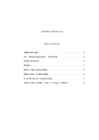
Adverbs and Adverbial Phrases ........................................................... 2 Types of Adverbs ..................................................................................... 2 Position of Adverbs.................................................................................. 4 Yet, still, already ....................................................................................... 6 Adverbs and Adverbial Phrases An adverb describes a verb, an adjective, another adverb or a whole sentence. Adverbs can be divided according to the information that they give. Types of Adverbs 1. Some adverbs tell us how somebody does something or how something happens. These are called Adverbs of Manner. Please speak quietly. Tom drove carefully along the narrow road. 2. Some adverbs tell us where. These are called Adverbs of Place: She put the book on the table. 3. Some adverbs tell us when. These are called Adverbs of Time.
....................................................... 4 Both, either and neither ....................................................... 4 Few/a few – a little/little....................................................... 5 A lot of/lots of – much/many................................................ 5 Some, any + -body / -one, + -thing, + -where ........................ 6 Some and any Some and any mean a certain number or amount. They are used with or instead of plural or uncountable nouns. Some is a possible plural form of a/an and one: Have a biscuit/some biscuits. I bought a cake/some cakes. Some, any and none can be used with of + the/this/these/those (+ ...) Some of the staff can speak Portuguese. Did any of your photos come out well? You can take any of these. Some is used: • with affirmative verbs: They bought some honey. • in questions where the answer ‘yes’ is expected: Did some of you sleep on the board
.., the last Continuous speaking. certain time in the future couple of hours, N: He will not have all day long been speaking. · putting emphasis on the Q: Will he have been course of an action speaking? Note: we use continuous tenses only for actions and happenings (e.g. they are singing/ it is snowing). Some verbs are not action verbs (e.g. know, like). You cannot use continuous tenses with the following verbs: like love hate want need prefer know realise suppose mean understand believe remember belong contain consist depend seem 4 The following verbs are usually only used in Simple Present (not in the continuous form). state: be, cost, fit, mean, suit Example: We are on holiday. possession: belong, have Example: Sam has a cat.
The business text must therefore be easily and quickly read and its message must be understood exactly as intended. If you learn to recognize and avoid the more common errors of information control, grammar and style, you will achieve this aim. You will write more confidently and more correctly if you check everything you write. Pay particular attention to the following: · Appropriate Subject Heading Take care to prepare your reader by introducing the subject appropriately in your subject heading. · Carefully Organized Information If a reader needs to be persuaded or convinced, your information will need careful planning and organizing. · Correct Grammar and Spelling Train yourself to check for major grammatical errors, words which are commonly misspelt and sentences which are incomplete.
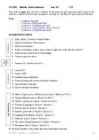
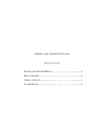
The Article Table of Contents General Rules....................................................................... 2 The Definite Article ............................................................... 5 Names that take the Definite Article...................................... 6 No article.............................................................................. 7 Countable and uncountable nouns ....................................... 9 General Rules There are two articles in the English language – the Indefinite Article and the Definite Article. The Indefinite Article has two forms – a and an (a precedes words beginning with a consonant sound and an precedes words beginning with a vowel sound). It comes from the Old English word ãn, which meant one. The Definite Article is the. It comes from the Old English word ţis, which meant this.
Mary is shorter than Jane but Judy is the shortest of the three sisters. Ben is the shortest boy in his class. The superlative degree is usually used with the definite article the. Formation of comparatives and superlatives from adjectives and adverbs: Adjectives 1) one-syllable Adjectives • for one-syllable adjectives, add –er to form the comparative and -est to form the superlative: sweet sweeter the sweetest If an adjective ends with a mute –e, it is omitted: late later the latest NOTE! For one-syllable adjectives ending in a vowel + consonant, we double the consonant: big bigger the biggest • with one-syllable adjectives ending in –ed we use more and most pleased more pleased most pleased 2 2) two-syllable Adjectives
2. To study the problem of the translation of idioms; 3. To understand the aim of the modern usage of idioms; 4. To distinguish different kinds of idioms; 5. To analyze the frequency of idioms' usage referring to English. Hypothesis Ø My suggestions is the Second World War was the turning point in many areas in life, because after the war new interactive medium have changed the English language more to the American English direction. The object of the work Ø The object of my research work is present day English and understanding that the origin of idioms is closely connected with people's mentality. The subject of the work The subject of my studies is" Idioms in the English language". Idiom is a phrase or expression whose total meaning differs from the meaning of the individual words. Methods of my studies Ø Dictionary of English Idiom; Ø Internet sites;
 annaabi.ee