Leidsid 33 sarnast õppematerjali, mis on seotud failiga "English download B2 workbook lk 15 harjutus 2 vastused-Use your English 2". Need materjalid aitavad sul teemat sügavamalt mõista.
english, workbook, bottle, stand, drive, fearTests Superstar 1 Luke Prodromou Test 1 Name____________________ Class_______ Use your English 1 Complete these sentences using the correct form (present simple or present continuous) of the verb in brackets. _ 1 She is in a band and she _________________________________ (record) a CD at the moment. _ 2 She is an actress and often _________________________________ (appear) on television. _ 3 At the moment she _________________________________ (have) a rest because she is tired. _ 4 Mike is a doctor and he _________________________________ (live) in Manchester.
noticed when I was born! 3 1 Laura was offered a place at much. Personality-wise, I've got a lot of my Manchester University but she dad's traits in me. We're both quite bubbly and friendly (or so people 1C The origins of English turned it down. page 5 2 Whilst some people are in favour say), and we share quite a laid-back of the monarchy, others think we approach to life. When it comes to 1 1 Anglo-Saxon 8 Conquest
We had a very enthusiastic 2 d Much as 1 T A 3 F C 5 T D 7 T B science teacher and during one of our 3 e However 2 T B 4 T A 6 F A 8 T D field trips we were taken on a tour 4 b In spite of of a laser lab. I was fascinated and, 5 f whereas Use of English after talking to the head of the lab, I 6 a Nevertheless 1 pride 6 extinction was offered a summer job. I was lucky 2 remarkable 7 contamination to get funding to cover my expenses 2 Students' own notes 3 mountainous 8 illegal and my boss was an inspiring mentor.
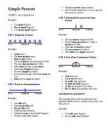
Simple Present · · New York is a small city. It is not important that this fact is untrue. [VERB] + s/es in third person USE 3 Scheduled Events in the Near Examples: Future · You speak English. · Do you speak English? · You do not speak English. USE 1 Repeated Actions Examples: · The train leaves tonight at 6 PM. · The bus does not arrive at 11 AM, it arrives at 11 PM. · When do we board the plane?
........................................................5 Word Order in Negative Sentences......................................................6 Word Order in General Questions.........................................................7 Word Order in Special Questions ..........................................................8 Word Order in Subject Questions ..........................................................9 Types of Sentences There are four basic types of sentences in English. AFFIRMATIVE and NEGATIVE sentences both end with a full stop ( ) : . I live in Tallinn. I do not live in Tallinn. I never watch soap operas. INTERROGATIVE sentences end with a question mark ( ? ) : Do you live in Tallinn? Why do you never watch soap operas? EXCLAMATORY and IMPERATIVE sentences end with an exclamation mark ( ! ) : What a beautiful day! Do your homework at once! Parts of the Sentence The basic parts of the sentence are: THE SUBJECT (WHO? WHAT?) ,
(not I want orange.) •Where is my bottle? (not Where is bottle?) When a countable noun is plural, we can use it alone: •I like oranges. •Bottles can break. We can use some and any with countable nouns: •I've got some dollars. •Have you got any pens? We can use a few and many with countable nouns: •I've got a few dollars. •I haven't got many pens. definite article The definite article the is the most frequent word in English. We use the definite article in front of a noun when we believe the hearer/reader knows exactly what we are referring to. • because there is only one: The Pope is visiting Russia. The moon is very bright tonight. The Shah of Iran was deposed in 1979. This is why we use the definite article with a superlative adjective: He is the tallest boy in the class. It is the oldest building in the town. • because there is only one in that place or in those surroundings:
INGLISE KEELE PÕHITÕED C.K 2017 A – AN – SOME Singular: a or an Use some for things you can't count ◦ *a banana *a car *a monkey *a football ◦ *some milk *some water *some coffee ◦ *an egg*an accident *an umbrella *an *some sugar eagle ◦ *some tea *some juice*some money *some butter Plural: some Exercises: 1. http://www.english-4u.de/a_an_some_ex1.htm ◦ *some bananas *some cats *some monkeys *some 2. http://www.english-4u.de/a_an_some_ex3.htm balls ◦ *some eggs*some oranges *some umbrellas *some 3. http://www.english-4u.de/a_an_some_ex6.htm eagles We us the
Mustn’t means be forbidden. Don’t have to expresses the absence of obligation. You mustn’t steal other people’s things. It’s wrong. You mustn’t drive if you’ve been drinking. You could kill someone! In England you don’t have to take your shoes off when you enter somebody’s home. When you go into a shop, you don’t have to buy anything. You can just look. • Have got to is also common in British English but it is more informal than have to: I’ve got to go now. See you! Don’t go to bed late. We’ve got to get up early tomorrow. Go and tidy your room. – Have I got to? – Yes, you have! • Should and ought to express mild obligation or advice. They both express what, in the speaker’s opinion, is the right or best thing to do: You’re always asking me for money. I think you should spend less. You ought to be more careful with your money.
'How are you?' Very often people expect you to say something positive. Here's a breakdown of how you can express how you really are without complaining too much. · Fine, thanks. / On top of the world, thanks. · OK, thanks · Not so bad, thanks. / Can't complain, thanks. · So so, thanks. / So and so, thanks. · Not so good, actually 1 The English alphabet Spelling Work with your partner and spell out first your name and then some names of places. Write down each letter as you hear it, and then say the word. The English alphabet on the phone: You might find the following alphabet (used by international airlines) useful when trying to spell a word on the telephone. A Alpha O Oscar Ä Alpha-Echo Ö Oscar-Echo
wishes/Yours, Mike. 4. Remember that it is not necessary to write addresses in the exam. Style in formal and informal letters Formal letters Greeting: Dear Sir/Madam / Mr bobbins, Informal letters · impersonal style Greeting: Dear Julie, · complex sentence structure - frequent · personal, short, zappy style use of Passive Voice - single word · use of slang or colloquial English use of verbs - non-colloquial English -- formal idioms/phrasal verbs language · pronouns are often omitted · each paragraph develops one specific · chatty, wide use of descriptive adjectives topic · use of short forms · only facts, infrequent use of descriptive Best wishes / Love / Yours / Regards.
) We'd better ask John to help us. 11. Use the present progressive am playing, is raining etc to talk about things that are continuing at the time of speaking. I'm playing very badly today. (NOT I play very badly today.) Look! It's raining! (NOT Look! It rains!) 12. Use for with a period of time. Use since with the beginning of the period. for the last two hours = since 9 o'clock for three days = since Monday for five years = since I left school I've been learning English for five years. (NOT I've been learning English since three years.) We've been waiting for ages, since eight o'clock. 13. Don't separate the verb from the object. VERB OBJECT She speaks English very well . (NOT She speaks very well English.) Andy likes skiing very much. (NOT Andy likes very much skiing.) 14. Don't use the present perfect have/has seen, have/has gone etc with words that name a finished time. I saw him yesterday. (NOT I have seen him yesterday.)
Book 1 BASIC ENGLISH BASIC ENGLISH GRAMMAR GRAMMAR BASIC ENGLISH GRAMMAR Book 1 Book 1 Younger students at beginning to intermediate levels will greatly benefit from this step-by-step approach to English grammar basics. This is the ideal supplement to your language arts program whether your students are native
available." In an indirect question with IF: if, alus, öeldis. For example: "The advertisement did not mention if(IF) the flat(A) is(Ö) available." 5. Newspaper's name in the first paragraph. If there's not said in which newspaper the advertisement was, it is good if you could make one up. Estonian newspapers are written without an article. For example: in Postimees, in Päevaleht. English newspapers are written together with an article. For example: in The Times, in the Sun, in the Independent, in the Guardian. In case you want to emphasize date when the newspaper was written, do not use any articles. For example: "I am writing to you regarding to your advertisement, which I saw in yesterday's Times." If we use "yesterday's", we can't use an article. If we do not use "yesterday's", we
Modals Sandra Haar Form 11 I am going to talk about... Can Could May Might Must Should Would Ought to Excercises References How do we use modal verbs? Affirmative: Subject + modal + infinitive, Example: She should stay Negative: Subject + modal(n`t) + infinitive, Example: She shouln`t stay Interrogative: (Wh) Modal + Subject + Infinitive, Example: Why should she stay? Can Ability to do something in the present-I can speak English. Permission to do something in the present-Can I go to the cinema? Request - Can you wait a moment, please? Offer- I can lend you my car till tomorrow. Suggestion- Can we visit Grandma at the weekend? Possibility- It can get very hot in Arizona. Could Ability to do something in the past- I could speak English. Permission to do something in the past- I could go to the cinema. Polite question- Could I go to the cinema, please? Polite request- Could you wait a moment, please
THE CAPITALIST NIGER Chika Onyeani ………………………Every African must internalise this book - period….DAA INTRODUCTION In October 1960, Nigeria received its independence from Britain. By then, Ghana the former Gold Coast had been independent for three years under the great Osagyefo Kwame Nkumah. It was a time for celebrating Africa’s coming of age, as more and more African countries received their independence either from Britain or France. It was especially a poignant time for Africa, as then British Prime Minister Harold McMillan articulated his now famous “winds of change” sweeping Africa. We had high hopes for Africa, for the Black race, that the insidious imposition of foreign rule on us, the looting of Africa’s natural resources by our colonial masters accorded us would be things of history. That is more than forty years ago. Unfortunately, the promise of independence has not been fulfilled. Today, Africa has become more desolate; there is more starvation
Why I came to study English Why I came to study English? Seems like a simple question, but it certainly made me think about it. Some of my friends have even said that majoring in English seems so boring and they constantly bombard me with questions about my future. That made me think about how exactly did I end up studying English? First of all, as a kid, I was so sure I would be a hairdresser or a teacher or a cook in the future. I am sure that almost every kid thinks the same, when all they have for inspiration are cartoons and toys to play with. When I started school, I was very interested in mathematics and other subjects that required logical thinking, because apparently I was smart in that area at the time. Up until 6th grade I was the best student in our class, winning mathematic
save saved 2. When a verb ends in a consonant + -y, the -y changes into -ied. hurry hurried copy copied 3. If a one-syllable verb ends with one vowel and one consonant, we double the consonant. beg begged plan planned We also double the consonant in words of more than one syllable, if the last syllable is stressed. permit permitted prefer preferred In British English l is usually doubled, even if the syllable is unstressed. travel travelled When to use the Past Simple Past Simple generally refers to: • Completed or finished actions I got up, switched off the radio, and sat down again. • Habits Every day I went to the park. • States In those days, I didn't like reading. 3 Past Continuous
going to). I don’t want to be disturbed. He’s going to be interviewed on Friday. 3 Jane would like to be elected the President of the Student Union. We can use have been + Past Participle after modal verbs to talk about the past events that did not take place. We should have been told about the dangers. The Passive with ’get/have’ In informal English, we sometimes use get instead of be in the Passive, especially when we talk about things that happen by accident or unexpectedly. get + Past Participle My flat got burgled when I was on holiday. He got killed in a plane crash. Have (get) something done can be used to talk about something we arrange for somebody else to do for us. have (get) + object + Past Participle I am having a garage built at the moment. You should have your eyes tested.
explains why it is that you don’t have to be concerned where your good is going to come from. If you can keep your mind clearly fo- cused on what you want, and refrain from thinking about what you don’t want, you will attract everything you need to achieve your goals, exactly when you are ready. Change your thinking and you change your life. ■ THE ONLY REAL MEASURE Bertrand Russell, the English philosopher, once said, “The very best proof that something can be done is that others have already done it.” In the New Testament, Jesus taught the way to measure the truth of any principle: “By their fruits, ye shall know them.” In other words, the only question you need to ask about any idea is, “Does it work?” Does it bring about the results that you de- sire
Introduction This inspirational and easy-to-read guide will make every manager stop and think again about how they approach their jobs. It provides practical advice on how to be prioritized and focused on the key tasks, how to manage in the organization; how to delegate effectively, and how to manage the balance between your work, family and personal needs. Managing yourself Book begins with a basic question: How can you possibly hope to manage your unit, team, organisation or company if you can not manage yourself? Six P-s are poor preparation produces piddling poor performance. Most managers appreciate a certain need for preparation but do not give it nearly as much attention as it deserves. Preparation is vital because it will give you considerable selfconfidence right from the start. To get the best out of yourself you need to feel accountable for your actions and for those of your team. Basically, that means not leaning on others for help and not looking for excuses when things go
Phonetic SD ("Rhythm And Style") 8. Lexical SD* 9. Syntactic SD* Use lecture notes 10. Graphical means and devices 11. Common literary and common colloquial vocabulary 12. Special literary vocabulary 13. Special colloquial vocabulary 14. Metre in English poetry. Modifications of metre ("Rhythm and Text") 15. Typically English stanzas ("Rhythm and Text") 16. Rhythm in poetry and in prose ("Rhythm and Text") Study independently 17. Varieties of language (I. Galperin "Stylistics") 18. Emotive prose (I. Galperin "Stylistics") 19. Scientific prose style (I. Galperin "Stylistics")
I’ll take this one. Decisions expressed with going to refer to a more distant point in the future. 3. Will does not express an intention. For that we use be going to. 2 Be going to We use the present tense of the verb be in the right form + going to + verb. I am going to travel I’m going to travel he/she is going to play he’s/she’s going to play we/you/they are going to drive we’re/you’re/they’re going to drive Negative I am not going to work I’m not going to work he/she is not going to fly he/she isn’t going to fly we/you/they are not going to walk we/you/they aren’t going to walk Question Is he/she going to leave? Are we/you/they going to finish? 1. Be going to describes intentions or plans. By the moment of speaking the plans have already been made.
Moved to Cali 2005 Was Born Traveled to Europe Husband 1978 School graduates @ Oxford 1999 Started Got married School 1983 2008 2 The Six English Verb Tenses Three Simple Tenses Simple continuous Present You walk. You are walking I run. I am running. Past You Walked You were walking. I ran. I was running. Future You will walk. You will be walking. I will run. I will be running. Three Perfect Tenses Perfect continuous
PRAISE FOR The 4-Hour Workweek "This is a whole new ball game. Highly recommended." --Dr. Stewart D. Friedman, adviser to Jack Welch and former director of the Work/Life Integration Program at the Wharton School, University of Pennsylvania "It's about time this book was written. It is a long-overdue manifesto for the mobile lifestyle, and Tim Ferriss is the ideal ambassador. This will be huge." --Jack Can eld, cocreator of Chicken Soup for the Soul®, 100+ million copies sold "Stunning and amazing. From mini-retirements to outsourcing your life, it's all here. Whether you're a wage slave or a Fortune 500 CEO, this book will change your life!" --Phil Town, New York Times bestselling author of Rule #1 "The 4-Hour Workweek is a new way of solving a very old problem: just how can we work to live and prevent our lives from being all about work? A world of in nite options awaits those who would read this book an
Estonian Business School ANALYSIS OF A PRESENTATION Home assignment Tallinn 2015 For the home assignment we had to choose one presentation from Ted.com. I chose about a 4 minute presentation by Nilofer Merchant on the following topic: “Got a meeting? Take a walk”. The main reason for choosing this presentation was that I had read Steve Jobs's biographical book and there he talked how he liked to go for a walk when having a meeting and therefore, I thought it would be a good idea to get to know a bit more about something that I already know about. Also, I think that in the future, it pays off to know some easy tricks about how to make your meetings more interesting, more memorable and more healthier. Last thing mentioned in the previous paragraph is nowadays in my opinion, one of the hottest topics and we can see it in the headlines on a daily basis. I am quite sure that people understand how important it is to take care of your
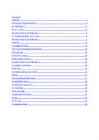
Contents Contents.................................................................................................................................. 1 # When the Tigers Broke Free................................................................................................ 2 # In The Flesh ?...................................................................................................................... 3 # The Thin Ice......................................................................................................................... 4 # Another Brick in the Wall part 1........................................................................................... 5 # The Happiest Days of our Lives........................................................................................... 6 # Another Brick in the Wall part 2........................................................................................... 7 # Mother..........................................................
280. Conscious love evokes the same in response. Emotional love evokes the opposite. Physical love depends on type and polarity. 281. Conscious faith is freedom. Emotional faith is slavery. Mechanical faith is foolishness. 282. Hope, when bold, is strength. Hope, with doubt, is cowardice. Hope, with fear, is weakness. 283. Man is given a definite number of experiences--economizing them, he prolongs his life. 284. Here there are neither Russians nor English, Jews nor Christians, but only those who pursue one aim--to be able to be. 285. The bitterest tears shed over graves are for words left unsaid and deeds left undone. 286. In the end it's not the years in your life that count. It's the life in your years. 9
Conditionals Table of Contents Conditionals ......................................................................... 2 A. Real Conditionals ............................................................. 2 B. Unreal Conditionals ......................................................... 3 Linking words used in Conditionals ...................................... 4 Conditionals Conditions deal with imagined situations: some are possible, some are unlikely, some are impossible. A. Real Conditionals Real Conditionals refer to situations that are true, have happened, generally happen or are likely to happen. The First Conditional expresses a possible condition and a probable result: If I have time, I will help you. In the if-clause we use the Present Simple, in the main clause will + the verb. We can also use the Present Continuous or Perfect in the if-clause and a Modal Verb in the main clause. If we are
1) Standard and non-standard varieties of English Standard varieties of English are the varieties of the English language that are considered to be a norm and are spoken and written by the minority (educated people). This is the optimum for educational purposes. The standard varieties of English are: BrEng (British), EngEng (English), NAmEng (North-America), USEng (United States), CanEng (Canada), AusEng (Australia), NZEng (New Zealand). Standard English (British English) is the most widely accepted and understood among native speakers, learned by foreigners. It is used in broadcasting, TV, news etc. It doesn't concern pronounciation (accent), but grammar and vocabulary. It includes formal and informal styles. British Standard English grammar and vocabulary, together with the RP accent should be called English English. RP (Received Pronounciation) is an accent that originates from South-East of England. A
23.Ta tavatses lugeda põnevusromaane She used to read thrillers 24.Varsti ta õppis vene keelt rääkima Soon she learned to speak Russian 25.Ma ei teadnud mida vastata I did not know what to answer 26.Mul oli kahju, et olin teda solvanud I was sorry to have insulted her 27.Ta oli esimene kes tuli She was the first to come 28.Nad olid liiga noored, et protestida They were too young to protest 29.Ta ei osanud piisavalt inglise keelt, et vaielda He did not know enough English to argue 30.Tal oli tähtsamatki teha, kui raamatukogusse minna He had more important things to do than to go to the library 31.Kui kuulata teda rääkimas, võiks mõelda, et ta on professor To hear hom talk, you would think he was a professor 32.Ta kuulas tähelepanelikult juhatajat kõnelemas He was listening attentively to the manager speak 33.Ma olen rõõmus, et sa leidsid oma rahakoti I am glad for you to have found your purse 34.Tekst oli liiga raske, et ma oleksin sellest aru saanud
1. STYLE The term "style" is polysemantic (has many meanings): a Latin word "stilus" originally meant a writing instrument used by ancient people. Already in classical Latin the meaning was extended to denote the manner of expressing one's ideas in written or oral form. Jonathan Swift defined style as "proper words in proper places". In present day English the word "style" is used in about a dozen of principle meanings: 1. the characteristic manner in which a writer expresses his/her ideas (e.g. style of Byron) 2. the manner of expressing ideas, characteristic of a literary movement or period 3. the use of language typical of a literary genre (e.g. the style of a comedy, drama, novel). 4. the selective use of language that depends on spheres / areas of human activity (e.g. style of fiction, scientific prose,
EHITUSTEADUSKOND Ehitustootluse instituut KUIDAS MUUDAB MUDELPROJEKTEERIMINE TERASKONSTRUKTSIOONIDE PROJEKTEERIMIST, VALMISTAMIST JA EHITAMIST? HOW ARE 3D AND BIM CHANGING THE DESIGN, FABRICATION AND CONSTRUCTION OF COMPLEX STEEL STRUCTURES? EPJ 60 LT Üliõpilane: Tanel Friedenthal Juhendaja: Prof. Roode Liias Kaasjuhendaja: Prof. Carrie S. Dossick Tallinn, 2010.a. Olen koostanud lõputöö iseseisvalt. Kõik töö koostamisel kasutatud teiste autorite tööd, olulised seisukohad, kirjandusallikatest ja mujalt pärinevad andmed on viidatud. …………………………………………….. (töö autori allkiri ja kuupäev) Üliõpilase kood: 041399 Töö vastab magistritööle esitatud nõuetele …………………………………………�
codegroups) that replace these plaintext elements. plaintext codeword emplacing DVAP employ DVBO en- DVCN enable DVDM enabled DVEL enabled to DVFK This means, of course, that DVDM replaces enable. If the plaintext and the code elements both run in alphabetical or numerical order, as above, the code is a one-part code, because a single book serves for both en- and decoding. If, however, the code equivalents stand in mixed order opposite their plaintext elements, like this Plaintext codenumber shield (for) 51648 shielded 07510 shielding 10983 shift(s) 43144 ship 35732 ships 10762 the code is a two-part code, because a second section, in which the code elements are in regular order, is required for decoding: codenumber plaintext 10980 was not 10981 spontaneous (ly) 10983 shielding
 annaabi.ee