Leidsid 33 sarnast õppematerjali, mis on seotud failiga "Differential Psychology". Need materjalid aitavad sul teemat sügavamalt mõista.
person, personality, psycho, differ, trait, mental, factor, social, cognitive, years, ability, tests, late, difference, positive, freud, differences, behaviour, traits, idea, approach, inter, logical, king, individual, extra, five, correlation, conscious, different, part, develop, experience, brain, other, related, eysenck, work, science, study, memoryThese emotional responses are linked to changes in autonomic and neuroendocrine systems, which are essential for metabolic support when preparing the body for action. Since emotion can influence such important processes like learning, decision-making, memory and consequently health and welfare of the individual then dysfunctional regulation of emotions can lead to psychopathology. A total of 26 healthy, non smoking male participants, age group 18-42 years were recruited into the study. Based on the theory of Cybernetic 3-Dimensional Model on Emotion Regulation (CMER), three dimensions of emotion regulation was measured. Participants were stressed using the TSST test, and the salivary cortisol and plasma IL-6 was measured as endocrinological markers of the stress response. Multiple regression and correlation analysis were conducted investigating the main hypothesis. The results show that
research. 1) Correlational studies: Study by Buss, who hypothesized that across cultures, men will prefer to marry younger women because of greater reproductive capacity and women will place greater value on a potential mate's earning potential to provide survival advantages. This evolutionary hypothesis was tested in 37 cultures by sending out questioners. 2) Twin studies (type of correlational studies) compare trait similarities in identical and fraternal twins (Minnesota twin study by Tellegen, Buchard). 3) Experiment: Split-brain experiments by Gazzaniga & Sperry, brain plasticity experiments by Rosenzweig and Bennett. Neurotransmission experiment by Martinez and Kesner. 4) Case studies: Phineas Gage studied by Dr John Harlow and Oliver Sack's study on Dr P. Discuss how and why particular research methods are used at the biological level of analysis.
Marii Haak 2017 To start with... · Two main concepts to understand - Psychology - Psyche How do you define them? What is psychology? · The study of the soul and mind (psyche & logos) · Psychology is the scientific study of the behavior of the individuals (what we do) and their mental processes (inner thoughts and feelings) · Studies human behavior, inner experiences and circumstances under they occur · Is psychology a study of differences between people or rather a study of similarities? - General tendencies Primary goal · The primary goal of psychology is to improve the understanding of behavior and cognition of our self and other people Why do we do what we do? Why do we think what we think?
alateadvusse (frustratsioon). VIII Elu mõte. Eesmärk: psyche vastandite tervikuks süntees ja identifitseerumine inimkonnaga. individualiseerumine (individuation) - oma arhetüüpide, psyche funktsioonide, orientatsioonide teadvustamine ja nende väljendamine. eneseaktualiseerumine (self-actualization): mina (self) - isiksuse keskpunkt. PSÜHHODÜNAAMILINE PARADIGMA. KAREN DANIELSON HORNEY (1885-1952). Horney, K. (1937). The neurotic personality of our time. Horney, K. (1950). Neurosis and human growth. Kirjeldas miks inimestel arenevad välja need olemused, mis tulenesid varasest lapspõlvest ja emotsionaalsetest suhetest vanemate ja lapse vahel. Igal organismil on kaasasündinud vajadus end realiseerida! Baasprintsiip: kaasasündinud vajadus arenguks, organismi võimaluste realiseerimine. Eneseteostus (self-realization) - Oma sisemise potentsiaali realiseerimine. Baasvajadused: rahuldamist eeldavad vajadused ja turvalisusvajadus.
The two bombs dropped on Hiroshima and Nagasaki in 1945 killed around 200,000 Japanese people. No other species has ever wielded such power, and no species could. The technology behind the atomic bomb only exists because of a cooperative hive mind: hundreds of scientists and engineers working together. The same unique intelligence and cooperation also underlies more positive advances, such as modern medicine. But is that all that defines us? In recent years, many traits once believed to be uniquely human, from morality to culture, have been found in the animal kingdom (see part one in this two-part series). So, what exactly makes us special? The list might be smaller than it once was, but there are some traits of ours that no other creature on Earth can match. No animal can get close to the devastation humans can cause (Credit: Thinkstock) No animal can get close to the devastation humans can cause (Credit: Thinkstock)
Chapter 2 Change Your Life 18 Chapter 3 Dream Big Dreams 40 Chapter 4 Decide to Become Rich 52 Chapter 5 Take Charge of Your Life 77 Chapter 6 Commit to Excellence 90 Chapter 7 Put People First 118 Chapter 8 Think Like a Genius 136 Chapter 9 Unleash Your Mental Powers 154 Chapter 10 Supercharge Your Thinking 179 Chapter 11 Create Your Own Future 201 Chapter 12 Live A Great Life 222 Summary and Conclusions 249 ix ccc_tracy_fm_i-xviii.qxd 7/7/03 3:22 PM Page x x ➤ CONTENTS Bibliography 256
London: Dent, 1883. Individuaalse psühholoogia ja mentaalsete testide esimene raamat. kuulmisläved, nägemisläved, värvitundlikkus jne. võimed erinevad, sest erinev sensoorne tundlikkus: muusikud, mehed, naised - maitsetundlikkus andekus: suurem energia ja suurem sensoorne tundlikkus. ühemunakaksikud ; sugupuude uurimine James McKeen Cattell (1860-1944) psühholoogia laboris Pennsylvania Ülikoolis (1888), Columbia Ülikoolis (1891) Cattell, J.M . Mental tests and measurements , Mind, 1890, 15, 373-380. esmakordselt termin " mental test" a) mentaalsed testid paljude inimestega b) tulemuseks: mentaalsete protsesside seosed, reeglid jne. 10 testi (algselt 50 ) 1. Dünamomeeter 2. Käe liikumise kiirus. 3. Taktiilne eristuslävi käel. 4. Valulävi (laubal) 5. Raskuste eristuslävi 6. Reaktsiooniaeg helisignaalile 7. Värvi nimetamise kiirus 8. Joone poolitamise täpsus 9
London: Dent, 1883. Individuaalse psühholoogia ja mentaalsete testide esimene raamat. kuulmisläved, nägemisläved, värvitundlikkus jne. võimed erinevad, sest erinev sensoorne tundlikkus: muusikud, mehed, naised - maitsetundlikkus andekus: suurem energia ja suurem sensoorne tundlikkus. ühemunakaksikud ; sugupuude uurimine James McKeen Cattell (1860-1944) psühholoogia laboris Pennsylvania Ülikoolis (1888), Columbia Ülikoolis (1891) Cattell, J.M . Mental tests and measurements , Mind, 1890, 15, 373-380. esmakordselt termin " mental test" a) mentaalsed testid paljude inimestega b) tulemuseks: mentaalsete protsesside seosed, reeglid jne. 10 testi (algselt 50 ) 1. Dünamomeeter 2. Käe liikumise kiirus. 3. Taktiilne eristuslävi käel. 4. Valulävi (laubal) 5. Raskuste eristuslävi 6. Reaktsiooniaeg helisignaalile 7. Värvi nimetamise kiirus 8. Joone poolitamise täpsus 9
Sheep senses and social cognition Sheep generally are held in low regard as far as cognition and social skills are concerned. However there is now interesting evidence from studies of their behaviour and brain function that they have highly sophisticated social and emotional recognition skills using faces, voices and smell. They are able to recognize and remember many diferent sheep and humans for several years or more and appear to have some capacity for forming mental images of the faces of absent individuals. The precence of such social cognition abilities in this species means that we must pay careful attention to welfare factors such as the composition and stability of their social environment as well as the nature of our own interactions with them. To many humans sheep are regarded as being as close to an automaton and amindless animal species as can be imagined and any serious consideration of their cognitive, social and general
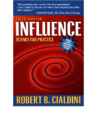
More praise for Influence: Science and Practice! "We've known for years that people buy based on emotions and justify their buying decision based on logic. Dr. Cialdini was able, in a lucid and cogent manner, to tell us why this happens." --MARK BLACKBURN, Sr. Vice President, Director of Insurance Operations, State Auto Insurance Companies "Dr. Cialdini's ability to relate his material directly to the specifics of what we do with our customers and how we do it, enabled us to make significant changes. His work has enabled us to gain significant competitive
Kõige rohkem mõtlen, kaalutlen, hindan, muretsen, rõõmustan, kurvastan Inimese suhe iseendaga SP-s: eneseteadvus, enesehinnang, eneseregulatsioon Eneseteadvus - kes ma olen: 5 spontaanset määratlust! Mina (self) eneseteadvuse väljendus, see, kelleks inimene ennast peab ja millega/kellega ennast samastab Mina mõisteaparaat (Introduction to SP, EP, 2008) Eneseteadvus, mina-kontseptsioon (self conciousness, self concept): a cognitive represenation of oneself that gives a coherence and meaning to one's experience, including one's relations to other people. It organize's past experinece and helps us to recognize and interpret relevant stimuli in the social environment. Üldistatud pilt iseendast. Teadmine endast (self-knowledge): knowledge about one's own characteristics, abilities, opinions, thoughts, feelings, motives etc. Teadmine enda kohta.
English literature is one of the oldest literatures in Europe; dates back to the 6th century AD. Oral literature, i.e. not written down, spread from person to person. In 449 AD Anglo-‐Saxon tribes invaded England – beginning of the Anglo-‐Saxon period in English literature. The first form of literature was folklore, carried by scops and gleemen, who sang in alliterative verse (a kind of simple poetry). Prose developed much later.
Formal characteristics(11) · Open Form · Free verse · Discontinuous narrative · Juxtaposition (kõrvutamine) · Intertextuality · Classical allusions(vihje) · Borrowings from other cultures and languages · Unconventional(ebaharilik) use of metaphor · Metanarrative · Fragmentation · Multiple narrative points of view (parallax) Thematic characteristics(8) · Breakdown of social norms and cultural sureties(veendumus) · Dislocation(nihestus) of meaning and sense from its normal context · Valorization of the despairing individual in the face of an unmanageable future · Disillusionment (silmade avamine, illusioone purustama) · Rejection of history and the substitution of a mythical past, borrowed without chronology · Product of the metropolis, of cities and urbanscapes · Stream of consciousness
Psychodynamic Approach · Work of Freud KEY ISSUES IN · Morea (1986) `the study PERSONALITY of personality began with the publication of The Interpretation of Dreams (1900).' The Psychodynamic · Freud controversial Approach figure in the history of psychology 1 2 WHO WAS SIGMUND
ilmnevaid seaduspärasusi välja toov teadus • SP seosed teiste uurimistraditsioonidega: ajalooline psühholoogia ja antropoloogia, isiksusepsühholoogia, keskkonnapsühholoogia, sotsioloogia, kultuuriuuringud. • Sotsioloogiline SP ja psühholoogiline SP?! • SP rakendusvaldkonnad ja väljundid: juhtimine ja liidriksolek, mõjutamine/reklaam, kaasamine, koostöö, läbirääkimised, grupiteraapiad, konfliktilahendamine … • Social Psychology Network: http://www.socialpsychology.org/ Gustave Le Bon (1841-1931) Kurt Lewin (1890-1947) 2. Inimsuhete ajalooline areng Meenutuseks: meie ühine ajalugu Vanaisad: homo erectus (2,0mln) homo neandertalensis (0,2 mln) Vanaema: Australopithecus afarensis a human ancestor that had developed bipedalism, but which lacked the large brain of modern humans. Antropogeneesi õied From left to right, the FBI assigns the above individuals to the
. . " and then name their pet peeve or passion. My view is not of an education specialist, but of one who loves sharing what I learn, and owes much to educators. Since I don't have an educational theory neatly worked-out, nor an outline of my perceptions, my intent is to address each educational ingredient that comes to my mind. After I've said what I think about each topic, readers may have a fair comprehension of my philosophy. First comes sensitivity. If a person be insensitive, be it from numbing cold, exhaustion, drugs, genetic makeup, or upbringing, then the process of education is bogged down, and results come only after great efforts. Sensitivity in my integrated meaning is broad, covering literally the senses, so that deaf and blind people are less sensitive, as well as people whose senses work perfectly, but whose receptivity or thought processes are blunted for whatever reason
........................................................183 The New Earth Is No Utopia.....................................................................184 Notes...........................................................................................................186 About the Author........................................................................................189 CHAPTER ONE THE FLOWERING OF HUMAN CONSCIOUSNESS EVOCATION Earth, 114 million years ago, one morning just after sunrise: The first flower ever to appear on the planet opens up to receive the rays of the sun. Prior to this momentous event that heralds an evolutionary transformation in the life of plants, the planet had already been covered in vegetation for millions of years. The first flower probably did not survive for long, and flowers must have remained rare and isolated phenomena, since conditions were most likely not yet favorable for a widespread flowering to occur
direction of a purchase decision and of using and evaluating products and services (Moutinho, Ballantyne & Rate, 2011, p. 83) The nature of consumer behavior is focusing on when, why, how and where people do or do not buy products. It blends elements from psychology, sociology, social anthropology, and economics. It attempts to understand the buyer decision making process, both individually and in groups. It also tries to assess influences on the consumer from groups such as family, friends, reference groups and society in general (Sandhusen, 2000, p. 218, 219) The study of individuals, groups, or organizations and the processes they use to
d a t a . P ii s Big a v data a l in t C o clou o l d I T opportu I 0 Academic essay (ITI0103) 2019 spring Introduction “Data is Everything and Everyone is Data. “[1] The ability to collect, organize, structure and analyse data on a large scale is probably the most significant trait that sets us, humans, apart from our primate friends. [1] To comprehend the opportunities and threats regarding big data located within the cloud, one must first realize the essence of them. Big data is not only what its name says, but it is also so much more. What is Big data? Big data is a term, which is used to describe a broad spectrum of concepts: from the technological ability to collect, aggregate, and process data, to the cultural shift that is
a means of both assessment and instruction. The first section discusses what AES is, how it works, and who the major purveyors of the technology are. The second section describes outgrowths of the technology as it applies to on-going projects in measurement and education. In 1973, the late Ellis Page and colleagues at the University of Connecticut programmed the first successful automated essay scoring engine, "Project Essay Grade (PEG)" (1973). The technology was foretold some six years earlier in a landmark Phi Delta Kappan article entitled, "The Imminence of Grading Essays by Computer" (Page, 1966). At the time the article was provocative and a bit outrageous, though in hindsight, it can only be deemed prophetic. As a former high school English teacher , Page was convinced that students would benefit greatly by having access to technology that would provide quick feedback on their writing. He also realized that the greatest hindrance to
own. The UNCRC laid the foundation for the potential re-evaluation of our traditional understanding of childhood and the perception of children as primarily objects of the adult world. Since, then the UNCRC has attracted significant scholarly interest from various disciplines and as such a high degree of research has been published in this area already. The increasing sociological interest in children in particular that has provided a new perspective around the idea of children as competent social actors has provoked a great controversy and confusion as it challenges the image of the incompetent child which is overwhelmingly prevalent in the Western society. The purpose of this dissertation is to critically explore this hotly debated tension between these two conflicting salient features that have often prevented the recognition of children as active citizens, entitled to respect and participation. With a
Q: Social order requires social behaviour to be predictable and individuals to cooperate. Amongst the explanations of social order are five outlined by Hechter and Horne: `meaning', `values and norms', `power and authority', `spontaneous interaction' and `networks and groups'. Describe how at least three of these (or other) factors might explain social order, and discuss the extent to which you find the explanations convincing. Introduction For societies to cohere and cooperate, it is necessary for individuals within them to have a predictable and collaborative behaviour. The presence of social order enables individuals to feel more secure publicly, as it enables them to somewhat predict their lives. Social order is also necessary for stability and serves as the basis for collective advancements. There are
pidevalt muutuv ja personaalne - peegeldab indiviidi kogemusi, eesmärk on tagada kohanemine keskkonnaga. Teadvus on personaalne, ei saa jaotada, pidevalt muutuv, valiv, kohaneb keskkonnaga Rakenduspsy kujunemine. Uurimistehnikate laiendamine (kasuliku teabe leidmine inimese kohta). Learnes patterns of behaviour are habits. Habit makes society possible. Act in ways that are compatible with the tupe of person you would like to become. Aitas evolutsiooni teooria tuua psühholoogiasse. Tema pragmaatiline suhtumine viis rakenduspsy kujunemisenie (applied psych.) Ideo-motor - ideas cause behavior, and thus we can control our behavior by controlling our ideas. Habits - learned patterns of behavior. Radical empiricism - all consistent categories of human experience are worthy of study, whether or not they are amanable to the methods of science.
Klassifitseeriv paradigma Gordon W. Allport (1897-1967) Personality: A psychological interpretation. 1937, NY: Henry Holt Pattern and growth of personality. 1961, NY: Holt, Rinehart & Winston. I. Isiksuse olemus. · dünaamiline organisatsiooon · psühhofüüsikaline süsteem · individuaalsus · temperament, intelligentsus ja füüsiline seisund · tüüp - teiste iseloomujoonte kategoriseerimine vs. isiksus - seesmine determinatsioon · miski, mis determineerib käitumist II. Kriteeriumid isiksuse teooriale · internaalsus, mitte situatsioon · seesmiste muutujate kirjeldus, mis determineerib käitumist
Klassifitseeriv paradigma Gordon W. Allport (1897-1967) Personality: A psychological interpretation. 1937, NY: Henry Holt Pattern and growth of personality. 1961, NY: Holt, Rinehart & Winston. I. Isiksuse olemus. · dünaamiline organisatsiooon · psühhofüüsikaline süsteem · individuaalsus · temperament, intelligentsus ja füüsiline seisund · tüüp - teiste iseloomujoonte kategoriseerimine vs. isiksus - seesmine determinatsioon · miski, mis determineerib käitumist II. Kriteeriumid isiksuse teooriale · internaalsus, mitte situatsioon · seesmiste muutujate kirjeldus, mis determineerib käitumist
Paremad täidesaatvad funkt (tähelepanu jne) eeldused paremaks enese kontr Metaregulatsioon- osa enesereg kulub kulub nt muretsemisele oma muretsemise pärast- mõttetu. Emots reg võib muutuda automaatseks ehk vallandab süsteem1 Isiksuseomadused- kausaalne heterogeensus, impl ja eksplit. Isiksusom indikaatoreid seob semantiline sarnasus. Konsistentsus ja sarnane kausaalsus 2. ISIKSUSEPSÜHHOLOOGIA METODOLOOGIA Kirjandus K: Hofstee, W. K. B. (2002). The questionnaire construction of personality: Pragmatics of personality assessment. In H. I .Braun, D. N. Jackson, & D. E. Wiley (Eds., pp. 19-35), The Role Of Constructs in Pyschological and Educational Measurement. New York: Lawrence Erlbaum. S: Schnabel, K. & Asendorpf, J. B. (2010). The self-concept: New insights from implicit measurement procedures. In B. Gawronski & B. K. Payne (Eds.), Handbook of implicit social cognition (pp. 408-425). New York: Guilford Press. Küsimused Hofstee (2002) artikli põhjal:
forest lowers blood pressure and pulse, cortisol level, supresses the activity of sympathetic nervous system and stimulates parasympathetic nervous system (Lee et al., 2012; Park, Tsunetsugu, Kasetani, Kagawa, & Miyazaki, 2010; Tsunetsugu et al., 2013). Satisfaction with the neighborhood and perceived safety related to the perceived health · General dissatisfaction with the neighborhood is related to poorer self-reported health state; also if the personality variables are taken into account · Also the self-reported health state is related to the perceived self-estimated safety of the neighborhood, as well to the trust toward the neighbours · Similar results from different studies from different countries (Echeverria et al., 2008; Gary et al., 2007; Hill et al., 2005; Kim, 2008; Latkin & Curry, 2003; Ross & Mirowsky, 2009; Oshio ja Urakawa, 2012) Public space and stress · Being in urban nature and its relations to stress was
What are the 4 levels of negative consequences of bullying specified by the text? General school climate, right of students to learn in a safe environment without fear, lifelong consequences. 2. What is the foremost source of formal bullying research? Scandinavian countries, Great Britain, and Japan. 3. Direct bullying behaviours include (5) teasing, taunting, threatening, hitting, stealing. 4. Indirect bullying is such as spreading rumours and enforcing social isolation. 5. Boys and girls differ in their bullying behaviours in that Boys typically engage in direct bullying methods. but girls are more apt to utilize more subtle indirect strategies. 6. In general terms, bullying can be defined as direct and indirect. 7. The amount of students involved in bullying (as either bullies or victims) is 15 per cent. 8. The chronological pattern of direct bullying can be described as increasing
· Stages of a writing lesson. o Generating ideas o Focusing ideas o Focus on a model text o Organising ideas o Writing o Peer evaluation o Reviewing 8 Stages of a writing lesson You do not have to include all these stages in every writing lesson, and it may differ according to the genre of the writing and / or the time available. Learners work in pairs or groups as much as possible, to share ideas and knowledge, and because this provides a good opportunity for practising the speaking, listening and reading skills. Generating ideas This is often the first stage of a process approach to writing. 1) Before writing learners think about a situation, and tell a partner. 2) Give learners the essay title and pieces of scrap paper.
1 The Medium Is the Message In a culture like ours, long accustomed to splitting and dividing all things as a means of control, it is sometimes a bit of a shock to be reminded that, in operational and practical fact,, the medium is the message. This is merely to say that the personal and social consequences of any medium-that is, of any extension of ourselves-result from the new scale that is introduced into our affairs by each extension of ourselves, or by any new technology. Thus, with automation, for example, the new patterns of human association tend to eliminate jobs, it is true. That is the negative result. Positively, automation creates roles for people, which is to say depth of involvement in their work and human association that our preceding mechanical
ALCOHOL Alcohol is a widely used substance for both science and in technology. Its name comes from an Arabic word al-kuhl meaning " a powder for painting the eyes". The term was later applied to all compounds that contain alcoholic spirits. To most people alcohol is considerd a downer that reduces activity in the nervous system. Some of the things alcohol effects you is, the alcohol intoxicated person exhibits lose muscle tone, loss of fine moter coordination,and often has a staggering "drunken" gait. The eyes may appear somewhat "glossy" and pupils may be slow to respond to stimulus. At high doses pupils may become constricted. At intoxing doses, alcohol can decrease heart rate, lower blood pressure and respiration rate, and result in decreased reflex and slower reaction times. Skin may be cool to touch but to the user may feel warm or normal, profuse sweating may accompany alcohol use
[email protected] ABSTRACT Scholarship on backpackers speculates some individuals may extend backpacking to a way of life. This article empirically explores this proposition using lifestyle consumption as its framing concept and conceptualises individuals who style their lives around the enduring practice of backpacking as ‘lifestyle travellers’. Ethnographic interviews with lifestyle travellers in India and Thailand offer an emic account of the practices, ideologies and social identity that characterise lifestyle travel as a distinctive subtype within backpacking. Departing from the drifter construct, which (re)constitutes this identity as socially deviant, the concept of lifestyle allows for a contemporary appraisal of these individuals’ patterns of meaningful consumption and wider insights into how ongoing mobility can lead to different ways of understanding identities and relating to place. Keywords: lifestyle consumption; backpacker; mobility; drifter; identity
closely connected with the United Kingdom, the Channel Islands and the Isle of Man – British Overseas Territories citizens = until 2002 (The British Overseas Territories Act) British Dependent Territories citizens – British Overseas citizens = persons connected with former British colonies (Malaysia and Kenya) – British Nationals (Overseas) = status created by the Hong Kong Act 1985 – British Protected Person (BPP). 15. Right of abode- an individual's freedom from immigration control in a particular country. A person who has the right of abode in a country does not need permission from the government to enter the country and can live and work there without restriction. Generally, in order to have the right of abode in a certain country, a person must be a citizen of that country. Those with permanent residency of the country generally have a de facto right of residence but it can be
 annaabi.ee