Leidsid 33 sarnast õppematerjali, mis on seotud failiga "Curriculum Vitae - CV". Need materjalid aitavad sul teemat sügavamalt mõista.
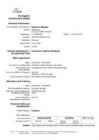
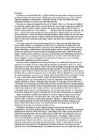
university, french, degree, manchester, managementtudies, responsible, running, curriculum, detailsallytreet, edinburghcotland, phone, 0237, lancaster, levels, geography, mathematics, experience, managertaff, peugeot, possible, wholekills, excel, internet, languages, fluent, english, germany, driving, airplane, activities, cross, countryEuropean level (*) Listening Reading Spoken Spoken interaction production English C2 Proficient user C2 Proficient user C2 Proficient user C1 Proficient user C1 Proficient user Page 1 / 3 - Curriculum vitae of For more information on Europass go to http://europass.cedefop.europa.eu Katherin Mayfair © European Communities, 2003 20060628 Russian B2 Independent B2 Independent B1
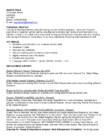
MARTIN POLD 12 Carlisle Street, Leicester, LE3 6AF Mobile: 07762877920 E-mail: [email protected] PERSONAL PROFILE: I am highly motivated person currently running my own small businesses. I have over 10 years experience in customer service setting, enabling me to develop high levels of communication and attention to detail. I am reliable and responsible having previously been entrusted with cash handling and dealing with financial transactions. I also have experience of training other members of staff. KEY SKILLS: Excellent communication and customer service skills Excellent IT skills Accurate and numerate Can work well as part of a team or own initiative Highly motivated and enthusiastic Flexible and adaptable Language skills: Estonian, English, German, Russian, Latin EMPLOYMENT HISTORY:
exhibition. Building sales team. Organizing trainings to sales team. VOLUNTARY WORK: Fundraiser, RECOVERY Charity, April 2012 Jan 2017 Regional Coordinator and Partner of Let's Do It!, Let's Do It! World, Nov 2011 Dec 2015 Duties: Coordinating Leicester and Leicestershire. Sharing information, building a team. Partner of Let's Do It. DSU VOLUNTEER SILVER AWARD April 2013: Carnival Helper, Leicester Caribbean Carnival Ltd 2012/2013 Square Mile Project, De Montfort University 2012/2013 Summer Sundae Steward, De Montfort Hall 2012/2013 Business Expert/Guest Speaker, Peter Jones Enterprise Academy, Jun 2012 Jun 2013 Duties: Giving FREE business advice and guidance to students at New College Nottingham. Helping students to launch their new business ideas and sharing my own business experience. Business Expert, The Working Knowledge Group, Nottingham Trent University, Jun 2012 Duties: The pitch judging is the Dragons Den role! Also giving business advice to
Anglo-Saxon England was one of the most civilised countries in Europe, with organised systems of agriculture and trade. The Vikings ca me from Scandinavia in the tenth eentury; they settled in the north and made the town of York the capital of their kingdom. The last successful invasion of Britain was in 1066, which is an important date in history books in British schools. Duke William of Normandy (William the Conqueror) defeated the English at the Battle of Hastings, and the Normans and the French settled in Britain over the next three centuries. French became the language of the nobility and, with Latin, the language of the legal system and of government. POPULATION Within Europe only the Netherlands has a higher density of population than England. Historically speaking, the true Britons are descendents of the Celtic tribes who originally came from the Iberian peninsula and settled in the western parts of the British Isles. The re st
Most local education authorities were have now completely changed over to comprehensive schooling. At the age of 16 pupils take school-leaving examinations in several subjects at the Ordinary level. The exam used to be conducted by eight independent examining boards, most of them connected with the university. This examination could also be taken by candidates at a further education establishment. This exam was called the General Certificate of Education (GCE). Pupils of comprehensive school had taken the examination called the Certificate of Secondary Education either with or instead of the GCE. A GCE of Advanced ("A") level was taken two years after the Ordinary level exam. It was the standard for entrance to university and to many forms of professional training. In 1988 both
Staying on the farm is a wonderful experience, and I 16)........................( enjoy ) every minute of it, though being a farmer is certainly a much harder job than I 17) .........................( think ) it was! Fancy joining me next time I come? Love, Sue TASK 11 Read the following letter and replace underlined formal phrases with the informal expressions. Dear Mum, I felt obliged to write to inform you how everything is going here in spain since I started my university. Please accept my sincere apologies for not writing sooner but I've been so busy I really haven't had a suitable opportunity. I managed to find a nice place to live. It's a small flat just around the corner from the university. I'm sharing the flat with a girl called Anita who seems really nice and has been here for a year. I have become familiar with my surroundings and have been practising my Spanish, which is _improving considerably every day .
Maintained schools funded by the state. Schools maintained by the local education authority (LEA, or, in Northern Ireland, by Education Authority). Some of those schools are voluntary schools (also known as religious schools or faith schools) where the land and buildings are owned by a charity, often a religious organisation such as a church, but the school is at least partly funded by the local education authority. In all state schools, students must follow the National Curriculum. Independent schools independent fee-charging schools. Schools that are independent of local or central government control; private schools • financed by fees and endowments financially independent Public schools = now a somewhat archaic term for the oldest, most exclusive and expensive of the boys' independent secondary boarding schools (some are now at least partly co- educational). The National Curriculum was introduced into England, Wales and Northern Ireland as a
roman occupation lasted nearly 400 years. They left behind very little. Roman province of Britannia covered most of present-day England and Wales. 4. Latin influence on English *The influence of Latin is noticeable also in the names of European cities: the Latin noun colonia (settlement, colony) may be found in numerous place-names: Lincoln, Colchester, Cologne ; from Latin word castrum (military camp) were derived English affixes -chester and -castle: Manchester, Lancaster, Newcastle; Latin word portus (seaport) in Portsmouth *-tor - person, doer, masculine form. The suffix is attached to the stem: victor (`winner', from the verb vincere `to win'), spectator (spectare). *-orium - place, where the activity marked with the verb occurs: dormitorium (dormire `to sleep'). In English the suffix is -ory: dormitory. *tas - it denotes an abstract notion, derives from the adjective: celebritas (celeber), libertas
http://www.tandfonline.com/loi/rmps20 When `we' are `the other'. Travel books on Romania as exercises in intercultural communication a Rodica Dimitriu a Department of English , Alexandru Ioan Cuza University of Iaþi , Romania Published online: 06 Aug 2012. To cite this article: Rodica Dimitriu (2012) When `we' are `the other'. Travel books on Romania as exercises in intercultural communication, Perspectives: Studies in Translatology, 20:3, 313-327, DOI: 10.1080/0907676X.2012.702400 To link to this article: http://dx.doi.org/10.1080/0907676X.2012.702400 PLEASE SCROLL DOWN FOR ARTICLE
Learning and Growth Perspective Objectives Measures Targets Initiatives 2013, 2014, 2015 Stable full-time employee core Amount of full-time 5, 7, 10 Motivation through increased salary and system of rewards employees Head-hunting Raise the competence of University degrees 3BSc , 2MSc; 4BSc, 2MSc; Creation of environment that will not stifle study process employees 5BSc, 3MSc Selection of trainings that would both fit company's requirements and Course/trainings 6h, 5h, 5h inclinations of employee certificate hours on average per person per
The 10 most popular second careers Four years ago Clare Stokes, 34, worked as a pharmacist. Today, she's a florist "I used to be a full-time pharmacist and ran pharmacies for Boots. I enjoyed it but realised I needed something to help me switch off from the day-to-day stresses of the job. So I studied floristry at night school and after three years, I qualified as a florist. It so happened that a florist shop came up for sale in my area and I couldn't resist the idea of running it. So I bought it, took on the existing staff and I haven't looked back. I think a lot of people are creative. Once they find an outlet for it, they find they want to do it all the time. But it's not just the creative side of my new career that I love. I also enjoy the contact with people and the business side. Some days I don't make as much money as others, but generally it's going well. Then there's the complete lack of stress. These days, I go home feeling relaxed.
outlets in 69 countries; 66% are in the United States and 90% are privately owned and operated. The company has more than 37,000 employees serving approximately 11.4 million customers daily. In North America, franchises are licensed on a per store basis, while in several international locations licenses are sold on a regional basis with franchises owning exclusive development rights for the region or country. These regional franchises are known as master franchises, and are responsible for opening new restaurants, licensing new third party operators, and performing standards oversight of all restaurant locations in these countries. The largest example of a master franchise is Hungry Jack's, which exclusively owns, operates or sub-licenses over 300 restaurants in Australia. As with other multi-national corporations, Burger King has been involved in several legal disputes and cases, as both plaintiff and defendant, in the years since its founding in 1954.
Anthropology of Tourism Madli Tuvike Anthropology and Tourism Female Adventure Tourism This essay will explain what significance culture has in adventure tourism. There are five paragraphs in this essay, where definitions of adventure travel and human culture are given. First, paragraph will look and define what culture, anthropology and adventure tourism are. Second paragraph will examine how different cultures impact female adventure travel. Third paragraph will point out the problems in adventure tourism. The forth paragraph will give recommendations for the future and some of the possible future problems in female adventure tourism will be looked at. The last paragraph will be a summary of the key findings and recommendations. Tourism is one of the world’s largest industries (Tisdell, 2000, Swarbrooke et al. 2003, Buckley, 2003). According to UNWTO, international tourist arrivals have reached 1,087
Caithness; by the end of the 13th century, the kingdom had assumed approximately its modern borders. However, processes of cultural and economic change beginning in the 12th century ensured Scotland looked very different in the later Middle Ages. The stimulus for this was the reign of King David I and the Davidian Revolution. Feudalism, government reorganisation and the first legally defined towns (called burghs) began in this period. These institutions and the immigration of French and Anglo-French knights and churchmen facilitated a process of cultural osmosis, whereby the culture and language of the low-lying and coastal parts of the kingdom's original territory in the east became, like the newly acquired south-east, English-speaking, while the rest of the country retained the Gaelic language, apart from the Northern Isles of Orkney and Shetland, which remained under Norse rule until 1468. The Wallace Monument commemorates William Wallace, the 13th-century Scottish hero
illiterate janitor with an easy-going, friendly disposition. Hence, I value what we might call character more than specialist knowledge from an antisocial person. God knows we want everyone to be a well-mannered genius. But humans are not cut out to be happy like pigs in a pen. We instead have insatiable brains, with mental appetites. So our goal is to balance the brainwork with hearts and smiles. "Facts served with sauce." Where does common sense fit on? Is it teachable? To a degree, what we mean by common sense is simply learned experience. Something more exists, though. Those who we praise for common sense may be quick-witted, steady-nerved, and efficient at practical decision-making. It is likely some of those traits depend on genetic brain makeup. In any case, for purposes of an essay on education, I propose to say no more about common sense. Similarly, where do concentration, reflection, analysis and criticism enter? Are they best
Introduction This chapter documents the advent and rise of automated essay scoring (AES) as a means of both assessment and instruction. The first section discusses what AES is, how it works, and who the major purveyors of the technology are. The second section describes outgrowths of the technology as it applies to on-going projects in measurement and education. In 1973, the late Ellis Page and colleagues at the University of Connecticut programmed the first successful automated essay scoring engine, "Project Essay Grade (PEG)" (1973). The technology was foretold some six years earlier in a landmark Phi Delta Kappan article entitled, "The Imminence of Grading Essays by Computer" (Page, 1966). At the time the article was provocative and a bit outrageous, though in hindsight, it can only be deemed prophetic. As a former high school English teacher , Page was
DC's to customer markets. As before, these decisions have a big impact on the revenues, costs and customer service levels of the firm. These decisions 13 assume the existence of the facilities, but determine the exact path(s) through which a product flows to and from these facilities. Another critical issue is the capacity of the manufacturing facilities--and this largely depends the degree of vertical integration within the firm. Short term decisions focus decisions focus on detailed production scheduling. These decisions include the construction of the master production schedules, scheduling production on machines, and equipment maintenance. Other considerations include workload balancing, and quality control measures at a production facility. 3). Inventory Decisions: These refer to means by which inventories are managed. Inventories
Discusses domestic matters with the Master of the Household. Towards the end of the day, there is always another pile of official papers and reports waiting to be read or acted upon. The business on constitutional monarchy never ends. 3. Who is the present heir to the throne? Speak about his education. Who are the 2nd and 3rd in line? Present heir is Prince Charles, The Prince of Wales. Has been an exchange student in Australia. Graduated from the university of Cambridge with BA (honors). 2nd and 3rd in line are Prince William of Wales and Prince Henry of Wales, respectively. 4. Make up your list of 5 top British people. Give your motivation. The Queen, Adele, Elton John, Shakespeare, JK Rowling. 5. Which 5 places attract visitors in Wales and Scotland? Edinburgh, Loch Ness, The Highlands, Snowdonia, Cardiff. 6. Name 6 islands, 5 rivers, 3 lakes, 3 mountains in UK.
Active and passive vocabulary. The Old English vocabulary was homogenous. There were about 50 000 – 60 000 words, 1/3 of which have survived. o About 450 loans from Latin o About 2000 from the Viking invasions. The Middle-English vocabulary became a heterogeneous hybrid of Germanic and Romanic languages. 100 000 to 125 000 words. o About 10 000 loans from Norman French, 75% are still in use o Continuing Latin influence Early Modern English. 200 000 – 250 000 words o English becomes a pluricentric language. o Polyglot. Cosmopolitan language Modern English. 500 000 words o At present at least 1 billion lexical units 2. Core and periphery. Origin of the 10,000 most frequent words: o Old English 31.8 % o French 45 % o Latin 16.7 %
REFERENCES Armstrong, K., & Retterer, O. (2008). Blogging as L2 writing: A case study. AACE Journal, 16(3), 233251. Brown, J.S.& Adler, R.P. (2008). Minds on Fire: Open Education, the Long Tail, and Learning 2.0. Educause Review, 43 (1), 1632. Godwin-Jones, B. (2003). Emerging technologies: Blogs and wikis: Environments for on-line collaboration. Language Learning & Technology, 7 (2), 1216. Hanlon, P. O. (2009). Running head: Blogs and their Potential to Facilitate Critical Reflection. Technology and Learning Literature Review, 110. Lissina, L. (2010). Education, Intercultural Learning and Youth. Trajectory@'s Blog. Available at http://www.trajectorya.ee/?page_id=132, accessed June 11, 2010. Matheson, D. (2004). Weblogs and the epistemology of the news: Some trends in online journalism. New Media & Society, 6 (4), 443468. Nunan, D. (1992). Research Methods in Language Learning. Cambridge University Press
Nevertheless, about half of the most commonly used words in Modern English have Old English roots. The words be, strong and water, for example, derive from Old English. Old English was spoken until around 1100. [5] 2) Middle English (1100-1500) In 1066 William the Conqueror, the Duke of Normandy (part of modern France), invaded and conquered England. The new conquerors (called the Normans) brought with them a kind of French, which became the language of the Royal Court, and the ruling and business classes. For a period there was a kind of linguistic class division, where the lower classes spoke English and the upper classes spoke French. In the 14th century English became dominant in Britain again, but with many French words added. This language is called Middle English. It was the language of the great poet Chaucer (c1340-1400), but it would still be difficult for native English speakers to understand today. [5]
The singles "You Don't Care About Us", from Placebo (1996), and "Pure Morning", from Without You I'm Nothing, were the peak of their British success, both charting in the top ten. Since Without You I'm Nothing, the band have received less positive coverage from the British music press who, on occasion, have mocked the perceived pretension of front-man Molko. However, the band has retained a huge popular and critical following in continental Europe. By way of their English-accented fluent French front-man, France has become their first target market in Europe, which has led to them gaining a huge popularity there, even in excess of their British fan base. The band's third release, Black Market Music, added hip-hop and disco elements to their tense rock sound. The UK saw a release date of October 2000; US fans were treated to a re- sequenced version that autumn. The US version featured a slightly different track listing,
) Perception Biological · Intelligence extra reading Cognitive Deary, I.J. (2013). Intelligence. Current Biology, 23, 673-676. (Memory) Social Deary, I.J. (2001). Intelligence: A Very Short Introduction. Oxford: Methodology Cognitive Oxford University Press. (Language and thinking) Personality Personality "characteristic patterns of thought, emotion, and behaviour, together with the psychological mechanisms--hidden or not-- Nomothetic Idiographic behind those patterns."
Challenges of children`s “participation”: A Case Study of active citizenship in Cadle Primary School Gerli Orumaa – 662974 9th of May 2014 Word Count: 8,800 `Submitted in partial fulfilment of the requirements for the degree of B.A. International Relations` Table of Contents Abstract 3 Introduction 4 Chapter 1: Citizenship, Children`s Rights and Participation: from the UN to the UK 6 Chapter 2: Citizenship Education in Wales………………………………………………14 Active Citizenship in Cadle Primary School: A Case Study 20 Conclusion 29 Bibliography 32 Appendices Appendix 1: The United Convention of the Rights of the Child
searchings. Portrait as a modernist Bildungsroman. Revolution in style and composition. James Joyce as a master of European Modernism. Self-consciously modernist-new ways to express, quite difficult to read. Himself encouraged diversity of opinions concerning his art. ,, Ulysses will give universities something to work on well into the next century". Joyce's background. Ireland, till 1904. Education was standard, middle class. He had quite prestigious start on education, Jesuit university college, Dublin. Ended up in rebellion. Against inhibiting(keelama) forces of family, church, school. Moved to the continent, Paris, Ulysses-Zürich and Paris. Joyce and Ireland. ,,Cultic twalette", left in 1904, couldn't help returning in every page he composed, short story collection Dubliners, Ulysses-guidebook through Dublin. A Portrait of the Artist as a Young Man Largely autobiographical, Joyce's own spiritual searches.
. Employers tööandjad Employees töötajad Welfare system sotsiaalsüsteem To dismiss sb kedagi vallandama To make sb redundant koondama kedagi Labour contract act - Under the term of employment legislation - Tööseadusandluse ? järgi Benefit, support, allowance toetus Claim nõue; hagi Perks = perquisite Ametihüved Updating courses teadmiste täiendamise kursused To report aru andma To be responsible millegi eest vastutama To be accountable kellelegi aru andma (kõrgemal seisvale inimesele vastutama) Sth is very costly kallis on midagi väga Expertise ekspertiis Expert assessors ekspert hindajad Panel kohtukoosseis Case load kohuasjade arv, mida keegi lahendama peab. Act as a watchdog Judicial review are subject to kohus võib need asjad läbi vaaadat, nn kohtulik järelvalve The nature on claims nõuete või hagide iseloom
herbs it is absolutely delicious? If you ask foreigners to name some typically English dishes, they will probably say "Fish and chips" then stop. It is disappointing, but true that, there is no tradition in England of eating in restaurants, because the food doesn't lend itself to such preparation. English cooking is found at home. So it is difficult to a good English restaurant with a reasonable prices. In most cities in Britain you'll find Indian, Chinese, French and Italian restaurants. In London you'll also find Indonesian, Mexican, Greek... Cynics will say that this is because English have no "cuisine" themselves, but this is not quite the true. Vocabulary: to criticize - tasteless overcooked - ingredient - to invent - sauces - to disguise - spice herb - delicious - disappointing - to lend cuisine British Youth (2) Most 18 and 19 year-olds in Britain are quite independent people. English people say
Is integrated care the `best' solution? b ) What is the initial target service user group? How will you ensure that service users remain the organising principle for integrated care throughout? How will integrated care address inequalities for service user groups, as well as the wider community? c ) How will you ensure organisational support for the goals of the project (for example, a senior officer responsible for delivery, a dedicated budget)? Context d) Is the proposed integration project associated with any other improvement programmes? How will this impact on local integration? What competing national or local agendas do you need to consider? e) Which sectors are involved and what is their role in relation to integration (for example, patients/public, primary care, acute care, third sector, private sector)
LEXICOLOGY 1. Size of English vocabulary 1) Old English – 50,000 to 60,000 words Vocabulary of Shakespeare OE – homogeneous; 1/3 of the vocabulary has survived • 884,647 words of running text About 450 Latin loans (Amosova) • 29,000 different words (incl. work, working, Viking invasions added 2,000 worked, which are counted here as separate 2) Middle English – 100,000 – 125,000 words) English becomes heterogeneous (Norman French, • 21,000 words English, Latin), hybrid of Germanic and Romance languages
4 come up with 8 mistake for for me. It was the first thing my parents 5 Well, you would keep eating too noticed when I was born! 3 1 Laura was offered a place at much. Personality-wise, I've got a lot of my Manchester University but she dad's traits in me. We're both quite bubbly and friendly (or so people 1C The origins of English turned it down. page 5 2 Whilst some people are in favour say), and we share quite a laid-back
This is a post-refereeing final draft. When citing, please refer to the published version: Cohen, S.A. (2011). Lifestyle travellers: Backpacking as a way of life. Annals of Tourism Research, 38(4), 1535-1555. DOI: 10.1016/j.annals.2011.02.002 LIFESTYLE TRAVELLERS: Backpacking as a way of life Scott A. Cohena Bournemouth University, United Kingdom a corresponding author: School of Tourism, Dorset House, Talbot Campus, Poole, Dorset, BH12 5BB, United Kingdom. Tel: +44 1202 961261 Fax: +44 1202 515707 Email: [email protected] ABSTRACT Scholarship on backpackers speculates some individuals may extend backpacking to a way of life. This article empirically explores this proposition using lifestyle consumption as its framing concept and conceptualises individuals who style their lives around the enduring
6 Chapter 1: Literature Review The construction industry is complex and dynamic and has several constraints that distinguish it from other industrial sectors. Dimitri Mitchell outlined in a September 2009 article in Civil Engineering entitled “The Promise of Virtual Design”, four characteristics that illustrate the construction industry. First, there is a high degree of complexity resulting from different companies collaborating on a single project. These diverse and dispersed companies are required to exchange critical information during the design and construction phases. Second, owners and other non engineering stakeholders interpret 2D drawings differently and often have an incomplete understanding of the planned construction. Third, there is a high degree of uncertainty and risk caused by site conditions
Electronic Security Electronic Intelligence Emission Security (shifting of ra- Electronic Reconnaissance (eaves- dar frequencies) dropping on radar emissions) Counter-Countermeasures ("look- Countermeasures (jamming, false ing-through" jammed radar) radar echoes) This book employs certain typographic conventions for simplicity and economy. Plaintext is always set lower case; when it occurs in the running text (as opposed to its occurrence in the diagrams), it is also in italics. Cipher-text or codetext is set in SMALL CAPS in the text, keys in LARGE CAPS. They are distinguished in the diagrams by labels. Cleartext and translations of foreign-language plaintext are in roman within quotation marks. The sound of a letter or syllable or word, as distinguished from its written form, is placed within diagonals, according to the convention widely followed in linguistics; thus /t/ refers
 annaabi.ee