Leidsid 33 sarnast õppematerjali, mis on seotud failiga "Cuban missile crisis". Need materjalid aitavad sul teemat sügavamalt mõista.
cuba, kennedy, missile, president, letter, castro, crisis, taken, nation, nikita, established, sites, sent, military, photos, formed, strike, choice, between, speech, remove, nuclear, cuban, vanessa, viira, mikson, fidel, government, 1959, took, attempted, april, built, summer, full, equipment, autumn, good, launch, base, wanted, strenght, force, bargainThe creation of the Northwest Territory as the first organized territory Ohio River was settled, 5 new states Advancement of education, maintenance of civil liberties, exclusion of slavery Promised not to invade or disturb Indians Northwest Indian War-> to stop white expropriation (sundkoormis) · Indian Removal Act of 1830 Destructive to tribes. Many died when travelled to the other side of Missisippi. Signed on May 28 by Andrew Jackson "Trade" land with the tribes Resolve the Georgia crisis (dispute with Cherokee) Move of over 70,000 natives (vabatahtlik-sunniviisiline) Reservations (kaitsealad)1851- the Indian Appropriations Act About 310 reservations 55,7 million acres Unevenly distributed Tribal sovereignty (iseseisvus) Poverty and unemployment · Indian citizenship Act of 1924 Granted citizenship to 300,000 indigenous people, to friendly tribes State support was limited Absorb Indians into the mainstream Didn't have the right to vote
River Johan Schalbrick, a drummer from Tallinn (Reval) · New Sweden Swedish colony on the Delaware River from 16381655 · 1657 Martinus Hoffman, born in Tallinn (Reval), came to New York (New Amsterdam), started to work as a saddlemaker. · His great-granddaughter Cornelia Hoffmann (b. 1734) married Isaac Roosevelt, which makes her the great-great-grandmother of Franklin Delano Roosevelt, president of the US from 193345. · Hans Rebane = 1897 founded the first Estonian-language newspaper in the US Eesti Ameerika Postimees (published in NY until 1911) · 1898 founded an Estonian Lutheran congregation in NY (still exists today) 2. Signficant waves of migration from Estonia to the US in the 20th century, their reasons. *The failure of the 1905 Revolution: The first significant wave of immigration
England. Former CIA Near East Division Chief James Chritchfield maintains that the CIA played no direct role in the 1963 coup, but that it viewed the Ba'ath Party favorably and offered support after they had taken over. In 1966 Salam Arif, the leader of the new Ba'athist government, died and his brother, Abdul Rahman Arif, not a Ba'athist, assumed the presidency. Some believe that Robert Anderson, former secretary of the treasury under President Dwight D. Eisenhower, secretly met with the Ba'ath Party and came to a negotiated agreement according to which both the oil field concessions and sulphur mined in the northern part of the country would go to United States companies if the Ba'ath again took over power. In 1968, General Ahmed Hassan al-Bakr of the Ba'ath Party was installed as the new president. The US broke relations with Iraq in 1967. After al-
The hyper velocity projectile can travel at speeds up to 2,000 meters per second, a speed which is about three times that of most existing weapons. The rate of fire is 10-rounds per minute. A kinetic energy hypervelocity warhead also lowers the cost and the logistics burden of the weapon. 10 Although it has the ability to intercept cruise missiles, the hypervelocity projectile can be stored in large numbers on ships. Unlike other larger missile systems designed for similar missions, the hypervelocity projectile costs only $25,000 per round. The railgun can draw its power from an onboard electrical system or large battery. The system consists of five parts, including a launcher, energy storage system, a pulse-forming network, hypervelocity projectile and gun mount. Currently the weapon is configured to guide the projectile against fixed or static targets using GPS technology. 4. Problems with a railgun
to 1924 (vast majority to West, 3rd and 4th aliyahs). J pop growth still significant, high birth rates, but pop static. Grows more in SU than anywhere else few leaving, pop growth significant. Vast majority in W borderlands. Very few emigrate during year and a half from annexed areas. Germans occupied Leningrad-Moscow-Stalingrad, all and more of former Pale. 1939, started evacuating. Stalin thought 43-44, war. Purges, Winter War, military needed improvement, military industrial complex and factories and personnel moved E. Disassemble, move by rail beginning 1939. They know what happened in Spain, total war. Disproportionate # of Js in SU industry, moved E. Js involved in evacuation because of potential for betraying, wealthy capitalists? Crimean factories moved on kurdish straits. Uk factories not moved, Ger war too fast. Month and a half, most J kolkhozes moved. Also evacuated govt officials, those at risk. Also unorganized
Some of the things you will learn in THE CODEBREAKERS • How secret Japanese messages were decoded in Washington hours before Pearl Harbor. • How German codebreakers helped usher in the Russian Revolution. • How John F. Kennedy escaped capture in the Pacific because the Japanese failed to solve a simple cipher. • How codebreaking determined a presidential election, convicted an underworld syndicate head, won the battle of Midway, led to cruel Allied defeats in North Africa, and broke up a vast Nazi spy ring. • How one American became the world's most famous codebreaker, and another became the world's greatest. • How codes and codebreakers operate today within the secret agencies of the U.S. and Russia.
0.6%; the clergy, townspeople, and other free people (excluding the Swedish "free peasants" of the coast and islands, resident since the 13th century); peasants, of who'm most were serfs. The split between social classes in Estonia was further deepened by the virtual coincidence of the borders between social class and nationality. The most important category in determining one`s social allegiance was the differentiation Deutsch and Undeutsch. Nor did rural Estonians think of themselves as a nation: they rather considered themselves peasants whose identity was largely influenced by regional loyalty. The name they often used while referring to themselves -- "country people" -- also seemed to be a sign of social self- determination. Climbing the social ladder in a society with a fixed class system was possible only for the very few. For an Estonian, this automatically meant Germanisation. Such a process of individuals revising their ethnic adherence, which had begun in the Middle Ages
Public International Law is a system of law, different from domestic law. Why is this system unique? Usually law regulates relations between people, people and the state etc, PIL regulates relations between states. Thats why PIL is important for international relation students. PIL influences the life of everybody, it doesn't regulate people directly but indirectly (through the decisions of the states), because it's everywhere. It's like air. E.g. when you want to send a letter to Brazil, you put a stamp from your own country and send it from your post office and the letter gets delivered. Why is this so easy, because there are certain international conventions that regulate postal services. E.g. traffic signs are almost the same everywhere, why? Because of certain int conventions that require the states to have more or less unified traffic signs. States apply international regulations to national regulations and they have to be in
established, itself being superseded by the "Estado Novo" authoritarian regime. Democracy was restored after the Portuguese Colonia l War and the Carnation Revolution in 1974. POPULATION As of 2011, the population of Portugal was 10,562,178, of which 547,733 live in Lisbon, the country's capital and largest city, located in the South, and 237,591 in Porto, also known as Oporto, the second-largest city, located in the North. The country is a democratic republic with a president (currently Aníbal Cavaco Silva) and prime minister (currently Pedro Passos Coelho). Since the 1990s, Portugal's economic development model has been slowly changing from one based on public consumption to one focused on exports, private investment, and development of the high-tech sector. The Portuguese currency is the euro () and the country's economy is in the eurozone. DEVELOPMENT Portugal is a developed country with a very high Human Development Index, the world's
It was the Germans who built the first really big rockets, as a way of bombing Britain without needing to use aircraft. First the V1 was built and then later the V2 - a more powerful rocket which was able to carry a large warhead of explosives to Britain. After the war, the Soviet Union and the United States took German rocket technology back to their countries. The main motive was to build rockets to launch nuclear missiles. The idea of using military rockets to launch a satellite was really an afterthought. In the 1950s the Soviet Union and the USA invested large amounts of money in their new space programmes. On 4 October 1957, an announcement by the Soviet Union took the world by surprise. `Sputnik', the first artificial satellite, which literally means "travelling companion" had been launched and was in orbit around the Earth. `Sputnik' was small, no bigger in fact than a football, and compared to today's
environment. Over the last few centuries, the development of society and its political upshots have produced agendas for linguistic inquiry and discourse on language, some of which have had an impact on the development of Russian and contingent languages and their social functions, as well as on the development of linguistics as a global discipline. Six such agendas can be pinpointed: (1) the Orthodox emancipation agenda (1600-1700), (2) the Russian nation building agenda (1700-present), (3) the scientific agenda (1860-present), (4) the Marxist agenda (1917-1989), (5) the Eurasian agenda (1920-1935), (6) the cybernetic agenda (1953-1975). Russian language Russian language is an East Slavic language and an official language in Russia, Belarus, Kazakhstan, Kyrgyzstan and many minor or unrecognised territories. It is an unofficial but widely spoken language in Ukraine and Latvia, and to a lesser extent, the other post-Soviet
7 million square miles (over 9.6 million km²) and population more than 300 million people. The capital city is Washington D.C. Although the United States has no official language at the federal level, English is the de facto national language. English is the most common language for daily interaction among both native and non-native speakers. Spanish is the second language. The largest city is the New York City. The Government is Federal constitutional republic and the president is George W. Bush. 2. Geographical position The United States of America is located on the continent of North America. It has borders with two countries Mexico and Canada. There are also the Atlantic Ocean, the Pacific Ocean and the Gulf of Mexico surrounding the big country. There are 50 states in America. Most of the people live in towns. The biggest state is Alaska; next by size are California, Alaska and Montana. Six states - Maine, Vermont, New Hampshire, Connecticut, Rhode Island and
The invasion was peaceful. *The Scottish Wars of Independence 1286-1371 The Wars of Scottish Independence were a series of military campaigns fought between Scotland and England. The First War began with the English invasion of Scotland and ended with the signing of the Treaty of Edinburgh-Northampton. The Second War began with the English-supported invasion of Edward Baliol and ended with the signing of the Treaty of Berwick. The wars were part of a great national crisis for Scotland and the period became one of the most defining moments in the nation's history. At the end of both wars, Scotland retained its status as an independent nation. The wars were important for the emergence of the longbow as a key weapon in mediaeval warfare. *John Balliol He was a leading figure of Scottish and English life of his time, he was the Scottish king. Following the death of Margaret of Scotland John was a competitor for the Scottish crown
a defeatist, who wants to avoid personal danger and wants to save his life, he is mean and betrays his country men. Pilar, Pablo's woman, strong, courageous, patriot, never the less understands the importance of individual human happiness. Human independence and solitarity. Jordan dies, he is left to die. Maria problably is pregnant. Towards the end of his life Heingay wrote short stories. 1952 novella ,,The old man and the sea". The protagonist is an old cuban fisherman. Cuba was that time almost the colony of usa. Santiago is an old fisherman who isn't able to catch anything for several days. One day he catches enormous fish. He is exhausted from trying to fight that fish and has to tie the fish to the boat. While he is rowing back to village the sharks eat the fish when he arrives back to village. It is a moral victory of defeat. Man may be destroyed but not defeated. Even the names are quite important in the novels
counter-culture, cult of personality. `The swinging Sixties' and `the sagging Seventies'. Art. Carl Andre equivalent VIII 1966. Exhibited at Tate gallery, London. Public anger: what's the point, is it art or just a pile of bricks, why is it displayed in a museum? Point-to fill the vacuum of interest. Art-made such by the institution of the museum. Postmodernism: not what is depicted/published/displayed/interpreted but why it is interpreted. Politics. J F Kennedy-elected president 1960, assassinated 1963, the youngest president, Irish catholic. Changed the whole climate of world politics. Cold war intensified(tugevnema) Science. Earth rising: apollo8 mission in December 1968, seven months before the first lunar landing. Endless further visions and possibilities. Totally new horizons. Original NASA photograph: earth: small, fragile, just behind the corner, example of visual manipulation. First man in space circled the earth. First man on the moon 1969
One of the reasons for this level of independence is that the school system has been influenced by the public-school tradition that a school is its own community and develop a sense of distinctiveness. Schools usually divide their year into three `terms', all schools have a `half- term'(half-term holiday), lasting a few days or a week in the middle of each term. At the age of 16 people are free to leave school if they want to. Exams: GCSE-exams taken by most fifteen-to sixteen-year-olds in England, Wales and Northern Ireland. Marks are given for each subject separately. A Levels- higher-level academic exams set by the same examining boards that set GCSE exams. They are taken mostly by people around the age of 18, who wish to go on to higher education. The sixth form- refers to those pupils who are studying beyond the age of sixteen. 31. Academic degrees in British universities
being forced to sign Magna Carta in 1215. It consisted of long list of limitations to the King's power and it gave more power to the origins of Parliament. The origins of Parliament are to be found in the reign of John's successor, Henry III. It was a meeting of the King and his Barons and servants at which various administrative and financial problems were discussed. In order to make it easier to put the decisions taken into practice, each Shire had to elect a number of knights to attend at these meetings at report the decisions to their Shires. Edward I continued this experiment and in 1295 called a parliament that became known as the Model Parliament. The House of Commons as a separate Chamber resulted from the unofficial meeting of these knights and burgesses. The person chosen to speak for these commoners in Parliament became known as the speaker.
for their freedom, against the Danes, Germans, Swedes, Poles and Russians. The Russians annexed the Estonian territory from Sweden after the Great Northern War in 1721 by the Treaty of Nystad. After the fall of Tsarist Russia in 1917, Estonians fought for their independence, and in 1918 the Republic of Estonia was established and endured until 1940. In the summer of that year the Soviet Union occupied all three Baltic states. As a result of the deep inner crisis within the Soviet Empire it became possible to re-establish the Estonian Republic in August 1991. A month later Estonia joined the United Nations. In 1997 the population reached 1.462 million; from this Estonians total 65% (950,124) and other nationalities 35%. The capital Tallinn, mentioned for the first time in 1154, has a population of 434,800 (1995). Other important towns are Tartu, Kohtla-Järve, Narva and Pärnu. Estonia is a developed industrial and agricultural country
expression “Downing Street” in colloquial use often refers to the government. 29. The Tower of London. UNESCO World Heritage Site. Date back to 1066. The tower has had many functions, having served as a royal residence, armory, treasury, mint and, most famously, as a prison for the enemies of the crown. The Tower is home to the English Crown Jewels. There are many ceremonies in the Tower. A small group of people can attend the Ceremony of Keys which has taken place for centuries at 10pm every night. In the course of the show the warders lock the Tower for the night, marching from one gate to another and exchanging the same dialogue at each gate: Halt! Who goes there! -The Keys. Whose Keys? -Queen Elizabeth’s Keys. Pass on, Queen Elizabeth’s Keys. 30. Buckingham Palace. Buckingham Palace is the official London residence of Her Majesty. It became the
Hungary, Slovakia and Poland in the west, and Belarus in the north. The country is rich in mineral resources: iron ore, coal, manganese, natural gas (shale costly and dangerous to extract), oil, sulfur, graphite, titanium, magnesium, kaolin, nickel, mercury, timber and others. It's commonly known that Ukraine is politically divided between its Western and Eastern regions. Ukraine's geography and history have played an important role in the country's current political crisis. Western parts of the country at times belonged to Poland, Austro- Hungary, and Czechoslovakia, while eastern and southern parts belonged to Russian Empire. Only after World War II did Ukraine attain its present borders as a republic within the Soviet Union. That history partly explains Ukraine's voting patterns, political sympathies, and outlook on the future. Population of Western Ukraine largely supports politics paying EU card (Yusteshenko,
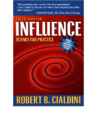
More praise for Influence: Science and Practice! "We've known for years that people buy based on emotions and justify their buying decision based on logic. Dr. Cialdini was able, in a lucid and cogent manner, to tell us why this happens." --MARK BLACKBURN, Sr. Vice President, Director of Insurance Operations, State Auto Insurance Companies "Dr. Cialdini's ability to relate his material directly to the specifics of what we do with our customers and how we do it, enabled us to make significant changes. His work has enabled us to gain significant competitive differentiation and advantage" -LAURENCE HOF, Vice President, Relationship Consulting, Advanta Corporation
Paine's The Age of Reason, and the Jefferson Bible, but the most influential thinker was undoubtedly John Locke, whose ideas spread to the colonies and across Europe. Main Ideas of the American Enlightenment: The Enlightenment caused a shift in the cultural and social attitudes of the people, bringing in some new and radical ideas. Republicanism: The doctrine of republicanism asserts a system of a government that is elected by the people of the nation. The roots of this ideology go back to ancient Greece, when the concept of a democratic government was examined by philosophers such as Plato and Aristotle. Individual Liberty: "Life, Liberty, and the pursuit of Happiness" developed as the motto of this era, which forms the cornerstone of the U.S. Constitution today. Since the colonies had very few individual rights, they declared certain fundamental rights that they deemed "inalienable
He showed that an object thrown into the air falls to the earth along a parabola. What he ended up doing was casting doubt on Aristotelian mechanics he challenged the monopoly on scientific education enjoyed by university clerics [ vaimulik ] who had, so he thought, learned nothing since their earliest encounter with Aristotle. Around 1609 Galileo had news of a development from Holland a lens grinder had taken two lenses and placed them at opposite ends of a metal tube. A rudimentary telescope was the result. Galileo made his own telescope as well as a compound microscope. Galileo directed all of his attention to the heavens. He was the first man to see craters on the moon, sun spots and the rings of Saturn. He also observed the phases of Venus. He determined that the Earth's moon was not a source of light but rather of reflected light. He saw the moons of Jupiter
neighbourhood, this truth is so well fixed in the minds of the surrounding families, that he is considered the rightful property of some one or other of their daughters. "My dear Mr. Bennet," said his lady to him one day, "have you heard that Netherfield Park is let at last?" Mr. Bennet replied that he had not. "But it is," returned she; "for Mrs. Long has just been here, and she told me all about it." Mr. Bennet made no answer. "Do you not want to know who has taken it?" cried his wife impatiently. "You want to tell me, and I have no objection to hearing it." This was invitation enough. "Why, my dear, you must know, Mrs. Long says that Netherfield is taken by a young man of large fortune from the north of England; that he came down on Monday in a chaise and four to see the place, and was so much delighted with it, that he agreed with Mr. Morris immediately; that he is to take possession before Michaelmas, and some of his servants are
London Robert Bruce The king of Scotland He supported Wallace´s uprising againts Edward I 1306 he crowned hmself as the king, Bruce freed Scotland from English rule by winning the battle of Bannockburn and confirmed the tresty of Northampton Effective, heroic king The Hammer of the Scots Edward I is known as the Hammer of Scots He intended to hammer Scots in to the ground and destroy them, instead he hammered them into a strong nation Campains to subdue Wales and Scotland Legal and administrative reform in England Eleanor Crosses Series of large stone monuments made for the memory of Edward I´s wife Queen Eleanor Were erected of the places where her funeral cortege rested on it s journey to London Only 2 of them have survived Bannockburn 1314 The battle of Bannockburn 1314 is a decisive battle in the Scottish history, English forces, led by edward II were crushed.
grave. Through buffoonery, utter mismanagement and downright stealing of the wealth of the masses, these leaders have so impoverished Africa that we are now nothing but a beggar continent. We beg for everything; we are more dependent on our colonial masters than when we received our independence from them. Africa owes the West more money than we and our generations to come can pay. I arrived in America in December of 1967as an official of what we believed was going to be a dynamic African nation – the young Republic of Biafra. But Biafra was defeated and Nigeria remained one, as a giant of Africa. In the last 32 years, I have watched with horror and outright helplessness as the downward slide of the African race continues to escalate. But rather than address the problems, we resort to blaming the Caucasians, Asians and others for our misfortune. We are not men enough to accept responsibility for our actions. Africans blame either the British, French or little
I 1F Discussion page 9 don't know, I just find the whole thing unnatural. I don't think we have a right 1 1 laboratory 5 crops to `play God' in this way. 2 controversy 6 harmful Leo I see what you mean. But to be 3 discredited 7 term honest with you, people have been 4 campaign 8 crisis crossing breeds for hundreds of years. 2 a, c, e, f It's just the methods that are new. Rosie Well, I think we're going to Transcript WB 02 have to agree to disagree here ... Anyway, talking about food, what shall Leo Did you watch that documentary we ...? about the latest advances in
losophizing about language, and in my own work I pay as much of it as I am able. With regret, however, I have not made that a theme of this book. Under severe space limitations, I could not expend as many pages as would be needed to explain the basics of formal syntax, without having to omit presentation of some philosophical issues I consider essential to competence in the field. Since around 1980, some philosophers of language have taken a turn toward the philosophy of mind, and some have engaged in metaphysical exploration of the relation or lack thereof between language and reality. These adversions have captured many philosophers' interest, and some fine textbooks have focused on one or both (for example, Blackburn 1984; Devitt and Sterelny 1987). But I have chosen otherwise. Whatever the merits of those sorts of work, I have not found that either helps us sufficiently to understand spe-
But our attention is caught by those things that avoid the hard choices implied by politics, morality, ethics, and common sense. It makes far better sense to reshape ourselves to fit a finite planet than to attempt to reshape the planet to fit our infinite wants. A third myth is that knowledge is increasing and by implication human goodness. There is an information explosion going on, by which I mean a rapid increase of data, words, and paper. But this explosion should not be taken for an increase in knowledge and wisdom, which cannot so easily by measured. What can be said truthfully is that some knowledge is increasing while other kinds of knowledge are being lost. David Ehrenfeld has pointed out that biology departments no longer hire faculty in such areas as systematics, taxonomy, or ornithology. In other words, important knowledge is being lost because of the recent overemphasis on molecular biology and genetic engineering, which
the bulk of the energy consumed by the industrial sector. The chemical industry is the largest industrial consumer of energy, followed closely by petroleum refining. The refining, chemical, paper and metal industries together use: · 94% of the feedstock · 92% of the byproduct energy · 70% of total inputs of energy for heat, power, and electricity generation Picture 2.10. Energy use by type of industry 2.6 Transportation Energy Use America is a nation on the move. About 28 percent of the energy we use goes to transporting people and goods from one place to another. Cars, vans, and buses are commonly used to carry people. Trucks, airplanes, and railroads can be used to carry people and freight. Barges and pipelines only carry freight. In 2005, 12 there were almost 239 million vehicles (cars, buses, and trucks) in the United States. That's more than three motor vehicles for every four people!
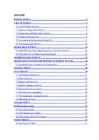
GRAMMAR 1 and 2. Helpful marginal notes throughout the books have been provided to reinforce existing skills and call attention to common problem areas. We wish you every success in your pursuit of English proficiency. 1 What is Grammar? 5 The Simple Past Tense 98 Regular and Irregular Verbs 99 Was and Were 104 2 The Capital Letter 6 The Past Progressive Tense 106 The Future Tense 108 Can and Could 112 May and Might 113 3 Nouns8 Do, Does and Did 115 Common Nouns 8 Would and Should 120 Proper Nouns 13
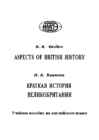
N. A. Vavilov ASPECTS OF BRITISH HISTORY Н. А. Вавилов КРАТКАЯ ИСТОРИЯ ВЕЛИКОБРИТАНИИ Учебное пособие на английском языке Москва Институт международного права и экономики имени А. С. Грибоедова 2008 2 УТВЕРЖДЕНО кафедрой лингвистики и переводоведения Вавилов Н.А. Краткая история Великобритании: Учебное пособие на английском языке. – 2-е изд., пересмотр. и испр. – М.: ИМПЭ им. А.С. Грибоедова, 2008. �
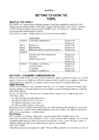
CHAPTER 1 GETTING TO KNOW THE TOEFL WHAT IS THE TOEFL? The TOEFL is a comprehensive English language examination required by more than 3,000 colleges and universities in the United States, Canada, and other parts of the world. In addition, foreign born professionals frequently need a TOEFL score for certification to practice their profession in the United States or Canada. The TOEFL is a timed test that consists of the three sections listed here. THE TOEFL Section 1 Listening Comprehension 50 questions 35 minutes Part A Statements 20 questions Part B Short Dialogs 15 questions Part C Minitalks and Extended Conversation
 annaabi.ee