Leidsid 33 sarnast õppematerjali, mis on seotud failiga "Big grammar theory ". Need materjalid aitavad sul teemat sügavamalt mõista.
noun, pronoun, nouns, person, adjective, adjectives, than, pronouns, plural, able, ending, verb, friend, syllable, ours, clause, selves, subject, adverb, child, singular, simple, object, yours, relative, rest, adverbs, friendly, hard, islands, west, english, work, clean, cheap, clever, narrow, objective, omadussõna, fast, formed, simply, letter, snakeIt can occur inside a morpheme and concerns pronunciation and shape while not affecting the meaning of the word. For example: morpheme that shows plurality is s. In words cat+plural, bus+plural, man + plural the meaning of the word stays the same but the pronunciation varies between /s/ and /ez/. In the word man the shape of the word changes because its plurality is irregular men. So zero plurality is the allomorph of the plurality morpheme.
Infixation is common in languages of Southeast Asia and the Philippines, and it is also found in some Native American languages. circumfixes morphemes that are attached to a root or stem morpheme both initially and finally. Morphs: the concrete realisation of a morpheme (`was' be, past, singular) Allomorphs: a/an Types of affixes: Derivational and infelctional Derivational affixes: Derivational affixes may change the grammatical class of the root verbs into nouns, nouns into adjectives (boy, boyish), and so on. Derivation is a lexical process which actually forms a new word out of an existing one by adding affixes to stems or roots. consideration, considerate, inconsiderate, inconsiderateness Inflectional affixes: Inflectional affixes may be described as `relational markers' that fit words for use in a sentence (express a syntactic relation). Inflections do not change the grammatical class of a given item or produce new lexemes, just different word forms.
Grammar is a very old field of study. Did you know that the sentence was first divided into subject and verb by Plato, the famed philosopher from ancient Greece? That was about 2,400 years ago! Ever since then, students all over the world have found it worthwhile to study the structure of words and sentences. Why? Because skill in speaking and writing is the hallmark of all educated people. Lesson by lesson, this book provides basic instruction in the eight parts of speech--nouns, pronouns, verbs, adjectives, adverbs, prepositions, conjunctions, and interjections--as well as the standard patterns of English sentences. All students of English, be they native speakers or those who are studying English as a second language, will profit from the fundamental introduction and review of grammar provided by SADDLEBACK'S BASIC ENGLISH GRAMMAR 1 and 2. Helpful marginal notes throughout the books have been provided to reinforce existing skills and call attention to common problem areas.
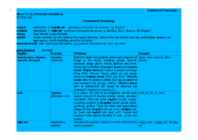
marker tunnus (mitmuse, oleviku, lihtmineviku, tingiva kõneviisi, käskiva kõneviisi, kaudse kõneviisi, umbisikulise tegumoe, ma- tegevusnime, oleviku kesksõna, mineviku kesksõna) derivational affix liide, tuletusliide, tuletusafiks (e.g. postwar, anti-American, wiser, greenish) parts of speech sõnaliigid English Estonian Definition Example noun (proper, common, nimisõna, Refers to words which denote classes and categories of book, water, sincerity, Mary, concrete, abstract) substantiiv things in the world, including people, animals, Estonia inanimate things, places, events, qualities, and states. Nouns can be divided into proper nouns and common
Pronouns By: Anneli Võikar Pronouns are small words that take the place of a noun. We can use a pronoun instead of a noun. Pronouns are words like: he, you, ours, themselves, some, each... If we didn't have pronouns, we would have to repeat a lot of nouns. Types of pronouns Personal pronouns Reflexive pronouns Demonstrative pronouns Interrogative pronouns Indefinite pronouns Relative pronouns Possesive pronouns Reciprocal pronouns Pronoun case Personal pronouns Personal pronouns represent specific people or things. We use them depending on: number person gender Case Singular: subject- I, you, he, she, it ; object-me, you, him, her, it. Plural: subject-we, you, they ; object-us, you, them. Examples: 1) Do you like coffee? (subject) 2) John loves you. (object) Reflexive pronouns We use a reflexive pronoun when we want to refer back to the subject of the sentence or clause. Reflexive pronouns end in "-self" (singular) or "- selves" (plural).
adjective + preposition omadussõna + eessõna proud of, good at, married to adverb particle Some verbs are followed by adverb particles. Examples are: put on, take off, give away, bring up, call in. Sometimes the particle is detached from the verb and put after the object. •He took his boots off. •They called the doctor in. apposition a grammatical construction in which two usually adjacent nouns having the same referent stand in the same syntactical relation to the rest of a sentence (as the poet and Burns in “a biography of the poet Burns”) back-reference In grammatical analysis, the term reference is often used to state a relationship of identity which exists between grammatical units, e.g. a pronoun 'refers' to a noun or noun phrase. When the reference is to an earlier part of the discourse, it may be called a 'back-reference' (or anaphora); collective noun
Bless you! Congratulations! Good luck! Te toca a ti. ¡Callate! Te amo. teh toh-kah ah tee kah-yah-teh tay ah-moh It's your turn. (informal) Shut up! I love you. (informal and singular) Notice that Spanish has informal and formal ways of speaking. This is because there is more than one meaning to "you" in Spanish (as well as in many other languages.) The informal you is used when talking to close friends, relatives, animals or children. The formal you is used when talking to someone you just met, do not know well, or someone for whom you would like to show respect (a professor, for example.) Encantado, cansado, enfermo, and aburrido are the masculine forms of the words. If the words
CHARACTERISTIC FEATURES OF OLD ENGLISH - 15 monophtongs, (7 long, 7 short, 1 central), 4 diphtongs, 17 consonants. Free variaton of R, and it was pronounced everywhere. Very much Germanic in character. Quite some special consonants that no longer exist. About morphology: synthetic with numerous aglutinating tendencies. System of tenses Germanic, but with a reduction of tenses. Paradigmatic leveling; Stress shift; Word order; Loan words (Old Norse, Old French). Dual pronouns. Determiners - no separate definite article. Strong and weak verbs. Word order relatively free with tendencies towards SVO. SVO, SOV, VSO most common. Adposition and podposition were both possible (eesliide ja tagaliide). About syntax: clauses were joined much simpler than nowadays, using and, then etc. Because of case syncretion the word order in a sentence became much more important to be able to tell the difference between words. FIRST CONSONANT SHIFT (GRIMM'S LAW)
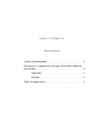
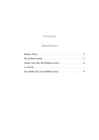
Degrees of Comparison Table of Contents Degrees of Comparison ......................................................... 2 Formation of comparatives and superlatives from adjectives and adverbs:......................................................................... 2 Adjectives ................................................................. 2 Adverbs .................................................................... 4 Types of comparisons ........................................................... 4 Degrees of Comparison Degrees of Comparison are used to compare things (living beings, actions, phenomena, etc). We use the comparative degree to compare two things: She’s shorter than me. John works harder than Jim.
Spr suggests the idea of energetic brisk, lively motion. Adherent connotation The kind that words may acquire in a certain context and outside it is not present. 5 e.g 1 Oscar Wilde ,,I tell you what, you are very rude; and, after all, what are you? Only a student." 2 Oscar Wilde ,,He is some brainless, beautiful creature who should be in here in winter when we have no flowers." 3 ,,They are worse than schoolteachers" These examples show that adherent connotation may be positive (brainless) or negative (students, schoolteachers). The type of context is important for creating adherent connotations. Negative connotation 1 The sentence may contain grammatical negotiation (has not) e.g science (neg.meaning) hasn't got a soul. Can't help itself. 2 The closeness of words with inherent negative connotations. Adj: obscene, corrupt, filthy, vulgar, ignorant Verbs: hate, opress, loath
· the manner of expressing ideas characteristic of a literary movement or period (symbolism, romanticism) · the use of lg. typical of a literary genre (comedy, drama, novel) · the selective use of lg that depends on spheres of human activity. These are called functional styles or registers (fiction, newspaper) Stylistics is the study of style. However, for some reason, English stylistics is less developed than French, German or Russian. The term ,,stylistics"came into more common use in English only some 35 years ago. It was recorded much earlier; in 1882 as "the study of literary style, the study of stylistic features" Stylistics is a branch of linguistics that studies principles of selecting different linguistic means for passing on thoughts and emotions. It studies: · Different functional styles, styles of genres, individual styles
1. The closeness and neighbourhood of words with inherent positive overtones. 2. We may have comparison a part of which the word becomes. 3. Words "hope", "wish", etc. may affect a word in the context. 4. Repetition of a word. 5. Complementary words. 6. Character's voice (e.g. "Hatred", she said, her voice trembling with pleasure." "pleasure" turns "hatred" into positive). 4. STYLISTIC MORPHOLOGY NOUNS: the expressive features of nouns are based on non-typical use of the number, the case, and pronoun substitution. On a transposition of nouns this is observed in personification, in which objects, natural phenomenon and animals are attributed with human feelings or speech (e.g. "The Wind laughed his evil laugh." "wind" is combined with typically human aspects). Another case of transposition is zoonymic metaphor. Names of animals, birds, fantastic beings when applied
Ladusseva "Stylistic practice: Book I, Book II" - I. Ladusseva "A Guide to Punctuation" EXAMINATION TOPICS: 1. Style, stylistics, a survey of stylistic studies 2. Inherent connotations. Phonesthemes Use lecture notes 3. Adherent connotations 4. Stylistic morphology: articles, nouns, pronouns, adjectives, verbs, adverbs, number * 5. Expressiveness on the level of word-building 6. Phonetic expressive means Study independen tly 7. Phonetic SD ("Rhythm And Style") 8. Lexical SD* 9. Syntactic SD* Use lecture notes 10. Graphical means and devices 11
I don't like to be shouted at. (NOT I don't like to be shouted.) This needs to be thought about some more. (NOT This needs to be thought some more.) 6. Don't use a present tense after It's time. It's time you went home. (NOT It's time you go home.) It's time we invited Bill and Sonia. (NOT It's time we invite Bill and Sonia.) 7. Use was/were born to give dates of birth. I was born in 1975. (NOT I am born in 1975.) Shakespeare was born in 1564. 8. Police is a plural noun. The police are looking for him. (NOT The police is looking for him.) I called the police, but they were too busy to come. 9. Don't use the to talk about things in general. Books are expensive. (NOT The books are expensive.) I love music. (NOT I love the music.) 10. Use had better, not have better. I think you'd better see the doctor. (NOT I think you have better see the doctor.) We'd better ask John to help us. 11
............................................................................. 4 Both, either and neither ....................................................... 4 Few/a few – a little/little....................................................... 5 A lot of/lots of – much/many................................................ 5 Some, any + -body / -one, + -thing, + -where ........................ 6 Some and any Some and any mean a certain number or amount. They are used with or instead of plural or uncountable nouns. Some is a possible plural form of a/an and one: Have a biscuit/some biscuits. I bought a cake/some cakes. Some, any and none can be used with of + the/this/these/those (+ ...) Some of the staff can speak Portuguese. Did any of your photos come out well? You can take any of these. Some is used: • with affirmative verbs: They bought some honey. • in questions where the answer ‘yes’ is expected:
It includes formal and informal styles. British Standard English grammar and vocabulary, together with the RP accent should be called English English. RP (Received Pronounciation) is an accent that originates from South-East of England. A social accent, associated only with England. 12-15% of native speakers in England use Standard English (BrEng). 3-5% of them use RP (EngEng). Non-standard varieties of English are often called dialects. They are any other dialect of English other than Standard English. They are stigmatized as shameful and inferior, socially lower. Judging people by their accent might, however, be offensive. These varieties are connected to race in US and class in UK. Grammatical and lexical differences throughout the world in the English language are rather insignificant . Most oftenly pronounciation is the most significant/different. Deviations from the standards: 1. Multiple negations ,,I didn't do nothing." 2. Ain't negative of ,,have" or ,,be" 3
english-4u.de/a_an_some_ex3.htm balls ◦ *some eggs*some oranges *some umbrellas *some 3. http://www.english-4u.de/a_an_some_ex6.htm eagles We us the • when we talk about a specific thing. • when it is clear which thing or person we mean. A – AN - THE • when there is only one of something. Examples: What is the highest building in the world?
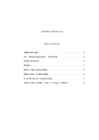
The Article Table of Contents General Rules....................................................................... 2 The Definite Article ............................................................... 5 Names that take the Definite Article...................................... 6 No article.............................................................................. 7 Countable and uncountable nouns ....................................... 9 General Rules There are two articles in the English language – the Indefinite Article and the Definite Article. The Indefinite Article has two forms – a and an (a precedes words beginning with a consonant sound and an precedes words beginning with a vowel sound). It comes from the Old English word ãn, which meant one. The Definite Article is the. It comes from the Old English word ţis, which meant this.
words disregarding particular features of any particular lg); special L (studies specific features of a separate lg, there is Engl that bases on general L); contrastive (compares vocabularys in different languages). 2. Connection of L with other linguistic disciplines a) the word performes a certain grammatical function (nt, he always misses the class, how many misses are there; the girl powders her nose, soliders face powder)In speech words are combined according to grammatical rules. The plural of nouns may carry a new meaning (nt, arms-weapons, looks-appearance, works-plant) b)connected with phonetics. The meaning of a word is expressed by sounds and it depends on the order of sounds(spoonerism) c)history of the lg helps to understand ahanges in the meanings of words (nt, legend ment a book where a life of saints was described) d)stylistics is the sign of expressive means of the language. The same idea may be expressed in different ways and so may aquire a new meaning
nonessential elements: Clause: That Tuesday, which happens to be my birthday, is the only day when I am available to meet. Phrase: This restaurant has an exciting atmosphere. The food, on the other hand, is rather bland. Word: I appreciate your hard work. In this case, however, you seem to have over-exerted yourself. 4. Do not use commas to set off essential elements of the sentence, such as clauses beginning with that (relative clauses). That clauses after nouns are always essential. That clauses following a verb expressing mental action are always essential. That clauses after nouns: The book that I borrowed from you is excellent. The apples that fell out of the basket are bruised. That clauses following a verb expressing mental action: She believes that she will be able to earn an A. He is dreaming that he can fly. I contend that it was wrong to mislead her. They wished that warm weather would finally arrive.
Did you have a party in your yester flat day? When were you here? Articles Rules: 1. Rule: When you have a single, countable English noun, you must always have an article before it. We cannot say "please pass me pen", we must say "please pass me the pen" or "please pass me a pen" or "please pass me your pen". Nouns in English can also be uncountable. Uncountable nouns can be concepts, such as 'life', 'happiness' and so on, or materials and substances, such as 'coffee', or 'wood'. 2. Rule:Uncountable nouns don't use 'a' or 'an'. This is because you can't count them. For example, advice is an
language as there are different levels of technicality, foreignness, and so on. An item like heart is core and should be located in the centre of the diagram, whereas an item like cordial is probably more literary (more likely to be written than spoken), whereas an item like cardiac is more scientific (and perhaps more technical as well). If you refer to your heart as your ticker, you have chosen a more colloquial or slangy term. 3. Native and foreign element. Native vocabulary. 3 strata: Indo-European words mother, father, night, foot, heart, bear (bore, born), see
Phonology. Mid-term 2. Syllable - is a phonological unit consisting of one or more phonemes. In phonetics a syllable is a unit which consists of a centre, that has little or no obstruction to airflow; it is comparatively louder than other sounds. In phonology syllables are the possible combinations of phonemes. The syllable consists of - onset, nucleus, coda. (every syllable has a nucleus: vowel, syllabic l, or m, n). Rhyme/rime nucleus + coda; the nucleus and the coda constitute a sub-syllabic unit rhyme. Words rhyme, when their nucleus and coda are identical. (E.g 'cr-o-wn', 'd-o-wn'). The hierarchical structure of the syllable: Onset the beginning of the syllable
Adverbs and Adverbial Phrases ........................................................... 2 Types of Adverbs ..................................................................................... 2 Position of Adverbs.................................................................................. 4 Yet, still, already ....................................................................................... 6 Adverbs and Adverbial Phrases An adverb describes a verb, an adjective, another adverb or a whole sentence. Adverbs can be divided according to the information that they give. Types of Adverbs 1. Some adverbs tell us how somebody does something or how something happens. These are called Adverbs of Manner. Please speak quietly. Tom drove carefully along the narrow road. 2. Some adverbs tell us where. These are called Adverbs of Place: She put the book on the table. 3. Some adverbs tell us when. These are called Adverbs of Time.
Literary (renaissance) o Democratic, juvenile, sophisticated, aberration, enthusiasm, pernicious, imaginary, allusion, anachronism, dexterity Scientific (17.-18. century) o Nucleus, formula, vertebra, corpuscle, atomic, carnivorous, incubate, aqueous, molecule Latin abbreviations o i.e – id est – that is to say Latin adjectives for english nouns o Nasal, oral, solar, paternal, maternal, lithic, lunar, filial Actual inflected Latin verbs used as nouns o Audio, audit, caveat, video. Endings dropped or adapted, often through French o add, addition, additive, agent, agentive, aqueduct, candle, colo(u)r, colossal, consider, contemplate, decide, decision, erupt, eruption, general, generic, hono(u)r, hono(u)rable,
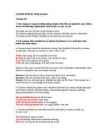
B Yes, it's Guillermo, G-U-I-double L-E-R-M-O, Moleda, M-O-L-E-D-A. A _________ ________, Mr Moleda. And _________ ________? B Xavier Electronica. That's X-A-V-I-E-R. A Right. ________ ______ line, please. I'm sorry. I'm afraid there's no answer. ___________ __________ ___________ _________ message? B No, it's all right. I can _____ ______ later. Goodbye. A Goodbye. Dialogues: Caller Person receiving the call Answer the phone Ask to speak to someone Ask who is calling Give your name Ask her to spell it Spell it Thank her. Explain that you are going to put her through Thank her. Translate:
THE SUBJECT (WHO? WHAT?) , THE PREDICATE (does, is doing, has done, etc – action/statement), THE OBJECT (WHO/WHAT is the action/statement directed at?) : Marion (who?) has a boy-friend (who?). She (who?) likes to read books (what?). The earth (what?) is a planet (what?). Besides, there are: THE ATTRIBUTE (WHAT?/WHAT KIND?) and THE ADVERBIAL (WHEN? - adverbial modifier of time/WHERE? – adverbial modifier of place/ HOW? – adverbial modifier of manner) Attributes modify nouns and stand in front of them. Adverbials modify verbs and usually stand behind them: This girl has a beautiful smile. This girl smiles beautifully. Attributes are usually adjectives but sometimes nouns as well: This is an interesting (adjective) story. The kitchen ( noun) door is locked. 2 Word Order in Affirmative Sentences In English the word order is not as flexible as in many other languages. The basic structure of an affirmative sentence is
CITATION FORM The citation form of the lexeme is the form that is employed to refer to the lexeme; it is also the form that is used for the alphabetical listing of lexemes in a conventional dictionary. In English, the citation form of a noun is the singular: e.g., mouse rather than mice. For multi-word lexemes which contain possessive adjectives or reflexive pronouns, the citation form uses a form of the indefinite pronoun one: e.g., do one's best, perjure oneself. In many languages, the citation form of a verb is the infinitive: French aller, German gehen, Spanish ir. In English it usually is the full infinitive (to go) although alphabetized without 'to' (go); the present tense is used for some defective verbs (shall, can, and must have only the one form). In Latin, Ancient Greek, and Modern Greek (which has no infinitive), however, the first person
or unwilling to proceed. A indicates strong emotions, paralyzing the speaker or his desire to conceal part of information. NT: she must leave or better yet drown herself make away with herself at some way or The speaker's strong emotions therefore inability to finish. NT: And it was so unlikely that she had stolen his wallet that... well. NOMINATIVE SENTENCES NOMINATIVE SENTENCES are just a noun-sentence, containing a noun or a nominal-noun-phrase sentence. NOMINATIVE SENTENCES strengthen the dynamic nature of the narrative. NT: London. Parks. Horse rides. Noisy streets. Noisy traffic. Policeman. Such sentences evoke a more or less isolated idea of an object without any connection with other objects. These sentences appeal to reader's imagination, and thus makes the reader active. ASYNDETON ASYNDETON means intentional omission of conjunctions between parts of a sentence or between sentences,
Latin borrowings cheap, pepper, street, mile, butter, cheese, wine, inch, ounce, pound, kitchen, plum, cup, dish, mint, Leicester, Clocester, colonia, lincoln, fossbrok, mass, monk, nun, bishop, abbot, minster, apostle, pope, altar, hymn, democratic, juvenile, sophisticated, abortion, enthusiasm, permissions, imaginary, allusion, anachronism, dexterity, nucleus, formula, vertebra, corpuscle, atomic, carnivorous, incubate, molecule, i.e- that is, viz- videlicet, etc- et cetera, c.f- confer Latin adjectives for english nouns- nose-nasal, mouth-oral, sun-solar, Greek borrowings abbot, angel, apostle, bishop, school, cilinder, cycle, dialogue, cardiac, phonetic, gymnasium, biathlon, pentathlon, decathlon, olympic, diagnosis, prognosis, analysis, technology, epic, drama, poem, tragedy, comedy, theatre, epilogue, prologue, metaphor Celtic borrowings welsh, walloon, walnut, bannock, bin, brock, badger, caln, whiskey, lock, slogan, arthur, donald and mac.
.= if he does not give..) Type 2 unreal present, imaginary situations: If + past simple/past continuous > would/could/might + perfect bare infinitive (If I were you, I would tell her the truth) Type 3 unreal past, regrets, criticism: If + past perfect/past perfect continuous > would/could/might + perfect bare infinitive ( If they had invited me, I would have gone..) DEFINITE ARTICLE ,,THE" We use ,,The": · With noun, talking about sth specific (Jo owns a car. The car is red.) · Unique nouns (The Earth) · Newspapers, cinemas, theaters, museums, ships, organisations (The United Nations) · Rivers, groups of islands, mountain ranges, deserts, oceans, countries (with States, Republic, Kingdom), names/nouns with of, geographical terms (the North) · Musical instruments, dances (the piano) · Families, nationalities (The Chinese) · Titles (the President) NB
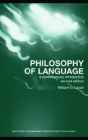
expounds the problems and positions introduced. An orientating chapter briefly introduces its topic and reminds readers of any crucial material they need to have retained from a typical introductory course. Considerable attention is given to explaining the central philosophical problems of a subject and the main competing solutions and arguments for those solutions. The primary aim is to educate students in the main problems, positions and arguments of contemporary philosophy rather than to convince students of a single position. Classical Philosophy Philosophy of Mind Christopher Shields Second Edition John Heil Epistemology Second Edition Philosophy of Religion Robert Audi Keith E. Yandell Ethics Philosophy of Science Harry Gensler Alex Rosenberg
Kõiki modaale ei saa kasutada inglise keele kõikides aegades, seetõttu on olemas modaalide asemikud (substitutes). Modal Verb Substitute Example must to have to I must talk. = I have to talk. must not not to be allowed to I must not talk = I am not allowed to talk can to be able to I can talk. = I am able to talk. may to be allowed to I may talk. = I am allowed to talk. need to have to I need to talk. = I have to talk. need not not ta have to I need not talk. = I don't have to talk.
 annaabi.ee