Leidsid 33 sarnast õppematerjali, mis on seotud failiga "Assignment Analysis of literature: prose". Need materjalid aitavad sul teemat sügavamalt mõista.
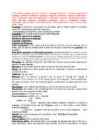
king, thin, june, character, thing, other, words, part, rough, present, position, through, indian, them, different, person, chapter, neck, between, figure, something, explain, characters, sketch, light, could, piece, land, feeling, attitude, novel, call, pronunciation, johnson, fall, rich, crazy, body, fish, graphic, paragraph, peel, mother, particularto be on the wagon (194) - someone who is on the wagon has decided not to drink any alcohol for a period of time. Albertine talks about Gerry, who had been thirteen years on the wagon. He was drinking tonic water with crescent of soiled lemon and Maraschino cherries. mayhem (196) Infliction of violent injury on a person or thing. Albertine says she had a false view of pregnant women. She had thought that pregnant women are wearing invisible halos, not committing mayhem. a suit of mail (199) - a kind of armor, made from interlocking metal rings. It's effective against some cutting weapons. Albertine describes Dot's knitted garments which stood up like miniature suits of mail. sallow (203) Of an unhealthy yellowish color. Albertine describes Dot after pregnancy. Her skin was loose, sallow, and draped like upholstery
Louise Erdrich Love Medicine Assignment 2 (pp. 4384) 1. Define the following words and expressions (considering the context) and reproduce (in your own words) the situations in which they appear in the book: the marrow of something (44) - The soft stuff inside of a bone is called marrow. ... From this biological kind of marrow comes a figurative meaning of marrow -- the essence of something. S The convent is on top of the high hill and from its window the Sisters can see the marrow of the town.
STYLE AND STYLISTICS FGI 1081 Stylistics (I. Ladusseva) 2 The term "style" is polysemantic (has many meanings): a Latin word "stilus" originally meant a writing instrument used by ancient people. Already in classical Latin the meaning was extended to denote the manner of expressing one's ideas in written or oral form. The precise definition was given by Jonathan Swift, who defined style as "proper words in proper places". In present day English the word "style" is used in about a dozen of principle meanings: 1. the characteristic manner in which a writer expresses his/her ideas (e.g. style of Byron). 2. the manner of expressing ideas, characteristic of a literary movement or period (e.g. symbolism, romanticism, renaissance). 3. the use of language typical of a literary genre (e.g. the style of a comedy, drama, novel). 4
1 SYNTACTIC STYLISTIC DEVICES SYNTACTIC STYLISTIC DEVICES are based on a peculiar place of the word or phrase in the utterance (text, sentence, etc).This special place creates emphasis irrespective of the lexical meaning of the words used. Categories: syntactic stylistic devises based on: SDD: based on ABSENCE OF LOGICALLY REQUIRED ELEMENTS OF SPEECH ELLIPSIS ELLIPSIS or ELLIPTICAL SENTENCES means leaving out one or both principle members of the sentence that is the subject or predicate. NT: Where is the man I'm going to marry? - Out in the garden. (no subject) What is he doing out there? - Annoying father. Here, in the dialogue, ellipsis creates the colloquial tone of the utterance
1. STYLE The term "style" is polysemantic (has many meanings): a Latin word "stilus" originally meant a writing instrument used by ancient people. Already in classical Latin the meaning was extended to denote the manner of expressing one's ideas in written or oral form. Jonathan Swift defined style as "proper words in proper places". In present day English the word "style" is used in about a dozen of principle meanings: 1. the characteristic manner in which a writer expresses his/her ideas (e.g. style of Byron) 2. the manner of expressing ideas, characteristic of a literary movement or period 3. the use of language typical of a literary genre (e.g. the style of a comedy, drama, novel). 4. the selective use of language that depends on spheres / areas of human activity (e.g. style of fiction, scientific prose,
STYLISTICS 1. Style, stylistics, a survey of stylistic studies The term ,,style" is polysemantic. Latin ,,stilus"--a writing instrument used by the ancients for writing on waxed tablets. Soon, the meaning was extended to denote the manner of expressing one's ideas in written or oral form. Jonathan Swift said: ,, Style is proper words in proper places" Present day--half a dozen meanings: · the characteristic manner in which a writer expresses his ideas (Style of Byron) · the manner of expressing ideas characteristic of a literary movement or period (symbolism, romanticism) · the use of lg. typical of a literary genre (comedy, drama, novel) · the selective use of lg that depends on spheres of human activity. These
Ameerika Kirjandus 30.01.13 Naturalism · France, Emile Zola · Put down his theory in 1879: Le Roman Experimental, attempt to explain the development of human society throuch biological laws · Outlook is deterministic, pessimistic, fatalistic (fate or biology) · Man as an animal-clever than other beasts, still explainable within the framework · Man is not a free agent, is govern by something · Unable to determine his own faith · Hereditary · Naturalists tried to apply in fiction the processes of natural sciences · Writers task is to record facts, systems of behaviour, living conditions, never revealing any natural unbiased (completely natural) · Point of view: amoral-outside the category of morality, neither good or bad
The making of a new nation. The Enlightenment in America. The emergence of the notion of the American Dream. The great Enlighteners: Crèvecoeur, Jefferson, Paine, Franklin. The American Enlightenment is the intellectual thriving period in the United States in the midtolate 18th century (17151789), especially as it relates to American Revolution on the one hand and the European Enlightenment on the other. Influenced by the scientific revolution of the 17th century and the humanist period during the Renaissance, the Enlightenment took scientific reasoning and applied it to human nature, society, and religion. American Enlightenment a gradual but powerful awakening that established the ideals of democracy, liberty, and religious tolerance in the people of America.
Chapter 21 Chapter 42 Chapter 1 It is a truth universally acknowledged, that a single man in possession of a good fortune, must be in want of a wife. However little known the feelings or views of such a man may be on his first entering a neighbourhood, this truth is so well fixed in the minds of the surrounding families, that he is considered the rightful property of some one or other of their daughters. "My dear Mr. Bennet," said his lady to him one day, "have you heard that Netherfield Park is let at last?" Mr. Bennet replied that he had not. "But it is," returned she; "for Mrs. Long has just been here, and she told me all about it." Mr. Bennet made no answer. "Do you not want to know who has taken it?" cried his wife impatiently. "You want to tell me, and I have no objection to hearing it." This was invitation enough. "Why, my dear, you must know, Mrs
Style The term style is a polysemantic one. The latin word ,,stilus" meant a writing instrument used by the ancients for writing on waxed tablets. Already, in classical latin the meaning of style was extended to denote the manner of expressing one's ideas in written or oral form. One of the abts/the best was given by Jonathan Swift: ,,Proper words in proper places." In present- day english, the world style is used in about half a dozen basic meanings. 1. the characteristic manner in which a writer expresses his ideas. Some speak about the style of Hemingway, Dickens etc. 2. the manner of expressing ideas, characteristic of a literary movement or period. Style of symbolism, romanticism 3. the use of language to pick a literary genre-comedy, novel, drama, O.D (poetic form) etc. 4
Vronsky, Betsy's cousin. Vronsky continues to pursue Anna. Although Anna initially tries to reject him, she eventually succumbs to his attentions. Karenin warns Anna of the impropriety of paying too much attention to Vronsky in public, which is becoming a subject of society gossip. He is concerned about his and his wife's public image, although he believes that Anna is above suspicion. Vronsky, a keen horseman, takes part in a steeplechase event, during which he rides his mare Frou-Frou too hard and she falls and breaks her back. Vronsky escapes with minimal injuries but is devastated that his mare must be shot. Anna tells him that she is pregnant with his child, and is unable to hide her distress when Vronsky falls from the racehorse. Karenin is also present at the races and remarks to her that her behaviour is improper. Anna, in a state of extreme distress and emotion, confesses her affair to her husband
Like psychoanalysis, surrealistic painting and writing explores the inner depths of the unconscious mind. Freudian ideas have provided subject matter for authors and artists. Critics often analyze art and literature in Freudian terms. 2. Literary Modernism and its sub-movements. The influence of Structuralism and psychoanalysis. Main characteristic features of Modernism. Denial of conventions, traditional structure, plot and presentation of character. The stream of consciousness. Allusiveness. Virginia Woolf's Modern Fiction as a theoretical platform for Modernism. Criticism of Realist literary method. Literary modernism: end of the 19th century-1920 (reached its height) and ended 1940s. A self- conscious break with traditional aesthetic forms. Rejecting the sentiment and discursiveness typical of Romanticism and Victorian literature for poetry that instead favored precision (täppis) of imagery and clear, sharp language
BOOK REPORT Title & author of the book: 'Anita and Me' by Meera Syal The setting of the book? The story resolves around Meena Syal, the daughter of the only Punjabi family in the Midlands' mining village of Tollington. The novel provides a vision of British childhood in the 1960s, a childhood caught between two cultures, each on the brink of enormous change. Meena is desperate to fit in with the other children in her neighbourhood while forever feeling like an outsider because she is "different". Eventhough the Punjabi family is well respected by the locals, there are still sutations when they have to deal with racism. Plot summary (NB! Use the present tenses) Anita and Me by Meera Syal is the story of a young Punjabi girl growing up in the fictional English village of Tollington in the Midlands in the 1960s. The book follows Meena during her pre-teen years
tips and useful language notes Book 1 Anne Seaton · Y. H. Mew Three Watson Irvine, CA 92618-2767 Web site: www.sdlback.com First published in the United States by Saddleback Educational Publishing, 3 Watson, Irvine, CA 92618 by arrangement with Learners Publishing Pte Ltd, Singapore Copyright ©2007 by Saddleback Educational Publishing. All rights reserved. No part of this book may be reproduced in any form or by any means, electronic or mechanical, including photocopying, recording, or by any information storage and retrieval system, without the written permission of the publisher. ISBN 1-59905-201-6 Printed in the United States of America 13 12 11 10 09 08 07 9 8 7 6 5 4 3 2 1 Introduction Grammar is a very old field of study. Did you know that the sentence was first divided into subject and verb by Plato,
His modest background and upbringing are crucial to his development as a writer. Chekhov always felt that he missed out on childhood. It was a very hard lifeand it may have contributed to his poor health: he succumbed later on to the"family disease", tuberculosis, which led to his early death at the age of 44.His mother was a quiet, gentle soul who was full of stories of her early life. In later years, Chekhov would say that "we inherited our talent from our father,but mother gave us soul". The other great passion of his formative years was nature, the Russiancountryside. As a port, Taganrog was surrounded on all sides by the landscapes of the Steppe and Chekhov's earliest stories reveal how intensely aware he was of his bond with the Don Steppe. Chekhov had always claimed that medicine was his wife and literature his mistress. Chekhov had lived for much of his career as a writer under the shadow of the great literary colossus of the age, Lev Tolstoy.
Broadly, there are three aspects to the study which are Pragmatics (studies the use of language → interested in the gap between the sentence’s meaning and the speaker’s meaning). Semantics (concerned with the meaning of the language aspects and the way they change, also how objects and language and thinking and language are related). Syntax (concerned with the rules [grammar] and how sentences and words are formed). Synchronic approach to language → A focus in language study on how language exists in one moment in time, not at how this language came to be the way it is now. Example Estonian in the 21st century. Diachronic approach to language → A focus in language study on how a language has changed over some period of time. In a way it is comparing language to what it was and how it is now. For example comparing 18th century and 19th century Estonian.
In the 15 th century Johann Gutenberg invented a mechanical process of duplicating texts, which we today call book printing. The first book was printed between 1444 and 1446, so these years can be considered as the beginning years of book printing. His most important preserved printings are the 40 copies of the Bible. By the end of the 15 th century there were about 1000 print-shops in Europe already. The oldest Estonian book dates back to 1535. Libraries form a vital part of education. They make available-through books, films, recordings and other media- knowledge that has been accumulated through the ages. People in all walks of life use libraries to get information for their work. Libraries also play an important role in preserving people's cultural heritage. For example, some libraries have rare books, authors' and composers' manuscripts or works by artists. Today's libraries differ very much from the ones from the past - not only in
......................................117 Chaos and Higher Order.............................................................................118 Good and Bad.............................................................................................119 Not Minding What Happens.......................................................................120 Is That So?..................................................................................................121 The Ego and the Present Moment .............................................................122 The Paradox of Time...................................................................................124 Eliminating Time.........................................................................................125 The Dreamer and the Dream.......................................................................127 Going Beyond Limitation...........................................................................128
Hamlet WILLIAM SHAKESPEARE Character List Hamlet - The Prince of Denmark, the title character, and the protagonist. About thirty years old at the start of the play, Hamlet is the son of Queen Gertrude and the late King Hamlet, and the nephew of the present king, Claudius. Hamlet is melancholy, bitter, and cynical, full of hatred for his uncle's scheming and disgust for his mother's sexuality. A reflective and thoughtful young man who has studied at the University of Wittenberg, Hamlet is often indecisive and hesitant, but at other times prone to rash and impulsive acts. Hamlet (In-Depth Analysis) Claudius - The King of Denmark, Hamlet's uncle, and the play's antagonist. The villain of the play, Claudius is a
To her, the ideal marriage is based on rational love, mutual understanding and respect. The Bronte sisters, Ann, Emily and Charlotte, wrote a few decades later. Although often viewed collectively, their literary output differs greatly from each other. Wrote under male pen names – difficult to get published as a woman. At the time they wrote, their works were considered blasphemous (dealt with sexuality and death). Emily Bronte – Wuthering Heights, critics presumed was written by a woman. Not understood by her contemporaries
1. FIRST SIGHT My mother drove me to the airport with the windows rolled down. It was seventy-five degrees in Phoenix, the sky a perfect, cloudless blue. I was wearing my favorite shirt -- sleeveless, white eyelet lace; I was wearing it as a farewell gesture. My carry-on item was a parka. In the Olympic Peninsula of northwest Washington State, a small town named Forks exists under a near-constant cover of clouds. It rains on this inconsequential town more than any other place in the United States of America. It was from this town and its gloomy, omnipresent shade that my mother escaped with me when I was only a few months old. It was in this town that I'd been compelled to spend a month every summer until I was fourteen. That was the year I finally put my foot down; these past three summers, my dad, Charlie, vacationed with me in California for two weeks instead. It was to Forks that I now exiled myself-- an action that I took with great horror. I detested
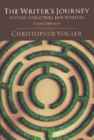
playwrights, fiction and non-fiction writers, scholars, and fans of pop culture all over the world. Discover a set of useful myth-inspired storytelling paradigms like "The Hero's Journey," and step-by-step guidelines to plot and • character development. Based on the work of Joseph Campbell, The Writers Journey is a must for all writers interested in further developing their craft. This updated and revised Third Edition provides new insights and observations from Vogler's ongoing work on mythology's influence on stories, movies, and man himself. In revealing new material, he explores key principles like polarity and catharsis, plus:
Pygmalion act 3 Where does the action take place in Act III? Name the places. At Mrs. Higgins's home Why is Mrs. Higgins not happy to see her son? Because Higgins offended all her friends and she wasn't happy about it. Why has Higgins invited Eliza to his mother's place? She wants to present her to her mother and the Who had Mrs Higgins invited to visit her? Miss Eynsford Hill, Mrs. Eynsford Hill, Freddy, Colonel Pickering. How does Higgins use the word ,,dickens". Quote his use of the word in different sentences and explain it's meaning. He uses the word in sentences like "Cynical! Who the dickens said it was cynical? I mean it wouldn't be decent." and ,,What the dickens has happened to you?" He uses the word instead of a swearing word. Comment on Eliza's behaviour at the meeting
Phone: [p] A phone is actual pronunciation of a phoneme. A phone is represented between brackets Allophone: e.g. pin spin Phoneme: /p/ - /iz/ `houses' /s/ voicless `cats' /z/ `boys' /t/ `learned' /id/ `wanted' A phoneme is the smallest unit of the sound system of a language. If two sounds have the same phoneme, they are treated equally. A phoneme is represented between slashes. Morphology: is the study of word formations and the internal structure of words Morphemes: the smallest units of language that have their own meaning or grammatical function. cat, cat/s, laugh/ed, un/able, sheep Free morphemes: cat, laugh, eat, red Bound morphemes: prefixes: pre- prejudge dis- dislike suffixes: -ist typist infixes attached within another morpheme. Infixation is common in languages of Southeast Asia and the Philippines, and it is also found in some Native American languages.
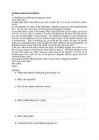
· How do they differ? · Which extracts are examples of formal letters? · How is the reader addressed in a formal letter? · What are the closing remarks for formal letters? · What is the salutation in a friendly letter? · How would you end extracts 1,2,3 ? · How would you begin the extracts 4 and 5? 1. Dear Mr Miller, I received your kind invitation to the reception. Unfortunately, owing to other commitments. I will be unable to attend ... 2. Dear Ralph, l just got your invitation to the company's event. l `m afraid I can't make it because I've a/ready made plans which l can "t change ... 3. Dear Sirs, I am writing to complain about the poor quality of the items which I received from your company. I have no other alternative but to cancel the order which 1 placed earlier this week ... 4. ... thus, I recommend that you accept this advice on the matter
Tests Superstar 1 Luke Prodromou Test 1 Name____________________ Class_______ Use your English 1 Complete these sentences using the correct form (present simple or present continuous) of the verb in brackets. _ 1 She is in a band and she _________________________________ (record) a CD at the moment. _ 2 She is an actress and often _________________________________ (appear) on television. _ 3 At the moment she _________________________________ (have) a rest because she is tired. _ 4 Mike is a doctor and he _________________________________ (live) in Manchester. _ 5 I _________________________________ (start) work at 8.30 every morning.
Best wishes, Anne C. Questions: a) Under what branch of literacy the given text goes to? ...................................................................................................... ............................................................ b) Who is the storyteller? ...................................................................................................... ............................................................. c) Describe her character with tree sentences. ...................................................................................................... ...................................................................................................... ...................................................................................................... ...................................................................................................... ................................
This article was downloaded by: [KU Leuven University Library] On: 02 June 2015, At: 06:11 Publisher: Routledge Informa Ltd Registered in England and Wales Registered Number: 1072954 Registered office: Mortimer House, 37-41 Mortimer Street, London W1T 3JH, UK Perspectives: Studies in Translatology Publication details, including instructions for authors and subscription information: http://www.tandfonline.com/loi/rmps20
1 KLM 9 ENIRO 2 FARWEK 10 SAUREX 3 TALLEGG 11 MIZDE 4 VESITERM 12 LADA 5 STOW 13 SCHWUNG 6 KALEV 14 MAIASMOKK 7 YAMAHA 15 ISKU 8 ESTRAVEL 2 Affirmative tense Use Signal Words Negative/Questions · action in the present taking always, Present Simple A: He speaks. place once, never or several every ..., N: He does not speak. normally, often, Q: Does he speak? times seldom,
His journalism, in the form of sketches which appeared in periodicals from 1833, formed his first collection of pieces Sketches by Boz which were published in 1836 and led to the serialization of his first novel, The Pickwick Papers, in March 1836. On 2 April 1836, he married Catherine Thompson Hogarth (1816 1879), the daughter of George Hogarth, editor of the Evening Chronice. After a brief honeymoon in Chalk, Kent, they set up home in Bloomsbury, where they had ten children. On 9 June 1865, while returning from France with Ternan, Dickens was involved in the Staplehurst rail crash in which the first seven carriages of the train plunged off a cast iron bridge that was being repaired.Because of that he died.( 9 June1870) Oliver Twist (1837-39), Nicholas Nickleby (1838-39), The Old Curiosity Shop and, Barnaby Rudge: A Tale of the Riots of 'Eighty as part of the Master Humphrey's Clock series (1840- 41), A Christmas Carol written in 1843. Hard Times- For These Times
do it, enabled us to make significant changes. His work has enabled us to gain significant competitive differentiation and advantage" -LAURENCE HOF, Vice President, Relationship Consulting, Advanta Corporation "This will help executives make better decisions and use their influence wisely ... Robert Cialdini has had a greater impact on my thinking on this topic than any other scientist." -CHARLES T. MUNGER, Vice Chairman, Berkshire Hathaway, Inc. If you're wondering why of Latin America, the Far East, and Central Europe. you should buy this new edition of Influence: o More neuroscience evidence of how the influence process works is inte-
John Galsworthy The Man of Property PREFACE "The Forsyte Saga" was the title originally destined for that part of it which is called "The Man of Property"; and to adopt it for the collected chronicles of the Forsyte family has indulged the Forsytean tenacity that is in all of us. The word Saga might be objected to on the ground that it connotes the heroic and that there is little heroism in these pages. But it is used with a suitable irony; and, after all, this long tale, though it may deal with folk in frock coats, furbelows, and a gilt- edged period, is not devoid of the essential heat of conflict
Mike has a terrible temper, which most often manifests itself during his extremely frequent bouts of drunkenness. He has a great deal of trouble coping with Brett's sexual promiscuity, which provokes outbreaks of self-pity and anger in him, and seems insecure about her infidelity as well as his lack of money. Pedro Romero - A beautiful, nineteen-year-old bullfighter. Romero's talents in the ring charm both aficionados and newcomers to the sport alike. He serves as a foil (a character whose attitudes or emotions contrast with, and thereby accentuate, those of another character) for Jake and his friends in that he carries himself with dignity and confidence at all times. Moreover, his passion for bullfighting gives his life meaning and purpose. In a world of amorality and corrupted masculinity, Romero remains a figure of honesty, purity, and strength. Montoya - The owner of a Pamplona inn and a bullfighting expert. Montoya sees bullfighting as something
 annaabi.ee