 50 punkti
Autor soovib selle materjali allalaadimise eest saada 50 punkti.
50 punkti
Autor soovib selle materjali allalaadimise eest saada 50 punkti.
 ~ 2 lehte
Lehekülgede arv dokumendis
~ 2 lehte
Lehekülgede arv dokumendis
 2011-01-23
Kuupäev, millal dokument üles laeti
2011-01-23
Kuupäev, millal dokument üles laeti
 14 laadimist
Kokku alla laetud
14 laadimist
Kokku alla laetud
 1 arvamus
Teiste kasutajate poolt lisatud kommentaarid
1 arvamus
Teiste kasutajate poolt lisatud kommentaarid
 hans222
Õppematerjali autor
hans222
Õppematerjali autor
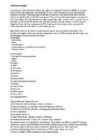
Mass Media What is Mass Media? Statistics show that there are few things which impact the human mind more than mass media. The advice of teachers, parents and relatives may fall on deaf ears, but the mass media influence holds us all spellbound! At this point, it becomes necessary to define mass media. Mass media may be defined as any form of communication which is meted out to the people at large, through the various forms of communication. What modes of communication are we talking about? Well there can be no static definition for the channels of mass communication as they are increasing all the time. But any form of communication which is seen and understood by a large mass of people can be taken to mean mass communication or mass media channels. Why is mass media so attractive to people? Mass media holds a kind of mystique in the minds of the people. It is because the communication is designed in such a way
MASS MEDIA By ''mass media '' we intend to those means of communication which can reach large or mass audiences. The most important are probably Television, Radio, the Press and Internet. The English-speaking peoples have always allowed more freedom of speech and of the press than most other countries. This gave them an advantage from the start in communications. The ground work for mass communications in the 20th century was laid in the 19th century by two inventions which allowed people to communicate by wire
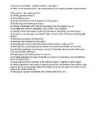
enter the country and can live and work there without restriction. Generally, in order to have the right of abode in a certain country, a person must be a citizen of that country. Those with permanent residency of the country generally have a de facto right of residence but it can be revoked in certain circumstances, for example for being convicted of crimes. 16. Print media- (newspapers and magazines). Print media is one of the oldest and basic forms of mass communication. It includes newspapers (national, regional and local), magazines and other forms of printed journals. All of them have established online presences. However, the digital reach of the various titles differs greatly: whereas over half of The Guardian and The Telegraph readers are based online now, 91% of The Times readers still read its print version. 17. Fleet Street- the home of the British press until the 1980s; a metonym for the British national press. 18
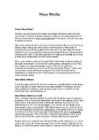
Mass Media Mass media is a term used to describe those means of communication which can reach large or mass audiences. The most important are probably Television, Radio, the Press and the Internet. Britain and America invented a lot of the technology used by the various modern communications media. In 1829, the typewriter was invented in America. In 1837, the telegraph was invented in Britain. In 18 76, Alexander Graham Bell invented the telephone in America. This made it possible to talk to people thousands of miles away. The telephone is a telecommunications device, which is used to transmit and receive sound. It's one of the most common household appliances in the world today. The English-speaking peoples have always allowed more freedom of speech and of the
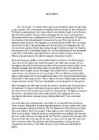
TALLINN UNIVERSITY School of Governance, Law and Society To what extent does the media influence foreign policy? Essay In Great Powers Foreign Policies and Relations TALLINN 2019 Media as a mass communication of today is playing a central role in creating and shaping public opinion and perceptions and also affecting society. Media is growing every day and influencing even more as the days go by. The word media is derived from the word medium. Singly the different media channels such as radio, TV, books, newspapers, magazines and mobile devices are called mediums, but as one, they are considered as media. (Cambridge Academic Content Dictionary, 2017) The media’s role in society depends on how society chooses to use media. In today’s world, the media has become a crucial thing for society,
Nowadays all people use any kinds of different media channels. To take into consideration that most people have all kinds of media devices which they use everyday. For example, general media channels are television, radio, the Internet and newsapers. They differ from eachother. That's why media channels have many advantages and disadvantages. To begin with, media devices have lots of advantages. Most people have TVs. Television is quite popular because people can get easy overview from news. Television also entertains and educates people. There are lots of different channels that forward live picture. For example, CNN, BBC, National Geographic, Discovery Channel, Eurosport. Moreover, radio has its own advantages which others doesn't have. People mostly listen radio in car and work station
Maturitní otázka c. 23. Means of communication Introduction A few centuries ago people knew only a few kinds of communication. They could speak to each other, they could send their message from one place to another by smoke signals, they used mail. Later on, they also had some newspapers. The first expansion of media was when the radio and television were invented. The second and the biggest boom started in 1960s when the first communication satellite was launched into orbit. There are 4 main media: Newspapers, TV, Radio and the Internet. Today's people take this as an ordinary thing and we don't realise that we nearly can't live without it. Media are very important for us. They give us big amount of information, so big that we can't remember all that things
institutions within society. The essence of journalism is to provide citizens with reliable information through the discipline of verification, as well providing a forum for public criticism. Professional and ethical standards In the UK, all newspapers are bound by the Code of Practice of the Press Complaints Commission. This includes points like respecting people's privacy and ensuring accuracy. However, the Media Standards Trust has criticised the PCC, claiming it needs to be radically changed to secure public trust of newspapers. This is in stark contrast to the media climate prior to the 20th Century, where the media market was dominated by smaller newspapers and pamphleteers who usually had an overt and often radical agenda, with no presumption of balance or objectivity. Little note: Publishers, owners and other corporate executives, especially advertising sales
 annaabi.ee






Kõik kommentaarid