cautiousness, suffering from low self-esteem; rarely defending themselves or retaliating when confronted by students who bully them; they may lack social skills and friends; they are often socially isolated; they tend to be close to their parents, they tend to be physically weaker than their peers. 12. Consequences for the person of being a bully: (3) criminal conviction, maintaining behaviours into adulthood, negatively influencing their ability to develop and maintain positive relationships. 13. Consequences for the person of having been bullied: (5) fearing school, considering school to be an unsafe and unhappy place, increasing student's isolation, depression and low self-esteem, problems that can carry into adulthood. 14. Student attitudes to bullying: (7) 15. Parents' relationship to bullying: (2) often unaware of the bullying problem,
Report on teenage crime Introduction: The aim of this report is to help find vent for teenages crimes problems. The information for the report was obtained from internet. The most common crimes: More and more teenages are being arrested for narcotic drug crimes, including the use of weapons in crimes. Older teenagers had higher violent crime victimization than did younger teenagers. Why? There are many ways to minimise teenage crime. Possible solutions 1. We have to enlarge collaboration with teenages. 2. More hobbies for them like sport or music 3. catch them in to joint action 4. more different interesting opportunities 5. Practice different social skills with him/her, such as greeting others, "breaking the ice," asking questions, and listening well. You also can role-play ways to resist peer pressure, such as offers of alcohol, tobacco, or illegal drugs from other kids. 6. minimise narcotic drug and...
rules for uniforms are different. Some schools have a school uniform and some do not. However, every school uniform has both advantages and disadvantages. One advantage is that school uniform helps to maintain discipline. Also it is a symbol of a school. School uniform makes life cheaper and easier you do not have to waste time in the morning thinking of what to wear. Also you do not have to buy a whole new wardrobe for every school semester and I think that a school uniform prepares you for adulthood because often many important jobs have a dress code, which you have to follow. However, for every plus there is a minus. Although many students might like a school uniform, many are against it and the reality is that lots of students refuse to wear it because it may be the bad material and it might be allergic to some students. Also I think that students cannot express themselves as they want to and really think that it would be better for all if you
What qualities should/should not a teacher have The quality of the education of young people depends on the work of the teacher, who is largely responsible for the exchange of knowledge and skills for young people from an early age up to adulthood. What characteristics must a teacher have in order to do their job as well as possible, so that young adults become enough to start their own life? The teacher must have an advanced level of knowledge in their field. The more qualified the teacher is the better and more clearly he knows how to convey his material for students. From that depends how well young people acquire the knowledge and benefit from skills they have obtained in their later life. Teaching skills are very important
What is the best age to be? The question we all may ask ourselves time and time again. What is the best age to be? In my opinion there is not a best age and because of that is a question that will always be left unanswered. The life span approach emphasizes developmental change is throughout adulthood as well as childhood. As a 18 year old female I cannot really choose a specific age group that would be best in the life in every aspect, because I have not yet reached certain age periods of my life span development. All ages have great and bad things. When you are a child your freedom is limited and it mostly depends on your parents´ mood at that time. Some examples like where you have to be home at 9.00pm and no TV until you´ve cleaned your room. Also then you have problems, but only the
German politician from Austria National Socialist German Workers Party (NSDAP) leader (1921-1945). Between 1934-1945, he was the dictator of Germany the official title of the German Chancellor (1933-1945) and the title of the head of state ("Führer and Chancellor"; 1934-1945). Adolf was born on April 20, 1889 a. Braunau am Inn, Austria-Hungary, a customs official Alois h otly excitHitler (1837-1903) and his wife Klara six children fourth. Only the children reached adulthood, he and his sister Paula. 1906. Hitler visited Vienna and ended up in a hotly excited waxed city buildings, art galleries and operas.His new ambition was to take the Vienna Academy of Fine Arts. Further, he served as illustrator, often painted pictures and postcards for sale in stores.He knew how to influence people in such a way that no other head of state had failed before. Desperate was susceptible to all kinds ässitustele of the people and the promises he talked
reached adolescence. In addition to the frequent use of profanity, the at times strongly depressive, violent or sexual tone of the novel, alongside with the difficulty of the problems addressed and discussed, make it overly difficult for the youngsters to completely understand, thus possibly leaving a wrong impression of the reasons for those situations and actions. To my mind, this novel is meant for the youngsters nearing adulthood, as their thinking is more critical, making the themes of the novel more understandable. On the whole, despite not being the most suitable for the youngest of readers, I find that the novel is a great insight into the mind of a troubled youngster attempting to find their place in life, overcoming obstacles and dealing with the consequences of their decisions, which is why it should and will remain in the list of timeless literature classics.
Jane Eyre Dark Characters The famous novel by Charlotte Bronte is a classic that in my opinion all people should be familiar with. I personally have seen even several movies based on it and also enjoyed reading the book. The novel mainly talks about a girl named Jane and her life as a guverness in Thornfield. When Jane reaches adulthood, she decides to work for the wealthy Mr.Rochester and teach his child who he himself is not that fond of. Jane as a person is shy but doesn't let people take advantage of her and after some time manages to charm the other wise cold hearted Mr.Rochester with her out spoken mind. Despite catching Mr.Rochesters eye their love story developes slowly because besides being both from a completely different class, Mr.Rochester always seems to have something bothering him in the back of his mind. When
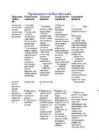
kogemuste (luues paralleele kasutada. tekkimist õppe takistustega) Dialoogiline kuulamine esindajad P. Jarvis M.C. Clark, M. J. Mezirow Sharan B. Merriam Rossiter Allikad: Clark, M. C., Rossiter, M. (2008). Narrative Learning in Adulthood. New Directions for Adult and Contiuning Education, 119, 61-90. Mezirow, J. (2009). An overwiev on transformative learning. In K. Ileeris (Ed.). Contemporary theories of learning. Oxon:Routledge, 90-105. Jarvis, P. (2009). Learning to be a person in society. In K. Illeris (Ed.). Contemporary theories of learning. Oxon: Routledge, 21-34.
1. Helen Keller was born in a small town called Tuscumbia, Alabama, on an estate called Ivy Green. She was born on 27 July, 1880, and her parents were Kate Adams Keller and Colonel Arthur Keller. At first she could talk and see but on February 1882 when Helen was 19 months old she became extremely ill and lost her ability to hear and see. (Due to a protruding(väljaulatuv) left eye, she was usually photographed in profile.) Both her eyes were replaced in adulthood with glass replicas. 2. Learning was tough for Helen. Because of her deafness and blindness, no one could get through to her, and she could not communicate with others. Basic rules and lessons made no sense to her, and she was called a "wild child." Then, in 1886, her mom heard about the Perkins School for the Blind in Boston from Alexander Graham Bell, inventor of the telephone. Kate wrote to the head of
He was described in later life as somewhat asymmetrical, and as carrying himself rather stiffly and awkwardly, though this may be on account of a knee injury sustained in middle age. As a very young child, he suffered a fever that left him deaf in one ear. At the age of seventeen, he suffered a severe attack of whooping cough, which was probably responsible for his chronically weak chest in later life. Another defect he carried into adulthood was what he referred to as his "hesitation", a stammer he acquired in early childhood and which plagued him throughout his life. At a time when people commonly devised their own amusements and when singing and recitation were required social skills, the young Dodgson was well equipped to be an engaging entertainer. He reportedly could sing tolerably well and was not afraid to do so before an audience
MATERINEAL-(,,mother line") women controlled home, family, children, inheritana, clan membership. Men hunted and made babies. Cherokee Wedding Ceremony- ¤groom brings meat(,,hunter") ¤ bride brings other food (grains, berries etc.) -> prooves that she's ,,homemaker" They step on the Ceremonial Blanket-> family. A girl got her name from older females. Boys were given a soft, sweet nickname. Boys got a new name, when they got older. Boy-> ,,Vision guest"-passage to adulthood. Ceremony->spirtual discovery. Holding man/medicine man/ shamom gives permanent name . ¤ The husband moves into the wifes village, allows to live there. Wifes were free to devorce. WEAPONS. Short spear (1 m) made from river reed (bamboo). Stone or bone tip/point. ,,Throwing stick" 1539. Hernando de Soto (concistator) they tried to look for ,,Eldorado" They were no highly developed metal. Bow was made of hickory wood, strings were made of bear hair.
bands, Billy Talent's homeland is Canada. Breaking Benjamin, vocalist number one to my mind, is tightly connected to that wonderful country as well. We studied it casually in form 8, but I'd like to overlearn some facts and maybe even get new ones. Unit three has the honour to gift us reading, grammar, listening and other needful exercises we might actually use in real life after all, that's what the school's about; it's preparing us to dive into the frozen ocean of realistic life of the adulthood without getting any scratches. And, since we're all really eager to learn new things from our English textbooks, I'm sure that one day we'll be able to perfectly complete that dive and be happy, enjoying every single day like it's the last one we'll ever see (not considering 2012). Well, after chapter one there'll be chapter two however, aren't we forgetting about something? Of cause we're not there are going to be lovely tests somewhere in the middle of the two chapters
no students who have both breakfast and school lunch, eat more than four slices of brown bread per day, and avoid fat. Personal freedom is a concept the meaning of which depends on the context from which it arises and to which it applies. In other words, it is a concept without a fixed meaning. To most people, freedom means the absence of fetters or bondage, eg. having the power to act or to speak or to think without externally imposed restraints. One's childhood's dream of adulthood is the desire to be independent. One's adulthood's dream of childhood is the desire to be free from responsibility and enjoy a life without care. In each case, the dream of freedom is idealised. A child dreaming of being an adult wants the independence that the adult has but does not understand the responsibility that accompanies it. An adult dreaming of being a child wants the carefree life that the child has but does not remember that a child is
· Fluid intelligence (gf) tests assessing limits of information processing, especially with novel, abstract material affected by biological factors, e.g. brain damage & nutrition Young Old adulthood age declines with age · Fluid and crystallised correlate above 0.5 Multiple intelligences: Howard Gardner · Studies of, Exceptional ability, `idiot savants,' brain damage and
Eneseregulatsiooni uurijate kodulehekülgi /sellised, millel on kasulikku infot/: Wegner: http://danwegner.net/ Carver: http://www.psy.miami.edu/faculty/ccarver/ Kross: http://selfcontrol.psych.lsa.umich.edu/papers.php Tamir: https://www2.bc.edu/~tamirm/ Hofmann: http://faculty.chicagobooth.edu/wilhelm.hofmann/ 8. ISIKSUSE ARENG K: Hennecke, M., Bleidorn, W., Denissen, J.J.A., & Wood, D. (2014). A three-part framework for self-regulated personality development in adulthood. European Journal of Personality, 28, 289-299. S: Edmonds, G., Jackson, J. J., Fayard, J. V., & Roberts, B.W. (2008). Is character fate, or is there hope to change my personality yet? Social and Personality Psychology Compass, 2, 399- 413. Millised on autorite meelest eeltingimused, et tahtlikust eneseregulatsioonist kujuneks püsiv muutus isiksuseomadustes? Tooge näiteid eesmärkidest, mille pärast inimesed võivad tahta muuta oma käitumisviise, mis sageli on
FCE Result Words and Phrases Alphabetical Wordlist a bite to eat (phr) abandon (v) abruptly (adv) absent-minded (adj) abstract (adj) abusive (adj) access (n) accuse of (v) achievement (n) aching (adj) acknowledgement (n) acquire (v) activist (n) adaptation (n) addicted to (adj) addictive (adj) additional (adj) admire (v) admission (n) adoptive (adj) adrenalin (n) adulthood (n) aerial (n) aging (n) aisle (n) alarming (adj) alien (n) alike (adv) allegedly (adv) alley (n) alongside (adv) aloud (adv) alternate (adj) amateur (n) ambitious (adj) anaemic (adj) analysis (n) ancestor (n) ancient (adj) angel (n) ankle (n) announce (v) annual (adj) anthropologist (n) 1 anticipate (v) antisocial (adj) apart (adv) ape (n) apparatus (n) apparent (adj) appeal to (v) appetising (adj) applicable (adj) apprenticed to (adj) approach (v)
The issue of a cultural bias in these earlier theories has vividly surfaced in recent studies that revisited the long- standing notion of the U-shaped curve of artistic development (Davis, 1991, 1997a, 1997b; Gardner, 1980; Gardner & Winner, 1982). The proponents of the U- shaped model argued that while young children exhibit very high levels of creativity in their pictorial work, older children and adolescents suffer from a serious decline in their artistic abilities, which are regained in adulthood only by artistically gifted individuals. The empirical data that confirmed the U-shaped development pattern were collected in North America and relied on aesthetic assessments of artistic merit executed by North American and other Western judges. When this study was recently replicated in settings involving Chinese populations, the U-shaped pattern failed to be confirmed (Kindler, 2001); Pariser & van den Berg. 1997). In none of these recent studies was young children's work considered to be
was here on these ancestral calving grounds. For nearly two decades the Serengeti wildebeest had been enjoying an (D) unprecedented population explosion. Twenty years ago, there had been perhaps 250,000. Now there were nearly two million, and together with a million gazelles and quarter of a million zebra, they formed the greatest concentration of wild animals left on earth. Nevertheless, of the half million calves now scattered across the plains; fewer than one in three would survive to adulthood. Many would simply lose their mothers in densely packed sea of animals, and fall easy (E) prey to predators. Often a new-born calf would become separated from its mother before it had learned to recognise her. Then the infant would attach itself to anything that moved, sometimes even (F) tottering hopefully towards a waiting lion. When the great migration began, many more youngsters would be swept away and drowned during
ee/est/haridus/Montessori-metoodika [27.09.2011]. Morel, A. (2011). Käeline tegevus ja rühmatunnid hariduslike erivajadustega laste koolis Johannes Käisi põhimõtteid järgides. Võru Linna Leht, veebruar, 4. http://www.voru.ee/linnaleht/Voru_Linna_Leht_022011.pdf .[27.09.2011]. Pitamic, M. (2006). Õpeta mind seda ise tegema: Montessori tegevused teile ja teie lapsele. Tallinn: Koolibri. Polk Lillard, P. (1996). Montessori today: a comprehensive approach to education from birth to adulthood. Schocken Books. Prepared environment. http://en.wikipedia.org/wiki/Montessori_education#Prepared_environment .[09.10.2011]. The Montessori Method. http://dewey.area24.net/TheMontessoriMethod.htm .[09.10.2011]. *Kasutatud fotode viited Foto 1. http://www.michaelolaf.net/maria.html .[27.09.2011]. Foto 2. http://nl.wikipedia.org/wiki/Bestand:Maria_Montessori_Grave.JPG .[27.09.2011]. Foto 3. http://www.ponderosamontessori.org/0_0_0_0_495_331_csupload_16771267.png?u=2574695132 [27.09.2011]
American Psychologist 54: 493503. 3 Gross J.J & Thomson R.A.(2007) Emotion Regulation. Coceptual Foundations. In Gross J.J. (Eds) Handbook of Emotion Regulation. London: Guilford Press Gross J.J. (2002) Emotion regulation: affective, cognitive, and social consequences. Psychophysiology 39 (3): 281291. Gross J.J. (2001) Emotion Regulation in Adulthood: Timing is everything. Current Directions in Psychological Science 10; 215 Gross J.J. (1999). Emotion regulation: Past, present, future. Cognition and Emotion, 13; 551- 573. Gross J. (1998) Review of General Psychology, 2 ; 271-299 Gross J.J. (1998b) The emerging field of emotion regulation: an integrative review. Review of General Psychology 2: 271299. Gross J.J., & Levenson R.W. (1997) Hiding feelings: The acute effects of inhibiting negative and positive emotion
Ühised immuunsüsteemi komponendid selgroogsetel ja selgrootutel: Innate immuunsus Fagotsütoos Antibakteriaalsed peptiidid Komplement Kaitsefunktsiooniga retseptorid Erinevused: selgrootutel puudub adaptiivne immuunsus, selgrootutel puuduvad lümfotsüüdid, selgrootutel puuduvad antikehad. Inimese ja hiire immuunsüsteemi erinevused: Mouse Human Hemotopoiesis in Active into adulthood Ends before birth spleen Presence of BALT Significant Largely absent in healthy tissue Neutrophils in periph. 1025% 5070% blood Lymphocytes in 7590% 3050% periph. blood Serum IgA Mostly polymeric Mostly monomeric
A Portrait of the Artist as a Young Man Largely autobiographical, Joyce's own spiritual searches. Growing up in Ireland at the turn of the century, the formation of an artist. Künstlerroman (A Künstlerroman meaning "artist's novel" in German, is a narrative about an artist's growth to maturity), but with an Irish specificity. Bildungsroman(coming-of-age story is a literary genre that focuses on the psychological and moral growth of the protagonist from youth to adulthood), but in the modernist style. Stephen's and Joyce's spiritual searchings. Family-a microcosm of Irish life (Christmas dinner), Jesuit college (sin &death sermon), doubts, rebellion, loss of faith. Love. Discovery of artistic talent, participation in national awakening movement. Rejection of Irish life, leaving the country. Visit to brothel: tormenting doubts, emptiness. Portrait as a modernist Bildungsroman. Bildungsroman is a "phantom formation," a mere construct of aesthetic ideology.
• Teoreetilised ja metodoloogilised kitsaskohad – biases, arvatakse, et on mingi keskeakriis, saadakse tulemus, mida tahakse, küsitavaused metodoloogiliselt nõrgaks kohaks (longituudid näitavad, et keskeakriisi pole – keskkondlik artefakt) Galambos, N.L., Fang, S., Krahn, H.J., Johnson, M.D., Lachman. M.E. (2015). Up, not down: The age curve in happiness from early adulthood to midlife in two longitudinal studies. Developmental Psychology, 51 (11): 1665. Vanadus (alates 60-65 ish kuni 90, kus algab kiire taandareng)) • Biopsühhosotsiaalne mudel – bioloogiline, psühholoogiline ja sotsiaalne muutus • Vananemise teooriad Geneetilise etteprogrammeerituse teooria – inimrakkude reprodutseerimisse on sisse ehitatud kell, kui aeg saab täis, siis rakud ei ole võimelised jagunema ja mõned rakud
Flow! Positiivse enesehinnangu tähtsus Enesekaitse: tähtsustan edu ja unustan ebaedu Positiivse ellusuhtumise kultiveerimine. Tunnustuse otsimine ja pakkumine Empiiriliselt: kollektivistlikes kultuurides EH madalam kui individualistlikes. Kultuurisurve olla tubli, edukas, õnnelik. Tähtede draamad. Nartsissistlik enesekäsitlus: "a pervasive pattern of grandiosity, need for admiration, and lack of empathy that begins by early adulthood and is present in a variety of contexts." Mis on adekvaatne enesehinnang? Eestlase enesehinnang? Eneseregulatsioon Eneseregulatsioon (self-regulation): process of controlling and directing one's behavior in oder to achieve desired goals. Oma Mina teadlik kujundamine, esitlemine, tasakaalustamine. Iseenda juhtimine Võtteid ja viise palju, meie vaatleme kahte eneseregulatsiooni vormi: eneseesitlus ja toimetulek stigmaga - Self-presentation
won't be living 2 past 4 guy 6 bashing 3 will/'ll have moved 3A Stages of life page 21 4 will/'ll be arriving 1 a childhood d adolescence 2 Tick: c, d, e 5 will/'ll have been travelling b adulthood e middle age 6 won't have been living 3 1 T 3 T 5 T c infancy f old age 7 will/'ll have learned 2 F 4 T 6 T 2 1 infant 4 kids 8 won't be speaking
Dominant white is the colour associated with deafness in cats. Dominant white masks all other colours and cats may have blue, orange or odd eyes. Those with blue eyes have a high chance of deafness. Those with one blue eye have a high chance of deafness on the blue-eyed side. Those with orange eyes are far less likely to be deaf. Some dominant white kittens are born with smudges of coloured fur on top of the head, this smudge of colour usually disappears by adulthood, but kittens with colour smudges are more likely to have normal hearing. The gene for white spotting can also create the impression of a self white cat. This gene is semi-dominant and is variable in the way it is expressed - a cat may have no visible white spots or may be wholly white and all stages in between those two extremes. Unlike dominant white, white spotting is not linked to deafness. COLOUR RESTRICTION, TICKING AND TIPPING Another form of modification is colour restriction
ja unustan ebaedu • Positiivse ellusuhtumise kultiveerimine. Tunnustuse otsimine ja pakkumine • Empiiriliselt: kollektivistlikes kultuurides EH madalam kui individualistlikes. Kultuurisurve olla tubli, edukas, õnnelik. Tähtede draamad. • Nartsissistlik enesekäsitlus: “a pervasive pattern of grandiosity, need for admiration, and lack of empathy that begins by early adulthood and is present in a variety of contexts.” • Mis on adekvaatne enesehinnang? Eestlase enesehinnang? Eneseregulatsioon Eneseregulatsioon (self-regulation): process of controlling and directing one’s behavior in oder to achieve desired goals. Oma Mina teadlik kujundamine, esitlemine, tasakaalustamine. Iseenda juhtimine Võtteid ja viise palju, meie vaatleme kahte eneseregulatsiooni vormi: eneseesitlus ja toimetulek stigmaga – Self-presentation
Although he's already ill at the time so thinks that the teacher tries to use him sexually but it stays unclear. He rans away from him and then his memory turns to his other brother Allie. He used to be his inspiration, role model. He gets a bit of piece of mind when he meets his younger sisters whos riding on a merry go round. That's one of the happiest points in the novel. He wants to become the protecter of innocent children. He doesn't want to enter adulthood. We can see his desire not to grow up because he doesn't see a role for himself in the world. He doesn't accept reality and deperately tries to find a way out. 1950's This decade is intimately associated with the Beat Movement. It's for a change a typically american. Conserned with a large group of young post-war writers, who were born in the 20's who were disillusioned of the world arounf them. It goes back to the middle of the 50's who sprang up in a lot of big cities in the states
2014-en.pdf [accessed 2 May 2014] 16 policy making.66 The excessive number of key policies and strategies developed along with NGO`s, local authorities, stakeholders and with children themselves after the adoption of the UNCRC has been outstanding as there is a strong belief within the Welsh Government that children and childhood has always been `more than preparation for adulthood`. 67 The Welsh Government believes that children are a`unique and valuable part of life, and the quality of those years is a matter that should concern us all`.68 The Welsh Government recognises children as right bearers where they acknowledge that children and young people are young citizens, `with rights and opinions to be taken into account now. They are not a species apart, to be alternately demonised and sentimentalised, nor trainee adults who do not yet have a full place in society`
” We are upset by any situation in our lives that does not seem to be fair and equitable to anyone, especially if it concerns ourselves. Whenever we feel that we or anyone else has been unfairly treated, for any reason, we take it as a personal attack. Our fragile self- esteem is threatened. We react with anger and resentment. This is a normal developmental phase of growth that we go through as we move toward adulthood. However, some people fixate at this stage and never grow beyond it. If we are not taught the importance of letting go of our grievances as children, we will come into adulthood with a gunnysack of unfor- given experiences. If we are not careful, we will then build our lives around our anger toward people who we feel are to blame for some- thing they did or that we disapprove of. Many psychotherapists and
Similarly, food servers have learned that simply giving customers a candy or mint along with their bill significantly in- creases tips (Strohmetz, Rind, Fisher, 8{ Lynn, 2002). In general, business operators have found that, after accepting a gift, customers are willing to purchase products and services they would have otherwise declined (Gruner, 1996). It appears that the give-and-take of social interaction is recognized well before adulthood. One fifth-grade language teacher wrote to me about a test she gives her students on the proper use of the past, present, and future tenses. To the question, The future of "I give" is _ _ ?, one enterprising young man wrote, "I take." He may have gotten that particular grammatical rule wrong, but he got a larger soci- etal rule precisely right. Politics Politics is another arena in which the power of the reciprocity rule shows itself.
of being present for them. Eventually, they will make mistakes, and they will experience some form of suffering, as all humans do. In fact, they may be mistakes only from your perspective. What to you is a mistake may be exactly what your children need to do or experience. Give them as much help and guidance as you can, but realize that you may also at times have to allow them to make mistakes, especially as they begin to reach adulthood. At times, you may also have to allow them to suffer. Suffering may come to them out of the blue or it may come as the consequence of their own mistakes. Wouldn't it be wonderful if you could spare them from all suffering? No, it wouldn't. They would not evolve as human beings and would remain shallow, identified with the external form of things. Suffering drives you deeper. The paradox is that suffering is caused by identification with form and erodes identification with form
Simba takes hisfather's place and "The Circle of Life" continues. As the presentation concluded, it wasn't difficult to see the Hero's Journey elements in The Lion King. S i m b a is a classic hero whose O R D I N A R Y W O R L D is that of privilege a n d the k n o w l e d g e that he will one day be king. H i s first C A L L is his father's demand that he grow up and face the responsibilities of kingship. Earning the right to rule the land as king is a metaphor for adulthood in many fables and fairy tales. H i s cockiness and disobedience constitute a R E F U S A L OF T H E C A L L . He 260 EPILOGUE: LOOKING BACK ON THE JOURNEY receives other C A L L S — the temptation to explore the forbidden zone, a call of childhood romance from Nala, and most drastically, the death of his father that calls him to enter a new phase of life in which he has to run away to survive.
 annaabi.ee