Leidsid 33 sarnast õppematerjali, mis on seotud failiga "Weird Food(s)". Need materjalid aitavad sul teemat sügavamalt mõista.
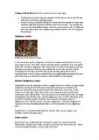
snake, wine, steep, fried, spiders, steeped, rice, alcohol, mixed, until, garlic, weird, foods, drink, whole, snakes, grain, varieties, toxic, glass, left, months, body, fluids, shot, these, little, chaps, lime, black, pepper, recipe, sugar, salt, added, legs, almost, completelyHowever, during the colonial period the seizure of communal land in South Africa restricted and discouraged traditional agriculture and wild harvesting, and reduced the extent of land available to black people. Decline of indigenous cookery Urbanization from the nineteenth century, coupled with close control over agricultural production, led black South Africans to rely more and more on comparatively expensive, industrially-processed foodstuffs like wheat flour, white rice, mealie (maize) meal and sugar. Often these foods were imported or processed by white wholesalers, mills and factories. The consequence was to drastically restrict the range of ingredients and cooking styles used by indigenous cooks. On the other hand, some imported food plants (maize, tomatoes) have expanded the dietary range of indigenous cooks. Of these maize is the most significant - it has been integrated to
Also, drinks containing different types of spices. · During the Gupta empire influenced by diet buduism and jainism. Many religious people were vegetarians. Most of the people consumed the chickens, sheep and goat meat. · Muslims also put emphasis on the development of food. Indians brought to the diet of dried fruit and flat bread. India introduced the dietary habits of the Portuguese and Chinese. · Indian diet is mixed with a variety of cultures. Etiquette: · Traditionally, meals were eaten while seated either on the floor or on very low stools or cushions. · Food is most often eaten without cutlery, instead using the right hand. Among the middle class throughout India, spoons and forks are commonplace. · Hot food is served on banana leaves, the leaves add aroma and taste to the food. Eating habits: · The breaksfast is most importing
linked to the seasons. In terms of staples, Estonia belongs firmly to the beer, vodka, rye bread and pork "belt" of Europe. The Cold Table Flounder The first course in traditional Estonian cuisine is based on cold dishes - a selection of meats and sausages served with potato salad or Rosolje, an Estonian signature dishes based on beetroot, meat and herring . Small pastries called pirukad ("pirukas" in the singular) - a relative of the pirozhki - filled with meat, cabbage, carrots, rice and other fillings or mixtures are also popular, and are often served with bouillon. Herring is common among other fish as a part of the Estonian Cold Table. Smoked or marinated eel, crayfish dishes and imported crabs and shrimps are considered delicacies. One of Estonia's national dishes is räim (Baltic dwarf herring), along with sprats. Flounder, perch and pike-perch are also popular. Soups Soups are traditionally eaten before the main course and most often are made of meat or
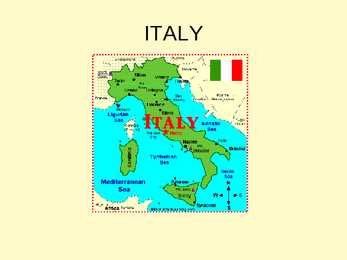
Italian food also has a lot of vegetables and healthy fats, such as olives, broccoli, and lettuces. Italians are also famous for the different kinds of breads they make. Spaghetti is traditional Italian cuisine Ingredients and dishes vary by region. Many dishes that were once regional, however, have proliferated with variations across the country. Cheese and wine are a major part of the cuisine, with many variations and Denominazione di origine controllata (DOC) (regulated appellation) laws. Coffee, specifically espresso, has become important in Italian cuisine. Essential Italian herbs and spices in the Essential Italian food in the kitchen: kitchen: * Garlic * Olive oil * Prosciutto ham
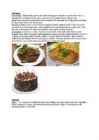
in very tender melt-in-the-mouth meat. The Black Forest: cake is one of the most popular German national foods. Cake consists of several layers of chocolate cake, with whipped cream and cherries between each layer. Then the cake is decorated with additional whipped cream and chocolate shavings. A Schnitzel in German is a slice of pork or veal haunch. Dish made with boneless meat thinned with a mallet (escalope-style preparation), coated in bread crumbs and fried. Only if it is made of veal and coated in bread crumbs is it called Wiener Schnitzel; a pork version is called Schnitzel Wiener Art (Viennese type schnitzel). These are served with a slice of lemon and without a sauce. Both often are referred to as simply Schnitzel. Poland Bigos: It is a soupy stew made from meat and cabbage, red wine, along with other vegetables often mushrooms, onions, and seasoned with bay and garlic. Bigos is usually eaten with mashed potatoes or rye bread.
more important commitments. It's time for the world to take advantage of this revolution." -- Vivek Kulkarni, CEO of Brickwork India and former IT secretary of Bangalore; credited as the "techno-bureaucrat" who helped make Bangalore an IT destination in India "Tim is the master! I should know. I followed his rags to riches path and watched him transform himself from competitive ghter to entrepreneur. He tears apart conventional assumptions until he nds a better way." --Dan Partland, Emmy Awardwinning producer of American High and Welcome to the Dollhouse "The 4-Hour Workweek is an absolute necessity for those adventurous souls who want to live life to its fullest. Buy it and read it before you sacri ce any more!" --John Lusk, group product manager at Microsoft World Headquarters "If you want to live your dreams now, and not in 20 or 30 years, buy this book!" --Laura
4000 years ago. The dingo is an effective hunter. To save their sheep from dingo attacks, farmers built many fences to keep the dingo out. These fences didn't work so in 1946 the government built a single fence which stretched 5400 km from Great Australian Bight in South Australia to near the Queensland coast. The single fence worked better. Lyrebirds are covered with brown feathers. They live in forests and woodland in Australia. They eat insects, spiders, beetles and worms. Male lyrebirds can copy many sounds. Lyrebird gets its name because of the tail of the male bird. It is shaped like a musical instrument called a lyre. There are 2 species of lyrebird, the superb lyrebird, about the size of a rooster, and Albert's lyrebird, which is the smaller of the species. Lyrebirds have mostly brown feathers and although they have wings, they don't often fly. They move about in the forests, running and jumping quickly on their short legs. They have
Japanese festivals Japanese festivals are traditional festive occasions. Some festivals have their roots in Chinese festivals but have undergone dramatic changes as they mixed with local customs. Some are so different that they do not even remotely resemble the original festival despite sharing the same name and date. There are also various local festivals (e.g. Tobata Gion) that are mostly unknown outside a given prefecture. It is commonly said that you will always find a festival somewhere in Japan. Matsuri is the Japanese word for a festival or holiday. In Japan, festivals are usually sponsored by a local shrine or temple, though they can be secular.
other than the plants which have earned me a living as an adult. For example, I collected postage stamps, played basketball, was fond of listening to music, played all manner of games, but dealt only in a neutral, uninspired fashion with plants. The one thing that was constant and of supreme importance was my love of reading. I don't recall why, but by an early age, say age 9, I was a phenomenal reader of books, a habit that persisted all the way until college. Reading expands one's mind immensely. It fires the imagination, demonstrates grammar, teaches vocabulary, informs, challenges, helps one relax. In some cases it forces the mind to concentrate, as to understand. It can help build a moral or ethical framework, and help oneself form an individual worldview. Even an untraveled child, sitting at home, can be transported by a book into any place or time. Fantasy and facts weave together, but the result is almost an unmitigated improvement
Woman holding in the exterior hand a Basket of Fruits and on the sinister side a West Indian Native Man supporting by the exterior hand a Bow all proper. · The motto : "Out of Many, One People" - as tribute to the unity of the different cultural minorities inhabiting the nation. · Capital and largest city: Kingston · Official languages : jamaican English, National language: Jamaican Patois. · Ethnic groups (2011): 92.1% African, 6.1% Mixed, 0.8% Indian, 0.4% Other, 0.7% Unspecified · Religion : 68.9% Christian, 1.1% Rastafarian, 6.5% Other, 2.3% Not stated, 21.3% None · Demonym: Jamaican · Jamaica is a parliamentary democracy and constitutional monarchy, with Queen Elizabeth II serving as the Jamaican monarch · Independence from the United Kingdom, Granted 6 August 1962 · Currency: Jamaican dollar (JMD) · Jamaica is divided into 14 parishes, which are grouped into three historic counties that have no
Tourists also love to visit Greenwich, which is best known for giving its name to the Greenwich Meridian (0° longitude) and Greenwich Mean Time. Foods and drinks English cuisine is formed by country’s history, its temperate climate and geography. The food of England has historically been characterised by its simplicity of approach and a reliance on the high quality of natural produce. The traditional English breakfast is a hot cooked meal of bacon, eggs, sausages, fried bread, mushrooms and baked beans. Now-a-days a typical English breakfast is more likely a bowl of cereals, a slice of toast, orange juice and a cup of coffee. They have Afternoon Tea (the traditional 4 o’clock tea). This is a small meal, not a drink. Traditionally it consists of tea (or coffee) served with either of the following: freshly baked scones served with cream and jam (known as a cream tea), afternoon tea
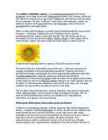
America (most originated in the fertile crescent, Asia or South or Central America). It was probably a "camp follower" of several of the western native American tribes who domesticated the crop (possibly 1000 BC) and then carried it eastward and southward of North America. The first Europeans observed sunflower cultivated in many places from southern Canada to Mexico. Sunflower was probably first introduced to Europe through Spain, and spread through Europe as a curiosity until it reached Russia where it was readily adapted. Selection for high oil in Russia began in 1860 and was largely responsible for increasing oil content from 28% to almost 50%. The high-oil lines from Russia were reintroduced into the U.S. after World War II, which rekindled interest in the crop. However, it was the discovery of the male-sterile and restorer gene system that made hybrids feasible and increased commercial interest in the crop. Production of sunflowers subsequently rose dramatically
Cachaça Cachaça is a liquor made from fermented sugarcane. It is the most popular distilled alcoholic beverage in Brazil. It is also known as aguardente, pinga, caninha or other names. Cachaça is mostly produced in Brazil, where, according to 2007 figures, 1.5 billion liters (390 million gallons) are consumed annually, compared with 15 million liters (4.0 million gallons) outside the country. It is typically between 38% and 54% alcohol by volume. When it is homemade it can be as strong as the distiller wants. Up to six grams per liter of sugar may be added." The major difference between cachaça and rum is that rum is usually made from molasses, a by-product from refineries that boil the cane juice to extract as much sugar crystal as possible, while cachaça is made from fresh sugarcane juice that's fermented and distilled. While many rums are made from molasses, "cachaça rum" is made from "cachaça", by-product
ALCOHOL Alcohol is a widely used substance for both science and in technology. Its name comes from an Arabic word al-kuhl meaning " a powder for painting the eyes". The term was later applied to all compounds that contain alcoholic spirits. To most people alcohol is considerd a downer that reduces activity in the nervous system. Some of the things alcohol effects you is, the alcohol intoxicated person exhibits lose muscle tone, loss of fine moter coordination,and often has a staggering "drunken" gait. The eyes may appear somewhat "glossy" and pupils may be slow to respond to stimulus. At high doses pupils may become constricted. At intoxing doses, alcohol can decrease heart rate, lower blood pressure and respiration rate, and result in decreased reflex and slower reaction times. Skin may be cool to touch but to the user may feel
" "Come on, Eva." Cary sat on our new living room floor amid a half-dozen moving boxes and flashed his winning smile. We'd been unpacking for days, yet he still looked amazing. Leanly built, dark-haired, and green-eyed, Cary was a man who rarely looked anything less than absolutely gorgeous on any day of his life. I might have resented that if he hadn't been the dearest person on earth to me. "I'm not talking about a bender," he insisted. "Just a glass of wine or two. We can hit a happy hour and be in by eight." "I don't know if I'll make it back in time." I gestured at my yoga pants and fitted workout tank. "After I time the walk to work, I'm going to hit the gym." "Walk fast, work out faster." Cary's perfectly executed arched brow made me laugh. I fully expected his million-dollar face to appear on billboards and fashion magazines all over the world one day. No matter his expression, he was a knockout.
On Wednesday it is customed that relatives come to bride' s and groom' s new house and watch the flour being sieved by a boy and a girl. Through that process there is silence. When there is enough flour people throw coins into it and yell their wishes of good luck. On Friday there is a ritual called " filling of the sacks" . That means that the bride fills sacks with all her possessions while visitors throw coins in among her things. At the same time groom is sending pitchers of wine around the village to friends and family with an invitation to the wedding. The bride's father does the same thing to his friends and family and the bride goes around the village on Saturday, but instead of wine she gives out sweets. Before the weddings there are all sorts of traditions. It all starts with raising a wedding flag at the groom's house. Then people come with the flag to the bride's house, where the bride's mother offers the groom wine and herbs for his lapel. After
The highest top Mount Kosciusko is 2228 metres above sea level. It was named by the Polish explorer Count Paul Strzelecki in 1840 in honour of the Polish national hero General Tadeusz Kociuszko. Like many of Australia's highest peaks, Mount Kosciuszko is not particularly difficult to climb. There is a road to Charlotte Pass, from which it is a seven kilometre walk up a path to the summit. Anybody with a modest level of fitness should be able to climb it. Until the 1960s the road was open to motor vehicles and it was possible to drive close to the summit. Uluru, also known as Ayers Rock, is a large sandstone rock formation in central Australia, in the Northern Territory. It is located in UluruKata Tjuta National Park. Uluru is 346 metres high, more than 8 km (5 miles) around with a hard exterior compared to most other large rock formations which has
It protects itself by forming an external skeleton of lime. When it dies its shell hardens. It has been growing for thirty million years. There are more than 300 varieties of coral with colours ranging from pale blue to bright yellow. Recently a black coral was found. Tourists visit it because it is beautiful, relaxing and interesting. Lakes The big lakes of the desert area are dry most of the time. Enormous Lake Eyre (70km wide, 130km long) was dry for a hundred years until 1950. Lake Eyre is the lowest place in Australia. It is 16 meters below sea level. Other bigger lakes are Lake Disappointment, Lake Mackay, and Lake Carnegie in the western part. Lake Torrens, Lake Gairdner and Lake Eyre in the southern part. Rivers The biggest river is the Murray. The other biggest rivers are the Mitchel and the Flinders. Other rivers are short and have water only after rains. The Climate Australia stretches from the tropics to the temperature region
The course is over a distance of 15 yards, during which the pancake must be tossed three times. At Westminster school in London, before dinner there's the pancake fight. Shrovetide football has few rules and the goals may be as much as three miles apart. February the 14th is famous as St. Valentine's Day. It is customary on the day to send a valentine, a card to someone you admire. In England there used to be a custom that on St. Valentine's Day the names of young, unmarried men and girls were mixed up and drawn out by chance. The person of the opposite sex whose name came out after yours was chosen valentine for the year. In the modern times St. Valentine's Day is big business. Shortly before February 14th card shops, bookshops and department stores display a wide choice of valentine cards. Men often give flowers or sweets for a valentine gift. Although St. Valentine's Day is celebrated widely in Great Britain today, it seems to be still more popular in America.
I bought a cake/some cakes. Some, any and none can be used with of + the/this/these/those (+ ...) Some of the staff can speak Portuguese. Did any of your photos come out well? You can take any of these. Some is used: • with affirmative verbs: They bought some honey. • in questions where the answer ‘yes’ is expected: Did some of you sleep on the board? (I expect so.) • in polite offers and requests: Would you like some wine? Could you do some typing for me? Any is used: • With negative verbs: I haven’t got any matches. • With hardly, barely, scarcely (which are almost negatives): I have hardly any spare time. • With without when without any ...= with no ... : He crossed the frontier without any difficulty/with no difficulty. • With questions except the types noted above: Have you got any money? Did he catch any fish?
FOOD FOR SPORT Eating right can help energize your workout. What is the best thing to eat before exercising for energy and endurance? You need quality carbs, lean protein, heart-healthy fats, and fluids. Your muscles rely on carbohydrate foods like breads, cereals, pasta, rice, fruits, and vegetables for quick energy. You need protein for your muscles and for your blood cells, which bring nutrients and oxygen to your muscles. You also need fluids, or your body will have a hard time performing at its best. Is there an ideal meal to eat before exercise? There's no one meal that you need to eat before working out. Instead, focus on these 5 things: Low fat Moderate in carbs and protein Low fiber Includes fluids Made up of familiar foods that you tolerate well
and very good friends. It is inappropriate to eat food while walking on the street. The only exception might be ice cream. The European style of eating--fork remaining in the left hand--prevails in Finland. Avoid eating anything with your fingers, including fruit. Refrain from eating before your host begins, and take small portions because it is the custom to eat everything on one's plate. At a dinner party, it is customary to refrain from drinking until the host offers a toast, and to refrain from eating until the host begins. Standing with arms folded is sometimes viewed as a sign of arrogance. Always cover the mouth when yawning! Finnish Behaviour Finns believe there is a proper way to act in any circumstance and always expect courteous behaviour. Talk in moderate tones and do not do anything to call attention to yourself. Serial conversation is the rule - i.e. listen to the speaker, wait for them to finish and
ITALY Pizza When we think of Italian cuisine, the first thought that comes to mind is Pizza. Yes, Italian Pizza is renowned the world over. 1 tsp yeast (fresh or dried) 6 tbsp lukewarm water ½ tsp sugar 1 tbsp olive oil 1 cup plain flour 1 tsp salt Mix together the yeast, water and sugar in a clean and dry bowl. If you are using dried yeast, sprinkle over the water and sugar solution and mix till dissolved. Leave this bowl in a warm place until a froth forms on the top. Then stir in the olive oil. In the meanwhile, sift together the flour and salt in a large bowl, mix these two dry ingredients well. Now, if your yeast mix is ready, make a well in the centre of the flour salt mix and pour the mixture in. Preferably with the hands, mix together and knead to make smooth dough. Remember to knead for at least five minutes, or until the dough is elastic and smooth to touch.
The name Bohemia came from a Celtic tribe called Boii, and is still used today for the western part of the Czech Republic. Foundation of Prague In the 6th century, two Slav tribes settled on opposite sides of a particularly appealing stretch of the Vltava River. The Czechs built a wooden fortress where the residential area Hradcany stands today, and the Zlícani built theirs upstream at what is now Vysehrad. They had barely dug in when nomadic Avars thundered in, to rule until the Frankish trader Samo united the Slav tribes and drove the Avars out. Samo held on for 35 years before the Slavs reverted to squabbling. In the 9th century Prague was part of the short-lived Great Moravian Empire. Under its second ruler, Rastislav (r 846-70), emissaries were invited to come from Constantinople, and Christianity took root in the region. The Moravians (the ancient lands of Moravia now form
Handbook of Meat Processing Handbook of Meat Processing Fidel Toldrá EDITOR A John Wiley & Sons, Inc., Publication Edition first published 2010 © 2010 Blackwell Publishing Blackwell Publishing was acquired by John Wiley & Sons in February 2007. Blackwell’s publishing program has been merged with Wiley’s global Scientific, Technical, and Medical business to form Wiley-Blackwell. Editorial Office 2121 State Avenue, Ames, Iowa 50014-8300, USA For details of our global editorial offices, for customer services, and for information about how to apply for permission to reuse the copyright material in this book, please see our website at www.wiley.com/ wiley-blackwell. Authorization to photocopy items for internal or personal use, or the internal or personal use of specific clients, is granted by Blackwell Publishing, provided that the base fee is paid directly to the Copyright Clearance Center, 222 Rosewood Drive, Danvers, MA 01923. F
SISUKORD ENERGY STORY................................................................................................................4 USES OF ENERGY............................................................................................................. 4 2.1 Uses of energy in homes...............................................................................................5 2.2 Types of energy used in homes.................................................................................... 6 2.3 Energy use in different types of homes........................................................................ 6 2.4 Commercial Energy Use...............................................................................................9 2.5 Industrial and Manufacturing Energy Use..................................................................11 2.6 Transportation Energy Use.........................................................................................12 RENE
This makes it the fourth largest province after Quebec, Ontario, and British Columbia. To the south, the province borders on the 49th parallel north, separating it from the U.S. state of Montana, while on the north the 60th parallel north divides it from the Northwest Territories. To the east the 110th meridian west separates it from the province of Saskatchewan, while on the west its boundary with British Columbia follows the 120th meridian west south from the Northwest Territories at 60°N until it reaches the Continental Divide at the Rocky Mountains. The province extends 1,223 kilometres north to south and 660 kilometres east to west at its maximum width. Its highest point is 3,747 metres at the summit of Mount Columbia in the Rocky Mountains along the southwest border, while its lowest point is 152 metres on the Slave River in Wood Buffalo National Park in the northeast. Alberta contains numerous rivers and lakes used for swimming, water skiing, fishing and a full
Most of the world's oils are non-conventional. Crude oil varies greatly in appearance depending on its composition. It is usually black or dark brown (although it may be yellowish, reddish, or even greenish). In the reservoir it is usually found in association with natural gas, which being lighter forms a gas cap over the petroleum, and saline water which, being heavier than most forms of crude oil, generally sinks beneath it. Crude oil may also be found in semi-solid form mixed with sand and water, as in the Athabasca oil sands in Canada, where it is usually referred to as crude bitumen. In Canada, bitumen is considered a sticky, black, tar-like form of crude oil which is so thick and heavy that it must be heated or diluted before it will flow. Venezuela also has large amounts of oil in the Orinoco oil sands, although the hydrocarbons trapped in them are more fluid than in Canada and are usually called extra heavy oil
But today's Australia is one of the most urbanized countries in the world. For many years, Australia was a part of the British Empire, and the Anglo-Celtic heritage has greatly influenced the country's lifestyle. The traditional British supper is still very common, and barbecues ("the barbies", as Australians call it) are a typical Australian pastime. There is also the traditional Aboriginal cooking in Australia. It consists of such unique foods as kangaroo, wombat, turtle, eel, emu, and snake meat. Almost all Australians love sports. Soccer, rugby, cricket, cycling, bush walking (hiking), tennis, and golf are very popular among Australians of all ages. Australians love to celebrate their national holidays. Along with New Year's Day, Easter, and Christmas, they celebrate the Australia Day on January 26, the Queen's birthday, and they also have several festivals during a year. Two of the most important festivals are for Easter and Christmas.
ago).Even the Indonesian anglers visited Australia hundreds of years before the first Europeans. The first European to see Australia was a Dutch captain Willem Jansz. He explored the Gulf of Carpentaria in 1606. Another European captain, Hartog, visited the west coast at Shark Bay also in 1606.Tasmania was discovered in 1642 by Tasman, who also named the Tasman Sea. However, none of them was happy over the discovery, because the land was very arid and barren. Such grasp remained unchanged until James Cook reached Cape Edward in 1779, where he turned north and landed at Botany Bay. That territory is nowadays called New South Wales. When he got back to home, he reported that the land had luxuriant vegetation and was very suitable for settlers. Therefore, the first settlement reached Botany Bay in 1788, but the bay was not suitable and they started to search a better landing point. It was found at Port Jackson
admired, and to own everything. With the exception of the lamplighter, whose dogged faithfulness he admires, the little prince does not think much of the adults he visits, and he does not learn anything useful. However, he learns from the geographer that flowers do not last forever, and he begins to miss the rose he has left behind. At the geographer's suggestion, the little prince visits Earth, but he lands in the middle of the desert and cannot find any humans. Instead, he meets a snake who speaks in riddles and hints darkly that its lethal poison can send the little prince back to the heavens if he so wishes. The little prince ignores the offer and continues his explorations, stopping to talk to a three-petaled flower and to climb the tallest mountain he can find, where he confuses the echo of his voice for conversation. Eventually, the little prince finds a rose garden, which surprises and depresses him--his rose had told him that she was the only one of her kind.
But it not seems so easy for everybody, Piggott Bros, the Society's tent contractors, were clearly horrified by the timetable. It would be impossible to put up the tents in 14 days; they needed 28. Considering that Chelsea Flower Show now takes at least 18 months to organize, the RHS was running a tight schedule if it was to be ready in time. At the end of April, a Press luncheon was arranged for Monday, 19 May (a tradition that continues to this day). With only a fortnight to go until the Show opened, the committee agreed that bath chairs should be allowed in, from 9am to 12 noon on the second day, for five shilling extra. Finally Chelsea successfully opened on Tuesday 20 May 1913, for three days. Curiously there is no Council report on how this Show actually went. The Gardner's Chronicle, which provided the best written records of the early Shows, was more forthcoming. The first Chelsea "had exceeded all expectations".
e. show cream/reddish patches and by 3 years of age she was entirely pale golden. She produced a number of Silver Persians without tarnish, but she failed to produce any offspring when mated to a golden sire. One of Contessa’s male offspring turned from silver to golden as an adult. An adult Silver Persian from England (Lynchard Silver Shadow) was exported to Australia and also turned golden. Shadow had a few golden hairs on his paw, but did not turn golden until he was a year old when his coat turned to pale beige. By 3 years old he was entirely pale golden. Shadow was bred to a genetically golden female, but the pairing only produced silver offspring. However, at least one of his silver offspring later turned pale golden. Other descendents of Contessa also went through the late colour change. During the 1980s, several other breeders of Shaded Silver and Chinchilla Persians came forward to report that their cats
 annaabi.ee