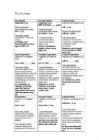
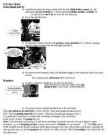
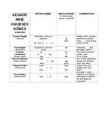
Art week Art week is a big event for students and teachers of Tallinn 21. School. It is a tradition that has been held for the last 30 years. Art Week is always organized by 11c class students who study Humanities and Social Sciences. Organizing class has to introduce the culture of the country they have picked to other students in school. The Art Week was originally initiated by Tiina Meeri, who is still working in our school and still organizes the week. At the beginning there were no countries, just certain time periods of history. The Art Week has some traditional events, such as the play "Moving Pictures" which tells the story of the theme country. At the opening ceremony, people from embassy come to congratulate and thank the students for their efforts of making such a big event happen. There´s also Art Week´s café where traditional food is served. Traditionally
Week 4 homework. Question 1: 1. SNR – Ratio of root mean square signal to root mean square. 2. SINAD – Ratio of the RMS signal amplitude to the mean of value of the root sum square. 3. ENOB – The effective number of bits and relates to SINAD. 4. THD – Ratio of the rms value of the fundamental signal to the mean value of RSS of its harmonics. 5. SFDR – Ratio of the RMS value of the signal to the RMS value of the worst spurious signal. 6. Channels – multiple analog signal inputs to the ADC that can be individually selected or selected through a multiplexor. 7. Linearity – Describes how an ADC conveter follows a linear function. 8. Operating temperature – A temperature at which the ADC functions optimally, usually given by the manufacturer. 9. Power dissipation – The proportion of power dissipated (through heat) when the ADC is working. Question 2: An 8 bit ADC has a reference voltage of 5V. What is the digital output code ...
25-29 märts 2015 Tallinn music week Mis on Tallinn music week? Tallinn Music Week (TMW) on Baltikumi ja Põhjamaade suurim uue muusika festival ja muusikatööstuse konverents. Siin kohtuvad publik, artistid ja tuule saavad tiibadesse värsked talendid ning Eesti artistidele luuakse eeldused olla osa kirjust rahvusvahelisest muusikamaailmast. Kontserdid toimusid igalpool Tallinnas: teatrites, kohvikutes, galeriides, ladudes, keskustes, restoranides, klubides ja lõpetades kirikutega Artistid
Mictrocontroller Week 03 Numbering systems 1. Convert the decimal number 123.456 to the following formats, taking whole numbers and fractions into account. Show calculations. a) binary b) hexadecimal c) base-5 d) BCD === 1. a) 0111 1011.0111 01002 b) 7B.7416 c) 443.2125 d) 0001 0010 0011.0100 0101 01102 === 2. Extend the following unsigned 8-bit binary numbers to their 16-bit equivalents and convert the result to hexadecimal. a) 011010112 b) 101101012 === 2. a) 006B b) 00B5 === 3. Extend the following signed two’s complement 8-bit binary numbers to their 16-bit equivalents and convert the result to hexadecimal. a) 011010112 b) 101101012 === 3. a) 006B b) FFB5 === Logic and arithmetic 4. Using two’s complement arithmetic, calculate the following (choose a suitable number of bits for the representation): a) 121 – 185 b) -70 – 88 == 4. Convert back to verify answer == 5. Calculate the following without conve...
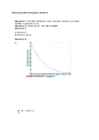
Microcontroller homework Week 05 Question 1. Treshold, sensitivity, range, linearity, accuracy, precision, stability, hysteresis, noise Question 2. Assuming Rh= 9kΩ Vo=0.381V Question 3. A) RS=100 Ω B) RS=212,464 Ω Question 4. A) B) R1 = 16,67 kΩ C) D) E) RF = 10k, RL = 282k, RH = 107k F) Without scaling: 2.35 steps/°C. With scaling: 3.42 steps/°C
Entry Ticket Week 39 – Ave Nurmeots (62-130) 1. Why is it important to move beyond product innovation? To be able to compete within the today’s marketplace (continued success and differentiation). It is not enough anymore just to come up with an innovative product or its features. To achieve a bigger and more sustainable competitive advantage different types of innovations should be combined together. 2. Name an example of a company from the book, which has gone beyond product innovation –explain which of the 9 other types they have used? I really liked the example of Microsoft reinventing integrated office tools. When I think about it in today’s context, it seems very logical – a lot of companies do that. But that must have been an amazing innovation for that time. They used: o Profit model – instead of paying for the different applications separately, they...
Review: 8 Mile 8 Mile is the musical drama of B-Rabbit's (Eminem) one week. It's a rap version of "Saturday Night Fever." For now it's out of date, but people loves it due to it's soundtrack. B-Rabbit, a wannabe rapper from the wrong side of Detroit's 8 Mile, has problems: he dumps his girlfriend when she tells him she's pregnant; to save money to make a demo tape, he moves into his alcoholic mom's (Kim Basinger) trailer; his job's a dead end, and he's just choked at the local head- to-head rap contest
London for five years. positive tell + infinitive now then imperative He told me to shut up. today that day Shut up! here there this that this week that week tell + not + infinitive He told me not to do it again. the following day tomorrow the next day negative the day after imperative the following week Don't do
paid 12 for the video. Past Past Continuous or Past Continuous Perfect I was driving to He said that he was York. driving/had been driving to York. Future (will) Conditional (would) I will tell you He said that he would tomorrow. tell me the next day. Now then, immediately Today that day Yesterday the day before, the previous day Tomorrow the next/following day This week that week Last week the week before, the previous week Next week the week after, the following week Ago before Here there Come go Bring take Who, where, how, when, what same question word Can, may if, whether Order/tell + sb + (not) to Must had to Can could had been able to May might jääb muutumatuks Should, ought to ja need jäävad muutumatuks.
could > had been able to may > might must > had to mustn't > wasn't/weren't allowed to today > that day yesterday > the day before tomorrow > the next day this year/ month/ week > that year/ month/ week last year/ month/ week > the year/month/week before next year/ month/ week > the next year/ month/ week now > then ago > before soon > later here > there this > that these > those
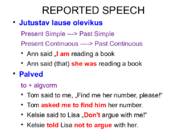
Lynn said ,,I went to the cinema last night." Lynn said (that) she had gone to the cinema the night before. Ed said ,,I have finished the exercise." Ed said (that) he had finished the exercise. Kerri said ,,We were waiting for the bus." Kerri said (that) they had been waiting for the bus. AJAMÄÄRUSED Today --> that day Tomorrow --> the next day Yesterday ---> the day before Last week/month/... --> the week/month/... before Next week/month/... --> the next week/month/... This week/month/... --> that week/month/... This --> that These --> those Now --> then Ago --> before REPORTED QUESTIONS Kaudses küsimuses jutustava lause sõnajärg Ajavormid muutuvad samamoodi nagu jutustavas lauses He asked me ,,Whose book is it?" He asked me whose book it was. Lisa asked Tom ,,Do you like ice cream" Lisa asked Tom if he liked ice cream.
please realize owe prefer recognize resemble regret suppose seem surprise think* sound want* understand Created by Aari Juhanson, MA 2009 weigh* Write about your past week Example: Last week I was very busy and had to do a number of things. I was even so busy that they called me three times each morning while I was having breakfast, and five times when I was trying to park my car. I had barely reached my office when I got another phone call. And so it continued for the rest of the week. By Friday morning I had been receiving hundreds of phone calls in the most inconvenient situations and at the most uncomfortable times.
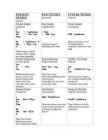
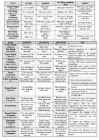
Present Simple Past Simple Future Simple lihtolevik Lihtminevik Lihttulevik I You + I põhivorm + II pv We ? , - Do + I pv. ?, - Did + I pv Will + I põhivorm They He + I põhivorm + S Tegevus tulevikus, mis ei She ?,- Does + I pv Lõpetatud tegevus ole ettekavatsetud It (yesterday, last week) (tomorrow, next week, next year) Korduv tegevus, faktid (always, often, usually, every day, normally) Present Continuous Past Continuous GOING-TO Future Kestev olevik Kestev minevik Tulevik Am Is + ING Was + I pv + -ing Am Are Were Is GOING TO + I pv
-21.nädalal KASUTATUD ALLIKAD: https://en.wikipedia.org/wiki/Morula http://super-beremennost.ru/razvitie_ploda_po_nedelyam.html http://woman7life.ru/foto-razvitie-ploda-po-nedelyam.html http://malutka63.ru/pregnancy/razvitie-embriona-po-nedelyam-fotoopi.html http://pixanews.com/photographers/lennart-nilson-zarozhdenie-zhizni.html http://mamainfo.com.ua/beremennost-i-rody/40-nedelya-beremennosti http://ladynumber1.com/health/pregnancy-salendar/week-by-week/35-nedelya-beremennosti.html http://ladynumber1.com/health/pregnancy-salendar/week-by-week/28-nedelya-beremennosti.html http://ladynumber1.com/health/pregnancy-salendar/week-by-week/21-nedelya-beremennosti.html http://www.itk.ee/kliinikud/naistekliinik/naistekliinikust/perinataalkeskus/emadusnouandla/rasedusaeg sed-uuringud http://www.renovacio-med.ru/catalog/poliklinika/obshaya_medicina/yzi_diagnostika/yzi_pri_beremennos ti_v_krasnoyarske.html/ http://www.7ya
there is a time context which makes everything clear, and/or there is another action already using the past perfect, which might alter the meaning or make things confusing. Time and place references Time and place references often have to change: now then today that day here there this that this week that week the following day tomorrow the next day the day after the following week next week the next week the week after the previous day yesterday
Verb forms 1. When I (turn) turned the radio on earlier today, I (hear) heard a song that was popular when I was in basic school. I (hear, not) had not heard the song in years, and it (bring) brought back many great memories. 2. Last week, I (run) ran into an old classmate of mine. We (see, not) had not seen each other in years. I (enjoy) enjoyed talking to her so much that I (ask) asked her, if she’d like to meet me tomorrow. We are getting together tomorrow evening. 3. When Mary (enter) entered the room, I (recognize, not) did not recognize her because she (lose) had lost so much weight and (grow) grown a long, healthy and beautiful hair. He looked totally different! 4
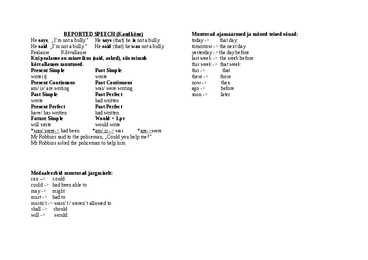
REPORTED SPEECH (Kaudkõne) Muutuvad ajamäärused ja mõned teised sõnad: He says, ,,I'm not a bully." He says (that) he is not a bully. today -> that day He said ,,I'm not a bully." He said (that) he was not a bully. tomorrow -> the next day Pealause Kõrvallause yesterday -> the day before Kui pealause on minevikus (said, asked), siis toimub last week -> the week before kõrvallauses muutused. this week -> that week Present Simple Past Simple this -> that write(s) wrote these -> those Present Continuous Past Continuous now -> then am/ is/ are writing was/ were writing ago -> before
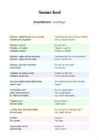
keskiviikko Wednesday keskiviikkona on Wednesday torstai Thursday torstaina on Thursday perjantai Friday perjantaina on Friday lauantai Saturday lauantaina on Saturday sunnuntai Sunday sunnuntaina on Sunday päivä day joka päivä every day viikko week joka viikko every week kuukausi month joka kuukausi every month vuosi year joka vuosi every year nyt now heti immediately äsken a moment ago pian soon myöhemmin later aina always ei koskaan never
AJAVORMID JA NENDE MOODUSTAMINE AJAVORMI NIMETUS MOODUSTAMINE KASUTAMINE, SAGEDAMINI ESINEVAD AJAMÄÄRUSED THE PRESENT I pv; do/does + I Tegevus toimub korduvalt, on harjumuspärane SIMPLE live, goes twice a week, every day, usually, often, sometimes, always THE PAST (+) II pv; did + I Tegevus toimub minevikus SIMPLE lived, went yesterday, last week, two years ago, in 1996 THE FUTURE (shall)/will + I Tegevus toimub tulevikus, on üksteisele järgnev
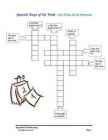
Spanish Days of the Week - Los Días de la Semana A day that begins with "j" A day that begins with "s" Friday in Spanish The first day of the week A day that starts with "m" The last day of
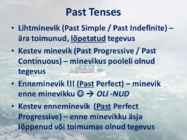
Lihtolevik III pv usually, always Past Simple Yesterday, last year, II pv(-ed)+ did Was/ were + III pv Had/got + sth + III pv Lihtminevik last week Present Am/is/are + Am/ is/ are + being + Am/ is/are + have/get At the moment, this Continuous I pv + -ing III pv + -ing + sth + III pv week, now Kestev olevik Past Continuous Was/were + Was/were + being + III Was/were + have/get +
Healthy Life I do not workout. I just do not have time for that and I do not have a mind to do workout sometimes. My way to workout is to play basketball, 90 minutes PE classes once a week and walk with my dog. In summers, I usually watch soccer on television and sometimes play basketball. My mother, father and sister are completely opposites of me. My sister practices swimming and soccer three times a week, including she rides with a bike. My mother bought herself a fitness machine; she uses it twice a week. My father also goes to fitness centre, rides with a bike and runs three times a week. In our family there is only me, who workout with my brain instead to do physical exercises. In addition, my grandparents are not capable to workout; they are too old for that as they say. In my family, many people do different activities
PLURAL FORMS OF ADJECTIVES Nominative and Accusative inanimate: -/ - , , . , , . , , ? , , , . Accusative animate and Genitive: -/ - , , . 1 1B Grammar Week 5 , , ? , , . Prepositional: -/ - , , . , , ? , , . Homework Points (1 point=2%) Task 1. Insert an adjective and a noun in the brackets into Plural: , , (boring), , . . . . ? /10 Task 2
Tunnused lauses: Lihtminevik. Keegi tegi Tunnused lauses: Tunnused lauses: midagi. Jutt käib tavalisest, Lihttulevik. Ennustused. yesterday, last harjumuspärasest Lubadused. Hetkeotsused (summer), (five years) tegevusest. (rääkimise hetkel ago, in 1987, etc. always, sometimes, sündivad). usually, often, every tomorrow, next (week), (day), etc. in 10 minutes, in 2050, soon, etc. Past Progressive Present Progressive Future Progressive Tegusõna on esitatud Tegusõna on esitatud Tegusõna on esitatud kujul kujul kujul will be _______ing was / were _______ing am / is / are ________ing
call me. NOTE: modal verbs could, would, might and should do not change. Changes in reported speech now then /at that time /immediately at that moment today / tonight that day /that night here there this / these that / those tomorrow the following day /the next day the day after next week the following week /the next week the week after yesterday the previous day /the day before last week the previous week /the week before (a year) ago (a year) before /earlier the day before yesterday two days before /earlier the day after tomorrow in two days' time come go Direct Speech Indirect/Reported Speech I he, she
Reporting clause Direct speech He says, ,,I like your car." Kaudne Kõne Indirect speech Pealause Sidesõna Sihitislause Main clause Linking word Object clause He says that he likes my car Väitlaused kaudses kõnes Statements in indirect speech Tom says to me he likes my car Joe is saying that Mary is leaving next week You have told me He kas worked there for two years Ann will tell them our friends will arrive at 7 o'clock Kui saatelause verb on minevikus, toimub otsese kõne kaudseks muutmisel aegade nihe vastavalt aegade järjestuse reeglile , mis nõuab ,et kui pealause verb on minevikus, peab ka sihitislause verb olema ühes mineviku ajavormis. the present indefinite the past indefinite the present continuos the past perfect the present perfect the past perfect
Dear Sir or Madam, 6 October 2009 I am writing to complain about repetitious delays in rail service last week and to claim the vouchers you have referred in your information leaflet. Whereas all my classes in London start at 10 o'clock sharp and I do not want to be late because I have paid for these I always check the schedule for the most convenient choice of train. Nevertheless last week all my journeys to my course delayed. On the worst day the train was 1 hour and 20 minutes late. Therefore I missed two classes in addition to numerous delays and loss of nerves. Although I understand that the weather conditions last week were extremely complicated the deferments should have been prevented, because that is quite predictable especially in October. As you have proposed in your information leaflet, which I picked up from the station,
AJAMÄÄRUSED THE PRESENT I pv ( +s ); do/does Tegevus toimub korduvalt, on harjumuspärane. ev SMPLE live, goes every day, usually, often, somtimes, always,never Lihtolevik THE PAST SIMPLE II pv; did ,lived, Tegevus toimus minevikus. Lihtminevik went yesterday, last week, two years ago, in 1998 THE FUTURE SMPLE ( shall ) / will +I pv. Tegevus toimub tulevikus. Lihttulevik will go tomorrow, next week, soon, later, In 2050 THE FUTURE IN THE ( should ) / would +I Kaudses kõnes tuleviku asemel, kui pealause on PAST pv minevikus. Kaudne tulevik ( He said that he would be better )
Will+lihtolevik (help,come jne) kindle tegevus If you help me I will help you You won’t pass your exam if you don’t start working harder I’m,are,is+ing (plaanid, kokkulepitud kohtumised) I’m playing football tomorrow. We are having a party tomorrow Lihtolevik (kindel aeg, kuupäev jne) The holidays start next week The train arrives at 6 in the morning (Be) going to (plaanid, kokkulepitud kohtumised, midagi võib juhtuda) I’m going to drive to work today I think its going to rain. Will be+ing (tegevus mis juhtub täpselt samal ajal nt nädala pärast) (tegevus mis on rutiinne) This time next week I will be sun –bathing. You will be seeing John in the office tomorrow, wont you? Will have+3 vorm (nähes ennast tulevikus ja vaadates tagasi lõpetatud
THE PRESENT SIMPLE I pv. (+ s); do/does + I pv. Tegevus toimub korduvalt, on harjumuspärane. püsiv olukord, ajagraafikutega seotud tulevik Lihtolevik live, goes every day, usually, often, sometimes, always THE PAST SIMPLE II pv.; did + I pv. Tegevus toimub minevikus. Lihtminevik lived, went yesterday, last week two years ago, in 1998 THE FUTURE SIMPLE be going to/ will + I pv. Tegevus toimub tulevikus. Lihttulevik will go/ won´t tomorrow, next week, soon, later, in 2012 THE FUTURE IN PAST (should)/ would + I pv. Kaudses kõnes tuleviku asemel, kui pealause on minevikus. Kaudne tulevik would go (He said that he would be there.)
Tense Form Use Hints Example + I pv ((e)+s) Present Simple 1. daily routines, habits or repeated actions Every hour/day/week etc , I always play football in -? do/does not+I pv 2. permanent states usually, always, in the the evenings morning/evening/night, at night Present Am/is/are+Iing 1
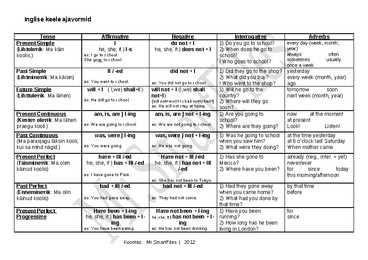
Inglise keele ajavormid Tense Affirmative Negative Interrogative Adverbs Present Simple I do not + I 1) Do you go to school? every day (week, month, (Lihtolevik: Ma käin he, she, it } I-s he, she, it } does not + I 2) When does he go to year) koolis.) ex: I go to school. school? always often She goes to school. ! Who goes to school? sometimes usually
Russian 2 Oral Essential Vocabulary Week 2 . (PERSON. APPEARANCE) Head nose () ear neck beard () lip mouth moustache () eye () eye brow
Write a report (on a separate sheet of paper) to the Ministry of Education on the sporting facilities in your school. Write about the places, rooms and equipment and PE lessons (number of lessons a week, teachers, trainings) and if anything should be improved. Rules - in notebook, See alsoTB p 202. Write ab. 200 words. To: Ministry of Education From: Mari Mets, student of Mets Gymnasium Subject: The sporting facilities in our school Date: 2 February 2016 Introduction The purpose of this report is to give an overview of sporting facilities in our school and give some recommendations to improve it. My findings are presented below. Places and rooms
Report A task was given to write a report which conveys the results of a survey about shopping habits of people of different ages and gender. The results of the survey were mostly the same, although there are some differences in answers. How much does one shop? About 1/3 of the 9 people surveyed said that they go shopping once a week. Others said that they shopped at least two times a week and it takes about 30 minutes for men and a hour for women to buy groceries and at least an hour if it's a shopping spree. How much do you spend on your hobbies? All men (4 out of 9 people surveyed) said that the most enjoyable products to shop for are electronics while all the women agreed that clothing and acessories are the most fun things to buy. Men also spend less than women, about 50 euros and about 80 euros a week respectively. The experience itself
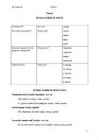
......................................................... 7 Prepositions of Place – in & on with travelling ..................................................... 8 Prepositional Phrases ......................................................................................... 8 Prepositions of Time – in, on & at • in is used with centuries, decades, years, seasons and months, parts of the day, periods of time • on is used with dates, special days, days of week, day of week + part of day, day + of ... • at is used with holidays, exact time, meals and with night in on at • the 20th century • the 29th of November • Christmas / Easter • the Middle ages /August the first • six o’clock / 7.30 • the 1980s • Christmas Day / New • midday / noon / • 2006 Year’s Eve / Easter midnight
Tulevikus toimub tegevus, mis on seotud graafikute, sõiduplaanidega, tunniplanid Üleüldised tõed ja loodusseadused Kui midagi kommenteeritakse - tv Present continius am, is, are working be vormi abil tehakse now, at the moment, look, listen, hurry up just praegu toimub tegevus praegusel perioodil toimuv tegevus kõige kindlam tulevik ettekavatsetud tulevik Present perfect Have, has worked 3pv Eitavaid, küs have / has Ever, never, for, since, already, yet, today, this week / month / yrear Äsja lõppenud tegevus, millele visatakse pilk peale Tükk aega varem toimunud tegevus (eesti keeles nud) Elavate inimeste puhul kui tahame öelda, mida on oma elus teinud Present Prefect continius have has been working for, all, since, lately, recently tegevus algas minevikus, aga rõhutatakse, et parajasti nüüd kestab ta ikka edasi she has been working all morning Past simple Worked küs did Yesterday, last week, monady year, ago, in 1999 Minevikus toimunud tegevus
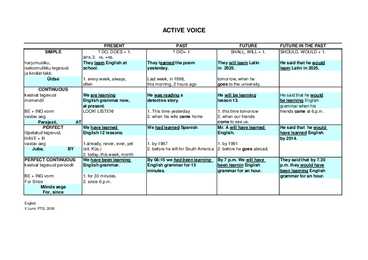
? DID+ 1. SHALL, WILL + 1. SHOULD, WOULD + 1. ains.3. +s, +es. harjumusliku, They learn English at They learned the poem They will learn Latin He said that he would iseloomulikku tegevust school. yesterday. in 2025. learn Latin in 2025. ja kindlat fakti. Üldse 1. every week, always, Last week, in 1998, tomorrow, when he often this morning, 2 hours ago goes to the university. CONTINUOUS kestvat tegevust We are learning He was reading a He will be learning He said that he would momendil English grammar now, detective story. lesson 13
speed 2. Past Simple Lihtminevik II ajavorm Did, didn't For an activity, which has Yesterday, (how long) ago, in finished entirely in the past. 1965, last week/month, then, from 1967 to 1993. 3. Future Simple Lihttulevik Will + I ajavorm Will, won't With predictions about the Tomorrow, next week/month.
Present Simple (lihtolevik) Abitegusõnu do, does kasutatakse ainult + 1.põhivorm + (e)s he, she, it eitavates ja küsilausetes. - do (does) + not + 1.põhivorm ? do (does) + 1.põhivorm Väljendab: Korduvat tegevust, püsivat olukorda, sõiduplaanide jms. Seotud tulevikku Spikkrisõnad: always, sometimes, seldom, often, usually, once a week, twice a day, every day, on Mondays Present Continuous (kestev olevik) Be(am, is, are), kasutatakse jaatavates, + be (am, is, are) + 1.põhivorm ing eitavates ja küsilausetes. - be (am, is, are) + not+ 1.põhivorm -ing ? be (am, is, are) + 1.põhivorm ing Väljendab: Praegu toimuvat tegevust, praeguse momendi vältel toimuvat tegevust, ettekavatsetud tegevus tulevikus
7. klassile Õpik: I love English 4 Kokkuvõte aasta jooksul õpitust. Koostaja: Gea Gutmann Viljandi Maagümnaasium Juhendaja: Toomas Rähn Final Test Form 7 Name................. 1. Use the right tense. (15 p) 1) Look! She....................................(carry) a heavy bag. 2) Mrs. Brown...................................(play) the piano at the concert next week. 3) Mary is a good girl. My mother............................(meet) her every day since she and her father moved here. 4) Yesterday at two o`clock Tom ..............................(sing) and his sister ........................... (draw) a pictuture in the living room. 5) The wind ........................(be) very strong some days ago. 6) Where are the children? They ...................................... (play) with their ball in the garden. 7) He..............................
They are going to get married in three months. (They have already decided to do it.) BUT: They're getting married next month. (They have decided and arranged to do it.) c) in predictions when there is evidence that something will happen in the near future. Look at the clouds! It's going to rain. Note: 1) We normally use be going to to talk about something we intend to do and will to give details or make comments. e.g. A: I'm going to have a party next week. I'll invite all my friends. B: That'll be great. 2) We normally use the present continuous rather than be going to with verbs which express movement, especially the verbs go and come. e.g. Sam is going to the market in a few minutes. Sheila is coming to my house for tea this afternoon NB! The future simple and be going to are used with the following time expressions: tomorrow, the day after tomorrow, tonight, soon, next week/month/year, in a week/month/year, in two/three
· DIRECT · INDIRECT · Am, is, are · Was/were · Shall/will · Should/would · Can · Could · May · Might · Must · Have/has to · Ought to · Had to CHANGES OF ADVERB OF TIME & PLACE · DIRECT · INDIRECT · NOW · THEN · TOMORROW · THE FOLLOWING DAY · NEXT WEEK · THE FOLLOWING WEEK · TONIGHT · THAT NIGHT · TODAY · THAT DAY · YESTERDAY · THE DAY BEFORE · LAST NIGHT · THE NIGHT BEFORE · LAST WEEK · THE WEEK BEFORE · HERE · THERE · THIS · THAT · THESE · THOSE CHANGES OF TENSES · DIRECT · INDIRECT · SIMPLE PRESENT · SIMPLE PAST · SIMPLE PAST · PAST PERFECT · PRESENT PERFECT · PAST PERFECT
potential. This pursuit drives me at the core, and leaves me with that deep sense of fulfillment at the end of the day. This fulfillment fuels my selfesteem and makes me feel grounded to reality because my impact is tangible. Goals MondaySaturday (excluding Christmas eve & day) 8am 7pm Focus solely on my main project. My team is mostly working from home this week and enjoying the holidays. 2. Girls/Relationships Vision I want to have the selfesteem and skills necessary to have 23 highly attractive girls I see throughout the week in win/win relationships. I want to have more than enough time & energy to meet plenty of new girls each night I go out. Purpose I find I am most grounded and confident in all other aspects of my life when I
Nt: I will never speak to you again! Will you give me a hand with the washing-up? · Tegevused/sündmused, mis KINDLASTI toimuvad tulevikus, me ei saa neid kontrollida Nt: Valentine's Day will fall on a Saturday this year. BE GOING TO Kasutan, kui... · plaanid tulevikuks Nt: I am going to travel around the world one day. · otsused, mis on juba LÄHITULEVIKUKS tehtud Nt: We are going to visit our grandparents next week. · Ennustused, põhinedes sellel, mida me näeme; kui on millegi toimumiseks tõendeid Nt: Look at the sky! It is going to rain. Look at that car! It is going to crach. FUTURE SIMPLE ja BE GOING TO-ga kasutame: tomorrow, the day after tomorrow, tonight, soon, next week/month/year, in a week/month/year etc. FUTURE CONTINUOUS - WILL BE + VERB + ING Kasutan, kui... · Tegevused, mis hakkavad toimuma väidetaval ajal tulevikus
Lihtolevik (algvorm) do sometimes, seldom, does every .... , once a year, he / she / it +s twice a month ...... Past Simple Tegusõna II põhivorm did Yesterday, ..... ago, Lihtminevik (+ ed) last night / week / ..... Present am am Now, at the moment, Continuous is + - ing is Listen! Look! Kestev olevik are are It´s 3 o´clock. Past Continuous was at 5 o´clock yesterday, Kestev minevik + -ing was this time on Sunday,
Russian 2 Oral Essential Vocabulary Week 3 . (PERSON. CHARACTER) (.) Positive features of one's character (adj.) strong-willed attentive kind friendly good-natured conscientious caring
75m Feb 2nd Valencia, Spain 21.32m Feb 10th Birmingham, UK 21.12m Feb 17th USA Indoor Champs 21.21m Feb 25th Hoffa Indoor Training Schedule January 2nd-January 26th, 2007 Week Power Lifts 1 x5x5x4x4x4 2 5x4 3 x4x4x4x3x3 4 5x3 Monday Tuesday Bench Press (goal of 3x200kg by week #4) Jump Squats (goal of 3x220kg by week #4 Rhythmic Step-
My trip through bog Me, my dad and my cousins traditionally go hiking every summer. Last summer we decided to go through bogs of Lavassaare. As it was going to be a week-long tramp, we considered our equipment carefully. We made list of everything we needed and then crossed out all that wasn't absolutely nesseccery. We couldn't have better timing: it was clear and warm all week long and it was exact time for wild strawberries and blueberries. We enjoyed the nature and especially the bog lakes. We spent six days in bog and travelled 55 kilometers with this time. This may seem as a short distance, but in bog, where your every step sinks and bog lakes lie exacly on your way, it is pretty long.
Carnival in Brazil What is it? A week-long party Annual Live music, street performances, dancing, floats, costumes, food and beverages. Rio de Janeiro, Bahia and Pernambuco 4.9 million people in 2011 History 1830 Lent Electing the Carnival's "king" Rio de Janeiro's Carnival Most well-known Samba schools Favelas Famous groups Street band Bahia's Carnival African rhythms Trios Eletrico Indian Blocos Afro Afoxes Pernambuco's Carnival African rhythms Week before Frevo music Side by side Samba 19th century in Rio de Janeiro Warm and vibrant mood First Samba School Brazil's "official music." Frevo Portugese word ferver (to boil) 19th century Brazilian Army Religious and martial music Two famous bands https://www.youtube.com/watch?v=kTc3pv7d5v Y Sources ● http://en.wikipedia.org ● http://traveltips.usatoday.com ● https://www.youtube.com ● http://www.rio-carnival.net THANK YOU FOR LISTENING!
 annaabi.ee