Leidsid 33 sarnast õppematerjali, mis on seotud failiga "Water creates energy". Need materjalid aitavad sul teemat sügavamalt mõista.
electric, power, hydro, electricity, country, projects, different, sources, best, percent, supply, present, falls, coal, later, create, station, cheap, fact, eduard, kamenski, such, nuclear, plants, solar, there, positive, negative, accounts, worldwide, fifteen, found, major, mainly, moving, turbines, acquired, times, following, comparison, known, shallgeothermal heat--which are renewable (naturally replenished). In 2006, about 18% of global final energy consumption came from renewables, with 13% coming from traditional biomass, such as wood-burning. Hydroelectricity was the next largest renewable source, providing 3% (15% of global electricity generation),followed by solar hot water/heating, which contributed 1.3%. Modern technologies, such as geothermal energy, wind power, solar power, and ocean energy together provided some 0.8% of final energy consumption. While there are many large-scale renewable energy projects and production, renewable technologies are also suited to small off-grid applications, sometimes in rural and remote areas, where energy is often crucial in human development.Kenya has the world's highest household solar ownership rate with roughly 30,000 small (20100 watt) solar power systems sold per year.
Renewable energy Meriliin Lend Estonian University of Life Sciences Tartu 2013 Topics Renewable energy Solar energy Wind energy Hydroelectric power Geothermal energy Biomass energy Renewable energy Renewable energy comes from sources that naturally renew, or will not run out in our lifetimes. Includes sunlight, wind, water, geothermal heat and various forms of biomass. Renewable energy cannot be exhausted and is constantly renewed. Does not harm the environment. Saves money. Solar energy Solar energy is the technology used to harness the sun's energy and make it useable. Every hour the sun beams onto Earth more than enough energy to satisfy global energy needs for an entire year.
......................................................................................................4 USES OF ENERGY............................................................................................................. 4 2.1 Uses of energy in homes...............................................................................................5 2.2 Types of energy used in homes.................................................................................... 6 2.3 Energy use in different types of homes........................................................................ 6 2.4 Commercial Energy Use...............................................................................................9 2.5 Industrial and Manufacturing Energy Use..................................................................11 2.6 Transportation Energy Use.........................................................................................12 RENEWABLE ENERGY...............................
Tartus secondary school of business Nuclear Power Helena Nulk form 11b Tartu 2009 Table of contents Introduction..........................................................................................................................................3 What is nuclear power?....................................................................................................................3 Nuclear life cycle.............................................................................................................................3 What is nuclear energy?...................................................................................................................3 What is nuclear fusion?.................................................................
Hello My name is JOHN SMITH and I am here to talk about Hydroelectricity. Global energy use has risen by 70% since 1971 and continues to increase at the rate of 2% per year. There are many scenarios for future demand. One solution would be to use more hydropower. In 2005, renewable energy represented one-fifth of total power generation. Hydropower is the most advanced of the renewable and represents 87% of this production. 160 countries all over the world are using hydropower. Five countries make up more than half of the world's hydropower production. Those countries are: Brazil,Canada, China, Russia and the USA. (Production) *Most of the energy comes from the potential energy of dammed water driving a water turbine and generator
We get natural resources from the environment. Many of them are essential for our survival while others are used for satisfying our wants. Renewable resources: Some natural resources can be reproduced within a few years or decades. These are called renewable resources. Solar radiation, wind and hydroelectricity, are perpetual resources that are in no danger of a lack of long-term availability. Some natural renewable resources such as geothermal power, fresh water, timber, and biomass must be carefully managed to avoid exceeding the worlds capability to displace them. Solar energy is the energy derived directly from the Sun. Along with nuclear energy, it is the most important source of energy on Earth. People usually use solar energy to produce electricity and heat. Wind power is the conversion of wind energy into a useful form of energy, such as electricity, using wind turbines
1 Wave energy Introduction to wave energy There are several possibilities to harvest different forms of energy from the sea. One of these options is the usage of waves for the generation of electricity. The devices needed to perform this task are called wave energy converters. Wave energy is indirect solar energy in twice. At first there is the wind, which is caused by variations in atmospheric pressure due to a differential solar heating of earth's surface by the sun. Different regions of pressure drives a force which rises a movement of atmospheric air masses that causes the earths wind system. If wind strikes over the surface of an open water, waves are induced. First they
biosphere, releasing pollutants and greenhouse gases into the air and damaging ecosystems through events such as oil spills. Concern over the depletion of the earth's finite reserves of oil, and the effect this would have on a society dependent on it, is a field known as peak oil. Etymology The word "petroleum" comes from Greek: πέτρα (petra) for rock and Greek: ἔλαιον (elaion) for oil. The term was found (in the spelling "petraoleum") in 10th-century Old English sources. It was used in the treatise De Natura Fossilium, published in 1546 by the German mineralogist Georg Bauer, also known as Georgius Agricola. In the 19th century, the term "petroleum" was frequently used to refer to mineral oils produced by distillation from mined organic solids such as cannel coal (and later oil shale), and refined oils produced from them; in the United Kingdom, storage (and later transport) of
...... Economical....................................................................................................... Dangers of biogas............................................................................................... Future prospects................................................................................................ Conclusion......................................................................................................... Used sources..................................................................................................... Introduction To be honest I got the list of topics after most interesting ones for me were taken. At first I was not very satisfied with my topic but then I realized that this could be actually really interesting thing to make a report of. I chose this particular topic because I have always been interested in green energy. This topic gave me an excellent
Name at least 3 renewable energy sources. What consequence might there be if we use non-renewable energy too much? Which energy technology is the world's fastest growing? With what name is renewable energy also known as? Light Heat Electricity Generated from natural resources. Doesn't harm the environment. Can't be replenished Most of our energy. May cause global warming. Wind energy is the fastest growing. Most renewable energy comes from the sun. Hydroelectric energy is the oldest and largest source. Renewable energy a.k.a "green" energy. Thank you for listening! We use energy every day. It surrounds us in different forms, such as light, heat, and electricity. Our bodies
Tartu Kutsehariduskeskus Autode ja masinate remondi osakond Rainer Kaine AT-109 Iseseisev töö Electric cars Instructor: Tauris Vijar Tartu 2010 Introduction In this essay i´m write electric cars and this how these cars are built, how easy is built electric car, how much costs electric cars. The problems for electric cars, there are many problems why peoples still can´t use quiet and more green cars. But even the electric car is not all green because the electricity produced for nuclear, coal, oil shale and natural gas. These ways to get electricity pollutes nature, the only difference between lies in the fact that pollution is in the one place. Coal Electric power station Oil shale power station in Narva What is a electric car
It increases risks and financing costs, like in the UK and Ireland, where DH is not established. There are few multi- family houses with central heating and it is expensive to build DH networks in built areas. Most French DH systems are operated according to long-term concessions by companies that sell electricity and gas. No strong actor provides unbiased DH support. In the Czech Republic, gas offers DH severe competition. Much DH is produced at the expense of electricity that is considered more valuable, and waste incineration is not popular. In Romania, DH consumption was reduced by one-half. Distribution losses are enormous. New less polluting plants are needed. Consortia from established DH countries could offer DH systems from fuel to customer if local policies facilitate DH development. Introduction This paper describes barriers to district heating (DH) in various parts of Europe and to Swedish involvement in district-heating business abroad
7.66 gha/in. Millega tegeleb riik? Autodetööstus Lennundus Õlletööstus Nafta ja gaas Ravimitööstus Masinaehitus Kivisüsi Fossiilkütuseenergia. NAFTA has caused huge amounts of toxic waste to be dumped into Countries with weak environment laws, Canada that is. Industrial activity- tööstustegevus for producing high-grade uranium.Kõrgekvaliteetne uraan nuclear energy. Tuumaenergia energy comes from hydro and wind. Hüdro- ja tuuleenergia It is the world's largest producer of natural uranium, producing one-third of global supply, and is also the world's leading producer of hydro-electricity, accounting for 13% of global production. It is also a significant producer of petroleum, natural gas, and coal. Kas riigil on reserv või defitsiit? Ontario, Canada's most populous province, generates some 9,600 MW annually, over half of that coming from one dozen nuclear reactors
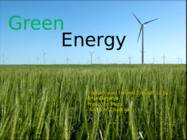
Green Energy Program paid for and brought to by -Anja Bananja -Franz the Manz - And Just Chadrick Overview- What is Green Energy? Different Types? What is sustainability? German Green Energy Cost and Efficiency Recycling What is Green Energy? -It is energy resources that are renewable -Can be naturally replenished -Clean, Safe and not harmful to the environment (aka mother earth) Types of Green Energy Green Energy going cute Solar Power · Is produced by using photovoltaic cells, which capture sunlight and turns that into energy.
The engine room is one of these spaces, and is generally the largest physical compartment of the machinery space. The engine room houses the vessel's prime mover, usually some variations of a heat engine - diesel engine, gas or steam turbine. On some ships, the machinery space may comprise more than one engine room, such as forward and aft, or port or starboard engine rooms, or may be simply numbered. 1.1)Main engine The engine room of a motor vessel typically contains several engines for different purposes. Main, or propulsion engines are used to turn the ship's propeller and move the ship through the water. They typically burn diesel oil or heavy fuel oil, and may be able to switch between the two. There are many propulsion arrangements for motor vessels, some including multiple engines, propellers, and gearboxes. Large engines drive electrical generators that provide power for the ship's electrical systems.
can affect the wheat cultivation for food in the future. 3.3. Sugarcane Sugarcane grows only in tropical areas and it is a very efficient and productive crop for biofuels. Brazil is the major sugarcane producer, where the production of ethanol from sugar cane started in the 1980s and has grown to 22.24 billion liters in 2007 (Zuurbier, 2008). Sugarcane is used as a feedstock for producing bioethanol and the residual leftover bagasse - is used in heat and power generation. That is one of the characteristic that gives sugarcane production an advantage over other fuels. But sugarcane is also the major source of sugar in the world; about 80% of today's sugar is made from sugarcane, cultivated in tropical and subtropical areas of the southern hemisphere. In Brazil, however, sugarcane utilisation for biofuels does not pose competition for sugar production, as sugarcane occupies about 10% of the current planted area, and only 50% of it
........................................................................................9 3.1 A functional 32 MJ railgun weapon.......................................................................................9 3.2 Multi-shot salvos..................................................................................................................10 4. Problems with a railgun.............................................................................................................11 5. Different applications.................................................................................................................12 5.1 Launch of spacecrafts into space from Earth.......................................................................12 5.2 Military weapons..................................................................................................................13 5.3 Fusion reaction initiations..........................................................................
On specifically Royal occasions, both `Advance Australia Fair' and `God Save the Queen' are played. The second choice for the anthem was `Waltzing Matilda'. It is still a famous song and Australians like that song and they sing it. Government and Head of State. Australia is a constitutional monarchy, (queen + teda asendavad inimesed) based on a liberal democratic tradition. Queen Elizabeth II, queen of Great Britain, is also formally Queen of Australia. In reality the power or the country is put to life by the Parliament. Parliament consists of The House of Representatives (esindajate koda) and the Senat. The House of representatives consists of 150 members. The Senat comprises 12 representatives from each state and 2 from each territory. The executive power in Australia is in the hands of the Prime Minister. Today the Prime Minister is John Howard. History. The first inhabitants in Australia are the Aborigines who came there about 60000 years ago
themselves to one or two slices. Eating fat The majority of the students eat margarine. Four students prefer butter, and another four eat neither. Conclusion It is noticeable that the eating habits of schoolleavers of Freedonian Secondary School are not very healthy. Moreover, there are no students who have both breakfast and school lunch, eat more than four slices of brown bread per day, and avoid fat. The debate about the best way to generate electricity is back on the agenda. The most common methods are by burning coal, building dams, or using nuclear power. However, many people think that nuclear power is dangerous, and when you consider the experience of Chernobyl in the Ukraine over 20 years ago, you can see why. Countries such as France, however, get about 80% of their electricity from nuclear power plants, and the pro-nuclear scientists argue that it is actually much clearer than burning fossil fuels, which contributes to
Canada is one of the largest countries in the world, second only to Russia in territorial size. It has a total area of 9.9 million square kilometers. This includes 755,170 square kilometers of water. Toronto is the largest city in Canada with a population of 4.3 million. Other major cities include Montreal (3.3 million people), Vancouver (1.8 million people). Located in the southeast corner of the nation, Ottawa is the nation's capital. Relief Canada is a vast country comprised of a multitude of very different landscapes: Atlantic provinces, the Appalachians, St. Lawrence and Great Lakes lowlands, Canadian Shield, The Prairies, mountain ranges and high plateaus of the Canadian Cordillera, and northern Canada. Climate Canada's climate varies wildly based on geography, from perma-frost in the north to four distinct seasons towards the equator. In this region the temperature can climb up to 35 degrees Celsius in
and many property owners have elevated their structures in low-lying areas. As a result of the erosion and ruin of properties by large storms on coastal lands, governments have looked into buying land and having residents relocate further inland. How to help prevent global warming GREEN JOBS AND CLEAN ENERGY Choose renewable energy. Pick a Green-e-certified energy supplier that generates at least half of its power from wind, solar energy and other clean sources. If you don't have that option, look at your current electricity bill to see if you are able to support renewable energy in another way. DRIVE SMARTER CARS Choose an efficient vehicle: High-mileage cars such as hybrids and plug-in hybrids use less gas and save money. Over its lifetime, a 40-mpg car will save roughly $3,000 in fuel costs compared with a 20-mpg car. Compare fuel economy performance before you buy. Drive smart
Causes · It is caused when sulfur dioxide and nitrogen oxides are released into the air. In the atmosphere they react with water, oxygen and other chemicals to form more acidic pollutants, known as acid rain. Sulfur dioxide and nitrogen oxides dissolve very easily in water and can be carried very far by wind. As a result, the two compounds travel long distances where they become part of the rain, sleet, snow or fog. SO2 and NOx come mainly from power stations and factories burning fossil fuels, or from motor vehicles. · Carbon dioxide in the air can dissolve in rain water to form carbonic acid, H 2CO3 CO2 + H2O H2CO3 · During the last century the rain water in some parts of the world has become far more acidic. This acid rain has been caused by the emission of pollutants gasses such as sulfuric dioxide, when goal is burned in electric power stations, sulfur impurities form sulfur
Nuclear Power: A Burden or a Blessing? Today, when the pollution of Earth is an important matter, people are trying to find economic solutions to produce power. This is where the necessity of nuclear power plants comes in question. Nuclear power plants are a cheap way to generate electricity but it also brings a lot of pollution that is much more radioactive and toxic than, for example, coal waste. But if we are looking at the facts, burning coal pollutes the Earth much more than nuclear power plants because more waste is generated. CO2, which is released from burning coal, is the main cause of global warming. Nuclear waste is collected and hidden in rocks or under ground, where it won't face the environment.
must follow rules made by EU because the threat to our environment can only be tackled collectively. EU has made our lives easier. Travelling in Europe is very easy because there are no longer any border controls between most European countries. The Schengen Agreement has made border controls between its member countries unnecessary. That’s how freedom of movement has created. Anyone can decide where they prefer to live, study or work. And if we fall ill or have an accident in other European country, we can be sure that we can get medical treatment with no fuss and at the same cost as people living in that country. These are very relevant points for all Europeans. EU is relevant to students and trainees too. EU’s Erasmus program provides students and trainees the financial and organizational support for a spell aboard or work placement. The program works in partnership with European universities, companies and institutions, it
We are part of the L'Oréal family. CLICK HERE to find out more about our parent company. History The very first The Body Shop® store opened on 26th March 1976 in Brighton, on the south coast of England. By 1978 the first overseas franchise is a kiosk in Brussels and by 1982 new shops open at a rate of two per month. In 1985, in its first year as a public company, The Body Shop sponsored posters for Greenpeace. A year later, it created an Environmental Projects Department of its own, while the first major campaign for The Body Shop is "Save the Whales" with Greenpeace, in 1986. The first Community Trade product for The Body Shop was a footsie roller, produced in 1986 by a supplier in southern India. This trade in footsie rollers has evolved into the current trade with Teddy Exports in India, one of our key Community Trade suppliers. By 1990, just one year after launching in the USA, there were 2,500 applications for a
crime Conservationist- someone who works to protect the environment from damage or destruction Council- the elected officials who govern a local area such as a city or county: can be followed by a singular or plural verb Descent- the act of moving down to a lower place or position Detached- not feeling involved with someone or something in a close or emotional way distinguished - successful and respected by many people District- an area of a town or country Draped- to put something made of cloth over or around something Draughts- a game for two people, played on a board with black and white squares using 24 round pieces. The American word is checkers Drill- a way of teaching people something by making them repeat it several times Ecological- relating to the environment and the way that plants, animals, and humans live together and affect each other Energy usage- Excavation- the process of digging in the ground to find things from the past
and using a hybrid car. They do make a statement by being compact and fuel efficient, but also carry various issues. Why to purc has e a hybrid c ar? 1. Made of lightweight materials hybrids are small in size. The engine is designed to be fuel efficient. When the car halts at a signal, the engine will automatically shut down and restart when the car shifts into gear. 2. These cars have the advantage of being powered by a gasoline engine and an electric motor that takes care of acceleration. 3. The batteries of the electric motor recharge automatically by harnessing the kinetic energy produced during braking. 4. Hybrid car engines produce less emission, give better mileage, idle less, and are fuel efficient. Why to purc has e a hybrid c ar? 5. The aerodynamic design reduces drag and the tires are made of a special rubber that reduces friction. 6. The battery has high capacity and is made of nickel-metal-
Furthermore, with the same research on maiz, he states that the highest number of microorganisms/g soil was recorded in the variant fertilized with N 150P75K75, while not saying that the influence was positive. Conclusion The topic of soil microflora is wide and it is rather hard to grasp the essental information without going into detail. Nevertheless, the report has identified the microorganisms in the biomass as being different types of bacteria, fungus, viruses and types of algae. These microorganisms are interdependent at many times and the amount of them can be influences by many variable that range from climatial to mankind. Bibliography Ascher, J., Sartori, G., Graefe, U., Thornton, B., Ceccherini, M. T., Pietramellara, G., & Egli, M. (2012). Are humus forms, mesofauna and microflora in subalpine forest soils sensitive to thermal conditions? Biology and Fertility of Soils, 48(6), 709725.
Misso Keskkool New Zealand Precis Compiler: Maiki Joakit Instructor: Mailis Teppo Misso 2011 New Zealand is an island country in the south-western Pacific Ocean comprising two main landmasses (the North Island and the South Island), and numerous smaller islands, most notably Stewart Island/Rakiura and the Chatham Islands. The indigenous Mori language name for New Zealand is Aotearoa, commonly translated as land of the long white cloud. Population (1998): 3,801,000.New Zealand is notable for its geographic isolation; it is situated about 2,000 kilometres (1,200 mi) southeast of Australia across the Tasman Sea, and
Tartu 2013 TABLE OF CONTENTS INTRODUCTION ................................................................................................................... 4 1. UKRAINE ...................................................................................................................... 5 1.1. General information ..................................................................................................... 5 1.1.1. Country Profile ..................................................................................................... 5 1.1.2. Post-Independent Ukraine. Economy and politics ............................................... 6 1.1.3. Key Macroeconomic indicators ......................................................................... 14 1.1.4. Foreign Direct Investments ................................................................................ 16 1.1.5
Table of contents 1. Introduction 2. Geographical position 3. Mountains, lowlands 4. Rivers, lakes 5. The territories and provinces 6. Towns, economy, agriculture 7. Climate 8. Animals, plantlife 9. Population 10. Sports 11. Culture 12. History 13. Political system, symbols 14. Conclusion 15. Materials 1. Introduction If you had to use two words to describe Canada, they might be large and diverse. Canada is the second largest country in the world, bordered by three oceans, and across the country, Canadians experience many different landscapes from rolling plains and mountains to the cold tundra of the north. Despite Canada's great size, it is one of the world's most sparsely populated countries. This fact, coupled with the grandeur of the landscape, has been central to the sense of Canadian national identity. 2. Geographical position Canada is the second largest country in the world after Russia. In the Arctic, Canada
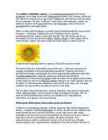
Gold images of the flower, as well as seeds, were taken back to Europe early in the 16th century. The Giant sunflower (Hlianthus giganteus) is native to Connecticut. They can grow to be between 3 and 12 feet tall. Their flower heads can be between 2 to 3 inches wide. They are most commonly found in valleys with wet meadows or swamps. The Giant sunflower grows between July and October. To grow well, sunflowers need full sun. They grow best in fertile, moist, well-drained soil with a lot of mulch. In commercial planting, seeds are planted 45 cm (1.5') apart and 2.5 cm (1") deep. Sunflower "whole seed" (fruit) is sold as snacks and can be processed into a peanut butter alternative, Sunbutter, especially in China, the United States, the Middle East and Europe. In Russia it is probably the most wide spread snack.[citation needed] It is also sold as food for birds and can be used directly in cooking and salads.
Estimation of Air Quality General factors: Quality Biological •Climate agents: •Location •Bacteria Different variables are used, one of •Pollution •Age of building Health effects connected •Molds them is concentration of VOC (volatile •Pollen •Used materials •Renovation with a building •Viruses organic compounds)
 annaabi.ee