 50 punkti
Autor soovib selle materjali allalaadimise eest saada 50 punkti.
50 punkti
Autor soovib selle materjali allalaadimise eest saada 50 punkti.
 ~ 8 lehte
Lehekülgede arv dokumendis
~ 8 lehte
Lehekülgede arv dokumendis
 2011-01-17
Kuupäev, millal dokument üles laeti
2011-01-17
Kuupäev, millal dokument üles laeti
 12 laadimist
Kokku alla laetud
12 laadimist
Kokku alla laetud
 0 arvamust
Teiste kasutajate poolt lisatud kommentaarid
0 arvamust
Teiste kasutajate poolt lisatud kommentaarid
 NoNStoP
Õppematerjali autor
NoNStoP
Õppematerjali autor
SISUKORD ENERGY STORY................................................................................................................4 USES OF ENERGY............................................................................................................. 4 2.1 Uses of energy in homes...............................................................................................5 2.2 Types of energy used in homes.................................................................................... 6 2.3 Energy use in different types of homes........................................................................ 6 2.4 Commercial Energy Use...............................................................................................9 2.5 Industrial and Manufacturing Energy Use..................................................................11 2.6 Transportation Energy Use........
ELEKTROENERGEETIKA INSTITUUT Referaat Taastvad Energiaallikad Esitamise tähtaeg 14.04.2009 Õppejõud: Hannes Agabus Tudeng: Sergei Belosapko Nikita Naumov Tallinn 2009 Contents: 1. Renewable energy 1.1. Costs................................................................................................................... 2 1.2. Potential future utilization..............................................................................4 1.3. Why Don't We Use More Renewable Energy? ...........................................5 2. Energy Types 2.1. Wind Energy.......................................................................................................6 2.1.1. Annual Generation........
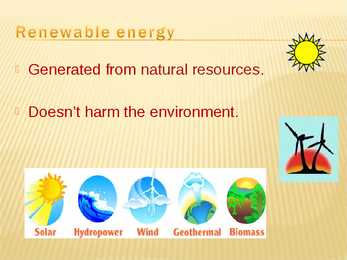
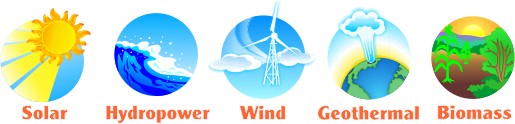
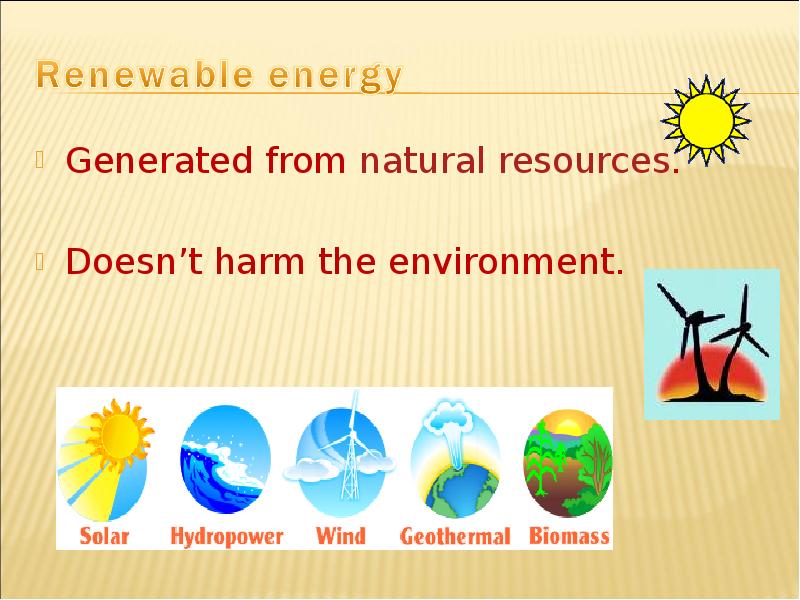
Renewable energy Meriliin Lend Estonian University of Life Sciences Tartu 2013 Topics Renewable energy Solar energy Wind energy Hydroelectric power Geothermal energy Biomass energy Renewable energy Renewable energy comes from sources that naturally renew, or will not run out in our lifetimes. Includes sunlight, wind, water, geothermal heat and various forms of biomass. Renewable energy cannot be exhausted and is constantly renewed. Does not harm the environment. Saves money. Solar energy Solar energy is the technology used to harness the sun's energy and make it useable. Every hour the sun beams onto Earth more than enough energy to satisfy global energy needs for an entire year. Solar energy use has surged at about 20 percent a year over the past 15 years, thanks to rapidly falling prices and gains in efficiency. Solar energy is inexhaustible. Noise free.
and also woods, groundwater, animals and so on, in other words it's everything that human hasn't created. These resources are also used in industry. We get natural resources from the environment. Many of them are essential for our survival while others are used for satisfying our wants. Renewable resources: Some natural resources can be reproduced within a few years or decades. These are called renewable resources. Solar radiation, wind and hydroelectricity, are perpetual resources that are in no danger of a lack of long-term availability. Some natural renewable resources such as geothermal power, fresh water, timber, and biomass must be carefully managed to avoid exceeding the worlds capability to displace them. Solar energy is the energy derived directly from the Sun. Along with nuclear energy, it is the most important source of energy on Earth
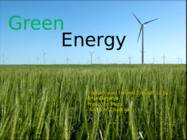
Green Energy Program paid for and brought to by -Anja Bananja -Franz the Manz - And Just Chadrick Overview- What is Green Energy? Different Types? What is sustainability? German Green Energy Cost and Efficiency Recycling What is Green Energy? -It is energy resources that are renewable -Can be naturally replenished -Clean, Safe and not harmful to the environment (aka mother earth) Types of Green Energy Green Energy going cute Solar Power · Is produced by using photovoltaic cells, which capture sunlight and turns that into energy. Problems ? -The sun has got to shine -The cost of solar panels and the systems range between $20k-40k -The light from the sun produces a very small amount of energy
Hello My name is JOHN SMITH and I am here to talk about Hydroelectricity. Global energy use has risen by 70% since 1971 and continues to increase at the rate of 2% per year. There are many scenarios for future demand. One solution would be to use more hydropower. In 2005, renewable energy represented one-fifth of total power generation. Hydropower is the most advanced of the renewable and represents 87% of this production. 160 countries all over the world are using hydropower. Five countries make up more than half of the world's hydropower production. Those countries are: Brazil,Canada, China, Russia and the USA. (Production) *Most of the energy comes from the potential energy of dammed water driving a water turbine and generator. In this case the energy extracted from the water depends on the volume and on the difference in height between the source and the water's outflow
Every day, the average person inhales about 20,000 litres of air. Every time we breathe. We risk inhaling dangerous chemicals that have found their way into the air. Air pollution can be found both outdoors and indoors. Pollutants can be trapped inside buildings, causing indoor pollution that lasts for long time. To keep our environment to be cleaner we have to be more responsible. People may try to restrict population growth, use less energy, improve energy efficiency, reduce waste and move to non-polluting renewable forms of energy production. Also, automobile-produced pollution can be decreased with highly beneficial results like a hybrid-cars. Many countries have green day weeks, when people don't use their cars, but they travel by buses or bicycles. Estonia has this week also. The 11tk edition of Green Week. The biggest annual conference on European environment policy, will be take place from 24 to 27 May 2011 in Brussels
GLOBAL WARMING Global warming is the observed century-scale rise in the average temperature of Earth's climate system. Since 1971, 90% of the increased energy has been stored in the oceans, mostly in the 0 to 700m region. Despite the oceans' dominant role in energy storage, the term "global warming" is also used to refer to increases in average temperature of the air and sea at Earth's surface. Since the early 20th century, the global air and sea surface temperature has increased about 0.8 °C (1.4 °F), with about two-thirds of the increase occurring since 1980.Each of the last three decades has been successively warmer at the Earth's
 annaabi.ee
















Kõik kommentaarid