Leidsid 33 sarnast õppematerjali, mis on seotud failiga "Tingimuslaused (Conditionals) II-III". Need materjalid aitavad sul teemat sügavamalt mõista.
condition, verb, conditional, parent, candy, kids, lottery, quit, wings, africa, here, remembered, call, friend, night, sent, angry, message, bought, accident, failed, different, simple, turn, around, result, first, note, there, comma, between, clauses, regular, verbs, conditionals, imagine, reality, unreal, regret, happened, specific, either............................................................ 2 B. Unreal Conditionals ......................................................... 3 Linking words used in Conditionals ...................................... 4 Conditionals Conditions deal with imagined situations: some are possible, some are unlikely, some are impossible. A. Real Conditionals Real Conditionals refer to situations that are true, have happened, generally happen or are likely to happen. The First Conditional expresses a possible condition and a probable result: If I have time, I will help you. In the if-clause we use the Present Simple, in the main clause will + the verb. We can also use the Present Continuous or Perfect in the if-clause and a Modal Verb in the main clause. If we are having a party tomorrow, we shouldn’t go out tonight. If you have finished with the computer, you should turn it off. It can also be used in offers and suggestions, or warnings and threats.
Conditionals: 0 and I What is a conditional sentence? • Conditional sentences have at least two clauses: IF clauses and THEN clauses • Examples: If I go into town tomorrow, then I will see a movie. If he spoke Chinese, then he would work as a guide in China. If they had been faster, then they would have won the race. IF Clauses (the condition) • IF clauses present the condition. • Examples: If I go into town tomorrow… If he spoke Chinese… If they had been faster… THEN Clauses (the results) • THEN clauses present the results. • Examples: … then I will see a movie. …. then he would work as a guide in China. … then they would have won the race. IF and THEN Clauses • The word “then” is optional, but the clause is still the result of the condition. So it is a “THEN” clause, without the word “then.” 0 CONDITIONAL
First Conditional: A real possibility in the future A First Conditional sentence is for future actions dependent on the result of another future action or event, where there is a reasonable possibility of the conditions for the action being satisfied. Formation: if + present simple, + will For example: If she gets good grades, she will go to university. We are talking about the future, but we use a present tense for the condition and will for the result. In this case, the person is sure about going to university. We can use other modal verbs in the result part of the sentence. For example: I Condition Result Possibility F she gets good she will go to If the condition is met, then she definitely If grades, university. will go he gets good he may go to
number, ning eessõna in, kui öeldakse ainult tänava nimi. They live at 5 Oxford Street. She got a job in Weston Road. Ameerika inglise keeles kasutatakse tänavatest rääkides eessõna on. He lives on Penn Street. What's the address? Do you know the address? Practise asking and saying addresses: Süda 1, 10118 Tallinn Akadeemia tee 311 Kentmanni 25-91 Saue, Harjumaa, 76402 Jõgisoo MODULE 5 Word order A Verb + object I like children very much. Did you see your friends yesterday? Ann often plays tennis. B Place and time Tom walks to work every morning. She has been in Canada since April. We arrived at the airport early. It is often possible to put time at the beginning of the sentence: On Monday I'm going to Paris.
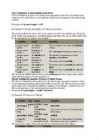
Conditionals Sentences with if are used to express possibilities. 0 Zero conditional If-clause present (past) simple Main clause present (past) simple Sometimes sentences with if express certainty rather than possibility. The zero conditional is used to talk about sth. that is always true (such as a scientific fact), or that was always true in the past. In this type of conditional we can use when instead of if. E.g., If/When you mix blue and red, you get purple. If/When you don't water flowers, they die. (present simple in both parts of the sentence) If/When I asked her to come with us, she always said no. (past simple in both parts of the sentence) 1 First conditional If-clause present simple; Main clause future tense (or: can, must, may, etc., + bare infinitive) Used to talk about the consequences of a possible action (a real or very probable situation in the
7. Verb: The principal forms of the verbs: Verbil on 4 põhivormi: Regular verb Irregular verb 1. the base form Talk Speak üldoleviku tüvivorm 2. the past form/ -ed form Talked Spoke üldmineviku vorm 3. the past participle (-ed Talked Spoken participle) mineviku kesksõna 4. the present participle (- Talking Speaking ing participle) oleviku kesksõna The tenses: Expressing the future:
Anglo Frisian » English 2. How to classify words into different word classes? (definition is that enough?, morphology, distribution and function tests); Grammatical categories for nominals, verbs, adjectives. "A set of words like dog, child, cat, man, bird where the individual words are mutually substitutable is known as a word class..." Definitions a) A noun is the name of a person, place or thing. b) A verb expresses an action, process or state. c) An adjective is a describing word which modifies a noun. "Although such definitions will identify many members of a word class, linguists generally agree that they need to be supplemented by formal tests. e.g. sincerity Sincerity can be frightening misery Lee is misery itself. Such miseries are uncommon Distribution: - a distribution test Kim is an engine driver
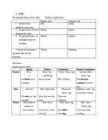
Moved to Cali 2005 Was Born Traveled to Europe Husband 1978 School graduates @ Oxford 1999 Started Got married School 1983 2008 2 The Six English Verb Tenses Three Simple Tenses Simple continuous Present You walk. You are walking I run. I am running. Past You Walked You were walking. I ran. I was running. Future You will walk. You will be walking. I will run. I will be running. Three Perfect Tenses Perfect continuous
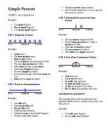
Windows are not made of wood. Simple Present · · New York is a small city. It is not important that this fact is untrue. [VERB] + s/es in third person USE 3 Scheduled Events in the Near Examples: Future · You speak English. · Do you speak English? · You do not speak English. USE 1 Repeated Actions Examples: · The train leaves tonight at 6 PM. · The bus does not arrive at 11 AM, it arrives at 11 PM. ·
Present tenses : 1) Present simple regular actions and routines especially with frequency(kordumine ) adverbs(määrsõna) N: Do you go to school by car every day ? I don't often watch TV. 2)Present continuousbe + verb + ing. Actions happening now N; Look! It's snowing. I'm meeting Jane tonight. You're always losing things. 3)keep + ingto describe habitual actions which may be irritating. N: my uncle keeps making silly jokes. Present perfect: 1) Present perfect simple: have/has + past participle. N: I've been here for ten minutes .The phone has rung ten times today. Look at this cheque,'I've won first prize. They have made a new star wars film. I've just got home.
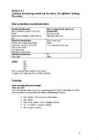
CONDITIONALS ZERO CONDITIONAL If you don't water flowers, they die. If you have a headache, stop watching TV. If clause: Main clause: PRESENT SIMPLE PRESENT SIMPLE or IMPERATIVE With zero conditional we express a general truth or we give advice. FIRST CONDITIONAL If the weather is nice, we will go for a walk. If you don't apologize, she will never trust you again. If clause: Main clause: PRESENT SIMPLE FUTURE SIMPLE The first conditional refers to the present and future. It expresses a possible condition and its probable result in the future. SECOND CONDITIONAL Jack wants to buy a house but he can't do this because he doesn't have any money. If I had a lo t o f m o ne y,
.) · Laws of nature and general truths (The sun sets in the west) · Timetables and programmes · Sporting commentaries, rewiews (Beckham wins the ball, crosses and Owen scores) · Feelings and emotions (I love Tallinn..) TIME EXPRESSIONS USED WITH PRESENT SIMPLE: usually, often, always, every day/week etc, in the morning/evening etc, at night/the weekend, on Fridays etc. Present Continuous · Actions taking place at or arount the moment of speaking (The kids are watching TV..) · Fixed arrangements in the near future (I'm going to the dentist tomorrow) · Currently changing ang developing situations (The number of burgularies is increasing) · With ,,Always" to express anger or irritation at a repeated action (You're always forgetting..) TIME EXPRESSIONS USED WITH PRESENT CONTINUOUS: now, at the moment, at present, these days, nowadays, still, today, tonight etc. Present Perfect
All rights reserved. No part of this book may be reproduced in any form or by any means, electronic or mechanical, including photocopying, recording, or by any information storage and retrieval system, without the written permission of the publisher. ISBN 1-59905-201-6 Printed in the United States of America 13 12 11 10 09 08 07 9 8 7 6 5 4 3 2 1 Introduction Grammar is a very old field of study. Did you know that the sentence was first divided into subject and verb by Plato, the famed philosopher from ancient Greece? That was about 2,400 years ago! Ever since then, students all over the world have found it worthwhile to study the structure of words and sentences. Why? Because skill in speaking and writing is the hallmark of all educated people. Lesson by lesson, this book provides basic instruction in the eight parts of speech--nouns, pronouns, verbs, adjectives, adverbs, prepositions, conjunctions, and
Tests Superstar 1 Luke Prodromou Test 1 Name____________________ Class_______ Use your English 1 Complete these sentences using the correct form (present simple or present continuous) of the verb in brackets. _ 1 She is in a band and she _________________________________ (record) a CD at the moment. _ 2 She is an actress and often _________________________________ (appear) on television. _ 3 At the moment she _________________________________ (have) a rest because she is tired. _ 4 Mike is a doctor and he _________________________________ (live) in Manchester. _ 5 I _________________________________ (start) work at 8.30 every morning.
going to go to the party. I told you he was going to come to the party. I already told Mark that when he arrived, we would go out for dinner. Active= I knew John would finish the work by 5:00 PM. Passive= I knew the work would be finished by 5:00 PM. 17. Gerunds See on nimisõna, mis on tuletatud teguseõnast ning lõppu käib -ing. Reading helps you learn English. He enjoys not working. 18. Infinitives See on tegusõna to vorm. Näiteks: sõnast learn tekib to learn 19. Phrasal Verb See on tegusõna + eessõna või määrsõna, mis loob esimesest lausest teise tähenduse, kasutades sama tegusõna. I ran into my teacher at the movies last night. He ran away when he was 15. 20. Negative question Negatiivsed küsimused sisaldavad enamasti emotsioone ning kõlavad teatud situatsioonides ebaviisakalt. Didn't she like the film? Yes, she did. Aren't they reading now? Yes, they are. Isn't he a student? Can't you read? Isn't she a beauty? 21. General question
englisch-hilfen.de LEARNING ENGLISH ONLINE Examples Examples Examples Tense Signal words Use Form affirmative negative interrogative every day something happens repeatedly sometimes how often something happens always I work. I don't work. Do I work? one action follows another often Infinitive He works. He doesn't work. Does he work? Simple Present things in gene
Dear Jenny , How are you ? I hope that you're very well. I've got so many to tell you that I don't know where to begin! Visiting Kenya was fantastic so far! The beaches are absolutely wonderfully. The sea is like glass and the white sand is as soft like powder. I've collected loads of shells already and yesterday I have ridden on an elephant. The local people also are very friendly and almost every night we had the opportunity to watch traditional dancing. You'd love africa. The most excited part of the holiday was hot-air baloon safari last week. It was amazing ! we floated quietly above all these teams of wild animals. The scenery absolutely was breathtaking. I've never seen nothing like it before. As soon as I will get back, I'll phone you and tell you all about it. Till then, take care. Love, Fiona TASK 8 Put the verbs in brackets into the Past Simple or the Present Perfect . 1.We ................... (arrive) two days ago but we ..................
We can report people's words by using direct speech or direct speech reported speech. speech `I'm tired!', Helen said. Helen said (that) she was tired. The main verb of the sentence is usually past ( Tom said that... / I told her that...) and the rest of the sentence is usually past too. Sequence of tenses if the verb in the main sentence is in the past tense the other verbs are usually in one of the past tense too. Present Simple Past Simple I'm a teacher. He said (that) he was a teacher Present Progressive Past Progressive I'm having lunch with my He said (that) he was having parents. lunch with his parents. Past Simple Past Perfect
) How much is the dress? ◦ HOW MANY – (kui mitu?) How many rackets do you have? PRESENT SIMPLE ◦ That's the way to express habits, facts, thoughts and feelings. It is used with general statements and actions that happen sometimes, always, usually,... ◦ Key words: often, always, never, every day, month,..., usually, sometimes, generally, normally, rarely, seldom, whenever, on Mondays, Tuesdays,... I, YOU + PLURAL DON'T (do not) + VERB TO BE, CAN, MUST --> VERB + NOT They go to school. They don't go to school. They are not (aren't) at home. I like oranges. I don't like oranges. The boys are not (aren't) in the park. We hate peppermint. We don't hate peppermint. I am not (I'm not) hungry.
It was raining earlier. He said it had been raining earlier. past perfect past perfect The play had started when I arrived. NO CHANGE POSSIBLE past perfect continuous past perfect continuous I'd already been living in London for five NO CHANGE POSSIBLE years. Other verb forms Other verb forms also sometimes change: will would I'll come and see you soon. He said he would come and see me soon. can could I can swim under water for two He said he could swim under water for two minutes. minutes. had to must
3) Carol has lived here for ten years. 4) My father is reading a book now. 5) Mr. Jackson works at school. II Complete the sentences using Tag Questions. ( 5 points ) 1) These apples weren`t very good,........? 2) The boys took a taxi,........? 3) English isn`t very difficult,........? 4) You don`t like watching comedies,........? 5) You`aren`t seventeen,........? 11. Put the verbs in brackets in the right form of the Conditional Mood ( Type I, II, III ) ( 5 points ) 1) If it were Monday, the boys ( have ) two English classes.( II ) 2) If all goes well, I ( be ) back at 5.( I ) 3) If the boys play better than last time, they ( win ) the match.( I ) 4) If I had heard the noise, I ( telephone ) the police.( III ) 5) If you ( follow ) the instructions, it would not have happened.( III ) 12. Look at the answers and complete the questions. ( 5 points ) e.g.When did you get up this morning
3 a 10 17 the Another important point is that ... 4 the 11 18 Challenge! 5 a 12 a 19 the Students' own answers Transcript 6 the 13 the 20 the S1 = student 1, S2 = student 2 7 the 14 2E Verb patterns page 16 S1Well, I suppose the most obvious 1 1 listening 6 to buy advantage of online shopping is 2 1 4 /any 7 Some 2 living 7 to have that goods are cheaper than in the
I will have been taught by Mary. Future perf. cont. Mary will have been teaching me. I will have been taught by Mary. Modals (can, could, may might etc) Modaalverbid Modaalverbid on can, could, may, might, must, ought to, shall, should, will, would. Nad väljendavad võimet, luba, soovi jne teha midagi. Kõiki modaale ei saa kasutada inglise keele kõikides aegades, seetõttu on olemas modaalide asemikud (substitutes). Modal Verb Substitute Example must to have to I must talk. = I have to talk. must not not to be allowed to I must not talk = I am not allowed to talk can to be able to I can talk. = I am able to talk. may to be allowed to I may talk
what you are going to learn in the pages ahead. It changed their lives, as it will change yours. ■ THE GREAT PRINCIPLE Perhaps the most important mental and spiritual principle ever dis- covered is that you become what you think about most of the time. Your outer world is very much a mirror image of your inner world. What is going on outside of you is a reflection of what is going in inside of you. You can tell the inner condition of a person by looking at the outer conditions of his or her life. And it cannot be otherwise. ■ THOUGHTS ARE THINGS Your mind is extraordinarily powerful. Your thoughts control and determine almost everything that happens to you. They can raise or lower your heart rate, improve or interfere with your digestion, change the chemical composition of your blood, and help you to sleep or keep you awake at night.
It was nice to be alone, not to have to smile and look pleased; a relief to stare dejectedly out the window at the sheeting rain and let just a few tears escape. I wasn't in the mood to go on a real crying jag. I would save that for bedtime, when I would have to think about the coming morning. Forks High School had a frightening total of only three hundred and fifty-seven -- now fifty- eight -- students; there were more than seven hundred people in my junior class alone back home. All of the kids here had grown up together -- their grandparents had been toddlers together. I would be the new girl from the big city, a curiosity, a freak. Maybe, if I looked like a girl from Phoenix should, I could work this to my advantage. But physically, I'd never fit in anywhere. I should be tan, sporty, blond -- a volleyball player, or a cheerleader, perhaps -- all the things that go with living in the valley of the sun.
and the ability to do so. I have recently become impressed by evidence suggesting that the form and pace of modern life is not allowing us to make fully thoughtful decisions, even on many personally relevant topics (Cohen, 1978; Milgram, 1970). That is, sometimes the issues may be so complicated, the time so tight, the dis- tractions so intrusive, the emotional arousal so strong, or the mental fatigue so deep that we are in no cognitive condition to operate mindfully. Important topic or not, we have to take the shortcuts Perhaps nowhere is this last point driven home more dramatically than in the life-and-death consequences of a phenomenon that airline industry officials have labeled Captainitis (Foushee, 1984). Accident investigators from the Federal Aviation Administration have noted that, frequently, an obvious error made by a flight captain was not corrected by the other crew members and resulted in a crash.
ühtki selle töövihiku osa paljundada ei elektroonilisel, mehaanilisel ega muul viisil. Töövihik on kooskõlas 2009. a uuendatud õppekomplektiga I Love English 6. Tartu, 2014 ISBN 978-9949-436-59-0 Kirjastus Studium Riia 15b, Tartu 51010 www.studium.ee Trükitud OÜ Greif trükikojas Lohkva, Luunja vald Tartumaa 62207 --- 3 xxx 1. The Big Apple 1. Write the verbs in the present continuous or the past continuous tense. Do you remember? am is are was were verb -ing 1 Sorry. I ... (write) a report at the moment. I can't come with you. 2 When Peter arrived, his friends ... (play) football. 3 I ... (sleep) when the alarm went off in my sister's room. 4 Dad's mobile phone is switched off because he ... (fly) to Paris. He's on the plane at the moment. 5 I ... (read) an interesting book. It's a collection of memories. 6 Leo was late again. He ... (step) out of his father's car when the bell rang. 7 Helen ..
I'm playing very badly today. (NOT I play very badly today.) Look! It's raining! (NOT Look! It rains!) 12. Use for with a period of time. Use since with the beginning of the period. for the last two hours = since 9 o'clock for three days = since Monday for five years = since I left school I've been learning English for five years. (NOT I've been learning English since three years.) We've been waiting for ages, since eight o'clock. 13. Don't separate the verb from the object. VERB OBJECT She speaks English very well . (NOT She speaks very well English.) Andy likes skiing very much. (NOT Andy likes very much skiing.) 14. Don't use the present perfect have/has seen, have/has gone etc with words that name a finished time. I saw him yesterday. (NOT I have seen him yesterday.) They went to Greece last summer. (NOT They have gone ... last summer.) 15. English (the language) normally has no article. You speak very good English
The Project Gutenberg EBook of Pride and Prejudice, by Jane Austen This eBook is for the use of anyone anywhere at no cost and with almost no restrictions whatsoever. You may copy it, give it away or re-use it under the terms of the Project Gutenberg License included with this eBook or online at www.gutenberg.org Title: Pride and Prejudice Author: Jane Austen Release Date: August 26, 2008 [EBook #1342] [Last updated: August 11, 2011] Language: English Character set encoding: ASCII *** START OF THIS PROJECT GUTENBERG EBOOK PRIDE AND PREJUDICE *** Produced by Anonymous Volunteers, and David Widger PRIDE AND PREJUDICE By Jane Austen Contents Chapter 1 Chapter 22 Chapter 2 Chapter 23 Chapter 43 Chapter 3 Chapter 24 Chapter 44 Chapter 4 Chapter 25 Chapter 45
Adverbs and Adverbial Phrases ........................................................... 2 Types of Adverbs ..................................................................................... 2 Position of Adverbs.................................................................................. 4 Yet, still, already ....................................................................................... 6 Adverbs and Adverbial Phrases An adverb describes a verb, an adjective, another adverb or a whole sentence. Adverbs can be divided according to the information that they give. Types of Adverbs 1. Some adverbs tell us how somebody does something or how something happens. These are called Adverbs of Manner. Please speak quietly. Tom drove carefully along the narrow road. 2. Some adverbs tell us where. These are called Adverbs of Place: She put the book on the table. 3. Some adverbs tell us when
Grammar point Made by Nikolai Hodosevich Conditional mood The conditional mood is the form of the verb used in conditional sentences to refer to a hypothetical state of affairs. Conditional verb forms can also have temporal uses, often for expressing "future in the past" tense. Condition sentences are often entered with conjunction IF Real events Structure: Additional clause Present Indefinite Main clause Future Indefinite If I have a lot of money, I will buy a car , Almost unreal events *In additional and main clauses usually use Subjunctive I and II
strawberries, and neither of us can 2 A honeymoon B salary C posh over he decided not to go for it. Photocopiable © Oxford University Press 1 Maturita Solutions Advanced Workbook Key 4 1 let me down Leo Well, in some parts of Africa and 2 been thrown away Asia there are thousands of people 3 brought up suffering from blindness caused by a 4 to put up with lack of vitamin A. Now there's a new 5 be looked after type of rice which has been engineered to contain massive amounts of vitamin 6 drop me off
For a period of time use for.) `trucks have break down' trucks have broken down (The past participle must be used in this construction.) `he hasn't replied any of our letters' he hasn't replied to any of our letters (The preposition to is required after the verb replied in this construction.) Spelling The writer made spelling mistakes in the following words: maintenance; complaints; personally Sentence Construction The secretary recognized that a phrase introduced by an expression like With reference to or Further to is not a complete sentence, and must be continued by another idea: Further to your request for two additional staff, introductory phrase comma
 annaabi.ee