Leidsid 33 sarnast õppematerjali, mis on seotud failiga "The Globe Theatre". Need materjalid aitavad sul teemat sügavamalt mõista.
shakespeare, theatre, globe, plays, stratford, built, year, there, years, build, april, stand, tickets, upon, avon, perform, wrote, greatest, june, england, work, possible, building, round, middle, open, other, gallery, done, cost, performance, 23rd, went, became, writer, come, theater, first, playing, lord, chamberlain, fire, 1613, closed, stood, bankShakespeare Elulugu · Was born in 1564, probably on April 23, in the small country town of Stratford-on- Avon · Father was a prosperous glove maker and held several important positions in the town government · Mother, Mary Arden, was the daughter of a wealthy landowner · By the age of 7, Shakespeare was probably attending the local grammar school · In 1582, at the age of 18, he married Anne Hathaway (26), the daughter of a farmer who lived about a mile from Stratford · Daughter Susanna (born in 1583) and twins, Hamnet and Judith (born in 1585; Hamnet died in 1596) · From 1585 to 1592, a period some scholars call ,,the lost years" · From 1592 the recors about Shakespeare are much fuller.
the 14th century. Then it spread all over Europe, reached England in 16th century. The struggle for power culminated in a war called The War of Roses. It was a civil war between two dynasties, families. They had different emblems on one side the Yorks (white rose) other Lancasters (red). They couldn't decide who gets the throne. War ended 1485. A new dynasty came to throne, Tudor, the first king in this dynasty was Henry Vll. When he came to throne a period of stability followed because he built a nation based state. He was good at diplomacy.He could avoid quarrels and wars with neigbouring countries. France, Spain - greatest enemies.So he could save much money and thus laid a good economic basis for his state. Besides that he built a merchant fleet (kaubalaevastik) England begun to dominate in international trade. Unfortunately the king got old and died. Next king was Henry Vlll, second son of the family, wasn't prepared to become a king. Had to take the role as his elder brother died
WILLIAM SHAKESPEARE Paulina Pähn, XIb EARLY LIFE: ·Born in Stratford- upon-Avon on April 23, 1564 ·Parents: John Shakespeare Mary Arden EDUCATION: · Attended King Edward IV Grammar School · Never went to university THE LOST YEARS: 1585 1592 ·Quit school ·Supported his family ·Became involved with acting MARRIAGE: · Married to Anne Hathaway · Shakespeare's children: Susanna Judith Hamnet (+ William Davenant?) CAREER IN LONDON: · Acted in several companies of players · By 1584 had become an important playwright-actor in the Lord Chamberlain's Company (the King's Men) · Wrote many great plays, for example:
SHAKESPEARE William Shakespeare (baptised 26 April 1564; died 23 April 1616) was an English poet and playwright, widely regarded as the greatest writer in the English language and the world's pre-eminent dramatist.He is often called England's national poet and the "Bard of Avon". His surviving works, including some collaborations, consist of about 38 plays, 154 sonnets, two long narrative poems, and several other poems. His plays have been translated into every major living language and are performed more often than those of any other playwright. POEMS · In 1593 and 1594, when the theatres were closed because of plague, Shakespeare published two narrative poems on erotic themes, Venus and Adonis and The Rape of Lucrece. He dedicated them to Henry Wriothesley, Earl of Southampton. In Venus
Death" killed almost half of Europe's population. It spread most rapidly in the larger cities where many people lived. This led to economic depression. When the plague slowly decreased in the 15th century, the population in Europe began to grow. A new middle class emerged --bankers, merchants and trades people had a new market for their services. People became wealthier and had more than enough money to spend. They began to build larger houses, buy more expensive clothes and get interested in art and literature. The middle class population also had more free time, which they spent learning foreign languages, reading, playing musical instruments and studying other things of interest. The Renaissance was especially strong in Italian cities. They became centres of trade, wealth and education. Many cities, like Venice, Genoa and Florence had famous citizens who were very rich and gave the city a lot of money.
William Shakespeare 1564 - 1616 Introduction Early life London and theatrical career Later years and death The plays Early life He was born in Stratford-1564, actual birthday is unknown, but it is observed on 23 April, St George's Day. Although there is no attendance records where he was educated, but it is believed he studied at the King's New School in Stratford. At the age of 18, Shakespeare married the 26-year- old Anne Hathaway. After six months of marriege Anne gave birth to Twins. London and theatrical career Click to edit Master text style It is not known exactly Second level Third level when Shakespeare began Fourth level writing, but some records
The high level of urbanisation on the island has contributed to a species extinction rate that is about 100 times greater than the background species extinction rate. 2 The History of the Great Britain The island was first inhabited by people who crossed over the land bridge from the European mainland. Traces of early humans have been found (at Boxgrove Quarry, Sussex) from some 500,000 years ago and modern humans from about 30,000 years ago. Until about 10,000 years ago, Great Britain was joined to Ireland, and as recently as 8,000 years ago it was joined to the continent by a strip of low marsh to what is now Denmark and the Netherlands. Britain in the reign of Elizabeth 3 Elizabeth II (Elizabeth Alexandra Mary; born 21 April 1926) is the
Lived on the British Isles in the 1st millenium. They most probably came from Eastern Europe and belonged to the Celtic race and also spoke Celtic. They were primitive hunters- gatherers, farmers. Some Celtic words are still used in modern English, however they are used mostly in place names. For example: · avon river · cumb valley · ford shallow place in the river Ancient Britons had their own religion and priests or druids and temples. In the year 55 BC Britain became a Roman province. Romans were highly developed and had their own language latin, which has also greatly influenced English. The military occupation of the Isles ended in 410 AD. The Romans eventually brought Christianity to Britain. Hadrian's wall on the border of Scotland and England. It began construction in 122 AD. An Anglo-Saxon attack on Rome forced the Romans to leave The British Isles. They were
William Shakespeare Teacher: Ekaterina Mokhovikova Student: Birgit Aljaste Life · Born on the · 26th of April 1564 in Stratford died on the 23rd of April 1616 · Poet and playwright(called playwright as a English's national poet) · Married at the age of 18 · 3 children with his wife(7 illegal children) Most famous works Comedy History Tragedy Poetry ·A Midsummer ·King John ·Antony and ·A Lover's Night's Dream Cleopatra Complaint ·Richard II and III
London London is almost 2,000 years old. Romans came to England in 43 AD. It was first called Londinium. In 1666 the Great Fire destroyed four fifths of the wooden buildings in the City including St Paul`s Cathedral. The fire began in the kitchen of the King`s baker Thomas Farriner in Pudding Lane and lasted for five days. London is the capital of England and the United Kingdom. By now London has swallowed up many of the small towns and villages that once surrounded it. London is on the same latitude as Warsaw
Britain makes its first appearance in written language when Romans invade the England. BEOWULF most important poem, surviving in a 10th-cent manuscript. The historical period of the poem's events can be dated in the 6th to 8th century. Much of the material of the poem is legendary and paralleled in other Germanic historical-mythological literature in Norse, Old English, and German. GEOFFREY CHAUCER (1340-1400) Politician and writer, fought in France during the 100 years war. He visited Genoa and Florence where he became acquainted with Italian literature and in particular with the works of Dante, Petrarch and Boccaccio. The French period (up to 1370). early works were based mostly on French models. The Italian period (up to c. 1387). Was influenced by Italian literature, especially Dante and Bocaccio. The English period. Wrote Canterbury tales. CANTERBURY TALES This unfinished poem of about 17,000 lines was written mostly after 1387
Geoffrey Chaucer 13431400 Known as the ,,Father of English literature", the greatest English poet of the Middle Ages An author, philosopher, alchemist and astronomer, diplomat Wrote The Book of the Duchess, the House of Fame, the Legend of Good Women and Troilus and Criseyde Best known today for "The Canterbury Tales" Crucial figure in developing the legitimacy of the vernacular, Middle English, at a time when the dominant literary languages in England were French Modern English William Shakespeare 26 April 1564 23 April 1616 The Elizabethan Era English poet and playwright, widely regarded as the greatest writer in the English language and the world's most important dramatist ,,England's national poet" Early plays in 1590's were mostly comedies (The Taming of the Shrew, The Merchant of Venice..) Began to focus on tragedy/drama in early 1600's (Romeo and Juliet, Hamlet, Macbeth, Othello..) In 1608 tragedy is replaced with romance
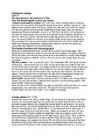
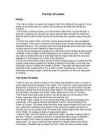
GLOBE THEATRE. Liis-Mariin Remmelg The Globe Theatre was a theatre in London associated with William Shakespeare. It was built in 1599 by Shakespeare's playing company, the Lord Chamberlain's Men, on land owned by Thomas Brend and inherited by his son, Nicholas Brend and grandson Sir Matthew Brend, and was destroyed by fire on 29 June 1613. A second Globe Theatre was built on the same site by June 1614 and closed The Globe was owned by actors who were also shareholders in Lord Chamberlain's Men. Two of the six Globe shareholders, Richard Burbage and his brother Cuthbert Burbage, owned double shares of the whole, or 25% each; the other four men, Shakespeare, John Heminges, Augustine Phillips, and Thomas Pope, owned a single share, or 12.5%. On 29 June 1613 the Globe Theatre went up in flames during a performance of Henry VIII. A theatrical cannon, set off during the performance,
London History The Romans AD 43- AD 410 The Romans finally invaded Britain in AD 43 from Kent. The Romans lead by Julius Caesar attempted to invade Britain twice before that in 55 and 54 BC but the invasions were unsuccessful. They made their way to the river Thames and sailed up it. The Romans knew it was important to control a crossing point at the river Thames, so they decided to build a settlement on the north bank. Although small settlements had been built on the banks of the Thames, the Romans were the ones who built the first city. They called their city Londinium. The Roman engineers noticed that the point where the swampy river narrowed would make an ideal crossing point, they built London Bridge. Less than 20 years later the native Iceni tribe, led by Queen Boudicca, rose up against the Romans in revenge for mistreatment and burnt Londinium to the ground. The well disciplined Roman army defeated her forces and Londinium was rebuilt
The clock first ticked on 31 May 1859. The pendulum is installed within an enclosed windproof box sunk beneath the clockroom. It is 3.9m long, weighs 300 kg and beats every 2 seconds. The clockwork mechanism in a room below weighs 5 tons. · Buckingham Palace is the official London residence of the British monarch. Originally known as, the building which forms the core of today's palace was a large townhouse built for the Duke of Buckingham in 1703 on a site which had been in private ownership for at least 150 years. During the 19th century it was enlarged, principally by architects John Nash and Edward Blore, forming three wings around a central courtyard. Buckingham Palace finally became the official royal palace of the British monarch on the accession of Queen Victoria in 1837.
Famous sights and people of England Kaspar Rätsep G1a Famous persons Kings & Queens: Queen Elizabeth I, Queen Victoria, Queen Elizabeth II, Henry VIII Politicians: Winston Churchil, Baroness Margaret Thatcher Writers & Poets: William Shakespeare, Daniel Defoe, Charles Dickens, Rudyard Kipling, Dame Agatha Christie Philosophers &Economists: Francis Bacon, John Locke Inventors & Scientists: Isaac Newton, Charles Darwin Actors,Actresses & Filmmakers: Sir Charlie Chaplin, Dame Elizabethe Taylor, AlfredHitchock, Hugh Grant, Orlando Bloom, KeiraKnightley, Daniel Radcliffe Musicians & Singers: Sir Elton John,Phil Collins,George Michael,Robbie Williams King Henry VIII Born: June 28, 1491 at Greenwich Palace
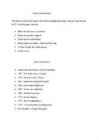
Table of Contents........................................................................................................................2 Introduction.................................................................................................................................3 The Estonia National Opera........................................................................................................4 Russian Drama Theatre...............................................................................................................5 Tallinn City Theatre.................................................................................................................... 6 Estonian Drama Theatre..............................................................................................................7 Estonia National Puppet Theatre....................................................................................
1. Ancient Britain: the Celtic tribes. 2000 years ago there was an Iron Age Celtic culture throughout the Br Isles. It seems that the Celts, who had been arriving from Europe from the 8th cent BC onward, intermingled with the peoples who were already there. The Celts were extremely talented people, creative and artistic. More than 1 Celtic tribe invaded Br. The descendants of ancient Celts live in Wales, Scotland, Cornwall and Ireland. They lived in primitive society. Druids priests, more powerful than chiefs. Acted like prophets. 2. Stonehenge From prehistoric period. Was built on Salisbury plain between 2500 and 1500 bc. One of the most famous and mysterious archaeological sites in the world
Take the following questions with you, find answers to them and put them down for yourself in this MSWord document. Don't forget to "take" photos - you are supposed to recognise the landmarks later on! At the end of the tour send the worksheet to yourself so that you could use it again. Good luck with exploring the city! DAY 2. The route: Westminster Abbey The Houses of Parliament London Eye 10 Downing Street St Paul's Cathedral The Tower of London Tower Bridge Globe Theatre Greenwich Observatory Destination 1: Westminster Abbey When was Westminster Abbey founded? (see its homepage: http://www.westminster-abbey.org/home ) 960 When was the last royal wedding held in Westminster Abbey? Whose was it? 29 April 2011 Prince William and MissCatherine Middleton How many monarchs have been buried in Westminster Abbey? 17 Destination 2: The Houses of Parliament What is the other name for the Houses of Parliament? Palace of Westminster
The city lies in the southeast of England and covers an area of about 1,578 square kilometres on either side of the River Thames. With population of seven million, London is by far the largest city in the UK. Birmingham, the second largest, has just over one million inhabitants. Cultural life London is the worldclass centre. It has more than40 theatres, where audiences enjoy everything from musicals to William Shakespeare's plays. The city also contain many cinemas, concert halls, museums and art galleries. Royal residence English (later British) kings and queens have lived in London for almost 1,000 years. There are several royal palaces in the capital. St James's Palace was built by King Henry VIII in the 16th century. Since 1837 the monarch has lived in Buckingham Palace LONDON'S EARLY HISTORY The Romans invaded England in 43 AD
The British Who are they? The British are world famous on almost all walks of life. Their culture is rich and varied. Theatre The British have a tradition of theatre. Long, long time ago the culture of theatre was introduced from Europe to the British by the Romans. Many auditoriums were constructed across the country. The most famous British playwright is obviously William Shakespeare. He lived from 1564 to 1616. During that time he wrote about 40 plays, which are still played and used in today's theatre. His plays are performed more often than those of any other playwright. The first professional woman playwright was Aphra Behn. Nowadays there are not so many world famous dramatists in England but the memory of William Shakespeare and many others has preserved until today. Important modern playwrights include Alan Ayckbourn, John Osborne, Harold Pinter, Tom Stoppard, and Arnold Wesker. Music
revenue in the British East India Company. William had been sent to England earlier, at the age of five, with a short stopover at St. Helena where the imprisoned Napoleon was pointed out to him. He was educated at schools in Southampton and Chiswick and then at Charterhouse School, where he was a close friend of John Leech. He disliked Charterhouse, parodying it in his later fiction as "Slaughterhouse." Illness in his last year there (during which he reportedly grew to his full height of 6'3") postponed his matriculation at Trinity College, Cambridge, until February 1829. Never too keen on academic studies, he left the University in 1830. Thackeray's years of semi-idleness ended after he met and, on 20 August 1836, married Isabella Gethin Shawe (1816-1893), He primarily worked for Fraser's Magazine, In the early 1840s, Thackeray had some success with two travel books, The Paris Sketch Book and The Irish Sketch Book
When they grow up, they play as members of important amateur teams or as a professional in teams competing in football ,,leagues". Professional football is as much a business as a sport. Rugby football was first played in 1823. In rugby every player is allowed to carry the ball. The ball is oval, not round. Each team contains 15 players. The oldest game of football in England is probably the football match which takes place at Ashburn on Shrove Tuesday every year. The game starts in the centre of the town, and the distance between two goals is two miles. The only rule is not to use motorcycles, cars and lorries in the game. In 1958 one team buried the ball. The other team didn't know and ran after them. Later first team took the ball and won. 3) JAMES WATT He was born in the small port of Greenock on the river Clyde in Scotland in 1736. His father was a mathematical-instrument maker and also kept a shop to supply ships with goods for their voyages
I have pasted together the following "history" of the world from certifiably genuine student bloopers collected by teachers throughout the United States, from eight grade through college level. Read carefully, and you will learn a lot. The inhabitants of Egypt were called mummies. They lived in the Sarah Dessert and traveled by Camelot. The climate of the Sarah is such that the inhabitants have to live elsewhere, so certain areas of the dessert are cul- tivated by irritation. The Egyptians built the Pyramids in the shape of a huge triangular cube. The Pramids are a range of mountains between France and Spain. The Bible is full of interesting caricatures. In the first book of the Bible, Guinesses, Adam and Eve were created from an apple tree. One of their children, Cain, asked "Am I my brother's son?" God asked Abraham to sacrifice Issac on Mount Montezuma. Jacob, son of Issac, stole his brother's birthmark. Jacob was a partiarch who brought
· Agatha Christie (1890-1976)was an English detective story writer.As an extraordinarily popular author, Christie wrote over 80 books, most of them featuring one of her two famous detectives; Hercule Poirot, an egotistical Belgian, and Miss Jane Marple, an elderly spinster. He has written stories likeThe Murder of Roger Ackroyd (1926), Murder on the Orient Express (1934), Funerals Are Fatal (1953), The Pale Horse (1962), Elephants Can Remember (1973), and Curtain (1975). Her plays like The Mousetrap (1952), is one of the longest-running plays in theatrical history.Christie also published novels under the pseudonym Mary Westmacott. Gerald Durrell · Gerald Durrell(19121990)was a British novelist and poet.His life in Greece and Egypt provided inspiration for most of his writing. His major work is the inventive tetralogy,The Alexandria Quartet:Justine (1957), Balthazar (1958), Montolive (1958), and Glea (1960). His Collected
No official schooling. In 1592 joined Lord Chamberlain’s Men. 1599, the Globe. Legacy: 37 plays, 2 narrative poems and 154 sonnets. Shakespeare’s drama follows the principles of renaissance drama, derived from the Greek drama tradition. Shakespeare’s drama: historical plays, tragedies (sad ending) and comedies (anything but sad; does not mean funny!) Catharsis – the therapeutic effect of tragedies. 17th century in England. Political changes, crisis of humanism. Puritanism, new economic possibilities through colonization. A transformation towards bourgeois society. The
and she was carrying an heir who was presumed to be male. Elizabeth was baptised on 10 September in a ceremony held at Greenwich On 2 May 1536, she was arrested and Palace. Archbishop Thomas Cranmer, imprisoned. Hastily convicted on charges the Marquess of Exeter, the Duchess of of adultery, incest and witchcraft, she was Norfolk and the Dowager Marchioness beheaded on 19 May 1536. of Dorset stood as her four godparents. Elizabeth, who was two years and eight After Elizabeth's birth, Queen Anne months old at the time, was declared failed to provide a male heir. illegitimate and deprived of the title of She suffered at least two miscarriages, princess. one in 1534 and another at the Eleven days after Anne Boleyn's death, beginning of 1536. Henry married Jane Seymour,who died 12 days after the birth of their son, Prince
The Presentations Triinu: "The Notorious Prisoners of the Tower" Built in 1078, has been used as a fortress, Royal Palace, a prison, the home for Crown Jewels. The first prisoner was Ranulf Flambard in 1100. The only woman tortured in the Tower was Anne Askew. Guy Fawkes was prisoned 5 th November 1605, hung in 1607. Walter Raleigh was knighted, married without queen´s permission. Last prisoners were in the Tower in 1952. Rita: "Alexander Fleming" Was a pharmacologist, has graduated 6 schools, studied anti-bacterial agents, found
Speculation about Shakespeare Authorship Main article: Shakespeare authorship question Around 150 years after Shakespeare's death, doubts began to be expressed about the authorship of the works attributed to him.[172] Proposed alternative candidates include Francis Bacon, Christopher Marlowe, and Edward de Vere, 17th Earl of Oxford.[173] Several "group theories" have also been proposed.[174] Only a small minority of academics believe there is reason to question the traditional attribution,[175] but interest in the subject,
· Their world is not one of culture or high moral standards · For these new writers controlling new american social experience · Naturalists offered a view that questioned the belief that now was a conscious and national being and happiness could in moral behaviour · Naturalists show man as a small figure in deterministic system which ignores him · Man is a huge machine · Lot of these novels end in tragedy · For 20 years naturalism remained dominant method. The beginning of the 1910 (modernism starts ) · American naturalists: frank Norris ,,The Octopus", Stephan Crane ,,Red badge of courage" · Jack London (1876-1916) · Grew up in extreme poverty. From early age had to support himself with dangerous manual jobs. Experienced the trouble of survival. Outlooks were eclectic (combination of various philosophies)
end of the 19 century, bored. Stanfrod talks friends about horses: problem: question is, what happens with the hooves while its moving, running. Bet, with eyes, can't settle this. Cannot ever see if the hooves touch the ground. Stanford has enough money, hires most famous photographer. Eadwerd muybridge, comes to usa. Tells him to settle this with photography. That time with photography you cannot get any informatio either. Started to install boxes, in each box, there was a camera. Does the hooves touch the ground or not? Fast shutter, can freeze the moment. Makes fast shutters, to record this. Finds solution, hooves are touching. The prerequisites for cinema: camera(edison and dickson), film stock that is flexible and stable to run through camera(kodak, celluloid film), projector, can show the image on a screen(1895-max skladanowsky, lumiere brothers) The lumiere brothers and cinematographe Father was a wealthy factory owner
· 1636 Harvard University · 1773 Boston Teaparty · 1775 War of Independence · 1776 4 July Declaration of Independence · First President George Washington Christopher Columbus Christopher Columbus (1451-1506) was an Italian explorer who sailed across the Atlantic Ocean in 1492, hoping to find a route to India (in order to trade for spices). He made a total of four trips to the Caribbean and South America during the years 1492-1504. He discovered America in 1492. I Indian sun, they pray for fan. J we hate Jews, they are fools. K Bush is okey, because he is not gay. L Americans are large, they eat much. M Mc`Donalds is good, there is a lot of food. N is for Nigga who pulled the trigger. O is for Osama who wears pyjamas. P is for Pamela who likes camera. Puritans The Puritans were a group of people who grew discontent in the Church of England and
The City of London History The City of London occupies one square mile in the middle of the capital. It once made up the entire town of London, surrounded by the wall first built by the Romans. The Roman Londinium grew up on the northern side of the "London Bridge" in the past. Products such as olive oil, wines and fruit were brought by ships from different parts of the Roman Empire and unloaded onto wooden quays along the river. In AD 61 the native Celtic Iceni tribe, led by Queen Boudicca, rose up against The Romans. They burnt Londinium to the ground but Roman armies eventually defeated Boudicca. The city was rebuilt and was gradually surrounded with a wall
 annaabi.ee