Leidsid 33 sarnast õppematerjali, mis on seotud failiga "The giant's causeway". Need materjalid aitavad sul teemat sügavamalt mõista.
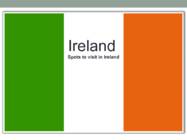
scotland, actual, ireland, north, tall, wife, northern, famous, sight, stones, giants, cross, channel, between, although, there, abundance, tales, myths, colourful, ways, came, exciting, years, through, chalk, cooling, cracking, finn, built, walk, fight, scottish, version, tells, fell, asleep, before, protect, laid, blanket, could, pretend, variationIreland Spots to visit in Ireland Ireland Irish Republic Fact File · Area: 70,280 square kilometers · Capital: Dublin · Population: 3,500,000 · Official language: Irish, English Northern Ireland Fact File · National sybol: the shamrock · Area: 14,160 square kilometres · Patron saint: Saint Patrick · Capital: Belfast · Population: about 1,7 million · Official language: English 1.Guinness Storehouse Guinness Storehouse is a Guinness-themed tourist attraction. 2.The Giant's Causeway · Northern Ireland most famous sight is the Giant's Causeway on the north coast.
Stonehenge One of the best known ancient wonders of the world, 5000 years old Megalith monument, built by western mediterraneans during 3000-1600 BC Circular structure, large standing stones, aligned with rising sun at teh solstice Attlers and bones were sued to dig pits that hold the stones The Celts in Britain and their legacy 700-200 BC celts invade Britain Gaels or Goehls(Ireland and Scotland),Cymri(Wales) and Brythons(gave name to Brittany) Fierce fighters,superb horsemen.Most of them farmers, lived in thatched houses Good at art, craftmanship, used iron Divided into tribes, ruled by kings, only in face of danger would they choose a single leader Legacy- hill-forts, farms, churches, field system,
Winston Churchill? Margaret Thatcher was the first female Prime Minister in Europe. She was a member of the conservative party. She died recently. Winston Churchill was the Prime Minister during WW II. He was excellent in making speeches, but he was a heavy drinker and also smoker. 2. What are the main countries of the UK and their capitals? There are 4: England with London as the capital; Wales with Cardiff as the capital; Scotland with Edinburgh as the capital; and Northern Ireland with Belfast as the capital. 3. What is Remembrance Day all about and why is it celebrated at that time? It is about the men (and women) who lost their lives fighting in the World Wars. It's celebrated then, because that's the day WWI was ended with a treaty. 4. Which powers does the Queen of the UK have? The Queen has to sign all the bills for them to pass. She is the one who opens the Parliament every fall for the next session. She is however more of a representative
History exam *Stonehenge - is a monument located in England. It is one of the most famous prehistoric sites in the world and is composed of earthworks surrounding a circular setting of large standing stones. The surrounding circular, earth bank and ditch, have been dated to about 3100 BC. Stonehenge was produced by a culture with no written language. Many aspects of Stonehenge remain subject to debate. There is little or no direct evidence for the construction techniques used by the Stonehenge builders. *The Celts in Britain and their legacy The Cets lived in Britain in The Iron Age. They were warring tribes who were battleful amongst themselves as well as inter-tribal war. They
1) INDIAN ROCK ART: A NATIONAL TREASURE IN DANGER Unrecognized, unprotected, this priceless legacy of primitive art has endured the ravages of nature only to fall victim to wanton destruction by ,,civilized" man. Like the huge stone statues of Easter Island and prehistoric cave paintings of Altamira and Lascaux, North American Indian rock art is surrounded by an atmosphere of mystery. Although examples of rock art exist at some 15000 sites in canyons, deserts, caves and river gorges. Nowadays, however, primitive rock art in the United States has become a new field of scientific study. Klaus F Wellmann wrote two books about rock art. He is a professor of medicine. Rock art represents the history of aboriginal Americans. In the most cases the art is an expression of ideas
Scotland ! Scotland (Gaelic: Alba) is a country in northwest Europe that occupies the northern third of the island of Great Britain. It is part of the United Kingdom, and shares a land border to the south with England. It is bounded by the North Sea to the east, the Atlantic Ocean to the north and west, and the North Channel and Irish Sea to the southwest. In addition to the mainland, Scotland consists of over 790 islands including the Northern Isles and the Hebrides. Edinburgh, the country's capital and second largest city, is one of Europe's largest financial centres. It was the hub of the Scottish Enlightenment of the 18th century, which saw Scotland become one of the commercial, intellectual and industrial powerhouses of Europe. Scotland's largest city is Glasgow, which was once one of the world's leading industrial metropolises, and now lies at the centre of the Greater Glasgow conurbation which
training. They were trusted to use common sense. By the end of the 12th cent. They had real knowledge & experience of the law which became known as ,,common law", based on custom, comparison, previous cases & decisions. It was unlike in the rest of Europe. In England trial by ,,ordeal" was replaced with trial by jury. The work of juries gradually changed from giving evidence to judging evidence of others. Now the king's laws were in force everywhere. In 1157 he forced Malcolm IV of Scotland to give up border regions to England. In 1171 he went to Ireland, took it under his rule & made his son John, Lord of Ireland. When he got the throne there had been a civil war between his mother Matilda & uncle Stephen. There was also Church who had become too powerful. The Church wanted the kings of Europe to accept its authority over both spiritual & earthy affairs. Conflict between Henry & Church. He chose his trusted adviser, Thomas Becket, to become archbishop in 1162, but he began to
'ledsltv 'sembl/ seadusandlik kogu The British Isles is the name of a group of islands washed by the North Sea in the east and the Atlantic Ocean in the west. The British Isles are shared by two separate and independent countries: the
B.C., but there was a rebellion in Gaul so they had to leave to fight against it. Next time they came in 43 A.D. and their leader was Emperor Claudius. Romans brought a lot with them. Their brought paved roads, the sites of important cities, the seeds of Christianity, the Roman law, Roman baths, language and advanced civilization. They also built Hadrian's Wall in 122 A.D. Romans occupied Britain for four centuries. The Roman way of life all vanished after the invasions from Northern Europe by the Angles, Saxons and Jutes from the 5th century onwards. They ruined Londinium, but they were easily turned into Christianity and religion became more and more important. The Vikings, who came in the 9th century, first raided England to plunder it, but then they decided to stay. In the 10th century England fell under Danish Rule, with King Canute finally managing to unite the Anglo-Saxons and Danes at the beginning of 11th century. Medieval England
.............................................................................. 8 Population and Ethnicity..............................................................................................9 3 Introduction The official name of the country is the United Kingdom. The United Kingdom is an island country. It consists of the island of Great Britain and Northern Ireland. Great Britain can be divided into three parts England, Wales and Scotland. Each of them has their own capital city. Glasgow in Scotland, Cardiff in Wales and London in England. The country is situated in the north-western Europe. The territory of the United Kingdom is about 244,000 square kilometres and about 60 million people live there. The UK contains a number of small islands. The largest islands that belong to the United
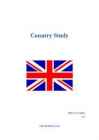
1) General facts The UK: * the United Kingdom of Great Britain and Northern Ireland was formed in 1801 * it covers 243,610 sq km * everybody from the UK is called British * the capital city is London * is made up of four constituent countries: England, Scotland, Wales and Northern Ireland which in turn are divided into counties * the flag is called the Union Jack which is a combination of the flags of England, Scotland and Northern Ireland * the population is about 60,000,000 people, the population density is 242 people/sq km * its coasts are washed by the Atlantic Ocean, the North Sea, the English Channel, the Celtic Sea, Saint George's Channel, and the Irish Sea. It is linked to France by the Channel Tunnel * the United Kingdom is a constitutional monarchy. The current monarch is Queen Elizabeth II, who is also the Queen and Head of State of fifteen other Commonwealth Realms, such as Canada, Australia, New Zealand and Jamaica.
1. Ancient Britain: the Celtic tribes. 2000 years ago there was an Iron Age Celtic culture throughout the Br Isles. It seems that the Celts, who had been arriving from Europe from the 8th cent BC onward, intermingled with the peoples who were already there. The Celts were extremely talented people, creative and artistic. More than 1 Celtic tribe invaded Br. The descendants of ancient Celts live in Wales, Scotland, Cornwall and Ireland. They lived in primitive society. Druids priests, more powerful than chiefs. Acted like prophets. 2. Stonehenge From prehistoric period. Was built on Salisbury plain between 2500 and 1500 bc. One of the most famous and mysterious archaeological sites in the world. One of the mysteries is how it was built at all with the technology of the time. Another is its purpose. It appears to function as a kind on
The United Kingdom The United Kingdom consists of England, Scotland, Wales and North Ireland and it is situated in the Atlantic Ocean near the mainland of Europe. The population of the UK is 58.6 million and area is 244,110 sq km. Britain has a temperate humid climate. Its characteristic features are mild winters, warm summer, no temperature extremes, abundant rain all year round and frequent changes of weather. The mild climate is partly due to the warm Gulf Stream and partly to the south westerly winds. Occasional winds from the east in winter may bring cold and dry weather
For example: · avon river · cumb valley · ford shallow place in the river Ancient Britons had their own religion and priests or druids and temples. In the year 55 BC Britain became a Roman province. Romans were highly developed and had their own language latin, which has also greatly influenced English. The military occupation of the Isles ended in 410 AD. The Romans eventually brought Christianity to Britain. Hadrian's wall on the border of Scotland and England. It began construction in 122 AD. An Anglo-Saxon attack on Rome forced the Romans to leave The British Isles. They were replaced by Germanic tribes Angles, Jutes and Saxons, who drove the Celts to the north (Scotland) and west (Wales). They came from the North and Baltic Seas. Along with them came their dialects, which constitute the basis for Old English. Around 4500 words are still used today. They also had their own religion and Germanic gods
brothers widow.Catherine of Aragon, she came from Spain, she was arden(innukas) Catholic. At first they had good relations. Soon there were big problems. Had daughter Mary, couldn't get a son. Needed a new king. Henry decided to get a divorce. Henry wrote a long letter to Pope for a divorce. Pope said no. Then Henry decleared himself the head of English church to get divorce. Catherine was sent to live in countryside and brought up Mary, who was also a Catholic. Next wife was Anne Bolyn, daughter of a knight. They had daughter called Elizabeth l. Time went by and Henry had to get rid of Anne, she was sent to tower accused of treason (riigi reetmine) and executed. Henry was free, needed another wife. Had six wives together. 1 died, 1 survived, 2 divorced, 2 killed. Henry had a son, was a king Edward Vl, died very young. Henry was a talented musican and scholar, spent much money on it. Soon he had spent all savings his father had collected, he needed money
In 1215 King John was forced by the Barons to sign the Magna Carta, which was a collection of 37 English laws. The purpose of the Magna Carta was to curb the King and make him govern by the old English laws that had prevailed before the Normans came. King John's reign lasted until 1216. Then the power was taken over by his son King Henry III. He leaded England for a very long time, until 1272. He was succeeded by his son Edward I. Edward I conquered Wales in 1284. He also tried to conquer Scotland and it even went right for him but only temporarily. Under the direction of Robert Bruce Scotland managed to restore its independence. In 1307 he was succeeded by Edward II, his son. In 1311-1315 there was the Great Famine. There was a series of cold and wet springs and early winters that reduced harvests throughout western Europe, and by the Spring of 1315, about ten percent of the population had died of starvation, and a number more had perished of illnesses that they could not fight off
So the tomb of the great King Kalev is what we call Toompea hill today. How the Lake Ülemiste was formed It is believed that once Linda was carrying boulders to make his husband a tomb, she got tired and one of the boulders fell from her apron. She sat on it and wept, thus creating the lake. How was St. Olaf's Church built According to a legend the people of Tallinn were searching for ways to make their hometown famous. Someone got the idea of building a high church, so the merchants would see the town from far away. But soon there was a problem- they couldn't find a man to build this gargantuan house of worship. Finally a stranger offered himself to build the church for a big cost, but he said he would do it for free, if the townspeople would guess his name. Once the sanctuary was almost finished, the citizen started to worry that where would they get that much gold for the architect. So
The foundation stones The Island Britain has a mild climate due to the Gulf Stream which brings warm waters from the Gulf of Mexico. The northern part of the island in average 5'C cooler and it's mountainous or hilly and that's why the south has been more populated.. Britain became an island only 5000 years BC after the Ice Age ended. Britain's prehistory The first evidence of human life on the island are dated back to 250 000 BC. 50 000 BC in a milder Ice Age period Britain became habitable again
The Greeks invented three kinds of columns - Corinthian, Doric and Ironic. They also had myths. A myth is a female moth. One myth says that the mother of Achilles dipped him in the River Stynx until he became intolerable. Achilles appears in "The Illiad", by Homer. Homer also wrote the "Oddity", in which Penelope was the last hardship that Ulysses endured on his journey. Actually, Homer was not written by Homer but by another man of that name. Socrates was a famous Greek teacher who went around giving people advice. They killed him. Socrates died from an overdose of wedlock. In the Olympic Games, Greeks ran races, jumped, hurled the biscuits, and threw the java. The reward to the victor was a coral wreath. The government of Athen was democratic because the people took the law into their own hands. There were no wars in Greece, as the mountains were so high that they couldn't climb over to see what their neighbors were doing
..................18 2.3 Results of the questionnaire 1...............................................................................................23 During the first questionnaire 30 students of the 9th and 10th class of Gymnasium were questioned about the British national symbols...........................................................................23 Surprisingly, according to the results, more than 50 percent of students are aware of the national flags of Great Britain, Scotland, Northern Ireland and Wales. As can be seen, quite a lot of children also know the name of the Great Britain flag. However, almost all of the students have no idea about other names of the British flags, as well as about the patron saints. In addition, almost 90 percent of students are also unaware about the national holidays..........23 All things considered, we see that there is a need for students to pay more attention to
Arthur Conan Doyle Life Arthur Conan Doyle was born on 22 May 1859, in Edinburgh, Scotland, to an English father, Charles Altamont Doyle, and an Irish mother, Mary Foley, who had married in 1855.] Although he is now referred to as "Conan Doyle", the origin of this compound surname is uncertain. Conan Doyle's father was an artist, as were his paternal uncles (one of whom was Richard Doyle), and his paternal grandfather John Doyle. Conan Doyle was sent to the Roman Catholic Jesuit preparatory school St. Mary's Hall, Stonyhurst, at the age of eight
wasted to keep up the prices. This merry, cheerful party mood of 1920 was changed to social consciousness and seriousness. Writers became socially minded. Politically and economicallt the rise of trade unions. Communist party in the usa became quite popular. Partly because of the russian revolution, which had huge impact all over the world. Writers became more critical and more bitter. One zanr that was proletarian literature, pro communist, left wing. The most famous representative was Michael Gold. The most interesting style was modernist combined with realism. The most interesting writer of this period was John Dos Passos 1896-1970. He is linked to the 1930's, the period of fear, unemployment, the rise of facism, market crashing. Came from an interesting background, grandfather was portugese, his mother came from puritan New England. Father was a lawyer and importand figure on wall street. He was born into a well off family and this is a paradox about him
Outstanding figures in British literature Eva Martina Põder 11.b British literature Refers to all literature produced by British authors from the United Kingdom, which includes England, Scotland, Northern Ireland, Wales, the Channel Islands, and Isle of Man Includes early works written in Gaelic, Welsh, and Latin, works in Old, Middle, and Modern English, each of which represents a different period Full of great works British works in Latin Venerable Bede He lived between 673 and 735 AD The greatest of all the AngloSaxon scholars He's the earliest English historian, whose work has shed light on a period of English history that would have otherwise been unknown ,,The Father of English History"
What kind of climate do you think Britain has? What is its surface like? What countries are situated on the islands? Which country are we going to study? Why? Location Land and climate affect life in every country. Britain is no exception. Britain is the largest island of the British Isles 1. It is just under 1,000 km long and just under 500 km across in its widest part. Britain is separated from the mainland of Europe by the North Sea on the east and the English Channel on the south – by only about 35 km of water at its closest point (the Strait of Dover 2). Most of the coastline is so broken by bays and inlets that no point on the island is more than 120 km from the sea. Climate and Surface Britain has a mild climate which is influenced by the Gulf Stream, an ocean current which flows past the British Isles and brings warm water from the Gulf of Mexico
Report of SCOTLAND Maiki Joakit 10. klass 2008 Etymology Scotland is from the Latin Scoti, the term applied to Gaels. The Late Latin word Scotia (land of the Gaels) was initially used to refer to Ireland. By the 11th century at the latest, Scotia was being used to refer to (Gaelic-speaking) Scotland north of the river Forth, alongside Albania or Albany, both derived from the Gaelic Alba. The use of the words Scots and Scotland to encompass all of what is now Scotland became common in the Late Middle Ages. History Repeated glaciations, which covered the entire land-mass of modern Scotland, have destroyed any traces of human habitation that may have existed before the Mesolithic period. It is believed that the first post-glacial groups of hunter-gatherers arrived in Scotland around 12,800 years ago, as the ice sheet retreated after the last glaciation. Groups of settlers began building the first known permanent houses on Scottish soil around 9,500
"Anna Karenina" Lev Tolstoi Part 1 The novel opens with a scene introducing Prince Stepan Arkadyevitch Oblonsky, "Stiva", a Moscow aristocrat and civil servant who has been unfaithful to his wife Darya Alexandrovna, nicknamed "Dolly". Dolly has discovered his affair - with the family's governess - and the house and family are in turmoil. Stiva's affair and his reaction to his wife's distress shows an amorous personality that he cannot seem to suppress. In the midst of the turmoil, Stiva reminds the household that his married sister, Anna Arkadyevna Karenina is coming to visit from Saint Petersburg. Meanwhile, Stiva's childhood friend
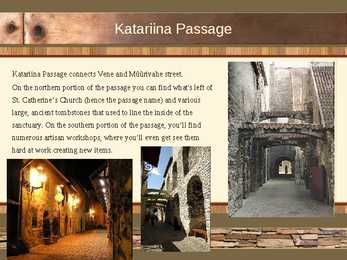
Katariina Passage Katariina Passage connects Vene and Müürivahe street. On the northern portion of the passage you can find what's left of St. Catherine's Church (hence the passage name) and various large, ancient tombstones that used to line the inside of the sanctuary. On the southern portion of the passage, you'll find numerous artisan workshops, where you'll even get see them hard at work creating new items. City wall Tallinn's medieval city wall is a sub-facility that was built
Tallinn English College Topic Great Britain 2007 1. Introduction The official name of Great Britain is `the United Kingdom of Great Britain and Northern Ireland (or short United Kingdom)' The population is about 60.4 million. The capital is London. Other biggest cities include Birmingham, Bristol, Portsmouth, Glasgow and Swansea. English is the main language of Great Britain, but Welsh is officially recognized in Wales and Gaelic in Scotland. 2. Geographical position The British Isles is the geographical term for a group of about 5000 islands off the coast of mainland Europe. The largest island is Great Britain, which is also the largest island in Europe. It consists of England, Wales and Scotland. The next largest island is Ireland, which is made up of Northern Ireland and the Irish Republic. Britain and Northern Island together form the United Kingdom. When referring to Britain or Great
American most touched by the ideas of the Enlightenment. Attempts to reconcile science and religion resulted in a widespread rejection of prophecy, miracle and revealed religion in preference for Deism especially by Thomas Paine in "The Age of Reason" and by Thomas Jefferson in his short Jefferson Bible from which all supernatural aspects were removed. Benjamin Franklin was influential in America, England, Scotland, and France, for his political activism and for his advances in physics. The American Dream is a national ethos of the United States, a set of ideals in which freedom includes the opportunity for prosperity and success, and an upward social mobility achieved through hard work. In the definition of the American Dream by James Truslow Adams in 1931, "life should be
Rosie It's unknown territory. We don't know enough about what effects it may have on the human body. You 4 know, they talk about how GM food 1 h 2 e 3 d 4 a could affect our digestion, cause 5 b 6 c 7 f 8 g allergies, that sort of thing. 5 1 unfriendly Leo There's a lot of controversy around it, but no actual evidence to 2 incorrect prove that GM food does us any harm. 3 completely Rosie I don't agree with that 4 totally argument, I'm afraid. There may be no 5 perfectly evidence right now, but it's the long- 6 wrong term effects that I'm concerned about. 7 virtually Leo Well any change has potential 8 highly consequences. You could make exactly
Estonia. For example, Danish, Russia and Germany. There are many legends of tallinn. For example Linda's rock, Old Thomas, Old Man of Ülemiste Lake , St. Olav's Church and Reval. 2 Legend of St. Olav's Church In old times, when Estonia was small country, people often thought of how to raise the importance of the city. City residents wanted that their city became big and famous. Citizens come to idea to build big church. Then the ships could see that church at long distance and they will come with their wares to the city port. But there wasn't such of master who would be able to do this church. One stranger man offer himself to do this, but he demanded a high reward. But he added condition: if citizens find out his name, he doesn't take any moeny for this job. The stranger man began to build a church. So the walls rised. Several people tried
First duty was to defend the faith of Christ against unbelievers, second to protect his temporal lord and the territories entrusted to him. Had to be wise, able to see justice, administer his estates. He had to be in constant training, motives for seeking knighthood should be pure. Honour had to be prized over everything. A knight should be without blemish, avoid pride, false-swearing, treason- the darkest crime. Slaying one's lord, adultery with his wife or surrendering his castle. Cowardness in the field, like treason, was punished by death. Another crimes-dishonourable conduct toward women, beating, raping. No robber, pirate, murder, violater of church could be knight. 7. Courtly love. The favour to be found with ladies is one of the main topics of the competitions. With the improved standards of living, war band had to rethink their attitude to women. Marriage could be only
didn't see it. I winced in sympathy and crouched to help the woman collect her money, as did one of the guards. "Thank you," she said, shooting me a quick harried smile. I smiled back. "No problem. I've been there." I'd just squatted to reach a nickel lying near the entrance when I ran into a pair of luxurious black oxfords draped in tailored black slacks. I waited a beat for the man to move out of my way and when he didn't, I arched my neck back to allow my line of sight to rise. The custom three -piece suit hit more than a few of my hot buttons, but it was the tall, powerfully lean body inside it that made it sensational. Still, as hot as all that magnificent maleness was, it wasn't until I reached the man's face that I went down for the count. Wow. Just...wow. He sank into an elegant crouch directly in front of me. Hit with all that exquisite masculinity at eye-level, I could only stare. Stunned.
 annaabi.ee