The Fall of the Empire The fall of the British Empire was caused by World War II for two reasons. Firstly, many nations felt that their sacrifice should be rewarded with independence, for example India. Also, the losses to the Japanese destroyed the myth of the European omnipotence. Secondly, heavily in debt to the United States, the United Kingdom was financially exhausted. This left it almost impossible to defend its wider colonies by force. So the vast markets were opened to American companies and to weaken the UK in general. No empire has been larger or more diverse than the British Empire. At its apogee in the 1930s, 42 million Britons governed 500 million foreign subjects. Britannia ruled the waves, and a quarter of the earth's surface was coloured red on the map. Where Britain's writ did not run directly, its influence, sustained by matchless industrial and commercial sinews, was often paramoun...
Star Wars Empire Strikes Back Main characters: Han Solo Luke Skywalker Princess Leila Dark Vader R2-D2 Chewbacca C-3PO About the author: Donald F. Glut (born February 19, 1944) began his professional career working as a musician, singer and song writer. For most of his career, however, he has made a living as a freelance writer of film and television scripts, novels, comic book scripts, non-fiction and short stories. He is now President of Frontline Entertainments for which he wrote and directed the comedy/fantasy motion picture Dinosaur Valley Girls. He `s best known book is Star Wars Episode V: The Empire Strikes Back Plot: The beginning of the book Luke Skywalker gets lost when he goes to investigate an asteroid that has just fallen down, but he is attacked by a monstrer who takes him into his cave. Luke frees himself from the cave but there is a freezing temperatur...
Country study test # 3 1. Why was it often said that ,,the sun never sets on the British Empire"? ... is used to describe an empire of such a large extent that, at any one time, at least part of its territory is in daylight. This was a saying refering to the fact that Britian had colonies all around the world. 2. What is the Commonwealth? The Commonwealth is an association of sovereign nations that support each other and work together towards international goals. 3. When was it founded? 1931 4. Who were the founder members? Great Britain, the Irish Free State (now the Republic of Ireland), Canada, Newfoundland (since 1949 part of Canada), Australia, New Zealand, and South Africa. 5. Are they still members? Why? Irish Free State left in 1949 with the republic of ireland acts, Newfoundland (since 1949 part of Canada), 6. What was the difference between the British Empire an...
About Peter I House Museum Emperor Peter I (1672-1725) expanded the borders of the Russian Empire in the course of the Northern War and managed to annex the whole Estonian territory by the year 1710. Therefore the protection of the new border areas became the priority of the ruler and he paid a lot of attention to the reconstruction of ports in Tallinn and Paldiski and visited Tallinn several times. Together with the site of the would-be palace, a summer estate and a 17th-century cottage that had belonged to town councillor von Drenteln were purchased for the emperor's use in 1713. The small cottage was enlarged with a wing and the outcome was a building with a hall, a kitchen and four rooms. The small summer residence was in use until the emperor's death. The succeeding rulers used the Palace of Kadriorg that had been completed only after Peter's death and the small building was neglected. The building was ...
Was the British Empire a good thing that enlarged the world creating possibilities for everyone or was it just a way for some to gain power and wealth? How is the modern-day Commonwealth different? The British Empire used to be one of the largest and wealthiest empires in the world. Its prosperity started at the early 1600s and reached its high peak at the end of the World War I. The Empire faded into the Commonwealth at the end of 1930s as one colony after another gained its independence. After studying the topic I would say that it cannot be said whether the British Empire was a very good or a very bad thing. Of course any kind of oppression should not be approved of and actually the Empire and native British forced on their way of life and culture to the colonies. On the other hand the Empire also helped its subjects to develop in a positive sense. In overall Britain ruled several parts of the world, like India, parts of Africa, ...
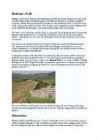
Hadrian's Wall Hadrian's Wall was a stone and turf fortification built by the Roman Empire across the width of Great Britain to prevent military raids by the tribes of Scotland to the north, to improve economic stability and provide peaceful conditions in the Roman province of Britannia to the south, to physically mark the frontier of the Empire, and to separate the unruly Selgovae tribe in the north from the Brigantes in the south and discourage them from uniting. The name is also sometimes used jocularly as a synonym for the border between Scotland and England, although for most of its length the wall follows a line well south of the modern border -- and neither the Scoti tribe nor the English lived in Britain at the time of the wall's construction. The wall was the northern border of the Empire in Britain for much of the Roman Empire's rule, and also the most heavily fortified border in the Empire. In addition to its use as a milit...
History of Different cultures Maile Kikerpill 2013 The Roman Empire began as a farming community on the Tiber River in central Italy was occupied in the 700 BC by 500 BC the area was dominated by Etruscans by 300 BC the Latins ruled central and southern Italy in 264 BC the Latins began to dispute the territorial ambitions of the Carthaginians known as the ,,Punic Wars,, finally destroyed in 146 BC By 70 AD Rome ruled every country that touched the Mediterranean was not the largest empire in total territory in world history until 27 BC the Roman Empire was a Republic Julius Caesar declared war on the Roman Senate itself became sole ruler Brutus, Cassius and others assasinated Julius Caesar Octavius declared himself "Caesar Augustus" and first Emperor of Rome 200 years of peace followed by 100 years of warfare in 284 AD Diocletian divided the Roman empire into two halves: East and West in 306 Constantine I declared Christianity in 401 ...
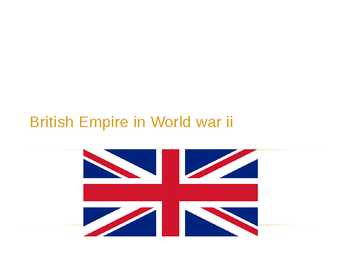
British Empire in World war ii BritISH empire in 1939 -1945 Prime minister: Winston Churchill 1940-1945 Preceded by Neville Chamberlain 1937-1940 King of the United Kingdom and the Dominions of the British Commonwealth: George VI Full name: Edward Albert Christian George Andrew Patrick David Population of Britain: ~47 million Same before and after the war Winston Churchill JOINING the war Britain declared war on Nazi Germany on 3 September 1939 rd British Empire in World war II On May 8, 1945, the Allies formally accepted the unconditional surrender of the armed forces of Nazi Germany. On 30 April Hitler committed suicide. The act of military surrender was signed on 7 May in Reims, France, and ratified on 8 May in Berlin, Germany. On August 15, 1945, the Surrender of Japan occurred, effectively ending World ...
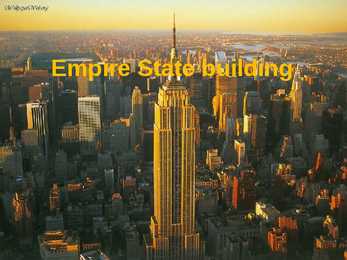
Empire State building Some information about the Empire State This building has 102 floors Location is in Midtown Manhattan, New York City It has roof height of 381 meters and with its antenna spire included, it stands a total of 443 meteres The Empire State Building is generally thought of as an American cultural icon A little bit history... Empire state was built in: 19291931 Cost was $40,948,900 The arhitects: Lamb Main contractor: Starrett Brothers and Eken http://www.youtube.com/watch?list=PL558244195862BD4F&v= m0TpUhylKc&feature=player_embedded
English a global language Aleksander 10B This essay explores British and English history and its influence to the world. English is spoken all around the world. We can even say that it is a international language. It begun when Great Britain started founding colonies. Empire growed from the 17'th century up to 1920's. It was said that the sun never sets on British empire. It had expanded all over the world. In the colonies, English started to change, it had spread all around the world, just like the empire. It was leading country in the world for a very long time. It had strong economy and the strongest navy that any one had ever seen, so it was till the world wars. The British Isles, because of their good geographical position have been conqured only twice. And both occasions had a great influence...
Roman Britain 1.Ülesanne 1.Roman empire exited,more then 400 years ago. 2.Colchester was the capital of Britannia for some time,soon London or Londinium became the capital 3. Romans speaked Latin. 4. Roman rules Britannia. 5. Julius Ceasar ,Hadrian 6. Romans rules Britain before the Vikings. 2.Ülesanne a–2 b–5 c- 1 d-3 e–4 3.Ülesanne 1–d 2–g 3- i 4–h 5–j 6–a 7–b 8–f 4.Ülesanne 55- Julius Ceasar first came to Britain in the year 55 BC (before Christ ). 400- Britannia became a part of the Roman Empire for more than 400 years. 20- About 20 large towns grew araund the camps of the Roman army. 2,000,000 – The whole population of Roman Britain was about 2 million. 2000 – There were abaut 2000 villas on the south of Britannia . 12 000 – Romans built abaut 12000 kilometers of road which were wide and straight . 410 – ...
History of Great Britain Prehistory (55BC) no written records 6th 3rd c. BC the Celts came to British isles hill figures, hill forts, stone circles ( Stonehenge ) RomanBritain (55BC 400AD) Julius Caesar, named the country Albion Hadrian's Wall, villas, roads, the town of Bath The AngloSaxon, Danish and Norman invasions Germanic tribes settled and stayed Anglia Christianity was brought, religion became important, churches were built 8th century = raids by the Vikings and the Danes 1016 1042 : Under Danish rule ( York was the capital ) 1042 : local AngloSaxons regain their rule 1066 : Normans arrive ( the Norman conquest ) Medieval Britain (106615th c.) the Battle of Hastings William the Conqueror a new AngloNorman state the feudal system introduced the rule of the king and church strengthened centralised country, military rule Scotland, Wales and Ire...
Wemley Stadium History Wembley The Twin Towers Wemley Stadium History Empire Stadium, the original stadium was built for the British Empire Exhibition of 1924. The stadium closed in October 2000 and was demolished in late 2002 for redevelopment. New Wemley broke ground in 2002. New Wembley opened in 2007. Wembley The T win T owers Location London, England Broke ground 1922 Opened 1923 Closed 2000 Demolished 2002 Surface Grass Construction cost £750,000 GBP (1924) Former names Empire Stadium, British Stadium Tenants England national football team Capacity 82,000 Olympic summer games stadium: London, 1944 • London, 1948 New Wemley Stadium Location London, England Broke ground 2002 Opened 2007 Owner The Football Association Operator Wembley National Stadium Limited Surface Grass Con...
History of Estonia Elina, Rasmus, Joosep Pre-history The Mesolithic Period The Neolithic Period The Bronze Age The Iron Age Early Middle Ages Click to edit Master text styles Second level Third level Fourth level Fifth level Counties of Ancient Estonia The Middle Ages Danish Estonia Swedish Coastal Settlements Terra Mariana The Reformation Period Division of Estonia in the Livonian War PolishLithuanian Commonwealth Estonia in the Swedish Empire Estonia in the Russian Empire Age of Enlightenment National Awakening Road to Republic Occupation of Estonia by German Empire. United Baltic Duchy Declaration of Independance As a result of the availability of education Age of awakening Red Army's retreat and arrival of German troops in Pärnu on 23 February in Tallinn on 24 February 1918 Independence (1918-1939) Tartu peace treaty in 1920 First recognized by Finl...
The New York 1. The Empire State Building. The Empire State Building is a 102-story landmark Art Deco skyscraper in New York City at the intersection of Fifth Avenue and West 34th Street. Its name is derived from the nickname for the state of New York, The Empire State. It stood as the world's tallest building for more than forty years, from its completion in 1931 until construction of the World Trad Center's North Tower was completed in 1972. 2. Central Park. Central Park is an urban park that occupies about 1.2 square miles (341 hectares, or 843 acres) in the heart of Manhattan in New York City. It is host to approximately twenty-five million visitors each year. Central Park was opened in 1859, completed in 1873 and designated a National Historic Landmark in 1963. 3. The statue of Liberty. The Statue of Liberty officially titled Liberty Enlightening the World, dedicated on October 28, 18...
King William I When William died his lands were divided between his eldest two sons. Robert inherited Normandy, while William became king of England. Died from injuries EDWARD V He and his brother Richard were murdered in the Tower of London Alfred the Great - King of Wessex (part of England). All British modern British monarchs trace from the Wessex line. William I, the Conqueror. Founder of the modern British state. Henry II - added Ireland the British possessions John I - signed Magna Carta, the beginigs of the British constitution Edward I - conquered Wales Edward III - started 100 years war Henry V - Last great warrior king Henry VIII - Broke England away from Catholic church. Elizabeth I - laid the seeds of the British Empire, and tons of other stuff James I - Was King James VI of Scotland, inherited throne from Elizabeth I, united England and Scotland Charles I - Overthrown by Parliament and executed. Replaced by a re...
16th century (Tudors) 1. Henry VII - avoided wars, careful with money, didnt have expensive parties, was a rather shadowy figure 2. Henry VIII- brilliant scholar, excellent knight, good-looking, ambitious, self- centered, loved expensive clothes and parties. Wasted his fathers money very quickly and had 6 wives. His first wife couldnt give birth to a baby boy and they only had a daughter. His next wife only gave birth to a girl too. His next wife gave birth to a boy but died after the labor. He didnt like his 4th wife so he sent her back. His fifth wife was young and beautiful but had many lovers and Henry didnt like it so she was sent to the Tower and was beheaded. HIs 6th wife survived. 3. Edward- was sickly and ruled only for a few years and then he died 4. Mary Tudor/Bloody Mary- was catholic and killed many protesntants. Ruled only f...
BRITISH HISTORY 17TH-19TH CENTURY SEVENTEENTH-CENTURY ☄ When James I became the first English king of the Stuart dynasty, he was already king of Scotland, so the crowns of these two countries were united. ☄ The kind of Middle English spoken in lowland Scotland had developed into a written language known as Scots ☄ The Scottish Protestant church adopted English rather than Scots bibles ☄ Religion and politics are inextricably linked ☄ Some people tried to kill the king because he wasn't Catholic enough and another king had been killed, partly because he seemed too Catholic ☄ Anger grew in the country at the way that the Stuart monarchs raised money ☄ Puritanism- ideological Protestantism ☄ Some of them thought the luxurious lifestyle of the king and his followers was immoral. They were also fiercely anti-Catholic and suspicious of the apparent sympathy t...
1)Haigustest vabanema- get rid of illenses 2) impeeriumi osaks saama- become a part of the Empire 3) mõnda aega- for some time 4) millegi poolest kuulsamaks saama- famous for 5)kuumaveeallikad- hot springs 6) peamiselt maakohtades- mostly in the countryside 7) linnarahvas- townspeople 8)raha teenima- earn some money 9) sõjad said läbi- wars were over 10) röövretki alustama- start raids 11) Rooma valitsemine- Roman rule. 1)See on palee, kus kuninganna elab- this is palec, where for the queen lives 2) Need on suveniirid, mis ma Londonist ostsin- These are suvenires, what I buy in England. 3)See on raamat, mida ma vajan-This is a book, what I need. 4) See on sõber, kelle isa oskab häid anektoote rääkida- This is the friend, whose father can talk jokes very well. 5) See on jope, mille ostsin kasutatud riiete kauplusest- This is jacket, which I bought the second hand. 6) See on kell, mille jaoks ma kogun raha- This is the clock, which I save...
India Mairi Kaseorg 9. A Overview of India India is the largest country and biggest democracy in the world today. It is the secondmost populous country with over 1.2 billion people which is about 17% of the world's population. The unemployment rate of India is 10.4%and many people live in poverty. The offical languages are Hindi and English. India is bounded by the Indian Ocean on the south, the Arabian Sea on the south west, and the Bay of Bengal on the southeast. Overwiev of India It is also home to a diversity of wildlife in protected habitats. India is a federation with a parliamentary system. It is the thirdlargest standing army in the world and ranks tenth in military expenditure among nations. The map of India Click to edit Master text styles Second level Third level ...
Celebrities of Australia Empire of the sun: Empire of the Sun is an Australian electronic music duo which formed in 2007. The duo is currently composed of Luke Steele of the Sleepy Jackson and Nick Littlemore of Pnau. The pair's name comes from the 1984 novel of the same name by J. G. Ballard. The duo achieved chart success with their first single "Walking on a Dream" which peaked at number ten on the Australian ARIA Singles Chart and reached number sixty four on the UK Singles Chart. Their debut album also titled Walking on a Dream, released in October 2008, to date has been certified platinum in Australia and has spawned the top 25 hit "We Are the People". Recently Empire of the Sun has gained mainstream media attention for gaining fourth position on the BBC's annual Sound of Music poll 2009. They are currently signed to EMI Australia and Virgin UK Hector Lombard: Hector Lombard (born February 2, 197...
The Romans came to Britain nearly 2000 years ago and changed our country. The Romans lived in Rome, a city in the centre of the country of Italy .One day, some years before Jesus Christ was born, the Romans came to Britain. First invasion - Caesar's first raid In August 55 B.C. (55 years before Jesus was born) the Roman general, emperor Julius Caesar invaded Britain. He took with him two Roman legions. After winning several battles against the Britons in South-East England he returned to France. Second invasion - Caesar's second raid In 54 B.C. Julius Caesar came to Britain again landing at Walmer near Deal in Kent. This time he brought with him five legions (30,000 foot soldiers) and 2,000 cavalrymen (horse riders). This time the Romans crossed the River Thames. After more fighting, the British tribes promised to pay tribute to Rome and were then left in peace for nearly a century. Third and final invasion In 43 A.D. (43 years after Je...
STUDY QUESTIONS ON CHAPTER 3 · Battle of Stamford Bridge 1066- Battle, that took place on Stamford Bridge between Norwegians who were led by Harald and England (king Harold Godwinson). During the battle many Norwegian leaders were killed. Norwegians lost the battle, and it is very often taken to mark the end of the Viking Age. · Battle of Hastings 1066- Occurred on 14th October 1066 during the Norman conquest of England, between the Norman-French army of William the Conqueror and the English army under king Harold II. During the battle Harold was killed and the Normans won. It was the end of Anglo-Saxon era. · Bayeux Tapestry- Embroidered cloth nearly 70m long, which depicts the events leading up to the Norman conquest of England concerning William, Duke of Normandy and Harold, Earl of Wessex, later king of England and culminating in the battle of Hastings. · Debate poem- ...
Armenian Genocide Tallinn 2011 Contest Introducion..................................................................................................3 1. The Armenian Genocide and its causes..............................................................4 1.1. Armenian Genocide.................................................................................4 1.2. The Armenian Massacre...........................................................................4 1.3. Young Turks and the Young Turk Revolution..................................................5 1.4. Armenian Genocide, 1905-1917 period.........................................................5 1.5. Death marches.......................................................................................5 1.6. Extermination camps...............................................................................6 2. The consequences of Armenian Genocide....
Assassination of Archduke Franz Ferdinand of Austria Archduke Franz Ferdinand was born in the city of Graz on December 18, 1863. After his cousin and father died, he became the heir to the throne of Austria- Hungary. His uncle, Franz Joseph, was the current emperor of the Austrian- Hungarian Empire. He was married to Sophie, the Duchess of Hohenberg. In the southern portion of Austria-Hungary was a region called Bosnia. Many of the Bosnians wanted to have their own country and not be under the rule of Austria-Hungary. The country of Serbia, just south of the Austria-Hungary border also wanted the freedom of the Bosnians. Serbia was an ally with the powerful Russian Empire and Austria-Hungary was allied with Germany. When Archduke Ferdinand announced his trip to Sarajevo, Bosnian nationalists saw their opportunity to strike at the Austrian Empire. With help from the neighboring country of Serbia, assassins were recruited and trained t...
RUNNING HEAD: RUSSIA Russia Throughout the History U.S Government Table of Contents 1. Introduction 2. History of Russia 3. Russia nowadays 4. Important people in Russia throughout the history 5. Conclusion 6. References Introduction- Russia Throughout the History Russia is a one of the biggest countries is the world. The first clues about Russian history are from as early as the 9th century. Russia has suffered through rough times in war, mad leaders and tough life amongst the locals. Over times the country has had several different names and political systems. They have been an empire ruled by a czar, a communist nation, and a democratic federation. Nowadays the country's official name is the Russian Federation ("Basic facts about,"). The head of the executive branch i...
Coachella Valley Music and Arts Festival Where? § Empire Polo Club in indio, California in the Inland Empire´s Coachella Valley When? § It´s a three day event held every year in third or fourth weekend of April The stages § Main stages: Coachella Stage, Outdoor Theatre, Gobi Tent, Mojave Tent and Sahara Tent History § 1999 § Founded by Paul Tollett § Organized by Goldenvoice § A Perfect Circle was the 1st band to ever play at Coachella § There was no Coachella festival held in the year 2000 § In 2007 the organizers extended the the festival to 3 days Festival passes § 1999-50$ § 2001/2002/2003-75$ § 2004-140$ § 2005-150$ § 2006-160$ § 2007-2012-275$ § 2013/2014-350$ § 2015/2016-375$ § 2017-400$ Vip festival passes § 900$ § Enables access to: Special foods and beverage facilities Shaded relaxation tents ...
Gordon James Ramsay Author: Martin Luik Gordon James Ramsay · Born 8 November 1966. · Scottish born British chef and restaurateur. · Known for presenting TV programmes about competitive cookery and food. · His signature restaurant, Restaurant Gordon Ramsay in Chelsea, London, has held 3 Michelin stars since 2001. · He currently has 21 restaurants. · His restaurants have been awarded 15 Michelin stars in total and currently hold 14. · His cooking styles are French, Italian and British. Early Life · Born on 8 November 1966 in Johnstone, Renfrewshire, Scotland. · From the age of five, he was raised in Stratford-upon-Avon, Warwickshire, England. · Second of four children. · Ramsay's father was a swimming pool manager, a welder, and a shopkeeper. His mother was nurse. · At the age of 16, Ramsay moved out of the family house into a flat in Banbury. Head Chef · In 1993, Ram...
A single nation. A million voices. The fall of and empire. Main events in Estonian history NIMI Ancient Estonia · Begins from around 8500 BC. · Worshipped the spirits of nature. · Own gods. · 5 periods: mesolithic, neolithic, bronze age, iron age, early middle ages. Click icon to add picture Click icon to add picture Estonian crusade · One of the last corners of medieval Europe to be christianized. · Against pagans in Estonia. ...
House of Winsdor. Their influence on modern society, key personalities. People all over the world are obsessed with the British royal family. Most fans know all the royal names and faces, the line of succession to the throne, and even the family's rarely- used last name. But let's start from the beginning. The House of Windsor is the reigning royal house of the United Kingdom and the other Commonwealth realms. The dynasty is of German paternal descent and was originally a branch of the House of Saxe-Coburg and Gotha, itself derived from the House of Wettin, which succeeded the House of Hanover to the British monarchy following the death of Queen Victoria, wife of Albert, Prince Consort. The name was changed from Saxe-Coburg and Gotha to the English Windsor (from "Windsor Castle"[1]) in 1917 because of anti-German sentiment in the British Empire during World War I.[2] There have been four British monarchs of the house of Windsor to date:...
Estonia Where it is? Republic of Estonia is a state in the Baltic region of Northern Europe .It is bordered to the north by the Finland, to the west by the Baltic Sea, to the south by Latvia (343 km), and to the east by lake Peipus and Russia (338.6 km). Across the Baltic Sea lies Sweden in the west and Finland in the north. Towns Tallinn is the capital and the largest city of Estonia. It lies on the northern coast of Estonia, along the Gulf of Finland. There are 33 cities and several town-parish towns in the country. In total, there are 47 linna, with "linn" in English meaning both "cities" and "towns". More than 70% of the population lives in towns. History • Estonia was settled near the end of the last glacial era, beginning from around 8500 BC. Before the German invasions in the 13th century proto-Estonians of the Ancient Estonia worshipped the spirits of n...
16. Britain in WW I Causes of WWI: Mutual defence alliances (if one country was attacked then allies would rush to help and it snowballed into a war between many countries) o The alliances at the time were: o Russia and Serbia o Germany and Austria-Hungary o France and Russia o Britain and France and Belgium o Japan and Britain Austria-Hungary declared war on Serbia, Russia got involved to defend Serbia. Germany seeing Russia mobilizing, declared war on Russia. France was then drawn in against Germany and Austria- Hungary. Germany attacked France through Belgium pulling Britain into war. Then Japan entered the war. Later, Italy and the United States would enter on the side of the allies. Imperialism: empires got bigger and with that the competition between the empires grew. Everyone wanted more ar...
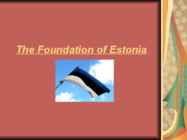
The Foundation of Estonia Estonia The history of Estonia The history of Estonia is a part of the history of Europe. Estonia was settled near the end of the last glacial era, beginning from around 8500 BC. Before the Germans invaded in the 13th century proto-Estonians of the Ancient Estonia worshipped the spirits of nature. Since the Northern Crusades Estonia became a battleground for centuries where Denmark, Germany, Russia, Sweden and Poland fought their many wars over controlling the important geographical position of the country as a gateway between East and West. Being conquered by Danes and Germans in 1227, Estonia was ruled initially by Denmark in the north, by the Livonian Order, an autonomous part of the Monastic state of the Teutonic Knights and Baltic German ecclesiastical states of the Holy Roman Empire. From 1418–1562 the whole of Estonia was part of the Livonian Confederation. A...
Christ The Redeemer Or the Statue of Christ Redeemer (Portuguese: Cristo Redentor) is a statue of Jesus Christ with the largest Art Deco architectural style and located in Rio de Janeiro, Brazil. The statue has a height 38 meters and is located at the top of Corcovado Mountain is 710 m high in the Tijuca Forest National Park, overlooking the city. Chichen Itza It is a Mayan archaeological heritage in Mexico is the most complete and still well maintained. According to the Mayan culture of Chilam Balam, the temple complex was built between the years 502-522 AD. Mayans occupy just over 200 years, then they migrate to coastal areas in Campeche. Itza is the central point of the complex and other buildings such as the Pyramids of Kukulcan, Temple of Chac Mool, and building the Thousand Pillars. Colosseum Is a large theater / Amphitheater, located at the State Capital of Italy, Rome, called the original "Flavian Amphitheatre", founded by...
Coco Chanel Gabrielle Bonheur Chanel · Pioneering French fashion designer · Founder of the famous fashion brand Chanel Coco Chanel Wearing her trademark- classical pearls Early life · Born on 19 August 1883 in France · Daughter of traveling salesman Albert Chanel and Jeanne Devolle · Tracing of her roots · Five siblings: two sisters and three brothers · Mother's death · Orphanage years Young Coco Chanel At the age of 19 The Beginning of CHANEL · Dream of becoming a famous fashion designer · The name Coco · Affair with the French millionaire Étienne Balsan · Designing hats as a hobby · First shop The first CHANEL store Opened in 1913 Gabrielle Chanel with her sister Adrienne Sisters standing in front of Coco's first fashion Boutique The Chanel empire · Gaining reputation · False history for her humble beginnings · Simplicity of the clothes · A Chanel couture jacket · First signature fra...
Independence Day On 24 February, Independence Day is celebrated in the Rebublic of Estonia. This is the day that the Manifesto was declared in Tallinn 91 years ago. In responce to a period of Russification initiated by the Russian empire in the 1890's, Estonian nationalism took on more political tones, with intellectuals first calling for greater autonomy, and later, complete independence from the Russian empire. Following the Bolshevik takeover of power in Russia after the October Revolution of 1917 and German victories against the Russian army, between the Russian Red Army's retreat and the arrival of advancing German troops, the Committee of Elders of the Maapäev issued the Estonian Declaration of Independence in Pärnu on February 24, 1918. after winning the Estonian Liberation War against Soviet Russia and at the same time German Freekorps volunteers (the Tartu Peace Treaty was signed on 2 February 1920), Estonia maintai...
ENGLAND General overview England is part of the United Kingdom Land borders with Scotland to the north and Wales on to the west The English Channel on south separates it form continental Europe The country includes over 100 smaller islands Capital and largest city is London Its has consitutional monarchy Monarch is Elizabeth II Total area is 130,395 km2 Population is 51,446,000 million, around 84% of the population of the UK Currency is Pound stearling(GBP) Has left-hand traffic Patron saint is ST. George Geography England comprises the central and southern two-thirds of the island of Great Britain, in addition to a number of small islands of which the largest is the Isle of Wight Much of England consists of rolling hills, but it is generally more mountainous in the north with a chain of mountains, the Pennines, dividing east and west Other hilly areas in the north and Midlands are the La...
The Most Influential Figures in British History There are many important historical figures, who have helped shape Britain into what it is today. In my opinion Elizabeth I, Queen Victoria and Winston Churchill are the ones who stand out and have had the biggest impact on British history. Firstly, Elizabeth I made a great impression on British history as she kept England from major wars during her reign, the kingdom expanded and she supported culture. The rule of Elizabeth I can be called a peaceful time as England did not enter any huge conflicts. She managed to keep good relations with other great countries. However, the defeat of the Spanish Armada left no one questioning the superiority of the British navy. In addition, the kingdom’s territories grew during her reign, Virginia in America being named after „The Virgin Queen“. Queen Elizabeth I also valued culture. Arts flourished while Elizabeth was i...
Study questions on chapter 1 Stonehenge - is pre-historical moument located in the English county of Wiltshire. 2400 BC 22 000 BC. It is composed of a circular setting of large standing stones. The site and its surroundings were added to the UNESCO's list of World Heritage Sites in 1986 Celtic Invasion It begun about 500 years BC. Celts brought iron with them to Britain (and pagan traditions). But it is belived that there was never an organized Celtic invasion.(Celts were too fragmented to make it happen) Iron Celts brought iron with them into Great Britain which made some big changes. Iron is stronger then bronze and iron ore is more common(it made tools and weapons better). One of the interesting innovations that they brough to Britain was the iron plough which changed a lot about the farming(made it easier). Iron changed trade and fostered local independence. Hadrian's wall was a defensive forti...
UNIT 6: Töövihikust harjutus 9. 1 Millal sa viimati sõid kaasavõetud einet? When did you last have a packed lunch? 2 Tavaliselt sööme me õhtul sooja toitu. We usually have a cooced meal in the evenings. 3 Sam ostis valmistoidu ja soojendas selle praeahjus üles. Sam bought a ready meal and heated it up in the oven 4 Kas me võiksime süüa hiina restoranist kaasatoodud toitu? Could we have Chinese takeaway? 5 Mõnikord sööme me laupäeviti väljas. We sometimes ate out on Saturdays. 6 Puu- ja köögiviljad on tervislik valik. Fruits and vegetables are a healthy choice. 7 Tädi Maggie räägib palju tervislikust toidust. Aunt Maggie talks a lot about healthy food. 8 Minu tüüpiline hommikusöök koosneb apelisinimahlast ja võileivast. My typical breakfast is consist of sandwich and a glass of orange juice. 9 Kas sa sooviksid tüki röstsaia moosiga? Would you like a piece of toast with jam? 10 Muuseum on avatud aasta läbi. The museum is opened ...
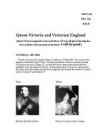
Kadri Laur PRG 11B. 26.05.07 Queen Victoria and Victorian England (Queen Victoria is supposed to have said this as a 10-year-old girl on learning that she was likely to become queen in the future: I will be good.) VICTORIA (r. 1837-1901) Victoria was born at Kensington Palace, London, on 24 May 1819. She was the only daughter of Edward, Duke of Kent. The Duke and Duchess of Kent selected the name Victoria but her uncle, George IV, insisted that she be named Alexandrina after her godfather, Tsar Alexander II of Russia. Edward died when Victoria was eight months old, upon which her mother enacted a strict regimen that shunned the courts of Victoria's uncles, George IV and William IV. Father ...
New York City Viivian Laes From 8 Kaali School Location in the United States. Facts about New York City ● Population : 8.5 million ● Is the most populous city in the US ● The most popular nickname : The Big Apple Why is New York City Called The Big Apple? Sightseeings : Central Park Empire State Building Statue of Liberty Times Square Thank you for listening !
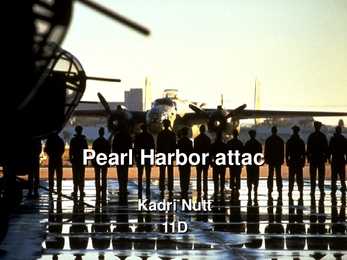
Pearl Harbor attac Kadri Nutt 11D Facts · was a preemptive military strike on the was United States Pacific Fleet base at Pearl Harbor, Hawaii · by the Empire of Japan's Imperial Japanese Navy, on the morning of Sunday, 7 December 1941. · Two attack waves · destroyed two U.S. Navy battleships, one minelayer, two destroyers and 188 aircraft. · Personnel losses were 2,333 killed and 1,139 wounded · Very important fuel storage, shipyards, and submarine facilities were not hit · Japanese losses were minimal at 29 aircraft and five midget submarines, with 65 Japanese servicemen killed or wounded. Reasons · intent was to protect Imperial Japan's advance into Malaya and the Dutch East Indies -- for their natural resources such as oil and rubber -- by neutralizing the U.S. Pacific Fleet. · Both the US and Japan had longstanding contingency plans for war in the Pacific · ...
William Shakespeare (1564-1616) playwright, actor, poet 37 plays, over 400 screen adaptions Lord Chamberlain's Men, King's Men, The Globe Early life: John Shakespeare, Mary Arden, 2 sis', 3 bros; married Anne Hathaway 3 children Life in London: 1599 built Globe, 1623 first compilation Forms: classical & history plays, comedies+tragedies, poetry Style: metaphors, rhetorical phrases, free flow of words, unrhymed iambic pentameter; deviations Renaissance (end of 14th century) Italy, reaches rest of Europe Elizabethan era (16th II h - 17th I h) Theatre: combined medieval theatre, morality plays & Roman drama to create Elizabethan tragedy Poetry: Italian influences, sonnet (English: cddc ee) Rulers of England: Henry VII (brings prosperity, repairs economic situation; made alliances); Henry VIII (beginning of English reformation; killed "traitors"; 6 marriages); Mary I (Catholic); Elizabeth I (The Virgin Queen restores order; Religiou...
HISTORY TEST 5 invasions to Britain until 1066 1) The Celts o Gaels in 600BC; Cymry(Britons) in 300BC o From present-day Austria, Switzerland o The Celtic language survives in the names of many places in England- Dover, Kent, Thames o The Celts are best known for their art- many bronze objects with elaborate designs; brooches; pins; mirrors; Celtic stone crosses o The Celts had 3 social orders: warriors, druids(priests) ordinary people 2) The Romans o (55 BC-Caesar) 43 AD- 410 AD- Claudius o From present-day Italy o Southern Britain became Britannia and was ruled by a roman governor o The Romans built over 20 towns: Colchester, Londinium, Winchester etc. They were good engineers and built roads and villas that had central heating, glass windows and mosaic floors ...
Tartu Kivilinna Grammar School Netherlands Report Composer: Reino Urbanovits Supervisors: Tiia Krass Erika Hunt Tartu, 2003 Table of contents Table of contents............................................................................................................................2 Introduction....................................................................................................................................3 Chapter 1........................................................................................................................................4 The Netherlands.............................................................................................................................4 Chapter 2.......
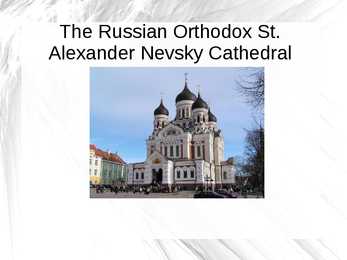
The Russian Orthodox St. Alexander Nevsky Cathedral The Russian Orthodox St. Alexander Nevsky Cathedral is designed by Mikhail Preobrazhensky ( a professor at St. Petersburg Academy of Arts) And built on the order of Alexander III between 1894 and 1900,during the period when the country was part of the Russian Empire The Alexander Nevsky Cathedral is Tallinn's largest and oldest orthodox cathedral It is dedicated to Saint Alexander Nevsky who in 1242 won the Battel of the Ice on Lake Peipus The church's towers' hold Tallinn's most powerful church bell ensemble,consisting of 11 bells (one of them weighing 15 tonnes) Orthodoxy in Estonia is practiced by 12.8 % of the population,making it the second most identifield religion after Lutheran Christianity with 13.6 % Orthodoxy is mostly practiced within Estonia's Russian ethnic minority The first mention of an Orthodox...
The Scorpion King is a 2002 American action film directed by Chuck Russell. The events of The Scorpion King take place 5,000 years before those in The Mummy and The Mummy Returns. Mathayus, the last true Akkadian mercenary, along with his half-brother is hired by King Pheron to kill a sorcerer, whose prophetic powers allow the vicious Egyptian Emperor Memnon to rule his empire with an iron fist. He sneaks into Memnon's camp and finds his way to the sorcerer's tent, where he discovers that Memnon's sorcerer is actually a beautiful sorceress called Cassandra. Mathayus and Cassandra, now King and Queen of Egypt, bid their farewells to Balthazar, who wishes them well. Cassandra then reveals to Mathayus that her night with him did not strip her of her powers. She subtly warns Mathayus of a vision she has had of his horrific destiny, but Mathayus decides that they will make their own destiny.
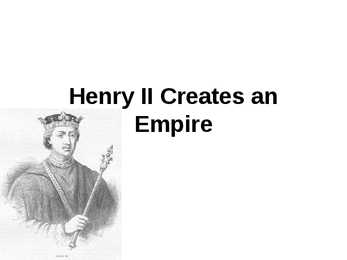
Henry II Creates an Empire Henry's claims by blood and marriage · Henry's father, Geoffrey Plantagenet, held rich lands as a vassal. · Henry received the claim to the English throne. · Henry's marriage to Eleanor of Aquitaine placed him firmly in the ascendancy. · Henry was the most powerful vassal in France. Taking the English Throne · It was 1147 when Henry had accompanied his mother on an invasion of England. · On 22 May 1149 he was knighted by King David I of Scotland. · Within the year he secured his right to the throne. · On 19 December 1154 he was crowned in Westminster Abbey. Lordship over Ireland · Shortly after his coronation, Henry sent a group of clerics to invade Ireland. · In 1171, Henry arrived from France, declaring himself Lord of Ireland. · In 1172, Roman Catholicism was proclaimed as the only permitted religious practice in Ireland. Consolidation in Scotland...
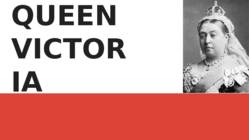
QUEEN VICTOR IA family Father: EDWARD AUGUSTUS Mother: PRINCESS VICTORIA OF SAXE-COBURG-SAAFELD She had nine daughters, most important of them was queen Elizabeth. Husband: PRINCE ALBERT life She was born on 24 May 1819 at Kensington palace , in London. Her coronation was on 28 June 1838 and she prevailed England for 63 years. She married at 1840. Victorias husband died on 16 March 1861, at the age of 74. Victoria fell into deep depression. She died on January 22, 1901 at age 81. She is buried in the Duchess of Kent's Mausoleum at Frogmore, Windsor Home Park, near to the royal residence Windsor Castle. england at her reign During Queen Victorias reign, British empire became the most powerful country in the world. Religion was very important and most of people went to church on Sundays. Industrial expanded, new work methods and technology ( water, gas, electricity), communications (the telegraph, press), sience (Darwin's theory for...
 annaabi.ee