 50 punkti
Autor soovib selle materjali allalaadimise eest saada 50 punkti.
50 punkti
Autor soovib selle materjali allalaadimise eest saada 50 punkti.
 ~ 29 lehte
Lehekülgede arv dokumendis
~ 29 lehte
Lehekülgede arv dokumendis
 2011-01-23
Kuupäev, millal dokument üles laeti
2011-01-23
Kuupäev, millal dokument üles laeti
 15 laadimist
Kokku alla laetud
15 laadimist
Kokku alla laetud
 0 arvamust
Teiste kasutajate poolt lisatud kommentaarid
0 arvamust
Teiste kasutajate poolt lisatud kommentaarid
 Merily L
Õppematerjali autor
Merily L
Õppematerjali autor
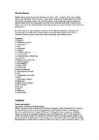
Marilyn Monroe Marilyn Monroe (born Norma Jeane Mortenson;[1] June 1, 1926 August 5, 1962), was a Golden Globe award winning[2] American actress, singer, model, Hollywood icon,[3] cultural icon, fashion icon,[4] pop icon and sex symbol. She is known for her comedic acting roles and screen presence. Monroe became one of the most popular movie stars of the 1950s and early 1960s. During the later stages of her career, she worked towards serious roles and her fame surpassed that of many entertainers of her time.[5] Her death at thirty six was classified as "probable suicide."[6] Many individuals including Jack Clemmons, the first LAPD Police officer to arrive at the death scene[7] believed that she was murdered.[8] She is the only female on the Forbes top earning dead celebrities list.[9] Contents 1 Childhood 1.1 Family and early life 1.2 Foster homes 2 Career 2.1 Early years 2.2 Stardom 2.2.1 Playboy playmate 2.2.2 A-list actress 2.2.3 Marilyn Monroe Productions 2.3 Later years 3 Mar
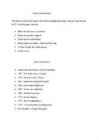
American literature The literary history of this nation when the first humanbeing living in what has since become the U.S used language creatively. · Mid to late 18 century put down · Words are powerful, magical · Words must be remembered · Native Americans stories creation of the world · Attidude thought their land/language · Similar stories Dates and names · America was discovered in 1492 by Columbus · 1497 John Cabot went to Canada · 1579 San Fransisco/St. Fransis · 1607 Jamestown collony/John Smith · 1620 a boat called MayFlower · 1630 Boston was established · 1636 Harvard University · 1773 Boston Teaparty · 1775 War of Independence · 1776 4 July Declaration of Independence · First President George Washington Christopher Columbus Christopher Columbus (1451
1. The Jacobean masque Elizabethan one nation culture, now cultural polarisation between the new courtly culture and the rest of the country. Court in cultural isolation. Ben Jonson. King and courtiers were close to universally recognised ideal types (conflict with the reality). Mysticism. Emergence of perspective view, stage machinery, artificial light, revolution. The stage cast the monarch in the focal point (the lines of perspective of the stage met there. Inigo Jones. Masque an educative vehicle, towards classical antiquity and architecture. Tide towards absolute monarchy. Masque – linked poetry and moral philosophy into art. Music, dance, poetry, lavish illusionistic scenic display to express the doctrines of divine kingship. Great impact. Like gods come down to earth. 2. The Caroline masque Charles decided on subject matter, and acted and danced in masques. Now the regal divinity even more obvious. Ben Jonson. Divine minds of this incomparable pair. Arts role – to
English literature is one of the oldest literatures in Europe; dates back to the 6th century AD. Oral literature, i.e. not written down, spread from person to person. In 449 AD Anglo-‐Saxon tribes invaded England – beginning of the Anglo-‐Saxon period in English literature. The first form of literature was folklore, carried by scops and gleemen, who sang in alliterative verse (a kind of simple poetry). Prose developed much later. The first form of recorded English literature was the epic Beowulf, which was produced sometime near the end of the 7th and beginning ?
British Literature in the 20th-21st Century REVISION QUESTIONS 1. The Contradictory, diverse, chaotic 20th century. New developments in science and philosophy. The essence and influence of Freudian theory. Contradictory, diverse, chaotic 20th c- simultaneous rejection and invocation of the past. While modernists apotheosized the creative geniuses of the past, they also rejected old poetic forms. Challenge old and established beliefs and more and more people had access to books and education more people went to universities. profound change in morals: · No universal value and perspective on things · Multiple truths, multiple perspectives · Nothing has inherent (kaasasündinud, sisemist) importance · Life lacks purpose Science: Albert Einstein-general theory of relativity had a huge impact on culture as well. Everything is relative. Philosophy: Henri Bergson (French) came to challenge the
1. Ancient Britain: the Celtic tribes. 2000 years ago there was an Iron Age Celtic culture throughout the Br Isles. It seems that the Celts, who had been arriving from Europe from the 8th cent BC onward, intermingled with the peoples who were already there. The Celts were extremely talented people, creative and artistic. More than 1 Celtic tribe invaded Br. The descendants of ancient Celts live in Wales, Scotland, Cornwall and Ireland. They lived in primitive society. Druids priests, more powerful than chiefs. Acted like prophets. 2. Stonehenge From prehistoric period. Was built on Salisbury plain between 2500 and 1500 bc. One of the most famous and mysterious archaeological sites in the world. One of the mysteries is how it was built at all with the technology of the time. Another is its purpose. It appears to function as a kind on astronomical clock and we know it was used by the Druids for ceremonies marking the passing of the seasons. It appears in number of novels. T
History exam *Stonehenge - is a monument located in England. It is one of the most famous prehistoric sites in the world and is composed of earthworks surrounding a circular setting of large standing stones. The surrounding circular, earth bank and ditch, have been dated to about 3100 BC. Stonehenge was produced by a culture with no written language. Many aspects of Stonehenge remain subject to debate. There is little or no direct evidence for the construction techniques used by the Stonehenge builders. *The Celts in Britain and their legacy The Cets lived in Britain in The Iron Age. They were warring tribes who were battleful amongst themselves as well as inter-tribal war. They were not centrally governed. The Celts brought iron working, iron ploughs and metal swords, horses, wheels and chariots - all these things gave them an instant superiority over the native tribes. The Celts built a number of hill forts throughout the region. The society
The making of a new nation. The Enlightenment in America. The emergence of the notion of the American Dream. The great Enlighteners: Crèvecoeur, Jefferson, Paine, Franklin. The American Enlightenment is the intellectual thriving period in the United States in the midtolate 18th century (17151789), especially as it relates to American Revolution on the one hand and the European Enlightenment on the other. Influenced by the scientific revolution of the 17th century and the humanist period during the Renaissance, the Enlightenment took scientific reasoning and applied it to human nature, society, and religion. American Enlightenment a gradual but powerful awakening that established the ideals of democracy, liberty, and religious tolerance in the people of America. If there were just one development that directly caused the American Revolution and uplifted the intellectual culture of the continent while it was only a British colony, it would be the American Enlightenment. Broadly
 annaabi.ee










Kõik kommentaarid