Leidsid 33 sarnast õppematerjali, mis on seotud failiga "Speculation about Shakespeare". Need materjalid aitavad sul teemat sügavamalt mõista.
shakespeare, catholic, evidence, portrait, sexual, other, oxford, several, there, century, religion, claim, however, susanna, stratford, prove, married, year, sonnets, same, appearance, around, years, death, doubts, works, alternative, include, bacon, marlowe, 17th, earl, academics, reason, traditional, interest, subject, particularly, 21st, membersSHAKESPEARE William Shakespeare (baptised 26 April 1564; died 23 April 1616) was an English poet and playwright, widely regarded as the greatest writer in the English language and the world's pre-eminent dramatist.He is often called England's national poet and the "Bard of Avon". His surviving works, including some collaborations, consist of about 38 plays, 154 sonnets, two long narrative poems, and several other poems. His plays have been translated into every major living language and are performed more often than those of any other playwright. POEMS · In 1593 and 1594, when the theatres were closed because of plague, Shakespeare published two narrative poems on erotic themes, Venus and Adonis and The Rape of Lucrece. He dedicated them to Henry Wriothesley, Earl of Southampton. In Venus
Shakespeare Elulugu · Was born in 1564, probably on April 23, in the small country town of Stratford-on- Avon · Father was a prosperous glove maker and held several important positions in the town government · Mother, Mary Arden, was the daughter of a wealthy landowner · By the age of 7, Shakespeare was probably attending the local grammar school · In 1582, at the age of 18, he married Anne Hathaway (26), the daughter of a farmer who lived about a mile from Stratford · Daughter Susanna (born in 1583) and twins, Hamnet and Judith (born in 1585; Hamnet died in 1596) · From 1585 to 1592, a period some scholars call ,,the lost years" · From 1592 the recors about Shakespeare are much fuller.
Introduced new words (1800). Placenames withe suffixes -by and -dale. They had their own customs and laws, which we know due to sagas (oral history). They had no written language. Beowulf Beowulf is an epic or a long poem describing the adventures of an hero. It belongs to the Anglo-Saxon period, when they were still living on the mainland and then brought to Greta Britain . It was made up in the 3rd or 4th century. I was spread orally until it was written down in the 10th century. The author is unknown and the manuscript is kept in the British Museum (near Trafalgar Square). The story is very important as it allows us to lear about the way of life in the 4th century. The characters can be divided into two groups fictitious and historical. The epic deploys many metaphors - e.g. the sea = the swan's road, body = a house for bones and alliteration. It is structured as two parts
The Renaissance In the history the Middle Ages were followed by the Renassance period. During this period a new class called bourgeoeisie came into being. This is the period when monarchies based on nationality were estabilished. The Renaessance started in Italy In the 14th century. Then it spread all over Europe, reached England in 16th century. The struggle for power culminated in a war called The War of Roses. It was a civil war between two dynasties, families. They had different emblems on one side the Yorks (white rose) other Lancasters (red). They couldn't decide who gets the throne. War ended 1485. A new dynasty came to throne, Tudor, the first king in this dynasty was Henry Vll. When he came to throne a period of stability followed because he built a nation based state. He was good at diplomacy
Hamlet - The Prince of Denmark, the title character, and the protagonist. About thirty years old at the start of the play, Hamlet is the son of Queen Gertrude and the late King Hamlet, and the nephew of the present king, Claudius. Hamlet is melancholy, bitter, and cynical, full of hatred for his uncle's scheming and disgust for his mother's sexuality. A reflective and thoughtful young man who has studied at the University of Wittenberg, Hamlet is often indecisive and hesitant, but at other times prone to rash and impulsive acts. Hamlet (In-Depth Analysis) Claudius - The King of Denmark, Hamlet's uncle, and the play's antagonist. The villain of the play, Claudius is a calculating, ambitious politician, driven by his sexual appetites and his lust for power, but he occasionally shows signs of guilt and human feeling--his love for Gertrude, for instance, seems sincere. Claudius (In-Depth Analysis) Gertrude - The Queen of Denmark, Hamlet's mother, recently married to Claudius
Witchcraft Witchcraft is the alleged use of supernatural or magical powers. A witch (from Old English wicca m. / wicce f.) is a practitioner of witchcraft. Historically, it was widely believed that witchcraft involved the use of these powers to inflict harm upon members of a community or their property, and that all witches were in league with the devil. Since the mid 20th century, the term witchcraft has sometimes been used to distinguish between bad witchcraft and good witchcraft, with the latter often involving healing. Human misfortune was often blamed on a supernatural entity or a known person in the community. Reasons for accusations of witchcraft fall into four general categories: · A person was caught in the act of positive or negative sorcery · A well-meaning sorcerer or healer lost their clients' or the authorities' trust
THE ANGLO-SAXON PERIOD English literature came when the Angles, the Saxons, the Jutes and the Frisians invaded Britain. During this time English was called Anglo- Saxon or Old English. In the chronicles of Roman history (composed in Latin) is said that Britain makes its first appearance in written language when Romans invade the England. BEOWULF most important poem, surviving in a 10th-cent manuscript. The historical period of the poem's events can be dated in the 6th to 8th century. Much of the material of the poem is legendary and paralleled in other Germanic historical-mythological literature in Norse, Old English, and German. GEOFFREY CHAUCER (1340-1400) Politician and writer, fought in France during the 100 years war. He visited Genoa and Florence where he became acquainted with Italian literature and in particular with the works of Dante, Petrarch and Boccaccio. The French period (up to 1370). early works were based mostly on French models
The danger of ambition is also figured here; jumping badly can lead to death. Having Gulliver stand with his legs apart so that the Lilliputian armies can walk through is also a ridiculous idea. It is a comment on the pomp and circumstance of English armies. To Swift it seems that armies are often more concerned with looking impressive than with being impressive. This scene might also be an allusion to the Colossus of Rhodes, described in Julius Caesar by Shakespeare as a largerthanlife figure that men could walk through the legs of. The war between the English and the French is parodied in the conflict between the Lilliputians and the Blefuscudians. Their conflict over which end of the egg to break reflects the centuriesold conflict over how to practice religionas Protestants or Catholics. While the wars over religion certainly were very serious, Swift suggests that what was being fought over (at least on the religious rather than the
Book Report A Midsummer Night's Dream Introduction A Midsummer Night's Dream is a romantic comedy by William Shakespeare written sometime in the 1594-96.The play was first published in 1600 and became very popular.The play has 132 pages. It portrays the adventures of four young Athenian lovers and a group of amateur actors, their interactions with the Duke and Duchess of Athens, Theseus and Hippolyta, and with fairies who inhabit a moonlit forest. The play is one of Shakespeare's most popular works for the stage and is widely performed across the world. The Body
Taken at the Flood "There is a Tide" redirects here. "There is a Tide" is also the name of a short story by Larry Niven, set in the Known Space universe. Taken at the Flood is a work of detective fiction by British writer Agatha Christie, first published in the US by Dodd, Mead and Company in March 1948 under the title of There is a Tide...[1] and in the UK by the Collins Crime Club in the November of the same year under Christie's original title.[2] The US edition retailed at $2.50[1] and the UK edition at eight shillings and sixpence (8/6).[2] It features her famous Belgian detective, Hercule Poirot, and is set in 1946. 1 Plot summary In a flashback from late Spring to early Spring, Lynn Marchmont, newly demobilised from the Women's Royal Naval Service, finds difficulty settling into the village life of Warmsley Vale
The Renaissance Between 14th and 16th century in Europe From French word rebirth It was an age of growth in Europe. New, powerful city states emerged. A new middle class had more and more money to spend. Great artists, writers and thinkers lived during this time. During the Middle Ages many people who lived in the countryside worked on the land that they got from the noblemen. In return, they were protected by them Between the middle and the end of the 14th century, the plague, also called "Black Death" killed almost half of Europe's population. It spread most rapidly in the larger cities where many people lived. This led to economic depression. When the plague slowly decreased in the 15th century, the population in Europe began to grow. A new middle class emerged --bankers, merchants and trades people had a new market for their services. People became wealthier and had more than enough money to spend
The Renaissance 1500 1650: background 1. What does the word ,,renaissance mean? Characterize briefly the period called the Renaissance. "The rebirth" from French Renaissance, meaning "rebirth"; Italian: Rinascimento, from re- "again" and nascere "be born") Rebirth of scholarship based on classical learning and philosophy. The Renaissance was a cultural movement that spanned roughly the 14th to the 17th century, beginning in Italy in the late Middle Ages and later spreading to the rest of Europe. It encompassed a revival of learning based on classical sources, the development of linear perspective in painting, and gradual but widespread educational reform. (wikipedia)Bridge between Medieval Ages and Modern Era. 2. Where did the Renaissance start and why? In the opening years of the 14th century, there began to develop in Italy and
Book Report Title ,,Othello" Author William Shakespeare Genre play, tragedy Setting time between 1489 and 1571 Setting place Venice and Cyprus Topics miscommunication, jealousy, revenge, hatred Othello was written in the 17th century and it is based on the Italian short story "Un Capitano Moro" (A Moorish Captain) by Cinthio (Giovanni Battista Giraldi). It was first published in 1565. The main characters of the play are Othello, Desdemona, Cassio and Iago. The play in this book has 91 pages and this book is published in 1996 by Dover Publications. Characters: Major characters: Othello he is the play's protagonist and hero. He has risen to high military
Cromwell’s dictatorship. In 1660, monarchy restored under Charles II. 1668 the Glorious Revolution + constitutional monarchy, i.e. constitution added to restrict the power of the monarch and divide obligations and power with the Parliament. Beginning of the century, literature, especially drama flourished. Emergence of puritanism – poetry becomes leading form. Puritanism – purification of religion, of all unnecessary rituals and decorations, in essence, all pleasure equals sin. Closed theatres and denounced all drama, dance, rural festivals, even country sports
a British monarch; only Queen Victoria has reigned longer. Her Silver and Golden Jubilees were celebrated in 1977 and 2002; her Diamond Jubilee is being celebrated during 2012. Cultural Life in Great Britain Artistic and cultural life in Britain is rather rich, like in most of the European countries. It has passed several main stages in its evelopment. The Saxon King Alfred encouraged the arts and culture. The chief debt owed to him by English literature is for his translations of and commentaries on Latin works. Art, culture and literature flourished during the Elizabethan age, during the reign of Elizabeth I; it was the period of English domination of the oceans and colonies, and, due to the strong political and economic position of the country, there were few obstacles in the way of the cultural development
Kennedy, Sr., Kennedy represented Massachusetts's 11th congressional district in the U.S. House of Representatives from 1947 to 1953 as a Democrat, and served in the U.S. Senate from 1953 until 1960. Kennedy defeated then Vice President and Republican candidate Richard Nixon in the 1960 U.S. presidential election, one of the closest in American history. He was the second-youngest President (after Theodore Roosevelt), the first President born in the 20th century, and the youngest elected to the office, at the age of 43.Kennedy is the first and only Catholic and the first Irish American president, and is the only president to have won a Pulitzer Prize.Events during his administration include the Bay of Pigs Invasion, the Cuban Missile Crisis, the building of the Berlin Wall, the Space Race, the African American Civil Rights Movement and early stages of the Vietnam War. Kennedy was assassinated on November 22, 1963, in Dallas, Texas
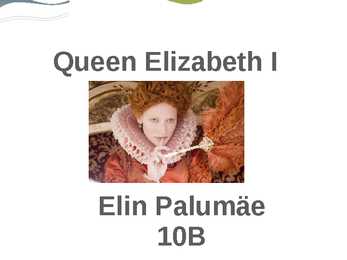
Mother of Elizabeth I Tenure - 28 May 1533 17 May 1536 Coronation 1 June 1533 Anne Boleyn was Queen of England from 1533 to 1536 as the second wife of Henry VIII of England and the 1st Marquess of Pembroke in her own right for herself and her descendants. House - House of Tudor Father - Thomas Boleyn, 1st Earl of Wiltshire Mother - Lady Elizabeth Howard Born c.1501/1507 Blickling Hall/ Hever Castle, England Died 19 May 1536 (aged 29-35)Tower of London Religion - Anglican, formerly Roman Catholic King of England Henry VIII Reign - 21 April 1509 28 January House - House of Tudor 1547(37 years) Father -Henry VII of England Coronation - 24 June 1509 (aged 17) Issue Mary I of England Predecessor - Henry VII Henry FitzRoy Successor - Edward VI Elizabeth I of England Spouse - Catherine of Aragon Edward VI of England Anne Boleyn Mother - Elizabeth of York
1. Ancient Britain: the Celtic tribes. 2000 years ago there was an Iron Age Celtic culture throughout the Br Isles. It seems that the Celts, who had been arriving from Europe from the 8th cent BC onward, intermingled with the peoples who were already there. The Celts were extremely talented people, creative and artistic. More than 1 Celtic tribe invaded Br. The descendants of ancient Celts live in Wales, Scotland, Cornwall and Ireland. They lived in primitive society. Druids priests, more powerful than chiefs. Acted like prophets. 2. Stonehenge From prehistoric period. Was built on Salisbury plain between 2500 and 1500 bc. One of the most famous and mysterious archaeological sites in the world
1. The Queen’s official title. Elizabeth the Second, by the Grace of God, of the United Kingdom of Great Britain and Northern Ireland and of Her other Realms and Territories Queen, Head of the Commonwealth, Defender of the Faith. 2. The Queen’s working day. Starts after breakfast. Reads the newspapers which are prepared by the Press Secretary, and a report on the previous day’s proceedings in the Parliament and the letters she receives. Also phone calls. Once a month she attends the Privy Council in order to give Royal Assent to various items of government legislation.
Main article: Marilyn Monroe filmography Once in New York Monroe set up her own production company, Marilyn Monroe Productions, with fashion photographer Milton H. Greene. As The Seven Year Itch raced to the top of the box office in the summer of 1955, and with Fox starlets Jayne Mansfield and Sheree North failing to click with audiences, Zanuck admitted defeat and Monroe returned to Hollywood. A new contract was drawn up, giving Monroe approval of the director as well as the option to act in other studios' projects. The first film to be made under the contract and production company was Bus Stop, directed by Joshua Logan. She played Chérie,[29] a saloon bar singer who falls in love with a cowboy. Monroe deliberately appeared badly made-up and unglamorous. She was nominated for a Golden Globe for the performance and was praised by critics.[15] Bosley Crowther of The New York Times proclaimed: "Hold on to your chairs, everybody, and get set for a rattling surprise
non-related ones. The most common words (`good', `to be', `to go', `much', "people", etc). General principle: the more frequently used a word, the more one can "afford" it to be irregular/non-iconic. Suppletion perhaps the most drastic form of irregularity/iconicity), covers mainly the most frequent words Metathesis-Two sounds, at least one of which is a consonant, change places inside a word. When one of the sounds is a vowel,the other is usually /r/. Fyrst/first/frist a typical case of metathesis.Another case in the passage: beorht/briht.Metathesis present in many languages, a universal phenomenon. For Instance, Proto-Indo-European had tworoots *spek- and the metathetical *skep-, both with the basic meaning of "look, observe, examine". The first is behind Latin words that produced such English loans as spectacle, spectator, expect, inspect, perspective, etc. The second is behind the Greek word for "examine" with the
than an actual decision maker these days. 5. What is the British Parliament made up of? What are their roles? It's made of 3 parts: the monarch, the House of Commons and the House of Lords. The House of Lords can ask the House of Commons to rewrite parts of the bill. The bill needs the Queen's signature to pass. The House of Commons writes the bills. 6. What do you know about the Wars of the Roses? It was a war between two families, one had a red rose as their symbol and the other had a white rose as their symbol. The war was about who should be on the throne, the red rose won and thereafter the red rose has been the symbol of England. 7. How was Protestantism established in England? When and by who? It was established by Henry VIII because he wanted to divorce his first wife. Up until then England was Catholic and divorcing was not allowed for him. He really wanted a new wife, so he declared that England was no longer a part of the Catholic Church
The Iberians brought their metal-working skills and the first real civilization to Britain in the third millennium B.C and were overrun by various Celtic invasions that began in the 8th century. The Celts introduced their tribal organization and an early form of agriculture before they were forced westward by the Roman invasion. Forms of Celtic language are still spoken in Britain. Romans (with Julius Caesar in the head of them) first tried to occupy Britain in 55 B.C., but there was a rebellion in Gaul so they had to leave to fight against it. Next time they came in 43 A.D. and their leader was Emperor Claudius. Romans brought a lot with them. Their brought paved roads, the sites of important cities, the seeds of Christianity, the Roman law, Roman baths, language and advanced civilization. They also built Hadrian's Wall in 122 A.D. Romans occupied Britain for four centuries. The Roman way of life all vanished after the invasions from Northern Europe by the
Homereading 4 Changing world Religions Islam Islam is a monotheistic Abrahamic religion originating with the teachings of Muhammad, a 7th century Arab religious and political figure. The word Islam means "submission", or the total surrender of oneself to God An adherent of Islam is known as a Muslim, meaning "one who submits (to God)". There are between 1.1 billion and 1.8 billion Muslims, making Islam the secondlargest religion in the world, after Christianity. Muslims believe that God revealed the Qur'an to Muhammad, God's final prophet, and regard the Qur'an and the Sunnah (words and deeds of Muhammad) as the fundamental sources of Islam.They do not regard Muhammad as the founder of a new religion, but as the restorer of the original monotheistic faith of Abraham, Moses, Jesus, and other prophets.
American literature The literary history of this nation when the first humanbeing living in what has since become the U.S used language creatively. · Mid to late 18 century put down · Words are powerful, magical · Words must be remembered · Native Americans stories creation of the world · Attidude thought their land/language · Similar stories Dates and names · America was discovered in 1492 by Columbus · 1497 John Cabot went to Canada · 1579 San Fransisco/St. Fransis · 1607 Jamestown collony/John Smith · 1620 a boat called MayFlower
Ameerika Kirjandus 30.01.13 Naturalism · France, Emile Zola · Put down his theory in 1879: Le Roman Experimental, attempt to explain the development of human society throuch biological laws · Outlook is deterministic, pessimistic, fatalistic (fate or biology) · Man as an animal-clever than other beasts, still explainable within the framework · Man is not a free agent, is govern by something · Unable to determine his own faith · Hereditary · Naturalists tried to apply in fiction the processes of natural sciences · Writers task is to record facts, systems of behaviour, living conditions, never revealing any natural unbiased (completely natural) · Point of view: amoral-outside the category of morality, neither good or bad
British Literature in the 20th-21st Century REVISION QUESTIONS 1. The Contradictory, diverse, chaotic 20th century. New developments in science and philosophy. The essence and influence of Freudian theory. Contradictory, diverse, chaotic 20th c- simultaneous rejection and invocation of the past. While modernists apotheosized the creative geniuses of the past, they also rejected old poetic forms. Challenge old and established beliefs and more and more people had access to books and education more people went to universities. profound change in morals:
The moon is down Author: John Steinbeck.(February 27, 1902--December 20, 1968) John Steinbeck III was one of the best-known and most widely read American writers of the 20th century. He wrote the Pulitzer Prize-winning novel The Grapes of Wrath, published in 1939 and the novella Of Mice and Men, published in 1937. In all, he wrote twenty-five books, including sixteen novels, six non-fiction books and several collections of short stories. In 1962 Steinbeck received the Nobel Prize for Literature. In his subsequent novels, Steinbeck found a more authentic voice by drawing upon direct memories of his life in California. Later he used real historical conditions and events in the first half of 20th century America, which he had experienced first-hand as a reporter. Steinbeck often populated his stories with struggling characters; his works examined the lives of the working class
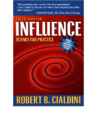
do it, enabled us to make significant changes. His work has enabled us to gain significant competitive differentiation and advantage" -LAURENCE HOF, Vice President, Relationship Consulting, Advanta Corporation "This will help executives make better decisions and use their influence wisely ... Robert Cialdini has had a greater impact on my thinking on this topic than any other scientist." -CHARLES T. MUNGER, Vice Chairman, Berkshire Hathaway, Inc. If you're wondering why of Latin America, the Far East, and Central Europe. you should buy this new edition of Influence: o More neuroscience evidence of how the influence process works is inte-
1. The Jacobean masque Elizabethan one nation culture, now cultural polarisation between the new courtly culture and the rest of the country. Court in cultural isolation. Ben Jonson. King and courtiers were close to universally recognised ideal types (conflict with the reality). Mysticism. Emergence of perspective view, stage machinery, artificial light, revolution. The stage cast the monarch in the focal point (the lines of perspective of the stage met there. Inigo Jones. Masque an educative vehicle, towards classical antiquity and architecture. Tide towards absolute monarchy. Masque – linked poetry and moral philosophy into art. Music, dance, poetry, lavish illusionistic scenic display to express the doctrines of divine kingship. Great impact. Like gods come down to earth. 2. The Caroline masque Charles decided on subject matter, and acted and danced in masques. Now the regal divinity even more obvious. Ben Jonson
History exam *Stonehenge - is a monument located in England. It is one of the most famous prehistoric sites in the world and is composed of earthworks surrounding a circular setting of large standing stones. The surrounding circular, earth bank and ditch, have been dated to about 3100 BC. Stonehenge was produced by a culture with no written language. Many aspects of Stonehenge remain subject to debate. There is little or no direct evidence for the construction techniques used by the Stonehenge builders. *The Celts in Britain and their legacy The Cets lived in Britain in The Iron Age. They were warring tribes who were battleful amongst themselves as well as inter-tribal war. They were not centrally governed. The Celts brought iron working, iron ploughs and metal swords, horses, wheels and chariots - all these things gave them an instant superiority over the native tribes
The making of a new nation. The Enlightenment in America. The emergence of the notion of the American Dream. The great Enlighteners: Crèvecoeur, Jefferson, Paine, Franklin. The American Enlightenment is the intellectual thriving period in the United States in the midtolate 18th century (17151789), especially as it relates to American Revolution on the one hand and the European Enlightenment on the other. Influenced by the scientific revolution of the 17th century and the humanist period during the Renaissance, the Enlightenment took scientific reasoning and applied it to human nature, society, and religion. American Enlightenment a gradual but powerful awakening that established the ideals of democracy, liberty, and religious tolerance in the people of America.
of scale or pace or pattern that it introduces into human affairs. The railway did not introduce movement or transportation or wheel or road into human society, but it accelerated and enlarged the scale of previous human functions, creating totally new kinds of cities and new kinds of work and leisure. This happened whether the railway functioned in a tropical or a northern environment, and is quite independent of the freight or content of the railway medium. The airplane, on the other hand, by accelerating the rate of transportation, tends to dissolve the railway form of city, politics, and association, quite independently of what the airplane is used for. Let us return to the electric light. Whether the light is being used for brain surgery or night baseball is a matter of indifference. It could be argued that these activities are in some way the "content" of the electric light, since they could not exist without the electric light. This fact
 annaabi.ee