Leidsid 33 sarnast õppematerjali, mis on seotud failiga "Rudyard Kipling ". Need materjalid aitavad sul teemat sügavamalt mõista.
kipling, year, british, other, here, rudyard, stories, years, first, work, lama, came, before, late, later, sister, them, live, there, month, during, novel, wood, come, land, able, poet, jungle, game, alice, lockwood, indian, became, until, early, lahore, back, hill, move, plain, travel, south, return, even, child, english, father, bombay, death, foundJoseph Rudyard Kipling was a British author and poet. He was born on 30 December 1865 in Bombay, in India which was part of the British Empire then. he is best known for his works of fiction The Jungle Book (1894) (a collection of stories which includes Rikki-Tikki-Tavi), Kim (1901) (a tale of adventure), many short stories, including The Man Who Would Be King (1888); and his poems, including Mandalay (1890), Gunga Din (1890), and If-- (1910).He is regarded as a major "innovator in the art of the short story"; his children's books are enduring classics of children's literature; and his best works speak to a versatile and luminous narrative gift. Kipling was one of the most popular writers in English, in both prose and verse, in the late 19th and early 20th centuries
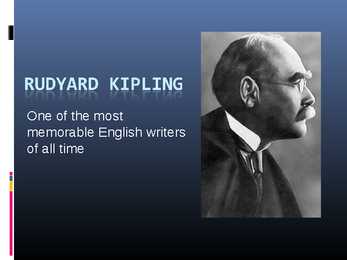
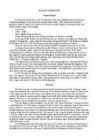
One of the most memorable English writers of all time Family of Joseph Rudyard Kipling Mother Alice MacDonald Kipling Father John Lockwood Kipling Sister Alice Kipling Fleming Early Life 30 December 1865 in Bombay, in British India Captain and Mrs. Holloway - Lorne Lodge Paradise at Aunt Georgie's and her husband 1878 - admitted to the United Services College Bombay in 1865 Travels & First writings 1883 - visited Simla thirty-nine stories appeared in the Gazette included in Plain Tales from the Hills Kipling's first prose collection 1887 Allahabad in the United Provinces published six collections of short stories 1889 sold the rights to his six volumes of stories Life London published a novel - The Light that Failed and on the 18 January 1892 Carrie Balestier (29) and Rudyard Kipling (26) were married in London United States didn't find a country that lived up to his expectations
well as a vigorous social campaigner. Considered one of the English language's greatest writers, he was acclaimed for his rich storytelling and memorable characters, and achieved massive worldwide popularity in his lifetime. Charles Dickens was born in Landport, Portsmouth in Hampshire, the second of eight children to John Dickens n 7 February 1812. The 12-year-old Dickens began working ten hour days in a Warren's boot-blacking factory. In May 1827, Dickens began work in the office of Ellis and Blackmore as a law clerk. At the age of seventeen, he became a court stenographer and, in 1830, met his first love, Maria Beadnell. Maria's parents disapproved of the courtship and effectively ended the relationship when they sent her to school in Paris. In 1834, Dickens became a political journalist, reporting on parliamentary debate and traveling across Britain by stagecoach to cover election campaigns for the Morning Chronice.
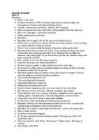
* Was born in India, in Bombay * Father - an artist , a professor at Bobay art school * In 1871 - sent to England to school * He and his sister lived with family friends, often beaten * Found solace in books, literature, poetry * Suffered from a bad eyesight * Collection of poems "Schoolboy lyrics", at the age of 16 * 1881- after finishing school returned to India * 1882- 1889- a journalist in India and the USA * Collections stories, essays, articles . Department ditties (poetry) ; Barrack room ballads (poetry); The seven seas , The five nations * 1892- got married, travelled in America, Canada, Japan * 1896- came back to England and settled down in Sussex * 1894 - The Jungle Book * 1895 - The second jungle book * 1898 - visited Africa * Boer war- tried to raise money for the troops * Saw the miseries of war * 1901- Kim was published
Conan Doyle was sent to the Roman Catholic Jesuit preparatory school St. Mary's Hall, Stonyhurst, at the age of eight. He then went on to Stonyhurst College, but by the time he left the school in 1875, he had rejected Christianity to become an agnostic. From 1876 to 1881 he studied medicine at the University of Edinburgh, including a period working in the town of Aston (now a district of Birmingham). While studying, he also began writing short stories; his first published story appeared in Chambers's Edinburgh Journal before he was 20. Following his term at university, he served as a ship's doctor on a voyage to the West African coast. He completed his doctorate on the subject of tabes dorsalis in 1885. In 1882, he joined former classmate George Budd as his partner at a medical practice in Plymouth, but their relationship proved difficult, and Conan Doyle soon left to set up an independent practice
William Blake · William Blake (17571827) was an English poet, philosopher and artist.He was one of the most extraordinary personalities to emerge during the period of Romanticism. He believed that spiritual reality lies hidden behind the visible world of the senses and he attempted to create a symbolic language to represent his spiritual visions. He began printing his own illustrated poems in colour in 1787. The first example was Songs of innocence(1789). Towards the end of his life, he joined a circle of younger artists who appreciated his remarkable powers. It was not until the late 19th century that Blake's work achieved general attention. He was extremely prolific and his prints, illustrations, and paintings can be found in several important public collections in England and the USA. Agatha Christie · Agatha Christie (1890-1976)was an English detective story
The making of a new nation. The Enlightenment in America. The emergence of the notion of the American Dream. The great Enlighteners: Crèvecoeur, Jefferson, Paine, Franklin. The American Enlightenment is the intellectual thriving period in the United States in the midtolate 18th century (17151789), especially as it relates to American Revolution on the one hand and the European Enlightenment on the other. Influenced by the scientific revolution of the 17th century and the humanist period during the Renaissance, the Enlightenment took scientific reasoning and applied it to human nature, society, and religion. American Enlightenment a gradual but powerful awakening that established the ideals of democracy, liberty, and religious tolerance in the people of America.
American literature The literary history of this nation when the first humanbeing living in what has since become the U.S used language creatively. · Mid to late 18 century put down · Words are powerful, magical · Words must be remembered · Native Americans stories creation of the world · Attidude thought their land/language · Similar stories Dates and names · America was discovered in 1492 by Columbus · 1497 John Cabot went to Canada · 1579 San Fransisco/St. Fransis · 1607 Jamestown collony/John Smith · 1620 a boat called MayFlower · 1630 Boston was established · 1636 Harvard University · 1773 Boston Teaparty · 1775 War of Independence · 1776 4 July Declaration of Independence
............................................................................................ Orson Scott Card He was born on the 24th of August, 1951 in Richland, Washington. Card's writing career began primarily as a poet, studying at Brigham Young University. During his studies as a theatre major, he began "doctoring" scripts, adapting fiction for theatre production, and finally writing his own one-act and full-length plays. Later he has worked both as a freelancer and a contracted writer. He first wrote the short story "Ender's Game" while working at the BYU press. Ender's Game and its sequel Speaker for the Dead were both awarded the Hugo Award and the Nebula Award, making Card the only author (as of 2008) to win both of science fiction's top prizes in consecutive years. Card continued the series with seven books, which divide into "Shadow" and "Speaker" series. He has also announced his plan to write two more novels: Shadows in
And the paintings and carvings are increaslibly falling victim to vandalism: they have been painted over, spoilt with knives, even used for target practice. The American Rock Art Research Association protects rock-art sites. 2) THE FAVOURITE SPORT IN BRITAIN The most popular sport is probably football. Two kinds of football is played in Great Britain. One of them, which is called association football, is played all over Europe. The other kind: rugby football is also very popular in New Zealand, France, and some other European countries. English boys play it at school, and in public parks. When they grow up, they play as members of important amateur teams or as a professional in teams competing in football ,,leagues". Professional football is as much a business as a sport. Rugby football was first played in 1823. In rugby every player is allowed to carry the ball. The ball is oval, not round. Each team contains 15 players
nobility · What were the reasons behind upward mobility? New public schools for poorer people; S. Smile "Self Help"; questioning the social status of the nobility · Reasons behind the rise of literacy 1850 Libraries Act, the Sixpenny novels (people could by cheap books- T. Malory "Morte d'Arthur", W. Scott historical novels- most popular was "Ivanhoe"; new schools for middle class- public schools; not so rich people got some education; the Penny Magazine · Key words of the British national identity: 1852- the Great Exhibition; Gothic revival Architectures; the Battle of the Styles; The Tower of London, Hampton Court were opened to public · Why were the Brits obsessed with the middle ages? People were afraid of new things, they didn't feel comfortable in new and fast-moving world; people wanted security and they found it in old things; Middle ages became popular, "Morte d'Arthur" by Thomas Malory 2) Ruskin and the medieval revival
tribes. The Celts built a number of hill forts throughout the region. The society was divided into warrior aristocracy, agricultural commons and the priests, the druids. *Caesar in Britain - Britain was very rich in minerals but that wasn't the main reason Caesar wanted to defeat it. He could clearly see that Britain was a threat to his latest and greatest conquest - France. He invaded Britain twice, in 55 and 54 BC. The first invasion was unsuccessful - it gained a beachhead on the coast of Kent but achieved little else. The second was more successful, the Celts asked for truce. However it wasn't a victory he had imagined and Julius Caesar never returned to Britain after that. The island was left undisturbed for nearly a century. *The Roman occupation of Britain 43-410 and its legacy Britain was conquered by Emperor Claudius, the Roman rule in England lasted up to 410. The Romans left behind a
Ameerika Kirjandus 30.01.13 Naturalism · France, Emile Zola · Put down his theory in 1879: Le Roman Experimental, attempt to explain the development of human society throuch biological laws · Outlook is deterministic, pessimistic, fatalistic (fate or biology) · Man as an animal-clever than other beasts, still explainable within the framework · Man is not a free agent, is govern by something · Unable to determine his own faith · Hereditary · Naturalists tried to apply in fiction the processes of natural sciences · Writers task is to record facts, systems of behaviour, living conditions, never revealing any natural unbiased (completely natural) · Point of view: amoral-outside the category of morality, neither good or bad
ENGLISH LITERATURE Ancient Britain Lived on the British Isles in the 1st millenium. They most probably came from Eastern Europe and belonged to the Celtic race and also spoke Celtic. They were primitive hunters- gatherers, farmers. Some Celtic words are still used in modern English, however they are used mostly in place names. For example: · avon river · cumb valley · ford shallow place in the river Ancient Britons had their own religion and priests or druids and temples.
comparative linguistics, language typology, psycholinguistics, sociolinguistics; applied linguistics including speech and text processing, quantitative linguistics, modern applied linguistics). History of the Department Russian philology was not studied as an independent academic discipline until 1945, yet from the very beginning of the faculty's existence there were courses in Russian studies on offer for students of Slavic studies. In the 1922/1923 academic year, an independent Section of Russian Language and Literature was founded within the School of Slavic Studies. The section was, from its foundation until 1945, headed by Valerij Alexandrovic Pogorielov. In 1945 another member of the post-revolutionary wave of Russian emigrants, Prof. Alexander Vasilievic Isacenko, was appointed Professor in Russian Philology. In 1946 Prof. A. V. Isacenko became the director of the newly established School of Russian, which transformed itself into the
HECHO EN CHICAGO, U.S.A. SIGNET, SIGNET CLASSICS, SIGNETTE, MENTOR AND PLUME BOOKS are published by The New American Library, Inc., 1301 Avenue of the Americas, New York, New York 10019 FIRST PRINTING, FEBRUARY, 1973 PRINTED IN THE UNITED STATES OF AMERICA To my Parents and my Grandmother Contents A Note on the Abridged Version Preface A Few Words 1. One Day of Magic: I 2. One Day of Magic: II 3. The First 3,000 Years 4. The Rise of the West 5. On the Origin of a Species 6. The Era of the Black Chambers 7. The Contribution of the Dilettantes 8. Room 40 9. A War of Intercepts 10. Two Americans 11. Secrecy for Sale 12. Duel in the Ether: I 13. Duel in the Ether: II 14. Censors, Scramblers, and Spies 15. The Scrutable Orientals 16. PYCCKAJI Kranrojioras 17. N.S.A. 18. Heterogeneous Impulses 19. Ciphers in the Past Tense 20. The Anatomy of Cryptology Suggestions for Further Reading Index
The origins of American literature The first Americans were explorers and settlers, adventurers and idealists who crossed the ocean in search of new opportunities or to escape the poverty and intolerance. Their writings were matter-of-fact accounts of life in America, which explained colonisation to Englishmen back in the homeland. An example of this form of writing is John Smith's A True Relation of Virginia, which is widely recognized to be the first example of Am lit. The early years of colonisation produced a mass of utilitarian writings including biographies, accounts of voyages, diaries, sermons, pamphlets. Much of the material addressed the problems of Church and State. There were few examples of fiction, poetry or drama. Anne Bradstreet of Massachusetts published some lyrical poems of high literary quality (1650) and Edward Taylor, who was born in England but lived in Boston, wrote some poetry in the style of John Donne and the metaphysical poets. All 17 th cent
One of the mysteries is how it was built at all with the technology of the time. Another is its purpose. It appears to function as a kind on astronomical clock and we know it was used by the Druids for ceremonies marking the passing of the seasons. It appears in number of novels. These days it is not only the interest of tourists but is also a gathering point of certain minority groups. It is now fenced off to protect it from damage. 3. The Roman conquest Julius Caesar's first raid was in 55 BC but the romans left. Ad 43- the Romans came to stay. The army established Roman rule in the south and SW of the country. The Romans started to introduce their laws to a new province of the Roman Empire and started to build good roads. Officials were appointed (governors, procurators to collect taxes, look after the estates and mines and se that the gold, silver, iron and lead were exported back to Rome). Introduced schools,a new language Latin, large farms (villas), baths.
She died when Douglass was about 7. The identity of Douglass' father is obscure; Douglass originally stated that his father was a white man, perhaps his master, Captain Aaron Anthony, but later said he knew nothing of his father's identity. When Anthony died, Douglass was given to Mrs. Lucretia Auld, wife of Captain Thomas Auld. Mrs. Auld then sent Douglass to Baltimore to serve the Captain's brother, Hugh Auld. Early education When Douglass was 12 years old, Hugh Auld's wife, Sophia, broke the law by teaching him some letters of the alphabet. Thereafter, as detailed in his Narrative of the Life of Frederick Douglass, an American Slave (published in 1845), Douglass succeeded in learning to read from white children in the neighborhood in which he lived, and by observing the writings of the men with whom he worked. When Mr. Auld discovered this, he strongly disapproved, saying that if a slave learns to read, he would become
PRESENTATION PRINCESS DIANA Diana, Princess of Wales was born on the 1st of July in 1961 and died on the 31st of August in 1997. She was a popular member of the British royal family and an international personality of the late 20th century. She was the first wife of Charles, Prince of Wales, whom she married on the 29th of July in 1981. The wedding, which was held at St. Paul's Cathedral, was televised and watched by a global audience of over 750 million people. Diana and Charles had two sons, Princes William and Harry. EARLY LIFE She was born at Park House, Sandringham in Norfolk, England. Her parents were John Spencer and Frances Burke Roche. She had two older sisters Sarah and Jane and a younger brother Charles. When
BOOK REPORT Title & author of the book: 'Anita and Me' by Meera Syal The setting of the book? The story resolves around Meena Syal, the daughter of the only Punjabi family in the Midlands' mining village of Tollington. The novel provides a vision of British childhood in the 1960s, a childhood caught between two cultures, each on the brink of enormous change. Meena is desperate to fit in with the other children in her neighbourhood while forever feeling like an outsider because she is "different". Eventhough the Punjabi family is well respected by the locals, there are still sutations when they have to deal with racism. Plot summary (NB! Use the present tenses) Anita and Me by Meera Syal is the story of a young Punjabi girl growing up in the fictional English village of Tollington in the Midlands in the 1960s. The book follows Meena during her pre-teen years
............ 8 7. SETTING................................................................ 9 8. LANGUAGE AND STYLE................................... 9 9. WHOM DO I RECCOMEND THIS NOVEL........ 9 10. SUMMARY........................................................... 10 11. SOURCES.............................................................. 11 INTRODUCTION The Mysterious Affair at Styles is a detective novel by Agatha Christie. It was written in 1916 and was first published by John Lane in the USA in October 1920 and in the UK by The Bodley Head (John Lane's UK company) on January 21 1921. In her first novel, The Mysterious Affair at Styles(1920), she created the now-famous Belgian detective Hercule Poirot, the most popular sleuth in fiction since Sherlock Holmes. Poirot and Marple have also been portrayed in the many films, radio programmes and stage plays based on her books
icon,[4] pop icon and sex symbol. She is known for her comedic acting roles and screen presence. Monroe became one of the most popular movie stars of the 1950s and early 1960s. During the later stages of her career, she worked towards serious roles and her fame surpassed that of many entertainers of her time.[5] Her death at thirty six was classified as "probable suicide."[6] Many individuals including Jack Clemmons, the first LAPD Police officer to arrive at the death scene[7] believed that she was murdered.[8] She is the only female on the Forbes top earning dead celebrities list.[9] Contents 1 Childhood 1.1 Family and early life 1.2 Foster homes 2 Career 2.1 Early years 2.2 Stardom 2.2.1 Playboy playmate 2.2.2 A-list actress 2.2.3 Marilyn Monroe Productions 2.3 Later years 3 Marriages and relationships 3.1 James Dougherty 3.2 Joe DiMaggio 3.3 Arthur Miller 4 The Kennedys 5 Death and aftermath 5
As the son of a grocer and grandson of a serf, Chekhov was a first-generation intellectual. His modest background and upbringing are crucial to his development as a writer. Chekhov always felt that he missed out on childhood. It was a very hard lifeand it may have contributed to his poor health: he succumbed later on to the"family disease", tuberculosis, which led to his early death at the age of 44.His mother was a quiet, gentle soul who was full of stories of her early life. In later years, Chekhov would say that "we inherited our talent from our father,but mother gave us soul". The other great passion of his formative years was nature, the Russiancountryside. As a port, Taganrog was surrounded on all sides by the landscapes of the Steppe and Chekhov's earliest stories reveal how intensely aware he was of his bond with the Don Steppe. Chekhov had always claimed that medicine was his wife and literature his mistress. Chekhov had
officers or Church of England clergymen. His greatgrandfather, also Charles Dodgson, had risen through the ranks of the church to become a bishop. His grandfather, another Charles, had been an army captain, killed in action in Ireland in 1803, when his two sons were hardly more than babies. His mother's name was Frances Jane Lutwidge. The elder of these sons yet another Charles was Carroll's father. He reverted to the other family business and took holy orders. He went to Rugby School, and thence to Christ Church, Oxford. He was mathematically gifted and won a double first degree, which could have been the prelude to a brilliant academic career. Instead he married his first cousin in 1827 and became a country parson. Young Charles' father was an active and highly conservative clergyman of the
Famous sights and people of England Kaspar Rätsep G1a Famous persons Kings & Queens: Queen Elizabeth I, Queen Victoria, Queen Elizabeth II, Henry VIII Politicians: Winston Churchil, Baroness Margaret Thatcher Writers & Poets: William Shakespeare, Daniel Defoe, Charles Dickens, Rudyard Kipling, Dame Agatha Christie Philosophers &Economists: Francis Bacon, John Locke Inventors & Scientists: Isaac Newton, Charles Darwin Actors,Actresses & Filmmakers: Sir Charlie Chaplin, Dame Elizabethe Taylor, AlfredHitchock, Hugh Grant, Orlando Bloom, KeiraKnightley, Daniel Radcliffe Musicians & Singers: Sir Elton John,Phil Collins,George Michael,Robbie Williams King Henry VIII Born: June 28, 1491 at Greenwich Palace Parents: Henry VII and Elizabeth of Y ork House of Tudor
Stonehenge One of the best known ancient wonders of the world, 5000 years old Megalith monument, built by western mediterraneans during 3000-1600 BC Circular structure, large standing stones, aligned with rising sun at teh solstice Attlers and bones were sued to dig pits that hold the stones The Celts in Britain and their legacy 700-200 BC celts invade Britain Gaels or Goehls(Ireland and Scotland),Cymri(Wales) and Brythons(gave name to Brittany) Fierce fighters,superb horsemen.Most of them farmers, lived in thatched houses
Libraries. We know a lot of things thanks to books, but we do not know exactly when and where they originated, and what should be considered the first book in the world. Ancient document, written on parchment, papyri and vellum can hardly be qualified as books the way we understand the word today. Centuries went before paper replaced parchment and papyri. In the 15 th century Johann Gutenberg invented a mechanical process of duplicating texts, which we today call book printing. The first book was printed between 1444 and 1446, so these years can be considered as the beginning years of book printing. His most
Outstanding figures in British literature Eva Martina Põder 11.b British literature Refers to all literature produced by British authors from the United Kingdom, which includes England, Scotland, Northern Ireland, Wales, the Channel Islands, and Isle of Man Includes early works written in Gaelic, Welsh, and Latin, works in Old, Middle, and Modern English, each of which represents a different period Full of great works British works in Latin Venerable Bede He lived between 673 and 735 AD The greatest of all the AngloSaxon scholars
Britain History Pre-Norman Britain The Iberians brought their metal-working skills and the first real civilization to Britain in the third millennium B.C and were overrun by various Celtic invasions that began in the 8th century. The Celts introduced their tribal organization and an early form of agriculture before they were forced westward by the Roman invasion. Forms of Celtic language are still spoken in Britain. Romans (with Julius Caesar in the head of them) first tried to occupy Britain in 55 B.C., but there was a rebellion in Gaul so they had to leave to fight against it
Read carefully, and you will learn a lot. The inhabitants of Egypt were called mummies. They lived in the Sarah Dessert and traveled by Camelot. The climate of the Sarah is such that the inhabitants have to live elsewhere, so certain areas of the dessert are cul- tivated by irritation. The Egyptians built the Pyramids in the shape of a huge triangular cube. The Pramids are a range of mountains between France and Spain. The Bible is full of interesting caricatures. In the first book of the Bible, Guinesses, Adam and Eve were created from an apple tree. One of their children, Cain, asked "Am I my brother's son?" God asked Abraham to sacrifice Issac on Mount Montezuma. Jacob, son of Issac, stole his brother's birthmark. Jacob was a partiarch who brought up his twelve sons to be partiarchs, but they did not take to it. One of Jacob's sons, Joseph, gave refuse to the Israelites. Pharaoh forced the Hebrew slaves to make bread without straw
The Middle Ages are one of the most turbulent periods in English history. The Middle Ages are so called as the middle period between the decline of the Roman Empire and the Renaissance. The Middle Ages started in 1066. with the Battle of Hastings and the Norman Conquest. William the Conqueror took all the lands from the Saxon English and gave these to French nobles. Normans were known as great builders. This is assured by the fact that many great castles and other buildings, including the Tower of London, were built during the Norman Conquest. In 1086. Domesday Book was compiled. It is a detailed survey of England ordered by William the Conqueror. The reign of King William Rufus who was the son of William started in 1087 and lasted until 1100. Next king was Henry I who was the brother of William Rufus. His reign was from 1100-1135. In 1135 Henry I nephew Stephen got to the throne of England and reigned the country for 19 years
Taken at the Flood "There is a Tide" redirects here. "There is a Tide" is also the name of a short story by Larry Niven, set in the Known Space universe. Taken at the Flood is a work of detective fiction by British writer Agatha Christie, first published in the US by Dodd, Mead and Company in March 1948 under the title of There is a Tide...[1] and in the UK by the Collins Crime Club in the November of the same year under Christie's original title.[2] The US edition retailed at $2.50[1] and the UK edition at eight shillings and sixpence (8/6).[2] It features her famous Belgian detective, Hercule Poirot, and is set in 1946. 1 Plot summary In a flashback from late Spring to early Spring, Lynn Marchmont, newly demobilised from the Women's Royal Naval Service, finds difficulty settling into the village life of Warmsley Vale. She is engaged to Rowley, one of several members of the Cloade family living nearby
 annaabi.ee