Leidsid 33 sarnast õppematerjali, mis on seotud failiga "Robert Burn". Need materjalid aitavad sul teemat sügavamalt mõista.
burn, burns, scotland, poems, poet, january, seven, children, came, birthday, song, there, eldestather, value, good, best, could, sent, reading, english, grammar, literature, latinifteen, 1786, success, complete, became, known, popular, edinburgh, edition, poverty, thirty, 25th, having, night, greatest, wrote, songs, working, countryside, bern, singTOPIC 8 The greatest poet of Scotland Robert Burns is loved by all Scotsmen as their greatest poet. The future poet was fortunate in his father who was understanding, friendly and fearless man. So it was probably from him that the poet inherited his great love and undrestanding of people. From his mother he, too, learned something that was to be value to him. His mother often sang the old songs and ballads of the countryside. Although William Burns, Robert´s father, was a poor peasant, he was man who valued knowledge. His greatest wish was to give his children the best education in his power. It was from him where Robert received his love of books. When Robert was six he and his brother Gilbert went to school, but only after a few months the teacher left and the school was closed. Their father persuaded two or three neighburs to join him in engaging another teacher. The new teacher was called John Murdoch. Although he was only eighteen,
Robert Burns Robert Burns was born in a small cottage in Alloway on 25 January 1759. By the time of his death, aged 37, on 21 July 1796, he had become Scotland's bestloved poet and, perhaps more importantly, the symbol of the regeneration of a nation. At Mount Oliphant, when he was 15, Robert wrote his first song, Handsome Nell, for his partner in the fields at harvest time, Nellie Kirkpatrick. Robert had to work as a flax dresser in Irvine to earn money for family but his real passion was poetry. At the age of 27 he had 3 children, two of them were twins. In July of 1786, Burns had succeeded in publishing the first book of his poems, the
Scotland Scotland · Scotland is a country in the north of Great Britain. It is apart of the United Kingdom. Scotland is divided into three natural regions: the Southern Uplands, the Central Lowlands and the Highlands and islands. A lot of places in Scotland are a natural paradise, still untouched by man. Glasgow · Glasgow is the largest city in Scotland and the third largest in the United Kingdom. Before 1750 Glasgow was a small town. It had a cathedral and a university but it was not a rich town. After 1707 Scottish ships could go to the English colonies in America. Ships brought tobacco to Glasgow and took back Scottish goods. In 1776, the American colonies became independent and the tobacco trade stopped. Heavy industry began to develop. It used coal and iron from the Clyde valley.
The oldest game of football in England is probably the football match which takes place at Ashburn on Shrove Tuesday every year. The game starts in the centre of the town, and the distance between two goals is two miles. The only rule is not to use motorcycles, cars and lorries in the game. In 1958 one team buried the ball. The other team didn't know and ran after them. Later first team took the ball and won. 3) JAMES WATT He was born in the small port of Greenock on the river Clyde in Scotland in 1736. His father was a mathematical-instrument maker and also kept a shop to supply ships with goods for their voyages. James was a delicate boy and often suffered from headaches. That is why he could not go to school at the age when other children did. His mother taught him to read and his father taught him writing and arithmetic. He had very good memory and a natural love of work. He liked mathematics and was also fond of designing and making things. James was an observant and thoughtful
Outstanding figures in British literature Eva Martina Põder 11.b British literature Refers to all literature produced by British authors from the United Kingdom, which includes England, Scotland, Northern Ireland, Wales, the Channel Islands, and Isle of Man Includes early works written in Gaelic, Welsh, and Latin, works in Old, Middle, and Modern English, each of which represents a different period Full of great works British works in Latin Venerable Bede He lived between 673 and 735 AD The greatest of all the AngloSaxon scholars He's the earliest English historian, whose work has shed light on a period of English history that would have otherwise been unknown
J.F.Cooper(1789-1851): he was born in Burlington, New Jersey in 1789. When he expelled from Yale bacause of prank, he joined the navy as a midshipman. In 1810 he took a furlough and never returned to active duty. He married with Susan De Lancy and got 5 children. They lived Europe, but returned to America because he was unpopular in Europe. In 1920 je published his first fiction "Precaution", in 1821 the second one "The Spy". His third book "The Pioneers" was the first of five novels. He died at Cooperstown in 1851. He was immensely popular writer and he considered to be the first major American novelist. R.L.Stevenson(1850-1894): he was born in Edinburgh, Scotland in 1850. He was a sick little boy who spent much of his time in bed. He was very
SCOTLAND 1. What is the capital of Scotland? The capital of Scotland is Edinburgh. 2. What is the population of Scotland? 2008 estimate is 5, 168, 500. 3. Why isn't S an independent country? Because it's part of the United Kingdom. 4. Did the Romans conquer Scotland? No, the Romans never conquered Scotland. 5. Why did they build Hadrian's wall? They built it to protect thei Empire south of the Scottish border. 6. When were S and England united? Why? Because there were many wars between them and in 1603 the Scottish kind James VI, became King of England and a century later they were united because of that. 7. Who's Robert Burns?' He's the national poet of Scotland. 8. When and how do Scottish celebrate Burns Night? (What do they do on that day?)
Scotland Scotland lies in the Atlantic Ocean. It's the northern part of Great Britain. The biggest cities of Scotland are Glasgow, Aberdeen and Edinburgh. Glasgow is the biggest of the cities. It was famous as a big industrial centre. Today it's famous for many theatres and art galleries. Scotland is known for its traditions, whisky, music and special food, which all are great attractions for tourists. Scotland's landscape is very attractive. There are wild mountains, heather moors and deep lakes called lochs in the northern part of Scotland. Some people believe that there is a big strange monster in Loch Ness. It's called the Loch Ness monster. Some people say that they have seen it. Tourists come there to see the monster every year but the monster doesn't show itself
Scotland Scotland is the northern part of Great Britain. It consist of the Lowlands, the Highlands and the islands. The landscape of Scotland is spectacular. There are wild mountains, heather moors and deep lochs. People belive that there is a strange, huge monster one of the lochs in the Highland. Some people say that they have seen it. Few people live in the north of Scotland nowadays. Most of people live in the lowlands. Farmers raise sheep and you can see hundreds or even thousands of them on the hillsides. Glasgow, Aberdeen and Edinburg are the biggest cities in Scotland. Aberdeen is an old university town. Glasgow is the biggest city. It is a famous industrial centre. There are many theatres and art galleries too. All true Scots belong to the clan. Each clan has its own tartan. This is a traditional woollen cloth that has squares and stripes
Charles Dickens Charles John Huffam Dickens was the foremost English novelist of the Victorian era, as well as a vigorous social campaigner. Considered one of the English language's greatest writers, he was acclaimed for his rich storytelling and memorable characters, and achieved massive worldwide popularity in his lifetime. Charles Dickens was born in Landport, Portsmouth in Hampshire, the second of eight children to John Dickens n 7 February 1812. The 12-year-old Dickens began working ten hour days in a Warren's boot-blacking factory. In May 1827, Dickens began work in the office of Ellis and Blackmore as a law clerk. At the age of seventeen, he became a court stenographer and, in 1830, met his first love, Maria Beadnell. Maria's parents disapproved of the courtship and effectively ended the relationship when they sent her to school in Paris.
1. Ancient Britain: the Celtic tribes. 2000 years ago there was an Iron Age Celtic culture throughout the Br Isles. It seems that the Celts, who had been arriving from Europe from the 8th cent BC onward, intermingled with the peoples who were already there. The Celts were extremely talented people, creative and artistic. More than 1 Celtic tribe invaded Br. The descendants of ancient Celts live in Wales, Scotland, Cornwall and Ireland. They lived in primitive society. Druids priests, more powerful than chiefs. Acted like prophets. 2. Stonehenge From prehistoric period. Was built on Salisbury plain between 2500 and 1500 bc. One of the most famous and mysterious archaeological sites in the world. One of the mysteries is how it was built at all with the technology of the time. Another is its purpose. It appears to function as a kind on
Mayo School. COUPLE named their son after the place they had first met Rudyard Lake. Alice Kipling Fleming - Sister of British author Rudyard Kipling who became a well-known psychic, producing automatic writing under the name "Mrs. Holland." Born June 11, 1868, Alice Kipling was privately educated. She went to India at age 16 and married British army officer John Fleming. While in India she wrote a number of poems, and in 1893 initially experimented with automatic writing. After a long illness she returned to England in 1902 and in the following year read the classic study Human Personality and Its Survival of Bodily Death, by F. W. H. Myers. As a result she contacted the secretary of the Society for Psychical Research (SPR), London, regarding her own automatic writing. She was one of the seven principal mediums involved in the famous cross-correspondences cases. Fleming continued
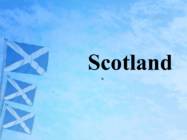
Population: 5, 055, 000 National emblem: the thistle Capital: Edinburgh National flower: the bluebell Islands: About 790 National instrument: bagpipes Lakes: the best- known is Loch Ness, famous for National dish: haggis Nessie, its mythical monster Scotland is also famous for: whisky, kilts and sheep · One of the four constituent nations which form the UK · They have their own money, system of law, history, stamps, deep- rooted customs, traditions and ancient language- Gaelic · Most people speak the Scottish dialect becoming endangered language · Weather unpredictable · Breathtaking scenery Scottish Industries · Traditional -coal mining, steel production, shipbuilding
The Renaissance In the history the Middle Ages were followed by the Renassance period. During this period a new class called bourgeoeisie came into being. This is the period when monarchies based on nationality were estabilished. The Renaessance started in Italy In the 14th century. Then it spread all over Europe, reached England in 16th century. The struggle for power culminated in a war called The War of Roses. It was a civil war between two dynasties, families. They had different emblems on one side the Yorks (white rose) other Lancasters (red). They couldn't decide who gets the throne. War ended 1485
An example of this form of writing is John Smith's A True Relation of Virginia, which is widely recognized to be the first example of Am lit. The early years of colonisation produced a mass of utilitarian writings including biographies, accounts of voyages, diaries, sermons, pamphlets. Much of the material addressed the problems of Church and State. There were few examples of fiction, poetry or drama. Anne Bradstreet of Massachusetts published some lyrical poems of high literary quality (1650) and Edward Taylor, who was born in England but lived in Boston, wrote some poetry in the style of John Donne and the metaphysical poets. All 17 th cent Am writings were, both in content and form, similar to English lit of the same period. The great literary figures of the 18th cent were Benjamin Franklin (1706-1790), Thomas Paine (1737-1809) and Thomas Jefferson (1743-1826). The common sense and witty aphorisms of Franklin's popular Poor Richard's
Lewis Carroll 27 January 1832 14 January 1898 Charles L. Dodgson Charles Lutwidge Dodgson (27 January 1832 14 January 1898), better known by the pseudonym Lewis Carroll, was an English author, mathematician, logician, Anglican deacon and photographer. His most famous writings are Alice's Adventures in Wonderland and its sequel Through the LookingGlass, as well as the poems "The Hunting of the Snark" and "Jabberwocky", all examples of the genre of literary nonsense. He is noted for his facility at word play, logic, and fantasy, and there are societies dedicated to the enjoyment and promotion of his works and the investigation of his life in many parts of the world, including the United Kingdom, Japan, the United States, and New Zealand. Family
Wa l t e r Scott Walter Scott Scottish novelist and poet One of the greatest historical 1771-1832 novelists. Scott wrote twenty-seven historical novels. Early Life o Was born August 15 1771 o Caught polio and survived. o Sent to Sandyknowe , his grandparents farm. o Taught to read and influenced by his aunt Jenny. o Given private tutoring by James Mitchell. o attended grammar school and met James Ballantyne.
worked towards religious, moral and societal reforms. The writings and ideas of John Calvin, a leader in the Reformation, gave rise to Protestantism and were pivotal to the Christian revolt. They contended that The Church of England had become a product of political struggles and man-made doctrines. The Puritans were one branch of dissenters who decided that the Church of England was beyond reform. Escaping persecution from church leadership and the King, they came to America. Of Plymouth Plantation Of Plymouth Plantation is the single most complete authority for the story of the Pilgrims and the early years of the Colony they founded. Written between 1620 and 1647, the journal describes the story of the Pilgrims from 1608, when they settled in the Netherlands, through the 1620 Mayflower voyage, until the year 1647. The book ends with a list, written in 1650, of Mayflower passengers and what happened to them.
they deemed "inalienable." Democracy: The colonies had no say in the formation of the government, and had no representation in the lawmaking process. Consequently, they were attracted to the idea of democracy, where the government is "of the people, by the people, for the people," as Lincoln later expressed in his Gettysburg Address. Religious Tolerance: Much impetus for the ideas of religious tolerance came from the rule of King George II, who was a staunch Catholic and did not allow freedom of religion to Protestants in New England. Voltaire was among the first to denounce Christianity and other organized religions as mere ploys to support monarchy. What emerged was Deism, which was more or less a new religion that considered reason its foundation. In Deism, there is no interference by a deity, and man controls his own destiny.
ENGLISH LITERATURE Ancient Britain Lived on the British Isles in the 1st millenium. They most probably came from Eastern Europe and belonged to the Celtic race and also spoke Celtic. They were primitive hunters- gatherers, farmers. Some Celtic words are still used in modern English, however they are used mostly in place names. For example: · avon river · cumb valley · ford shallow place in the river Ancient Britons had their own religion and priests or druids and temples. In the year 55 BC Britain became a Roman province. Romans were highly developed and
In 1945 another member of the post-revolutionary wave of Russian emigrants, Prof. Alexander Vasilievic Isacenko, was appointed Professor in Russian Philology. In 1946 Prof. A. V. Isacenko became the director of the newly established School of Russian, which transformed itself into the Department of Russian Literature and Modern Language Studies in 1948. Prof. Isacenko was still holding the leading post in 1950 when the Department of Russian Language and Literature came into being. In 1955, when Prof. A. V. Isacenko left Bratislava for Olomouc, the department already had ten full-time teachers. Russian studies continued developing in the second half of the 1950s and in the 1960s when Prof. A. V. Isacenko was replaced first by Assoc. Prof. . urovic (1955-1959) and then by Assoc. Prof. J. Kopanicák (1959-1970). The political turnaround in 1989, of course, also had impact on the evolution of Russian studies as an academic discipline
1. What are the capitals of the 4 constituent countries? England- London; Northen Ireland- Belfast; Scotland- Edinburgh; Wales- Cardiff 2. Order the invaders in correct chronological order: Anglo-Saxons, Normans, Romans, Celts. Romans Anglusaxons , Norman 3. How did the Celts influence Britain? Language. Wars. Engand and Scotland eventually became 1 contry 4. How many people approximately speak English? Approximately 600 million 5. Who (which tribes) gave the base of the English language?Germanic tribes- Anglo-Saxons. 6. Describe Wales.- Wales is a mountainous country on the western side of Great Britain. The national game of Wales is Rugby. Flag- Red dragon on a green and white field. They have their own language Cymraeg ( Welsh) . Anthem- Land Of My Fathers
training. They were trusted to use common sense. By the end of the 12th cent. They had real knowledge & experience of the law which became known as ,,common law", based on custom, comparison, previous cases & decisions. It was unlike in the rest of Europe. In England trial by ,,ordeal" was replaced with trial by jury. The work of juries gradually changed from giving evidence to judging evidence of others. Now the king's laws were in force everywhere. In 1157 he forced Malcolm IV of Scotland to give up border regions to England. In 1171 he went to Ireland, took it under his rule & made his son John, Lord of Ireland. When he got the throne there had been a civil war between his mother Matilda & uncle Stephen. There was also Church who had become too powerful. The Church wanted the kings of Europe to accept its authority over both spiritual & earthy affairs. Conflict between Henry & Church. He chose his trusted adviser, Thomas Becket, to become archbishop in 1162, but he began to
John Donne: passionate feeling and logical argument are mixed, play of intellect, conceits (extended metaphors), wit, huge range of ideas with startling connections between them, analyses love with different moods (cynicism and profound dedication) The First Anniversary. An Anatomy of the World; The Flea; Love’s Alchemy; Elegy XIX To His Mistress Going To Bed; Holy Sonnets (9, X, XIV); Hymn To God My God, in My Sickness. Francis Quarles: emblem poems Canticle George Herbert: courtly urbanity of language, certain neatness and point, his wit „homely” (simple), sometimes queer, conceits in title. The Dawning; The Altar; The Collar; The Pilgrimage Richard Crashaw: paradoxes, sensuous warmth, conceit as isolated ornament rather than integral part of poem’s meaning To the Noblest & best of Ladyes, the Countesse of Denbigh Henry Vaughan: many obvious borrowings, striking opening lines. The World
overseas. British expansion pushed forward at an unprecedented rate a new era of cultural exchange(that altered the British worldview). Representatives: Rudyard Kipling, Richard Francis Burton(The Perfumed Garden, The Arabian Nights, Kama Sutra) · Other themes and genres of Victorian literature and their representatives(children's literature, psychological novel, fantasy). Children's literature before there was no literature for children, the Victorians "invented childhood"(children started to read), stopping child labour + introduction of compulsory education, literature for young peoplegrowth industry, dedicated children's authors, novelist producing works for children Dickens A Child's History of England. Writers_ Lewis Carroll, R.M. Ballantyne, Anna Sewell. Supernatural and fantastic literature a new form of supernatural, mystery and fantastic literature
1) General facts The UK: * the United Kingdom of Great Britain and Northern Ireland was formed in 1801 * it covers 243,610 sq km * everybody from the UK is called British * the capital city is London * is made up of four constituent countries: England, Scotland, Wales and Northern Ireland which in turn are divided into counties * the flag is called the Union Jack which is a combination of the flags of England, Scotland and Northern Ireland * the population is about 60,000,000 people, the population density is 242 people/sq km * its coasts are washed by the Atlantic Ocean, the North Sea, the English Channel, the Celtic Sea, Saint George's Channel, and the Irish Sea. It is linked to France by the Channel Tunnel * the United Kingdom is a constitutional monarchy. The current monarch is Queen Elizabeth II, who is also the Queen and Head of State of fifteen other Commonwealth Realms, such as
Romantic ideal is the organic world. Romanticism: · Returns to nature and belief in the goodness of mankind · Exaltation of the senses and emotion overcome reason and intellect is the time when novels became more important · Imagination is very important, it is a God-like creator (W. Blake: "I know that this world is a World of Imagination and Vision") 3. Romantic image of the poet The poet was a learned man who also knew how to appreciate nature. He was in spiritual marriage between the mind and the external world. Poets believed that emotions were universal and almost inexpressible. They were always looking for smth. new, but also fought against previous literary styles and argued with philosophers from the 18th c and earlier. Romantic poet keeps the image of a nation alive and is: · A visionary · A free spirit whose most important sense was seeing
Partly because of the russian revolution, which had huge impact all over the world. Writers became more critical and more bitter. One zanr that was proletarian literature, pro communist, left wing. The most famous representative was Michael Gold. The most interesting style was modernist combined with realism. The most interesting writer of this period was John Dos Passos 1896-1970. He is linked to the 1930's, the period of fear, unemployment, the rise of facism, market crashing. Came from an interesting background, grandfather was portugese, his mother came from puritan New England. Father was a lawyer and importand figure on wall street. He was born into a well off family and this is a paradox about him. Upper middle class family, yet his political views were very radical, he was extremely well educated. He was hostile against the social order in the usa. The central theme in his writings is the criticism of basic institutions of american society
Scotland ! Scotland (Gaelic: Alba) is a country in northwest Europe that occupies the northern third of the island of Great Britain. It is part of the United Kingdom, and shares a land border to the south with England. It is bounded by the North Sea to the east, the Atlantic Ocean to the north and west, and the North Channel and Irish Sea to the southwest. In addition to the mainland, Scotland consists of over 790 islands including the Northern Isles and the Hebrides. Edinburgh, the country's capital and second largest city, is one of Europe's largest financial centres. It was the hub of the Scottish Enlightenment of the 18th century, which saw Scotland become one of the commercial, intellectual and industrial powerhouses of Europe. Scotland's largest city is Glasgow, which was once one of the
1. Beowulf. The dating of Beowulf is still controversial. The poem is one of the earliest and greatest monuments of the Germanic literatures. The main stories of the poem (the fights of B.) are versions of common folk-tales, but the poet also introduces many incidental stories, some of which belong to the world of ancient Germanic legend. He writes his folk-tales and legends in a web of other events, mainly set in the Baltic Kingdoms. He shows a very rich and leisurely portrayal of this Baltic world, providing many customs like the close relationship between lord and man in the war-band and others. All this encouraged the supposition that the unknown author of the poem was himself a bard of the ancient type
English literature is one of the oldest literatures in Europe; dates back to the 6th century AD. Oral literature, i.e. not written down, spread from person to person. In 449 AD Anglo-‐Saxon tribes invaded England – beginning of the Anglo-‐Saxon period in English literature. The first form of literature was folklore, carried by scops and gleemen, who sang in alliterative verse (a kind of simple poetry). Prose developed much later. The first form of recorded English literature was the epic Beowulf, which was produced sometime near the end of the 7th and beginning �
Spencer 88. . Spenser's belief that poetry should deal with subjects far removed from everyday life and should be written in refined language unlike that which was used by common people became the basic principle for poetry throughout much of the Elizabethan period. CHRISTOPHER MARLOWE 1564-1593, born in Canterbury, was working for the government. Also wrote plays where he was successful. In the end got stabbed to death. SHAKESPEARE (1564-1616) he was an actor, poet, playwright and the best dramatist in writing. 37 plays, he used many sources for his plays including the classical Greek and Latin writings. Shakespeare did not publish his plays, two former actors and friends of him did, after he died. From 1600 to 1608 Shakespeare wrote his great tragedies. These plays have given world theatre unforgettable characters such as Hamlet, King Lear, Othello and Macbeth. The comedies that were written in this period no longer have the bright, optimistic
literature; and his best works speak to a versatile and luminous narrative gift. Kipling was one of the most popular writers in English, in both prose and verse, in the late 19th and early 20th centuries. In 1907, he was awarded the Nobel Prize in Literature, making him the first English language writer to receive the prize. Among other honours, he was sounded out for the British Poet Laureateship and on several occasions for a knighthood, all of which he declined. Later in life Kipling came to be recognized as a "prophet of British imperialism." Many saw prejudice and militarism in his works, and the resulting controversy about him continued for much of the 20th century. Kipling kept writing until the early 1930s, but at a slower pace and with much less success than before. He died of perforated duodenal ulcer on 18 January 1936, two days before George V, at the age of 70. His death had in fact previously been incorrectly announced in a
 annaabi.ee