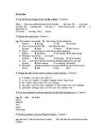
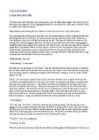
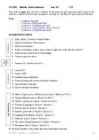
Leidsid 33 sarnast õppematerjali, mis on seotud failiga "Reported speech". Need materjalid aitavad sul teemat sügavamalt mõista.
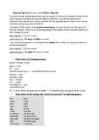
english, speak, spoke, learnt, words, says, everybody, speaks, guests, arrived, today, learning, years, talking, here, before, olevikus, olevikku, enneminevik, hava, asked, teasel, küsisõna, wanted, know, järjekord, lauses, these, those, tomorrow, there, yesterday'How are you?' Very often people expect you to say something positive. Here's a breakdown of how you can express how you really are without complaining too much. · Fine, thanks. / On top of the world, thanks. · OK, thanks · Not so bad, thanks. / Can't complain, thanks. · So so, thanks. / So and so, thanks. · Not so good, actually 1 The English alphabet Spelling Work with your partner and spell out first your name and then some names of places. Write down each letter as you hear it, and then say the word. The English alphabet on the phone: You might find the following alphabet (used by international airlines) useful when trying to spell a word on the telephone. A Alpha O Oscar Ä Alpha-Echo Ö Oscar-Echo
) We'd better ask John to help us. 11. Use the present progressive am playing, is raining etc to talk about things that are continuing at the time of speaking. I'm playing very badly today. (NOT I play very badly today.) Look! It's raining! (NOT Look! It rains!) 12. Use for with a period of time. Use since with the beginning of the period. for the last two hours = since 9 o'clock for three days = since Monday for five years = since I left school I've been learning English for five years. (NOT I've been learning English since three years.) We've been waiting for ages, since eight o'clock. 13. Don't separate the verb from the object. VERB OBJECT She speaks English very well . (NOT She speaks very well English.) Andy likes skiing very much. (NOT Andy likes very much skiing.) 14. Don't use the present perfect have/has seen, have/has gone etc with words that name a finished time. I saw him yesterday. (NOT I have seen him yesterday.)
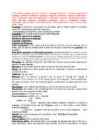
My languages I love different languages. I mean, I really, really love different languages. I also believe and have been told that I pick them up rather easily. That might be true, although I did not pick any Greek up in Greece but that might have been because they spoke so damn fast that I could not tell if it was a word or an entire sentence. The first foreign language I learned was Russian. Considering I was ten when Estonia became a Republic, it makes sense. We began studying Russian in first grade, though it was simplified – "koška" instead of "kot", "medvešonok" instead of "medved", "saichik" etc. Did not make much sense and we mostly played some games in Russian (Tare-tareke etc). Learned as much playing
Tests Superstar 1 Luke Prodromou Test 1 Name____________________ Class_______ Use your English 1 Complete these sentences using the correct form (present simple or present continuous) of the verb in brackets. _ 1 She is in a band and she _________________________________ (record) a CD at the moment. _ 2 She is an actress and often _________________________________ (appear) on television. _ 3 At the moment she _________________________________ (have) a rest because she is tired. _ 4 Mike is a doctor and he _________________________________ (live) in Manchester.
INGLISE KEELE GRAMMATIKA Present Simple Lihtoleviku moodustamine Jaatav vorm Eitav vorm Küsiv vorm I make I do not make Do I make? He/she/it speaks He/she/it does not speak Does he/she/it speak? We/you/they go We/you/they do not go Do we/you/they go? NB! ERANDID! · Verbidele, mis lõpevad ss, h, ch, tch, x või oga, lisatakse ainsuse kolmdandas pöördes es. he does he goes he misses he watches he mixes · Verbid, mis lõpevad yga, mille ees on konsonant, muudavad y iks enne es lisamist. fly he flies carry he carries
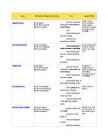
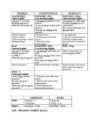
tense Affirmative/Negative/Question Use Signal Words always, every ..., action in the present Simple Present A: He speaks. never, normally, N: He does not speak. taking place once, never or often, seldom, Q: Does he speak? several times sometimes, usually if sentences type I facts (If I talk, ...)
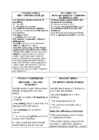
Lihttulevik The future simple Tulevikus toimuv tegevus, mis ei sõltu meie tahtest või mille suhtes teeme otsuse kõnelemise momendil. Next week, tomorrow, in two years time, in 2020. will + 1. pv (will not = won't) Maria will be thirteen next year. Maybe I won't go to the party tomorrow, I'm too tired. Will you help me with my homework tonight? Kestev olevik The present continuous Praegu toimuv tegevus. Now, at the present. am / is / are + -ing We are learning English. Is Mark reading or writing? Where is the teacher standing? 3 Kestev minevik The past continuous Minevikus teatud hetkel parajasti kestnud tegevus. Yesterday at 6, when she came, this time on Tuesday. was / were + -ing When the teacher came in, the pupils were talking. What were you doing when she opened the door? I was not talking, I was reading a book. Kestev tulevik The future conrinuous
Lihttulevik The future simple Tulevikus toimuv tegevus, mis ei sõltu meie tahtest või mille suhtes teeme otsuse kõnelemise momendil. Next week, tomorrow, in two years time, in 2020. will + 1. pv (will not = won't) Maria will be thirteen next year. Maybe I won't go to the party tomorrow, I'm too tired. Will you help me with my homework tonight? Kestev olevik The present continuous Praegu toimuv tegevus. Now, at the present. am / is / are + -ing We are learning English. Is Mark reading or writing? Where is the teacher standing? 3 4 Kestev minevik The past continuous Minevikus teatud hetkel parajasti kestnud tegevus. Yesterday at 6, when she came, this time on Tuesday. was / were + -ing When the teacher came in, the pupils were talking. What were you doing when she opened the door? I was not talking, I was reading a book. Kestev tulevik The future conrinuous
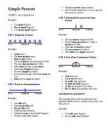
Simple Present · · New York is a small city. It is not important that this fact is untrue. [VERB] + s/es in third person USE 3 Scheduled Events in the Near Examples: Future · You speak English. · Do you speak English? · You do not speak English. USE 1 Repeated Actions Examples: · The train leaves tonight at 6 PM. · The bus does not arrive at 11 AM, it arrives at 11 PM. · When do we board the plane?
Book 1 BASIC ENGLISH BASIC ENGLISH GRAMMAR GRAMMAR BASIC ENGLISH GRAMMAR Book 1 Book 1 Younger students at beginning to intermediate levels will greatly benefit from this step-by-step approach to English grammar basics. This is the ideal supplement to your language arts program whether your students are native
1. Active/Passive Active - the professor teaches the students. Passive - The students are taught by the professor 2. Present Simple [VERB] + s/es in third person. Tegevus on korduv või tavapärane. You speak English. I play tennis. Cats like milk. The train leaves tonight at 6 PM. I am here now. Active= Once a week, Tom cleans the car. Passive= Once a week, the car is cleaned by Tom. 3. Present Continuous [am/is/are + present participle]. Tegevus toimub/ei toimu praegusel hetkel. You are watching TV. You are learning English now. I am studying to become a doctor. I am meeting some friends after work. Active= Right now, Tom is writing the letter. Passive= Right now, the letter is being written by Tom. 4
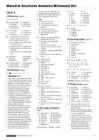
suffer from illnesses 3 saksa päritolu of german descent 4 Ameerikat avastama discover America 5 ametlik keel official language 6 orjusele lõppu tegema put an end to slavery 7 oma traditsioone ja kultuuri säilitama keep your traditions and culture 8 immigrantide arv the number of immigrants 2 Complete the sentences with the names of countries, nationalities, and languages. 1 The capital of Norway is Oslo. 2 Kevin lives in Chicago. He is American. 3 Michail comes from Moscow. He speaks Russian. 4 What nationality are you? I´m Estonian. 5 The descendants of the Africans brought to America are called settlers. 6 Uwe´s grandparents live in Germany. They speak German. 7 Michael comes from Australia. He speaks Australian English. 8 Eve lives in Ireland. She speaks English and Irish. 3 Write the sentences in reported speech. 1 Martin said, "We´re going on a class trip tomorrow." Martin said they were going on a class trip the next day.
5 seen 12 walked school. It's hard to say. 6 were waiting 13 didn't admit 3 stewardess 7 retirement 7 was looking 4 wonderful 2 1 I reckon they are about 17 years old. 3 1 was getting, arrived Challenge! 2 It's a mixed class of girls and boys. 2 was preparing, cut Students' own answers 3 It's difficult to tell what kind of 3 discovered, were building 1E Past perfect simple and lesson their in.
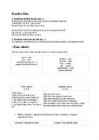
http:// THE PLURAL www.english-4u.de/plural_ex6. htm Singular + s parrot – parrots apple – apples girl – girls Words ending with y if a consonant is written before. ----> ies lolly – lollies story – stories strawberry – strawberries but: boy – boys toy - toys bay - bays Words ending with ch, x, s, sh, o ----> es
Reported speech is often also called indirect speech. When we use reported speech, we are usually talking about the past (because obviously the person who spoke originally spoke in the past). The verbs therefore usually have to be in the past too. For example: "I'm going to the cinema". He said he was going to the cinema. Basic tense chart The tenses generally move backwards in this way (the tense on the left changes to the tense on the right): present simple past simple I'm a teacher. He said he was a teacher past continuous.
1D Sporting origins page 67 2 She recognised him at once. 2 Phobias can be genetically 3 He's working at his father's shop inherited. 1 1 staunchly / resolutely for the time being. 3 When it comes to politics, 2 By and large 4 They'll be here any moment now. Edward and his dad have a lot in 3 swiftly 5 Everybody makes mistakes once common. 4 loosely in a while. 4 Luke is the spitting image of Matt 5 categorically 6 My brother was still a baby at the Damon. 6 widely time. 5 Personality-wise, I take after my 7 resolutely / staunchly mum
Reported Speech (in other words Indirect Speech) If we report what another person has said, we usually do not use the speaker's exact words (direct speech), but reported (indirect) speech. Therefore, you need to learn how to transform direct speech into reported speech. We use reported speech when we are saying what other people say, think or believe. - Example: If this verb is in the present tense (says), it's easy. We just put 'she says' and then the sentence. When we are reporting things in the present, future or present perfect we don't change the tense. : direct speech: "I like ice cream"
Phone: [p] A phone is actual pronunciation of a phoneme. A phone is represented between brackets Allophone: e.g. pin spin Phoneme: /p/ - /iz/ `houses' /s/ voicless `cats' /z/ `boys' /t/ `learned' /id/ `wanted' A phoneme is the smallest unit of the sound system of a language. If two sounds have the same phoneme, they are treated equally. A phoneme is represented between slashes. Morphology: is the study of word formations and the internal structure of words Morphemes: the smallest units of language that have their own meaning or grammatical function. cat, cat/s, laugh/ed, un/able, sheep Free morphemes: cat, laugh, eat, red Bound morphemes: prefixes: pre- prejudge dis- dislike suffixes: -ist typist infixes attached within another morpheme. Infixation is common in languages of Southeast Asia and the Philippines, and it is also found in some Native American languages.
Kaudne kõne 1. Saatelause olevikus (he says that ...) Kõneleja juttu saab edasi anda otseselt (direct) ja kaudselt (reported). Otsene kõne: He says: "I am a man" Kaudne kõne: He says (that) he is a man. Kaudsel kõnel võivad muutuda asesõnad ja ka verbi pöördevormid. She tells me: ,,I like your dress." She tells me (that) she likes my dress. 2. Saatelause minevikus (he said that ...) Kui saatelause on minevikus, siis võivad samuti muutuda asesõnad ja verbi pöördevormid. Pane tähele! Oleviku vorm otseses kõnes muutub mineviku vormiks kaudses kõnes. am/is --- was are -- were do/does --- did
The Project Gutenberg EBook of Pride and Prejudice, by Jane Austen This eBook is for the use of anyone anywhere at no cost and with almost no restrictions whatsoever. You may copy it, give it away or re-use it under the terms of the Project Gutenberg License included with this eBook or online at www.gutenberg.org Title: Pride and Prejudice Author: Jane Austen Release Date: August 26, 2008 [EBook #1342] [Last updated: August 11, 2011] Language: English Character set encoding: ASCII *** START OF THIS PROJECT GUTENBERG EBOOK PRIDE AND PREJUDICE *** Produced by Anonymous Volunteers, and David Widger PRIDE AND PREJUDICE By Jane Austen Contents Chapter 1 Chapter 22 Chapter 2 Chapter 23 Chapter 43 Chapter 3 Chapter 24 Chapter 44
lunch. She was tiny, several inches shorter than my five feet four inches, but her wildly curly dark hair made up a lot of the difference between our heights. I couldn't remember her name, so I smiled and nodded as she prattled about teachers and classes. I didn't try to keep up. We sat at the end of a full table with several of her friends, who she introduced to me. I forgot all their names as soon as she spoke them. They seemed impressed by her bravery in speaking to me. The boy from English, Eric, waved at me from across the room. It was there, sitting in the lunchroom, trying to make conversation with seven curious strangers, that I first saw them. They were sitting in the corner of the cafeteria, as far away from where I sat as possible in the long room. There were five of them. They weren't talking, and they weren't eating, though they each had a tray of untouched food in front of them. They weren't gawking at me, unlike most of the other students, so it was
SIMPLE CONTINUOUS PERFECT I (-s) DO/DOES AM/IS/ARE + ING HAVE/HAS + III pv. I learn English I am learning English I have learned English. I get up at 7 every day. I'm reading a good book at the I've learned 10 words today. He doesn't get up at 7. moment. He hasn't learned any new What time do you get up? He isn't reading anything at the words today. moment. How many words have you What are you reading at the learned today? moment? 1 Korduv tegevus. 1 Praegu toimuv. 1 Äsja lõppenud 2 Püsiv olukord
duration of an action which I had spoken to Georgia before I started and finished in the past, left work the previous evening. before an action which finished in another action or stated time in the past and whose result was the past, usually with for or since visible at a later point in the past. We had been chatting for about an She had just had a shower and her hour when Carol arrived. hair was still wet. for an action which lasted The time expressions we use with for some time in the past and the past perfect are: whose result was visible in the before, after, already, just, for, since, past. till/until, when by the time, never etc. He had been running and he was hot and thirsty.
Kirjapraktika Portfoolio 2013 faces. Lausanne is a beautiful and interesting place to visit. I would go back there in a heartbeat and I would recommend seeing it for yourself as it will amaze anyone who took the time to enjoy it. It will definitely take your breath away. c) a person The first time I met Kati was in 2010. I first met her on the eve of my university life as she arrived in my dormitory room quite late at night. I wasn't very fond of her at that moment. She has an oval face that is covered with freckles. Her complexion is very fair, she doesn't tan at all. She has blue eyes that match her blonde hair and complexion. She has a narrow nose, everything about her is slim. She is very thin and looks sometimes younger than she is, she's in her mid twenties. She has one of the most peculiar personalities I know. She is sometimes very quiet and completely
Style The term style is a polysemantic one. The latin word ,,stilus" meant a writing instrument used by the ancients for writing on waxed tablets. Already, in classical latin the meaning of style was extended to denote the manner of expressing one's ideas in written or oral form. One of the abts/the best was given by Jonathan Swift: ,,Proper words in proper places." In present- day english, the world style is used in about half a dozen basic meanings. 1. the characteristic manner in which a writer expresses his ideas. Some speak about the style of Hemingway, Dickens etc. 2. the manner of expressing ideas, characteristic of a literary movement or period. Style of symbolism, romanticism 3. the use of language to pick a literary genre-comedy, novel, drama, O.D (poetic form) etc. 4
Studium Units 1-4 e-formaat Toimetatud Tartu Emajõe Koolis Toimetaja I. Tars Tartus, 2016 Elektroonilisse vormingusse kohandatud õpikus kasutatud märgised, mis aitavad otsingukäsu kasutamisel navigeerida * Tavakirjas leheküljenumbri ees on kolm järjestikust sidekriipsu, tühik ja vastava lehekülje number, näiteks, --- 5; * peatüki ette on kirjutatud kolm x-i, tühik ja vastava peatüki number, näiteks xxx 5; * visuaalne info on pandud kahekordsete ümarsulgude vahele. I Love English 6 töövihik sobib inglise keele õpetamiseks 8. klassis Töövihik vastab riiklikule õppekavale Retsenseerinud Piret Kärtner, Viive Latt, Ingrit Tera Toimetanud Viiu Menning, Nicola Fyfe, Tiina Helekivi Kujundanud ja küljendanud Eve Kurm Tehniliselt toimetanud Andero Kurm Illustreerinud Ülle Meister Esikaas: Boswell and Dr. Johnson (foto Scanpix). Vaata Unit 20. Autoriõigus: Mare Jõul, Ülle Kurm, 2009 Kirjastus Studium, 2009 Kõik õigused on kaitstud
c) Try to……. the most important rules. d) It is difficult to …….attention in a noisy classroom. e) Pauline tried her best to …….the end of year examinations. f) Your work is the same as Harry's. Did you……. his work? g) Your mind is wandering! You must …….more! h) Helen decided to……. all her work at the end of every week. i) It's a good idea to……. important parts of the book in red. j) The teacher saw Jerry trying to …….in the exam. Task 3. Match the words in the box with a suitable definition (a-j). Use each word once only. classmate examiner learner principal pupil coach graduate lecturer professor tutor a) Someone who teaches at a university lecture f) Someone who teaches one student or a very small class b) Someone who has a college degree g) Someone in the same class as yourself
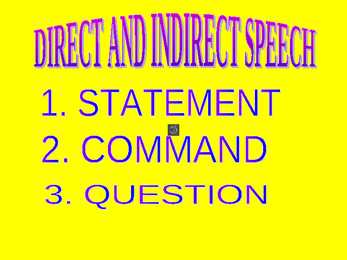
· THIS · THAT · THESE · THOSE CHANGES OF TENSES · DIRECT · INDIRECT · SIMPLE PRESENT · SIMPLE PAST · SIMPLE PAST · PAST PERFECT · PRESENT PERFECT · PAST PERFECT · PRESENT · PAST CONTINUOUS CONTINUOUS · PAST PERFECT · PRESENT PERFECT CONT. CONT. · SIMPLE FUTURE · PAST FUTURE 1. STATEMENT HE SAID HE SAID TO ME THAT REPORTED WORDS HE TOLD ME STATEMENT EXAMPLE · DIRECT · INDIRECT · They said to me: "we are going · They said to me that to visit Borobudur tomorrow." they were going to visit Borobudur the following day. · Jeffry said: "I didn't go to school today. · Jeffry said that he
I mean it wouldn't be decent." and ,,What the dickens has happened to you?" He uses the word instead of a swearing word. Comment on Eliza's behaviour at the meeting.(Do it in about 4 sentences) Eliza is speaking very properly and is polite. She is answering the questions that are asked from her with very long sentences. But she is also saying things that are not necessary. What is Freddy's attitude towards Liza? Freddy is giggling at her. How does Liza leave? She says good by to everyone but before she leaves Freddy stops her and asks if she is walking but Eliza says that not bloody likely and leaves. What does Higgins suggest Clara to do after she said that they had to leave? Why does he give such a suggestion? He suggests to try the new small talk at the three at-homes. He says to pitch it in strong. Higgins said to his mother that Liza was useful. Useful in which way? He said that she knows where all his things are and remembers his meetings.
3) Why don`t you let her........her story? A finish B to finish C finishing D have finished 4) Tim........in a cafe at present, but he has already applied for a new job A work B have worked C is working D worked 5) My father........already worked for two years before he went to University. A was B had C has D is 3. Change the order of the words to make a correct sentence. ( 5 points ) 1) I wonder / can / you / me / help / if 2) a / my / to / written / I / mother / already / letter / long / have 3) the / watch / often / they / TV / in / evening 4) the / gave / my / for / this / umbrella / is / that / Sally / me / my / birthday 5) particular / nothing / have / at / tell / you / to / moment / the 4. Give the comparative and the superlative of the following adjectives: ( 5 points ) e.g
"Hullo darling," she said. "Hullo darling," he answered. She took his coat and hung it in the closer. Then she walked over and made the drinks, a strongish one for him, a weak one for herself; and soon she was back again in her chair with the sewing, and he in the other, opposite, holding the tall glass with both hands, rocking it so the ice cubes tinkled against the side. For her, this was always a blissful time of day. She knew he didn't want to speak much until the first drink was finished, and she, on her side, was content to sit quietly, enjoying his company after the long hours alone in the house. She loved to luxuriate in the presence of this man, and to feel - almost as a sunbather feels the sun - that warm male glow that came out of him to her when they were alone together. She loved him for the way he sat loosely in a chair, for the way he came in a door, or moved slowly across the room with long strides
Phonetic SD ("Rhythm And Style") 8. Lexical SD* 9. Syntactic SD* Use lecture notes 10. Graphical means and devices 11. Common literary and common colloquial vocabulary 12. Special literary vocabulary 13. Special colloquial vocabulary 14. Metre in English poetry. Modifications of metre ("Rhythm and Text") 15. Typically English stanzas ("Rhythm and Text") 16. Rhythm in poetry and in prose ("Rhythm and Text") Study independently 17. Varieties of language (I. Galperin "Stylistics") 18. Emotive prose (I. Galperin "Stylistics") 19. Scientific prose style (I. Galperin "Stylistics")
englisch-hilfen.de LEARNING ENGLISH ONLINE Examples Examples Examples Tense Signal words Use Form affirmative negative interrogative every day something happens repeatedly sometimes how often something happens always I work. I don't work. Do I work?
 annaabi.ee