Leidsid 33 sarnast õppematerjali, mis on seotud failiga "Punctuation". Need materjalid aitavad sul teemat sügavamalt mõista.
colon, comma, however, thought, dash, marks, inverted, here, phrases, camera, subject, quotation, thing, punctuation, vocabularyxclamation, quotations, full, period, slash, between, linked, meaning, nice, person, granny, before, felt, hated, dark, informal, sometimes, instead, having, there, lots, rules, strict, likely, around, longer, subjects, affordExtended Rules for Using Commas Comma Use 1. Use commas to separate independent clauses when they are joined by any of these seven coordinating conjunctions: and, but, for, or, nor, so, yet. The game was over, but the crowd refused to leave. The student explained her question, yet the instructor still didn't seem to understand. Yesterday was her brother's birthday, so she took him out to dinner. 2. Use commas after introductory a) clauses, b) phrases, or c) words that come before the main clause. a. Common starter words for introductory clauses that should be followed by a comma include after, although, as, because, if, since, when, while. While I was eating, the cat scratched at the door. Because her alarm clock was broken, she was late for class. If you are ill, you ought to see a doctor. When the snow stops falling, we'll shovel the driveway. However, don't put a comma after the main clause when a dependent (subordinate) clause
Go to library use books, published sources (they are published so they are reliable) use Internet at least. In library make separate card for every publication (author, year of publication, etc.). You start reading a book: think of your own topic and make notes (take a sheet of paper for a book: in the left hand margin you indicate the page, on the right hand write a quotation you wish to use, or "in pages 10 to 12 the author analyses .... and ......". You should use quotation marks when you take some author's ideas, but your own comment should be without quotation marks. THE MECHANICS: · font size 12 · lines double spaced · Times New Roman · margins (one left side margin should be 3cm, all other (up, down, and right) 1.5 cm) · the page number should be in the right hind corner (upside) NB! It should be within those 1.5 cm no special space. And no "p." letter! · on the right side the text should be justified
NT: It was not Cape town, where people only frowned when they saw a black boy and a white girl... but. (here he loved her) SSD-s that are based on REDUNDANCY OF ELEMENTS OF SPEECH are: (Here belong devices based on repetition) FRAMING FRAMING means repeating the same word, phrase or sentence at the beginning and at the end of a sentence or passage.In this way the repeated unit is emphasised. NT: the street, so soft and sunny. Here he comes. She smiles and stretches out her hands. ANADIPLOSIS ANADIPLOSIS means repeating a word or phrase at the end of the clause or sentence and at the beginning of the next one. NT: Such was life. Life without hope. NT: Three fishers went sailing out in the West. Out in the West, as the sun went down. ANAPHORA ANAPHORA means repeating a world, phrase or sentence at the beginning of several clauses or sentences in succession (happening one after another). NT: Heroes come and go
Connotation is ever present when the word is used. Adherent connotation is the shade of meaning the word requires in a particular context only. Outside this context this shade of meaning is not present. ADHERENT CONNOTATION (AC) - is evoked only to create a particular context. AC may be positive or negative. Negative adherent connotation 1. Grammatical negation results in words becoming negatively charged (e.g. "Science has not got a soul. Cannot help itself." science here becomes negative). 2. The neighbourhood or closeness of words bearing adherent negative connotation. 3. Vulgar words in the context lend their negative charge normally to the following word. 4. The same do certain intensifiers, such as: merely, only, too, too much, horribly, perfectly, so, etc. 5. Repetition of a word in a sentence makes the negative charge stronger. 6. Graphic presentation the inverted commas, quotation marks (e.g
g. style of fiction, scientific prose, newspapers, business correspondence, etc.). These are called functional styles or registers. Stylistics is the study of style. In spite of the variety of styles English Stylistics has not been discussed on the same scale as French or German stylistics; it has not been discussed thoroughly. The very term "stylistics" came in more common use in English only some 45 years ago. However, it was recorded for the first time much earlier in 1882, meaning "the study of literary style, the study of stylistic features" (Oxford Dictionary). Stylist is a writer / speaker skilled in a literary style (e.g. Hemingway is considered a peculiar stylist used a lot of repetitions). Stylistician is a scholar (a student). Style is applied to many things: clothing, architecture, hairstyles, etc. A linguistic style
Byron) · the manner of expressing ideas characteristic of a literary movement or period (symbolism, romanticism) · the use of lg. typical of a literary genre (comedy, drama, novel) · the selective use of lg that depends on spheres of human activity. These are called functional styles or registers (fiction, newspaper) Stylistics is the study of style. However, for some reason, English stylistics is less developed than French, German or Russian. The term ,,stylistics"came into more common use in English only some 35 years ago. It was recorded much earlier; in 1882 as "the study of literary style, the study of stylistic features" Stylistics is a branch of linguistics that studies principles of selecting different linguistic means for passing on thoughts and emotions. It studies: · Different functional styles, styles of genres, individual styles
Demonstrative Determiners 73 Direct and Indirect Objects 144 Interrogative Determiners 74 Positive and Negative Sentences146 Possessive Determiners 75 Questions 147 7 Verbs and Tenses 79 14 Punctuation 150 The Simple Present Tense 80 Period 150 Am, Is and Are 83 Comma 151 The Present Progressive Tense 89 Exclamation Point 152 Have and Has 93 Question Mark 152 The Present Perfect Tense 96 Apostrophe 153 1 What is Grammar? Here's an old children's rhyme about the eight parts of speech of English grammar. It gives you an idea of what grammar is about. Read and remember it.
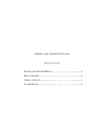
Adverbs and Adverbial Phrases Table of Contents Adverbs and Adverbial Phrases ........................................................... 2 Types of Adverbs ..................................................................................... 2 Position of Adverbs.................................................................................. 4 Yet, still, already ....................................................................................... 6 Adverbs and Adverbial Phrases An adverb describes a verb, an adjective, another adverb or a whole sentence.
• Modal Verbs express our attitudes, opinions and judgements of events. Who’s that knocking on the door? - It’s James. (This is a fact.) - It could/may/might/should/can’t/’ll be James. (These all express our attitude or opinion.) Expressing permission Can, may and be allowed to are used to express permission. Can is more informal and usually spoken. You can borrow my bike, but you can’t have the car. I need it. May I smoke in here? You can’t come in here in those muddy shoes! You’re allowed to get married when you’re 16. Are we allowed to use Power Point at the exam? Expressing obligation Have to, must and should are used to express obligation. Positive negative and interrogative forms of ‘have to’ I You have to We don’t have to work hard to They pass the exam.
Chapter 17 Chapter 38 Chapter 58 Chapter 18 Chapter 39 Chapter 59 Chapter 19 Chapter 40 Chapter 60 Chapter 20 Chapter 41 Chapter 61 Chapter 21 Chapter 42 Chapter 1 It is a truth universally acknowledged, that a single man in possession of a good fortune, must be in want of a wife. However little known the feelings or views of such a man may be on his first entering a neighbourhood, this truth is so well fixed in the minds of the surrounding families, that he is considered the rightful property of some one or other of their daughters. "My dear Mr. Bennet," said his lady to him one day, "have you heard that Netherfield Park is let at last?" Mr. Bennet replied that he had not. "But it is," returned she; "for Mrs. Long has just been here, and she told me all about it." Mr
_ 7 English tests _________________________________ (get) more and more interesting. _ 8 They _________________________________ (have) a party because it's her birthday. _ 9 I sometimes _________________________________ (ride) my bicycle to school. 10_ She usually _________________________________ (go) to the gym on Friday evenings. Marks: /10 2 Choose the correct tense (present simple or present continuous) in these sentences. 1 How do you usually start/are you usually starting your day? _____________________________________ 2 What time do you go/are you going to bed at weekends? _____________________________________ 3 This Girlzone CD is belonging/belongs to Alan. _____________________________________ 4 I understand/am understanding English, but not Spanish. _____________________________________
Several vehicles have been unavailable for use for long periods because of a deterioration in the quality of AMC's services, and this has caused considerable operational difficulties. When the MCC Transport Manager heard of the problem, he immediately telephoned the Transport Supervisor and asked him to write a short report detailing the background and extent of the problem. Text 1 is the report that the Transport Supervisor drafted out. However, knowing that his report writing ability was not particularly good, he asked his secretary to revise it before she typed it up. Text 2 is the report that was finally sent to the Transport Manager. Read both of the reports and see if you can identify: the changes that the secretary made the reasons for making these changes the effect of these changes TO: Transport Manager FROM: Transport Supervisor (Field Services) SUBJECT: Services Provided by Autocheck Maintenance Company DATE: 6.4.01
.. 3. Dear Sirs, I am writing to complain about the poor quality of the items which I received from your company. I have no other alternative but to cancel the order which 1 placed earlier this week ... 4. ... thus, I recommend that you accept this advice on the matter. I am pure that the suggestion offered is the best solution. Please let me know if this was helpful. Yours sincerely, Lee Jones 5. ... I would appreciate a reply at your earliest convenience. I look forward to meeting you to discuss employment opportunities. Yours faithfully, Nicole Porter Paragraph Plan for Letters · salutation · Paragraph 1 reasons for writing · Paragraphs 2, 3 development · Final paragraph closing remarks · Name · Letters are divided into two categories, formal and informal. There are various types of formal and informal letters .
4) Are you going ..... the ball? 5) ..... piano sounds great, don't you agree? 6) Hey, Keith, bring me some of ..... ice cream, too! 7) Linda sat ..... the rock and sang ..... song. 8) ..... school is something you never forget, yet while studying many things just are forgotten. 9) He jumped off ..... cliff and fell ..... the ice-cold ocean. 10) It was ..... noisiest concert ever! 11) What are you doing? Don't you know that ..... fishing isn't allowed here? 12) Neither ...... them moved, they were just staring ..... each other. 13) You must go, Susan, or else I won't go ..... there as well. 14) He laughed ..... her, not feeling any pity at all. 15) Mother listened ..... the radio while Jim was catching ..... butterflies. 16) She was soon bored, so he decided ..... finish his speech earlier. 17) Marta was hungry; she went ..... the kitchen .... order to grab ..... sandwich and ..... bottle ..... milk. 1
I wish and if only can be used use to express a wish. 1) I wish or if only + Past Simple express wishful thinking: I wish I wasn’t so fat (, so I would be able to get into this tight-fitting dress)! If only John came on time (, so we could catch the last train)! I wish I lived in a big city. We all wish we had more time. If only I was taller, I could be a super-model. I wish you did not bother me with your stupid questions! I wish you were here! We cannot use would in these sentences, but we can use could: I wish I could fly to the Moon. If only I could speak the language of this country. 2) I wish or if only ... + would expresses a wish for something to happen or stop happening: I wish you would clean up your room. If only you’d be more helpful. 3) wish or if only ... + a Past Perfect tense expresses a wish about the past: I wish you had told me about the problem.
Words that ADD information · also · and · another · besides first, second, third, ... · furthermore · in addition · moreover The little girl put on her yellow shirt and brown overalls. Chris is on the basketball team this semester at Indiana School for the Deaf. In addition, he is on the soccer team. We will be here for one more week so we can finish up our work. Another reason we are staying longer is because we do not want to miss the Deaf Way conference. First of all, pour a half-cup of milk in the bowl; second, add two eggs; and third, stir the mixture. I admire I. King Jordan because he is the first deaf president of Gallaudet. Besides that, I admire him because he is a great long distance runner. Furthermore, he is a dedicated family man. All in
She felt fragile, she was afraid to bump against anything. Her skin felt hard and brittle, she knew about her condition and that she can fall apart at slightest touch. She had a tough life, she was divorced, poor, unwell and probably not a Christian since she decided to sleep with a man whom she just met. She also was drinking and smoking. She hoped that man could be different maybe because he had good-natured slowness which her ex-husband maybe hasn't had. Or maybe because she thought he is wealthier or generous. 6. Find symbols and allusions to prove that the first part can be interpreted in Christian terms. What do you make of its ending? Drinking ,,Angel Wings". Oh God, Mary it's good. 3 7. Introduce briefly the major characters of the remaining parts. Start designing a family tree
Style bears the stamp of indivual usage, that is every writer has a unique pattern/habit and abilities that form his style. This approach is best illustrated in the well-known victum of the french poet Georges-Louis de Buffon ,,Style is the man himself." Stylistics English stylistics or the study of style has not been discussed on the same scale as french stylistics, german or russian. The very term stylistics came into more common use in english only some 30-40 years ago. It was however recorded much earlier that is in 1882 for the first time, meaning ,,The Study of literary style, the study of stylistic features." A short history of the development of stylistics Stylistics is regarded a relatively new branch of philology, yet its roots go back as far as ancient Greece and Rome, where the rhetoricians (retoorikud) cultivated the art of clear and elegant use of language by developing and polishing stylistic devices.
I'd urgently entreat you not to come Within our doors. You preach a way of living That decent people cannot tolerate. I'm rather frank with you; but that's my way-- I don't mince matters, when I mean a thing. DAMIS Mr. Tartuffe, your friend, is mighty lucky . . . MADAME PERNELLE He is a holy man, and must be heeded; I can't endure, with any show of patience, To hear a scatterbrains like you attack him. DAMIS What! Shall I let a bigot criticaster Come and usurp a tyrant's power here? And shall we never dare amuse ourselves Till this fine gentleman deigns to consent? DORINE If we must hark to him, and heed his maxims, There's not a thing we do but what's a crime; He censures everything, this zealous carper. MADAME PERNELLE And all he censures is well censured, too. He wants to guide you on the way to heaven; My son should train you all to love him well. DAMIS No, madam, look you, nothing--not my father Nor anything--can make me tolerate him.
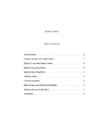
...................................................................130 Allowing the Diminishment of the Ego......................................................130 As Without, So Within................................................................................132 Chapter Eight The Discovery of Inner Space - 135 Object Consciousness and Space Consciousness.......................................137 Falling Below and Rising Above Thought.................................................138 Television...................................................................................................139 Recognizing Inner Space...........................................................................141 Can You Hear the Mountain Stream? .......................................................143 Right Action..............................................................................................144 Perceiving Without Naming.....
exists between grammatical units, e.g. a pronoun 'refers' to a noun or noun phrase. When the reference is to an earlier part of the discourse, it may be called a 'back-reference' (or anaphora); collective noun Collective noun is the name we give to a group of nouns to refer to them as one entity. A crew of sailors. A flock of birds. A range of mountains. conjunction any member of a small class of words distinguished in manylanguages by their function as connecto rs between words, phrases,clauses, or sentences, as and, because, but, however. content words Content words are words that have meaning. They can be compared to grammatical words, which are structural. Nouns, main verbs, adjectives and adverbs are usually content words. Auxiliary verbs, pronouns, articles, and prepositions are usually grammatical words. Example ‘We flew over the mountains at dawn'. countable nouns Countable nouns are easy to recognize. They are things that we can count. For example: "pen". We
2.3.2 Adjectives Inherent → Degree of comparison. (Comparative and superlative) For example: cold - colder – coldest Agreement → Attributive adjectives go with the head noun and predicative adjectives go with the subject. For example: The white door 3. Nouns and noun phrases Nouns are “naming words” because they name objects, places, beings etc. For example: dog, cat, Tartu, University of Tartu etc… The structure of the noun phrase → The noun phrase typically consists of the head which is usually a noun and other linguistic elements which determine or modify the head. (Determiners) (Premodifiers) HEADnoun (postmodifier)
ISBN 0-316-16017-2 [1. Vampires -- Fiction. 2. High schools -- Fiction. 3. Schools -- Fiction. 4. Washington (State) -- Fiction.] I. Title. PZ7.M57188Tw2005 [Fic] --dc22 2004024730 Printed in the United States of America For my big sister, Emily, without whose enthusiasm this story might still be unfinished. But of the tree of the knowledge of good and evil, thou shalt not eat of it: for in the day that thou eatest thereof thou shalt surely die. Genesis 2:17 PREFACE I'd never given much thought to how I would die -- though I'd had reason enough in the last few months -- but even if I had, I would not have imagined it like this. I stared without breathing across the long room, into the dark eyes of the hunter, and he looked pleasantly back at me. Surely it was a good way to die, in the place of someone else, someone I loved. Noble, even. That ought to count for something. I knew that if I'd never gone to Forks, I wouldn't be facing death now. But, terrified as I was, I couldn't
do, stay and flourish. Of course, the compliance professionals aren't the only ones who know about and use these principles to help them get their way. We all employ them and fall victim to them to some degree in our daily interactions with neighbors, friends, lovers, and family. But the compliance practitioners have much more than the vague and amateurish understanding of what works than the rest of us have. As I thought about it, I knew that they represented the richest vein of informa- tion about compliance available to me. For nearly three years, then, I combined my experimental studies with a decidedly more entertaining program: I system- atically immersed myself in the world of compliance professionals-salespeople, fund-raisers, advertisers, and others. _. _ INTRODUCTION
It's a bit 3 1 to 8 of Unit 1 uncanny really. Is it something she's 2 about 9 century passed on to me genetically, or is it 3 like 10 assumed / 1A Memories page 3 learned behaviour? Who knows? 4 of thought / 1 See exercise 2 2 5 6 any fought
Philosophy of language has been much in vogue since early in the twentieth century, but only since the 1960s have the issues begun to appear in high resolution. One crucial development in the past forty years is the attention of philoso- phers of language to formal grammar or syntax as articulated by theoretical linguists. I personally believe that such attention is vital to success in phi- losophizing about language, and in my own work I pay as much of it as I am able. With regret, however, I have not made that a theme of this book. Under severe space limitations, I could not expend as many pages as would be needed to explain the basics of formal syntax, without having to omit presentation of some philosophical issues I consider essential to competence in the field. Since around 1980, some philosophers of language have taken a turn toward the philosophy of mind, and some have engaged in metaphysical exploration of the relation or lack thereof between language and reality
and competent, and you will perform better at whatever you at- tempt. If you think about making mistakes or being embarrassed, you will perform poorly, no matter how good you really are. Pictures and images, from your imagination or from the exter- nal influences, produce ideas, emotions, and attitudes that corre- spond to them. They then trigger actions that bring about certain results and outcomes.The thought of a person or situation can cause you to instantly feel happy or sad, elated or angry, loving or lonely. ■ ATTITUDES, ACTIONS, AND EMOTIONS Your attitudes, positive or negative, constructive or destructive, lead to corresponding images, emotions, and actions that affect your life and relationships. Your attitudes, in turn, are based on ccc_tracy_fm_i-xviii.qxd 7/7/03 3:23 PM Page xvi
I S1That doesn't really bother me. You decided on the appropriate word gave a speech at my brother's funeral can always return the goods. form, making sure that their answer and that started it. It felt normal S2Another important point is that fits exactly with the framework of the to stand up and speak out. People the Internet isn't always secure. sentence. reacted and I thought, `I've got to If you use your credit card to buy stop this gun thing.' I believe we Listening something online, criminals could should ban guns, period. · Remind students to prepare for the
Levin is upset at the poor deal he makes with the buyer and his lack of understanding of the rural lifestyle. Levin pays Dolly a visit, and she attempts understand what happened between him and Kitty and to explain Kitty's behaviour to him. Levin is very agitated by Dolly's talk about Kitty, and he begins to feel distant from her as he perceives her behaviour towards her children as false. Levin resolves to forget Kitty and contemplates the possibility of marriage to a peasant woman. However, a chance sighting of Kitty in her carriage as she travels to Dolly's house makes Levin realise he still loves her. In St. Petersburg, Karenin exasperates Anna by refusing to separate from her. He insists that their relationship remain as it was and threatens to take away their son Seryozha if she continues to pursue her affair with Vronsky. Part 4 Anna continues to pursue her affair with Vronsky. Karenin begins to find the situation intolerable. He talks with a lawyer about obtaining a divorce
With a shaky inhalation, I placed my hand in his. My pulse leaped when his grip tightened. His touch was electric, sending a shock up my arm that raised the hairs on my nape. He didn't move for a moment, a frown line marring the space between arrogantly slashed brows. "Are you all right?" His voice was cultured and smooth, with a rasp that made my stomach flutter. It brought sex to mind. Extraordinary sex. I thought for a moment that he might be able to make me orgasm just by talking long enough. My lips were dry, so I licked them before answering. "I'm fine." He stood with economical grace, pulling me up with him. We maintained eye contact because I was unable to look away. He was younger than I'd assumed at first. Younger than thirty would be my guess, but his eyes were much worldlier. Hard and sharply intelligent.
By that time, I ... (12 be) a famous author and she ... (13 ask) me to write a book about her way to the top. That's why I ... (14 start) taking notes of her and my other classmates' results. 3. Complete the exercise with the verbs in the past simple, the past continuous, or the past perfect tense. Do you remember? I went I was / we were going I had gone I couldn't wait for the first day of school to show off the new bike which I ... (1 get) as a birthday present. As I ... --- 5 (2 want) to look cool riding up to the front steps, I ... (3 put) on my new skirt. When I ... (4 reach) the school, I ... (5 make) a big mistake and ... (6 smile) at my friends instead of watching where I was going. While I ... (7 wave) at my best friend, I couldn't brake, and I ... (8 hit) the steps. I ... (9 fail) off my bike and ... (10 tear) my skirt. What a great start to the new year! 4. Write the sentences. 1 fifteen the off in I'm minutes to cinema I'm off to the cinema in fifteen minutes.
number of items. Typical closed classes found in many languages are adpositions (prepositions and postpositions), determiners, conjunctions, and pronouns.[1] Contrastingly, an open class offers possibilities for expansion. Typical open classes such as nouns and verbs can and do get new words often, through the usual means such as compounding,derivation, coining, borrowing, etc. [2] Syntax: studies how words group together to make phrases and sentences. Sentences are not simply random strings of words; they conform to specific patterns determined by the syntactic rules of the language. The syntactic rules in a grammar must account for the grammaticality of sentences, word order, structural ambiguity, the meaning relations between words in a sentence, the similarity of meaning of sentences with different structures, the speaker's creative ability to produce and understand any of an infinite set of possible sentences.
into it with little or no expectations, when it had just recently been published and had not yet become as immensely popular as it is right now, especially in Estonia, as it had not yet been translated. But the hype was already building up in American social networking sites, and since the book was already being referred to as the ´´next Harry Potter´´, I obviously had to read it. It is somewhat embarrassing to admit, that at first, before giving much indepth thought about what was written between those pages, I was quite incredibly fascinated with ´´Twilight´´. I got so attached to the book that I couldn't even spare ten minutes to take a break in order to have something to eat or rest my eyes, when my vision got all blurry (it was an eBook). Eventually my best friend managed to lure me to her place (it took her much effort) and even then, I secretly downloaded the book to her computer and carried on reading, my only
 annaabi.ee