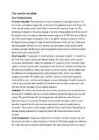
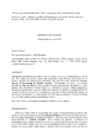
Install LAMP Server Install Apache web server apt install apache2 Start and enable apache2 systemctl start apache2 systemctl enable apache2 Install mysql apt install mysql-server Start and enable mariadb systemctl start mariadb systemctl enable mariadb Secure MariaDB installation mysql_secure_installation Install PHP apt install php php-mysql 3. Create a new MySQL database and user mysql -u root -p create database owncloud; create user owncloud@localhost identified by '12345'; grant all privileges on owncloud.* to owncloud@localhost identified by '12345'; flush privileges; exit; 4. Install Owncloud Install additional packages apt install -y apache2 mariadb-server libapache2-mod-php7.0 php7.0-gd php7.0-json php7.0-mysql php7.0-curl php7.0-intl php7.0-mcrypt php-imagick php7.0-zip php7.0-xml php7.0-mbstring Download Owncloud 10 package. cd /tmp wget https://download.owncloud.org/community/owncloud-10.0.2.tar.bz2 Extract Owncloud and change the permission
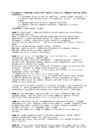
(Press y|Y for Yes, any other key for No) : Y Reload privilege tables now? (Press y|Y for Yes, any other key for No) : Y --- #Sisene MySQL-andmebaasi ja sisesta parool Naidis0Parool sudo mysql -u root -p #Loo andmebaas nimega nt.: baas2db #Loo andmebaasi kasutaja nt.: user2 ja parool nt.: Kevade.2 #Seo kasutaja andmebaasiga ja anna õigused. #Uuenda muudatused. #Välju andmebaasist. CREATE DATABASE baas2db; CREATE USER user2@localhost IDENTIFIED BY 'Kevade.2'; GRANT ALL PRIVILEGES ON baas2db.* TO user2@localhost; FLUSH PRIVILEGES; Exit --- #Tähelepanu! Lamp-serveri installeerimise käigus lisandub ka programm ,,Apache2" mis tekitab index.html faili. #See fail on Apache2'e testimiseks. Võid veenduda, et Apache2 töötab valides brauseris http://localhost/ #või IP-aadress ja ekraanile ilmub test-leht. Rohkem seda faili vaja ei lähe, nimetame selle ringi. sudo mv /var/www/html/index.html /var/www/html/old.html #Mine tmp-kataloogi ja lae siia kokkupakitud Joomla.
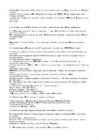
3. Muutke ruuteri turvaseadeid. 3.1 Ühendage arvutid ja ruuter sobivate kaablitega. (võrgu skeem joonisel 2.) . 3.2 Keelake ligipääs kahele enda poolt vabalt valitud veebiaadressile. 1) ( 192.168.1.1) Firewall. 2) URL Filter. URL Filter Options Enable. Deny Filtered URLs (.. ) Allow Filtered URLs ( ). 3) Deny Filtered URLs. 2 (-), . Apply. . 3.3 Lubage ligipääs keelatud aadressitele ühele "priviligeeritud" arvutile sisevõrgus. 1) PC Privileges. 2) Enable Privileges PCs access authorized services only. All PCs, Bypass URL Filter Bypass Content Filter. Apply. . New. IP address , ( ). Bypass URL Filter Select authorized services. Apply. . 4. Häälestage ruuter nii, et välisvõrgust näeks sisevõrgus olevalt veebiserverit. 4.1 Ühendage arvutid ja ruuter nii, et üks arvuti on WAN pordis. (võrgu skeem on joonisel 3.) Switch . , . , WAN , LAN . 4
countries (England, Scotland, Wales and Ireland), but a dominant English political and military expansionism over the century. Near the end of the Middle Ages, the role of government in England underwent many changes. From the Magna Carta to the creation of the English Parliament, England laid the foundation for representative government and regulated sovereignty. The Magna Carta clearly defined the ancient rights and privileges of the people 1. It established the principle that the king no longer had absolute control, and prevented English rulers from taking advantage of their subjects. Later, England would institute a Parliament to allow British nobles the opportunity to voice their opinions in political matters. This entire process moved the world one step closer to the types of governments that are seen today. 3.12.2012
It should also be noted that since employees spend a great deal of their day at your store, you should try to switch up the music as much as possible. By doing this you would not have only satisfied customers but also employees. Special offers and client cards Finally, you could make more discounts and also think about client cards. Discounts always attracts people`s attention. Client cards gives people more opportunities to get different discounts and maybe some privileges. In this way, your shop would be more famous. Conclusion To sup up, I believe that if you include some of the suggestions above, you will be able to change your shop very attractive and successful. As a result, the costumers will have the best experience.
Many high-level positions in companies are filled by men even though the workforce in many developed countries is more than 50 percent female. Companies should be required to allocate a certain percentage of these positions to women. To what extent do you agree? In the 21st century it is all about gender equality and every individual wants to achieve high level position in their work place. In the past, women, in many societies, had less rights and privileges than men. The statement says that companies should give a certain number of higher positions to women. However, I do not agree with this requirement completely. Giving a certain percent of higher positions to women certainly is an easy solution but in my opinion it will bring even more sexism. It shows that women are somehow weaker, fragile and need help for everything. And this on the other hand, will cause a situation where females will receive
· Kept tight control of the elections bishops, archbishops and abbots · Saw them as his ministers · Entrusted them with much local power and responsibility · Used the Anglo-Saxon officials, earls and sheriffs to look after the king's interests The angevin empire · Henry II came to throne in 1155 (up to 1189) · One of England's greatest monarchs · Before him: feudal anarchy, civil wars · As a feudal ruler, had to deal with the privileges and obligations of his noble vassals · As a king, claimed special rights and privileges to increase his power · Famous for his legal reforms · Previously, private citizens had to bring charges against criminals · Result: suspects prevented this by intimidating their victims · Citizens had to pay a severe penalty when they lost · Result: few people brought cases to court
[21] Some aforementioned products also bring new never-seen problems with them. As cybersecurity has never been more important than it is now, then making sure, that your product isn't misused and it cant be leaked is a must. There are multiple ways hackers can attack databases and take advantage of their vulnerabilities. Few examples of inside-based attacks are: Academic essay (ITI0103) 2019 spring - Abusing excessive privileges. When the user is granted additional privileges that the user doesn't initially require can result in unexpected results, as the user, who only needs read-only privileges, but is granted full administrative powers, can edit the data he initially was not supposed to. [22] - Abusing existing privileges. Same goes for workers, who do have the rights to do so. An example can be made when the mentioned decides to leak some data to the
Social order:1)The King-the most powerful person-owned land,led the army,made laws,demanded money through taxes,had absolute power2)Aristocracy:Barons,Lords-got lands from the King3)Middle classes:Knights,Merchants,Yeomen- freefarmers-owned land,protected Lords,had to got to war4)Villeins or Serfs-didn`t own land,products went to Lord,had to do any job that the Lord asked them to do5)Slaves- had to work hard System of government:King-ruled throughly the system of patronage,he gave hands and privileges to people who were loyal to him when he needed it. The Domesday Book was the record of the great survey of England, executed for 'William the Conqueror'. The survey was similar to a census by a government of today. Magna Carta is an English legal charter. The Magna Carta required King John of England to proclaim certain rights, respect certain legal procedures, and accept that his will could be bound by the law. Anglo-Saxon poetic forms:Didactic poems-stories from Bible
when Hiiumaa, along with the rest of Estonia, had been conquered by Germanic Crusaders. In 1254, Hiiumaa was divided between the Bishoprick of Ösel-Wiek and the Livonian branch of the Teutonic order who were also partly acting on behalf of the Hanseatic league The island was part of Swedish Estonia from 15631720, after which it passed to the Russian as part of the Governorate of Estonia, although Dagö's Swedish population kept most of their privileges. Most of the island's previously numerous Swedish speaking population emigrated or were "Estonia" during the period of Imperial Russian rule, although a small minority remains to this day. Estonian Swedes are also known as "aibofolke" (meaning island people in Swedish) or "rannarootslased" (meaning coastal Swedes in Estonian). Transport Road transport from Estonian mainland to Hiiumaa involves a 90-minute (28 km) ferry crossing
the 15th, century. A century later its population of 7,000-8,000 made it one of the biggest cities in northern Europe. Unfortunately, prosperity did not last long due to the weakening of the Hanseatic League, epidemics, hunger and wars. Sweden finally managed to take control of the whole of Estonia in 1629. Though hard times continued, the period that followed is known as the good old Swedish era': foundations were laid for the Estonian school system, the privileges of the nobility were curtailed, local peasants were granted the right to own property, and so on. Meanwhile, different countries fought for domination in the Baltic region. Russia started the Northern War in 1700. Peter the Great had made it his aim to conquer Estonia and `open a window onto Europe' Together with the Russian troops, the plague came again and thousands of people died. A Russian general described the
It gave her increased access to venues (meeting places) from which women were often barred -- even women of her social standing. Also scandalous was Sand's smoking tobacco in public. These and other behaviors were exceptional for a woman of the early and mid-19th century, when social codes were of the utmost importance. As a consequence of many untraditional aspects of her lifestyle, Sand was obliged (kohustatud) to relinquish (loovutama) some of the privileges appertaining (juurde kuuludes) to a baroness. Poet Charles Baudelaire was a contemporary critic of George Sand: "She is stupid, heavy and garrulous (lobisev). Her ideas on morals have the same depth of judgment and delicacy of feeling as those of janitresses and kept women.... The fact that there are men who could become enamoured of this slut is indeed a proof of the abasement of the men of this generation." Relationships
His people created a new settlement called Lundenwic 2 km upstream of Londinium. In 886 Alfred made peace with the Danish Vikings. Their king was named Guthrum. London Wall The Norman Conquest During the 9th century, London was the largest city of England. At that time, the Duke of Normandy won the Battle of Hastings, which was between England and Normandy. As a result the duke was crowned king of England. His name was William the Conqueror. William granted the citizens of London special privileges. He also built the Tower of London, (which was a prison) to keep the people under control. The Tower is the oldest building used by the British government. In 1097, William II began the building of Westminster Hall, close by the abbey of the same name. The hall became the prime royal residence throughout the Middle Ages. Westminster became the seat of the royal court and government, while its neighbour, the City of London (a part of London), was a centre of trade
Fourth level Fifth level VIBORG / VIIPURI Important trading post since 11th Century Gulf of Finland estuary of Vuoksi Incorporated to sweden 1293, stone castle built End of Middle Ages one of two major cities in Finland, only one surrounded by a stone wall, 1470 TOWN privileges latest 1403 Click to edit Master text styles Second level Third level Click to edit Master text styles Fourth level Second level Fifth level Third level Fourth level
between the news and other departments in a news organization to prevent undue influence on the news department. Legal status Governments have widely varying policies and practices towards journalists, which control what they can research and write, and what press organizations can publish. Some governments guarantee the freedom of the press; while other nations severely restrict what journalists can research and/or publish. Journalists in many nations have some privileges that members of the general public do not; including better access to public events, crime scenes and press conferences, and to extended. YELLOW JOURNALISM Yellow journalism, or the yellow press, is a type of journalism that presents little or no legitimate well-researched news and instead uses eye-catching headlines to sell more newspapers. Frank Luther Mott (1941) defines yellow journalism in terms of five characteristics: Scare headlines in huge print, often of minor news
A standout amongst other genuine models of an organization utilizing the weakening contention is Toys R' Us, which has suppressed endeavors at comparable names like "Legal advisors R' Us. Another precedent, was that if Company A needs to utilize "Intel" to depict a handgun, Intel Corporation would have an extremely solid contention that enrollment of the stamp 'INTEL' for handguns would weaken Intel Corporation's check. Cradle may likewise look for assurance under the privileges of attention. It denies individuals from monetarily abusing that individual's resemblance without remunerating that person. A standout amongst the most acclaimed cases occurred in 1992, when Frito-Lay contracted a Tom Waits impersonator to sing a tune, in view of one of Waits' tunes for a business, after Waits had more than once declined them. Holds up contended that the melody made his companions think he had sold out, and the jury granted him $2.5 million
The distribution of property is even more uniequal. 1 per cent of the population own 60 per cent of the saleable assets of the nations. Individual incomes range from £1 000 000 a year to £50 per year. This extreme degree of inequality is due to the right of inheritance at present vested in the legal institution of property. Large individual fortunes are, for the most part, made up of inherited property. The rich, as a class, are born with silver spoon in their mouths and the economic privileges that they enjoy were not acquired by the possession or exercise of great talents, but by the accident of birth. Social inequality. The apparatus of social hierarchy is amazingly complete. It is manifest in the Court with its great expense and elaborate display; the country house with its ancient associations and dependent village; the segregation of a group of schools (ironically called ,,public" schools) to provide each new generation with the manners and habits of ruling class;
“priviligeeritud” arvutile sisevõrgus. Tarvikud: vt eelmist ülesannet. Samm 1: Selle ülesande puhul seadistame ruuteri tulemüüri. Seega avame 3COM liideselt Firewall vaate. URL Filter tab’i alt sisestame kolm võtmesõna (nt delfi, neti, ttu). Nüüd on kõigil kohaliku võrgu arvutitel keelatud sellist võtmesõna sisaldavatele veebilehtedele ligipääsemine. Testime igaks juhuks. Samm 2: „Privileegidega“ arvuti määramiseks avame mõistagi PC Privileges vaate. Selekteerime PCs Access authorised services only ja teeme New reegli. Valime reegli definitsiooni vaatelt Bypass URL Filter, Web ja DNS. Kindlasti valida, et reegel kehtib Everyday 00:00 – 23:59. Samm 3: Lihtne ülesanne vajab nüüd ette näitamist. 4 Häälestage ruuter nii, et välisvõrgust näeks sisevõrgus olevalt veebiserverit. 4.1 Ühendage arvutid ja ruuter nii, et üks arvuti on WAN pordis. (võrgu skeem on joonisel 3.) 4
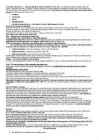
prast. Vib vajalik olla ka teistes punktides. 3. Muutke ruuteri turvaseadeid. 3.1 hendage arvutid ja ruuter sobivate kaablitega. (Eelmisest punktist juba paigas) 3.2 Keelake ligips kahele enda poolt vabalt valitud veebiaadressile. Vasakust menst Firewall>URL Filter>Deny List ( Vib olla ka Enable, mnedel ruuteritel vike erinevus) Kirjutage 2 URL tunnus sna niteks ttu ja google. Apply. 3.3 Lubage ligips keelatud aadressitele hele "priviligeeritud" arvutile sisevrgus. Samas mens on nupp PC Privileges>PCs access authorised services only>New Avanenud aknas sisestage he teie ksutuses oleva arvuti IP ( sisestatud punktis 2.2) Linnukesed panna kigele kuni reani Block or Allow other services. 4. Hlestage ruuter nii, et vlisvrgust neks sisevrgus olevalt veebiserverilt. 4.1 hendage arvutid ja ruuter nii, et ks arvuti on WAN pordis. (pange IP'd enne paika, vastasel juhul vib tekkida bug windowsis, mida kuskilt ei ne, aga asjad lihtsalt ei tta. Restart windowsile parandab vea) 4
The important thing is not what states were called or how long they lasted, but how they were organised, maintained control, gained and lost legitimacy. South African state formed out of: Conquest Colonization Slavery Indentured labour Racially discriminatory laws reserved jobs for whites; differential pay-scales etc Post 1910 state strong and centralized institutionalised racism: "power, wealth and privileges [distributed] unequally on a racial basis" (Giliomee, 1995, p190) Farming and mining (the basis of the economy) both required large work forces. Once slavery was abolished, need for to generate labour force. Taxation (poll tax) used to force blacks into labour force. Segregation used to control access of blacks to land. A strong, centralized and unequal state. 1936 Black voters removed from common roll. 1956 Coloured voters removed from common roll.
The freedom of action in the new provinces was naturally granted to one of the most firm ideological pillars of the tsarist empire -- the Russian orthodox church; though as the Landeskirche in the Estonian and Livonian territories, the Lutheran church long maintained a de facto predominance. The most important organ of Baltic German local government was the Diet, consisting of all the noble families who had been `selected' in a list of the eligible. Although jealously guarding their privileges, the knighthoods still never became entirely closed. Between sessions of a Diet, the legislative power of the knighthoods belonged to the Council of the Diet. The towns were governed by the Town Councils, which supplemented their ranks from among the representatives of merchants and lawyers. The citizens and the inhabitants of a town did not coincide -- most of the population had no civic rights. The lower class mainly consisted of Estonians. While an
Over the next years, he wrote a number of novels, each with a historical setting. He maintained the anonymous habit he had begun with Waverley. He became unfamos, when Austen's star rose. Jane Austen is considered merely an entertaining "woman's novelist" in the 19th century. She was seen as the major English novelist of the first decades of the 19th c. Austen wrote about upper-middle class society and women's role in it. The society is secure in its values, privileges and snobbery. Her created society defines itself in terms of land, money and class: Praises good conduct, manners, sound reason, marriage as an admirable social institution; Practicality; Stresses the importance of learning and education of women. Novels of manners: good conduct, sound reason, marriage as an admirable social institution, and novels of sensibility to a degree even realistic. Regional Novels: Bath/Southampton/London.
Tallinn is said to be built on salt, as it was an important trading commodity. In the 16th century Tallinn had a population of about 7,000 8,000 making it one of the biggest cities in northern Europe. In 1629 Sweden took control of the whole of Estonia. Though hard times continued, the period that followed is known as the "good old Swedish era": foundations were laid for the Estonian school system, the privileges of the nobility were curtailed, local peasants were granted the right to own property, and so on. Peter the Great wanted to open a window onto Europe for Russia so he started the Northern War in 1700. Estonia remained under Russian rule and the Baltic-German nobility vowed allegiance to the Tsar; the barons were restored their former privileges. In 1870 a railway line was opened from St. Petersburg to Tallinn. Tallinn grew into a major port and an industrial centre
Objektiprivileegid käsitlevad andmebaasi objektide (tabelid, protseduurid, indeksid) kasutamist. Objekti privileegide liigid: SELECT - lubab lugeda tabelist või vaatest INSERT - lisada tabelisse või vaatesse UPDATE - muuta olemasolevaid andmeid DELETE - kustutada ALTER - muuta olemasolevate tabelite struktuuri ja veergude definitsioone INDEX - indekseerida tabeleid REFERENCES - luua viiteid sellele tabelile ALL - kõik ülaltoodud õigused Kasutajale privileegide andmise süntaks: GRANT privileges ON object TO user; Objektiks, mille kohta õigusi jagatakse, võib olla tabel , vaade, jada (sequence), sünonüüm. Näiteks: lubada kasutajal nimega isik lugeda tabelit arve. GRANT SELECT ON arve TO isik; ALTER, INDEX ja REFERENCES on pole võimalikud VIEW-de korral. · Süsteemiprivileegid käsitlevad üldisenmaid kasutaja õigusi andmabaasis, peamiselt seda, milliseid üldtegevusi kasutaja võib teha. Mõned põhilisemad privileegid Oracle-s:
But, under the control of various English kings, London once again prospered as an international trading centre. However, Viking raids began in the late 10 th century and reached a head when they took the city under Danish king Canute and forced the then-English king to flee. Years later, following a victory at the Battle of Hastings, William the Conqueror was crowned King of England in the newly-finished Westminster Abbey in 1066. William granted the citizens of London special privileges while building a castle in the corner of the city to keep them under control. This castle was expanded by later kings and is now known as the Tower of London. The city grew in wealth and population during the Middle Ages. In 1100 its population was around 18,000 but after 200 years it had grown to nearly 100,000. However disaster struck during the Black Death, when London lost nearly a third of its population. After the defeat of
Women were not allowed to compete, they could not even watch the competition. The athletes presented themselves 1 moth before the games began at Elis, the organising town. The athletes had to swear that they would compete with honour and respect the rules. The victors enjoyed great honours and on returning to their cities their compatriots pulled down part of the walls for them to enter. They were also given special privileges and high office. Baron Pierre de Coubertin (January 1, 1863-September 2, 1937), born as Pierre de Frédy, was a French pedagogue and historian, but is best known as the founder of the modern Olympic Games. He was born in Paris into a French aristocratic family. As a young man he was an avid sportsman with rowing being one of his favourites, also practicing the sports of boxing, fencing and horse-riding.
present. Some issues should be voted and receive qualified majority: recommendation with respect to the maintenance of international peace and security; election of non-permanent members of the security council; election of the members of ECOSOC (elections of members of other main bodies); admission of new members to the UN and the suspension of the rights and privileges of membership and expulsion of the members; budgetary questions. Members can also decide some additional questions should be treated this way. Meet on annual regular sessions, can be extraordinary sessions at the request of the Security Council or the majority of the member states of the UN. UN resolutions are not always legally binding. Sometimes they're considered as soft law. Can tackle any questions that may appear.
Consumption(eelnevalt ka sellest)- aga rikkad saavad rikkamaks. Tax efficiency vs. Tax justice Tax avoidance vs. Tax evasion vahe- kui ma olen eesti kodanik aga saan raha usast- siin pean makse maksma, seal ei peaks. Sel juhul ma väldiksin makse...legaalselt. Avoidance- illegaalselt ei maksta... vms :D Tax on already taxed money- Kõige pealt peab maksma...income. · Not really justifiable · Other social engineering · But not having it naturally privileges the wealthy. Theoretical vs. Real tax Is Estonia a low-tax country? YES- esp. For companies, proportional tax, in property tax, in corporate tax NO- esp. For persons, 20% in effect still high for the rich, high auxiliary taxes, tax is earning, no tax hacen aspects visible Avalik teenistus (14.10) Miks on avalikku teenistust vaja? 3 suuremat rolli: 1) Inimressursi juhtimise süsteem 2) Kontrollimehhanism- erinevate mehhanismise ülesehitamine, mis aitaks ära hoida
The unfortunate Wenceslas was murdered by his own brother, Boleslav; the Chapel of St Wenceslas in St Vitus Cathedral is decorated with scenes from the saint's life. In 950 the German king Otto I conquered Bohemia and incorporated it into the Holy Roman Empire. By 993 Pemysl princes had forged a genuine Slav alliance, and ruled Bohemia on the Germans' behalf until 1212, when the pope granted Otakar I the right to rule as a king. Otakar bestowed royal privileges on the Staré Msto (Old Town), and Malá Strana (Little Quarter) was established in 1257 by Otakar II. Pemysl lands stretched at one point from modern-day Silesia (a region on the Czech-Polish border) to the Mediterranean Sea. Their Austrian and Slovenian domains, however, were lost when Otakar II died and his army was thrashed at the 1278 Battle of Moravské Pole (fought near modern-day Dürnkrut in Austria) by the Austrian Habsburgs. Hussite revolution
meet people from all over the world, to see what the outside world is about and to expand my way of thinking. Whilst these perspectives do convey a cosmopolitan sensibility, the notion of cross- cultural mobility engendering cosmopolitanism has been subject to intense scrutiny. Skrbis, Kendall and Woodward (2004) remind us that behind the abstract ideal of cosmopolitanism often lurks the privileges of wealth and citizenship of the mobile elite, whilst John Urry warns in an interview with Blok (2005, p. 81) that to position one as cosmopolitan is to try to produce ‘superior cultural capital over and against others’. Andreas (Swedish, 25), for example, used his consumption of ‘exotic’ foods as a way to try to distinguish himself from his friends in Sweden: ‘I go home and I have a completely different taste because I’ve tasted
neid loonud kasutaja (omanik) ja ka süsteemiadministraatori õigustega isik. Teistel kasutajatel puuduvad selle objekti suhtes õigused. Objekti omanik või süsteemiadministraatori õigustega isik võib anda teistele kasutajatele õiguse nende objektidega tegutsemiseks. Andmebaasis kasutajatele õiguste jagamiseks, kirjeldab SQL standard GRANT lause. Andmebaasis kasutajatelt õiguste äravõtmiseks, kirjeldab SQL standard REVOKE lause. GRANT {õiguste nimekiri | ALL PRIVILEGES} ON objekti nimi TO {õiguse saajate nimekiri | PUBLIC} [WITH GRANT OPTION] õiguste nimekiri: SELECT - lubab lugeda tabelist või vaatest. DELETE lubab kustutada kirjeid. INSERT [(veeru nimi) [,...])] lubab lisada tabelisse või vaatesse. UPDATE [(veeru nimi) [,...])] lubab muuta tabelis olemasolevaid andmeid. REFERENCES [(veeru nimi) [,...])] lubab luua viiteid sellele veerule terviklikkuse piirangutes. USAGE - õigus kasutada domeene.
The gradual development of powerful towns was a notable feature of Dutch history during the 12th, 13th, and 14th centuries, and the area became an important trading centre. Under the leadership of wealthy merchants the towns began to challenge the power of the nobles who ruled the countryside. The merchants often supported the regional ruler in his campaigns against unruly vassals, at the same time exacting from him privileges designed to promote commerce and to strengthen the town and the position of the merchant class. (3) In the early Middle Ages such political entities as the counties of Flanders and Holland, the bishopric of Utrecht, and the duchies of Brabant and Gelderland were established. In the far north, however, the Frisians did not submit to a regional ruler but continued to obey their local headmen. The association of the Netherlands with the Holy Roman Empire remained largely
the Confessor. He built a wooden palace at Westminster, were the parliament met later. This is why Westminster became the seat of government not the city of London itself. Edward the Confessor also built Westminster Abbey. He ruled until his death in 1065, after which King Harold was crowned. Norman period( Medieval London) 1066 In 1066 in the Battle of Hastings the Normans were victorious and William was crowned King. William granted the citizens of London special privileges, but he also built a castle in the southeast corner of the city to keep them under control. This castle was expanded by later kings until it became the complex we now call the Tower of London. The Tower acted as royal residence, and it was not until later that it became famous as a prison. In 1176 the first stone London Bridge was built. This bridge was to remain the only one in London until 1739. Because the passage across this one bridge was narrow and clogged with
charged RHS Members for their Chelsea tickets. There were protest and 10,000 Members resigned in disgust, yet 20,000 joined the Society, happy to pay when they made the visit to Chelsea and content that Members from further afield were no longer subsidizing the free tickets of those who lived in London. These were hugely controversial decisions but they probably saved the show. Certainly it became a safer and more enjoyable experience. Nonetheless the RHS wanted to give its Members special privileges and so, since 1988, only Members are allowed into the Show on Tuesday and Wednesday, with ticket prices from 7 to 20, while the general public is confined to Thursday and Friday and pays from 12 to 27. The RHS has established the standards and the important principle that we do not allow plants to be sold at our shows without a visual contribution. Without this policy you would end up with a street market atmosphere with no educational value.
concept that focuses on steering mechanisms in a certain political unit, emphasizing the interaction of state (First), business (Second), and society (Third Sector) players. "Good Governance", on the other hand, is not at all neutral; rather, it is a normative concept that again embodies a strong value judgment in favor of the retrenchment of the state, which is supposed to yield to Business standards, principles, and not least interests. In that sense, "Good Governance" privileges the Second over the First Sector, even in First Sector areas. The Hatter ... had taken his watch out of his pocket, and was looking at it uneasily.... "Two days wrong! ... I told you butter wouldn't suit the works!" he added, looking angrily at the March Hare. "It was the best butter," the March Hare meekly replied. (Carroll 1865) As this implies, `Good', like its superlative, is often a relative term, meaning `good of its kind',
............................................................................... 39 5.2. Fictitious or deliberate bankruptcy............................................................................................ 42 5.3. Criminal code......................................................................................................................... 42 6. ALLOWANCES/ PERMISSIONS NEEDED, PROCEDURES TO ACQUIRE ........................................ 43 6.1. The privileges granted to foreign investors ............................................................................... 43 6.2. Excise duties ............................................................................................................................... 45 7. ACCOUNTING ............................................................................................................................ 49 7.1 Levels of the system of accounting regulation in the Russian Federation .............
jurisdiction, p. 19. As kingly power is by the law of God, so it hath no inferior law to limit it; Adam was lord of all, p. 40. The father of a family governs by no other law, than by his own will, p. 78. The superiority of princes is above laws, p. 79. The unlimited jurisdiction of kings is so amply described by Samuel, p. 80. Kings are above the laws, p. 93. And to this purpose see a great deal more which our author delivers in Bodin's words: It is certain, that all laws, privileges, and grants of princes, have no force, but during their life; if they be not ratified by the express consent, or by sufferance of the prince following, especially privileges, Observations, p. 279. The reason why laws have been also made by kings, was this; when kings were either busied with wars, or distracted with public cares, so that every private man could not have access to their
Keel determineerib ka rahvuse vaimus. Keeleala sätestab ka poliitilise võimu ala. 13 IV Suurbritannia Poliiitlise süs järjepidevus. Olulised kesksed riiklikud institutsioonid ulatuvad arengus mitusada aastat tagasi. Konsitutsiooniliste aktide süsteem,pol süs ei tugine ühele suurele dok ( PS või konstitutsioonilie) vaid eri aegadel välja antud dokumentidele ( Best practice policy - aja katsumusele vastu pidanud pol süs). Royal privileges ( 1215 Magna Carta ) , Parlament bills ( 1679 Habeas Corpus Act, 1689 Bill of rights 1911 Parliament Act , Court decisions. ) Eelnevad seadused sisaldavad järgmisi eesmärke :Monarhi õiguste järk-järguline piiramine. Parlament, parlamendi kujunemine, parlamendi pol õiguste suurenemine ja piiritlemine. Peaministri ja valitsuskabineti institutsioon ja selle kujunemine , indiviidide õigused ja seda puudutav seadusandlus.
everything is fine between him and his wife. He decides that this option will cause Anna the most grief anyway. The guilt will destroy her, Karenin predicts. "'Alexsey Aleksandrovich! What is it you want of me?"' "'I want you not to meet that man here, and to conduct yourself so that neither the world nor the servants can reproach you...not to see him. That's not much, I think. And in return you will enjoy all the privileges of a faithful wife without fulfilling her duties. That's all I have to say to you. Now it's time for me to go. I'm not dining at home.' He got up and moved toward the door." Anna agrees with her husband that the best thing to do is indeed to stay together and avoid a public scandal. She goes to Princess Betsy for advice. It doesn't reflect well on Anna that she seeks advice from a gossip queen. Karenin goes along with his plan to undermine Anna by sending her money, along with a
mass suicide of all residents, most of whom compliantly drank and died from a vat of poison-laced Kool-Aid. Diane Louie, a resident, however, rejected Jones's com- mand and made her way out of Jonestown and into the jungle. She attributes her willingness to do so to her earlier refusal to accept special favors from him when she was in need. She turned down his offer of special food while she was ill, be- cause "I knew once he gave me those privileges, he'd have me. I didn't want to owe him nothin'" (Anderson 8{ Zimbardo, 1984). Perhaps Reverend Jones' mistake was in teaching the Scriptures too well to Ms. Louie, especially Exodus 23:8-"And thou HOW THE RULE WORKS shalt take no gift; for a gift blindeth them that have sight and perverteth the words of the righteous." The Rule Enforces Uninvited Debts Earlier we suggested that the power of the reciprocity rule is such that, by first
foreign societies (the Finnish Literary Society and the Hungarian Academy of Sciences). Dr. Karl August Hermann (1851-1909) was a philologist, the most prominent figure in the music life during the National Awakening, and the publisher of the first Estonian music journal Laulu ja Mängu Leht (Newspaper of Song and Play).1 The early Estonian nationalists fought for civil rights, the democratisation of society, raising the educational and cultural level, and against privileges and rank. Dr. Jakob Hurt (1839-1907), pastor, theologian, folklorist and philologist, became the ideological leader of the nation and was the first president of Eesti Kirjameeste Selts (Society of Estonian Men of Letters). He outlined a wide national cultural programme to deal with the substantial cultural and educational challenges that deeply engrossed him; he was the initiator and organiser of a great collection of folklore and folk songs, and scholarly research
him an exceptionally long cable of 1,000 codegroups that he had found in the State Department files. It had come for Bernstorff in an American cablegram of January 17 from Berlin and was, Polk felt, almost certainly the coded original. (It was, in fact, the double-decker, which included the Zimmermann telegram.) At 11 that morning, Lansing, armed with this, discussed the whole situation with the President, who, exclaimed "Good Lord!" several times at the outrageous German abuse of the cable privileges he had extended them. He consented to Lansing's plan to release the telegram through the press, which Lansing felt "would avoid any charge of using the document improperly and would attract more attention than issuing it openly." Accordingly, at 6 p.m. the next day, E. M. Hood of the Associated Press was called to Lansing's home, given the message and some background details, and pledged to secrecy on the greatest scoop of the war.
 annaabi.ee